Top videos

⛰️ "Jack and Jill went up the hill to fetch a pail of water!" 🌞 It's one of the most popular traditional nursery rhymes in the English language. ✔️ Easy to learn, fun to listen to, and perfect for singing with your baby, toddler, or child! 🎯
Enjoy this catchy sing-along nursery rhyme with your kids, complete with animated ultra HD 4k visuals starring Lucas 🦁, Ruby 🐰, and their friends! Not only does it help kids get a good grasp of phonics and words, but they'll have tons of fun watching, listening, singing, and maybe even dancing! 🤩
🎧 Jack and Jill went up the hill lyrics:
Jack and Jill went up the hill,
To fetch a pail of water.
Jack fell down and broke his crown,
And Jill came tumbling after.
Up Jack got and home did trot,
As fast as he could caper.
He went to bed and bound his head,
With vinegar and brown paper.
⭐ RV AppStudios is thrilled to expand our kids songs and nursery rhymes with this brand new sing-along, one we're sure your kids will love singing along with! 👍 As always, be sure to LIKE and SHARE this kids song to show more families that it can be easy and fun to learn 🔔 And don't forget to SUBSCRIBE for more free animated sing-along songs and nursery rhymes for kids by RV Kids! 🔥
📢 Also, check out our FREE coloring pages for kids and much more - https://www.rvappstudios.com
🎯 Try our FREE Educational Apps for Babies & Toddlers:
🟡 Google Play: https://play.google.com/store/....apps/dev?id=74300059
🟣 iOS: https://apps.apple.com/develop....er/rv-appstudios-llc
Copyright © RV AppStudios
#NurseryRhymes #KidsSongs #BabySongs

✏️ This fun ABC flashcards for toddlers will teach the letters of the alphabet in a fun and easy way! ✔️ Kids will be able to sing along with Lucas, Brody, Lilly, and Ruby and learn all 26 letters in no time, all thanks to beautiful animations, catchy educational video and easy to understand examples.
📖 ABC Flashcards for babies and toddlers is a great educational tool for learning the English alphabet ABCD. A to Z learning becomes more enjoyable for toddlers, preschoolers, and kindergartners thanks to adorable visuals and bright flashcards. 🎯 Children learn best with visual examples, images, and fun music, and that's exactly what this alphabet flashcards video delivers!
🚀 Help your child learn their ABC with flashcards that show pictures of objects and spelling. This educational flashcards for toddlers video features kids' favorite game characters 🦁 Lucas & friends, which makes learning all the more fun! 🤩
⦿ Learn Alphabet A to Z:
00:00 Lucas & Friends Intro
0:16 A - Acorn, Angel, Ankle, Arm, Arrow, Award
0:59 B - Balloon, Bear, Biscuit, Book, Broccoli, Butterfly
1:41 C - Cake, Camel, Cap, Caterpillar, Coconut, Cookies
2:26 D - Deer, Diamond, Dish, Door, Doughnut, Dove
3:07 E - Earrings, Earth, Egg, Elbow, Elephant, Eraser
3:50 F - Fan, Feather, Flag, Flamingo, Flute, Football
4:38 G - Gate, Gift, Girl, Glass, Gloves, Grass
5:24 H - Hammer, Hamster, Hand, Hat, Heart, Hippo
6:10 I - Ice cream, Igloo, Ink, Insect, Instrument, Island
6:52 J - Jacket, Jaguar, Jar, Jersey, Jet, Juice
7:29 K - Kangaroo, Kick, Kid, Kitten, Knee, Knife
8:12 L - Ladybug, Leg, Leopard, Lettuce, Lollipop, Lotus
8:55 M - Mat, Mirror, Mosquito, Mouth, Muffin, Mug
9:38 N - Nail, Napkin, Neck, Net, Noodle, Nurse
10:19 O - Oak, Ocean, Oil, Olive, Orchid, Ox
11:00 P - Panda, Peach, Penguin, Pig, Pot, Pumpkin
11:42 Q - Quail, Quarter, Queen, Queue, Quill, Quinoa
12:24 R - Rain, Rainbow, Rattle, Reindeer, Robot, Rocket
13:08 S - Sandwich, Shark, Ship, Snail, Snowman, Swing
13:50 T - Telephone, Television, Toast, Towel, Toys, Turtle
14:32 U - Ukulele, Umbrella, Unicorn, Unicycle, Uniform, Urchin
15:13 V - Van, Vase, Vegetables, Violin, Volleyball, Vulture
16:03 W - Waffle, Wallet, Walnut, Watch, Well, Window
16:40 X - X-Mas tree, X-Ray, Xylophone,
17:11 Y - Yacht, Yak, Yarn, Yogurt, Yolk, Yo-Yo
17:54 Z - Zebra, Zebu, Zeppelin, Zero, Zipper, Zoo
✔️ This video is available in ultra HD 4k for the highest possible video and audio quality. It stars everyone's favorite animated buddies, 🦁 Lucas & friends, and it's family-friendly, so everyone can enjoy it! 🕺
⭐ RV AppStudios is thrilled to add our newest educational video for kids to our collection! 👍 As always, be sure to LIKE and SHARE this learning video to show more families that it can be easy and fun to learn 🔔 And don't forget to SUBSCRIBE for more free animated sing-along songs, nursery rhymes for kids and educational video by RV Kids! 🔥
🛍️ Official Lucas & Friends Store Now Open - https://shop.rvappstudios.com
📢 Checkout Lucas & Friends Educational Children's Books: https://www.amazon.com/Lucas-F....riends-by-RV-AppStud
🎯 Try our FREE Educational Apps for Babies & Toddlers:
🟡 Google Play: https://play.google.com/store/....apps/dev?id=74300059
🟣 iOS: https://apps.apple.com/develop....er/rv-appstudios-llc
🟢 RV AppStudios: https://www.rvappstudios.com/kidsapp.html
🌟 Fun educational videos for toddlers by RV AppStudios:
🔸 ABC Alphabet for Kids - https://youtu.be/sZicltsIO5o
✏️ Phonics Song For Children - https://youtu.be/8E5NPhGvpq4
🐊 Learn Alphabet for Kids with Animals - https://youtu.be/MZI1izUMLu4
📖 ABC Flashcards for Toddlers - https://youtu.be/p-kAI-qOeJA
Copyright © RV AppStudios
#Educational #KidsLearningVideos #ABCD

Machine learning is everywhere these days, but not everyone knows what it is; in this video I give a simple explanation.
http://dominicwalliman.com/
https://twitter.com/DominicWalliman
https://www.instagram.com/dominicwalliman
https://www.facebook.com/dominicwalliman
Credits:
Amazon robots: https://www.youtube.com/watch?v=quWFjS3Ci7A
Self driving cars: https://www.youtube.com/watch?v=kMMbW96nMW8
NASA exoplanets: https://www.youtube.com/watch?v=WRwX6fY8ZCw
NASA curiosity rover: https://www.youtube.com/watch?v=ME_T4B1rxCg
BBC micro image
BBC Micro: By BBC_Micro.jpeg: Stuart Bradyderivative work: Ubcule (talk) - BBC_Micro.jpeg, Public Domain, https://commons.wikimedia.org/....w/index.php?curid=11

This follows my journey to find and rank all of the biggest threats to humanity. Grab yourself the Map of Doom poster here: https://store.dftba.com/collec....tions/domain-of-scie
Link to Veritasium’s Asteroids video video: https://youtu.be/4Wrc4fHSCpw
This year was the first experience we’ve had of a global disaster affecting every single person on Earth. And also how unprepared society was to deal with it, despite plenty of people giving warnings that this was going to happen at some stage.
But in the midst of all the doom I started to wonder, what other things could threaten humanity, that we are not thinking about? So I made the Map of Doom to list all the threats to humanity in one place.
But just finding them all is not enough. I wanted to find a way of comparing the risks of all of these disaster scenarios. So this video follows my attempt at doing that, and I think I’ve hit on a great way to visually compare all these dangers, which I haven’t seen anyone do before, so hopefully by the end of the video you’ll have a better idea about what the biggest threats are, and how they compare to this pandemic.
#existentialrisk #climatechange #DomainOfScience
--- References ----
Thanks to Kurtis Baute for climate change info: www.kurtisbaute.com https://www.youtube.com/user/ScopeofScience
[1] 10 ways the world is most likely to end, explained by scientists https://bit.ly/3fPiZK9
[2] Fifth of countries at risk of ecosystem collapse, analysis finds
https://bit.ly/3qfpGKc
[3] Global Catastrophic Risk
https://bit.ly/2VgwusX
[4] Human Extinction
https://bit.ly/3ocAcjP
[5] Global Challenges Foundation (pdf)
https://bit.ly/3mqo9Pi
[6] Deadliest Earthquake
https://bit.ly/2ViLaYo
[7] If all the plankton died
https://bit.ly/2HVX5IQ
[8] Gamma ray burst
https://bit.ly/37cMilS
https://bbc.in/39t11w6
[9] Asteroid Impacts Death Risk
https://bit.ly/3fP4ciP
[10] West coast US earthquake probabilities
https://on.doi.gov/2VegasL
[11] How many people die of earthquakes per year?
https://bbc.in/3obBjQP
https://on.natgeo.com/36hvGdF
[12] Most deadly Earthquakes in history
https://bit.ly/2JnLliN
[13] Asteroid Impact Frequency and Risks
https://bit.ly/36hfGIx
https://bit.ly/3mgoVyh
[14] Supervolcanoes
https://bit.ly/3o4iJtN
[15] Average frequency of supervolcanoes
https://bbc.in/36lFB1M
[16] Climate change deaths per year
https://bit.ly/36hvZoP
https://bit.ly/2Vg6u0H
https://bit.ly/3mp9mEG
[17] Deaths due to climate change
https://bit.ly/39sOhVV
[18] Global Carbon Emissions Per Year
https://on.doi.gov/3ob3hMe
[19] Estimating Future Death Tolls
https://bit.ly/3fQbqCR
[20] Frequency of Pandemics
https://bit.ly/2JqQrKS
[21] Worst pandemics in history
https://bit.ly/36kVPZe
[22] Climate Tipping Points
https://bit.ly/39uAazw
[23] The richest 1% carbon emissions
https://bit.ly/3mmMdCL
[24] People killed by asteroids https://bit.ly/39vrI31
[25] The London Beer Flood
https://bit.ly/3fNjRyZ
--- Posters ----
DFTBA Store: https://store.dftba.com/collec....tions/domain-of-scie
RedBubble Store: https://www.redbubble.com/people/DominicWalliman
I have also made posters available for educational use which you can find here: https://www.flickr.com/photos/95869671@N08/
-- Some Awesome People ---
And many thanks to my $10 supporters on Patreon, you are awesome!
Theodore Chu
Petr Murmak
Sebastian
Eric Epstein
Alex Polo
Kevin Delaney
Reggie Fourmyle
Mark Pickenheim
Join the gang and help support me produce free and high quality science content:
https://www.patreon.com/domainofscience
--- My Science Books ----
I also write science books for kids called Professor Astro Cat. You can see them all here:
http://profastrocat.com
--- Follow me around the internet ---
http://dominicwalliman.com
https://twitter.com/DominicWalliman
https://www.instagram.com/dominicwalliman
--- Credits ---
Music, art, and everything else by Dominic Walliman
Additional music: Higher Kiss by TrakTribe https://www.youtube.com/channe....l/UCALNf7YM2pEGJvIHf
Sound effects obtained from https://www.zapsplat.com

Kære venner
Denne video er en fortsættelse af mit værksted Plus uden 10erovergang. Den kan du også finde her på siden
Når der arbejdes med forskellige plusstrategier, er det super vigtigt, at der ikke alene fokuseres på at lære opstilling og algoritmer. Derfor kan dette værksted være en god hjælp, fordi der stadig arbejdes med visualisering vha nummerbrikker.
Før dette værksted bør eleverne således også have arbejdet med tællestrategier, de første tal, gode venner og pluspar.
Alle disse værksteder kan du ligeledes hente gratis på hjemmesiden.
Du kan hente materialet til værkstedet her: https://anettekmatematik.com/p....lus-med-10erovergang
Der er brikker med regnestykker og en stor regneplade i PDF Filen. Desuden er der 2 ark med røde nummerbrikker og 2 ark med blå nummerbrikker.
Du kan desuden anvende pladen til regnestrategier. Den findes også i linket.
Håber du kan bruge værkstedet, og del gerne med kolleger, forældre og elever.
KH Anette

This video walks you through the process of performing multiplication with the lattice method.
It is similar to multiplication with multi-digit numbers, however, the setup is slightly different.
🔴 Subscribe for more free YouTube tips: https://www.youtube.com/c/ImprovedMath
🔴 Share this video with a friend: https://youtu.be/jG5fOooXhbo
🔴 Check out this playlist:
✅ For business inquiries contact me at improvedmath@gmail.com
✅ Let's connect:
https://www.youtube.com/c/ImprovedMath
https://www.tiktok.com/@improvedmath1?
https://www.pinterest.com/improvedmath/
Improved math is a channel created to provide additional instruction on essential math concepts. I’m passionate about math and I know first-hand how important math concepts are in the real world.
Teachers, parents, guardians, homeschoolers, and students can use these videos to help reinforce math skills. These math videos are designed to help teach yourself math or provide self-study math tools to assist when additional instruction is needed. Teaching math and learning math has changed the way many students learn in this virtual environment. Having on-demand math videos can provide math tutoring needed when children are not able to get help from their teachers after school hours or when trying to do math at home.
The library of math tutorials that I create can also be used as supplemental instructional material for homeschool math. Each full-length video comes with a subsequent knowledge check or math practice problems which serve as a virtual math topic worksheet to test your understanding of each skill. These videos can be paused to work out the problems on your own, then unpaused to check your answers. All of these videos can be found under the Knowledge Check playlist.
I also have a library of shorter videos (less than 1 minute in length - shorts) that are quick math tips and tricks on basic math topics. Some of these short math help videos include problems that you can work on yourself and submit your answers in the comments. They are all listed under my Math Tips and Tricks playlist.
Improved math is creating more videos every day to cover topics from 4th grade, 5th grade, 6th grade, and 7th-grade math. The videos focus on fractions, basic math operations, geometry, and ratios but more topics are being added all the time. If there is a specific topic you would like to see covered, drop me a comment in one of my videos and let me know!
Free math help videos will be posted every Thursday and Friday. For additional math resources, check out my math help website at improvedmath.com where I post math worksheets and answers along with additional context on math basics.
Thanks for watching my channel.
#latticemethod
#multiplication
#mathhelp
#homeschoolmath

#longdivision #divisionwithoutremainder #longdivisionwithoutremainders #howtodolongdivision #mathtips #learnmath #mathhelp
In this video, we go over the steps needed to complete a long division problem without a remainder.
https://www.youtube.com/c/ImprovedMath
https://www.tiktok.com/@improvedmath1?
https://www.pinterest.com/improvedmath/

This video is an introduction to the basic concepts of exponents.
In this video we cover:
What are exponents?
How to write exponents
Exponents as repeated multiplication
Examples of solving exponents
Exponential form
The standard form of exponents
The expanded form of exponents
For a free printable worksheet on exponents, check out my site here:
https://improvedmath.com/an-in....troduction-to-expone
Improved math is a channel created to provide additional instruction on essential math concepts. I’m not a math teacher, I’m an accountant. I know firsthand how important math concepts are in the real world.
Teachers, parents, guardians, homeschoolers, and students can use these videos to help reinforce math skills.
For more information on math topics or for free additional resources, you can also visit my website at improvedmath.com
#exponents
#standardform
#expandedform
#exponentialindex
#exponentshelp
#exponentsvideo
#helpwithexponents
#howtosolveexponents
#exponentexamples
https://www.youtube.com/c/ImprovedMath
https://improvedmath.com
https://www.tiktok.com/@improvedmath1?
https://www.pinterest.com/improvedmath/
Don’t forget to like, share, and subscribe!

This video is a virtual math worksheet for practicing how to change numbers from scientific notation to standard form. The video includes 4 practice problems that you can try on your own and then check your answers against mine.
🔴 Subscribe for more free YouTube tips: https://www.youtube.com/c/ImprovedMath
🔴 Share this video with a friend: https://youtu.be/w555XBle11U
✅ For business inquiries contact me at improvedmath@gmail.com
✅ Let's connect:
https://www.youtube.com/c/ImprovedMath
https://www.tiktok.com/@improvedmath1?
https://www.pinterest.com/improvedmath/
Improved math is a channel created to provide additional instruction on essential math concepts. I’m passionate about math and I know first-hand how important math concepts are in the real world.
Teachers, parents, guardians, homeschoolers, and students can use these videos to help reinforce math skills. These math videos are designed to help teach yourself math or provide self-study math tools to assist when additional instruction is needed. Teaching math and learning math has changed the way many students learn in this virtual environment and during the pandemic. Having on-demand math videos can provide math tutoring needed when children are not able to get help from their teachers after school hours or when trying to do math at home.
The library of math tutorials that I create can also be used as supplemental instructional material for homeschool math. Each full-length video comes with a subsequent knowledge check or math practice problems which serve as a virtual math topic worksheet to test your understanding of each skill. These videos can be paused to work out the problems on your own, then unpaused to check your answers. All of these videos can be found under the Knowledge Check playlist.
I also have a library of shorter videos (less than 1 minute in length - shorts) that are quick math tips and tricks on basic math topics. Some of these short math help videos include problems that you can work on yourself and submit your answers in the comments. They are all listed under my Math Tips and Tricks playlist.
Improved math is creating more videos every day to cover topics from 4th grade, 5th grade, 6th grade, and 7th-grade math. The videos focus on fractions, basic math operations, geometry, and ratios but more topics are being added all the time. If there is a specific topic you would like to see covered, drop me a comment in one of my videos and let me know!
Free math help videos will be posted every Thursday and Friday. For additional math resources, check out my math help website at improvedmath.com where I post math worksheets and answers along with additional context on math basics.
Thanks for watching my channel.

#math #mathtips #mathematics #homeschool #homeschooling #factors
This video is going to walk you through 2 examples of how to find the greatest common factor using a factor tree. Try the bonus question at the end and leave your answer in the comments!
🔴 Subscribe for more free YouTube tips: https://www.youtube.com/c/ImprovedMath
🔴 Share this video with a friend: https://youtu.be/psdUtPLceao
🔴 Check out this playlist:
✅ For business inquiries contact me at improvedmath@gmail.com
✅ Let's connect:
https://www.youtube.com/c/ImprovedMath
https://www.tiktok.com/@improvedmath1?
https://www.pinterest.com/improvedmath/
Improved math is a channel created to provide additional instruction on essential math concepts. I’m passionate about math and I know first-hand how important math concepts are in the real world.
Teachers, parents, guardians, homeschoolers, and students can use these videos to help reinforce math skills. These math videos are designed to help teach yourself math or provide self-study math tools to assist when additional instruction is needed. Teaching math and learning math has changed the way many students learn in this virtual environment. Having on-demand math videos can provide math tutoring needed when children are not able to get help from their teachers after school hours or when trying to do math at home.
The library of math tutorials that I create can also be used as supplemental instructional material for homeschool math. Each full-length video comes with a subsequent knowledge check or math practice problems which serve as a virtual math topic worksheet to test your understanding of each skill. These videos can be paused to work out the problems on your own, then unpaused to check your answers. All of these videos can be found under the Knowledge Check playlist.
I also have a library of shorter videos (less than 1 minute in length - shorts) that are quick math tips and tricks on basic math topics. Some of these short math help videos include problems that you can work on yourself and submit your answers in the comments. They are all listed under my Math Tips and Tricks playlist.
Improved math is creating more videos every day to cover topics from 4th grade, 5th grade, 6th grade, and 7th-grade math. The videos focus on fractions, basic math operations, geometry, and ratios but more topics are being added all the time. If there is a specific topic you would like to see covered, drop me a comment in one of my videos and let me know!
Free math help videos will be posted every Thursday and Friday. For additional math resources, check out my math help website at improvedmath.com where I post math worksheets and answers along with additional context on math basics.
Thanks for watching my channel.

This video is a virtual math worksheet for negative exponents. I go over the 3 steps for solving negative exponents which are:
1. Write the original number as its reciprocal
2. Change the exponent from negative to positive
3. Solve as you would a positive exponent
The video has 4 problems that you can solve on your own and compare answers.
🔴 Subscribe for more free YouTube tips: https://www.youtube.com/c/ImprovedMath
🔴 Share this video with a friend: https://youtu.be/J6zYQ2dTXIM
✅ For business inquiries contact me at improvedmath@gmail.com
✅ Let's connect:
https://www.youtube.com/c/ImprovedMath
https://www.tiktok.com/@improvedmath1?
https://www.pinterest.com/improvedmath/
Improved math is a channel created to provide additional instruction on essential math concepts. I’m passionate about math and I know first-hand how important math concepts are in the real world.
Teachers, parents, guardians, homeschoolers, and students can use these videos to help reinforce math skills. These math videos are designed to help teach yourself math or provide self-study math tools to assist when additional instruction is needed. Teaching math and learning math has changed the way many students learn in this virtual environment and during the pandemic. Having on-demand math videos can provide math tutoring needed when children are not able to get help from their teachers after school hours or when trying to do math at home.
The library of math tutorials that I create can also be used as supplemental instructional material for homeschool math. Each full-length video comes with a subsequent knowledge check or math practice problems which serve as a virtual math topic worksheet to test your understanding of each skill. These videos can be paused to work out the problems on your own, then unpaused to check your answers. All of these videos can be found under the Knowledge Check playlist.
I also have a library of shorter videos (less than 1 minute in length - shorts) that are quick math tips and tricks on basic math topics. Some of these short math help videos include problems that you can work on yourself and submit your answers in the comments. They are all listed under my Math Tips and Tricks playlist.
Improved math is creating more videos every day to cover topics from 4th grade, 5th grade, 6th grade, and 7th-grade math. The videos focus on fractions, basic math operations, geometry, and ratios but more topics are being added all the time. If there is a specific topic you would like to see covered, drop me a comment in one of my videos and let me know!
Free math help videos will be posted every Thursday and Friday. For additional math resources, check out my math help website at improvedmath.com where I post math worksheets and answers along with additional context on math basics.
Thanks for watching my channel.
#mathworksheets
#virtualmath
#homeschoolmath
#exponentsworksheet
#freemathvideos

Thanks for checking out my video on Subtracting Fractions With Different Denominators
In this video we cover:
The steps to subtracting fractions with unlike denominators:
* Identify new denominator using the least common / lowest common multiple
* Convert fractions to equivalent fractions
* Subtract the numerators
* Simplify if needed
Other Videos Mentioned:
* Least Common / Lowest Common Multiple: https://youtu.be/_fIoO4xHMmY
* Equivalent Fractions: https://youtu.be/Y_xJugQN3AM
* Adding Fractions With Different Denominators: https://youtu.be/K0teVeHAuNc
* Subtracting Fractions with Same Denominators: https://youtu.be/6QrWDQsvDQQ
Improved math is a channel created to provide additional instruction on essential math concepts. I’m not a math teacher, I’m an accountant. I know firsthand how important math concepts are in the real world.
Teachers, parents, guardians, homeschoolers, and students can use these videos to help reinforce math skills.
For more information on math topics or for free additional resources and printable worksheets, you can also visit my website at improvedmath.com
#subtractingfractions
#equivalentfractions
#leastcommonmultiple
#lowestcommonmultiple
#mathhelp
#subtractingfractionswithunlikedenominators
#mathtips
#mathtricks
#learnmath
#unlikedenominators
#homeschoolmath
#teachyourselfmath
#selfstudymath
#mathvideos
https://www.youtube.com/c/ImprovedMath
https://improvedmath.com
https://www.tiktok.com/@improvedmath1?
https://www.pinterest.com/improvedmath/
Don’t forget to like, share, and subscribe!
Partial Fractions Introduction | Polytechnic Maths 1st Year | Unit-3
🎓 #astechnic #polytechnic #Mathematics1 #BTEUP2025 #polytechnicsyllabus
#Polytechnic #Mathematics #Maths1st #PartialFraction #PolytechnicMaths #Unit3 #AllBranch #MathsLecture #MathsClass #PolytechnicStudy
📚 Welcome to Polytechnic Mathematics - 1st Year (All Branch) Lecture Series!
In this video, we are starting Unit-3 → Partial Fractions (Introduction).
This lecture will help Polytechnic 1st Semester students understand the basic concept, definition, and types of Partial Fractions in a very simple and easy way.
👉 Suitable for: All Branch Polytechnic Students
👉 Unit Covered: Unit-3 (Partial Fractions)
👉 Subject: Mathematics - 1st
🎯 After watching this video, you will be able to:
✔ Understand the meaning of Partial Fractions
✔ Solve problems step by step
✔ Prepare easily for Polytechnic Exams
💡 Stay connected for complete lectures of Polytechnic Mathematics (1st Year, All Units).
वीडियो को Exam Oriented और Easy Language में तैयार किया गया है, ताकि आप आसानी से 100% मार्क्स ला सकें।
📚 यह लेक्चर BTEUP, SBTE Bihar, MSBTE और अन्य Polytechnic Boards के लिए उपयोगी है।
📱 Join WhatsApp Group for Syllabus & Updates:
👉 https://chat.whatsapp.com/GjmPF2F7GDJF64OP0IeYbW
📢 AS TECHNIC के Official Links:
📱 App Download – https://bit.ly/3r745GE
📺 YouTube Channel – https://www.youtube.com/c/AStechnicinstitute
📢 Telegram Channel – https://t.me/astechnic
💬 WhatsApp Chat – https://wa.me/7860111134
📸 Instagram – https://instagram.com/as_technic
📍 Google Map Location – https://maps.app.goo.gl/TH5WT1SGzw6Jojzu9
👍 Facebook – https://www.facebook.com/astechniclive
🐦 Twitter – https://twitter.com/Astechnic1
🧵 Threads – https://www.threads.net/@as_technic
📞 Contact Number – 7860111134 , 7310111134
mathematics 1 syllabus polytechnic 2025
bteup 1st semester maths syllabus
polytechnic trigonometry syllabus
Partial Fractions Introduction |
Polytechnic Maths 1st Year | Unit-3
Polytechnic Mathematics 1st Year |
Partial Fractions Full Explanation
Unit-3 Partial Fraction |
Polytechnic Maths | Easy Introduction
Mathematics 1st Year |
Polytechnic All Branch | Partial Fractions
Partial Fractions Basics |
Polytechnic 1st Semester Maths Unit-3
Complete Guide to Partial Fractions |
Polytechnic Mathematics 1st
Polytechnic 1st Year Maths |
Unit-3 Partial Fraction Explained
Maths 1st (Polytechnic) |
Partial Fraction Introduction Class
Polytechnic Maths Lecture |
Partial Fraction | Unit-3 Notes
Learn Partial Fractions Easily |
Polytechnic Maths 1st Year
differential calculus syllabus 1st sem
partial fractions polytechnic maths
permutation combination
binomial theorem bteup
complex numbers syllabus polytechnic
bteup syllabus 2025 pdf
maths 1 syllabus in hindi
polytechnic maths latest syllabus 2025
astechnic syllabus update
polytechnic 1st sem syllabus pdf
mathematics 1 syllabus 2025
polytechnic 1st semester syllabus
bteup maths 1 syllabus
trigonometry polytechnic
differential calculus bteup
partial fractions maths syllabus
complex numbers polytechnic
permutation combination binomial
polytechnic mathematics syllabus
bteup 1st sem maths
astechnic polytechnic update
maths syllabus 2025 hindi polytechnic 1st semester mathematics 1st syllabus,
up polytechnic 1st semester mathematics syllabus
polytechnic 1st semester syllabus 2025,
polytechnic 1st semester syllabus applied mathematics,
up polytechnic applied mathematics 1st syllabus,
mathematics trigonometry polytechnic semester 1,
polytechnic 2nd semester mathematics 2nd syllabus,
up polytechnic 2nd semester mathematics syllabus,
trigonometry polytechnic 1st semester,
unit 1 trigonometry polytechnic 1st semester

By MathDOC, Rajika Wimalarathne | 0719666616 | Combined Mathematics | www.mathdoc.lk ***
✅ Theory | Revision | Paper
✅ සිංහල මාධ්ය
✅ English Medium
✅ Physical
✅ Live Online
✅ Online Recordings
✅ Best results

Fractions - All Concepts and Short Tricks in English as well as Telugu I Types of Fractions I Ramesh
#RameshSir #Fractions #Concepts #ShortTricks
Fractions - All Concepts and Short Tricks in English as well as Telugu I Types of Fractions I Ramesh
Hi Everyone !
In this video I have explained all the concepts of fractions like types of fractions ( Proper, Improper, Mixed, Like, Unlike, Equivalent) and comparison of fractions (smallest, Largest, ascending and descending orders), pictorial representation of fractions. These concepts are very useful to all students as well as competitive exams. So watch the video till end and share to your friends. Thanks for watching...
Also watch the following videos as well...
LCM Short Trick
https://youtu.be/7x0K94bj9Co
Amazing Division Trick
https://youtu.be/Q7rgGUfQ-BQ
Division Trick - 1
https://youtu.be/D6r3XcEztp0
Division Trick - 2
https://youtu.be/keam5D9bykU
Balancing Mathematical Equations
https://youtu.be/T6eb-cFhS8g
How to success in NMMS/NTSE in 15 days
https://youtu.be/cI7L6xbBU-I
BODMAS Rule (Simplification Tricks Part-1)
https://youtu.be/pLNMdbZFEOY
Counting Cubes Trick
https://youtu.be/PA9X0bnOyfs
Number Series Part - 2
https://youtu.be/wrg4kzGkuD8
Picture Series,
https://youtu.be/BEVjpkmU_tI
NMMS(SAT) - Mensuration
https://youtu.be/_Fqd2G6PHT8
NMMS(SAT) - Exponents & Powers
https://youtu.be/pHXXY311qFY
NMMS 2019 Maths Bits Answers with Explanation
https://youtu.be/zh2OPw8OvRI
Simplification Tricks Part - 1
https://youtu.be/KNT7EpBuw6o
Simplification Tricks Part - 2
https://youtu.be/-LuNboS71kk
Simplification Tricks Part - 3
https://youtu.be/B0rU1j2Njug
How to Remember Opposite Alphabets
https://youtu.be/Q6jrXAPfUuM
Classification (Odd man out based on numbers)
https://youtu.be/jjJJ-9eFnns
Completing Figures Trick
https://youtu.be/JJp9pJdCd3I
Square root infinite series trick
https://youtu.be/QLb2R0RGlR4
Coding - Decoding Part - 1
https://youtu.be/u_yjyFThn-I
Alphabet Analogy(Letter Analogy)
https://youtu.be/KejyZEqoHRU
Number Analogy
https://youtu.be/m93nt--I6-M
Word Analogy
https://youtu.be/41lGfVou_Wo
Missing Numbers Tricks
https://youtu.be/VQjUAG5gxdg
Number Series Tricks
https://youtu.be/0pCFnmM1jB0
Repeated Letter Series
https://youtu.be/bFJp7RKgyVU
Counting Figures(Triangles)
https://youtu.be/4JmeG4KeO_g
Counting figures Part-2
https://youtu.be/910Wp20iwaQ
Counting Figures Part-3
https://youtu.be/Fg9WjXZi1gE
Calendar Trick Part- 1
https://youtu.be/n1xqo6VtvH0
Time & Work Part - 1
https://youtu.be/HSByvHGp8tY
Time & Work Part - 2
https://youtu.be/g3kaopXpx-o
Mirror & Water Images
https://youtu.be/Jk77cPzVxz4
Average Trick
https://youtu.be/JcxCzbDujRE
Clock Trick
https://youtu.be/cVn4O2M6dWE
Calendar Tricks Part - 2
https://youtu.be/QRzWipsIYF8
Logical Venn Diagrams
https://youtu.be/t9jtX1qpL-k
Dot Situation
https://youtu.be/n2tymdmp-nc
Profit and Loss
https://youtu.be/ToeUKWkZmlc
Odd man out Part-1(Based on Numbers)
https://youtu.be/dDkRnAjT9oE
Odd man out Part-2(Based on Word)
Opposite Alphabets
https://youtu.be/Q6jrXAPfUuM
Alphabet Numbers
https://youtu.be/RBrMc_khTxI
Odd Man Out (Alphabets)
https://youtu.be/5kGnL5uyK20
Don’t forget to suggest our channel to someone who needs it :- https://www.youtube.com/channe....l/UCWKWBq9tXVs_BRNev
-----Thank You for Watching-----
“Ramesh Sir"

Join our 6-days booster course at just ₹ 29/- 👉 https://www.curiousjr.com/mark....eting/Booster-1?utm_
Exam Express Batch Details :-
✒️This batch is completely free for all the students aiming for Class 5th CBSE Exams 2023-24.
✒️ We will cover the CBSE syllabus of Grade 5 Maths.
✒️India’s best pre-foundation faculty team will complete each chapter in '45 minutes covering Concepts and Important Questions'.
✒️ Classes will start from 14th Feb. 2024.
✒️ 1 Recorded Class will be held everyday, on PW Fundo YouTube channel.
✒️ Classes will be held every week from Monday to Saturday.
✒️ Lecture notes will be provided on the comment section of each video.
✒️ The weekly schedule of the lecture will be provided on the PW Fundo Community tab.
✒️ 1 Quiz will be held after completion of syllabus .
✒️ All the lectures will be in Hinglish Mode
📲 PW App/Website: https://physicswallah.onelink.me/ZAZB/PWAppWEb
📚 PW Store: https://physicswallah.onelink.me/ZAZB/qqee0bv4
-------------------------------------------------------------------------------------------------------------------------------------------------------
In the 5th grade CBSE (Central Board of Secondary Education) curriculum, students typically learn about fractions as part of their mathematics syllabus.
-------------------------------------------------------------------------------------------------------------------------------------------------------
📌 𝐑𝐄𝐂𝐎𝐌𝐌𝐄𝐍𝐃𝐄𝐃 𝐂𝐇𝐀𝐍𝐍𝐄𝐋𝐒 𝐅𝐎𝐑 𝐘𝐎𝐔 -
🌐 Physics Wallah - Alakh Pandey: https://www.youtube.com/@PhysicsWallah
🌐 PW Little Champs: https://www.youtube.com/@PWLittleChamps
🌐 Physics Wallah Foundation: https://youtube.com/@PW-Foundation
-------------------------------------------------------------------------------------------------------------------------------------------------------
📌 For any Queries👉 Call on 8448828113 or drop an email on cjr_support@pw.live
--------------------------------------------------------------------------------------------------------------------------------------------------------------
#PW #PWFundo #PhysicsWallah #Class5Maths #Fractions #Grade5Maths #ExamExpress

Welcome to this math class! In today’s lesson, we’ll explore fractions—what they mean, how to use them, and why they matter in real life. Whether you’re a student, a homeschool parent, or just brushing up, this class will make fractions simple and clear.
👉 Subscribe to our channel for more homeschool-friendly math lessons and resources!
Aurora
Supercharged Science & Math
Homeschool Science Curriculum

This video covers the very basics of Fraction. Fraction is a very useful and basic topic of math which has a lot of application from daily life to science to everything else around the world. It is most commonly asked in competitive exams and students must be well versed wtih its concepts. it can be learnt by anyone and can be used in competitive exams like IIT JEE, NEET, Bank PO, SSC CGL, IBPS, CAT and various other exams.
Learn what actually is LCM & HCF
https://youtu.be/_XLBHKLukdw
Mental Math Playlist
https://youtube.com/playlist?l....ist=PL6t7ZA5N0bGH16e
Instagram link 🔗
http://appopener.com/ig/bhe6qs5zd
Hope the video was useful for you and you learnt something from it.
Don't forget to like, comment, share and do subscribe this channel for more such study videos.
Video Timeline
00:00 - Introduction
02:20 - Proper and Improper Fraction
04:50 - Mixed Fraction
08:00 - Equivalent and Simplest Fraction
10:40 - Like and Unlike Fraction
14:58 - Comparing Fractions
17:37 - Addition and Subtraction of Fractions
22:05 - Practice Questions
Follow me on Instagram @shineacademy.ig for any doubts or queries.
#ShineAcademy
#fraction #basics #maths #Quant #youtubeindia #quantitativeaptitude #competition #competitiveexams #bankpo #ssc #cat #onlineclasses #number
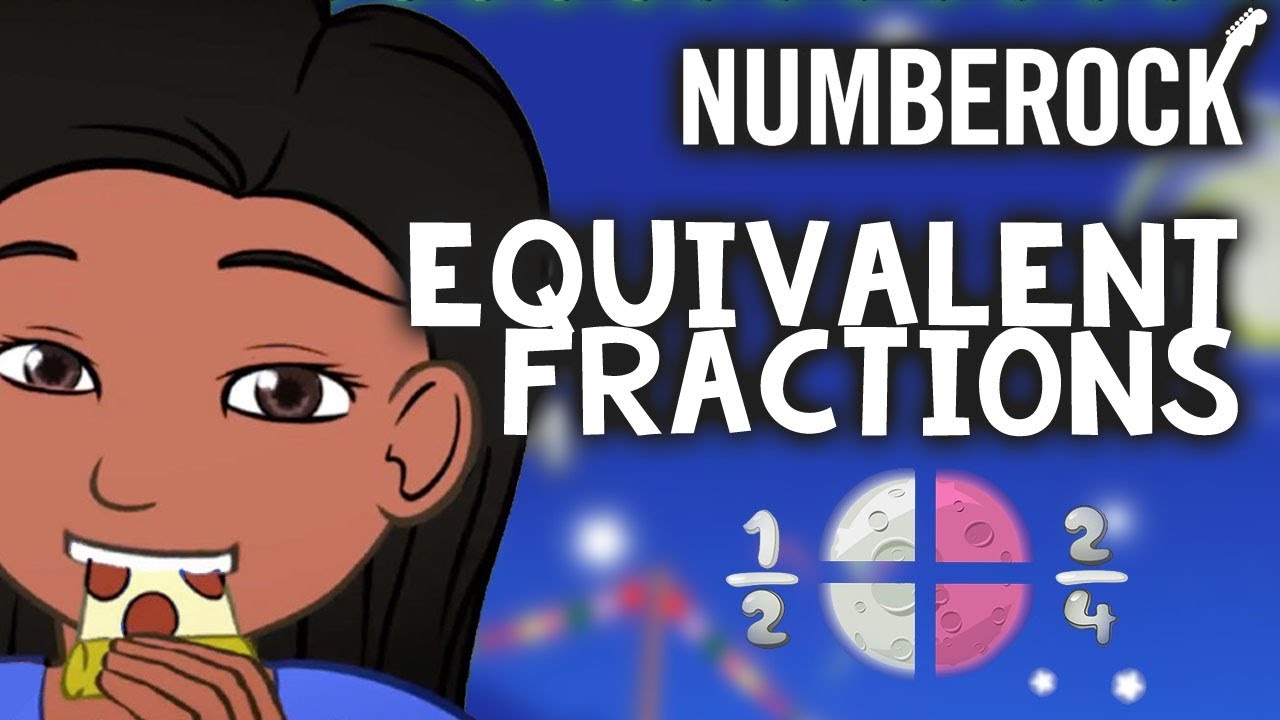
Our mission? Make math fun, engaging, and oh-so-easy for both you & your students. Our library of lesson materials is not only super-affordable but is also FREE to try out at http://numberock.com/letsrockmath.
Video Summary
Once upon a time, in a math land so grand that nine canaries found themselves perched on wires over sand. Many say it was all planned - just a device to represent equivalent fractions for kids all over the world to see. Who knows?
Each wire held a fraction, or a piece of the pie, Three ninths, one third— oh not in my eye!
“Listen up,” said the canaries, feathers all a-fluff, “Equivalent fractions, that’s some sick stuff!” 🎵
Thank you for watching Numberock's Equivalent Fractions Song.

Viewers like you help make PBS (Thank you 😃) . Support your local PBS Member Station here: https://to.pbs.org/PBSDSDonate
Turns out the sky IS falling. SUBSCRIBE! http://bit.ly/iotbs_sub
Tweet this video ⇒ http://bit.ly/OKTBSdfa Share on FB ⇒ http://bit.ly/OKTBSdfaFB
↓ More info and sources below ↓
A giant asteroid took out the dinosaurs 66 million years ago. Could a big meteor hit Earth again? And if we find one coming our way, how can we use science to avoid a deadly asteroid or meteorite impact?
Want to wear your love for science? We’ve got merch: http://dftba.com/besmart
References/Learn More:
Impact Earth! Simulator: https://www.purdue.edu/impactearth/
Thanks to Destin for letting us use a clip from Smarter Every Day #84! https://www.youtube.com/watch?v=-NLBtZKx2cA
National Academies report: “Defending Earth” https://www.nap.edu/catalog/12....842/defending-planet
3D asteroid simulation www.asterank.com/3d/
NASA’s near-Earth object program http://neo.jpl.nasa.gov/
Facts about asteroids from NASA http://www.nasa.gov/mission_pa....ges/asteroids/overvi
Great meteor/meteorite FAQ http://www.amsmeteors.org/mete....or-showers/meteor-fa
----------------
It’s Okay To Be Smart is written and hosted by Joe Hanson, Ph.D.
Have an idea for an episode or an amazing science question you want answered? Leave a comment or check us out at the links below!
Facebook: http://www.facebook.com/itsokaytobesmart
Twitter: http://twitter.com/okaytobesmart
http://twitter.com/DrJoeHanson
Instagram: http://instagram.com/DrJoeHanson
Produced by PBS Digital Studios
Music via APM
Stock images from SciencePhoto http://www.sciencephoto.com/ and Shutterstock http://www.shutterstock.com

Check out "Out of Our Elements" on PBS Terra! https://youtu.be/tp-FsXHVFoU
“In Our Nature” is a NEW special limited series on It’s Okay To Be Smart!
We’re on PATREON! Join the community ►► https://www.patreon.com/itsokaytobesmart
↓↓↓ More info and sources below ↓↓↓
Seemingly distant ecosystems, even half a world apart, are connected in surprising ways. In this special limited series, Emily Graslie and Trace Dominguez join me as we explore the universal rules of life that tie together Earth’s living systems. In episode 4, we look at some surprising ways that species use teamwork in order to survive. Why is one African tree full of ants? Why are there birds nesting in girafe armpits? What surprising guard animal keeps an endangered butterfly larva from becoming wasp food? Welcome to the world of mutualisms and animal partnerships.
In Our Nature is a special miniseries produced by It’s Okay To Be Smart for PBS. Stay tuned for more episodes coming this summer, here on our YouTube channel!
Original Production Funding provided by: Anne Ray Foundation, a Margaret A. Cargill Philanthropy
-----------
Special thanks to our Brain Trust Patrons:
Clinger-Hamilton Family
Attila Pix
Burt Humburg
DeliciousKashmiri
Mario Orso
Brian Chang
Roy Lasris
Javier Soto
dani bowman
David Johnston
Salih Arslan
Baerbel Winkler
Robert Young
Amy Sowada
Eric Meer
Dustin
Marcus Tuepker
Karen Haskell
AlecZero
SUBSCRIBE so you don’t miss a video! ►► http://bit.ly/iotbs_sub
Join us on Patreon!
https://patreon.com/itsokaytobesmart
Twitter
http://www.twitter.com/DrJoeHanson
http://www.twitter.com/okaytobesmart
Instagram
http://www.instagram.com/DrJoeHanson
http://www.instagram.com/okaytobesmart
Merch
https://store.dftba.com/collec....tions/its-okay-to-be
Facebook
https://www.facebook.com/itsokaytobesmartpbs/

Check out Hungry Planet on @pbsterra https://youtu.be/uH2jWc9TEVM
↓↓↓ More info and sources below ↓↓↓
The idea of the lone genius creating everything isn’t just misleading. It’s harmful and wrong. Innovation thrives when people work together, and rather than nice linear paths, new ideas come from chance events and unexpected connections. This video tells the story of one such invention, and offers a new idea about how new ideas are really born.
0:00 I've got a gripe
1:30 How innovation stories usually go
2:28 The last time this happened, things got weird
2:51 Stabbing sick people in Olde London
4:23 A heroic cow named Blossom
5:05 Why Napoleon hated swamps
6:22 The preacher, sparks, and a fortuitous explosion
7:08 Who's "in charge" here?
8:26 Bubbles, for your health!
9:33 Putting the club in soda
10:13 Needles and drugs
11:01 A tower in Paris
11:58 Quantum bros
12:53 Very VERY tiny things
13:37 This physicist hates cats
14:20 Mr. Helix and the messengers
15:18 It's all coming together
16:08 The best part of the story
17:35 Extras
We’re on PATREON! Join the community: https://www.patreon.com/itsokaytobesmart
SUBSCRIBE so you don’t miss a video! ►► http://bit.ly/iotbs_sub
-----------
High fives to all our Brain Trust Patrons:
Charles Horton, Jr
Holly, Brett, and Ashe Bullion
Jaap Westera
Millennial Glacier
Mehdi Damou
Barbora Bei
Burt Humburg
dani bowman
David Johnston
Baerbel Winkler
Robert Young
Eric Meer
Karen Haskell
Join us on Patreon!
https://patreon.com/itsokaytobesmart
Twitter
http://www.twitter.com/DrJoeHanson
http://www.twitter.com/okaytobesmart
Instagram
http://www.instagram.com/DrJoeHanson
http://www.instagram.com/okaytobesmart

Take the PBS Digital Studios annual survey: https://to.pbs.org/2024SurveyBeSmart
Check out @ACSReactions here: https://youtu.be/_cb09XB07LQ
↓↓↓ More info and sources below ↓↓↓
For centuries, diamonds were one of the most mysterious materials on Earth. They were beautiful, indestructible, and completely unexplained. Today, we’re exploring how scientists unlocked their secrets, and how one lab recreates the extreme conditions in Earth's mantle to make diamonds… out of dead people.
-----------
High fives to all our Brain Trust Patrons:
Baerbel Winkler
Barbora Bei
Burt Humburg
dani bowman
David Johnston
Ed Eyden
Eric Meer
Holly, Brett, and Ashe Bullion
Jaap Westera
Jennifer Burton
Karen Haskell
Mike and Patty Loftis
Olivia Ruiz
SUBSCRIBE so you don’t miss a video! ►► http://bit.ly/iotbs_sub
Join us on Patreon!
https://patreon.com/itsokaytobesmart
Instagram
http://www.instagram.com/DrJoeHanson
http://www.instagram.com/okaytobesmart
Facebook
https://www.facebook.com/itsokaytobesmartpbs/
Merch
https://store.dftba.com/collec....tions/its-okay-to-be

Viewers like you help make PBS (Thank you 😃) . Support your local PBS Member Station here: https://to.pbs.org/PBSDSDonate
Get your #ididascience shirt here! http://dftba.com/besmart
↓ More info and sources below ↓
Vintage arcade footage courtesy of: http://patrickscottpatterson.com/
Special thanks to Dreamhack Austin 2016: http://dreamhackaustin.com/
Thank you to our commentators:
@Totalbiscuit https://www.youtube.com/cynicalbrit
@EGiNcontroL https://www.facebook.com/GeoffRobinsoniNcontroL
References:
Thompson, Joseph J., Mark R. Blair, and Andrew J. Henrey. "Over the hill at 24: persistent age-related cognitive-motor decline in reaction times in an ecologically valid video game task begins in early adulthood." PloS one 9.4 (2014): e94215.
Thompson, Joseph J., et al. "Video game telemetry as a critical tool in the study of complex skill learning." PloS one 8.9 (2013): e75129.
Lewis, Joshua M., Patrick Trinh, and David Kirsh. "A corpus analysis of strategy video game play in starcraft: Brood war." Proceedings of the 33rd annual conference of the cognitive science society. 2011.
ESA Essential Facts About the Computer and Video Game Industry 2016 http://essentialfacts.theesa.com/
----
Have an idea for an episode or an amazing science question you want answered? Leave a comment or check us out at the links below!
Like us on Facebook: http://www.facebook.com/itsokaytobesmart
Follow on Twitter: http://twitter.com/okaytobesmart
http://twitter.com/jtotheizzoe
Follow on Tumblr: http://www.itsokaytobesmart.com
Follow on Instagram: http://instagram.com/jtotheizzoe
Follow on Snapchat: YoDrJoe
-----------------
It’s Okay To Be Smart is written and hosted by Joe Hanson, Ph.D.
Follow me on Twitter: @jtotheizzoe
Produced by PBS Digital Studios: http://www.youtube.com/user/pbsdigitalstudios
Music via APM
Stock images from SciencePhoto http://www.sciencephoto.com/ and Shutterstock http://www.shutterstock.com
Stock footage from Videoblocks (unless otherwise noted) http://www.videoblocks.com

Check out What Do I Do With This? from @NinePBS and our full Earth Month playlist here: https://www.youtube.com/watch?v=SL_gYWba5NM&list=PLnNZYWyBGJ1F8ofFm4H9UTrHxqU8zngK4&index=6
↓↓↓ More info and sources below ↓↓↓
Plants eat sunlight and air to make life. But the key enzyme behind it all, called rubisco, isn’t actually all that great at its job. Let’s talk about how photosynthesis really works, why oxygen isn’t coming from where you think, and whether we can fix the biggest flaw in one of Earth’s most essential processes.
References and further reading: https://sites.google.com/view/....fixing-photosynthesi
-----------
High fives to all our Brain Trust Patrons:
Marcus Pingel
Olivia Ruiz
Mike and Patty Loftis
Ed Eyden
Jennifer Burton
Holly, Brett, and Ashe Bullion
Jaap Westera
Barbora Bei
dani bowman
David Johnston
Baerbel Winkler
Eric Meer
Karen Haskell
SUBSCRIBE so you don’t miss a video! ►► http://bit.ly/iotbs_sub
Join us on Patreon!
https://patreon.com/itsokaytobesmart
Instagram
http://www.instagram.com/DrJoeHanson
http://www.instagram.com/okaytobesmart
Facebook
https://www.facebook.com/itsokaytobesmartpbs/
Merch
https://store.dftba.com/collec....tions/its-okay-to-be