Top videos

Thanks for stopping by our channel! TeachEngineering is a FREE digital library comprised of standards-aligned engineering curricula for K-12 educators to make applied science and math come alive through engineering design. Browse through our hands-on activities and be sure to subscribe to our channel for videos posted each week.
Music: Dutty

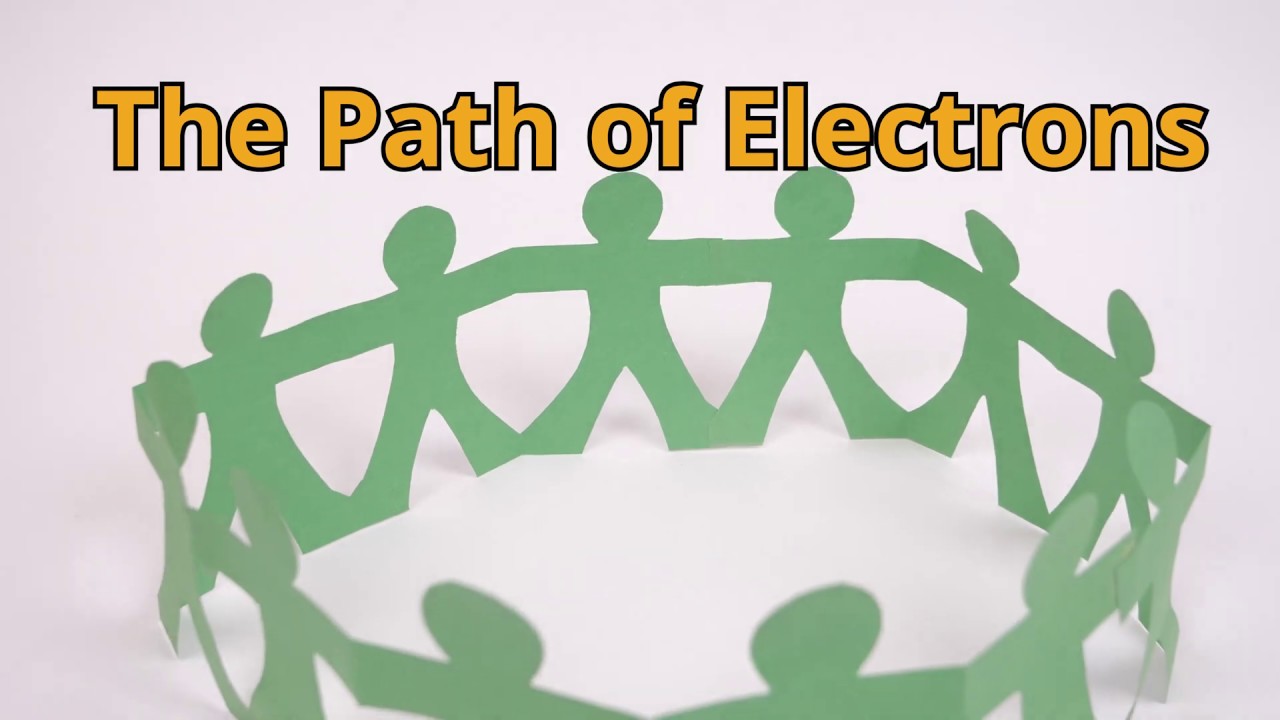
Students engage in an interactive "hot potato" demonstration to gain an appreciation for the flow of electrons through a circuit. Students role play the different parts of a simple circuit and send small items representing electrons (paper or candy pieces) through the circuit.
View the full activity at TeachEngineering:
https://www.teachengineering.o....rg/activities/view/c
TeachEngineering has over 1,500 FREE lessons and activities. Visit http://www.TeachEngineering.org for more!
Music: Stuck In The Air - The Tower of Light

In this video, you will learn how to input functions on Geogebra.
The basic functions includes linear and quadratic functions.
More on Geogebra in the next video.

In this step-by-step tutorial we will use images from the web to model a real world application for right triangle trigonometry problems. Along the way the viewer will learn how to use many GeoGebra features, gain exposure to strategies and techniques for building interactive worksheets, learn to correct mistakes, and create a dynamic student learning experience.
Link to the completed GeoGebra worksheet : https://www.geogebra.org/m/bzsc9mda

Electricity allows engineers to create systems and devices to benefit all areas of society including entertainment, healthcare, transportation, space travel and more! The phenomenon of electricity inspires innovation in engineering.
This video will touch on:
What electricity is,
The two types of electricity: static and current,
And how engineers can make the world a better place using electricity!
Find lessons and activities around the phenomenon of electricity here: https://www.teachengineering.o....rg/populartopics/ele
Music: Orange Octopus

The concepts of imaginary numbers and how they work in vector spaces can be difficult to understand. In this short, Grant shows how to use GeoGebra to visualize complex numbers and the effects they have when you multiply by a vector by complex number. This work was motivated by the question of what effect does a complex eigenvalue have on a vector.
*Links*
Our Meetup: https://www.meetup.com/East-Ba....y-Tri-Valley-Machine
*Content*
00:00 Viewing Imaginary numbers with GeoGebra
▬▬▬▬▬▬▬▬▬▬▬▬▬▬▬▬▬▬▬▬▬
😊About Us
West Coast Machine Learning is a channel dedicated to exploring the exciting world of machine learning! Our group of techies is passionate about deep learning, neural networks, computer vision, tiny ML, and other cool geeky machine learning topics. We love to dive deep into the technical details and stay up to date with the latest research developments.
Our Meetup group and YouTube channel is the perfect place to connect with other like-minded individuals who share your love of machine learning. We offer a mix of research paper discussions, coding reviews, and other data science topics. So, if you're looking to stay up to date with the latest developments in machine learning, connect with other techies, and learn something new, be sure to subscribe to our channel and join our Meetup community today!
Meetup: https://www.meetup.com/east-ba....y-tri-valley-machine
▬▬▬▬▬▬▬▬▬▬▬▬▬▬▬▬▬▬▬▬▬
#mathematics #geogebra #imaginarynumbers #machinelearning #ai #artificalintellegence #aitraining #eigenvalues

For this maker challenge, students become biomedical engineers who design, create, and test a medical device that measures a patient’s pulse using a microcontroller, LED, and light sensor. Students use data collected from the device they build to determine how to best visualize the results, so that a doctor can view the patient’s pulse on the computer screen. During the challenge, students learn about basic coding, the capabilities of microcontrollers, how sensors gather data, how the human circulatory system works, and how to plot real data. Finally, students are challenged to make their systems portable so that they create wearable health technology. This is a great project for a high school senior design team project.
View the full activity at TeachEngineering:
https://www.teachengineering.o....rg/makerchallenges/v
TeachEngineering has over 1,500 FREE lessons and activities. Visit http://www.TeachEngineering.org for more!
Music: Komputo - Francis Preve

This video will guide you on how to construct a rhombus using a slider and other tools.

During a power failure, or when we go outside at night, we grab a flashlight so we can find our way. What happens inside a flashlight that makes the bulb light up? Why do we need a switch to turn on a flashlight? Have you ever noticed that for the flashlight to work you must orient the batteries a certain way as you insert them into the casing? Many people do not know that a flashlight is a simple series circuit. In this hands-on activity, students build this everyday household item and design their own operating series circuit flashlights.
View the full activity on TeachEngineering: https://www.teachengineering.o....rg/activities/view/c
TeachEngineering has over 1,500 FREE lessons and activities. Visit http://www.TeachEngineering.org for more!
Music: Alternate - Vibe Tracks

#precalculus #circle # conicsection
#statisticsandprobability

Students are introduced to renewable energy, including its relevance and importance to our current and future world. They learn the mechanics of how wind turbines convert wind energy into electrical energy and the concepts of lift and drag. Then they apply real-world technical tools and techniques to design their own aerodynamic wind turbines that efficiently harvest the most wind energy. Specifically, teams each design a wind turbine propeller attachment. They sketch rotor blade ideas, create CAD drawings (using Google SketchUp) of the best designs and make them come to life by fabricating them on a 3D printer. They attach, test and analyze different versions and/or configurations using a LEGO wind turbine, fan and an energy meter. At activity end, students discuss their results and the most successful designs, the aerodynamics characteristics affecting a wind turbine's ability to efficiently harvest wind energy, and ideas for improvement. The activity is suitable for a class/team competition. Example 3D rotor blade designs are provided.
View the full activity at TeachEngineering:
https://www.teachengineering.o....rg/activities/view/n
TeachEngineering has over 1,500 FREE lessons and activities. Visit http://www.TeachEngineering.org for more!
Music: Straighty Baby - Audionautix
Straighty Baby by Audionautix is licensed under a Creative Commons Attribution license (https://creativecommons.org/licenses/by/4.0/)
Artist: http://audionautix.com/

#precalculus

To gain a better understanding of the roles and functions of components of the human respiratory system and our need for clean air, students construct model lungs that include a diaphragm and chest cavity. They see how air moving in and out of the lungs coincides with diaphragm movement. Then student teams design and build a prototype face mask pollution filter. They use their model lungs to evaluate their prototypes to design requirements.
View the full activity on TeachEngineering:
https://www.teachengineering.o....rg/activities/view/c
TeachEngineering has over 1,500 FREE lessons and activities. Visit https://www.teachengineering.org/ for more
Music: Sky Scraper - Geographer


In this hands-on activity, students explore the phenomenon of static electricity by engaging in the science and engineering practices of asking questions and planning and carrying out investigations. Students enact a “human diagram” to model the Bohr model of an atom. Then, in pairs, they charge a comb (on hair) and use it to attract an O-shaped piece of cereal and then watch the cereal jump away when it touches the comb. They do the same with Styrofoam pellets, observing them pulling towards a charged comb, then leaping back to the table. Through these investigations, students explore the disciplinary core ideas of electric and magnetic forces, the crosscutting concept of cause and effect, and they make sense of static electricity and what’s going on at the atomic level.
View the full activity on TeachEngineering:
https://www.teachengineering.o....rg/activities/view/c
TeachEngineering has over 1,500 FREE lessons and activities. Visit https://www.teachengineering.org/ for more
Music - Educated Man

This video goes with my blog post about using the MaKey-MaKey in the Classroom. Read all about it here: bit.ly/TTMaKeyMaKey

🎉 NEW Videos: https://www.youtube.com/playli....st?list=PLLF_mZmNqOn
🕵️♀️ Amazing Things for Kids: https://www.youtube.com/playli....st?list=PLLF_mZmNqOn
What is Air? | Educational Videos for Primary School Kids | @HappyLearningENG
Did you know that air is full of things we can’t see? In this video, we teach you all the secrets of air: what it’s made of, how it changes with temperature, and why it’s so important for life on Earth. Discover how air allows plants to perform photosynthesis, how a hot air balloon flies, and much more! You’ll also learn how air is essential for fire, sound, and the flight of birds. Don’t miss this adventure through air and its amazing characteristics!
Subscribe to Happy Learning: https://my.happylearning.tv/
Curiosities for kids:https://www.youtube.com/playli....st?list=PLLF_mZmNqOn
Discover hundreds of never-before-seen resources! Create your free account at https://my.happylearning.tv/ and start learning in the most entertaining way.