Top videos

By studying how bees and flowers interact with one another, we can also understand engineering practices related to our environment! In this activity, students engineer a model of a flower to test different materials’ ability to pollinate another flower. In teams of two, students use the engineering design process to create a model of a flower out of construction paper and then test different materials by measuring and recording how much pollen is transferred. While discovering the most efficient material, students determine how the information they gain can help bees pollinate and they better understand the importance of bee conservation.
This engineering curriculum aligns to Next Generation Science Standards (NGSS).
View the full activity on TeachEngineering:
https://www.teachengineering.o....rg/activities/view/u
TeachEngineering has over 1,500 FREE lessons and activities. Visit https://www.teachengineering.org/ for more
music: Daily Beetle

LANGUAGE ENGLISH OR MALAYALAM

In this activity, students learn about the engineering design process and use it to solve a design problem involving detergent and dirty clothes. The problem presented is a spot on a favorite shirt while on a camping trip. Students move through the engineering design process, as they design, build, and test a prototype of a portable washing machine
View the full activity on TeachEngineering:
https://www.teachengineering.o....rg/activities/view/u
TeachEngineering has over 1,500 FREE lessons and activities. Visit https://www.teachengineering.org/ for more
Music: Fig Leaf Rag - Kevin MacLeod

Students control small electric motors with Arduino microcontrollers to make simple sticky-note spinning fans and then explore other variations of basic motor systems. Through this exercise, students create circuits that include transistors acting as switches. They alter and experiment with given basic motor code, learning about the Arduino analogWrite command and pulse width modulation (PWM). Students learn the motor system nuances that enable them to create their own motor-controlled projects. They are challenged to make their motor systems respond to temperature or light, to control speed with knob or soft potentiometers, and/or make their motors go in reverse (using a motor driver shield or an H-bridge). Electric motors are used extensively in industrial and consumer products and the fundamental principles that students learn can be applied to motors of all shapes and sizes.
View the full activity at TeachEngineering:
https://www.teachengineering.o....rg/makerchallenges/v
TeachEngineering has over 1,500 FREE lessons and activities. Visit http://www.TeachEngineering.org for more!
Music: Fuggetaboutit

The Teach Engineering Digital Library is an educational resource featuring standards-aligned, design-rich curricula to help educators foster design thinking.
Put the ‘E’ in STEM by making applied science, technology, and math come alive through engineering design and design thinking.


Students learn about the different structures that comprise cell membranes, fulfilling part of the Research and Revise stages of the legacy cycle. They view online animations of cell membrane dynamics (links provided). Then they observe three teacher demonstrations that illustrate diffusion and osmosis concepts, as well as the effect of movement through a semi-permeable membrane using Lugol's solution. Lastly, students use the associated activity to test their understanding of the cell structure and membrane.
View the full lesson on Teach Engineering:
https://www.teachengineering.o....rg/lessons/view/van_
Teach Engineering has over 1,500 FREE lessons and activities. Visit https://www.teachengineering.org/ for more

#mathematics tutorial
Note: ang given pala ay 3x plus 5 Hindi 3x minus 5.. Hehehe
Sorry

An exploration of an engineering brief from a mock toy company leads students to explore a new slime with a unique set of characteristics. Using simple directions, students create five different types of slime and classify their slime properties against the criteria provided by the mock toy company. Based on their observations, they identify the best slime recipe based on the resulting physical properties.
View the full activity on TeachEngineering:
https://www.teachengineering.o....rg/activities/view/i
TeachEngineering has over 1,500 FREE lessons and activities. Visit https://www.teachengineering.org/ for more
Music: Cats and Gats - Dyalla

#statistics

#precalculus #binomialtheorem #binomialexpansion #pascalstriangle #shs
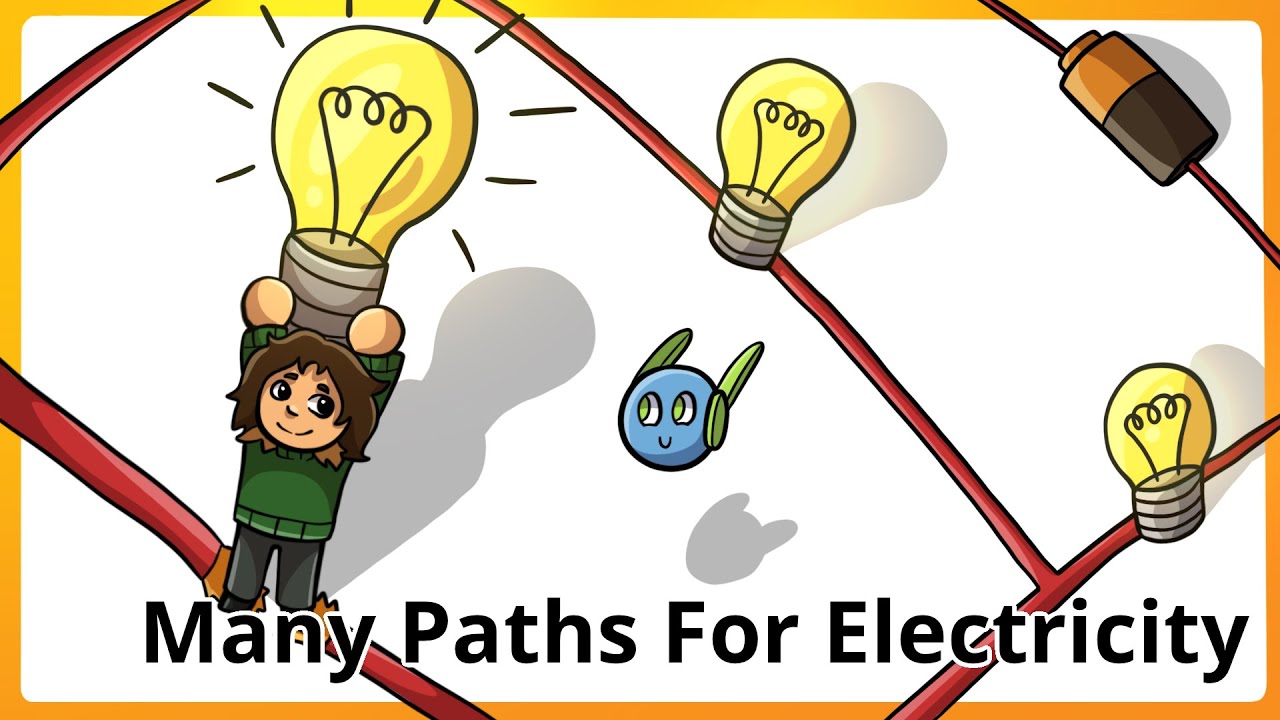
Students explore the composition and practical application of parallel circuitry, compared to series circuitry. Students design and build parallel circuits and investigate their characteristics, and apply Ohm's law.
View the full lesson on TeachEngineering:
https://www.teachengineering.o....rg/lessons/view/cub_
TeachEngineering has over 1,900 FREE lessons and activities. Visit http://www.TeachEngineering.org for more!

#complex rational equation
#factoring quadratic equation
#evaluating composition of function
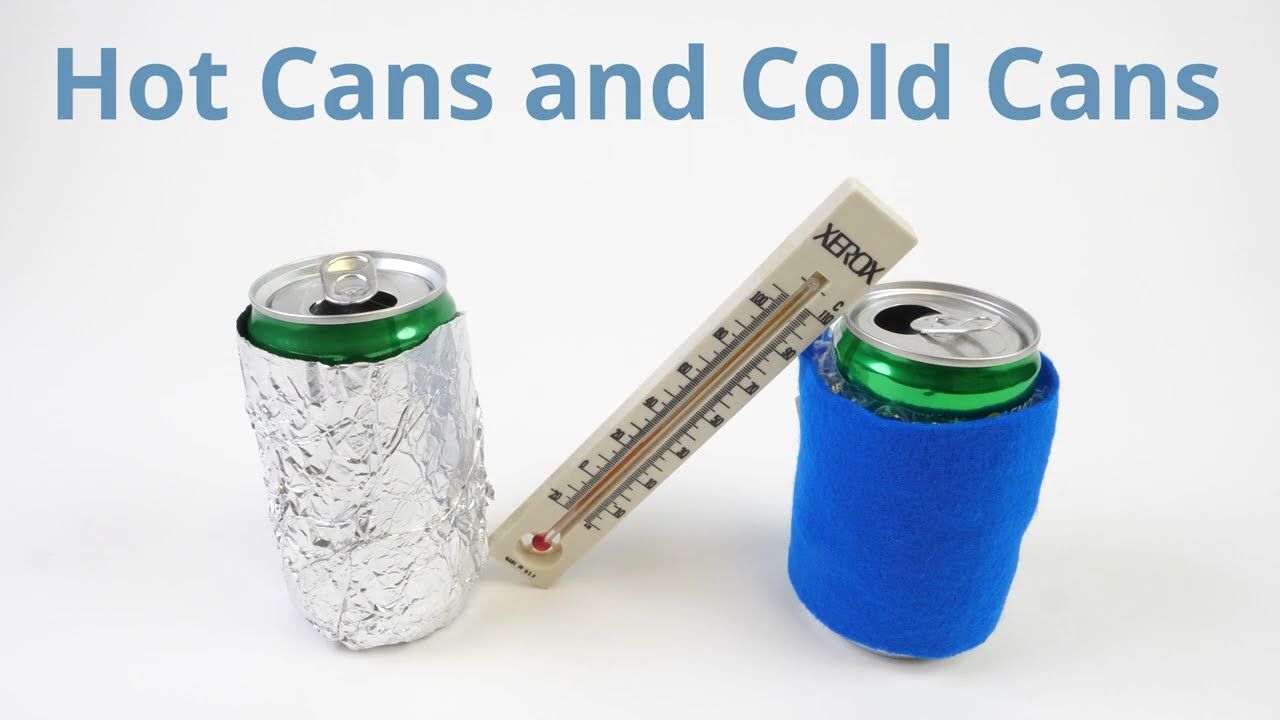
Students apply the concepts of conduction, convection, and radiation as they work in teams to solve two challenges. One problem requires that they maintain the warm temperature of one soda can filled with water at approximately human body temperature, and the other problem is to cause an identical soda can of warm water to cool as much as possible during the same 30-minute time period. Students design their engineering solutions using only common everyday materials, and test their devices by recording the water temperatures in their two soda cans every five minutes.
This engineering curriculum aligns to Next Generation Science Standards (NGSS).
View the full activity on TeachEngineering:
https://www.teachengineering.o....rg/activities/view/d
TeachEngineering has over 1,500 FREE lessons and activities. Visit https://www.teachengineering.org/ for more
Music - Aimless Amos


Students work together in small groups, while competing with other teams, to explore the engineering design process through a tower building challenge. They are given a set of design constraints and then conduct online research to learn basic tower-building concepts. During a two-day process and using only tape and plastic drinking straws, teams design and build the strongest possible structure. They refine their designs, incorporating information learned from testing and competing teams, to create stronger straw towers using fewer resources (fewer straws). They calculate strength-to-weight ratios to determine the winning design.
View the full lesson on TeachEngineering:
https://www.teachengineering.o....rg/activities/view/u
TeachEngineering has over 1,500 FREE lessons and activities. Visit https://www.teachengineering.org/ for more
Music - Educated Man by Max McFerren

This video tutorial shows you how to use Makey Makey with Scratch and explains how a Makey Makey works as a circuit. We’ll explore some conductive materials that you can use and compatible devices. Educators, here’s a resource you can use with your group of learners: http://bit.ly/SurfSMakey1
--------------------------------------------------------------------------------------------------------------------------------
🔗🔗🔗 LINKS 🔗🔗🔗
➡️MAILING LIST: http://surfingscratcher.com/re....commends/downloads/s
➡️SparkFun Circuits: https://learn.sparkfun.com/tut....orials/what-is-a-cir
➡️Makey Makey Website: https://makeymakey.com
--------------------------------------------------------------------------------------------------------------------------------
🙏🙏🙏 SUPPORT 🙏🙏🙏
🛒Buy Makey Makey STEM PACK (contains 12): https://amzn.to/2o3jcmc
🛒Buy a single Makey Makey: https://amzn.to/2o1RrKW
🛒Kit with Copper Tape & Graphite Pencils: https://kit.co/surfingscratche....r/how-to-makey-makey
➡️PATREON: https://www.patreon.com/surfingscratcher
➡️MAILING LIST: http://bit.ly/SurfSubscribe
👕👚TEE I’M WEARING — : http://shrsl.com/1ua92
Surfing Scratcher receives a percentage of the purchase price when you make a purchase through some of these links.
--------------------------------------------------------------------------------------------------------------------------------
🛒🛒🛒SHOP 🛒🛒🛒
Educators and teachers, you can find unplugged lessons, resources and activities to purchase for this tutorial series on my website here:
➡️Educational Resources: https://www.surfingscratcher.com/shop/
➡️Browse my Teachers Pay Teachers Store: https://bit.ly/2Tq45lH
--------------------------------------------------------------------------------------------------------------------------------
👻👻👻 SOCIAL MEDIA 👻👻👻
➡️Scratch: https://scratch.mit.edu/users/surfingscratcher/
➡️Website: https://surfingscratcher.com
➡️Like my Facebook Page: https://bit.ly/2HnR1Gg
➡️Subscribe to my YouTube Channel: https://bit.ly/2TDtqI3
➡️Follow me on Instagram: https://bit.ly/2NWlxZe
➡️Follow me on Pinterest: https://bit.ly/2CdKIl5
--------------------------------------------------------------------------------------------------------------------------------
📝📝📝 VIDEO DESCRIPTION 📝📝📝
In this Makey Makey Basics tutorial, I’ll introduce new learners and educators to the Makey Makey device. We can connect the Makey Makey directly to the computer as it is essentially a keyboard or mouse. We can immediately start using the Makey Makey, by touching the ‘Earth’ connection and one of the input buttons. The reason this works is because electricity flows through us from the ground connection to the input button. We complete a circuit. A circuit is essentially a flow of energy. With this understanding, we are ready to test and explore some other conductive materials.
We’ll look at all things metallic, as they are fantastic conductors. These include copper tape, tinfoil and even a dense graphite pencil. We’ll look at fruit as well as water and play doh. Anything that conducts electricity will work. Some insulators (non-conductive materials) include wood, glass and plastic.
Makey Makey is compatible with all major operating systems: Mac, Windows, Linux, Google Chromebooks. It isn’t officially supported on mobile and tablet devices.
--------------------------------------------------------------------------------------------------------------------------------
❓🤔❓ WHAT IS SURFING SCRATCHER? ❓🤔❓
Surfing Scratcher wants to show learners, students, educators and teachers how to learn mathematics through coding games online with Scratch 3 programming projects. Whether you are a Scratch beginner, or you're an educator wondering how to use Scratch in your classroom or looking for lessons & resources for your classroom, Surfing Scratcher is here to help you on your journey.
--------------------------------------------------------------------------------------------------------------------------------
⏯ ⏯⏯PLAYLISTS ⏯ ⏯⏯
https://bit.ly/2J1q5i3
--------------------------------------------------------------------------------------------------------------------------------
#scratch #inventionliteracy #makeymakey

Discover hundreds of never-before-seen resources! Create your free account at https://my.happylearning.tv/ and start learning in the most entertaining way.

www.nerding.org
STEM Classes for Kids

Discover hundreds of never-before-seen resources! Create your free account at https://my.happylearning.tv/ and start learning in the most entertaining way.
What are you waiting for? Did you know that a baby had more bones in its body than an adult?
An adult has 206 bones in their body whereas a newly born baby has almost 300. This is because newborn babies are born with some of their bones separated to make it easier for them at childbirth. If we were to touch a baby’s head very carefully, we would feel some softer parts called fontanel, where they are joined by cartilaginous tissues and with the passing of time these bones and tissues become the skull. The truth is, nature is very wise, don’t you think?
And did you know that the breath of newly born babies does not smell?
This is because they don’t have any teeth which is where the bacteria responsible for bad breath called halitosis, is found. So, as you are not a baby, you must clean your teeth very well after each meal so as not to have bad breath. Don’t forget, ok?
Did you know that most babies cry without tears?
The reason for this is a simple one. The tear duct in a baby’s eyes is not totally open at birth and so tears can’t pass through. In some cases these ducts don’t open until the baby turns four months old. Though this happens, we cannot think that when a baby is crying, it’s only pretending. During the first months of a baby´s life, crying is the most practical way of communicating, so when a baby cries, we must go to them or notify an adult so that they can find out what the baby wants. We must take great care of newborn babies, because don’t forget, we were all babies once.