Top videos

ChatGPT for Educators - K12 and Higher Education #k12 #education #colleges #faculty #highereducation #highered #school
____________________________________________
Be sure to subscribe: https://www.youtube.com/channe....l/UCMAbWt9vWjtWynOkc
Support this channel and donate here: https://www.paypal.me/raypastore
Check out my website at: http://raypastore.com

Teach In Two

4th Grade Vocabulary Part 3 is the third video in the series that provides students with words to expand their vocabulary. Lessons are formatted to provide easy learning. Each video in this series will create an atmosphere conducive to remembering the material presented.
Please visit our channel and Subscribe. New videos posted every Tuesday.
https://youtube.com/channel/UC...._XYRUNkxt9636TWXdgJ9
Welcome to the Complete K12 Essentials Youtube channel!
#firstdayofschool
#homeschool
#SCHOOLDAY
#SchoolDay
#homeschoolcomplete
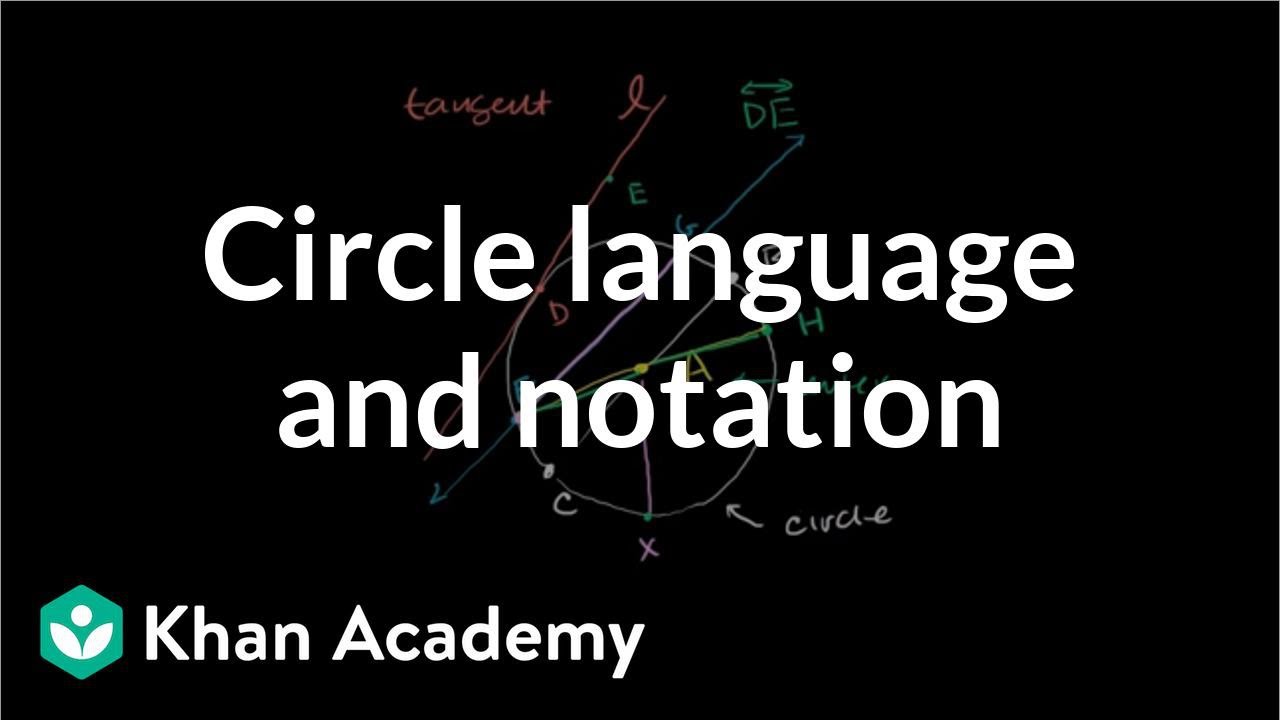
Courses on Khan Academy are always 100% free. Start practicing—and saving your progress—now: https://www.khanacademy.org/ma....th/geometry/hs-geo-c
Formal definition of a circle. Tangent and secant lines. Diameters and radii. major and minor arcs
Watch the next lesson: https://www.khanacademy.org/math/geometry/intro_euclid/v/the-golden-ratio?utm_source=YT&utm_medium=Desc&utm_campaign=Geometry
Missed the previous lesson?
https://www.khanacademy.org/math/geometry/intro_euclid/v/geometric-precision-practice?utm_source=YT&utm_medium=Desc&utm_campaign=Geometry
Geometry on Khan Academy: We are surrounded by space. And that space contains lots of things. And these things have shapes. In geometry we are concerned with the nature of these shapes, how we define them, and what they teach us about the world at large--from math to architecture to biology to astronomy (and everything in between). Learning geometry is about more than just taking your medicine ("It's good for you!"), it's at the core of everything that exists--including you. Having said all that, some of the specific topics we'll cover include angles, intersecting lines, right triangles, perimeter, area, volume, circles, triangles, quadrilaterals, analytic geometry, and geometric constructions. Wow. That's a lot. To summarize: it's difficult to imagine any area of math that is more widely used than geometry.
About Khan Academy: Khan Academy offers practice exercises, instructional videos, and a personalized learning dashboard that empower learners to study at their own pace in and outside of the classroom. We tackle math, science, computer programming, history, art history, economics, and more. Our math missions guide learners from kindergarten to calculus using state-of-the-art, adaptive technology that identifies strengths and learning gaps. We've also partnered with institutions like NASA, The Museum of Modern Art, The California Academy of Sciences, and MIT to offer specialized content.
For free. For everyone. Forever. #YouCanLearnAnything
Subscribe to Khan Academy’s Geometry channel:
https://www.youtube.com/channe....l/UCD3OtKxPRUFw8kzYl
Subscribe to Khan Academy: https://www.youtube.com/subscr....iption_center?add_us
The vowel a can make a short /ă/ sound or a long /ā/ sound. Learn about the vowel a with Reya the Red Panda from Khan Academy Kids!
Visit us at http://www.khankids.org to learn more about Khan Academy Kids, a free educational app for preschool through 2nd grade.
Available on Google Play, Apple, and Amazon app stores:
➡️ http://khan.co/KhanKids-YT-Google
➡️ http://khan.co/KhanKids-YT-Apple
➡️ http://khan.co/KhanKids-YT-Amazon
You can also access other videos on vowels and vowel teams on our Vowels and Vowel Teams playlist here: http://khan.co/KhanKids-Vowels.
Subscribe to our channel for more videos like this.
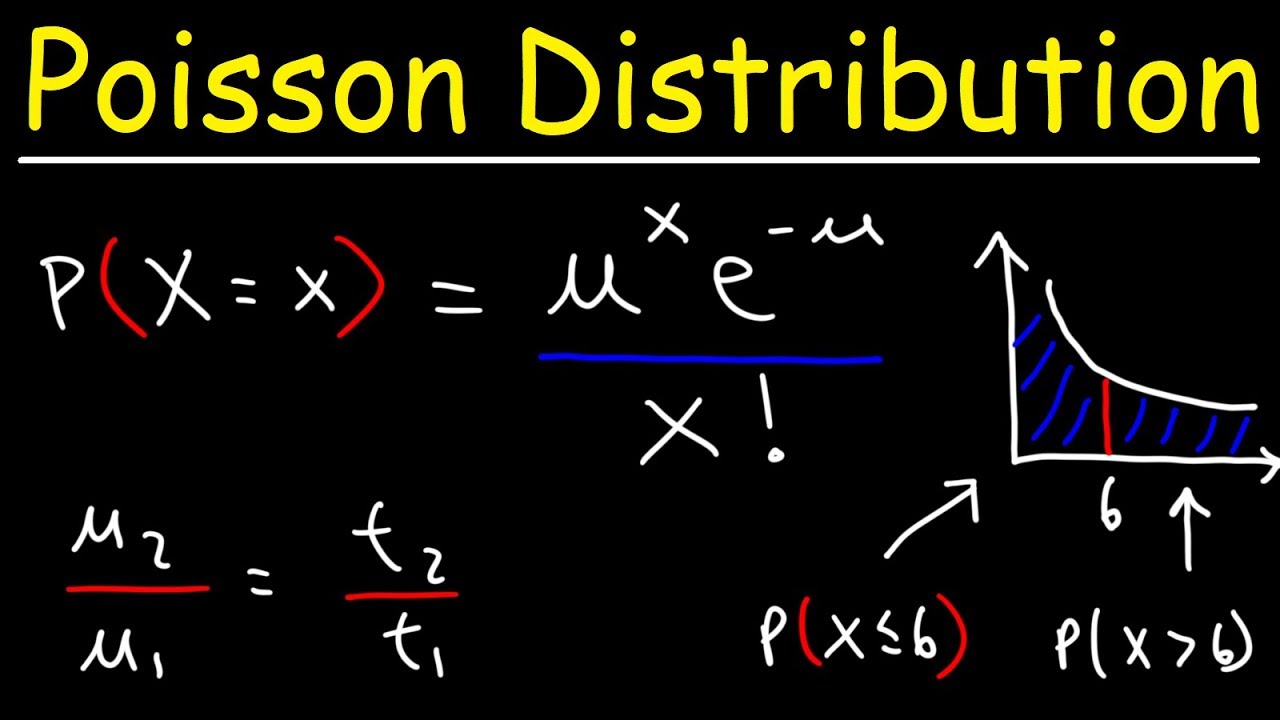
This statistics video provides a basic introduction into the poisson distribution. It explains how to identify the mean with a changing time interval in order to calculate the probability of an event occurring.
Introduction to Probability: https://www.youtube.com/watch?v=SkidyDQuupA
Probability Formulas:
https://www.youtube.com/watch?v=bddckR734aM
Probability Explained:
https://www.youtube.com/watch?v=UORztmWGY6Q
Probability With Geometry:
https://www.youtube.com/watch?v=DeH5aHWxEaI
Probability of Complementary Events:
https://www.youtube.com/watch?v=0T-CaQCiSf4
Conditional Probability:
https://www.youtube.com/watch?v=sqDVrXq_eh0
__________________________________
Independent and Dependent Events:
https://www.youtube.com/watch?v=lWAdPyvm400
Probability of Mutual Exclusive Events:
https://www.youtube.com/watch?v=X6usGgwXFyU
Multiplication and Addition Rule:
https://www.youtube.com/watch?v=94AmzeR9n2w
Compound Probability:
https://www.youtube.com/watch?v=EHU6pVSczb4
Expected Value:
https://www.youtube.com/watch?v=b6VK2VPMXNI
Probability Tree Diagrams:
https://www.youtube.com/watch?v=w4wKXVwtGac
___________________________________
Bayes Theorem:
https://www.youtube.com/watch?v=OByl4RJxnKA
Probability - Binomial Distribution:
https://www.youtube.com/watch?v=3PWKQiLK41M
Probability - Geometric Distribution:
https://www.youtube.com/watch?v=d5iAWPnrH6w
Probability - Poisson Distribution:
https://www.youtube.com/watch?v=m0o-585xwW0
Continuous Probability Distributions:
https://www.youtube.com/watch?v=QxqxdQ_g2uw
Probability Density Functions:
https://www.youtube.com/watch?v=3xAIWiTJCvE
__________________________________
Probability - Uniform Distributions:
https://www.youtube.com/watch?v=KfunVw-0AH0
Probability - Exponential Distributions:
https://www.youtube.com/watch?v=J3KSjZFVbis
Probability - Normal Distributions (Calculus):
https://www.youtube.com/watch?v=gHBL5Zau3NE
Probability - Standard Normal Distributions:
https://www.youtube.com/watch?v=CjF_yQ2N638
Probability - The Law of Large Numbers:
https://www.youtube.com/watch?v=ihTpK6dXSas
___________________________________
Final Exams and Video Playlists:
https://www.video-tutor.net/
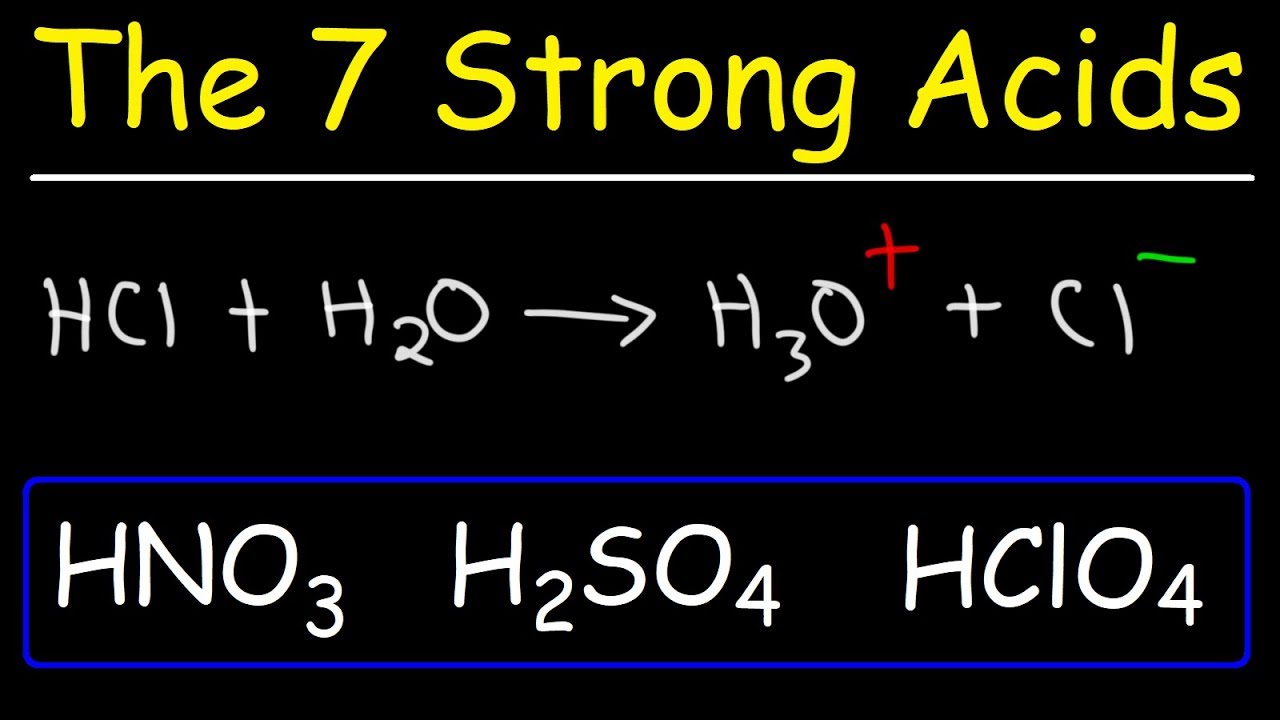
This chemistry video tutorial explains how to memorize the 7 strong acids and strong bases. Strong acids dissociate completely where as weak acids dissociate partially. Strong Bases are usually soluble compounds that release hydroxide ions into solution.
Acids and Bases - Introduction: https://www.youtube.com/watch?v=FM2MpMbV0rw
The 7 Strong Acids to Memorize:
https://www.youtube.com/watch?v=AaYQ_ZiE7AY
Conjugate Acid-Base Pairs:
https://www.youtube.com/watch?v=OP6RKqSp1Xw
pH and pOH Calculations:
https://www.youtube.com/watch?v=OEW4-Sfyvik
Estimate The pH Without a Calculator:
https://www.youtube.com/watch?v=Mgph6gmIuwg
_______________________________
Autoionization of Water - Kw:
https://www.youtube.com/watch?v=ID5K1Yt7Yho
Which Acid Is Stronger?
https://www.youtube.com/watch?v=PdqFSw_SRug
Acidic, Basic, & Neutral Salts:
https://www.youtube.com/watch?v=-6Pxr7SRgeo
pH of Weak Acids:
https://www.youtube.com/watch?v=kJTCuRSeh6g
Buffer Solutions:
https://www.youtube.com/watch?v=kBzPTEB21Po
_________________________________
Polyprotic Acid Base Equilibria:
https://www.youtube.com/watch?v=nXugjkSQtTI
Acid Base Titration Curves:
https://www.youtube.com/watch?v=LNG9rhmBu8E
Acids and Bases - Practice Test:
https://www.youtube.com/watch?v=hmGPK0cuO7o
Ksp - Molar Solubility & Ice Tables:
https://www.youtube.com/watch?v=kO-9OajoPZs
Complex Ion Equilibria:
https://www.youtube.com/watch?v=nkiMFM19yNE
___________________________________
Gibbs Free Energy, Entropy & Enthalpy:
https://www.youtube.com/watch?v=2KuNzB0cZL4
Entropy - 2nd Law of Thermodynamics:
https://www.youtube.com/watch?v=lN66F9V7-_Q
Electrochemistry Practice Problems:
https://www.youtube.com/watch?v=S9frctwDyL0
Final Exams and Video Playlists:
https://www.video-tutor.net/
Full-Length Videos and Worksheets:
https://www.patreon.com/MathSc....ienceTutor/collectio
Chemistry PDF Worksheets:
https://www.video-tutor.net/chemistry-basic-introduction.html

Naming Alkenes, IUPAC Nomenclature Practice, Substituent, E Z System, Cycloalkenes Organic Chemistry
This organic chemistry video explains how to name alkenes using the iupac nomenclature system. It contains examples with substituents, cycloalkenes, cis trans isomers and naming alkenes using the e z system.
Stereochemistry R/S Configuration:
https://www.youtube.com/watch?v=yzfcrwJ37kI
Optical Activity & Specific Rotation:
https://www.youtube.com/watch?v=duGxp_XZzvw
SN1, SN2, E1, E2 Reaction Mechanisms:
https://www.youtube.com/watch?v=hz-fSXifP9w
SN1, SN2, E1, E2 - Practice Test:
https://www.youtube.com/watch?v=qTc2uud7TVU
Alkene Reactions Review:
https://www.youtube.com/watch?v=lKROX1C0JRs
________________________________
Alkyne Reactions Review:
https://www.youtube.com/watch?v=p6TLF92lyuI
Organic Chemistry PDF Worksheets:
https://www.video-tutor.net/orgo-chem.html
Organic Chemistry 1 Exam 2 Playlist:
https://bit.ly/3PKEApB
Organic Chemistry 1 Final Exam Review:
https://www.youtube.com/watch?v=ej2pSWw6U3w
Full-Length Videos and Worksheets:
https://www.patreon.com/MathSc....ienceTutor/collectio

Why do we have sunny weather one day and heavy rain the next? Large air masses cause some of our weather. There are four main fronts caused by these air masses.
A cold front which is the result of cold air
A warm front which is caused by warm air rising over cold air.
An occluded front which is a warm air mass stuck between two air masses.
A stationary front which is two air masses with almost the same density and pushes against each other.

Grasslands are a large area of the earth that have lots of grass and very few trees. The grassland biome is found in South Africa, North America, Hungary, Argentina Uruguay, and Russia.
Temperate grasslands have hot summers and cold wintersTemperate grasslands can be further subdivided. Prairies are grasslands with tall grasses while steppes are grasslands with short grasses.
Steppes receive less rainfall than prairies and receive only 10 to 20 inches rainfall a year. dry areas of grassland with hot summers and cold winters.
MooMooMath and Science upload a new math or science video every day. We have over 1400 math and science videos to help in school and life.
https://www.youtube.com/channe....l/UCE_WiQFez8FZcICpb
Check out another grassland called the savanna
https://www.youtube.com/watch?v=nKnV_7QzpNo
Introduction to Biomes
https://youtu.be/cXo9YczQBo4

In this video your child will be able to learn about 5 places around the world and 5 different time periods. First, your child will be taken on a trip around the world and visit amazing cities such as Paris, New York, Murcia, Mexico and Sydney. A few things they will be able to learn include popular landmarks of the city, traditional foods and more. Next, your child will be able to travel back in time to the prehistoric era, egyptian, renaissance, industrial revolution, digital revolution and to present day. Your child will meet famous people such as Cleopatra and Steve Jobs!
This video is part of a collection of videos that teaches children about history. During these videos you will learn plenty of things such as notable people who lived in these eras and why this history is important.
Thanks for visiting us! If you want your children to smile and learn, subscribe! :D
We only upload our own content, designed by educators so that children smile and learn while watching a video.
All of our content reinforces educational values, encouraging the use of multiple intelligences and language learning.
If you like our videos, download “The Smart Library” now. You’ll discover more than 70 interactive games and stories for children designed by educators. The stories are based on VALUES like friendship, respect, and generosity, and our games cover all of the MULTIPLE INTELLIGENCES. All our content is in SPANISH, ENGLISH, FRENCH, ITALIAN and PORTUGUESE.
The perfect tool to use in and out of school.
Download it today!
-Apple Store: https://itunes.apple.com/us/ap....p/smart-edutainment-
-Google Play: https://play.google.com/store/....apps/details?id=net.
www.smileandlearn.com
Thank you for trusting us with your children's education!
#nguyenanngan
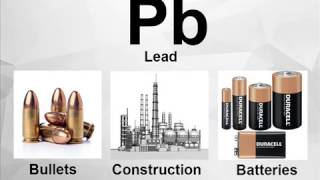
Learn the periodic table easily at all ages by either listening or looking at these pictures to learn the usages of each element.

The Principal Lecturer and Lead for Planning and Admissions in the School of Education discusses training as a teacher, the unique rewards the profession brings and why Brighton is the option for you.
Find out more about teacher training at Brighton: https://www.brighton.ac.uk/stu....dying-here/subject-a

Beskriver den logistiske ligning og giver et eksempel.
Matematik A - Differentialligninger
Se mere på www.restudy.dk

AI offers unprecedented promise in education—personalized tutoring, universal access, and tailored learning—but it also brings risks of misinformation, bias, and outright falsehoods. In this compelling TEDx talk, a seasoned tech and education leader explores a looming crisis: without prioritizing accuracy and truth, we risk creating tools we can’t trust. What happens when our students replace reliable sources of knowledge—trained educators, vetted textbooks, and professional librarians—with tools that may not be fact-based? Jim Chilton is a technology executive with a passion for driving growth and transformation. As the executive vice president and Group CTO at Cengage Group, he leads the innovation efforts and ensures that the Group Technology organization aligns with the company's vision. His role encompasses overseeing product engineering, artificial intelligence programs, internal business systems, cloud computing and cybersecurity. He is deeply committed to giving back to the industry and community and serves as an advisor and board members for several organizations. Chilton received the 2020 Inspire CIO of the Year/Boston ORBIE award and has been a finalist for the National Inspire CIO of the Year ORBIE Award in 2023 and 2024. He’s also been a multi-year recipient of the Apprenti Industry award and HMG Global Leadership award. This talk was given at a TEDx event using the TED conference format but independently organized by a local community. Learn more at https://www.ted.com/tedx
These fun filled learning videos for toddlers will help children learn to count 1 - 10 with fun loving animals from Number Farm and Number Zoo. Learn the alphabet with ABC Adventure and enjoy matching colours with the puppies down at Puppy Park! Watch the best learning videos for toddlers here http://bit.ly/1RyvZEG
Love Toddler Fun Learning and Gecko's Garage? You can watch all of our videos over on our app. Watch ad free and download for offline viewing. Click here to download http://apple.co/2t5dDla
Like us on Facebook http://www.facebook.com/toddlerfunlearning
Visit us at http://www.toddlerfunlearning.com
Toddler Fun Learning makes fun, free and educational videos, nursery rhymes, stories and songs for toddlers all over the world.

🎉 NEW Videos: https://www.youtube.com/playli....st?list=PLLF_mZmNqOn
🕵️♀️ Amazing Things for Kids: https://www.youtube.com/playli....st?list=PLLF_mZmNqOn
🚗🚌 Let’s learn English vocabulary about the means of transport! In this fun and educational video for children, we explore the most common vehicles and ways we move from one place to another. From cars and buses to trains, bicycles, boats and planes — kids will discover how to name and pronounce each mode of transport in English. ✈️🚲🚢
Subscribe to Happy Learning: https://my.happylearning.tv/
Curiosities for kids:https://www.youtube.com/playli....st?list=PLLF_mZmNqOn
Discover hundreds of never-before-seen resources! Create your free account at https://my.happylearning.tv/ and start learning in the most entertaining way.

Pre-order our book YOU ARE AN ARTIST (which includes new assignments!) here: http://bit.ly/2kplj2h
The Art Assignment furthers their exploration of New Orleans to visit artist Bob Snead. He's the Executive Director of Press Street, an organization that promotes art and literature in the community through events, publications and arts education. Snead embraces the collaborative nature of art-making and gives us the assignment to produce an Assembly Line.
John and Sarah Green then discuss the controversy in contemporary art of using assistants and others to make the art and not the artist. Sarah shows how this has been a common practice and gives a prime example, Leonardo Da Vinci.
INSTRUCTIONS - Assembly Line
1. Make an object
2. Make a template for how to recreate that object
3. Invite friends over and produce an assembly line to recreate that object
4. Document the process and upload with #theartassignment
5. Fame and glory (your work might be featured in a future episode)
Find out more about The Art Assignment and how to submit your response: http://theartassignment.com/

Learn about Davy Crockett in this biography for kids! Kids will learn all about Davy Crockett and his times. Learn why he was one of the most influential men of his time, and how he became the stuff of legend long after his death.
Homeschool Pop offers a unique, dynamic learning experience. We strive to have the right balance of silliness and learning to keep students engaged as we look at the life of Davy Crockett in this biography.
We hope you enjoyed the classroom edition of the Davy Crockett video! Thanks for watching, and we hope you will keep watching and learning. You are awesome!
Davy Crockett Biography For Kids | Classroom Edition

=================================================
More Animated Bible Stories here https://ouo.io/QRLcnJ
=================================================
BUY YourvOwn Bible @ ALIEXPRESS http://ivononic.com/5EY7
FREE Math Videos for Toddlers
http://vismuene.com/6b7a
Buy your own multi-purpose learning module https://invol.co/cl18o24
Buy Rosary here https://invol.co/cl18kr6
Click this link to buy bible https://invol.co/cl14yim Objective: Find the Greatest Common Factor (GCF) of sets of numbers
This video is compatible with Interactive Whiteboard
Download my Math Interactive Whiteboard Lessons and flash games here: http://iwb-resources.blogspot.com
Take your budget further. For a limited time, receive deployment, educator training, or analytics services for no charge with your purchase of Google Workspace for Education Plus or Chromebooks with Chrome Education Upgrade or ChromeOS Flex with Chrome Education Upgrade.
Learn more at edu.google.com/promotional-offers/
These services, delivered by trusted Google for Education partners, are designed to help your school get the most out of Google for Education tools.

Napoleon wasn't that short after all, but we offer this short song for those of you who asked.
(original remake of the instrumental) HD VERSION: https://youtu.be/Ce8wJyGhEL0

We hope you enjoyed this video! If you have any questions please ask in the comments.
⬇︎⬇︎⬇︎⬇︎⬇︎⬇︎⬇︎⬇︎⬇︎⬇︎⬇︎⬇︎⬇︎⬇︎⬇︎⬇︎⬇︎⬇︎⬇︎⬇︎⬇︎⬇︎⬇︎⬇︎⬇︎
🖥 Visit Our Website ➜ https://ilearneasy.co.uk
📝 Access Free Resources ➜ https://ilearneasy.co.uk/subjects/
👩🏻🏫 Book an Online Lesson ➜ https://ilearneasy.co.uk/contact-us/
📧 Contact Us ➜ https://ilearneasy.co.uk/contact-us/
Time stamps:
0:00 - Intro
0:24 - Simile
1:12 - Metaphor
2:18 - Quiz