Top videos
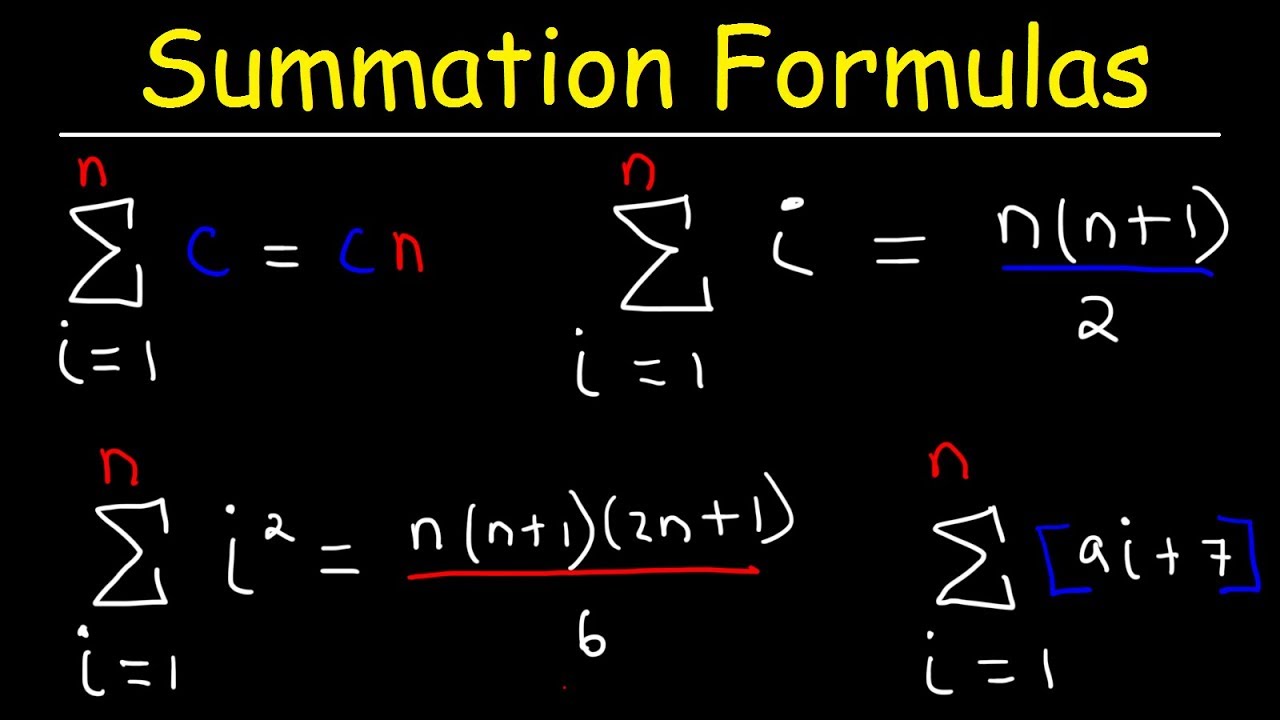
This calculus video tutorial provides a basic introduction into summation formulas and sigma notation. It explains how to find the sum using summation formulas for constants, i, i^2, and i^3.
Antiderivatives: https://www.youtube.com/watch?v=xaCPDMEkbig
Basic Integration Problems:
https://www.youtube.com/watch?v=zOxaUlRkFG0
Indefinite Integral:
https://www.youtube.com/watch?v=JTFMeSCxgcA
Definite Integral:
https://www.youtube.com/watch?v=Gc3QvUB0PkI
Differential Equations:
https://www.youtube.com/watch?v=H5tD_NtPDuU
_______________________________
Properties of Definite Integrals:
https://www.youtube.com/watch?v=QcHz3h81U-s
Rectilinear Motion Problems:
https://www.youtube.com/watch?v=LBmET4sH460
Sigma Notation - Calculus:
https://www.youtube.com/watch?v=XJkIaw2e1Pw
Riemann Sums - Area:
https://www.youtube.com/watch?v=YTKQswb60Pw
The Midpoint Rule:
https://www.youtube.com/watch?v=5XreKMJDJsg
________________________________
Finding Area - Limit Definition:
https://www.youtube.com/watch?v=ctEpKZyxqFU
Definite Integrals - Geometry:
https://www.youtube.com/watch?v=ghxEOz9rmwE
Fundamental Theorem - Part 1:
https://www.youtube.com/watch?v=aeB5BWY0RlE
Fundamental Theorem - Part 2:
https://www.youtube.com/watch?v=ns8N1UuXl4w
Net Change Theorem:
https://www.youtube.com/watch?v=df1Qr8pepx0
__________________________________
Final Exams and Video Playlists:
https://www.video-tutor.net/
Full-Length Videos and Worksheets:
https://www.patreon.com/MathSc....ienceTutor/collectio

This calculus video tutorial explains the concept of implicit differentiation and how to use it to differentiate trig functions using the product rule, quotient rule - fractions, and chain rule.
Derivatives - Fast Review: https://www.youtube.com/watch?v=5yfh5cf4-0w&t=1s
Derivatives - The Product Rule - f*g:
https://www.youtube.com/watch?v=17X5g9QArTc
Derivatives - The Quotient Rule:
https://www.youtube.com/watch?v=8jVDEcQ0wXk
Derivatives - The Chain Rule:
https://www.youtube.com/watch?v=HaHsqDjWMLU
Derivatives - Composite Functions:
https://www.youtube.com/watch?v=vNXjMTv4vHs
__________________________________
Implicit Differentiation:
https://www.youtube.com/watch?v=xbviQHhU1rA
Derivatives of Inverse Trig Functions:
https://www.youtube.com/watch?v=KbYW9FDm-Zk
Derivatives of Exponential Functions:
https://www.youtube.com/watch?v=yg_497u6JnA
Derivatives of Logarithmic Functions:
https://www.youtube.com/watch?v=Dp9sgIvaKPk
Logarithmic Differentiation:
https://www.youtube.com/watch?v=9z1Dz60mWcQ
___________________________________
Derivatives - Using Logarithms:
https://www.youtube.com/watch?v=VnB59SrT0PY
Derivatives of Inverse Functions:
https://www.youtube.com/watch?v=Hw6ltuCEtuU
Derivatives - Differentiation Rules:
https://www.youtube.com/watch?v=IvLpN1G1Ncg
Derivatives - Function Notations:
https://www.youtube.com/watch?v=7BK_mmYckmI
Derivatives - The Reciprocal Rule:
https://www.youtube.com/watch?v=dsqD5zg9hLY
_________________________________
Final Exams and Video Playlists:
https://www.video-tutor.net/
Full-Length Videos and Worksheets:
https://www.patreon.com/MathSc....ienceTutor/collectio

This physics video tutorial provides a basic introduction into center of mass. It explains how to find the center of mass in typical physics problems. This video contains a few examples of finding the center of mass of a system of masses along the x-direction and along the y-direction. In addition, it explains how to find where to place a massive load on a truck to move the truck's center of mass to the middle of the truck.
Impulse and Momentum:
https://www.youtube.com/watch?v=hODlmGK7pl8
Conservation of Momentum:
https://www.youtube.com/watch?v=Fp7D5D8Bqjc
Rocket Propulsion:
https://www.youtube.com/watch?v=kvAf-Xouj8s
Inelastic Collisions:
https://www.youtube.com/watch?v=C1XuwHLacao
Impulse Momentum Theorem:
https://www.youtube.com/watch?v=1WIECGg71WY
____________________________
Force-Time Graphs:
https://www.youtube.com/watch?v=Bv9ry123zck
Ballistic Pendulum Problem:
https://www.youtube.com/watch?v=PUNKqLkELbQ
Elastic Collisions:
https://www.youtube.com/watch?v=CFbo_nBdBco
2D Collision Problems:
https://www.youtube.com/watch?v=9YRgHikdcqs
Impulse & Momentum Test Review:
https://www.youtube.com/watch?v=FfaEbqmvKQA
_____________________________
Center of Mass - Calculus:
https://www.youtube.com/watch?v=SWu_i-19Rn0
Intro to Rotational Motion:
https://www.youtube.com/watch?v=WQ9AH2S8B6Y
Full-Length Videos and Worksheets:
https://www.patreon.com/MathSc....ienceTutor/collectio
Physics PDF Worksheets:
https://www.video-tutor.net/ph....ysics-basic-introduc
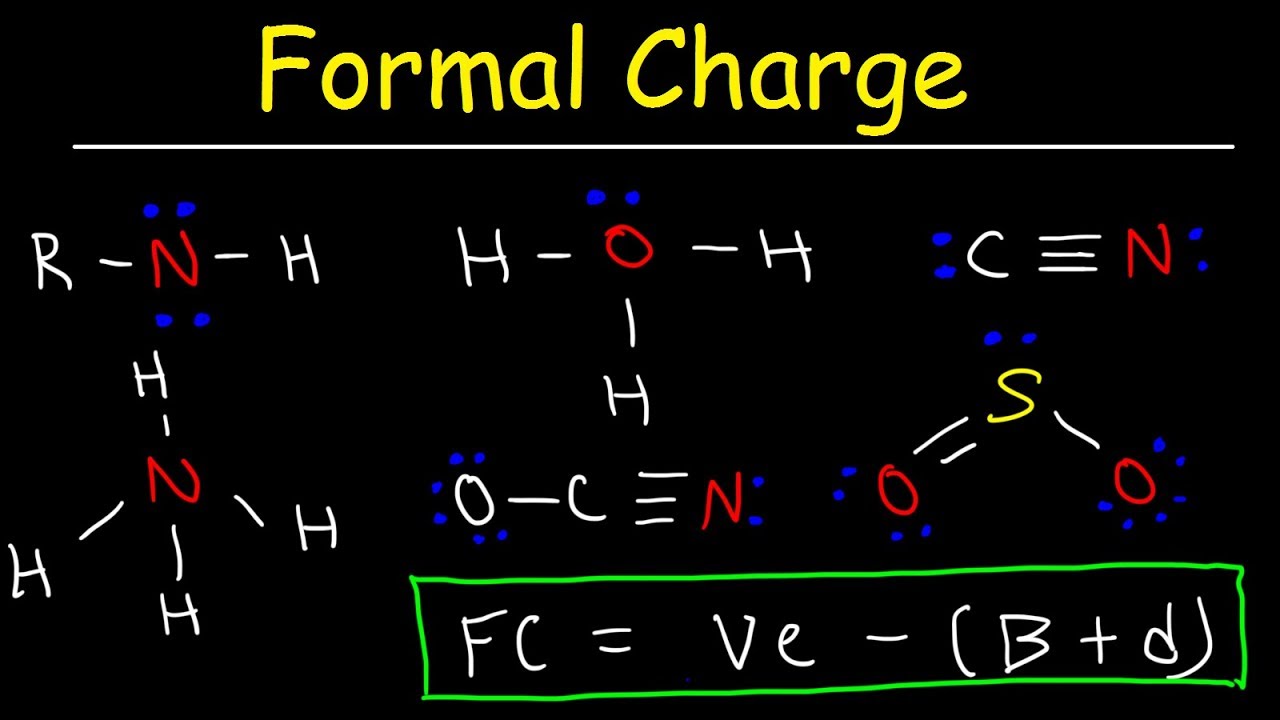
This chemistry video tutorial provides a basic introduction into how to calculate the formal charge of an atom or element in a lewis structure. This video is useful for students taking general chemistry or organic chemistry. This tutorial contains plenty of examples and practice problems so you can master using the formula / equation for calculating formal charge.
How To Draw Lewis Structures:
https://www.youtube.com/watch?v=NFZtjSeT3XE
VSEPR Theory:
https://www.youtube.com/watch?v=DBrq31w8vC4
Molecular Geometry:
https://www.youtube.com/watch?v=_Cw0_cJzkSI
Lewis Dot Structures:
https://www.youtube.com/watch?v=Ymf3kZePDnU
Lewis Structures of Ionic Compounds:
https://www.youtube.com/watch?v=xhItoqhHoEE
_________________________________
Octet Rule Exceptions:
https://www.youtube.com/watch?v=96L6_IwyHRM
Resonance Structures:
https://www.youtube.com/watch?v=9B5FGPDwX_E
Polar and Nonpolar Molecules:
https://www.youtube.com/watch?v=4ykSzYl_4vI
Formal Charge Calculations:
https://www.youtube.com/watch?v=R_SIjijCouE
Lewis Structures - Mega Review:
https://www.youtube.com/watch?v=PeY_sihSh8E
________________________________
Hybridization of Atomic Orbitals:
https://www.youtube.com/watch?v=pdJeQUd2g_4
Molecular Orbital Theory:
https://www.youtube.com/watch?v=6tB6E6R_XpQ
Dipole Dipole Forces of Attraction:
https://www.youtube.com/watch?v=zOvnu0KYyxo
Hydrogen Bonding:
https://www.youtube.com/watch?v=ZDjJOqOKeCI
Unit Cell Chemistry:
https://www.youtube.com/watch?v=HCWwRh5CXYU
_________________________________
Final Exams and Video Playlists:
https://www.video-tutor.net/
Full-Length Videos and Worksheets:
https://www.patreon.com/MathSc....ienceTutor/collectio
Formal Charge:
https://www.video-tutor.net/how-to-calculate-formal-charge.html
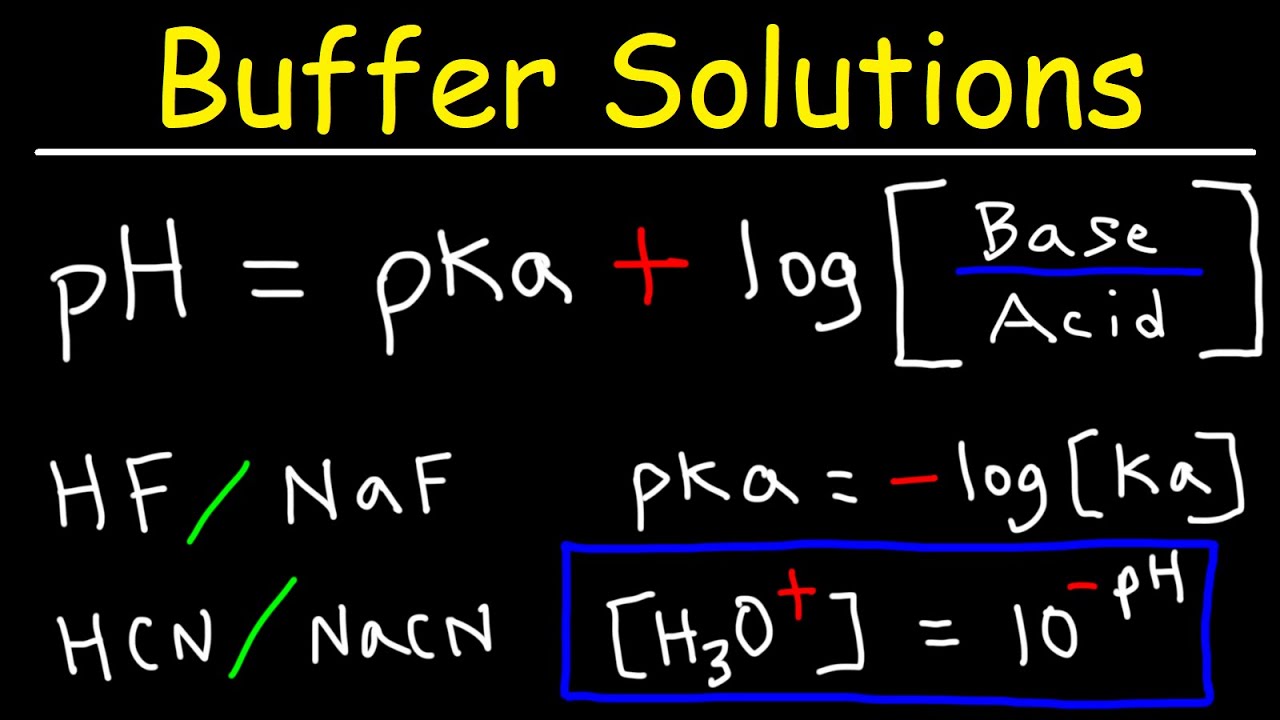
This chemistry video tutorial explains how to calculate the pH of a buffer solution using the henderson hasselbalch equation. It explains the concept, components, and function of a buffer solution. A buffer solution consist of a weak acid and its conjugate weak base counterpart. It's purpose is to maintain a relatively constant pH value. This video discusses the relationship between the pH and pKa values with the relative amounts of weak acid and weak base components in the buffer solution. This video contains plenty of examples and practice problems.
Get The Full 1 Hour 40 Min Video:
https://www.patreon.com/MathScienceTutor
PDF Worksheet - 16 Questions:
https://bit.ly/3QtcHST
Direct Link to The Full Video:
https://bit.ly/3jT4gUA
Chemistry PDF Worksheets:
https://www.video-tutor.net/ch....emistry-basic-introd
________________________________________
Full 1 Hour 40 Minute Video on YouTube:
https://www.youtube.com/watch?v=us_x9cbQs94
Join The YouTube Membership Program:
https://bit.ly/46xaQTR
General Chemistry 2 Final Exam Review:
https://www.youtube.com/watch?v=lSmJN1_uVpI
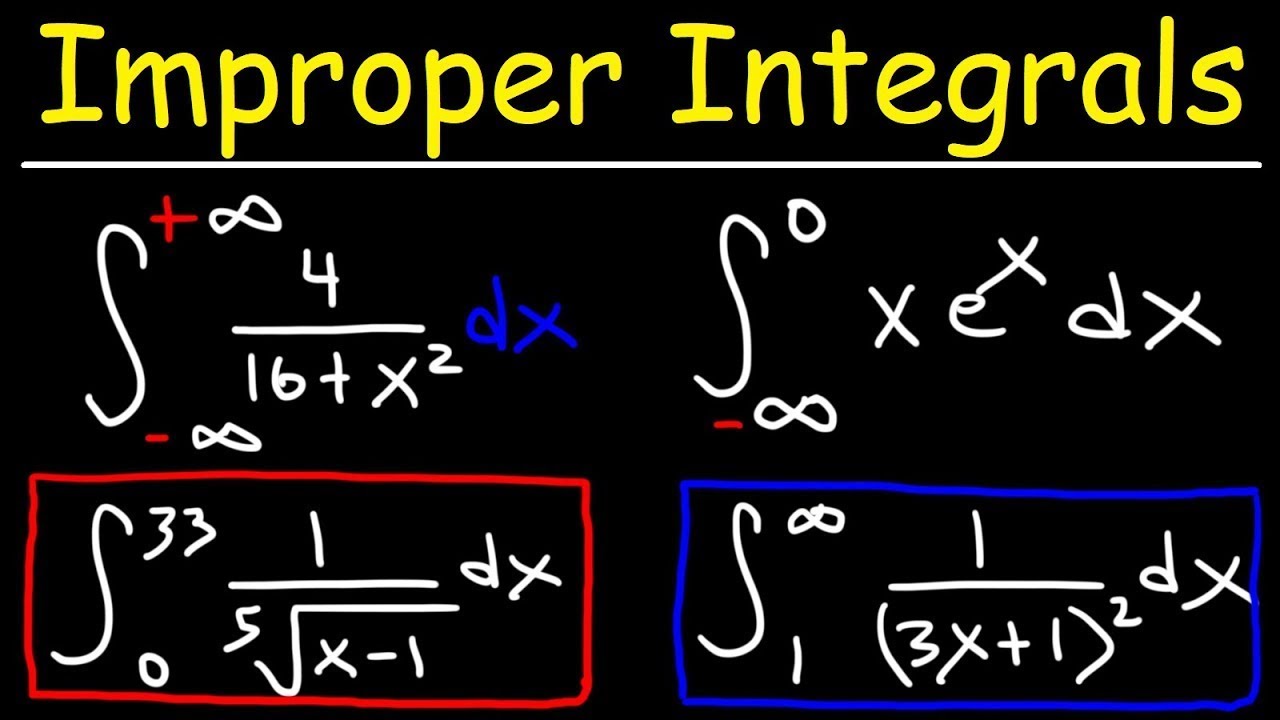
This calculus 2 video tutorial explains how to evaluate improper integrals. It explains how to determine if the integral is convergent or divergent by expressing the limit as it approaches infinity. It also explains how to determine if the integral is improper by identifying any vertical asymptotes or infinite discontinuites. This video contains plenty of examples and practice problems.
Get The Full 51 Minute Video on Patreon:
https://www.patreon.com/MathScienceTutor
Direct Link to The Full Video:
https://bit.ly/3haLP9Y
_______________________________
Full 51 Minute Video on Youtube:
https://www.youtube.com/watch?v=mbJ5AdNqptM
Join The Membership Program:
https://www.youtube.com/channe....l/UCEWpbFLzoYGPfuWUM
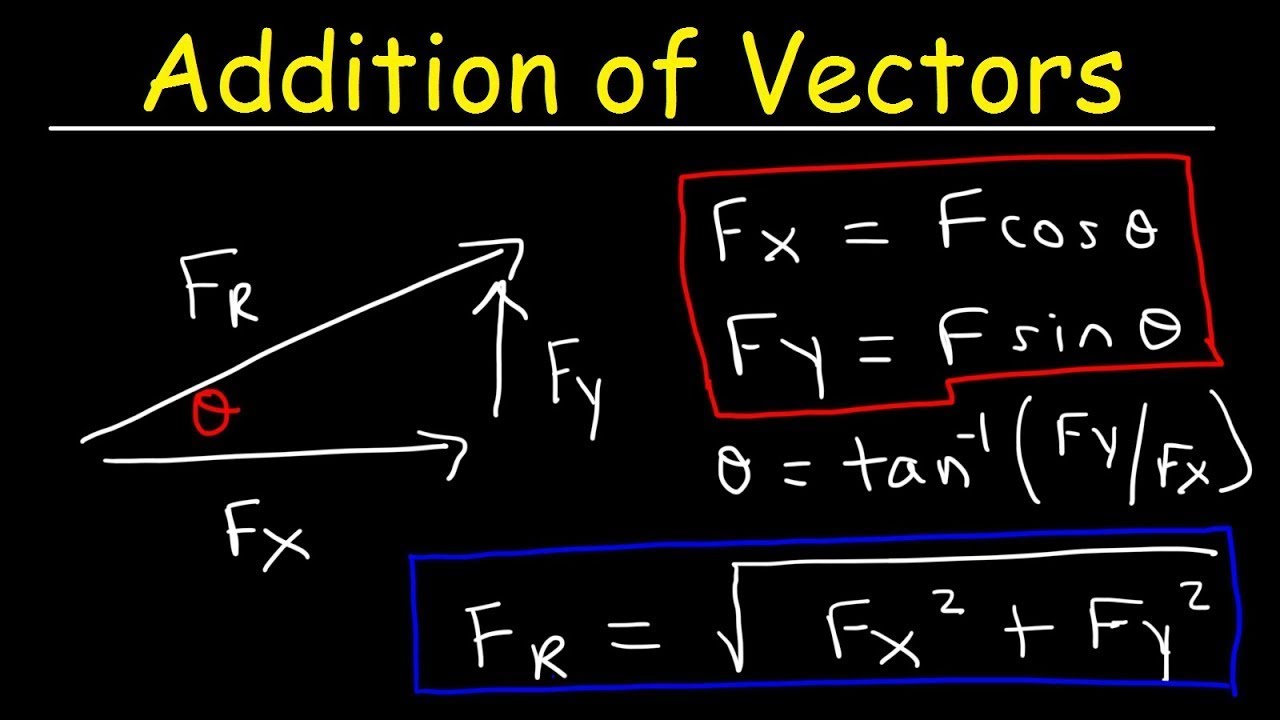
This physics video tutorial focuses on the addition of vectors by means of components analytically. It explains how to find the magnitude and direction of the resultant force vector. This video contains all of the formulas and equations needed to resolve a vector into its components and to use that in order to find the magnitude and direction angle of the resultant force vector. This video explains how to add 2 force vectors to get the resultant sum. This tutorial contains plenty of examples and practice problems.
Full 45 Minute Video on Patreon:
https://www.patreon.com/MathScienceTutor
Direct Link to The Full Video:
https://bit.ly/3GCN1zW
Physics PDF Worksheets:
https://www.video-tutor.net/ph....ysics-basic-introduc
________________________________
Join The Program:
https://bit.ly/46xaQTR
Full Video on YouTube:
https://www.youtube.com/watch?v=UCqj--bKhzo
Addition of Vectors - Notes:
https://www.video-tutor.net/ad....dition-of-vectors.ht
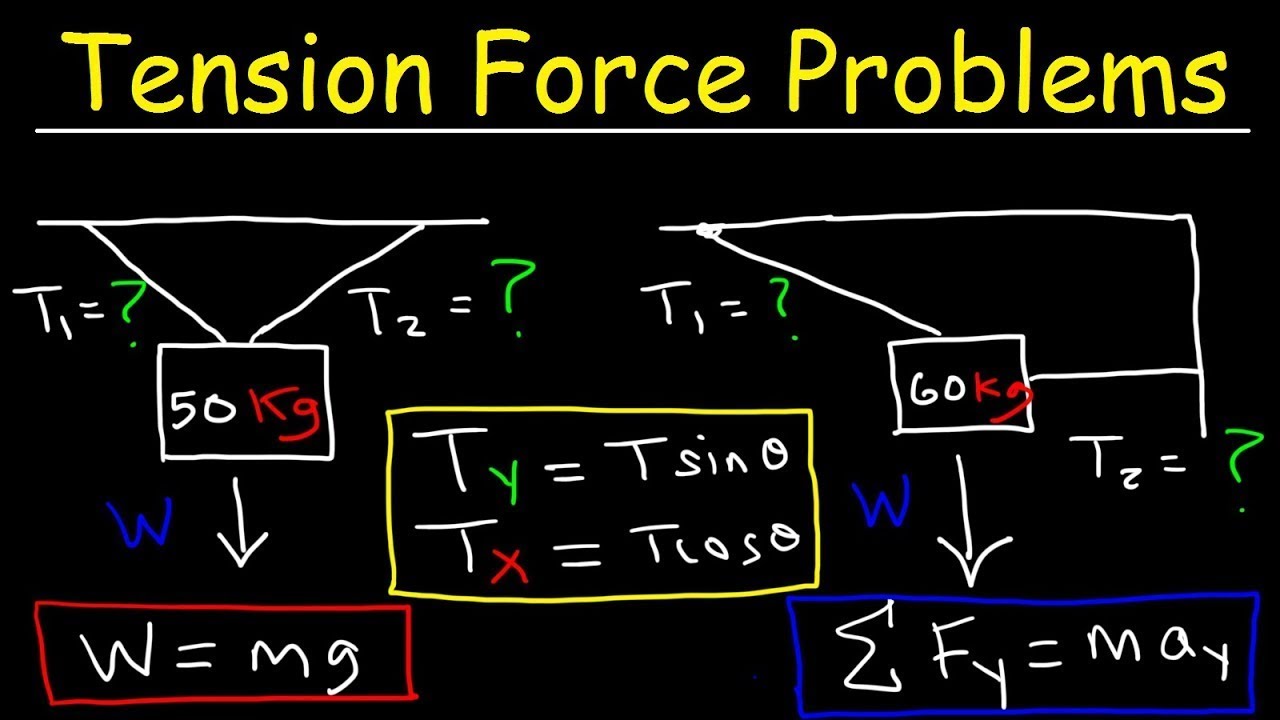
This physics video tutorial explains how to solve tension force problems. It explains how to calculate the tension force in a rope for a object descending with a downward acceleration using newton's laws of motion. it also discusses how to use free body diagrams and the weight force to calculate the tension force in two ropes at different angles. There's another tension force physics problem that asks you to calculate the tension in two cables / ropes where one rope is in the horizontal direction and the second rope is at an angle.
Access The Full 1 Hour Video:
https://www.patreon.com/MathScienceTutor
Direct Link to The Full Video:
https://bit.ly/3vJhW7a
PDF Worksheet - 9 Problems:
https://bit.ly/3CqSIye
Physics PDF Worksheets:
https://www.video-tutor.net/ph....ysics-basic-introduc
________________________________
YouTube Membership:
https://bit.ly/46xaQTR
Full 1 Hour Video on YouTube:
https://www.youtube.com/watch?v=cN3g5rj8o_Q
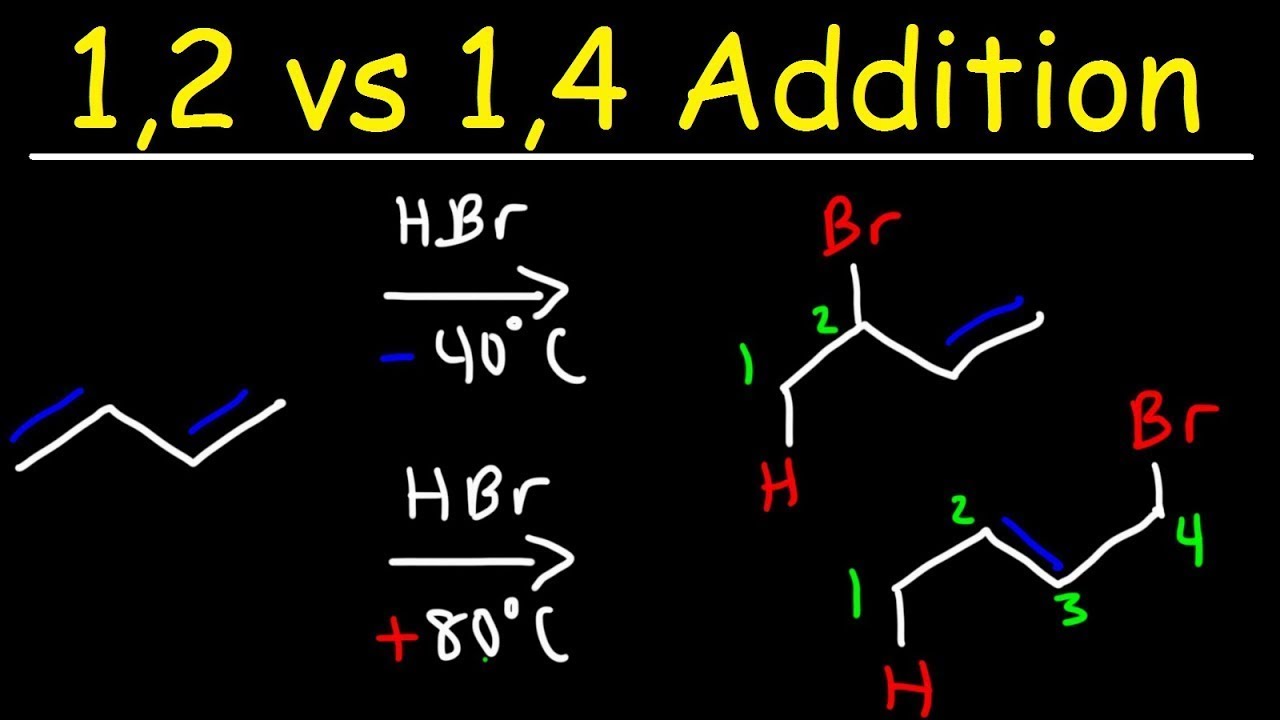
This organic chemistry video tutorial provides a basic introduction into the 1,2 addition reaction and the 1,4 addition of HBr to 1,3-butadiene. The kinetic product is the major product that forms faster at a low temperature. The thermodynamic product is the most stable alkene that forms as the major product at high temperatures.
Access The Full 40 Minute Video on Patreon:
https://www.patreon.com/MathScienceTutor
Direct Link to The Full Video on Patreon:
https://bit.ly/3mwEi8R
Full 40 Minute Video:
https://www.youtube.com/watch?v=BlTDF_7IaBA
Join My Youtube Membership Program:
https://www.youtube.com/channe....l/UCEWpbFLzoYGPfuWUM

This organic chemistry video tutorial provides a basic introduction into hydrocarbons. It explains the difference between aliphatic hydrocarbons and aromatic hydrocarbons as well as saturated hydrocarbons and unsaturated hydrocarbons. It covers the difference between alkanes, alkenes, alkynes, and aromatic rings such as benzene also known as an arene.
Organic Chemistry - Basic Introduction:
https://www.youtube.com/watch?v=B_ketdzJtY8
Acids and Bases - Basic Intro:
https://www.youtube.com/watch?v=owVZiKnnPME
Lewis Acids and Bases:
https://www.youtube.com/watch?v=rmaLsdFQ2KQ
Nucleophiles and Electrophiles:
https://www.youtube.com/watch?v=9QZj-F-5PV4
Constitutional Isomers:
https://www.youtube.com/watch?v=48rsf1pOhfA
_______________________________
IUPAC Nomenclature of Alkanes:
https://www.youtube.com/watch?v=TYU_JluleME
Naming Cycloalkanes:
https://www.youtube.com/watch?v=vSxZm_91GT0
Naming Bicyclic Compounds:
https://www.youtube.com/watch?v=L8wEn7sD_SA
Naming Ethers:
https://www.youtube.com/watch?v=MZbgA0w2Ts4
Naming Alcohols:
https://www.youtube.com/watch?v=kggg1dqvxX8
Naming Alkyl Halides:
https://www.youtube.com/watch?v=595ENX3iqEE
________________________________
Naming Amines:
https://www.youtube.com/watch?v=Y6AzMr0Fn3Y
Van Der Waal Forces:
https://www.youtube.com/watch?v=c3g3maYegBk
Boiling Point of Organic Compounds:
https://www.youtube.com/watch?v=Qk_uPsq10TI
Organic Chemistry PDF Worksheets:
https://www.video-tutor.net/orgo-chem.html
Organic Chemistry Exam 1 Playlist:
https://bit.ly/3kJnNXU
Full-Length Videos and Worksheets:
https://www.patreon.com/MathSc....ienceTutor/collectio

This organic chemistry tutorial video discusses the difference between a homolytic bond cleavage and a heterolytic bond cleavage.
Organic Chemistry - Basic Introduction: https://www.youtube.com/watch?v=B_ketdzJtY8
Acids and Bases - Basic Intro:
https://www.youtube.com/watch?v=owVZiKnnPME
Resonance Structures:
https://www.youtube.com/watch?v=OqsOIp5UuME
IUPAC Nomenclature of Alkanes:
https://www.youtube.com/watch?v=TYU_JluleME
Van Der Waal Forces:
https://www.youtube.com/watch?v=c3g3maYegBk
_______________________________
Boiling Point of Organic Compounds:
https://www.youtube.com/watch?v=Qk_uPsq10TI
Boiling Point - Test Question:
https://www.youtube.com/watch?v=KsCAY_66jsY
Melting Points of Alkanes:
https://www.youtube.com/watch?v=WXFzlDBV_kY
Physical Properties of Alkanes:
https://www.youtube.com/watch?v=F2x8wMWPpec
Water Solubility of Vitamins:
https://www.youtube.com/watch?v=BOady1INhxo
_______________________________
Newman Projections:
https://www.youtube.com/watch?v=_CCHTptAhLQ
Organic Chemistry PDF Worksheets:
https://www.video-tutor.net/orgo-chem.html
Organic Chemistry Exam 1 Playlist:
https://bit.ly/3kJnNXU
Full-Length Videos and Worksheets:
https://www.patreon.com/MathSc....ienceTutor/collectio
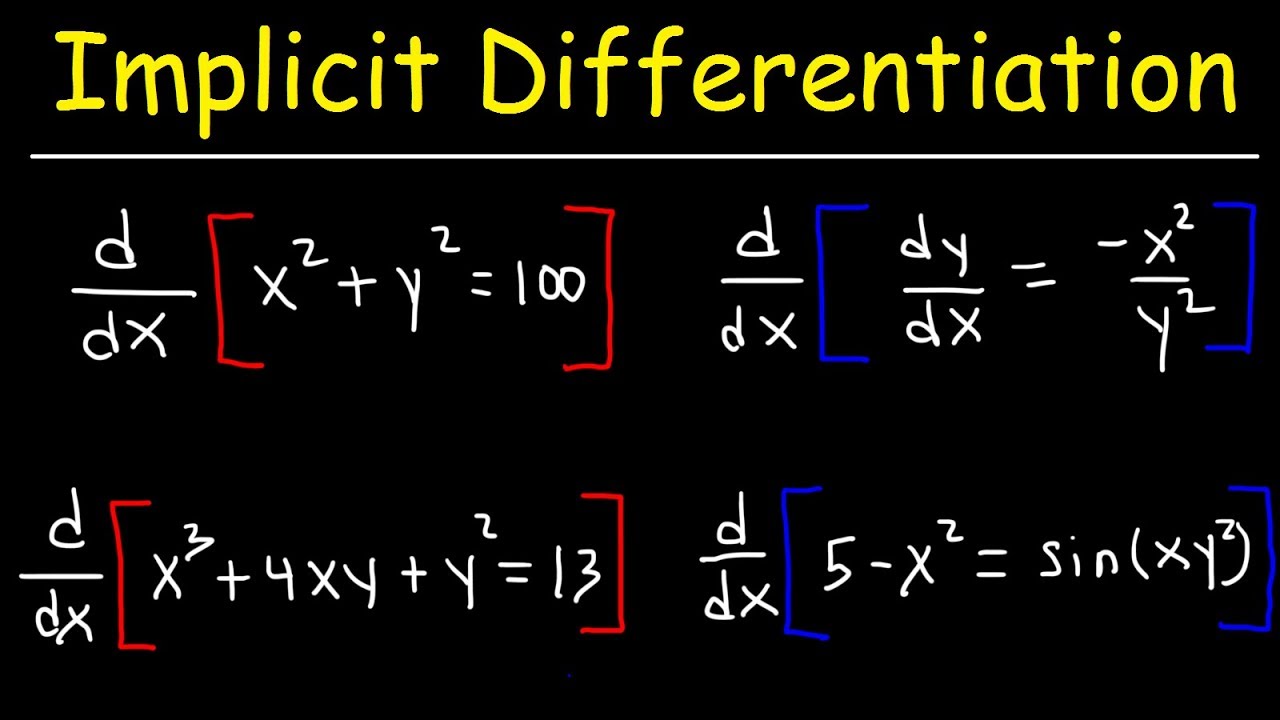
This calculus video tutorial provides a basic introduction into implicit differentiation. it explains how to find dy/dx and evaluate it at a point. It also explains how to find the slope of a curve given the x and y coordinates. In addition, it explains how to find d^2y/dx^2, the second derivative of the function using implicit differentiation. You need to be familiar with the product rule, chain rule, and quotient rule for derivatives.
Derivatives - Fast Review: https://www.youtube.com/watch?v=5yfh5cf4-0w&t=1s
Derivatives - The Product Rule - f*g:
https://www.youtube.com/watch?v=17X5g9QArTc
Derivatives - The Quotient Rule:
https://www.youtube.com/watch?v=8jVDEcQ0wXk
Derivatives - The Chain Rule:
https://www.youtube.com/watch?v=HaHsqDjWMLU
Derivatives - Composite Functions:
https://www.youtube.com/watch?v=vNXjMTv4vHs
__________________________________
Implicit Differentiation:
https://www.youtube.com/watch?v=xbviQHhU1rA
Derivatives of Inverse Trig Functions:
https://www.youtube.com/watch?v=KbYW9FDm-Zk
Derivatives of Exponential Functions:
https://www.youtube.com/watch?v=yg_497u6JnA
Derivatives of Logarithmic Functions:
https://www.youtube.com/watch?v=Dp9sgIvaKPk
Logarithmic Differentiation:
https://www.youtube.com/watch?v=9z1Dz60mWcQ
___________________________________
Derivatives - Using Logarithms:
https://www.youtube.com/watch?v=VnB59SrT0PY
Derivatives of Inverse Functions:
https://www.youtube.com/watch?v=Hw6ltuCEtuU
Derivatives - Differentiation Rules:
https://www.youtube.com/watch?v=IvLpN1G1Ncg
Derivatives - Function Notations:
https://www.youtube.com/watch?v=7BK_mmYckmI
Derivatives - The Reciprocal Rule:
https://www.youtube.com/watch?v=dsqD5zg9hLY
_________________________________
Final Exams and Video Playlists:
https://www.video-tutor.net/
Full-Length Videos and Worksheets:
https://www.patreon.com/MathSc....ienceTutor/collectio

This video tutorial provides a basic intro into trigonometry. It explains how to evaluate trigonometric functions like sin, cos, and tan using soh cah toa and right triangle trigonometry. It explains how to use reference angles and coterminal angles to evaluate trig functions such as sec, csc, and cot.
Access Full-Length Premium Videos: https://www.patreon.com/MathScienceTutor
_____________________________________________________________________________________________
Trigonometry - Basic Introduction: https://www.youtube.com/watch?v=g8VCHoSk5_o
Introduction to Angles: https://www.youtube.com/watch?v=oxhXz9_uyiM
Radians and Degrees: https://www.youtube.com/watch?v=JmLN3QxshlE
What Exactly Is a Radian? https://www.youtube.com/watch?v=CHCWXAkozHM
Coterminal Angles: https://www.youtube.com/watch?v=RkMhGwp8pv4
Decimal Degrees to DMS: https://www.youtube.com/watch?v=W9kousU6AI0
Arc Length of a Circle and Sector Area: https://www.youtube.com/watch?v=C9z3FXS7nlo
Linear Speed and Angular Velocity: https://www.youtube.com/watch?v=FgTvlGm9jgE
Clock to Angle Problems: https://www.youtube.com/watch?v=LEHYr0XfSyI
The Unit Circle: https://www.youtube.com/watch?v=57VrEiEPD1I
How To Remember The Unit Circle Fast: https://www.youtube.com/watch?v=gdJq1QunN-o
______________________________________________________________________________________________
Reference Angles: https://www.youtube.com/watch?v=E-xFXpVo14o
The Six Trigonometric Functions: https://www.youtube.com/watch?v=WvoFgL4P_rw
How To Solve Right Triangles: https://www.youtube.com/watch?v=i3bjEOA5_zc
Reciprocal Identities: https://www.youtube.com/watch?v=UeuuFqbTYgA
Quotient Identities: https://www.youtube.com/watch?v=7PVKbyLFY5U
Even and Odd Trigonometric Identities: https://www.youtube.com/watch?v=5p8hokJ3Cqo
Pythagorean Identities: https://www.youtube.com/watch?v=TpADRvW8zm8
The Pythagorean Theorem: https://www.youtube.com/watch?v=pbf4lcJhIfI
Trig Functions - Periodic Properties: https://www.youtube.com/watch?v=8Z60_yXX4xA
Trigonometry For Beginners: https://www.youtube.com/watch?v=PUB0TaZ7bhA
The Exact Value of Trig Functions: https://www.youtube.com/watch?v=bTdjcvm6pPo
Special Right Triangles - 30 60 90: https://www.youtube.com/watch?v=p70UBGCHZrQ
Special Right Triangles - 45 45 90: https://www.youtube.com/watch?v=xzMirNSv1d0
Special Patterns - Pythagorean Theorem: https://www.youtube.com/watch?v=MeBcJPdjeI4
Cofunction Identities: https://www.youtube.com/watch?v=35fxto48HZY
______________________________________________________________________________________________
Angle of Elevation Problems: https://www.youtube.com/watch?v=uyKvSe6Ltgs
Evaluating Trig Functions Given a Point: https://www.youtube.com/watch?v=P8rdY2ahkms
A Simple Way to Remember Trig Values: https://www.youtube.com/watch?v=YDuPdLL9GGo
Exact Value of 5 Remaining Trig Functions: https://www.youtube.com/watch?v=H7GwDntpGUY
Evaluate Trig Functions - Reference Angles: https://www.youtube.com/watch?v=V8LEHEzdU2U
How To Graph Trig Functions: https://www.youtube.com/watch?v=fo_q9mEAFp4
How To Graph Sine and Cosine: https://www.youtube.com/watch?v=bm8oYKKlCXI
Evaluating Inverse Trig Functions: https://www.youtube.com/watch?v=jt7p-mCC0ng
Finding The Missing Side of a Triangle: https://www.youtube.com/watch?v=tielQ3ejh70
Finding The Missing Angle of a Triangle: https://www.youtube.com/watch?v=4Dv5IFqATrc
Two Triangle Trigonometry Problems: https://www.youtube.com/watch?v=OTP885mApV8
Bearings Vs Direction - Word Problems: https://www.youtube.com/watch?v=jyi5zW8mavs
Bearing Problems and Navigation: https://www.youtube.com/watch?v=cSKAqfGXOPI
Two Triangle Problems - More Examples: https://www.youtube.com/watch?v=QM1T6eL8t48
_____________________________________________________________________________________________
Verifying Trig Identities: https://www.youtube.com/watch?v=Rf05H8ogHLg
Trigonometry Final Exam Review: https://www.youtube.com/watch?v=OAsbx4TEnL0
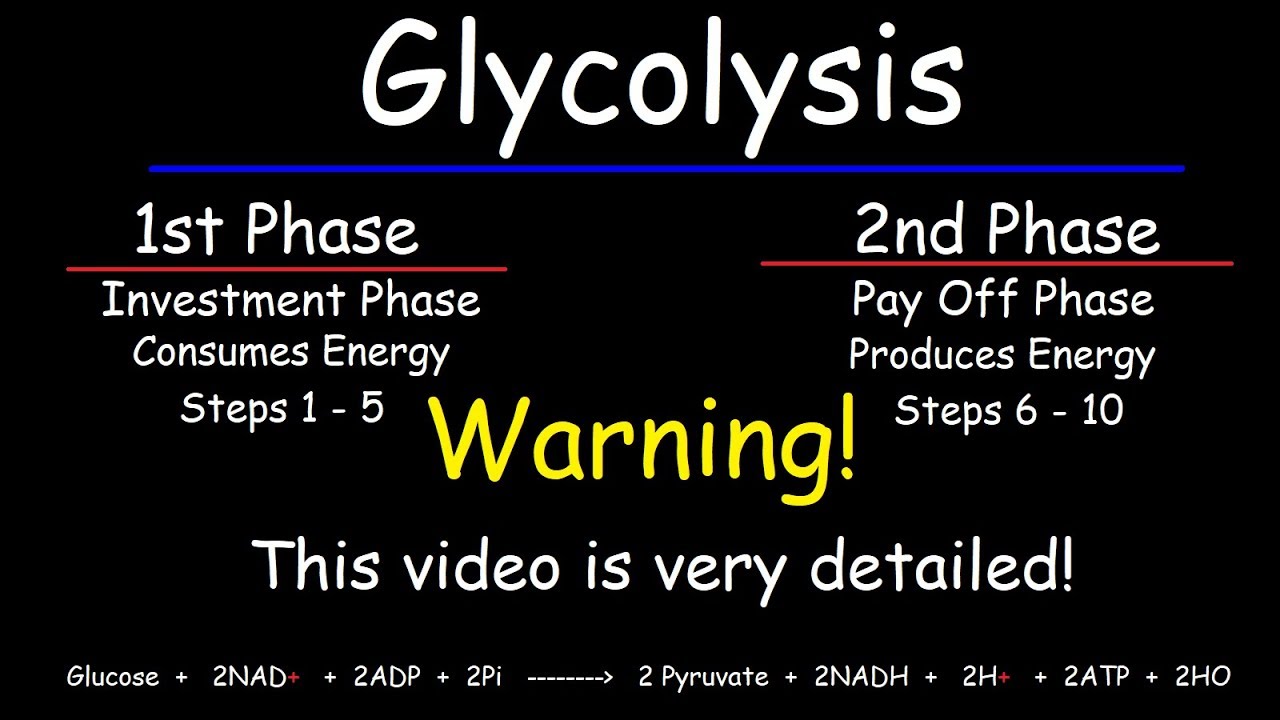
This biochemistry video tutorial provides a basic introduction into glycolysis which can be divided into two phases - the investment phase and the pay off phase. Glycosis converts glucose into 2 molecules of pyruvate and produces high energy molecules such as ATP and NADH in the process. It discusses the nomenclature of the molecules and enzymes involved in each step. Enzymes mentioned include the kinase enzyme, isomerase, PFK-1, aldolase, enolase, and mutase enzymes.
My Website: https://www.video-tutor.net
Patreon Donations: https://www.patreon.com/MathScienceTutor
Amazon Store: https://www.amazon.com/shop/th....eorganicchemistrytut
Subscribe:
https://www.youtube.com/channe....l/UCEWpbFLzoYGPfuWUM
Disclaimer: Some of the links associated with this video may generate affiliate commissions on my behalf. As an amazon associate, I earn from qualifying purchases that you may make through such affiliate links.
This organic chemistry video tutorial explains how nucleophilic substitution reactions work. It focuses on the SN1 and Sn2 reaction mechanism and it provides plenty of examples and practice problems. The Sn2 reaction is a second order nucleophilic substitution reaction where the rate is dependent on the concentration of the substrate / alkyl halide and the nucleophile. SN2 reactions occur with inversion of configuration and work well with methyl and primary substrates. It's a concerted reaction mechanism that occurs in a single step. The rate law for the SN1 reaction is given as well. SN1 reactions proceed via a carbocation intermediate and carbocation rearrangements such as the hydride shift and the methyl shift are possible. SN1 reactions work well with tertiary alkyl halide substrates due to carbocation stability. Carbocations are stabilized by means of hyperconjugation and the inductive effect. SN1 reactions will produce an unequal racemic mixture. The stereochemistry of both reaction mechanisms are discussed in detail. SN1 reactions work well with polar protic solvents but SN2 reactions work better in polar aprotic solvents. Solvolysis reactions are sn1 reactions where the nucleophile is the same as the solvent.
Stereochemistry R/S Configuration: https://www.youtube.com/watch?v=yzfcrwJ37kI
Optical Activity & Specific Rotation:
https://www.youtube.com/watch?v=duGxp_XZzvw
SN1, SN2, E1, E2 Reaction Mechanisms:
https://www.youtube.com/watch?v=hz-fSXifP9w
SN2 Reaction Mechanisms:
https://www.youtube.com/watch?v=k_spZVJtzFE
SN2 - Test Question:
https://www.youtube.com/watch?v=Ci8f9FjEbqQ
_______________________________
SN1 Reaction Mechanisms:
https://www.youtube.com/watch?v=rRAKyR7hX-U
Carbocation Stability - Hyperconjugation:
https://www.youtube.com/watch?v=5BSQG2sbrQw
Carbanion Stability:
https://www.youtube.com/watch?v=B2Ntf951Ztg
Protic Vs Aprotic Solvents:
https://www.youtube.com/watch?v=w7yVVLSQ9CU
E1 Ring Expansion:
https://www.youtube.com/watch?v=M1ZIXVN7GyE
E2 - Test Question:
https://www.youtube.com/watch?v=bTS-mINzs2U
________________________________
E2 Stereochemistry - Newman Projections:
https://www.youtube.com/watch?v=_H7ANeZ4iL8
SN1, SN2, E1, E2 - Practice Test:
https://www.youtube.com/watch?v=qTc2uud7TVU
Organic Chemistry PDF Worksheets:
https://www.video-tutor.net/orgo-chem.html
Organic Chemistry 1 Exam 2 Playlist:
https://bit.ly/3PKEApB
Full-Length Videos and Worksheets:
https://www.patreon.com/MathSc....ienceTutor/collectio
This video tutorial explains the rules behind significant figures. It shows you how to round decimals to the appropriate number of sig figs and how to tell which digit is certain and uncertain.
Significant Figures - A Fast Review: https://www.youtube.com/watch?v=l2yuDvwYq5g
How To Round Numbers Using Sig Figs:
https://www.youtube.com/watch?v=fxdYta_Olv0
More Examples on Significant Figures:
https://www.youtube.com/watch?v=9WFxkxFXb20
Sig Figs - Add, Subtract, Multiply and Divide:
https://www.youtube.com/watch?v=BmeImtwhfj8
______________________________________
Unit Conversion Mega Review:
https://www.youtube.com/watch?v=eK8gXP3pImU
Greek Alphabet Symbol List:
https://www.youtube.com/watch?v=_AWZZP3J5Nw
How To Calculate Your GPA:
https://www.youtube.com/watch?v=qYHsThZWydY
Student Loan Calculation:
https://www.youtube.com/watch?v=_KRBqpnR0xs
How To Save Money & Time In College:
https://www.youtube.com/watch?v=yNO02qfMSwI
______________________________________
General Chemistry - For Beginners:
https://www.youtube.com/watch?v=-KfG8kH-r3Y
Organic Chemistry - Basic Introduction:
https://www.youtube.com/watch?v=B_ketdzJtY8
Physics - Basic Introduction:
https://www.youtube.com/watch?v=b1t41Q3xRM8
Algebra For Beginners:
https://www.youtube.com/watch?v=MHeirBPOI6w
Trigonometry - For Beginners:
https://www.youtube.com/watch?v=PUB0TaZ7bhA
_____________________________________
SAT Math Part 1:
https://www.youtube.com/watch?v=fTGuTEQCsZY
ACT Math Test Prep:
https://www.youtube.com/watch?v=SsA7rZ8kczM
GRE Math Test Prep:
https://www.youtube.com/watch?v=z6lbrzaCbdk
Final Exams and Video Playlists:
https://www.video-tutor.net/
Full-Length Videos and Worksheets:
https://www.patreon.com/MathSc....ienceTutor/collectio
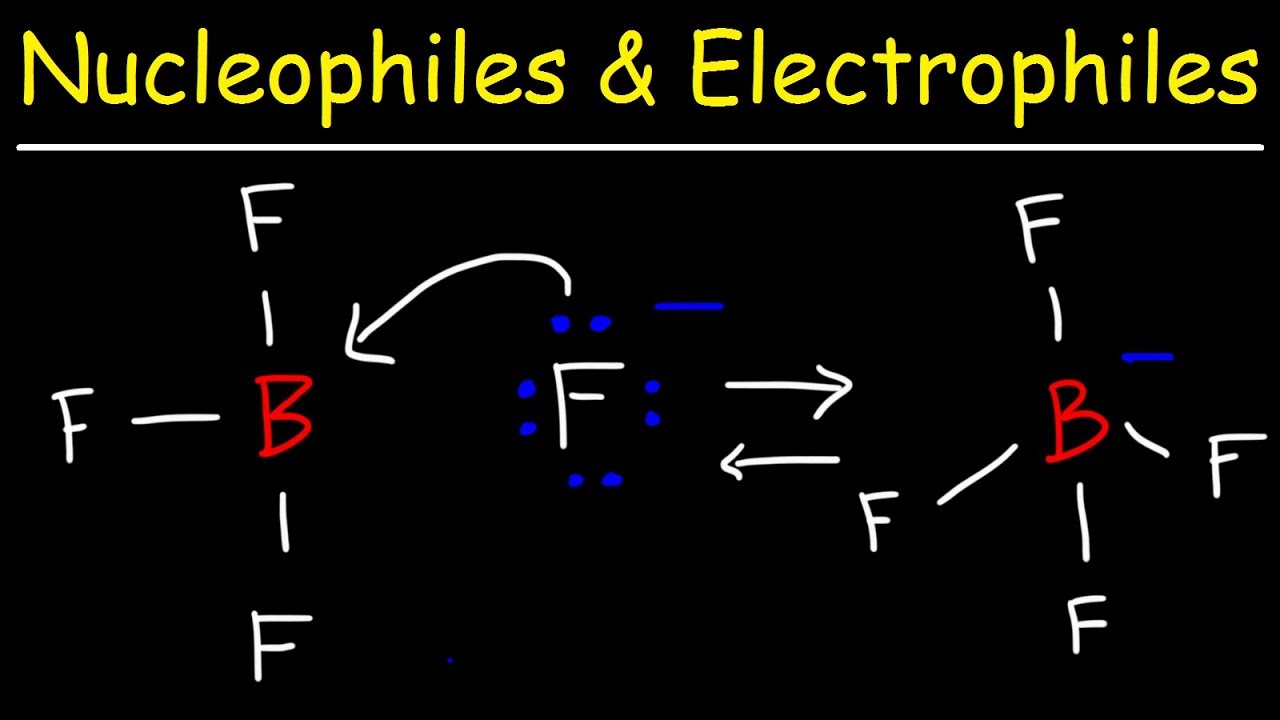
This organic chemistry video tutorial provides a basic introduction into nucleophiles and electrophiles. Nucleophiles are lewis bases and electrophiles are lewis acids.
Organic Chemistry - Basic Introduction: https://www.youtube.com/watch?v=B_ketdzJtY8
Acids and Bases - Basic Intro:
https://www.youtube.com/watch?v=owVZiKnnPME
Lewis Acids and Bases:
https://www.youtube.com/watch?v=rmaLsdFQ2KQ
Hydrocarbons:
https://www.youtube.com/watch?v=z5hQ8iZZ8dU
Constitutional Isomers:
https://www.youtube.com/watch?v=48rsf1pOhfA
_______________________________
IUPAC Nomenclature of Alkanes:
https://www.youtube.com/watch?v=TYU_JluleME
Naming Cycloalkanes:
https://www.youtube.com/watch?v=vSxZm_91GT0
Naming Bicyclic Compounds:
https://www.youtube.com/watch?v=L8wEn7sD_SA
Naming Ethers:
https://www.youtube.com/watch?v=MZbgA0w2Ts4
Naming Alcohols:
https://www.youtube.com/watch?v=kggg1dqvxX8
Naming Alkyl Halides:
https://www.youtube.com/watch?v=595ENX3iqEE
________________________________
Naming Amines:
https://www.youtube.com/watch?v=Y6AzMr0Fn3Y
Van Der Waal Forces:
https://www.youtube.com/watch?v=c3g3maYegBk
Boiling Point of Organic Compounds:
https://www.youtube.com/watch?v=Qk_uPsq10TI
Organic Chemistry PDF Worksheets:
https://www.video-tutor.net/orgo-chem.html
Organic Chemistry Exam 1 Playlist:
https://bit.ly/3kJnNXU
Full-Length Videos and Worksheets:
https://www.patreon.com/MathSc....ienceTutor/collectio

This algebra 2 / precalculus math video tutorial explains the rules and properties of logarithms. It shows you how to condense and expand a logarithmic expression in addition to graphing and solving logarithmic equations.
Logarithms - The Easy Way!
https://www.youtube.com/watch?v=kqVpPSzkTYA
Log to Exponential Form:
https://www.youtube.com/watch?v=f0C1KL7GkqY
Change of Base Formula:
https://www.youtube.com/watch?v=FFm-zaFW_X4
Change of Base Log Problem:
https://www.youtube.com/watch?v=p7hD9VdXv9U
Properties of Logarithms:
https://www.youtube.com/watch?v=Jtv9Lnf7Zw8
____________________________________
Expanding Logarithmic Expressions:
https://www.youtube.com/watch?v=OIz-5MyJA3g
Condensing Logarithmic Expressions:
https://www.youtube.com/watch?v=luRrOlsB4cY
Natural Logarithms:
https://www.youtube.com/watch?v=daUlTsnCNRQ
Solving Exponential Equations:
https://www.youtube.com/watch?v=9tutJ5xrRwg
Exponential Equations - Quadratic Form:
https://www.youtube.com/watch?v=yNgmVu0R_T8
_______________________________________
Solving Logarithmic Equations:
https://www.youtube.com/watch?v=fnhFneOz6n8
Graphing Logarithmic Functions:
https://www.youtube.com/watch?v=-nptxS9rZNA
Graphing Exponential Functions:
https://www.youtube.com/watch?v=DASfP8KAyvs
Compound Interest Word Problems:
https://www.youtube.com/watch?v=Hn0eLcOSQGw
Logarithms Practice Problems:
https://www.youtube.com/watch?v=7DVbQKI600k
_______________________________________
Final Exams and Video Playlists:
https://www.video-tutor.net/
Full-Length Videos and Worksheets:
https://www.patreon.com/MathSc....ienceTutor/collectio
![The Distributive Property [Introduction]](https://i.ytimg.com/vi/Fv-QOswpN1Y/maxresdefault.jpg)
The distributive property of multiplication over addition is a(b+c)=ab+ac.
The equality of both sides allows us to move in either direction.
In one direction you will generally be told to "distribute" while the other direction is tied with "factoring." It can be hard to associate all these math terms together, but this video attempts to provide simple examples using the distributive property in both directions.
#DistributiveProperty #JoeCMath
0:00 Introduction
0:35 Distribute multiplication over addition example
1:22 Factoring using the distributive property
2:37 Consider subscribing
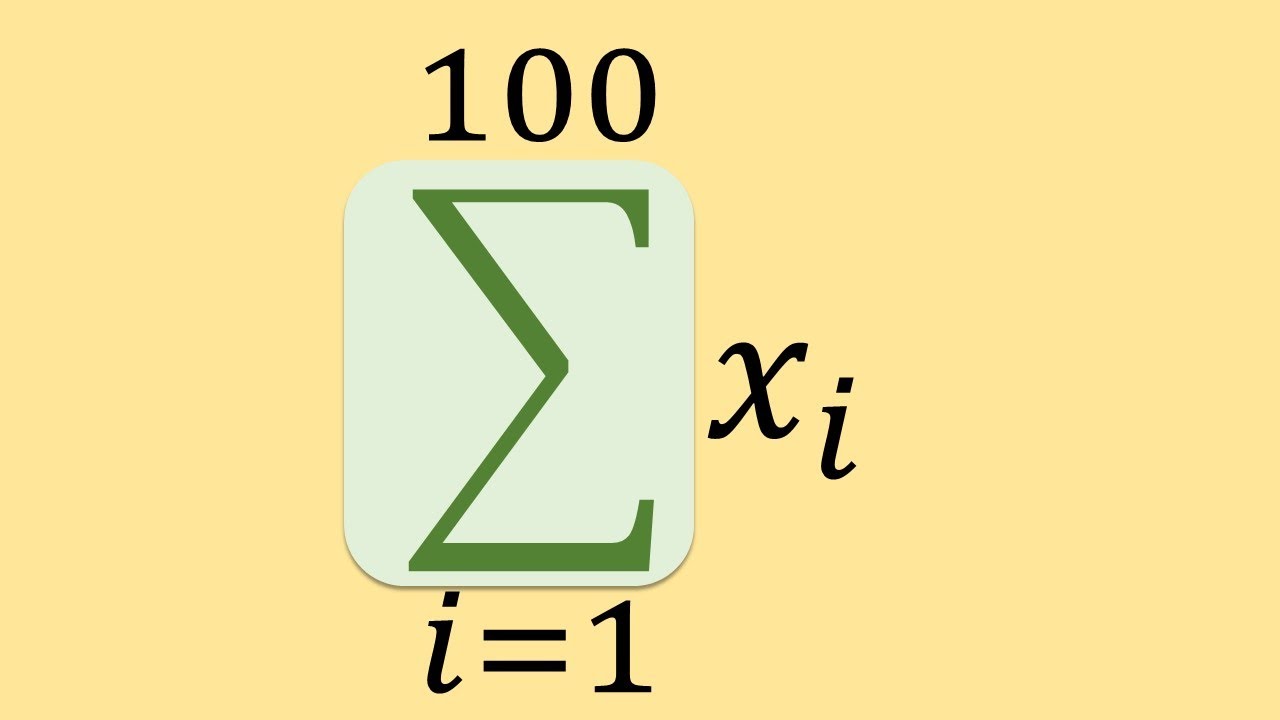
Summations (sigma notation) is used to represent a large sum of terms that follow a pattern. In calculus you will learn about series, which are sums with an infinite number of terms. But before you get to that, you need to understand the basic notation.
A common example provided in the video is the sum of 1 through 100. Also, a short introduction to the sum of 1 through some positive natural number n is discussed.
0:00 Introduction
0:09 Basic components of summation notation
0:37 Basic Example: Summing i from 1 to 3
1:27 How summation notation compacts large sums
1:56 Example: Summing i^2 from 1 to 5
2:43 Summing natural numbers from 1 to n
3:50 Using closed form solution to sum from 1 to 100
4:40 Warnings for things I didn't talk about
4:45 Any letter can be your index of summation
5:10 You can have a sum of variables
5:33 You can sum over sets
6:03 Hammering in the message
#summation
#sigmanotation
#sums
#joecmath
#calculus
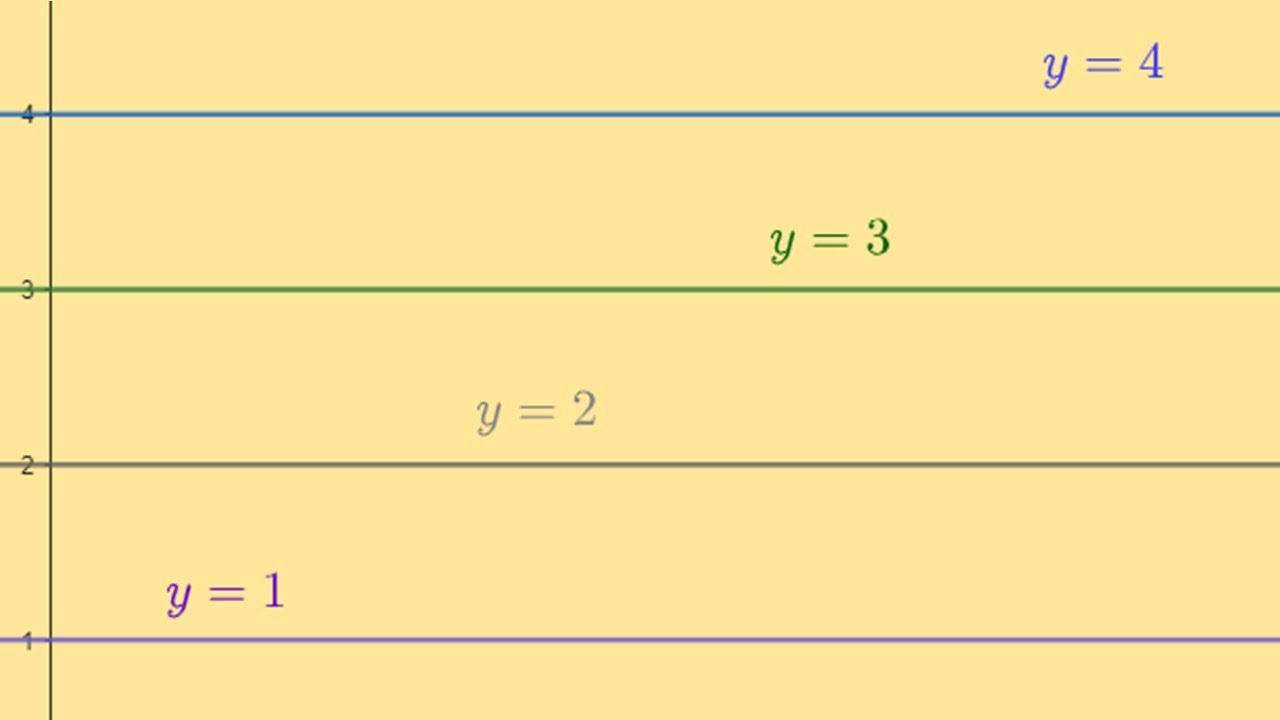
Graphing a horizontal line of the form y=a where "a" is as easy as finding the value "a" on the y-axis and drawing a horizontal line at that location. It can be easy to confuse y=a with x=a, but remember that y=a is the equation for a horizontal line.
Some images made using Geogebra.
#HorizontalLines
#Graphing
#JoeCMath
0:00 Introduction
0:09 Graphing y=1
1:41 Graphing y=-2, y=-1, y=0, and y=2
2:00 Every subscription matters

Hi, this is a new kids video about the New Year and his different traditions. Let's explore how different cultures welcome the New Year in their own unique ways. So if you want to know how to celebrate New Year, watch this video for kids. Happy New Year and wish you and your families a great celebration, and a wonderful 2024 year. With big love and all best wishes sincerely yours Kids Academy.
00:00 - Start
01:05 - Japan - Temple bells ringing
01:27 - Scottish hog muh nay
01:55 - Brazil - White Clothes and Ocean Offerings
02:13 - Denmark: Breaking Dishes for Good Fortune
02:27 - Greece - Cake cutting ceremony
02:52 - Italy - Wearing red and letting go of the past!
03:20 - Panama - Burning Effigies
03:45 China - Red Envelopes
Subscribe to our channel: https://goo.gl/iG2Bdr
#kidsacademy #LearnWithKidsAcademy #newyear
Connect with us on :
App Store: https://apps.apple.com/app/apple-store/id543851593
Google Play: https://play.google.com/store/....apps/details?id=air.
Our website: http://www.kidsacademy.mobi
Instagram: https://www.instagram.com/kidsacademyco
Facebook: https://www.facebook.com/KidsAcademyCompany

When children learn colors, it is so much fun! These fun and educational videos teach colors for kids. These videos are ideal for use in school classrooms and home classrooms. ESL learners learn from and enjoy the videos too. Each video teaches a different color such as green, red, blue, yellow, and orange!
00:00 Start
00:08 - Orange
02:15 - Blue
04:10 - Green
06:30 - Yellow
08:29 - Red
Learning the names of colors and correctly identifying colors is one of the first academic skills that young preschoolers and kindergarteners learn. When children learn to name colors, they effectively describe objects in their environment. But knowing colors is more than that. When children learn colors, they can compare and contrast things in the child’s environment as well as use color to sort and classify objects.
The color videos from Kid’s Academy are perfect for teaching different colors. The videos are the appropriate length for young learners and simply explain what the different colors are and what the colors look like. The clips show our favorite elephant character on a different color adventure in each video. In the videos, the student sees examples of objects of each color. The color and color word are clearly stated and repeated often so that the learner remembers and pronounces the color name correctly.
When teaching colors for children, teachers and parents have the opportunity to extend the learning after viewing the videos. Ask your student or child to name other foods that are orange, red, blue, green or yellow. Identify objects in the home and classroom and name their color. And children cannot resist painting and drawing with these colors. Older students learning to write and spell color words benefit from writing the color words learned from the videos too!
Identifying colors for children is fun and an important milestone in a child’s early learning. With these clips, children learn quickly to identify and name each color. School and home classrooms can use these videos as a visual aid to assist young children with color mastery and provide fun and entertainment while learning.
Subscribe to our channel: https://goo.gl/iG2Bdr
#kidsacademy #LearnWithKidsAcademy
Connect with us on :
App Store: https://apps.apple.com/app/apple-store/id543851593
Google Play: https://play.google.com/store/....apps/details?id=air.
Our website: http://www.kidsacademy.mobi
Instagram: https://www.instagram.com/kidsacademyco
Facebook: https://www.facebook.com/KidsAcademyCompany
It's Kids Academy, and welcome back to our channel! This number song is easy to sing and chant along. Kids will have fun following the characters and counting 1-10 with them. They won't be distracted by unnecessary details. A great educational activity for preschoolers and young learners. Enjoy your viewing!
Try Kids Academy now! Enjoy our special Cyber Week offer. The price was 75% higher! https://clck.ru/YuJaw
Subscribe to our channel: https://goo.gl/iG2Bdr
*
Connect with us on :
App Store: https://smart.link/59833db06a6b8
Google Play: https://smart.link/597210af6eb83
Our website: http://www.kidsacademy.mobi
Facebook: https://www.facebook.com/KidsAcademyCompany
Twitter: https://twitter.com/KidsAcademyCo

Baby Shark is the most popular kids show in the world and for good reason! This hilarious and heartwarming show is perfect for children of all ages. Baby Shark by Kids Academy will have you singing and dancing along with your kids!
Subscribe to our channel: https://goo.gl/iG2Bdr
#kidsacademy #LearnWithKidsAcademy
Connect with us on :
App Store: https://apps.apple.com/app/apple-store/id543851593
Google Play: https://play.google.com/store/....apps/details?id=air.
Our website: http://www.kidsacademy.mobi
Instagram: https://www.instagram.com/kidsacademyco
Facebook: https://www.facebook.com/KidsAcademyCompany