Top videos

We’re continuing our look at engineering materials with third main type of material that you’ll encounter as an engineer: polymers. They’re made of long, repeating chains of smaller molecules known as monomers and today we’ll explore their strange history of polymers and the things that contributed to how we use them today.
Crash Course Engineering is produced in association with PBS Digital Studios: https://www.youtube.com/playli....st?list=PL1mtdjDVOoO
Check out Hot Mess: https://www.youtube.com/channe....l/UCsaEBhRsI6tmmz12f
***
RESOURCES:
http://www.slate.com/articles/....news_and_politics/ex
https://www.britannica.com/science/polymer
http://www.pslc.ws/macrog/kidsmac/basics.htm
https://www.livescience.com/60682-polymers.html
https://www.britannica.com/science/copolymer
https://www.britannica.com/science/elastomer
https://www.cmu.edu/gelfand/ed....ucation/k12-teachers
http://pslc.ws/macrog/kidsmac/xlink.htm
https://www.britannica.com/tec....hnology/vulcanizatio
https://news.nationalgeographi....c.com/news/2010/06/1
https://www.britannica.com/sci....ence/polyvinyl-aceta
https://sciencebob.com/make-your-own-bouncy-ball/
https://www.smithsonianmag.com..../smart-news/once-upo
https://www.britannica.com/bio....graphy/Hermann-Staud
https://www.theatlantic.com/te....chnology/archive/201
https://www.britannica.com/sci....ence/polyethylene-te
https://physics.aps.org/articles/v11/29
***
Crash Course is on Patreon! You can support us directly by signing up at http://www.patreon.com/crashcourse
Thanks to the following Patrons for their generous monthly contributions that help keep Crash Course free for everyone forever:
Mark Brouwer, Kenneth F Penttinen, Trevin Beattie, Satya Ridhima Parvathaneni, Erika & Alexa Saur, Glenn Elliott, Justin Zingsheim, Jessica Wode, Eric Prestemon, Kathrin Benoit, Tom Trval, Jason Saslow, Nathan Taylor, Brian Thomas Gossett, Khaled El Shalakany, Indika Siriwardena, SR Foxley, Sam Ferguson, Yasenia Cruz, Eric Koslow, Caleb Weeks, D.A. Noe, Shawn Arnold, Malcolm Callis, Advait Shinde, William McGraw, Andrei Krishkevich, Rachel Bright, Mayumi Maeda, Kathy & Tim Philip, Jirat, Ian Dundore
--
Want to find Crash Course elsewhere on the internet?
Facebook - http://www.facebook.com/YouTubeCrashCourse
Twitter - http://www.twitter.com/TheCrashCourse
Tumblr - http://thecrashcourse.tumblr.com
Support Crash Course on Patreon: http://patreon.com/crashcourse
CC Kids: http://www.youtube.com/crashcoursekids

In which John Green talks about the many revolutions of Latin America in the 19th century. At the beginning of the 1800s, Latin America was firmly under the control of Spain and Portugal. The revolutionary zeal that had recently created the United States and had taken off Louis XVI's head in France arrived in South America, and a racially diverse group of people who felt more South American than European took over. John covers the soft revolution of Brazil, in which Prince Pedro boldly seized power from his father, but promised to give it back if King João ever returned to Brazil. He also covers the decidedly more violent revolutions in Mexico, Venezuela, and Argentina. Watch the video to see Simón Bolívar's dream of a United South America crushed, even as he manages to liberate a bunch of countries and get two currencies and about a thousand schools and parks named after him.
Chapters:
Introduction: Latin American Revolutions 00:00
Spheres of Influence: Spain, the Catholic Church, and the Patriarchy 0:37
Latin American Culture 2:12
Brazilian Independence 3:29
Mexican Independence 5:31
Venezuelan Independence 7:59
An Open Letter to Simón Bolívar 9:15
The Legacy of the Latin American Revolutions 10:25
Credits 12:49
Crash Course is on Patreon! You can support us directly by signing up at http://www.patreon.com/crashcourse
Want to find Crash Course elsewhere on the internet?
Facebook - http://www.facebook.com/YouTubeCrashCourse
Twitter - http://www.twitter.com/TheCrashCourse
Instagram - https://www.instagram.com/thecrashcourse/
CC Kids: http://www.youtube.com/crashcoursekids

In diesem Video erfährst du, wie du Materialien mit Geogebra erstellst und den Schülern zur Verfügung stellen kannst. Darüber hinaus erfährst du, wie du die Werkzeugleiste anpassen und das Classroom-Tool von Geogebra benutzen kannst :)

Resolver un sistema de ecuaciones 2x2 en GeoGebra de manera fácil
#shorts
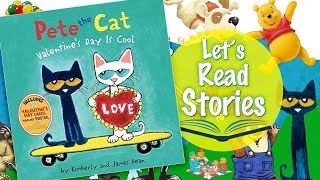
Pete the Cat Valentine's Day is Cool - Children's Stories Read Aloud for Kids
by James Dean
Click here to purchase Pete the Cat Valentine's Day is Cool: https://www.amazon.com/Pete-Ca....t-Valentines-Day-Coo
New York Times bestselling author and artist James Dean takes us on an awesome trip with Pete the Cat as he discovers just how special Valentine's Day can be!
At first, Pete thinks Valentine's Day isn't cool...until he realizes all the special cats there are in his life. Pete the Cat: Valentine’s Day Is Cool comes complete with a poster, stickers, and twelve punch-out Valentine’s Day cards.
Once Pete the Cat realizes how much fun Valentine’s Day can be, he decides to make valentine cards for his family and friends. But what happens when he realizes he's forgotten to make a card for a very important cat?
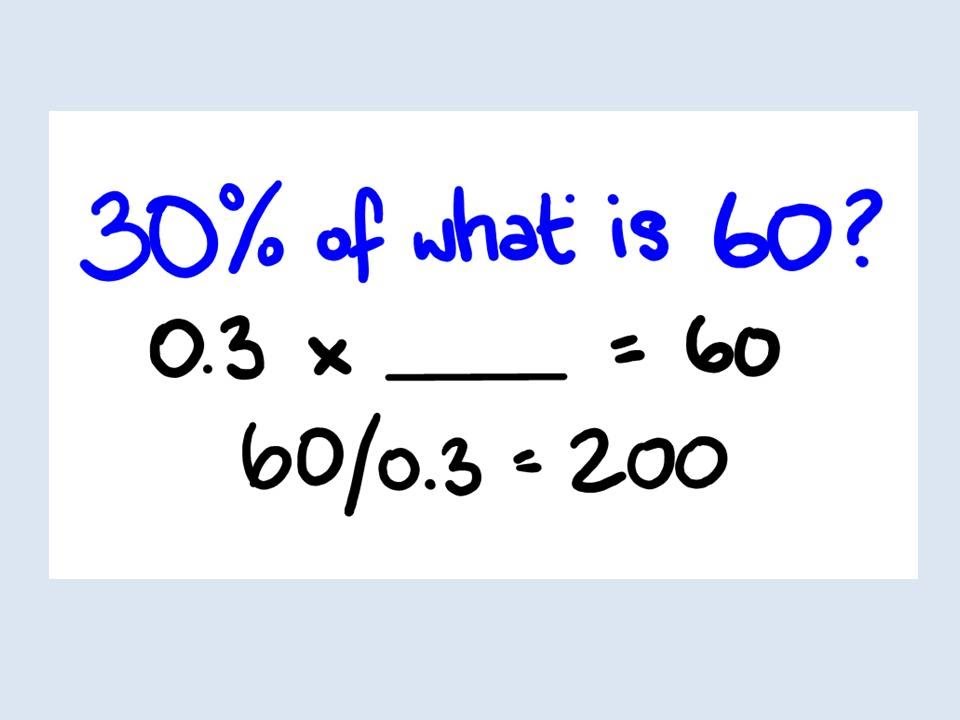
Work out percent problems of an unknown amount with this fast math lesson.
This video shows how to easily solve percentage problems and looks at how to convert percentages to fractions and percentages and fractions to decimals.
This lesson shows two methods for working out the problems -- enabling learners to work with the method that works best for them. These strategies are both easy for students to learn and for teachers to teach -- and give a greater understanding of the relationship between percent, decimals and fractions when describing parts of an amount.
The first method explored uses the fraction of the percent (putting the number out of 100), and then easily and instantly converting this to a decimal. Then using some simple equation juggling we solve the equation to get the answer. This type of method is good for those who can follow simple steps and are capable when shifting around numbers in an equation to get an answer.
Using the second method we look at where we can solve the problem by changing the value to one percent then 100 percent.
This is another video from the tecmath channel made in response to a question from a viewer -- so the other lesson you can learn is this -- if you have any mathematical questions and you need them answered -- then let me know -- I'd be glad to help! Even better if we can find a math trick or two along the way!
To donate to the tecmath channel:https://paypal.me/tecmath
To support tecmath on Patreon: https://www.patreon.com/tecmath
To buy tecmath mechandise: https://teespring.com/stores/tecmath-store

El tiempo en español. Las estaciones del año, los meses, estado del tiempo. Aprende vocabulario relacionado con el tiempo en español.
Si quieres aprender más vocabulario en español, suscríbete a nuestro canal!🔔

Today, Caroline and Sophie start Circle Time with a fun "Show & Tell" featuring character art we’ve received from kids. Great work, everyone! Learn how to draw Sandy the Dingo from Khan Academy Kids with Kim Ferrari, our lead animator. An animator is someone who draws, and makes those drawings move. Draw with Kim as she explains Sandy’s structure and illustrates the techniques that create her face. Practice drawing to make your own Sandy.
Are your kids ready to draw Sandy? Submit your drawing here: http://khan.co/KhanKids-SubmitYourArt. For more Show and Tell submission ideas, check out our list here: http://khan.co/KhanKids-ShowAndTell.
Looking for more kid-friendly activities? Don’t miss our Printables page, here:
http://khan.co/KhanKids-Printables.
Learn more about Khan Academy Kids, our free educational app for children ages 2-7, at http://www.khankids.org.
Available on Apple, Google Play, and Amazon app stores:
http://khan.co/KhanKids-YT-Apple
http://khan.co/KhanKids-YT-Google
http://khan.co/KhanKids-YT-Amazon
Subscribe to our channel so you don’t miss a single resource from Khan Academy Kids, and access all of our Circle Time videos on our Circle Time Playlist! http://khan.co/KhanKids-CircleTimePlaylist.
Questions or ideas for Circle Time? Reach our team at khankids@khanacademy.org.
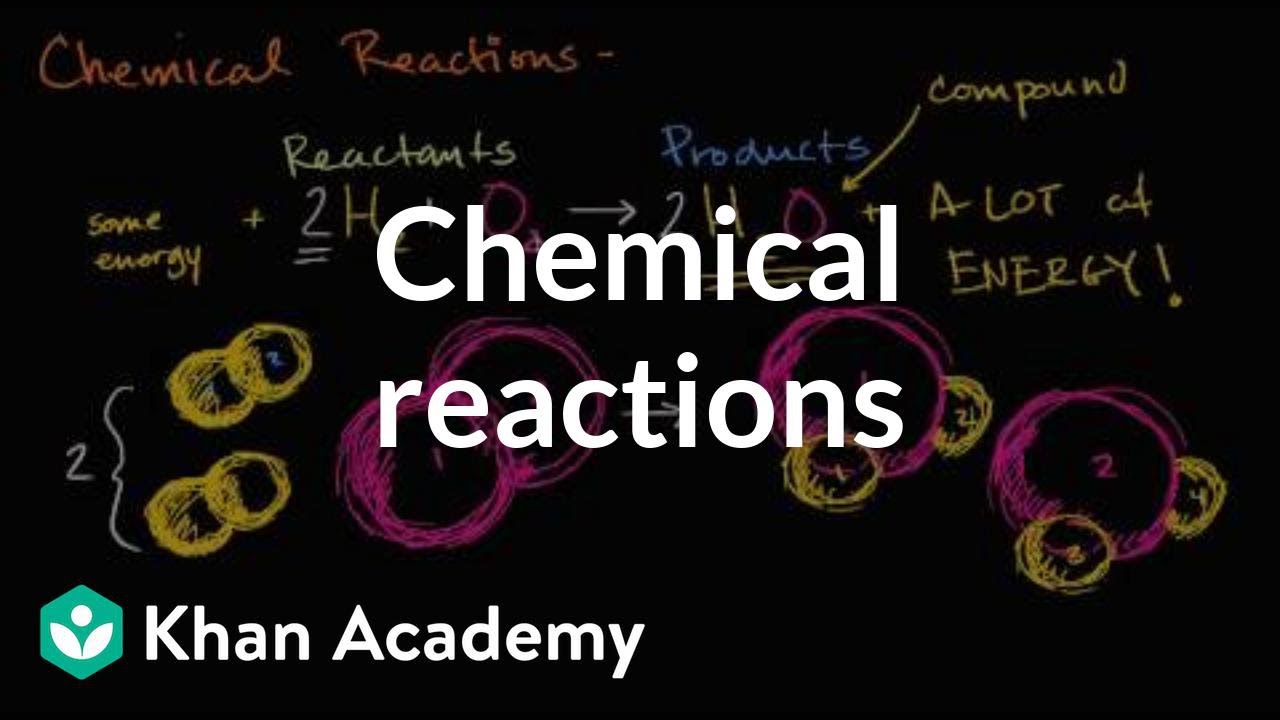
Reactants and products in reversible and irreversible chemical reactions.
Watch the next lesson: https://www.khanacademy.org/science/biology/water-acids-and-bases/hydrogen-bonding-in-water/v/hydrogen-bonding-in-water?utm_source=YT&utm_medium=Desc&utm_campaign=biology
Missed the previous lesson? https://www.khanacademy.org/science/biology/chemistry--of-life/chemical-bonds-and-reactions/v/intermolecular-forces-and-molecular-bonds?utm_source=YT&utm_medium=Desc&utm_campaign=biology
Biology on Khan Academy: Life is beautiful! From atoms to cells, from genes to proteins, from populations to ecosystems, biology is the study of the fascinating and intricate systems that make life possible. Dive in to learn more about the many branches of biology and why they are exciting and important. Covers topics seen in a high school or first-year college biology course.
About Khan Academy: Khan Academy offers practice exercises, instructional videos, and a personalized learning dashboard that empower learners to study at their own pace in and outside of the classroom. We tackle math, science, computer programming, history, art history, economics, and more. Our math missions guide learners from kindergarten to calculus using state-of-the-art, adaptive technology that identifies strengths and learning gaps. We've also partnered with institutions like NASA, The Museum of Modern Art, The California Academy of Sciences, and MIT to offer specialized content.
For free. For everyone. Forever. #YouCanLearnAnything
Subscribe to Khan Academy's Biology channel: https://www.youtube.com/channe....l/UC82qE46vcTn7lP4tK
Subscribe to Khan Academy: https://www.youtube.com/subscr....iption_center?add_us

Courses on Khan Academy are always 100% free. Start practicing—and saving your progress—now: https://www.khanacademy.org/ma....th/ap-calculus-ab/ab
What's the relationship between how fast a circle's radius changes, and how fast its area changes? Created by Sal Khan.
Watch the next lesson: https://www.khanacademy.org/math/ap-calculus-ab/ab-applications-derivatives/ab-related-rates-intro/v/analyzing-related-rates-problems-expressions?utm_source=YT&utm_medium=Desc&utm_campaign=APCalculusAB
Missed the previous lesson? https://www.khanacademy.org/math/ap-calculus-ab/ab-applications-derivatives/ab-applied-rate-of-change/v/derivative-and-marginal-cost?utm_source=YT&utm_medium=Desc&utm_campaign=APCalculusAB
AP Calculus AB on Khan Academy: Bill Scott uses Khan Academy to teach AP Calculus at Phillips Academy in Andover, Massachusetts, and heÕs part of the teaching team that helped develop Khan AcademyÕs AP lessons. Phillips Academy was one of the first schools to teach AP nearly 60 years ago.
About Khan Academy: Khan Academy is a nonprofit with a mission to provide a free, world-class education for anyone, anywhere. We believe learners of all ages should have unlimited access to free educational content they can master at their own pace. We use intelligent software, deep data analytics and intuitive user interfaces to help students and teachers around the world. Our resources cover preschool through early college education, including math, biology, chemistry, physics, economics, finance, history, grammar and more. We offer free personalized SAT test prep in partnership with the test developer, the College Board. Khan Academy has been translated into dozens of languages, and 100 million people use our platform worldwide every year. For more information, visit www.khanacademy.org, join us on Facebook or follow us on Twitter at @khanacademy. And remember, you can learn anything.
For free. For everyone. Forever. #YouCanLearnAnything
Subscribe to Khan AcademyÕs AP Calculus AB channel: https://www.youtube.com/channe....l/UCyoj0ZF4uw8VTFbml
Subscribe to Khan Academy: https://www.youtube.com/subscr....iption_center?add_us

Here’s a quick video to help with understanding the gender of nouns in Spanish.
Please like the video and share with others who could benefit. More Spanish lessons coming.
Request a topic you’d like for me to go over in a future video!
👍Please share this video with others and like it to help me get the word out on my videos!
And let me know about other troublesome topics you’d like in bite-sized form.
🔔 Subscribe for more Spanish lessons: http://bit.ly/XGe7we
Special Offer: Get a discount off your first 6 months with code CHATEOBOT! Sign up at: https://www.senorjordan.com/chat
Social Media:
* YouTube: https://www.youtube.com/SeñorJordan
* Find “señor jordan videos” on Facebook, Twitter, Instagram, and TikTok
* Soundcloud: senorjordanspanish
Enjoying the content? Consider buying me a taco!
https://ko-fi.com/senorjordan
🌐 Private Lessons Available:
Interested in improving your Spanish conversational skills? Contact me: www.senorjordan.com/clases
📚 Practice Your Spanish with My Books!
https://www.tprsbooks.com/shop/?_product_type=novel&_author=jeremy-senor-jordan&_product_language_filter=spanish

Part of becoming financially literate is understanding how to calculate interest. In this video, your kids or students will learn what exactly interest is and how they can calculate it. Interest is an amount of money that you either pay or earn. Whether you pay or earn depends on the situation. If you borrow money, you have to pay interest. If you save money at a bank, you will earn interest.
There are a few terms you should be familiar with. The principal is the amount of money you start with that you are borrowing or spending. Another term to know is rate. The rate is the percentage you are charged (if borrowing money from a bank/company) or paid (if saving money in a bank). You will be able to use the rate and principal to determine the interest using an equation: Interest = Principal x Rate x Time (years).
The video goes through a helpful example scenario to walk you through calculating interest when saving money at a bank. In this case, Frankie Finance is starting with $200. The rate will be 0.15. Based on the equation, Frankie will earn $30 dollars per year in interest. Next, you can follow another scenario in which Frankie borrows money and owes $30 extra a year! The equation is the same regardless of whether or not you're borrowing or saving.
We hope you and your student(s) enjoyed learning about these important skills! If you want even more information, head over to our website and download one of our many free lesson plans, full of activities, worksheets, and more!
https://learnbright.org/lesson....s/math/financial-lit
https://learnbright.org/lesson....s/math/introduction-
Thank you for watching and learning with us! We’re constantly releasing new content and videos, so click that “Subscribe” button and you’ll get notified.
What you will learn in Financial Literacy—Calculating Interest:
0:00 Introduction
0:29 What is interest?
1:24 Principal, rate, and the interest equation
2:20 Interest scenario—earning interest
4:23 Interest scenario—paying interest
Find and Follow Us Online:
Facebook: https://www.facebook.com/LearnBright/
Instagram: https://instagram.com/LearnBrightEducation
Pinterest: https://pinterest.com/LearnBrightEducation
YouTube: @LearnBright
Website: https://learnbright.org/
*Teachers and Parents! Did you know? In addition to these great videos, we have also created a library of high-quality and engaging lessons for your elementary aged student(s). Visit us and sign up for a free account, and you'll instantly have access to thousands of lesson plans, learning materials, teaching instructions, activities, and assignments that your kids will really enjoy! We hope to see you soon!
Browse our entire collection of Math lesson plans:
https://learnbright.org/lessons/?filter_subject=math
#FinancialLiteracy
#FinancialLiteracyForKids
#SalesTax

In our declaration of independence crash course video you will learn in a very simple way many of the main points about the declaration. What are the events surrounding the signing? When did we sign? What is included in the declaration? And more!
For additional resources, worksheets and activities for your kids or students download our free lesson plan here: https://learnbright.org/lesson....s/social-studies/the
Thank you for watching and learning with us! We’re constantly releasing new content and videos so click that “Subscribe” button and you’ll notified.
Find and Follow Us Online:
Facebook: https://www.facebook.com/LearnBright/
Instagram: https://instagram.com/LearnBrightEducation
Pinterest: https://pinterest.com/LearnBrightEducation
YouTube: https://www.youtube.com/LearnBright
Website: https://learnbright.org/
*Teachers and Parents! Did you know? In addition to these great videos, we have also created a library of high quality and engaging lessons for your elementary aged student(s). Visit us, sign up for a free account, and instantly you'll have access to thousands of lesson plans, learning materials, teaching instructions, activities, and assignments that your kids will really enjoy! We hope to see you soon!
Browse our entire collection of Social Studies lesson plans: https://learnbright.org/lessons/?filter_subject=social-studies
#ASL
#DeclarationOfIndependence

Atoms for kids is an introduction video that helps students learn all about atoms. We answer questions like "What is an Atom?", "What is an Atom made of?", and "What do Atoms do?". We explore protons, electrons and neutrons and give a brief overview of the periodic table of elements. But don't stop at this video! You can also download our FREE lesson plan that has many activities and worksheets about atoms that will help engage and reinforce the learning.
Download the Atoms Lesson Plan here: https://learnbright.org/lessons/science/atoms/
Thank you for watching and learning with us! We’re constantly releasing new content and videos, so click that “Subscribe” button and you’ll get notified.
Find and Follow Us Online:
Facebook: https://www.facebook.com/LearnBright/
Instagram: https://instagram.com/LearnBrightEducation
Pinterest: https://pinterest.com/LearnBrightEducation
YouTube: https://www.youtube.com/LearnBright
Website: https://learnbright.org/
*Teachers and Parents! Did you know? In addition to these great videos, we have also created a library of high quality and engaging lessons for your elementary aged student(s). Visit us, sign up for a free account, and instantly you'll have access to thousands of lesson plans, learning materials, teaching instructions, activities, and assignments that your kids will really enjoy! We hope to see you soon!
Browse our entire collection of Science lesson plans: https://learnbright.org/lessons/?filter_subject=science
#ASL
#AtomsForKids
#Atoms

#pagabasangsalitangmaykambalkatinig
#kambalkatinig
#pagsasanaysapagbasa
#pagsasanaysapagbasangtagalog
#grade1Filipino
#grade2Filipino
#readingtutorialTagalog
#readingtutorialGrade1
#readingtutorialGrade2
#basabata
#practicereadingathome
#magaralbumasangabakada
#magaralbumasangtagalog
#magaralbumasa
#paanomatutobumasa
#paanoturuanbumasaangbata
#paanoturuanbumasaangkinder
#paanoturuanbumasaanggrade1
#magaralbumasangpangungusap
#pagbasangpangungusap
#paanomakakabasangmabilisangbata
#paanomakakabasanangmabilisangbata

Our What Is the Electoral College video will explain and answer many questions regarding the electoral college and how it is used to determine our new president. This video is geared for kids and provides a basic overview of this important part of our government and election process. Come and learn all about the history of the electoral college and how it will impact the upcoming elections. We hope you enjoy.
Looking for more Electoral College resources? Download our free comprehensive lesson plan here: https://learnbright.org/lesson....s/social-studies/ele
Thank you for watching and learning with us! We’re constantly releasing new content and videos so click that “Subscribe” button and you’ll notified.
Find and Follow Us Online:
Facebook: https://www.facebook.com/LearnBright/
Instagram: https://instagram.com/LearnBrightEducation
Pinterest: https://pinterest.com/LearnBrightEducation
YouTube: https://www.youtube.com/LearnBright
Website: https://learnbright.org/
*Teachers and Parents! Did you know? In addition to these great videos, we have also created a library of high quality and engaging lessons for your elementary aged student(s). Visit us, sign up for a free account, and instantly you'll have access to thousands of lesson plans, learning materials, teaching instructions, activities, and assignments that your kids will really enjoy! We hope to see you soon!
Browse our entire collection of Social Studies lesson plans: https://learnbright.org/lessons/?filter_subject=social-studies
#ASL
#ElectoralCollege

Types of Government for kids will explain all of the various forms of government and the countries that use them. From Democracy to Dictatorship we will learn about what they mean, what living conditions are like, how they started, and much more!
Here is a sample of each of the kinds of governments and what they mean.
Democracy - People have freedom
Dictatorship - People have very little freedom, if any at all.
Monarchy - People have nearly the same freedoms as in a democracy.
Theocracy - Freedom is limited to what the religion allows.
Totalitarian - Little freedom, and nothing ever changes.
Anarchy - There is freedom, but life is usually very dangerous.
Be sure to download our free 9 page lesson plan on government types built for grades 5-6 here: https://learnbright.org/lesson....s/social-studies/gov
Thank you for watching and learning with us! We’re constantly releasing new content and videos so click that “Subscribe” button and you’ll notified.
Find and Follow Us Online:
Facebook: https://www.facebook.com/LearnBright/
Instagram: https://instagram.com/LearnBrightEducation
Pinterest: https://pinterest.com/LearnBrightEducation
YouTube: https://www.youtube.com/LearnBright
Website: https://learnbright.org/
*Teachers and Parents! Did you know? In addition to these great videos, we have also created a library of high quality and engaging lessons for your elementary aged student(s). Visit us, sign up for a free account, and instantly you'll have access to thousands of lesson plans, learning materials, teaching instructions, activities, and assignments that your kids will really enjoy! We hope to see you soon!
Browse our entire collection of Social Studies lesson plans: https://learnbright.org/lessons/?filter_subject=social-studies
#ASL
#TypesofGovernment
#Government

A quick demo of using Geogebra to demonstrate angle relationships for parallel lines cut by a transversal.

Education Week's Leaders To Learn From is a distinctive gathering of over 200 superintendents, policymakers, industry professionals, and other education leaders, aimed at recognizing excellence in K-12 leadership and sharing innovative solutions to the challenges facing today's school systems. Learn more at http://edweek.org/leaders ____________________
Want more stories about schools across the nation, including the latest news and unique perspectives on education issues? Visit www.edweek.org.
About Education Week:
Education Week is America’s most trusted source of independent K-12 education news, analysis, and opinion. Our work serves to raise the level of understanding and discourse about education among school and district leaders, policymakers, researchers, teachers, and the public. Published by the nonprofit organization Editorial Projects in Education, Education Week has been providing award-winning coverage of the field for over 35 years.
Follow Education Week:
- Subscribe to our Channel: http://www.youtube.com/subscri....ption_center?add_use
- On Facebook at https://www.facebook.com/edweek/
- On Twitter at https://twitter.com/educationweek/
- On LinkedIn at https://www.linkedin.com/company/education-week
To license video footage from Editorial Projects in Education please contact the Education Week Library at library@epe.org.