Top videos
An excellent summary of the field of quantum computing. Find out more about Qiskit at https://qiskit.org and their YouTube channel https://www.youtube.com/c/qiskit
And get the poster here: https://store.dftba.com/collec....tions/domain-of-scie
With this video I aim to give a really good overview of the field of quantum computing with a clear explanation of how they work, why people are excited about quantum algorithms and their value, the potential applications of quantum computers including quantum simulation, artificial intelligence and more, and the different models and physical implementations people are using to build quantum computers like superconducting devices, quantum dots, trapped ions, photons or neutral atoms, and the challenges they face.
#quantumcomputer #quantum #domainofscience
--- Get My Posters Here ----
DFTBA Store: https://store.dftba.com/collec....tions/domain-of-scie
RedBubble Store: https://www.redbubble.com/people/DominicWalliman
I have also made posters available for personal or educational use which you can find here: https://www.flickr.com/photos/95869671@N08/
-- Some Awesome People ---
And many thanks to my $10 supporters and above on Patreon, you are awesome!
Join the gang and help support me produce free and high quality science content:
https://www.patreon.com/domainofscience
Bob Milano
Raj Duphare
Ben
Anca Selariu
Eric Epstein
Gordon D Collins
Kamil Qbitskey
Mirik Gogri
noggieB
Petr Murmak
Prabhakar R
Reggie Fourmyle
Sandy Toye
Sebastian
Terrence Masson
Theodore Chu
Joshua Rauß
--- Special thanks ---
Special thanks for giving their time to help me with the script to:
Nicholas Bronn
Sergio Boixo
Stephanie Simmons
--- My Science Books ----
I also write science books for kids called Professor Astro Cat. You can see them all here:
https://store.dftba.com/collec....tions/domain-of-scie
http://profastrocat.com
--- Follow me around the internet ---
http://dominicwalliman.com
https://twitter.com/DominicWalliman
https://www.instagram.com/dominicwalliman
--- Credits ---
Writer, art, animation and edited by Dominic Walliman
I use Adobe Illustrator and After Effects for the graphics (for the many people who ask :)
--- References ----
[1] Why qubits need so much storage space
https://quantumcomputing.stack....exchange.com/questio
[2] Storage space of the world
https://www.quora.com/Whats-th....e-worlds-total-data-
[3] Quantum Algorithms
https://en.wikipedia.org/wiki/....Quantum_algorithm?wp
[4] Models of Quantum Computing
https://quantumcomputing.stack....exchange.com/questio
[5] Topological Quantum Computing
https://www.quantamagazine.org..../major-quantum-compu
[6] Optical Lattice
https://www.mewburn.com/news-insights/creating-qubits-a-hot-lead-at-coldquanta?utm_campaign=ICT&utm_source=caitlin
ultracold atom quantum simulator
https://arxiv.org/abs/1901.01146
[7] Linear optical quantum computing (Xanadu)
https://arstechnica.com/scienc....e/2021/03/programmab
and
https://arstechnica.com/scienc....e/2020/12/un-computa
[8] Quantum computing overview
https://cen.acs.org/materials/....electronic-materials
[9] Linear photonic qubits
https://www.youtube.com/watch?v=62Y7uT26hzo
https://arstechnica.com/scienc....e/2021/03/programmab
[10] Google Roadmap
https://blog.google/technology..../ai/unveiling-our-ne
--- Chapters ---
00:00 Introduction
00:44 How Quantum Computers Work
06:19 Quantum Algorithms
12:01 Potential Applications of Quantum Computing
15:26 Models of Quantum Computing
17:29 Qiskit Sponsorship Message
19:29 Models of Quantum Computing Continued
24:59 Obstacles to Building a Quantum Computer
27:24 What Real Quantum Computers Are Made From
31:45 Summary
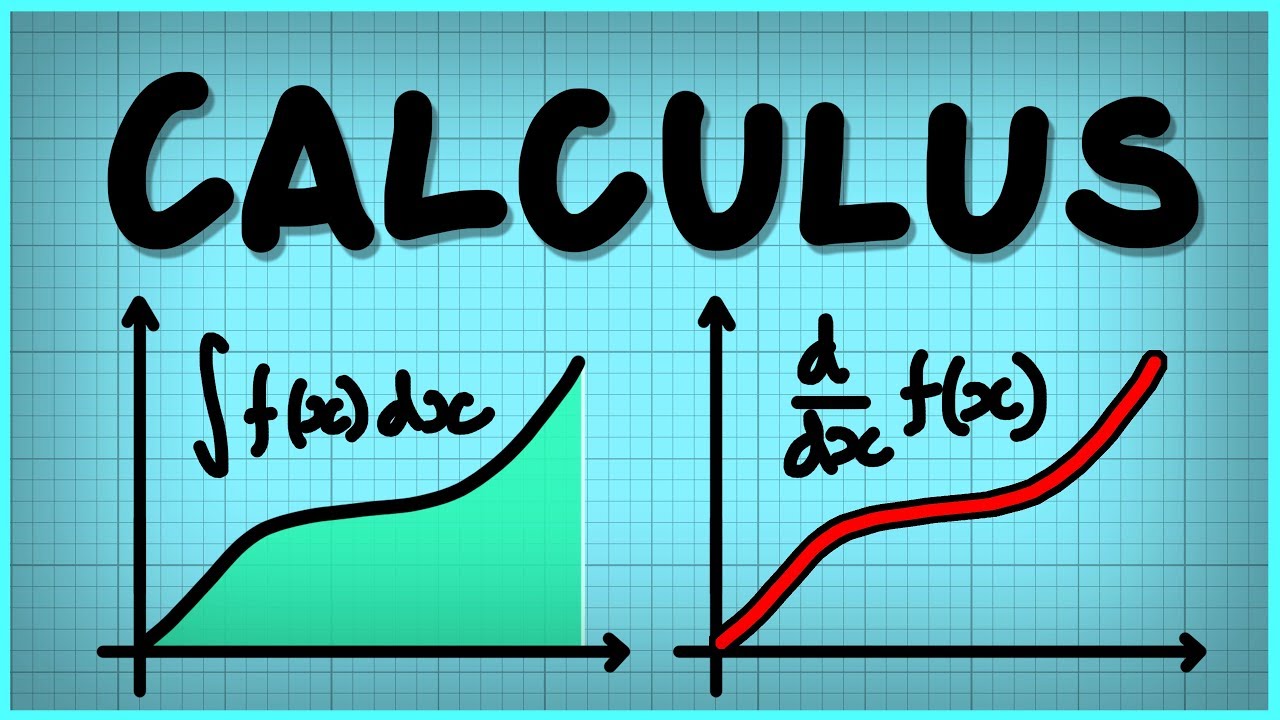
Calculus is an incredibly useful tool for deriving new physics. Check out this video's sponsor https://brilliant.org/dos
Here is a brief description of calculus, integration and differentiation and one example of where it is useful: deriving new physics. In this video I start with a very simple derivation which shows the relationship between momentum and kinetic energy, and then show a simple introduction to integration and differentiation.
When I learned physics at University one of the most satisfying experiences was getting to grips with calculus enough to use it to derive equations as it allowed me to wield mathematics to describe the world, which felt awesome.
#mathematics #calculus #DomainOfScience
I have posters available to buy here: https://www.redbubble.com/people/dominicwalliman
I have also made versions available for educational use which you can find here: https://www.flickr.com/photos/95869671@N08/
Thanks so much to my supporters on Patreon. If you enjoy my videos and would like to help me make more this is the best way and I appreciate it very much. https://www.patreon.com/domainofscience
Also, if you enjoyed this video, you will probably like my science books, available in all good books shops around the work and is printed in over 20 languages. Links are below or just search for Professor Astro Cat. They are fun children's books aimed at the age range 4+ and 7+. But they are also a hit with adults who want good explanations of science. The books have won awards and the app won a Webby.
Frontiers of Space: http://nobrow.net/shop/profess....or-astro-cats-fronti
Atomic Adventure: http://nobrow.net/shop/profess....or-astro-cats-atomic
Human Body Odyssey: http://nobrow.net/shop/profess....or-astro-cats-human-
Solar System Book (age 4+): http://nobrow.net/shop/profess....or-astro-cats-solar-
Solar System App: http://www.minilabstudios.com/....apps/professor-astro
Find me on twitter, instagram, and my website:
http://dominicwalliman.com
https://twitter.com/DominicWalliman
https://www.instagram.com/dominicwalliman
https://www.facebook.com/domainofscience
https://www.patreon.com/domainofscience

Find out what it takes for a quantum computer to beat a classical computer to achieve quantum supremacy. Check out this video's sponsor https://brilliant.org/dos
Quantum supremacy’s that moment when a quantum computer beats the best supercomputers at solving some kind of problem, and it’s a very exciting time right now in quantum computing because, as of recording this video we’re on the brink of having quantum supremacy. In this video I quickly describe how quantum computing works, what quantum computers exist in the world today and what you need to do to prove quantum supremacy.
When I posted this video quantum supremacy hadn’t been reached, but people are predicting that it will happen soon.
Also the qubit numbers I posted for the different quantum computing efforts will go out of date quite quickly, so they won’t be valid if you are watching this in the future. Hello from April 2018!
And full disclosure - I used to work at D-Wave but I don’t have any favourites, I’m excited by progress on all fronts and believe they all deserve the same critical analysis.
#quantum #computers #DomainOfScience
I have other posters available to buy here: https://www.redbubble.com/people/dominicwalliman
I have also made versions available for educational use which you can find here: https://www.flickr.com/photos/95869671@N08/
Thanks so much to my supporters on Patreon. If you enjoy my videos and would like to help me make more this is the best way and I appreciate it very much. https://www.patreon.com/domainofscience
Also, if you enjoyed this video, you will probably like my science books, available in all good books shops around the work and is printed in over 20 languages. Links are below or just search for Professor Astro Cat. They are fun children's books aimed at the age range 4+ and 7+. But they are also a hit with adults who want good explanations of science. The books have won awards and the app won a Webby.
Frontiers of Space: http://nobrow.net/shop/profess....or-astro-cats-fronti
Atomic Adventure: http://nobrow.net/shop/profess....or-astro-cats-atomic
Human Body Odyssey: http://nobrow.net/shop/profess....or-astro-cats-human-
Solar System Book (age 4+): http://nobrow.net/shop/profess....or-astro-cats-solar-
Solar System App: http://www.minilabstudios.com/....apps/professor-astro
Find me on twitter, instagram, and my website:
http://dominicwalliman.com
https://twitter.com/DominicWalliman
https://www.instagram.com/dominicwalliman
https://www.facebook.com/domainofscience

A fortress has just been uncovered in the Caucasus, and it’s nothing like we’ve ever seen before. Imagine a wall stretching a full kilometer, built over 3,000 years ago, standing as proof of a civilization that thought on a mega scale. This isn’t just another Bronze Age site—it’s a mystery fortress that could rewrite the history of how people lived, traveled, and defended themselves at the crossroads of Europe and Asia. Why build something this massive in such a remote place? Archaeologists think it might have been used seasonally by nomadic groups, but the full story is still buried in the stones.
Animation is created by Bright Side.
----------------------------------------------------------------------------------------
Music from TheSoul Sound: https://thesoul-sound.com/
Check our Bright Side podcast on Spotify and leave a positive review! https://open.spotify.com/show/....0hUkPxD34jRLrMrJux4V
Subscribe to Bright Side: https://goo.gl/rQTJZz
----------------------------------------------------------------------------------------
Our Social Media:
Facebook: https://www.facebook.com/brightside
Instagram: https://www.instagram.com/brightside.official
TikTok: https://www.tiktok.com/@bright....side.official?lang=e
Telegram: https://t.me/bright_side_official
Stock materials (photos, footages and other):
https://www.depositphotos.com
https://www.shutterstock.com
https://www.eastnews.ru
----------------------------------------------------------------------------------------
For more videos and articles visit:
http://www.brightside.me
----------------------------------------------------------------------------------------
This video is made for entertainment purposes. We do not make any warranties about the completeness, safety and reliability. Any action you take upon the information in this video is strictly at your own risk, and we will not be liable for any damages or losses. It is the viewer's responsibility to use judgement, care and precaution if you plan to replicate.

Kære venner
Vi arbejder med chance og sandsynlighed også i de små klasser. Vi bruger blot lidt andre ord, når vi leger racerløb, spiller banko og undersøger hvad man kan slå med to terninger.
Og er der mon lige stor chance for at slå alle tal fra 1 til 12?
Det har vi nogle rigtig gode snakke om.
Og så synes eleverne jo bare, at de hjemmelavede biler vi kører med, er fantastiske - og det gør læreren også.
Racerløb kan både spilles på gulvet med en stor fællesbane, eller i mindre grupper med min spilleplade. Den kan du hente lige her: https://anettekmatematik.com/racerloeb-og-banko/
Der er også en Scoretavle, så vi kan holde styr på, hvilke biler der vinder mest.
Og så er der Bankoplader, som i princippet er samme leg og matematisk undersøgelse, men det ved eleverne ikke (i starten i hvert fald).
Bankopladerne er også med i filen på min hjemmeside.
Rigtig god fornøjelse.
Kh Anette
Følg mig gerne her:
https://facebook.com/anettekmatematik/
https://instagram.com/anettekmatematik/
https://www.youtube.com/channe....l/UCR8PqEuBE7OlORn2y
https://anettekmatematik.com/
#DIY #anettekmatematik #værkstedsundervisning

Kære venner
For en uge siden uploadede jeg en video med titlen: Plus med Terninger
Du kan finde den her: https://www.youtube.com/watch?v=rimb3k5esx4
Den handlede egentlig om plusstrategier, og efterfølgende er jeg blevet nysgerrig omkring, hvilke plusstrategier I snakker om i jeres klasser?
I videoen kan du se et par eksempler på mine snakke omkring plusstrategier i mine indskolingsklasser.
Skriv gerne dine egne eksempler under videoen, så vi kan udveksle gode ideer.
Kh Anette
Følg mig gerne her:
https://facebook.com/anettekmatematik/
https://instagram.com/anettekmatematik/
https://www.youtube.com/channe....l/UCR8PqEuBE7OlORn2y
https://anettekmatematik.com/
#værkstedsundervisning
#anettek
#kortspil

#multiplication #mathhelp #latticemethod #homeschool
This video shows you how to multiply 2-digit numbers by 2-digit numbers using the lattice method. Once you know how it works, it is really easy to do. It doesn't really save any time compared to traditional multiplication, but it is fun to work through.
🔴 Subscribe for more free YouTube tips: https://www.youtube.com/c/ImprovedMath
🔴 Share this video with a friend: https://youtu.be/6_jkPjBMUKo
🔴 Check out this playlist:
✅ For business inquiries contact me at improvedmath@gmail.com
✅ Let's connect:
https://www.youtube.com/c/ImprovedMath
https://www.tiktok.com/@improvedmath1?
https://www.pinterest.com/improvedmath/
Improved math is a channel created to provide additional instruction on essential math concepts. I’m passionate about math and I know first-hand how important math concepts are in the real world.
Teachers, parents, guardians, homeschoolers, and students can use these videos to help reinforce math skills. These math videos are designed to help teach yourself math or provide self-study math tools to assist when additional instruction is needed. Teaching math and learning math has changed the way many students learn in this virtual environment. Having on-demand math videos can provide math tutoring needed when children are not able to get help from their teachers after school hours or when trying to do math at home.
The library of math tutorials that I create can also be used as supplemental instructional material for homeschool math. Each full-length video comes with a subsequent knowledge check or math practice problems which serve as a virtual math topic worksheet to test your understanding of each skill. These videos can be paused to work out the problems on your own, then unpaused to check your answers. All of these videos can be found under the Knowledge Check playlist.
I also have a library of shorter videos (less than 1 minute in length - shorts) that are quick math tips and tricks on basic math topics. Some of these short math help videos include problems that you can work on yourself and submit your answers in the comments. They are all listed under my Math Tips and Tricks playlist.
Improved math is creating more videos every day to cover topics from 4th grade, 5th grade, 6th grade, and 7th-grade math. The videos focus on fractions, basic math operations, geometry, and ratios but more topics are being added all the time. If there is a specific topic you would like to see covered, drop me a comment in one of my videos and let me know!
Free math help videos will be posted every Thursday and Friday. For additional math resources, check out my math help website at improvedmath.com where I post math worksheets and answers along with additional context on math basics.
Thanks for watching my channel.

#improperfractions #math #homeschool #fractions #mathtips
This video walks you through the concept of cross-multiplication for 4 examples of comparing improper fractions.
🔴 Subscribe for more free YouTube tips: https://www.youtube.com/c/ImprovedMath
🔴 Share this video with a friend: https://youtu.be/yB8sEfZ4I5Y
🔴 Check out this playlist:
✅ For business inquiries contact me at improvedmath@gmail.com
✅ Let's connect:
https://www.youtube.com/c/ImprovedMath
https://www.tiktok.com/@improvedmath1?
https://www.pinterest.com/improvedmath/
Improved math is a channel created to provide additional instruction on essential math concepts. I’m passionate about math and I know first-hand how important math concepts are in the real world.
Teachers, parents, guardians, homeschoolers, and students can use these videos to help reinforce math skills. These math videos are designed to help teach yourself math or provide self-study math tools to assist when additional instruction is needed. Teaching math and learning math has changed the way many students learn in this virtual environment. Having on-demand math videos can provide math tutoring needed when children are not able to get help from their teachers after school hours or when trying to do math at home.
The library of math tutorials that I create can also be used as supplemental instructional material for homeschool math. Each full-length video comes with a subsequent knowledge check or math practice problems which serve as a virtual math topic worksheet to test your understanding of each skill. These videos can be paused to work out the problems on your own, then unpaused to check your answers. All of these videos can be found under the Knowledge Check playlist.
I also have a library of shorter videos (less than 1 minute in length - shorts) that are quick math tips and tricks on basic math topics. Some of these short math help videos include problems that you can work on yourself and submit your answers in the comments. They are all listed under my Math Tips and Tricks playlist.
Improved math is creating more videos every day to cover topics from 4th grade, 5th grade, 6th grade, and 7th-grade math. The videos focus on fractions, basic math operations, geometry, and ratios but more topics are being added all the time. If there is a specific topic you would like to see covered, drop me a comment in one of my videos and let me know!
Free math help videos will be posted every Thursday and Friday. For additional math resources, check out my math help website at improvedmath.com where I post math worksheets and answers along with additional context on math basics.
Thanks for watching my channel.

#fractions #math #maths #homeschool #mixednumbers #improperfractions
This video shows you 4 examples when trying to figure out how to convert mixed numbers to improper fractions.
First, you multiply your denominator times the whole number. Next, you add the numerator to that result.
🔴 Subscribe for more free YouTube tips: https://www.youtube.com/c/ImprovedMath
🔴 Share this video with a friend: https://youtu.be/0r6fZwQy5iE
🔴 Check out this playlist:
✅ For business inquiries contact me at improvedmath@gmail.com
✅ Let's connect:
https://www.youtube.com/c/ImprovedMath
https://www.tiktok.com/@improvedmath1?
https://www.pinterest.com/improvedmath/
Improved math is a channel created to provide additional instruction on essential math concepts. I’m passionate about math and I know first-hand how important math concepts are in the real world.
Teachers, parents, guardians, homeschoolers, and students can use these videos to help reinforce math skills. These math videos are designed to help teach yourself math or provide self-study math tools to assist when additional instruction is needed. Teaching math and learning math has changed the way many students learn in this virtual environment. Having on-demand math videos can provide math tutoring needed when children are not able to get help from their teachers after school hours or when trying to do math at home.
The library of math tutorials that I create can also be used as supplemental instructional material for homeschool math. Each full-length video comes with a subsequent knowledge check or math practice problems which serve as a virtual math topic worksheet to test your understanding of each skill. These videos can be paused to work out the problems on your own, then unpaused to check your answers. All of these videos can be found under the Knowledge Check playlist.
I also have a library of shorter videos (less than 1 minute in length - shorts) that are quick math tips and tricks on basic math topics. Some of these short math help videos include problems that you can work on yourself and submit your answers in the comments. They are all listed under my Math Tips and Tricks playlist.
Improved math is creating more videos every day to cover topics from 4th grade, 5th grade, 6th grade, and 7th-grade math. The videos focus on fractions, basic math operations, geometry, and ratios but more topics are being added all the time. If there is a specific topic you would like to see covered, drop me a comment in one of my videos and let me know!
Free math help videos will be posted every Thursday and Friday. For additional math resources, check out my math help website at improvedmath.com where I post math worksheets and answers along with additional context on math basics.
Thanks for watching my channel.

#math #homeschoolmath #integers #mathtips
Hi! Welcome to Improved Math!
If you want to learn how to add integers using a number line, then this video is for you. In this video I walk through 4 additional examples on how to add integers. In my previous video, we talked about the rules for adding integers. When adding all positive integers, your answer will always be positive. When adding all negative integers, the answer will always be negative. When adding both positive and negative integers together, you will subtract the absolute values of the integers and the answer will be in the sign of the integer with the highest absolute value. Don’t forget to check out the bonus problem and leave me your answer in the comments!
Understanding basic math isn’t just about crunching numbers; it's about fine tuning problem-solving abilities, making informed decisions, and gaining deeper insight into the world around us. From everyday tasks to complex situations, math plays a pivotal role.
Just as important is cultivating critical thinking skills. Learning how to analyze and evaluate information is needed to arrive at well-informed conclusions. Discover why these skills are the cornerstone of innovation, creativity and rational decision-making.
Math isn’t just confined to the classroom but is essential in all aspects of life from personal finance and career success to daily decision-making and creative endeavors.
Thank you so much for watching!
💡 Subscribe for more free YouTube tips: https://www.youtube.com/c/ImprovedMath
💡Share this video with a friend:
✅ Let's connect:
For email inquiries: improvedmath@gmail.com
https://www.youtube.com/c/ImprovedMath
https://www.tiktok.com/@improvedmath1?
https://www.pinterest.com/improvedmath/

#math #homeschool #mathtips #factors #lcm
This video shows you how to use prime factorization to find the lowest common multiple. First, find your prime factors. Then create a table that lists out the factors of each number. Multiply across and that is your lowest common multiple.
🔴 Subscribe for more free YouTube tips: https://www.youtube.com/c/ImprovedMath
🔴 Share this video with a friend: https://youtu.be/JALEpGpi0Pg
🔴 Check out this playlist:
✅ For business inquiries contact me at improvedmath@gmail.com
✅ Let's connect:
https://www.youtube.com/c/ImprovedMath
https://www.tiktok.com/@improvedmath1?
https://www.pinterest.com/improvedmath/
Improved math is a channel created to provide additional instruction on essential math concepts. I’m passionate about math and I know first-hand how important math concepts are in the real world.
Teachers, parents, guardians, homeschoolers, and students can use these videos to help reinforce math skills. These math videos are designed to help teach yourself math or provide self-study math tools to assist when additional instruction is needed. Teaching math and learning math has changed the way many students learn in this virtual environment. Having on-demand math videos can provide math tutoring needed when children are not able to get help from their teachers after school hours or when trying to do math at home.
The library of math tutorials that I create can also be used as supplemental instructional material for homeschool math. Each full-length video comes with a subsequent knowledge check or math practice problems which serve as a virtual math topic worksheet to test your understanding of each skill. These videos can be paused to work out the problems on your own, then unpaused to check your answers. All of these videos can be found under the Knowledge Check playlist.
I also have a library of shorter videos (less than 1 minute in length - shorts) that are quick math tips and tricks on basic math topics. Some of these short math help videos include problems that you can work on yourself and submit your answers in the comments. They are all listed under my Math Tips and Tricks playlist.
Improved math is creating more videos every day to cover topics from 4th grade, 5th grade, 6th grade, and 7th-grade math. The videos focus on fractions, basic math operations, geometry, and ratios but more topics are being added all the time. If there is a specific topic you would like to see covered, drop me a comment in one of my videos and let me know!
Free math help videos will be posted every Thursday and Friday. For additional math resources, check out my math help website at improvedmath.com where I post math worksheets and answers along with additional context on math basics.
Thanks for watching my channel.

This video shows 4 examples of simplifying ratios with whole numbers as additional practice for mastering the concept. The steps to reducing ratios to their lowest form are listed and include: finding factors of all ratio numbers, finding the greatest common factor, and dividing the ratio numbers by the greatest common factor.
The video encourages the watcher to pause the video in the beginning and try the examples for themselves. Then they can check their work against my answers.
For more help on simplifying ratios, check out my tutorial video here: https://youtu.be/mhcIH3iKKmE
For more help on finding factors and the greatest common factor, check out my video here: https://youtu.be/RaWciR9iyyU
Improved math is a channel created to provide additional instruction on essential math concepts. I am passionate about math and I know firsthand how important math concepts are in the real world.
Teachers, parents, guardians, homeschoolers, and students can use these videos to help reinforce math skills.
For more information on math topics or for free printable worksheets and answer sheets, you can also visit my website at improvedmath.com
#mathhelp
#simplifyingratios
#factors
#greatestecommonfactor
#reducingratios
#mathpractice
#simplifyingratiosworksheet
#mathvideos
https://www.youtube.com/c/ImprovedMath
https://improvedmath.com
https://www.tiktok.com/@improvedmath1?
https://www.pinterest.com/improvedmath/
Don’t forget to like, share, and subscribe!

Hello students,
Thank you so much for your immense support. We have tried our best to explain this chapter in a very simple and easy to understand Hindi language. Still you might have some doubts or suggestions for us.
In this video we have gone through the following:
what are fractions?
Types of Fractions,
Conversion of fractions,
Mixed fractions into Improper fractions,
Improper fractions into Mixed fractions,
Register for Online Course for Class 5 here
Course details: Recorded videos for all chapters, Doubts Session: Every Sunday, MCQ tests (topic- wise and chapter-wise)
https://www.descipal.com/cours....es/706818?utm_source
Register for Online Course for Class 6 here
https://www.descipal.com/cours....es/700839?utm_source
Register for Online Course for Class 7 here
https://www.descipal.com/cours....es/705963?utm_source
Thank you,
Raj sir
Don't forget to check out the following videos for class 5 Maths:
Multiplication of Fractions https://www.youtube.com/watch?v=gY_TN3AVeeg
Decimals- Complete chapter https://www.youtube.com/watch?v=QrRfkFbumes&t=289s
Percentage-https://www.youtube.com/watch?v=UiD9W7V_Bh4&t=702s
Geometry -part 1 https://www.youtube.com/watch?v=Z4bYk0f9iBw
Geometry -part 2 https://www.youtube.com/watch?v=Xs-mPiAYlPI&t=20s
Divisibility rules https://www.youtube.com/watch?v=5zl1zSAUGs4
Factors multiples HCF https://www.youtube.com/watch?v=a8O8BB-l-0M&t=339s
HCF by long division method https://www.youtube.com/watch?v=X1NJiue1TvQ&t=240s
Measurement -complete chapter https://www.youtube.com/watch?v=amBmxx5ptOE&t=139s
Rounding off to nearest 10, 100, 1000 https://www.youtube.com/watch?v=RYB6Ij0Hz-k
Comparing fractions,
class 5 fractions,
class 5 fractions in hindi,
Fractions in Hindi,
Fractions by Revolutionary teachers
Fractions full chapter explanation,
fractions complete chapter,
Fractions class 5,
Fractions class 6.
Maths class 5,
Class 5 Maths,
Maths class 6,
Class 6 Maths,
Maths tricks,
Maths short tricks,
Maths concepts in hindi,
maths by raj sir,
maths by revolutionary teachers
![Multiplying Fractions [CC] - Civil Service Exam Review](https://i.ytimg.com/vi/ZDExOt6pOg0/maxresdefault.jpg)
Watch this to learn the two methods on how to multiply fractions.
Practice using free worksheets you can download here:
http://teamlyqa.com/2015/10/05..../fractions-worksheet
Join Team Lyqa by liking this page:
https://www.facebook.com/teamlyqa
You can click here to see the other videos I made:
https://www.youtube.com/watch?v=GU5TL5pNww0&list=PLdtpIaZj6fcLO2Qb7vEFiGW9yu5hhbhre
You can go to my website for free lessons and worksheets:
http://teamlyqa.com/
Follow me on:
FACEBOOK: https://www.facebook.com/AteLyqaMaravilla
INSTAGRAM: https://www.instagram.com/lyqamaravilla
TWITTER: https://www.twitter.com/lyqamaravilla
Happy learning!


In this video we will study about Fractions:
addition of fractions
subtraction of fractions
multiplication of fractions
division of fractions
Download our app Descipal
https://qvgqvq.on-app.in/app/home?orgCode=qvgqvq&referrer=utm_source=copy-link&utm_medium=tutor-app-referral
fractions,
addition of fractions,
subtraction of fractions,
multiply fractions,
division of fractions
How to add fractions,
How to subtract fractions,
how to multiply fractions,
how to divide fractions,
fractions complete chapter,
fractions one shot video,
what are fractions,
fractions explained, what are fractions, fractions in maths, fractions for beginners, learn fractions easily, fractions for kids, basics of fractions in mathematics, introduction to fractions, types of fractions explained, fractions lesson, fractions examples for students, fractions made easy, fractions explained with examples, understanding fractions for beginners, fractions step by step, fractions for class 5, fractions for class 6, fractions for class 7, fractions for CBSE, fractions in mathematics, simple explanation of fractions, easy way to learn fractions, fraction math tricks, addition of fractions explained, how to add fractions, addition of fractions in maths, addition of fractions for beginners, addition of fractions step by step, addition of fractions with same denominator, addition of fractions with different denominators, addition of fractions examples, addition of fractions lesson, learn addition of fractions easily, addition of fractions for kids, addition of fractions for class 5, addition of fractions for class 6, addition of fractions for class 7, addition of fractions CBSE, addition of fractions explained with examples, easy way to add fractions, addition of fractions made easy, fraction addition tricks, subtraction of fractions explained, how to subtract fractions, subtraction of fractions in maths, subtraction of fractions for beginners, subtraction of fractions step by step, subtraction of fractions with same denominator, subtraction of fractions with different denominators, subtraction of fractions examples, subtraction of fractions lesson, subtraction of fractions for kids, subtraction of fractions for class 5, subtraction of fractions for class 6, subtraction of fractions for class 7, subtraction of fractions CBSE, subtraction of fractions explained with examples, subtraction of fractions made easy, easy way to subtract fractions, fraction subtraction tricks, multiplication of fractions explained, how to multiply fractions, multiplication of fractions in maths, multiplication of fractions for beginners, multiplication of fractions step by step, multiplication of fractions examples, multiplication of fractions lesson, multiplication of fractions for kids, multiplication of fractions for class 5, multiplication of fractions for class 6, multiplication of fractions for class 7, multiplication of fractions CBSE, multiplication of fractions explained with examples, multiplication of fractions made easy, easy way to multiply fractions, fraction multiplication tricks, learn multiplication of fractions easily, division of fractions explained, how to divide fractions, division of fractions in maths, division of fractions for beginners, division of fractions step by step, division of fractions examples, division of fractions lesson, division of fractions for kids, division of fractions for class 5, division of fractions for class 6, division of fractions for class 7, division of fractions CBSE, division of fractions explained with examples, division of fractions made easy, easy way to divide fractions, fraction division tricks, learn division of fractions easily, simple explanation of division of fractions

In this video, Grammar Hero works out a practice test question that requires you to subtract and then convert fractions to a percent. This question should closely mirror what you should expect to see in the Arithmetic Reasoning (AR) subtest of the Armed Services Vocational Aptitude Battery (ASVAB) as well as the Pre-screening internet-delivered Computer Adaptive Test (PiCAT).
#grammarhero #ASVAB #AceTheASVAB #ASVABVersion #PiCAT #algebra #geometry #afqt #asvabexam #asvabtest #asvabmath #asvabmathknowledge #asvabmathprep #asvabtutoring #asvabmathhelp #arithmeticreasoning

#fractionsdécimales #nombresdécimaux #nationapprenante #nationapprenante #éducation #écoleàlamaison #cm2 #écoleenligne #maths #mathématiques #maitrelucas #élémentaire #primaire #écoleprimaire #école #cm1 #cycle3
Les fractions décimales et les nombres décimaux décrivent de nouveaux nombres pour palier l'insuffisance des nombres entiers, notamment pour mesurer des longueurs. La règle graduée est une des premières rencontres des élèves avec les nombres à virgule. Cette vidéo à destination des élèves de cycle 3 (CM1, CM2, 6e) est une initiation aux fractions décimales et aux nombres décimaux. Une fraction décimale est un partage d'une unité en un nombre de parts égal à une puissance de 10 (10, 100, 1000, etc.). Un nombre décimal est un nombre qui peut s'écrire sous forme de fraction décimale. Ces notions sont complexes et nécessitent un travail long sur tout le cycle 3. Le visionnage de la vidéo n'est évidemment pas suffisant et ne constitue qu'un aperçu de ces chapitres.
Découvrez nos cahiers de soutien scolaire adaptés pour chaque année du CP au CM2 : https://maitrelucas.fr/livres/
Fiche d'exercices : https://maitrelucas.fr/fiche/n....ombres-decimaux-cm1-
Retrouvez toutes les vidéos de Maître Lucas en visitant son site : https://maitrelucas.fr/bibliotheque-video/
Ainsi que cette leçon : https://maitrelucas.fr/lecons/....fractions-decimales-
Mon conseil : Il n'est pas évident de se représenter les fractions décimales ni les nombres décimaux. Il faut alors partir de situations concrètes. Pour les fractions décimales, je conseille de partir de parts ou de bandes coupées afin de se rendre compte que ce sont uniquement des partages par 10, 100, 1000, etc. L'utilisation de la règle et des longueurs est également un moyen de manipuler les nombres décimaux avec des outils palpables avant d'entrer dans la conceptualisation.
Compétence :
- Produire et utiliser diverses représentations des fractions simples et des nombres décimaux.
- Utiliser et représenter les nombres décimaux.
Les chapitres de la vidéo :
00:00 C'est quoi les fractions décimales et nombres décimaux ?
01:03 C'est quoi une fraction décimale ?
02:28 C'est quoi les nombres décimaux ?
03:14 La partie décimale et partie entière
06:03 Exercices les fractions décimales et nombres décimaux
09:51 Résumé et fiches d'exercices
À qui s'adresse cette vidéo :
Niveau : CM1 - CM2 - 6e
Matière : maths CM1, maths CM2, maths 6e
Cours : maths, mathématiques, numération, nombres, calculs
maîtres Lucas est enseignant depuis de nombreuses années. Il a enseigné à tous les niveaux de l'école maternelle et élémentaire en Europe et aux États-Unis. Il a d'ailleurs obtenu un prix d'enseignement à New York. Aujourd'hui, il s'occupe de la formation des enseignants, mais est toujours disponible pour proposer de nouvelles vidéos à ses abonnés :-).
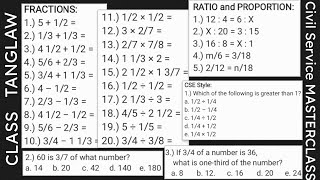
FRACTIONS:
1.) 5 + 1/2 =
2.) 1/3 + 1/3 =
3.) 4 1/2 + 1/2 =
4.) 5/6 + 2/3 =
5.) 3/4 + 1 1/3 =
6.) 4 – 1/2 =
7.) 2/3 – 1/3 =
8.) 4 1/2 – 1/2 =
9.) 5/6 – 2/3 =
10.) 3/4 – 1 1/3 =
11.) 1/2 × 1/2 =
12.) 3 × 2/7 =
13.) 2/7 × 7/8 =
14.) 1 1/3 × 2 =
15.) 2 1/2 × 1 3/7 =
16.) 1/2 ÷ 1/2 =
17.) 2 1/3 ÷ 3 =
18.) 4/5 ÷ 2 1/2 =
19.) 5 ÷ 1/5 =
20.) 3/4 ÷ 3/8 =
CSE Style:
1.) Which of the following is greater than 1?
a. 1/2 ÷ 1/4
b. 1/2 – 1/4
c. 1/4 ÷ 1/2
d. 1/4 + 1/2
e. 1/4 × 1/2
2.) 60 is 3/7 of what number?
a. 14
b. 20
c. 42
d. 140
e. 180
3.) If 3/4 of a number is 36, what is one-third of the number?
a. 8
b. 12
c. 16
d. 20
e. 24
RATIO and PROPORTION:
1.) 12 : 4 = 6 : X
2.) X : 20 = 3 : 15
3.) 16 : 8 = X : 1
4.) m/6 = 3/18
5.) 2/12 = n/18
part1:
https://youtu.be/DuVEguCq_KQ

In this video, we will learn the basics of fractions and the different types.
#Fractions #Basics #Kids

#fraction #fractions #nationapprenante #éducation #écoleàlamaison #cm1 #cm2 #mathématiques #nombre #calculs #primaire #enfants #élémentaire #divisions #cycle3 #maths #calculs #maths #écoleprimaire
Cette vidéo permet de découvrir la notion de fraction simple. Elle est essentiellement destinée aux élèves de CM1, mais peut-être utilisée comme un rappel pour les élèves de CM2. Il s'agit de découvrir les fractions à partir d'une situation de la vie courante. Les élèves ont sans doute déjà parlé de la notion de demi et quart au cycle 2 et ils découvrent comment les représenter (numérateur et dénominateur). Ils apprennent à utiliser les fractions pour rendre compte de partages.
Découvrez nos cahiers de soutien scolaire adaptés pour chaque année du CP au CM2 : https://maitrelucas.fr/livres/
Quiz : https://maitrelucas.fr/exercic....e/quiz-debuter-les-f
Découvrez la carte mentale de cette leçon afin de la mémoriser plus rapidement : https://maitrelucas.fr/carte-m....entale/decouvrir-les
Fiche d'exercices : https://maitrelucas.fr/fiche/fractions-cm1-cm2/
Retrouvez toutes les vidéos de Maître Lucas en visitant son site : https://maitrelucas.fr/bibliotheque-video/
Ainsi que cette leçon : https://maitrelucas.fr/lecons/....les-fractions-cm1-cm
Mon conseil : il me semble important d'exploiter la notion de fraction au quotidien. De nombreuses situations permettent de les aborder, notamment avec des partages. Vous pouvez progressivement augmenter le nombre de parts (1/10, 3/20, etc.) en faisant un lien constant avec une situation concrète pour votre enfant.
Compétences :
- Produire et utiliser diverses représentations des fractions.
- Représenter une fraction, lire et écrire une fraction, donner la fraction d'une quantité donnée.
- Utiliser des fractions pour rendre compte de partages de grandeurs ou de mesures de
grandeurs.
Les chapitres dans cette vidéo :
00:00 Introduction les fractions
00:35 C'est quoi une fraction ?
01:53 Les demis
02:20 Les quarts
03:00 Après le quart ?
04:11 Comparer des fractions
04:47 Les fractions et les entiers
05:30 Numérateur et dénominateur
05:44 Exercices sur les fractions
07:10 Carte mentale et exercices sur les fractions
À qui s'adresse cette vidéo :
Niveau : CM1, CM2
Matière : Maths CM1, Maths CM2, Mathématiques CM1, Mathématiques CM2, Nombres et calculs CM1, Nombres et calculs CM2
Cours : Mathématiques, Maths, Opérations
Maître Lucas est enseignant depuis de nombreuses années. Il a enseigné à tous les niveaux de l'école maternelle et élémentaire en Europe et aux États-Unis. Il a d'ailleurs obtenu un prix d'enseignement à New York. Aujourd'hui, il s'occupe de la formation des enseignants, mais est toujours disponible pour proposer de nouvelles vidéos à ses abonnés :-).

Viewers like you help make PBS (Thank you 😃) . Support your local PBS Member Station here: https://to.pbs.org/PBSDSDonate
They have some of the best caterpillars in Peru. The best.
Follow all of our Peru adventures on this playlist: http://bit.ly/SmartPeru
↓ More info and sources below ↓
Special thanks to Andy Warren, David Pfennig, Alex Wild, and Gustavo Londoño for helpful discussions for this video! #mimicry #rainforest
You should definitely be following Aaron Pomerantz:
http://www.thenextgenscientist.com/
Twitter: @AaronPomerantz
IG: @nextgenscientist
Special thanks to Rainforest Expeditions for hosting us! Visit http://www.perunature.com/
Check out Deep Look for more awesome up-close science: https://www.youtube.com/user/KQEDDeepLook
Cinerous mourner nest video courtesy of Dano Grayson: http://danograyson.com/
Cinerous mourner photos by Santiago David
References:
d'Horta, Fernando Mendonça, Guy M. Kirwan, and Dante Buzzetti. "Gaudy juvenile plumages of cinereous mourner (Laniocera hypopyrra) and Brazilian laniisoma (Laniisoma elegans)." The Wilson Journal of Ornithology 124.3 (2012): 429-435.
Forbes, Peter. Dazzled and deceived: mimicry and camouflage. Yale University Press, 2011. http://amzn.to/2dE444Z
Kikuchi, David W., and David W. Pfennig. "Predator cognition permits imperfect coral snake mimicry." The American Naturalist 176.6 (2010): 830-834.
Londoño, Gustavo A., Duván A. García, and Manuel A. Sánchez Martínez. "Morphological and behavioral evidence of Batesian mimicry in nestlings of a lowland Amazonian bird." The American Naturalist 185.1 (2015): 135-141.
Rabosky, Alison R. Davis, et al. "Coral snakes predict the evolution of mimicry across New World snakes." Nature communications 7 (2016).
Savage, Jay M., and Joseph B. Slowinski. "The colouration of the venomous coral snakes (family Elapidae) and their mimics (families Aniliidae and Colubridae)." Biological Journal of the Linnean Society 45.3 (1992): 235-254.
Thompson, Martin J., and Martijn JTN Timmermans. "Characterising the phenotypic diversity of Papilio dardanus wing patterns using an extensive museum collection." Plos one 9.5 (2014): e96815.
Wickler, Wolfgang. Mimicry in Plants and Animals: Trans. by RD Martin. Weidenfeld & Nicolson, 1968.
----------------
It’s Okay To Be Smart is written and hosted by Joe Hanson, Ph.D.
Have an idea for an episode or an amazing science question you want answered? Leave a comment or check us out at the links below!
Facebook: http://www.facebook.com/itsokaytobesmart
Twitter: http://twitter.com/okaytobesmart
http://twitter.com/DrJoeHanson
Tumblr: http://www.itsokaytobesmart.com
Instagram: http://instagram.com/DrJoeHanson
Produced by PBS Digital Studios
Music via APM
Stock images from SciencePhoto http://www.sciencephoto.com/ and Shutterstock http://www.shutterstock.com

PBS Member Stations rely on viewers like you. To support your local station, go to: http://to.pbs.org/DonateOKAY
↓ More info and sources below ↓
The Nobel Prizes reward the greatest accomplishments of the human race. Right? Then why haven't they changed much in 100+ years? Do they really represent how science is done? And why so few women?
References and more:
Molly Oldfield - The Secret Museum http://amzn.to/173lLpj
Georgia Lupi Nobel Prize infographic: http://www.brainpickings.org/i....ndex.php/2012/11/29/
Alfred Nobel's will: http://www.nobelprize.org/alfr....ed_nobel/will/will-f
Top 10 Nobel snubs: http://www.scientificamerican.....com/slideshow.cfm?id
Nobel Prize controversies (like Johannes Fibiger) http://en.wikipedia.org/wiki/N....obel_Prize_controver
Women who have won science Nobels http://mentalfloss.com/article..../53186/14-women-whov
The Nobel ignores how modern science works: http://spectrum.ieee.org/tech-....talk/aerospace/astro
Nobel prize and myth of the "lone genius" http://blogs.scientificamerica....n.com/the-curious-wa
Thomas Edison on success: http://www.brainpickings.org/i....ndex.php/2013/02/11/
Steve Jobs on creativity: http://www.wired.com/wired/arc....hive/4.02/jobs_pr.ht
Open letter to Nobel committee: http://www.newscientist.com/ar....ticle/dn17863-open-l
Thumbnail art via catwalker/Shutterstock
-----------
Join us on Patreon!
https://patreon.com/itsokaytobesmart
Twitter
http://www.twitter.com/DrJoeHanson
http://www.twitter.com/okaytobesmart
Instagram
http://www.instagram.com/DrJoeHanson
http://www.instagram.com/okaytobesmart
Merch
https://store.dftba.com/collec....tions/its-okay-to-be
Facebook
https://www.facebook.com/itsokaytobesmartpbs/

PBS Member Stations rely on viewers like you. To support your local station, go to: http://to.pbs.org/DonateOKAY
↓ More info and sources below ↓
We’re on PATREON! Join the community ►► https://www.patreon.com/itsokaytobesmart
SUBSCRIBE so you don’t miss a video! ►► http://bit.ly/iotbs_sub
Could humans ever evolve to have wings? Why don’t fish have propellers? Why don’t tigers have wheels? Why don’t zebras have laser turrets? These might all seem like stupid questions (and maybe they are!) but they can teach us a lot about how evolution actually works, and how it doesn’t work.
References: https://sites.google.com/view/....whatisimpossible-ref
-----------
Big Thank you to our Brain Trust Patrons:
Roy Lasris
Javier Soto
dani bowman
David Johnston
Ahmed Elkhanany
Zenimal
Salih Arslan
Baerbel Winkler
Robert Young
Amy Sowada
Benjamin Teinby
Eric Meer
Jay Stephens
Peter Ehrnstrom
Dustin
Marcus Tuepker
Karen Haskell
AlecZero
Diego Lombeida
Join us on Patreon!
https://patreon.com/itsokaytobesmart
Twitter
http://www.twitter.com/DrJoeHanson
http://www.twitter.com/okaytobesmart
Instagram
http://www.instagram.com/DrJoeHanson
http://www.instagram.com/okaytobesmart
Merch
https://store.dftba.com/collec....tions/its-okay-to-be
Facebook
https://www.facebook.com/itsokaytobesmartpbs/

Viewers like you help make PBS (Thank you 😃) . Support your local PBS Member Station here: https://to.pbs.org/PBSDSDonate
A dose of reality about vaccines…
Subscribe: http://bit.ly/iotbs_sub Twitter: @okaytobesmart
↓ More info and sources below ↓
As more and more parents are choosing not to vaccinate their children or are vaccinating them later, diseases like measles are making a comeback. What's behind this antivax movement? Are vaccines safe? How do vaccines work? Why do some people claim there is a link between vaccines and autism? This week we look at why are people afraid of something that has saved so many lives, and the history and science of vaccines. #vaccine #antivax #measles
REFERENCES AND FURTHER READING:
"The Panic Virus" by Seth Mnookin: http://amzn.to/1CB8Q7p
"On Immunity" by Eula Biss: http://amzn.to/1FTmmH1
Watch "Vaccines: Calling the Shots" from PBS' NOVA: https://www.youtube.com/watch?v=NVCO6_bpsEY
The Robert Falcon Scott expedition and the lost cure for scurvy, by Maciej Cegłowski: http://idlewords.com/2010/03/scott_and_scurvy.htm
The incredible value of vaccines: http://www.gavi.org/about/miss....ion/facts-and-figure
The Guardian's herd immunity simulation: http://www.theguardian.com/soc....iety/ng-interactive/
Map of global vaccine rates: http://gamapserver.who.int/gho..../interactive_charts/
How risky are vaccine side effects? http://www.cdc.gov/vaccines/va....c-gen/side-effects.h
Eula Biss on vaccines and empathy: http://www.vox.com/2015/2/6/79....92071/how-one-vaccin
Have an idea for an episode or an amazing science question you want answered? Leave a comment below!
Follow on Twitter: http://twitter.com/okaytobesmart
http://twitter.com/jtotheizzoe
Follow on Tumblr: http://www.itsokaytobesmart.com
Follow on Instagram: http://instagram.com/jtotheizzoe
-----------------
It's Okay To Be Smart is written and hosted by Joe Hanson, Ph.DFollow me on Twitter: @jtotheizzoe
Email me: itsokaytobesmart AT gmail DOT com
Facebook: http://www.facebook.com/itsokaytobesmart
Google+ https://plus.google.com/+itsokaytobesmart
For more awesome science, check out: http://www.itsokaytobesmart.com
Produced for PBS Digital Studios
Joe Hanson - Creator/Host/Writer
Joe Nicolosi - Director
Amanda Fox - Producer, Spotzen IncKate Eads - Associate Producer
Andrew Matthews - Editing/Motion Graphics
Katie Graham - Director of Photography
John Knudsen - Gaffer
Dalton Allen - Post-Production Intern
Theme music:
"Ouroboros" by Kevin MacLeod
Other music via APM
Stock images from Shutterstock
-----------------
Last week's video:
What is Déjà Vu? https://www.youtube.com/watch?v=ut8mYGi0YRs
More videos:
Why Are Some People Left-Handed? https://www.youtube.com/watch?v=NPvMUpcxPSA
Why Did We Blow on NES Games? https://www.youtube.com/watch?v=4Gf9mtXnJfM
The Science of Game of Thrones - https://www.youtube.com/watch?v=Utu-LpJn3Is
There Was No First Human - https://www.youtube.com/watch?v=xdWLhXi24Mo health (industry) mmr polio