Top videos
![10 Hidden Midjourney Features Nobody Knows About [Biggest Update]](https://i.ytimg.com/vi/KJz0X652qMI/maxresdefault.jpg)
🚀 Become an AI Master – All-in-one AI Learning https://aimaster.me/pro
Get 30 FREE credits on Evoto AI https://evoto.ai/s/aimaster
In this video, we'll take a look at the key features of the most popular AI tool called Midjourney. It has recently been updated to Midjourney 6, giving you even more options for generating both illustration and full portrait images. The developers have named one of the features like Consistent Characters. Is the update really that good or are giants like Dalle-3, Adobe FireFly better? Let's get to the bottom of it. AI Master with you, enjoy the show!
Scriptwriters: jobs.arthurwiner@gmail.com

Learn more about Abacus here! https://chatllm.abacus.ai
🚀 Become an AI Master – All-in-one AI Learning https://aimaster.me/pro
In this video I show you how to build powerful AI agents in just minutes using ChatLLM by Abacus. No coding, no extra subscriptions—just one platform that includes popular models like ChatGPT, Gemini, Claude, and more. You’ll see how AI Engineer can turn a simple idea into a fully functional agent or Artifact (like a mini-app) without writing a single line of code. It’s a complete game-changer for workflows, customer support, and even data analysis. Plus, ChatLLM offers seamless integration with Slack, Google Drive, GitHub, and more.

🚀 Become an AI Master – All-in-one AI Learning https://aimaster.me/pro
Elon Musk showed us his new AI! Will this artificial intelligence be better than ChatGPT? In this video, I will tell you about everything that is currently known about Elon Musk's AI, whose functionality can amaze you! Does it make sense to use ChatGPT now, or is Elon Musk's AI much better? We will compare these two neural networks to understand what the future holds for both ChatGPT and Elon Musk's AI! So I advise you to definitely watch this video from beginning to end to learn all about the new AI!

🚀 Become an AI Master – All-in-one AI Learning https://aimaster.me/pro
What will make ChatGPT even smarter? How to always get answers to exciting and difficult questions? What should be done so that ChatGPT can always help you when you ask for it? In this video, I will tell you about the secret methods that will help you get a shocking result after entering the ChatGPT request! Why didn't anyone talk about this before? Of course, everyone has already heard about the possibilities of this AI, but it can be made more effective! But how? Be sure to watch this video from start to finish to learn how to make ChatGPT smarter several times over!

En este video aprenderás la forma de simular el movimiento rectilíneo uniforme en GeoGebra. Este es el primer video de una serie dedicada a las posibilidades que ofrece el GeoGebra para crear simulaciones, espero que les sea de ayuda.
✅Suscríbete a Math Vitae: ✅
https://www.youtube.com/channe....l/UCBZsUd48julclRUxz
🎁Interactúa con el proyecto aquí🎁
https://www.geogebra.org/m/cwrctunh
⏱
00:00 Saludo y presentación
00:20 Recordemos
01:04 Elementos necesarios
02:23 Animación de la imagen
05:43 Cambiando el formato
08:06 Despedida

Projectile Motion
@GeoGebraChannel
See my GeoGebra creations here:
https://www.geogebra.org/u/srigraphs
Geogebra
Download GeoGebra software at https://www.geogebra.org
Music Curtesy
00:00 - 00:06 - Playing In Color by Nullhertz
00:10 - 02:43 - Creative Background by AudioCoffee
02:46 - End - Children Electro Swing 1 by Grand Project
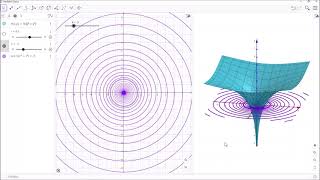
Tutorial para realizar las curvas de nivel de una superficie en Geogebra.

Conviértete en miembro de este canal para disfrutar de ventajas:
https://www.youtube.com/channe....l/UCd-qrxIpBfDKRkSbC
#ondastheta #geogebra #física #universidadsurcolombiana #creaciondeunaonda #movimientoarmonicosimple #mas #ondas #FísicaMatemáticasallimite #matematicas #LaPracticaHaceAlMaestro #algebraticos #fisicavirtual #fisica #FísicaMatemáticasProfeWilliam
___________________________________________________________________________
- Donación voluntaria: https://www.paypal.com/paypalme/profewilliam
👉🔔👈 Si quieres ayudarme para que el canal siga creciendo puedes:
- Suscribirte:
https://www.youtube.com/c/Físi....caMatemáticasProfeWi
Sígueme en mis redes sociales:
___________________________________________________________________________________
- Instagram:
https://www.instagram.com/fisicamatematicas/
- Facebook:
https://www.facebook.com/fisicamatematicasallimite
Contacto: william19280288@gmail.com


In diesem Video erfährst du, was dynamische Textfelder sind und wie du solche selber erstellen kannst :)
Falls du noch Fragen zu den Textbausteinen hast, schreibe gerne eine Nachricht in die Kommentare :)

#graph #cubic #geogebra
Pass any math or algebra test by hanging out with us and watching these short videos. 10 minutes is all you need. Question 16 to 20.
Join this channel to get access to perks:
https://www.youtube.com/channe....l/UCS1YNEY54RYgt9Obz
Get Our Premium Course -- ultimate-algebra.com
Over 200+ videos with quizzes and answer site, covers pre-algebra, algebra 1 and algebra 2.
GED preparations. Get videos, lessons and tests.
https://ultimateged.com

Pass any math or algebra test by hanging out with us and watching these short videos. 10 minutes is all you need.
Join this channel to get access to perks:
https://www.youtube.com/channe....l/UCS1YNEY54RYgt9Obz
Get Our Premium Course -- ultimate-algebra.com
Over 200+ videos with quizzes and answer site, covers pre-algebra, algebra 1 and algebra 2.
GED preparations. Get videos, lessons and tests.
https://ultimateged.com

🟨 Make learning shapes easier for kids with this fun sing-along shapes tracing video! 🤩 Starring every child’s favorite animated friends Lucas, Ruby, Lilly, and Brody, the whole family can learn the names of basic shapes, learn how to recognize them, and even learn how to draw shapes from scratch. ✏️ Getting an education is easy when friends are around, and it’s even easier in video form! 🔅
This shapes learning for kids educational video is perfect for preschoolers, toddlers, kindergarteners, and above. 🔸 It teaches circles, squares, triangles, rectangles and more using rhyming lyrics and cute animations. ✨ It’s an incredibly child-friendly video, making it perfect for parents and teachers to share with their learning children. ✔️ Learn the names and spelling of shapes with 🦁 Lucas & friends.
✍️ Learn 12 different shapes and objects in this fun and safe educational environment.
0:00 Lucas & Friends Intro
0:08 Circle 🟠
0:32 Square 🟩
1:04 Triangle 🔺
1:34 Rectangle 📕
2:06 Oval 🏉
2:30 Rhombus 🔷
3:00 Semicircle ☂️
3:25 Star ⭐
4:00 Hexagon 🛑
4:36 Pentagon 🏠
5:10 Heart 🤍
5:41 Crescent 🌙
⭐ RV AppStudios is thrilled to add our newest educational video for kids to our collection! 👍 As always, be sure to LIKE and SHARE this learning video to show more families that it can be easy and fun to learn 🔔 And don't forget to SUBSCRIBE for more free animated sing-along songs, nursery rhymes for kids and educational video by RV Kids! 🔥
📢 Coloring pages for kids and much more - https://www.rvappstudios.com
🎯 Try our FREE Educational Apps for Babies & Toddlers:
🟡 Google Play: https://play.google.com/store/....apps/dev?id=74300059
🟣 iOS: https://apps.apple.com/develop....er/rv-appstudios-llc
🟢 RV AppStudios: https://www.rvappstudios.com/kidsapp.html
🌟 Fun educational videos for toddlers by RV AppStudios:
🔷 Learn Names of Shapes - https://youtu.be/2czDty8m3-E
🟠 Shape learning for kindergarten - https://youtu.be/jlzX8jt0Now
✏️ Learn Opposite Words For Kids - https://youtu.be/6bPkAyl6LmA
🐱 Learn Animals Names and Sounds - https://youtu.be/uiI50n3qVgc
Copyright © RV AppStudios
#KidsLearning #Shape #EducationalVideo

✏️ Learn all about Wild Animals from A-Z with these fun and interactive nursery rhyme songs! 🥰 Watch your toddlers, preschoolers and kindergarteners learn about wild animals all around the world and get to practice their ABCs with fun songs that inspire kids to learn. ✨ Spark curiosity and pretend to play, all through song! 🤩
😊 Play along with Ruby and Lucas as your little one learns their ABCs while also learning about wild animals from A to Z. 🔸 Soon your whole family will be singing along with these fun videos in ultra HD 4k from RV AppStudios. ✔️ If you like educational kids videos like these make sure to follow our channel and turn on the notification bell so you don’t miss a video!
⦿ Learn alphabets with their animals name:
🐊 Alligator
🐻 Bear
◾ Cheetah
🦌 Deer
🐘 Elephant
🦊 Fox
🦒 Giraffe
🦛 Hippopotamus
◾ Iguana
🐆 Jaguar
🐨 Koala
🦁 Lion
🐒 Monkey
◾ Numbat
◾ Ostrich
🐼 Panda
◾ Quokka
🦏 Rhinoceros
🦨 Skunk
🐅 Tiger
◾ Umbrella Cockatoo
◾ Vulture
🐺 Wolf
◾ Xenopus
◾ Yak
🦓 Zebra
⭐ RV AppStudios is thrilled to add our newest song for kids to our collection, and one we're sure your kids will love singing along-to! 👍 As always, be sure to LIKE and SHARE this kids song to show more families that it can be easy and fun to learn 🔔 And don't forget to SUBSCRIBE for more free animated sing-along songs and nursery rhymes for kids by RV Kids! 🔥
📢 Coloring pages for kids and much more - https://www.rvappstudios.com
🎯 Try our FREE Educational Apps for Babies & Toddlers:
🟡 Google Play: https://play.google.com/store/....apps/dev?id=74300059
🟣 iOS: https://apps.apple.com/develop....er/rv-appstudios-llc
🟢 RV AppStudios: https://www.rvappstudios.com/kidsapp.html
🌟 Fun educational videos for toddlers by RV AppStudios:
🌻 Learn Farm Animals Names and Sounds - https://youtu.be/mtP11p1xuCY
🐱 Animals Sounds & Baby Names - https://youtu.be/4jeHK_9NiXI
✏️ Alphabet Learning Videos For Toddlers - https://youtu.be/X-ktkw8LY70
📖 ABC Flashcards for Toddlers - https://youtu.be/p-kAI-qOeJA
Copyright © RV AppStudios
#WildAnimals #KidsLearning #Alphabet

Welcome to our sing-along nursery rhyme video for kids! 🤩 In this video, we'll be singing Miss Polly Had a Dolly poem, a fun and educational song that's perfect for teaching children new words and new rhymes (and perfect for just being entertaining!). 👪 Grab the kids and join us for a fun time!
🦁 Everyone's favorite animated game characters are here to sing along: Lucas & friends! 🐰 They're joined by toe-tapping music and child-friendly animations that make for the perfect family environment. ✔️ The entire video is also presented in glorious ultra HD 4k for premium audio and visual quality. Singing along to the Miss Polly Had a Dolly song has never looked so good! 🥰
🎤 Miss Polly had a Dolly lyrics:
Miss Polly had a dolly who was sick, sick, sick
And she called for the doctor to come quick, quick, quick
The doctor came with his bag and his hat
And he knocked at the door with a rat-a-tat-tat
He looked at the dolly and he shook his head
And he said, "Miss Polly, put her straight to bed"
He wrote on a paper for a pill, pill, pill
I'll be back in the morning if the baby's still ill
Miss Polly had a dolly who was sick, sick, sick
And she called for the doctor to come quick, quick, quick
The doctor came with his bag and his hat
And he knocked at the door with a rat-a-tat-tat
He looked at the dolly and he shook his head
And he said, "Miss Polly, put her straight to bed"
He wrote on a paper for a pill, pill, pill
I'll be back in the morning if the baby's still ill
📌 We hope kids and parents enjoy this educational video, as we made it to help teach new things and to help families have fun. 📸 Keep your camera ready to take pictures of your child's smile when Lucas & friends show up on the screen!
⭐ Baby songs, preschool songs, nursey rhymes songs, and so many more kids videos available here. If our video entertains your child and makes them happy, please hit the LIKE button. SHARE it with your friends and family members so that more and more kids can sing and have fun. 👍 SUBSCRIBE to our channel RV Kids to watch our other nursery rhymes, kids songs, and educational videos for children and parents. 🔔 And make sure you turn on the bell icon to get notified as soon as our new videos come up. 🔥
🛍️ Official Lucas & Friends Store Now Open - https://shop.rvappstudios.com
📢 Checkout Lucas & Friends Educational Children's Books: https://www.amazon.com/Lucas-F....riends-by-RV-AppStud
🎯 Try our FREE Educational Apps for Babies & Toddlers:
🟡 Google Play: https://play.google.com/store/....apps/dev?id=74300059
🟣 iOS: https://apps.apple.com/develop....er/rv-appstudios-llc
🟢 RV AppStudios: https://www.rvappstudios.com/kidsapp.html
🌟 More fun nursery rhymes and kids songs by RV AppStudios:
🥳 Put Your Hands In the Air Song - https://youtu.be/lKemaWQif4g
🦁 Lucas Song RV AppStudios - https://youtu.be/jpSMPm-DFUs
🎂 Birthday Song for Children - https://youtu.be/naWirAMrE5c
🥰 Humpty Dumpty Kids Song - https://youtu.be/mE1W-IE3_Dc
Copyright © RV AppStudios
#LucasAndFriends #KidsSong #NurseryRhymes

Watch our new 'Wheels on the Bus + More Kids Songs and Nursery Rhymes' video with your children. 🤩 Get ready to sing with your kids as you enjoy these captivating and cute sing-along songs with lyrics! 🌟 Plus, get ready to tap your feet and dance with Lucas and Ruby?
Our nursery rhymes are fun, filled with fun & laughter, plus kids get to see Lucas & Ruby interact for even more fun! This fun and exciting collection of nursery rhymes includes The Wheels on the Bus, Head, Shoulders, Knees & Toes, Daddy Finger Song, Baa Baa Black Sheep Song, London Bridge is Falling Down, Five Little Monkeys, Bingo Song, and Five Little Ducks children's song. 🥰
Tap on the time track to enjoy your favorite nursery rhyme with lyrics.
00:11 Wheels on the Bus Song 🚍
02:59 Head, Shoulders, Knees & Toes 🦶
04:29 Daddy Finger Song 🖐️
05:58 Baa Baa Black Sheep Song 🐑
07:41 London Bridge is Falling Down 🌉
09:15 Five Little Monkeys 🐒
11:22 Bingo Song (B-I-N-G-O) 🐶
14:05 Five Little Ducks 🦆
⭐ RV AppStudios is thrilled to release our first compilation of nursery rhymes, we heard you parents 🙂. Our compilation of kids songs and nursery rhymes is perfect for children and parents. Get ready to sing to our tunes! 👍 As always, be sure to LIKE and SHARE this kids song to show more families that it can be easy and fun to learn. 🔔 SUBSCRIBE to our channel for more ultra HD 4K nursery rhymes and kids songs by RV Kids! 🔥
📢 Also, check out our FREE coloring pages for kids and much more - https://www.rvappstudios.com
🎯 Try our FREE Educational Apps for Babies & Toddlers:
🟡 Google Play: https://play.google.com/store/....apps/dev?id=74300059
🟣 iOS: https://apps.apple.com/develop....er/rv-appstudios-llc
Copyright © RV AppStudios
#KidsSongs #NurseryRhymes #KidsVideos

Kids can learn the ABCs with sing-along songs for babies and toddlers! 🤩 Sing your ABCD alphabet from A to Z with our adorable characters Lucas 🦁 and Ruby 🐰. ABC song for alphabet learning made easy with fun nursery rhyme songs created so that kids and families can sing and enjoy together. 🌟
What better way to learn the ABC and the alphabet than with cute and catchy sing-along ABC songs? ✏️ Make learning fun and easy for preschoolers and children of all ages as they get an education simply by listening to ABC songs and singing with their favorite cartoon friends. 🎵 Our colorful videos have more than just ABC nursery rhymes and alphabet lessons, they also come with Ruby, Lily, and other characters from our educational mobile games! 🐱
Children, kindergarteners, and older kids find it easy to remember lessons when they learn ABC song through catchy music. ✨ Rhyming lyrics are simple to memorize, and because they’re presented with colorful visuals and catchy music, kids can’t help but get into a learning mode. The best part is they won’t even realize they’re getting an education, they’re just having fun! 🎉
🎯 RV AppStudios creates free, family-safe learning materials for kids around the world. 🌎 Make learning easy with our educational apps, nursery rhymes & kids songs. 🔥
#ABCSong #ABCD #ABC

🤩 Enjoy Baa Baa Black Sheep Song Winter Edition ❄️, Ten In The Bed, Old MacDonald Had A Farm, Itsy Bitsy Spider, and Five Little Speckled Frogs song back to back. ✨ Let your kids have a great time watching these super adorable nursery rhymes. These popular kids songs in this compilation video feature Lucas and Ruby, kids love singing along with them. ✔️ All toe-tapping songs in one video will make babies, toddlers, kids, preschoolers, and kindergartners very happy.
🥰 Parents, teachers, grandparents, and caretakers will find this video very helpful in keeping kids engaged for some time, all while making sure that they are enjoying kids’ songs.
👉🏻 Tap on the time track to enjoy your favorite nursery rhyme:
0:00 Introduction
00:12 Baa Baa Black Sheep Song 🐑
01:54 Ten In The Bed Nursery Rhyme 🛏️
04:23 Old MacDonald Had A Farm Song 🚜
07:01 Itsy Bitsy Spider Nursery Rhyme 🕷️
09:20 Five Little Speckled Frogs Kids Song 🐸
⭐ RV AppStudios is thrilled to add our newest dance song for kids to our collection, one we're sure your kids will love singing along to the music! 👍 As always, be sure to LIKE and SHARE this kids song to show more families that it can be easy and fun to learn 🔔 And don't forget to SUBSCRIBE for more free animated sing-along songs and nursery rhymes for kids by RV Kids! 🔥
✔️ Watch our playlists:
▪️ Educational Videos for Kids (Babies & Toddlers)
https://youtube.com/playlist?l....ist=PLyl0JyYbEqAIb1m
▪️ Kids Songs and Nursery Rhymes
https://youtube.com/playlist?l....ist=PLyl0JyYbEqAIPLq
📢 Coloring pages for kids and much more - https://www.rvappstudios.com
🎯 Try our FREE Educational Apps for Babies & Toddlers:
🟡 Google Play: https://play.google.com/store/....apps/dev?id=74300059
🟣 iOS: https://apps.apple.com/develop....er/rv-appstudios-llc
Copyright © RV AppStudios
#NurseryRhymes #BabySongs #KidsVideo

Colors For Kids | Green Color, Blue Color, Grey Color Where Are You Song | Learn Colors For Toddlers
🎨 The Colors Finger Family song with lyrics will make learning colors for kids exciting and fun. 🖍️ A great way for children to learn colors while watching fun nursery rhymes and children's songs with Lucas 🦁 , Ruby 🐰 and friends. Kids can learn to recognize colors and their spelling with this fun and adorable colors song! 🖌️
✔️ Our colors for kids song include Red, green, blue, purple, black, yellow, white, and many more colors. 🍭 Plus, colors song are the perfect way to teach children basic colors while signing along to a fun family finger tune! 🤩
🎧 Lyrics:
Red color, red color
Where are you?
Here I am, here I am, how do you do?
Green color, green color
Where are you?
Here I am, here I am, how do you do?
Blue color, blue color
Where are you?
Here I am, here I am, how do you do?
Yellow color, yellow-color
Where are you?
Here I am, here I am, how do you do?
Orange color, orange-color
Where are you?
Here I am, here I am, how do you do?
Pink color, pink color
Where are you?
Here I am, here I am, how do you do?
Purple color, purple color
Where are you?
Here I am, here I am, how do you do?
Black colour, black colour
Where are you?
Here I am, here I am, how do you do?
Grey color, grey color
Where are you?
Here I am, here I am, how do you do?
White color, white color
Where are you?
Here I am, here I am, how do you do?
👉 Like these sing-along baby songs and nursery rhymes? 🔔 SUBSCRIBE to our channel for more ultra HD 4K nursery rhymes and kids songs! 👍 Be sure to LIKE and SHARE so more families can discover free sing-along kids songs by RV Kids! 🔥
🔗 Checkout our website for coloring pages for kids - https://www.rvappstudios.com
🎯 Try our Educational Apps for Babies & Toddlers:
🟡 Google Play: https://play.google.com/store/....apps/dev?id=74300059
🟣 iOS: https://apps.apple.com/develop....er/rv-appstudios-llc
Copyright © RV AppStudios
#Color #NurseryRhymes #LearnColors

🥰 Grab the kids, it's time to learn ABC's, Colors & More! ✏️ This amazing sing-along educational compilation video teaches everything from the alphabet to shapes and colors, all in a fun, colorful, and friendly environment. It's not just one lesson for kids, it's an awesome learning experience! 🎓
🤩 Children as young as babies all through toddler, preschool, and kindergarten years will love this video collection. It features sing-along activities that help kids learn shapes, memorize the alphabet (ABCs), learn to count 1 to 10, remember the months of the year, and learn basic colors. 🚀 Each video is bright and cheery and extremely catchy, so your kids can't help but sing along while getting their education. And all you have to do is hit play! 🎯
◉ Tap on the time track to quickly enjoy your favorite toddler learning video.
00:00 ABC learning for kids (A to F)
02:42 Rainbow Colors Song
03:33 Lucas and Ruby Introduction
04:07 Shapes Learning for Preschool (Triangle)
07:05 Learn Colors with Color Stack Rings (Red, Pink, Blue, Yellow, Red, Green)
10:55 Number Learning for Toddlers (1 to 5)
12:29 Learn Alphabet Letters G to L
14:10 Learn Shape with Circle
17:04 Color Flashcard Orange, Blue
23:19 ABC Learning for Toddlers (M to R)
25:00 Surprise Eggs for Toddlers
25:40 Color Flashcard (Yellow, Purple)
28:32 Let's Learn the Colors (Orange, Green, Purple, Brown)
29:46 Head Shoulder Knees and Toes Song
33:32 Color Flashcard for Brown & Pink
36:19 ABCD Learning (S to Z)
39:15 Put Your Hands in the Air Kids Song
42:33 Learn Colors (Red, Pink, Blue, Yellow)
43:47 Lucas is playing Peekaboo
49:22 ABC for Kids (A to L)
55:23 Toddler Dance Song
58:31 Pogo Stick Jumping
59:58 Color Learning for Toddlers (Orange, Green, Purple, Brown)
01:01:12 ABC for Toddlers to Learn (M to Z)
✔️ All of our lessons star Lucas & Friends, the adorable and much beloved animated friends featured in many free educational videos and learning apps for kids. Be sure to watch in Ultra HD 4K for the best experience! 🔆
🥰 We hope our learning videos will make it easier and more fun for your child to learn new things! Hit the LIKE button and SHARE it with friends and other family members! ⭐ RV AppStudios is thrilled to add our newest educational videos for toddlers to our collection, and one we're sure your kids will love singing along-to! 🔔 Don't forget to SUBSCRIBE for more free animated sing-along songs, nursery rhymes for kids and learning content by Lucas and friends! 🔥
🛍️ Official Lucas & Friends Store Now Open - https://shop.rvappstudios.com
📢 Checkout Lucas & Friends Educational Children's Books: https://www.amazon.com/Lucas-F....riends-by-RV-AppStud
🎯 Try our FREE Educational Apps for Babies & Toddlers:
🟡 Google Play: https://play.google.com/store/....apps/dev?id=74300059
🟣 iOS: https://apps.apple.com/develop....er/rv-appstudios-llc
🟢 RV AppStudios: https://www.rvappstudios.com/kidsapp.html
🌟 Fun educational videos for toddlers by RV AppStudios:
🦕 Dinosaurs For Kids + Dinosaur Song https://youtu.be/i_tgKZr_OeA
✏️ Learning Videos For Toddlers https://youtu.be/H-9eydT066s
🥰 Alphabet ABC Song, Days of the Week https://youtu.be/LK-5e29WZVY
🐕 Numbers & Animals for Kids https://youtu.be/Hv0s85XFVZc
Copyright © RV AppStudios
#toddlerlearningvideo #preschoollearning #baby #kidslearning

🤩 Help your kids learn the basics before school in this huge 7-in-1 compilation video! Sing-along with Lucas & Friends as children learn everything from the ABC to animals, shapes, colors, and parts of the body, all presented in a fun, family-safe atmosphere. 🎯
Babies, toddlers, preschoolers, and kindergarteners can enjoy these songs for kids as they learn the English alphabet, colors, and other simple educational diversions. ✏️ It's a great way to share a few lessons while kids have fun. ✔️ All you have to do is hit the play button and watch your little ones learn while they sing!
📌 Get your family together and enjoy this fun sing-along educational journey! 🔥
🔆 Tap on the time track to quickly enjoy your favorite toddler learning video with Lucas & friends.
00:00 - Lucas and Ruby Introduction
00:09 - A to Z Alphabets
05:40 - Learn Alphabet with Animals
07:54 - Number Counting 1-10
09:55 - Learn Name of the Shapes
19:13 - Animals Names & Sounds
22:43 - Learn Colors for Toddlers
28:40 - Learn Parts of the Body
35:03 - Alphabets for Kids
40:30 - ABC Animals for Children
42:45 - Learn to Count 1 to 10
44:46 - Shapes for Kids to Learn
53:58 - Animals Name and Sound
57:27 - Colors Names for Kids
✔️ This video is available in ultra HD 4k for the highest possible video and audio quality. It stars everyone's favorite animated buddies, 🦁 Lucas & friends, and it's family-friendly, so everyone can enjoy it! 🕺
🥰 Like free learning sing-along videos like this? Hit the LIKE button and SHARE it with friends and other family members! ⭐ RV AppStudios is thrilled to add our newest educational videos for toddlers to our collection, and one we're sure your kids will love singing along-to! 🔔 Don't forget to SUBSCRIBE for more free animated sing-along songs, nursery rhymes for kids and learning content by Lucas and friends! 🔥
🛍️ Official Lucas & Friends Store Now Open - https://shop.rvappstudios.com
📢 Lucas & Friends Educational Children's Books: https://www.amazon.com/Lucas-F....riends-by-RV-AppStud
🎯 Try our FREE Educational Apps for Babies & Toddlers:
🟡 Google Play: https://play.google.com/store/....apps/dev?id=74300059
🟣 iOS: https://apps.apple.com/develop....er/rv-appstudios-llc
🟢 RV AppStudios: https://www.rvappstudios.com/kidsapp.html
🌟 More fun nursery rhymes, kids songs and educational videos by RV AppStudios:
🐶 ABC Flashcards, Animal Sounds, Vehicle Sounds - https://youtu.be/wWYh0cUwJv4
✏️ Learn ABC Letters, Number Counting, Colors For Kids - https://youtu.be/DvTAWOItdAg
⭐ ABC Song, Learn Colors, Count Numbers & Animals for Kids - https://youtu.be/Hv0s85XFVZc
🎨 ABC Song, Counting Numbers & Learn Colors For Kids - https://youtu.be/T9ViFtzplf8
Copyright © RV AppStudios
#ABCD #abc #toddlerlearning #preschool

✏️ Help Your baby, toddler, preschooler or kindergartener learn the months of the year with this interactive and educational nursery rhyme video! 🥰 Soon your kid will be able to say all 12 months of the year from January to December, by singing along to the Months of the Year Song. 🗒️ This exciting calendar song for kids is fully animated and stars kids' favorite characters 🦁 Lucas, Ruby, Lilly, and Brody!
🤩 In this fun sing-along song children will learn to memorize all 12 months of the year in English. ✔️ This newest video is presented in full HD 4k and is fun for the whole family. It's simple, fun, and includes full animations that will help keep children engaged! ✨
🎤 12 Months of the Year:
January
February
March
April
May
June
July
August
September
October
November
December
⭐ RV AppStudios is thrilled to add our newest song for kids to our collection, and one we're sure your kids will love singing along-to! 👍 As always, be sure to LIKE and SHARE this kids song to show more families that it can be easy and fun to learn 🔔 And don't forget to SUBSCRIBE for more free animated sing-along songs and nursery rhymes for kids by RV Kids! 🔥
📢 Coloring pages for kids and much more - https://www.rvappstudios.com
🎯 Try our FREE Educational Apps for Babies & Toddlers:
🟡 Google Play: https://play.google.com/store/....apps/dev?id=74300059
🟣 iOS: https://apps.apple.com/develop....er/rv-appstudios-llc
🟢 RV AppStudios: https://www.rvappstudios.com/kidsapp.html
🌟 Fun educational videos for toddlers by RV AppStudios:
🍭 Learn Colors With Lucas & Ruby - https://youtu.be/qMkXnwRlpRo
✏️ Numbers 1 to 20 for Kids - https://youtu.be/2KwCtfvvMsY
🎨 Color Song for Kids - https://youtu.be/PoMPLwKgeKw
🐘 Animal Sounds for Kids - https://youtu.be/_wpG04sx84E
Copyright © RV AppStudios
#Months #KidsSongs #ToddlerSongs
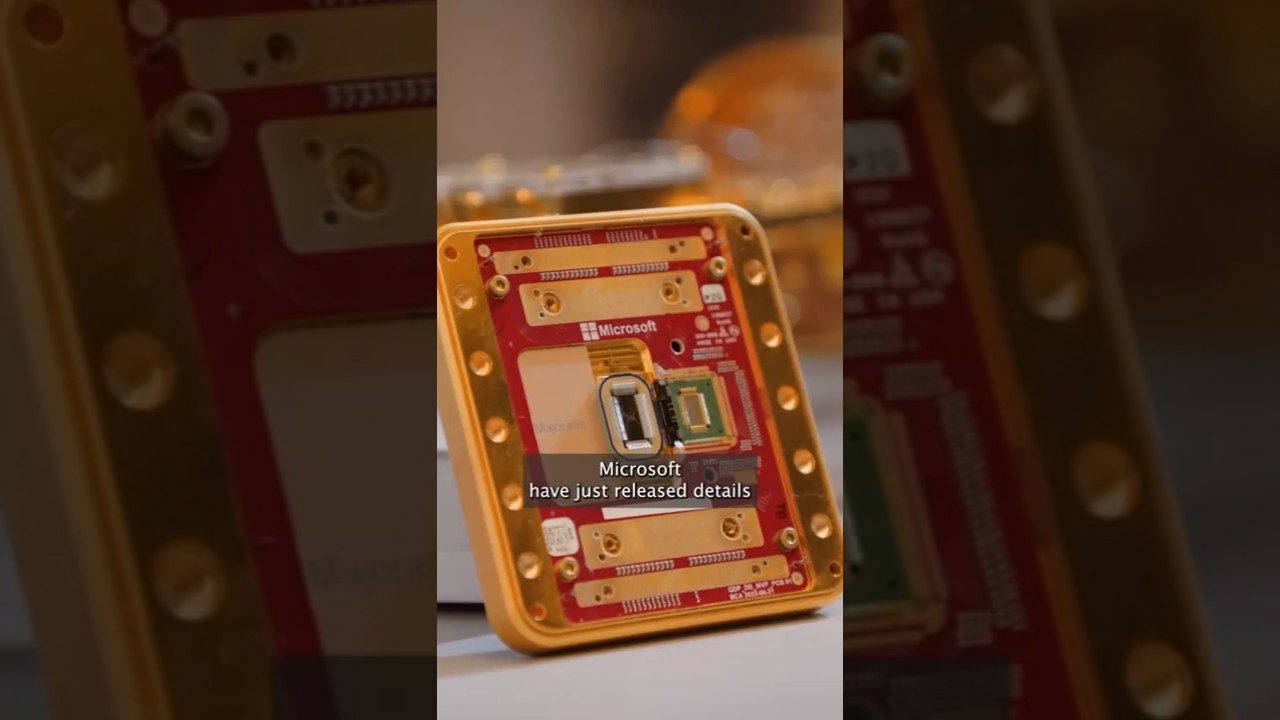
Microsoft's just unveiled a qubit that uses a topological superconductor material, this is why this material is exciting for quantum computer development, it's resitance to noise.
Read more on their blog here: https://azure.microsoft.com/en-us/blog/quantum/

Everything you need to know about gravitational waves. In February 2016 scientists announced the first detection of gravitational waves by humans on Earth. This was a huge, world changing, discovery. The gravitational waves were caused by a pair of colliding black holes 1.3 billion light years away 1.3 billion years ago. This video summaries all the of the mind blowing facts about the gravitational waves and describes LIGO, the incredibly sensitive telescope that detected them.
#gravitationalwaves #space #DomainOfScience
If you would like to buy a poster you can get one here http://www.redbubble.com/people/dominicwalliman/works/24649310-gravitational-wave-astronomy?asc=u&p=poster&rel=carousel
Errata and clarifications.
I endeavour to be as accurate as possible in my videos, but I am human and definitely don’t know everything, so there are sometimes mistakes. Also, because my videos are summaries of some quite complex science, I make simplifications. Some of these are intentional because I don’t have time to go into full detail, but sometimes they are unintentional and here is where I clear them up.
1. I got the month of the original detection wrong! It was September 2015, not November 2015. Silly me, my apologies.
2. “1.3 billion years ago, 1.3 billion light years away” This is incorrect and an oversight on my part. I completely forgot to take into account the expansion of the Universe. The resulting black hole is 1.3 billion light years from us today, but was closer to us when the collision happened, which means that it happened less than 1.3 billion years ago. I tried to work out exactly when but was stumped because I couldn’t find the function for the acceleration of the expansion of the universe. The redshift of the signal from the black holes was about 10%, so I thought the collision was 10% closer in time than 1.3 billion years i.e. 1.18 billion years, but I think it might be a bit more complicated than that.
3. LIGO schematic animation. I made a couple of silly errors here. The first circular mirror that the laser hits should be 90º to the way I oriented it: half the laser light is transmitted and half reflected, each one going up a different arm.
4. LIGO schematic animation. When the laser bounced back and forth it should bounce between the two suspended mirrors and not go all the way back to the diagonal mirror.
5. VIRGO is near Pisa, not at Trento as I drew on the map. I said the right thing but drew the wrong thing. My apologies.
6. ‘A second even more powerful collision.” Wrong again! The second collision was less powerful and the signal was more buried in the noise.
I’m not happy with the number of flat out mistakes I made on this one! I will try better in the future. I blame it on the Christmas spirits.
If you would like to find out more about gravitational waves and the detection here are the original papers and some very informative links.
Main LIGO scientific paper: http://journals.aps.org/prl/ab....stract/10.1103/PhysR
Supplementary LIGO paper: http://iopscience.iop.org/arti....cle/10.3847/2041-820
Articles:
http://physicsworld.com/cws/ar....ticle/news/2016/feb/
http://www.nature.com/news/the....-black-hole-collisio
http://www.businessinsider.com..../black-hole-collisio
http://www.space.com/33176-gra....vitational-waves-fro
http://www.ligo.org/science/Pu....blication-GW150914/i
http://www.nature.com/news/gra....vitational-waves-6-c
http://www.nature.com/news/the....-black-hole-collisio
What they sound like:
http://www.vox.com/2016/6/15/1....1948618/ligo-gravita
Also, if you enjoyed this video, you will probably like my science books, available in all good books shops around the work and is printed in 16 languages. Links are below or just search for Professor Astro Cat. They are fun children's books aimed at the age range 7-12. But they are also a hit with adults who want good explanations of science. The books have won awards and the app won a Webby.
Frontiers of Space: http://nobrow.net/shop/profess....or-astro-cats-fronti
Atomic Adventure: http://nobrow.net/shop/profess....or-astro-cats-atomic
Intergalactic Activity Book: http://nobrow.net/shop/profess....or-astro-cats-interg
Solar System App: http://www.minilabstudios.com/....apps/professor-astro
Find me on twitter, instagram, and my website:
http://dominicwalliman.com
https://twitter.com/DominicWalliman
https://www.instagram.com/dominicwalliman
https://www.facebook.com/dominicwalliman