Top videos

The total solar eclipse from Madras, Oregon on August 21, 2017. As the moon passed in front of the sun turning day to night and revealing the sun's corona, apparently all I could think to say was 'Oh my goodness!'
This awe-inspiring phenomenon returned to the US on April 8, 2024, when total solar eclipse crossed North America, passing over Mexico, the United States, and Canada.
Special thanks to our Patreon supporters! Join the community to help us keep our videos free, forever: https://ve42.co/PatreonDE
Everyone says not to photograph your first solar eclipse and I think they might be right. I was focused on getting the exposure right for Bailey's beads and the diamond ring, plus making sure to get the corona and solar flares. This was a bit stressful but I'm delighted with the results.
This video originally included more info but since I'm uploading from Madras where the internet is sluggish, I cut out three minutes so the upload would happen before I had to leave for my flight.
Special thanks also to Dr. Teagan Wall for sharing this experience with me and Raquel Nuno for inspiring me to come to Oregon.
Music from http://epidemicsound.com "Spinning Earth 2" and
Kevin MacLeod http://incompetech.com "Big Mojo"

Topic - Uses of plants
Plants are very useful to us.
in this video, you will learn different uses of plants.
00:00 Introduction
A. 00:43 Foods from plants
B. 02:37 Useful things from plants
C. 03:09 Plants gives other useful things
______________________________
AAtoons Kids
play N learn
Website - http://www.aatoonskids.com
Facebook Page - https://www.facebook.com/aatoonskids1
Twitter - https://twitter.com/aatoonskids
_____________________________________________________________
#UsesofPlants
#Plants
#PlantsandthierUses
#AAtoonsKids
______________________

We want to share a special story with you:
kurzgesagt began as a small passion project, but thanks to your support through our shop, we’ve been able to grow and keep making inspiring science videos which remain free for everyone.
From our Human Era Calendar to posters, plushies, and everything in between, every purchase helps us bring more knowledge to the world. Thank you so much for your support!
OUR CHANNELS
▀▀▀▀▀▀▀▀▀▀▀▀▀▀▀▀▀▀▀▀▀▀▀▀▀▀
German: https://kgs.link/youtubeDE
Spanish: https://kgs.link/youtubeES
French: https://kgs.link/youtubeFR
Portuguese: https://kgs.link/youtubePT
Arabic: https://kgs.link/youtubeAR
Hindi: https://kgs.link/youtubeHI
Japanese: https://kgs.link/youtubeJA
Korean: https://kgs.link/youtubeKO
HOW CAN YOU SUPPORT US?
▀▀▀▀▀▀▀▀▀▀▀▀▀▀▀▀▀▀▀▀▀▀▀▀▀▀
This is how we make our living and it would be a pleasure if you support us!
Get Prodcuts designed with ❤ https://shop-us.kurzgesagt.org
Join the Patreon Bird Army 🐧 https://kgs.link/patreon
DISCUSSIONS & SOCIAL MEDIA
▀▀▀▀▀▀▀▀▀▀▀▀▀▀▀▀▀▀▀▀▀▀▀▀▀▀
TikTok: https://kgs.link/tiktok
Reddit: https://kgs.link/reddit
Instagram: https://kgs.link/instagram
Twitter: https://kgs.link/twitter
Facebook: https://kgs.link/facebook
Discord: https://kgs.link/discord
Newsletter: https://kgs.link/newsletter
OUR VOICE
▀▀▀▀▀▀▀▀▀▀▀▀▀▀▀▀▀▀▀▀▀▀▀▀▀▀
The Kurzgesagt voice is from
Steve Taylor: https://kgs.link/youtube-voice
OUR MUSIC ♬♪
▀▀▀▀▀▀▀▀▀▀▀▀▀▀▀▀▀▀▀▀▀▀▀▀▀▀
700+ minutes of Kurzgesagt Soundtracks by Epic Mountain:
Spotify: https://kgs.link/music-spotify
Soundcloud: https://kgs.link/music-soundcloud
Bandcamp: https://kgs.link/music-bandcamp
Youtube: https://kgs.link/music-youtube
Facebook: https://kgs.link/music-facebook
If you want to help us caption this video, please send subtitles to subtitle@kurzgesagt.org
You can find info on what subtitle files work on YouTube here:
https://support.google.com/youtube/answer/2734698?hl=en-GB&ref_topic=7296214
Thank you!

Visit https://www.abcmouse.com/learn/youtube to learn more about our award-winning online learning program for children 2-8!
🌟🚀 Join us on an incredible journey as we explore the amazing concept of space elevators! Learn how these futuristic structures could one day carry people and cargo from Earth to space. Perfect for young explorers and budding scientists ready to reach for the stars! 🌌✨
👉 Discover more fun learning songs and educational videos by subscribing to our YouTube channel at https://YouTube.com/ABCmouse.
And visit https://www.abcmouse.com/learn/youtube to find out more about our award-winning online learning program for children 2–8!
© Age of Learning, Inc. All rights reserved.

Class 11th math + IIT - JEE के कोर्स से संबंधित अधिक जानकारी के लिए 8059832705 पर Whatsapp करे.
Our Website :
https://www.mathkeeda.in/
Our App :
https://play.google.com/store/....apps/details?id=com.
Instagram :
https://www.instagram.com/mathkeeda/
Facebook page
https://www.facebook.com/mathkeeda
Email id
rohitmaths212@gmail.com
#Mathkeeda #Rohitsirmaths -----------------------------------------------------------------------------------
👉 Follow us on Instgram :
https://www.instagram.com/mathkeeda/
👉 Follow our Facebook Page :
https://www.facebook.com/mathkeeda.in

Pre-order our book YOU ARE AN ARTIST (which includes new assignments!) here: http://bit.ly/2kplj2h
In which we feature responses to The Art Assignment Ep. 2: Stakeout!, given by Chicago-based artist Deb Sokolow: http://youtu.be/qbuRG-NWUuY.
Thanks to all who posted the responses featured in this video:
ConVinceingVince (friends in Balboa Park): https://www.youtube.com/watch?v=Rr2rA7T6hQ0
Ajetosien (Margriet & Josien): https://www.youtube.com/watch?v=DGCLlgCy2aw
Daisy May Smith: http://bicyclemadefortwo.tumbl....r.com/post/799302466
collegeswaggernuggets (college campus selfie project): https://www.youtube.com/watch?v=B6bM0qMy-58&feature=youtu.be--
Jane83Doe: https://www.youtube.com/watch?v=2aExyiI8gg0
Julia Smith: https://www.youtube.com/watch?v=7SYQUcKwA68
Kenton Visser: http://kentonblogs.tumblr.com/....post/78723653051/sta
allylucas99: http://instagram.com/p/llg0w8TXbk/
Laufey Haraldsdóttir: http://laufeyha.tumblr.com/pos....t/78441720125/the-ar
klonschaferl (Friends in Vienna): https://www.youtube.com/watch?v=7k5m-NthHEI.
Jennifer Reynolds-Strange (Jen and Sumayya): https://www.youtube.com/watch?v=dQWo58fdmCc
Danielle Vaughn (Harvey): https://www.youtube.com/watch?v=6vmVpDjN16c
Joanna Volavka (frog w peppermints): https://www.youtube.com/watch?v=HqW_EFjyu_Q
venjb (you are beautiful mirror box): https://www.youtube.com/watch?v=wmCWBP4g4a4
CzarMadeline (pennies): https://www.youtube.com/watch?v=CZX_pT_Ok3g
Geeksdanz: https://www.youtube.com/watch?v=Oi-lFMEWQVo
The Art Assignment #2 - Stakeout Pt. 2 - "Forsaken Bubbles"
Lin Hai Wen: http://linhaiwen.wordpress.com..../2014/03/07/the-art-
Box of chocolates "for you": http://davidandlucy.blogspot.c....o.uk/2014/03/assignm
VidsByBrad (homer simpson bookmark):
https://www.youtube.com/watch?v=D3aBBsF4JoY&list=UU1plh9pszUr1vjjCINDbwVw
JoyLyte: http://youtu.be/yg-YqG0vaYw
Jeffrey Lanzini: https://www.youtube.com/watch?v=skv07DNrcpQ
Cynicus: https://www.youtube.com/watch?v=pxPABgLaBAo
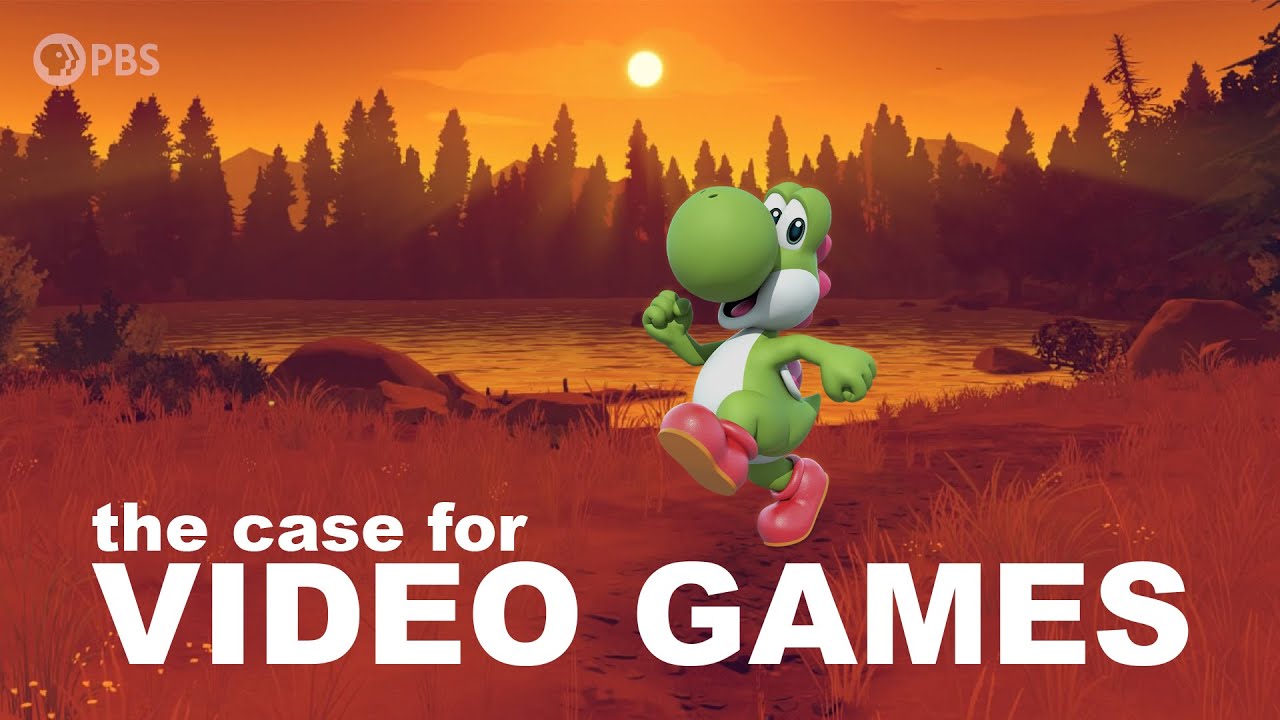
Video Games are fun, but are they art? Heck yes. We explore the history and present of video games and what sets them apart as a means of artistic expression. To learn about many other alternative means of expression, preorder a copy of You Are An Artist: http://bit.ly/2kplj2h
#videogames #gaming #videoart
Thanks to our Grandmasters of the Arts Tyler Calvert-Thompson, Divide by Zero Collection, David Golden, and Ernest Wolfe, and all of our patrons, especially Rich Clarey, Iain Eudaily, Tom Forwood, Patrick Hanna, Andrew Huynh, Eve Leonard, David Moore, Jane Quale, Gabriel Civita Ramirez, Constance Urist, Nicholas Xu, and Roberta Zaphiriou. To support our channel, visit: http://www.patreon.com/artassignment.
Subscribe for new episodes of The Art Assignment every other Thursday, and follow us elsewhere for the full Art Assignment experience:
Twitter: http://twitter.com/artassignment
Instagram: http://instagram.com/theartassignment/
Facebook group: https://www.facebook.com/group....s/artassignmentextra

#chatgpt #gemini #ai活用
━━━━━━━━━━━━━━━━━━
🏢企業様向けのAI研修のお問い合わせはコチラから🏢
https://jiso-ai.com/contact/
今AI活用やマネタイズの仕方がわからない人🤦やAI初心者の人も必見!
🚨無料期間限定🚨で
✨Youtubeでは出せないさきのAI最新情報✨&
👩💻AIノウハウ100大特典🎁を勉強会参加後にLINEで受け取れます!
AIスキルを身につけて【社内評価⏫UP⏫】や【収益化💰】
業務効率化🗒️できるココでしか手に入らない情報を
現在期間限定でしかも、無料配布しているので興味ある方は是非!!
↓↓↓
https://info.opt--in.com/p/cCQ....Yo5AUNsJh?ftid=ejeGI
ーーーーーーーーーーーーーー
約8000人以上の人が登録中!
⬇️さきのAI最新情報公式LINE⬇️
https://info.opt--in.com/p/cCQ....Yo5AUNsJh?ftid=ejeGI
ーーーーーーーーーーーーーー
🎁”LINE登録者限定"のAI特別セミナー開催
🎁”LINE登録者限定"のAI勉強会
🎁”勉強会参加者限定"のAI豪華100大特典配布
🎁”勉強会参加者限定"の特別な案内
【⬇️無料登録はこちら⬇️】
https://info.opt--in.com/p/cCQ....Yo5AUNsJh?ftid=ejeGI
━━━━━━━━━━━━━━━━━━
↓↓本日紹介したツールや動画こちら↓↓
【Gemini】
https://share.google/nWQmg0yjvZhIFzPJQ
【NotebookLM】
https://notebooklm.google.com
━━━━━━━━━━━━━━━━━━
◾️目次
00:00 OP
01:32 NotebookLMの基本説明
03:58 NotebookLM神機能解説
07:39 NotebookLM効率化機能
08:36 NotebookLM神機能活用①
10:23 NotebookLM神機能活用②
11:36 NotebookLM神機能活用③
13:09 NotebookLM神機能活用④
━━━━━━━━━━━━━━━━━━

Thousands of parents and educators are turning to the kids’ learning app that makes real learning truly fun. Try Kids Academy with
3-day FREE TRIAL! https://bit.ly/2GuGyL2
Personality Adjectives - Building Vocabulary - 3rd Grade
Some adjectives have a lot of personality! Let’s learn about positive character adjectives while watching an expert teacher thoroughly define each word! This video tutorial will expand your child’s vocabulary and grammar usage while he or she studies adjectives.
Watching this video will benefit your child because:
- New vocabulary becomes relatable with a teacher to explain each term
- Your child will gain a better understanding of adjectives that describe traits
While your child watches, he or she will learn about adjectives, build vocabulary, and learn about positive traits and emotions important to everyday life!
#TalentedAndGifted #LearnWithKidsAcademy
Kids Academy Talented and Gifted Program for kids aged 2-10:
App Store: https://smart.link/59833db06a6b8
Google Play: https://smart.link/597210af6eb83
*****
Subscribe to our channel: https://goo.gl/iG2Bdr
Connect with us on :
Our site: https://www.kidsacademy.mobi/
Facebook: https://www.facebook.com/KidsAcademyCompany
Twitter: https://twitter.com/KidsAcademyCo

You can learn more at https://curiositystream.com/smart
SUBSCRIBE so you don’t miss a video! ►► http://bit.ly/iotbs_sub
↓↓↓ More info and sources below ↓↓↓
Humans have a hard time with really big numbers, especially when it comes to DEEP TIME. The history of the Earth took a lot longer than you think, trust me. But I’m here to help you put it in perspective. With some string.
REFERENCES:
http://bit.ly/DeepTimeRefs
-----------
FOLLOW US:
Twitter: @DrJoeHanson @okaytobesmart
Instagram: @DrJoeHanson
https://www.itsokaytobesmart.com/
Merch: https://store.dftba.com/collec....tions/its-okay-to-be
Facebook: http://www.facebook.com/itsokaytobesmart
BOOKS WE’VE FEATURED:
http://smart-books.tumblr.com/
-----------
It’s Okay To Be Smart is hosted by Joe Hanson, Ph.D.
Director: Joe Nicolosi
Researcher: Sarah Jenevein
Creative Director: David Schulte
Editors/animators: Derek Borsheim
Producers: Stephanie Noone and Amanda Fox
Produced by PBS Digital Studios
Music via APM
Stock images from Shutterstock http://www.shutterstock.com

Learn more about opportunities from KiwiCo here: https://www.kiwico.com/okay
SUBSCRIBE so you never miss a video! ►► http://bit.ly/iotbs_sub
↓↓↓ More info and sources below ↓↓↓
What do raindrops look like? Exactly how we drew them as kids, right? Wrong! Teardrop-shaped rain is physically impossible. This week I went inside a vertical wind tunnel to bring you the true shape of rain.
Special thanks to iFly Indoor Skydiving in Austin, TX! Learn more about their STEM field trips: https://www.iflyworld.com/prog....rams/stem-field-trip
REFERENCES:
Dr. Scot Martin, Laboratory of Environmental Chemistry at Harvard University https://www.seas.harvard.edu/directory/smartin
Terminal Velocity of Raindrops Aloft
https://journals.ametsoc.org/d....oi/10.1175/1520-0450
The Terminal Velocity of Fall for Water Droplets in Stagnant Air
https://journals.ametsoc.org/d....oi/pdf/10.1175/1520-
Single-Drop Fragmentation Determines Size Distribution of Raindrops
https://www.nature.com/articles/nphys1340
-----------
FOLLOW US:
Twitter: @DrJoeHanson @okaytobesmart
Instagram: @DrJoeHanson
Merch: https://store.dftba.com/collec....tions/its-okay-to-be
Facebook: http://www.facebook.com/itsokaytobesmart
BOOKS WE’VE FEATURED:
http://smart-books.tumblr.com/
-----------
It’s Okay To Be Smart is hosted by Joe Hanson, Ph.D.
Director: Joe Nicolosi
Writer: Sarah Keartes
Creative Director: David Schulte
Editor/animator: Derek Borsheim
Producers: Stephanie Noone and Amanda Fox
Produced by PBS Digital Studios
Music via APM
Stock images from Shutterstock http://www.shutterstock.com

In this complete beginner's guide, I'll show you everything you need to know about Google Gemini in 2026. Whether you've never used Gemini before or you want to understand all the new features, this tutorial walks you through the entire platform step by step.
My YouTube Film Gear:
🎥 Camera: https://geni.us/B9eb5P
🎙️ Microphone: https://geni.us/QarC
🎤 Audio Interface: https://geni.us/kaosfB
🎧 Headphones: https://geni.us/5mtk
🎤 My Weekly Creator Podcast:
https://geni.us/RiqyRCP
BEST TOOLS FOR CREATORS and ENTREPRENEURS:
🌐Web Hosting and Domains (Hostinger): https://geni.us/p3vg1p
📽️YouTube Optimization (Creative Fuel): https://geni.us/oPCt7Cf
🙋Hire Freelancers and Artists (Fiverr): https://geni.us/h4zMWAP
🎧Podcast Hosting (Libsyn): https://geni.us/TrpwY0
🔗GeniusLink Link Shortener: https://geni.us/fHPAe
🎞️Stock Assets For Creators (Envato): https://geni.us/rlEKkLB
💰E-commerce (Shopify): https://geni.us/m9ctWwe
🎙️Podcast Recording and Editing (Riverside.FM) https://geni.us/PLlt1M
😤 Connect With Me Online:
✉️ Free Weekly Newsletter: https://geni.us/zOm9L
💡 Personal Website: https://www.dustyporter.com/
🧠 Twitter (X): https://twitter.com/DustyPorterYT
📸 Personal Life: https://www.instagram.com/dustyporteryt
🧑🤝🧑 Creator Community Group: https://geni.us/6m57Yg
Disclaimer: The links above may be affiliate links. Using them supports our channel at no extra cost to you. I appreciate your support!
00:00 Welcome to Gemini
00:58 Access and Plans
01:44 Desktop Interface Tour
02:00 First Prompt and Responses
02:59 Models and Voice Input
04:12 Upload Files and Drive
04:58 Photo Editing Nano Banana
06:14 Create Image Music Video
08:09 Chat History and Sharing
09:00 Temporary Chats and Privacy
09:40 Settings Memory and Apps
10:56 Chrome Sidebar and Actions
12:03 NotebookLM and Wrap Up
12:34 Gemini Mobile App Tour
14:13 Mobile Photo Tips and Outro

Want to build projects faster with AI? In this video, you'll learn how to install Claude Code, set it up on your system, create real projects, and even control it remotely from your phone.
Whether you're a beginner, developer, or AI enthusiast, this step-by-step tutorial will help you get started with Claude Code and use AI-powered coding to boost your productivity.
See our student results and success stories, and how we help people get placed:-
Visit: https://www.brototype.com/?utm_source=brototypemalayalamyoutube&ref=Claude_Code_LF
Need guidance to start an IT career?
Call or WhatsApp us: +91 9037847544
About Us
At Brototype, we help you build high-income software development skills using AI-assisted programming and prepare you for real IT careers.
Brototype is one of South India’s leading coding and software training communities, helping aspiring developers learn modern programming, AI development tools, and real-world problem solving.
We offer a 12-month program called Brocamp, where you learn coding in a real IT office environment while working with AI-powered development tools used by modern developers.
You can join from any educational background, even with no prior coding experience.
So far, we have helped 2,300+ students start their IT careers, with an average salary of ₹5 LPA (₹40,000 per month).
Ready to start your journey?
Connect with us: +91 9037847544
To know more about Brocamp, visit : https://www.brototype.com/brocamp/?utm_source=brototypemalayalamyoutube&ref=Claude_Code_LF
Follow Us On Instagram: https:https://www.instagram.com/brototype.malayalam
Join Instagram Channel: https://www.instagram.com/brototype.malayalam
Join WhatsApp Channel: https://whatsapp.com/channel/0....029Va9CyBL1t90g3zr9r
#claudecode #anthropicclaude

Educational video for children that talks about genres of music. First we have Rap. Rap started in the 70's in the big cities of the United States. Rap singers are called rappers, and they have a very unique way of making music: they usually sing very fast and use a very similar pitch throughout the song. Then, we have Blues. Blues is a musical genre that began in the early 20th century. It is mainly vocal because, although it uses instruments, the singer is the protagonist. The singer expresses emotions such as sadness and heartbreak through the lyrics of the song. The notes of blues songs have a unique characteristic, and that is that they sound sad. Another musical genre is Gospel. Gospel is a type of religious music, created by the enslaved people who lived in the United States between the 17th and 19th centuries. Typical instruments of Gospel music include tambourines, pianos, organs, guitars and other stringed instruments as well as some wind instruments. There is also Disco music. Disco is a type of music produced mainly to be danced to in discos and nightclubs. Electric guitars, electric basses, keyboards and drums are the instruments played in disco music. Finally, there is Country music, a type of music that was born in the rural regions of the southern United States in the early 20th century. In Country music, we hear a mixture of slow and fast rhythms. Stringed instruments such as the fiddle, guitar and bass along with others such as the piano and percussion instruments are the most typical in country music, but we can also hear an interesting instrument: the banjo.
This video is a very useful and interesting resource for children. It is perfect for teaching about musical genres. It is an excellent video for elementary education.
Thanks for visiting us! If you want your children to smile and learn, subscribe! :D
If you like our videos, download Smile and Learn now. You’ll discover thousands of activities for children aged 3 to 12 years, all designed by educators. We have hundreds of games, interactive stories and videos in five languages: English, Spanish, Portuguese, Italian, Turkish and French. Try a month for free and start the adventure!
www.smileandlearn.com

As a follow up to a story I posted about a few weeks ago, Anthropic has agreed to pay out AT LEAST $1.5 Billion for copyright infringement. And guess what? Anthropic will be able to continue as is since they have an influx of cash.
Generative AI is KILLING publisher traffic: https://www.youtube.com/watch?v=CEZxyU4JmPQ
Subscribe: http://www.youtube.com/channel..../UCQE1w78Y61yuP1OwRL
#internet #technology #tech #education #ads #anthropic #ai #piracy #lawsuit
CNBC: https://www.cnbc.com/2025/09/0....5/anthropic-to-pay-1
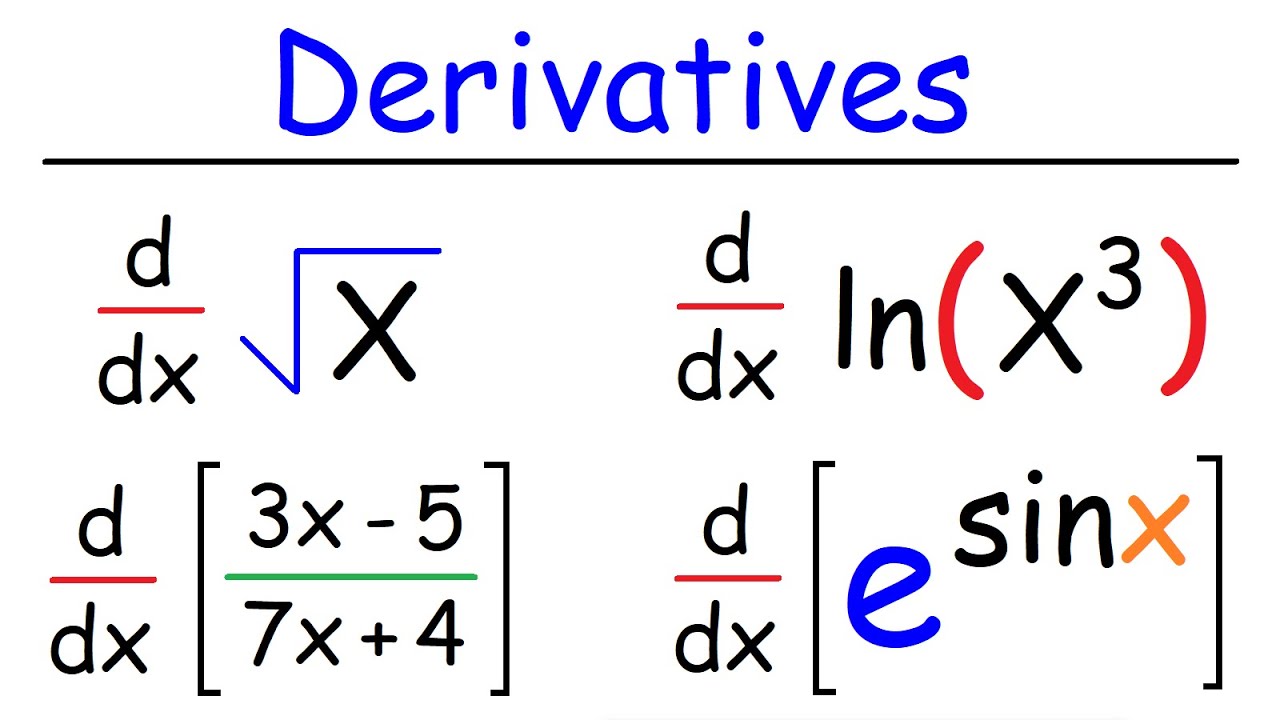
This calculus video tutorial provides a basic introduction into derivatives for beginners. Here is a list of topics:
Derivatives - Fast Review: https://www.youtube.com/watch?v=5yfh5cf4-0w&t=1s
Limit Definition of the Derivative:
https://www.youtube.com/watch?v=-aTLjoDT1GQ
Derivatives - Alternate Limit Definition:
https://www.youtube.com/watch?v=6yzaEpacZkg
Derivatives - The Constant Rule:
https://www.youtube.com/watch?v=cyn6CDnAlcA
Derivatives - The Power Rule:
https://www.youtube.com/watch?v=9Yz-RCdS2Tg
_________________________________
Derivatives - Constant Multiple Rule:
https://www.youtube.com/watch?v=ut-AFj600S0
Derivatives - Polynomial Functions:
https://www.youtube.com/watch?v=8Sv6CNuNwqo
Derivatives - Sine and Cosine:
https://www.youtube.com/watch?v=QYJx-ztCrE4
Derivatives - Trigonometric Functions:
https://www.youtube.com/watch?v=PEqCa0U77mc
Derivatives - Limits:
https://www.youtube.com/watch?v=xGibYZiT5-U
_______________________________________
Equation of the Tangent Line:
https://www.youtube.com/watch?v=5NyeGzbBJQM
Derivatives - Horizontal Tangent Line:
https://www.youtube.com/watch?v=aNfoxbMUOHk
The Equation of The Normal Line:
https://www.youtube.com/watch?v=lEF2mmR3CWU
The Equation of The Secant Line:
https://www.youtube.com/watch?v=680o1GL-LRg
Average and Instantaneous Velocity:
https://www.youtube.com/watch?v=AwxT1xjMP9g
_______________________________________
Final Exams and Video Playlists:
https://www.video-tutor.net/
Full-Length Videos and Worksheets:
https://www.patreon.com/MathSc....ienceTutor/collectio

Don Quixote de la Mancha in its version for kids, is an educational story about the adventures of Don Quixote de la Mancha, a knight who loved books and above all the adventures of the great knights in old Spain. Share the adventures of Don Quixote, his horse Rozinante and the companion in his wanderings, Sancho Panza! Our story is based on the original book written by Miguel de Cervantes Saavedra and it's been adapted for kids. How would you like to read the whole novel?
This educational video is part of a larger collection of classic stories videos, for kids to enjoy classic novels while having fun. Ideal resource to introduce kids to literary texts, in primary school.
Thanks for visiting us! If you want your children to smile and learn, subscribe! :D
We only upload our own content, designed by educators so that children smile and learn while watching a video.
All of our content reinforces educational values, encouraging the use of multiple intelligences and language learning.
If you like our videos, download “The Smart Library” now. You’ll discover more than 70 interactive games and stories for children designed by educators. The stories are based on VALUES like friendship, respect, and generosity, and our games cover all of the MULTIPLE INTELLIGENCES. All our content is in SPANISH, ENGLISH, FRENCH, ITALIAN and PORTUGUESE.

This calculus video tutorial provides a basic introduction into to continuity. It explains the difference between a continuous function and a discontinuous one. It discusses the difference between a jump discontinuity, an infinite discontinuity and a point discontinuity. A point discontinuity is a hole also known as a removable discontinuity. Infinite and jump discontinuities are nonremovable discontinuities. This video explains how to identify the points of discontinuity in a rational function and in a piecewise function. it explains how to make piecewise functions continuous by finding the value of the constant. This video has many examples and practice problems.
Introduction to Limits:
https://www.youtube.com/watch?v=YNstP0ESndU
How To Evaluate Limits From a Graph:
https://www.youtube.com/watch?v=7Q2HwTHcxA0
Evaluating Limits By Factoring:
https://www.youtube.com/watch?v=fOrOeZA-vdY
Limits of Rational Functions :
https://www.youtube.com/watch?v=M2BgBG2Su94
Limits of Radical Functions:
https://www.youtube.com/watch?v=qay5HvT1UK8
Limits of Trigonometric Functions:
https://www.youtube.com/watch?v=HbtuSC_WOW0
___________________________________
How To Find The Limit at Infinity:
https://www.youtube.com/watch?v=NmLljBAg82o
Infinite Limits + Vertical Asymptotes:
https://www.youtube.com/watch?v=xvFqomOpLrs
Limits at Infinity With Radicals:
https://www.youtube.com/watch?v=1hyoTeWg6Bs
Limits of Absolute Value Functions:
https://www.youtube.com/watch?v=wFeh4ByT0xs
Limits of Composite Functions:
https://www.youtube.com/watch?v=KjL9cWHzeIc
The Squeeze Theorem:
https://www.youtube.com/watch?v=lVIb9iJ-rRI
____________________________________
Limits and Logarithms:
https://www.youtube.com/watch?v=fHzmQmcvheI
Limits of Exponential Functions:
https://www.youtube.com/watch?v=pcUXo7XbRaM
Piecewise Functions - Limits:
https://www.youtube.com/watch?v=JrYmEo6hoiU
3 Step Continuity Test:
https://www.youtube.com/watch?v=WT7oxiiFYt8
Continuity and Differentiability:
https://www.youtube.com/watch?v=fml0-ELYLaE
Limits - Test Review:
https://www.youtube.com/watch?v=6e4Wtgc43KQ
_____________________________________
Final Exams and Video Playlists:
https://www.video-tutor.net/
Full-Length Videos and Worksheets:
https://www.patreon.com/MathSc....ienceTutor/collectio

Welcome to day 1 of our new series: Fractions!
You're bound to encounter a few here and there on the ASVAB so it's worth mastering!
We're starting with simplifying fractions today and continue with the rest of the series to keep building on knowledge we've just learned.
Fractions 1: Simplifying Fractions 🎥 https://youtu.be/ELIKimbR_io
Fractions 2: Improper Fractions to Mixed Numbers 🎥 https://youtu.be/4TsXk3fr2Sc
Fractions 3: Fractions to Decimals 🎥 https://youtu.be/c8ziIt43IEo
Fractions 4: Fractions to Percents 🎥 https://youtu.be/IX19osvVSh0
Fractions 5: Adding and Subtracting Fractions 🎥 https://youtu.be/z97MUJvAc_E
Fractions 6: Multiplying Fractions 🎥 https://youtu.be/EZvwCyu26tI
Fractions 7: Dividing Fractions 🎥 https://youtu.be/pjcmZY7WIGg
After mastering these basics on fractions, you are one step closer to being able to master word problems with fractions!! Let's #AcetheASVAB
Want the worksheet? Sign Up for the All-Access Program to get everything you need to beat the test!
Click here: https://asvab.info/ASVABprogram
Use the Code: YOUTUBE at checkout for 10% off!
Check out the ASVAB Class schedule: https://asvab.info/Calendar
Thank you to all my subscribers for liking and commenting on the videos! Your support helps me continue being the best ASVAB Coach I can be 💪🏾
Register for a free class: https://asvab.info/freehelpyt
Raise your ASVAB score guaranteed: https://asvab.info/ASVABprogram
-----------------------------------------------------------------------
🔥🔥 Full Program Details:
You want to raise your score and pass the ASVAB. Stop letting test anxiety get in the way.
With the ASVAB All-Access Program, you'll be able to watch, practice, and master your way to a higher score!
1️⃣ Watch:
- Watch me teach in fun live classes
- Or conveniently watch the full recordings anytime (300+ past recordings included too)
2️⃣ Practice:
- Build your confidence with Guided Practice Videos and Worksheets
- Learn from every mistake with over 5000 practice problems and video solutions
3️⃣ Master
- Build speed + confidence with speed drills for every math concept
- Get test ready with Practice Tests and video walkthroughs
📍Subtests we cover: AR, MK, WK, PC, and GS
So basically, I’ll have your back all the way until you pass.
If you believe this will help you succeed, then click the link below, sign up, and start raising your score. Let's #AceTheASVAB
https://asvab.info/ASVABprogram
#AceTheASVAB #ASVAB #ASVABMath