Top videos

A quadratic equation is an equation in the form of ax^2 + bx + c = 0, where x is the variable and a, b, and c are constants. Quadratic equations can be solved using various methods such as factoring, completing the square, or using the quadratic formula: x = (-b ± √(b^2 - 4ac)) / 2a. The solutions to a quadratic equation are known as the roots and are represented by x1 and x2.

Watch our Champ Siblings perform amazing calculations within seconds
Abacus Champs Academy
Head Off: O-1,West Patel Nagar, N.D-11008
Sub Off: A-2/248 prateek Apts Paschim Vihar N.D-63
Moti Nagar center: Bhai Biba Singh Khalsa School, Block 13, Moti Nagar
m- 9311229429, 9899220297 www.abacuschampsacademy.com
#Speedcompetition
#AbacusChampionship
#NationalLevelCompetition
#AbacusTeacherTraining
#OnlineAbacusClasses
#AbacusFranchise
#AbacusClassesIndia
#abacuscompetition
#abacuscompetition2023
#limcabookofrecords
#youtubeshorts
#viralvideo
#reelsviral
#improvemathmatics

How to subtract fractions. This video will show you an easy trick so you can learn how to subtract fraction in just minutes. When learning how to add and subtract fractions, most people run into problems with unlike fractions. You can’t simply add or subtract unlike fractions. You need to make them into like fractions. There are a few ways to do this but this video show you the fastest way to learn how to subtract fractions and especially how to subtract unlike fractions.
Here is the answer to our example fraction subtraction problem:
2/3 – 2/7 = 8/21

Class 9 - Mathematics - Chapter 12 - Lecture 1 - Theorem (1,2,3) - Allied Schools

Learn German numbers 1 to 100 with this quick and easy German lesson. The pronunciation of German numbers can be difficult, so in this video, you'll be able to listen and count along as a native German speaker counts every number in German from 1 to 100. German numbers are a crucial part of the German language, so if you don't have every number 1-100 memorized by the end of the video lesson, start over from the beginning.
For more German number lessons and other free German lessons online, subscribe to Language of Earth.
Youtube.com/LanguageofEarth
Need a German number study guide? Bookmark this video as a reference to count 1 to 100 in German.


I hope You Like this work...
Then...
please Like.. Share...
And
Subscribe to my channel...
To motivate us.
If you want any further information related with the KVS
please let me know in the comment section.
Other videos links that you may like to visit....
YOU CAN WATCH..
*LATEST NEWS on admission in KV |NEW UPDATE IN KENDRIYA VIDYALAYA ADMISSION GUIDELINES FOR CLASS 1-12
https://youtu.be/6CZBGdzZwyg
*How to get RTE ADMISSION in KENDRIYA VIDYALAYA | DA PH quota in KV|All info with list of documents.
https://youtu.be/edijTUxwXGw
*PREFERENCE IN ADMISSION OF KENDRIYA VIDYALAYA | HOW WE WILL GET ADMISSION IN KENDRIYA VIDYALAYA
https://youtu.be/cO0WGHJhflk
*Famous personalities who studied in Kendriya Vidyalaya.. Yes! it is simple
https://youtu.be/2suRsdgSalQ
*KVS FEE STRUCTURE |Kendriya vidyalaya ki fees kitni hai for class 1| K V fees for class 1st to 12th
https://youtu.be/KkW1ZYuoLOE
*ALL ABOUT ADMISSION IN KENDRIYA VIDYALAYA for Class 1 | New update on admission in KV for 2022-23.
https://youtu.be/_0iY2mAcyp8
* KVS PRAYER WITH LYRICS | DAYA KAR DAN VIDYA KA | दया कर दान विद्या का.. प्रार्थना के अर्थ के साथ |
https://youtu.be/ZdW9WbfwErY
** HOW TO CHANGE NAME IN GOOGLE MEET APP | Change name in google meet | गूगल मीट में नाम कैसे चेंज करे
https://youtu.be/McxkqY5jurc
1. DIVISIBILITY RULE | FROM 2 TO 20 | with amazing tricks in Hindi | YES IT IS SIMPLE.
https://youtu.be/Gs4WXpOUnMw
2. FRACTIONS AND ITS BASIC OPERATIONS in Hindi | Add Subtract Multiply and Divide | YES IT IS SIMPLE.
https://youtu.be/ILaSrXBd6N0
3. BODMAS RULE | WHAT IS BODMAS
https://youtu.be/YE20t-1P6Uk
4. FRACTION | RELATION IN MIXED FRACTION AND IMPROPER FRACTION VICE-VERSA
https://youtu.be/y6BmVptk4gc
5. FRACTION | WHAT IS FRACTION | TYPES OF FRACTIONS
https://youtu.be/LrXKGUkHO7w
6. BEST TRICK for UNIT CONVERSION | HOW TO CONVERT UNITS EASILY in 10 seconds only
https://youtu.be/mlWG07Fesi0
7. FAST MATH CALCULATION | SHORT TRICKS to divide multiply subtract
https://youtu.be/nzzJ5IRF_U0
8. FAST CALCULATION TRICKS IN MATHEMATICS | MULTIPLICATION SHORT TRICKS
https://youtu.be/ekWDJDSoaU4
9. FAST CALCULATION TRICKS IN MATHEMATICS | MULTIPLICATION SHORT TRICKS
https://youtu.be/BCgtYeM2IwM
10. Cube tricks | How to find cube of any number
https://youtu.be/xqrdL97sY4Q
11. Square tricks | How to find Square of any number
https://youtu.be/wGRRLe0GG7Y
12. HOW TO LEARN TABLES EASILY | Learn tables in fastest way | amazing TRICKS
https://youtu.be/58FTFD_Nx4M
13. ROMAN NUMBERS 1 TO 1000 | amazing trick to read & write
https://youtu.be/xXHUqQrl-z0
14. BASIC ADDITION FOR KIDS | with carrying
https://youtu.be/k34iQF7IBJo
15. BASIC SUBTRACTION FOR KIDS | with borrowing
https://youtu.be/GrXu4_2HX9E
16. BASIC MULTIPLICATION FOR KIDS | How to multiply by 1, 2 AND 3 DIGIT NUMBERS
https://youtu.be/sSqyu76VNIU
17. BASIC DIVISION FOR KIDS | How to divide 2, 3 AND 4 DIGIT NUMBERS
https://youtu.be/XV9wi6fHpww
18. ASCENDING AND DESCENDING ORDER OF FRACTION | SMALLEST AND LARGEST FRACTION TRICK | YES IT IS SIMPLE.
https://youtu.be/etprzH2rXQ8
19. DECIMAL NUMBERS its Basic concepts | Decimal Numbers Place value and Number names | YES IT IS SIMPLE
https://youtu.be/0hjcAh155ic
Thanks a lot for your valuable time...
I hope these videos will help you to make math more simple.
If you like the content, Kindly Subscribe to channel and hit the bell icon button for the latest update.
Like, Comment & Share the video with your family and friends.

Complete Maths-1 In ONE SHOT BY New Indian Era | Detailed Session #class12th #maths #newindianera By New Indian Era
Achievers Batch : https://xptuz.courses.store/31....7717?utm_source%3Dot
Telegram Link : https://t.me/nietelegram
#class12th #newindianera #maths #mathematics #mathsclass12exercisesolutions #class12th #zindagibatch #mathsclass #mathsclass12 #mathshscboard
Hi Students! Excited to launch our app & courses we have for you.
Check out all the links below 👇
🔥Download Our Mobile App (New Indian Era) - https://play.google.com/store/....apps/details?id=co.p
🔥Our Web Store - https://xptuz.courses.store/
🔥Vijay Batch: Maharashtra Boards (PCM) - http://on-app.in/app/oc/279686/xptuz
🔥Vijay Batch: Maharashtra Boards (PCB) - http://on-app.in/app/oc/279684/xptuz
🎉English Booster Batch : http://on-app.in/app/oc/288224/xptuz
🔥Zindagi Batch: Maharashtra Boards (PCMB) - http://on-app.in/app/oc/279612/xptuz
🔥Yoddha Batch: Maharashtra Boards (Physics) - http://on-app.in/app/oc/279626/xptuz
🔥Yoddha Batch: Maharashtra Boards (Chemistry) - http://on-app.in/app/oc/279628/xptuz
🔥Yoddha Batch: Maharashtra Boards (Maths) - http://on-app.in/app/oc/279629/xptuz
🔥Yoddha Batch: Maharashtra Boards (Biology) - http://on-app.in/app/oc/279630/xptuz
#nieclass12thphysics #niephysics
#zindagibatch #class12th #class12thphysics #class12thbiology #class12thchemistry #class12thmaths #english #englishstream #englishgrammar #educationalvideo #newindianera #conceptbatch #conceptvideos #chemistry #class12th #nie #vijaybatch #yoddhabatch #zindagibatch #nieapp #oneshot #oneshotbynewindianera english Class 12th,writing skill,Class 12th english,english by new indian era,writing skills class 12th writing skill,english class 12th writing skill,drafting virtual massage,english grammar class 12th,english grammar by new indina era,class 12th english grammar,new indian era

Learn about Mathematics Gk Questions | Top 10 Maths Gk ||Gk questions and answers in English |
#maths #mathematics #mathsgk
#magk
•Father of mathematics
•Plus And minus
•Bodmas
•Even number
•Perfect number
``````````````````````````````````````````````````````````````````
Please subscribe my channel 🙏🙏
Thank you so much for watching my video ☺️
°°°°°°°°°°°°°°°°°°°°°°°°°°°°°°°°°°°°°°°°°°°°°°°°°°°°°°°

1 महीने में बोर्ड परीक्षा की तैयारी कैसे करें ll 2023 Board Exam
hello student welcome to my channel is video mein Maine aap logon ko bataya hai ki ek mahine mein padhakar Board pariksha 2023 me 90% Marks kaise laye aise karo board exam ki taiyari topper banoge
Topic covered
ek mahine mein board exam ki taiyari
1 mahine mein board exam ki taiyari kaise karen
1 mahine mein padhakar 90% kaise lae
2023 board exam ki taiyari kaise karen
bacche samay mein board exam ki taiyari kaise karen
ek mahine mein class 10 board ki taiyari kaise karen
ek mahine mein class 12th ki taiyari kaise karen
board exam 2023 ki taiyari kaise karen
Saraswati super classes
#saraswatisuperclasses
#boardexam2023
#1mahinemeboardexamkitaiyari
#class10boardexam
#class12boardexam
#बोर्ड_परीक्षा_2023_टॉपर_कैसे_बने
#trendingvideo
#board
#shortviralvideo

How to Learn dodging tables?
Dodging tables method explained in the video in very simpler method, & improve your multiplication skills.
ATECH ACADEMY 📚
The Future Begins Here
With specialization in -
8th | 9th | 10th | MATHS | SCIENCE
+1 | +2
MATHS | PHYSICS | CHEMISTRY | BIOLOGY | IITJEE | NEET | MEDICAL
ATECH COMPETITIONS
NDA | CDS | AFCAT | INET | AIR FORCE | NAVY | SSB
Coaching Notes | Doubt Clearing | Revision | Exam Tips | CBSE | ICSE | NCERT
Contact for Online & Classroom Coaching Classes
Atech Academy Website - https://www.atechedu.com/
Atech Academy Facebook- https://www.facebook.com/atechcoachin...
Atech Academy Twiter - https://twitter.com/atechacademy
Atech Academy Instagram - https://www.instagram.com/atechacademy/
Atech Academy WordPress - https://myatechedu.wordpress.com/
Atech Academy Pinterest - https://in.pinterest.com/AtechAcademy..

Welcome to Least Common Multiple (LCM) with Mr. J! Need help with finding the least common multiple? You're in the right place!
Whether you're just starting out, or need a quick refresher, this is the video for you if you're looking for help with how to find the least common multiple. Mr. J will go through least common multiple examples and explain the steps of how to find least common multiples.
MORE ADDING AND SUBTRACTING FRACTIONS VIDEOS:
✅ Adding Fractions with Unlike Denominators (Part 1) - https://youtu.be/CoCmsyFQ_Xc
✅ Adding Fractions with Unlike Denominators (Part 2) - https://youtu.be/SSxU5sjxqyk
✅ Subtracting Fractions with Unlike Denominators (Part 1) - https://youtu.be/jgGAJOe-Bgg
✅ Subtracting Fractions with Unlike Denominators (Part 2) - https://youtu.be/Tl3lbRe18JY
✅ Simplifying Fractions - https://youtu.be/oFVzcnJfYkg
✅ Least Common Multiples - https://youtu.be/53Ed5yjBELc
✅ Why Do We Need a Common Denominator When Adding and Subtracting Fractions? - https://youtu.be/YxAXC8Q16ok
✅ Equivalent Fractions - https://youtu.be/dBZ2QGZBH6M
About Math with Mr. J: This channel offers instructional videos that are directly aligned with math standards. Teachers, parents/guardians, and students from around the world have used this channel to help with math content in many different ways. All material is absolutely free.
Click Here to Subscribe to the Greatest Math Channel On Earth: https://goo.gl/XHTrfY
Follow Mr. J on Twitter: @MrJMath5
Email: math5.mrj@gmail.com
Music: https://www.bensound.com/royalty-free-music
Hopefully this video is what you're looking for when it comes to least common multiples.
Have a great rest of your day and thanks again for watching!

Tons of MATH VIDEOS here: https://www.mccarthymathacademy.com/
My mission is to math FUN, make it CLICK, and make it STICK!
Don't forget to LIKE and SUBSCRIBE!
FOLLOW ME:
Instagram: https://www.instagram.com/mccarthymathacademy/
Facebook: https://www.facebook.com/McCar....thy-Math-Academy-124
TPT Store: https://www.teacherspayteacher....s.com/Store/Mccarthy
Website: https://www.mccarthymathacademy.com/
Want to focus on one factor at a time? Jump ahead by clicking the factor you want to practice:
Multiply by 0 - 0:16 (Music: "No" by Meghan Trainor)
Multiply by 1 - 0:50 (Music: "I Knew You Were Trouble" by Taylor Swift)
Multiply by 2 - 1:18 (Music: "Rude" by Magic!)
Multiply by 3 - 1:47 (Music: "Moves Like Jagger" by Maroon 5)
Multiply by 4 - 2:07 (Music: "Single Ladies" by Beyonce)
Multiply by 5 - 2:30 (Music: "Honey, I'm Good" by Andy Grammer)
Multiply by 6 - 2:49 (Music: "Call Me Maybe" by Carly Rae Jepsen)
Multiply by 7 - 3:09 (Music: "Love Yourself" by Justin Bieber)
Multiply by 8 - 3:50 (Music: "Party Rock Anthem" by LMFAO)
Multiply by 9 - 4:18 (Music: "Watch Me (Whip/Nae Nae)" by Silento)
Multiply by 10 - 4:50 (Music: "Sorry" by Justin Bieber)
Multiply by 11 - 5:16 (Music: "Drag Me Down" by One Direction)
Multiply by 12 - 5:49 (Music: "Can't Stop the Feeling" by Justin Timberlake)
This song is a mash up of current popular music. I do not claim rights for the music, just the adapted educational content of the lyrics. Enjoy!
Lyrics:
C’mon ya’ll
Get fluent
Know your fast facts
Then flaunt it
I’m ‘bout to break it down
Zeros to twelves
Check out my fluency
Let’s go!
(Zeros)
All my students, listen up
If zero is a factor
It takes control
It steals the show
The Property of Zero
Times 1 is 0
Times 2 is 0
Times 3 is 0
Times 4, it is 0
Times 5, it is 0
Times 6, it is 0
Nah, n-nuh, nah, n-nuh
Zee-eer-ro
Times 7 is 0
Times 8 is 0
Times 9 is 0
Times 10, it is 0
11, is 0
Times 12 is 0
Nah, n-nuh, nah, n-nuh
Zee-eer-ro
(Ones)
I knew ones weren’t trouble when they walked in
In fact, they’re so easy
Just count like 1, 2, and 3,
4, 5, 6, 7, 8,
9, 10, 11, 12, ohh
Identity Property of Multiplication
(Twos)
Do you know I know my twos?
Yes, I most certainly do
Do you know I know my twos?
2, 4, 6, 8, 10, 12
14, 16, 18, 20, 22, 24
I know my twos
Use that doubling strategy
So easy,
But I’ll practice them anyway
(Threes)
Hit me with my threes, pretty please
3, 6, 9, 12, 15, 18
21, 24, 27
30, 33, 36
I love me some threes, yeah
(Fours)
If you know your fours, then you should sing a-long with me
If you know your fours, then you should sing a-long with me
Don’t be shy, I know you know ‘em
Sing a-long with me
If you know your fours, then you should sing a-long with me
4, 8, 12, 16, 20, 24, 28
32, 36, 40, 44, 48
(Fives)
Aw, no! Here come the fives
5, 10, 15, 20, 25
You’ll know ‘em all shortly
30, 35, and 40
And then there’s 45, 50, 55, feeling alive
60’s coming, it’s true
Now the fives must bid you adieu
(Sixes)
Hey sixes, I just met ya
You’re kinda crazy
6, 12, and 18, 24, and 30
36 and 42 and 48
54 and 60, 66, 72
(Sevens)
What was the song for the sevens again?
Oh wait, I’ve got it
My momma once told me your sevens could be hard
She said, “If you practice, then soon, you’ll be a star.”
Well I’ve been practicing all day
Now I can finally say,
“Now I know, I know the sevens on my own.”
It goes like 7, 14, 21, 28, 35, 42, 49
56, 63, and 70,
77 and 84
(Eights)
Party rockin’ with the eights, for sure
8, 16, 24
32, 40, 48
56, 64 (Ow!)
72, 80, 88, 96
Party rockin’ with the eights
Can you handle it?
(Nines)
Go on and do those nines for me
McCarthy Math!
We’ve got those nines
9, 18, 27
I’m just beginning
36, 45, 54, 63
Now watch that 72, that 81, that 90, yeah
Now watch that 99, 108
Oh, life is so great with the nine whip nae nae
(Tens)
Is it too late to learn your tensies? (Did she really just call ‘em tensies?)
10, 20, 30, 40 (Oh, she did…)
50, 60, 70, 80
90, 100, 110
120, and that’s the end
(Elevens)
You know the elevens will not drag us down
11, 22, 33, 44, 55, 66, 77, 88, 99
110, 121, 132
(Twelves)
Yeah, uhn, yeah, uhn
I’ve got this feeling
The twelves are great
12, 24, 36, 48
The big 6-0
72
84, 96, we’re almost through
We’ve got that 108
Stepping up to 120
132 and 144
I can’t stop studying because I’m grooving to the beat
Soon I’ll be fluent with my fast facts
And that’ll be sweet
Faster than fast at quiz after quiz
I never thought I’d be a multiplication whiz
Spread the word to all the other kids
‘Bout this mashup, ‘ bout this mash-up, ‘bout this mash-up
Nothing I can see but As,
So I dance, dance, dance
My teacher and my parents are proud of me,
So I dance, dance, dance, c’mon
Multiplying is so easy
So I dance, dance, dance
And I can’t stop listening to this jam
I keep dancing
Multiplication
Mashup
Multiplication
Mashup
C’mon!

PICT Model School brings to you child-friendly video for easy learning. #BigWordsExplained.
Help your child learn how to read a clock with this video.
Don't forget to Like, Share and Subscribe to our videos.
Know more about PICT Model School:
https://pictmodelschool.com/
Follow us on Facebook & Instagram:
@pictmodelschool

With the help of this video One can write table of 13 easily . Trick for Table of 13 is very interesting. You do not need to remember table of 13 to write it correctly. Multiplication table trick, Table of 13 with the help of trick, #tabletrick #mathstrick #shorts
@growkids

Learn times tables through a fun adventurous game.
App Store (iOS): https://apps.speedymind.net/appstore1
Google Play (Android): https://apps.speedymind.net/googleplay1
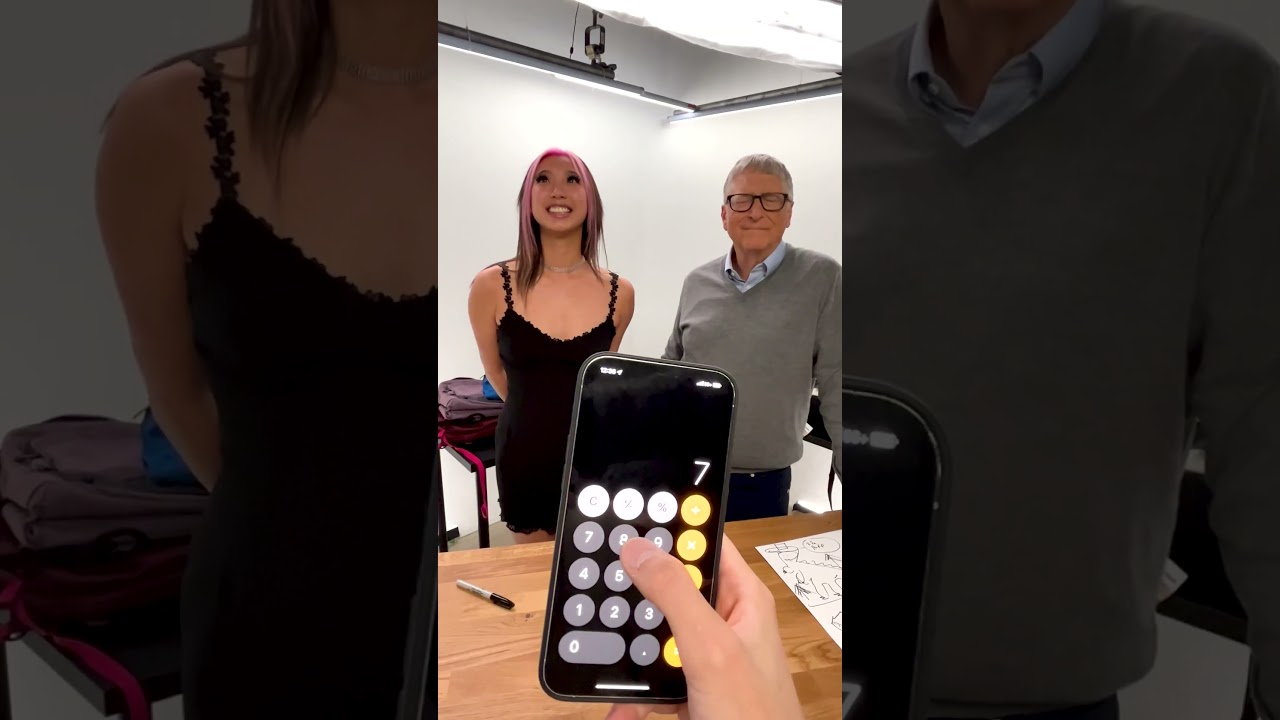
Bill Gates Vs Human Calculator

Addition trick|Butterfly Method for addition trick|Fraction trick |#shorts #fraction #tricks
Simplification in 2 सेकेंड | सरलीकरण का आसान ट्रिक | Simplification Trick|
Your quaries ::::::---------
simplification trick
simplification
simplification short tricks
simplification short trick
simplification tricks in maths for bank exams
simplification trick
simplification short trick in hindi
maths short tricks
simplification short tricks in hindi
simplification shortcut tricks
simplification shortcuts
simplification trick for all competitive exam,
simplification in hindi
maths tricks
#mathshort
#youtubeshort
#shorts
#mathviraltrick
#viralvideo
#poonamstudycentre
#shortvideo
short tricks
short trick
math short trick
maths tricks
math short tricks
maths tricks for fast calculation
vedic maths tricks
multiply short trick
maths
maths trick
multiply short tricks hindi
math short trick in hindi
lcm short trick
maths trick by imran sir
maths short trick
math trick
short trick of maths
ssc maths short trick
short tricks maths
vedic math short trick for fast calculation
multiply karne ki short trick
tricksquare trick
square root
Shorts
41-50 Square
dear sir maths tricks
fraction trick
addition of fraction
fractions
maths for kids
fraction addition
fraction trick
Addition trick|Butterfly Method for addition trick|Fraction trick |#shorts #fraction #tricks
Simplification in 2 सेकेंड | सरलीकरण का आसान ट्रिक | Simplification Trick|
Your quaries ::::::---------
simplification trick
simplification
simplification short tricks
simplification short trick
simplification tricks in maths for bank exams
simplification trick
simplification short trick in hindi
maths short tricks
simplification short tricks in hindi
simplification shortcut tricks
simplification shortcuts
simplification trick for all competitive exam,
simplification in hindi
maths tricks
#mathshort
#youtubeshort
#shorts
#mathviraltrick
#viralvideo
#poonamstudycentre
#shortvideo
short tricks
short trick
math short trick
maths tricks
math short tricks
maths tricks for fast calculation
vedic maths tricks
multiply short trick
maths
maths trick
multiply short tricks hindi
math short trick in hindi
lcm short trick
maths trick by imran sir
maths short trick
math trick
short trick of maths
ssc maths short trick
short tricks maths
vedic math short trick for fast calculation
multiply karne ki short trick
tricksquare trick
square root
Shorts
41-50 Square
dear sir maths tricks
fraction trick
addition of fraction
fractions
maths for kids
fraction addition
fraction trick
Teachers, check out some of my favorite math warm ups for a first grade classroom! This video includes 4 different warm ups to use at the beginning of your math block, including a brand new game called Make 11! Watch how to learn how to play :)
Buzz Game: https://youtu.be/1Hn1yAUcmQM
Fix it Cards on TPT: http://bit.ly/SJTFixitCards
SJT WRITING CLUB: https://sjtclub.mykajabi.com/SJT-writing-club
SJT MATH CLUB: https://sjtclub.mykajabi.com/SJT-math-club
SJT LITERACY CLUB: https://sjtclub.mykajabi.com/sjt-literacy-club
Join my FB group: https://www.facebook.com/groups/1666817543386771
If you happen to use any of these games in your classroom, leave a comment below and let me know how they go! :) Also, if you share any of the games from Susan's Sunday Spotlight, please tag me on instagram @susanjonesteaching so I can see!! You can also use the hashtag: #susanssundayspotlight
**SIGN UP FOR MY EMAIL LIST FOR THE LATEST UPDATES, TIPS, and FREEBIES!**
http://bit.ly/SJTnewsletter
Be sure to subscribe and click the bell to see all my future videos.
Happy teaching,
Susan Jones
MY BLOG:
http://susanjonesteaching.com/
MY STORE:
https://www.teacherspayteacher....s.com/Store/Susan-Jo
You can see tons of other games for first grade students below!
Math: http://bit.ly/SJTMathGames
Phonics: http://bit.ly/SJTphonicsgames
Sight Words: http://bit.ly/SJTsightwordgames
Full disclosure: Amazon links in my descriptions are usually affiliate links which means if you purchase through that link, I receive a very small percentage of the sale.
CONTACT: susanjonesteaching@gmail.com

Pebbles present, Let's Learn The Clock For Children. Learn Time For Kids. Pre School Learning Videos by Pebbles.
Visit Pebbles Official Website - http://www.pebbles.in
Visit Pebbles Exclusive Video Website - http://www.pebblestv.com
Subscribe to our Channel – https://www.youtube.com/user/P....ebblesRhymes?sub_con
Subscribe to our Channel – https://www.youtube.com/user/P....ebbleschennai?sub_co
Engage with us on Facebook at https://www.facebook.com/PebblesChennai
Please Like, Share, Comment & Subscribe
Teacher : Shaifali P.
Concept : Milind Patwardhan.
#pebbleskidslearning, #pebblesrhymes, #pebblesstories
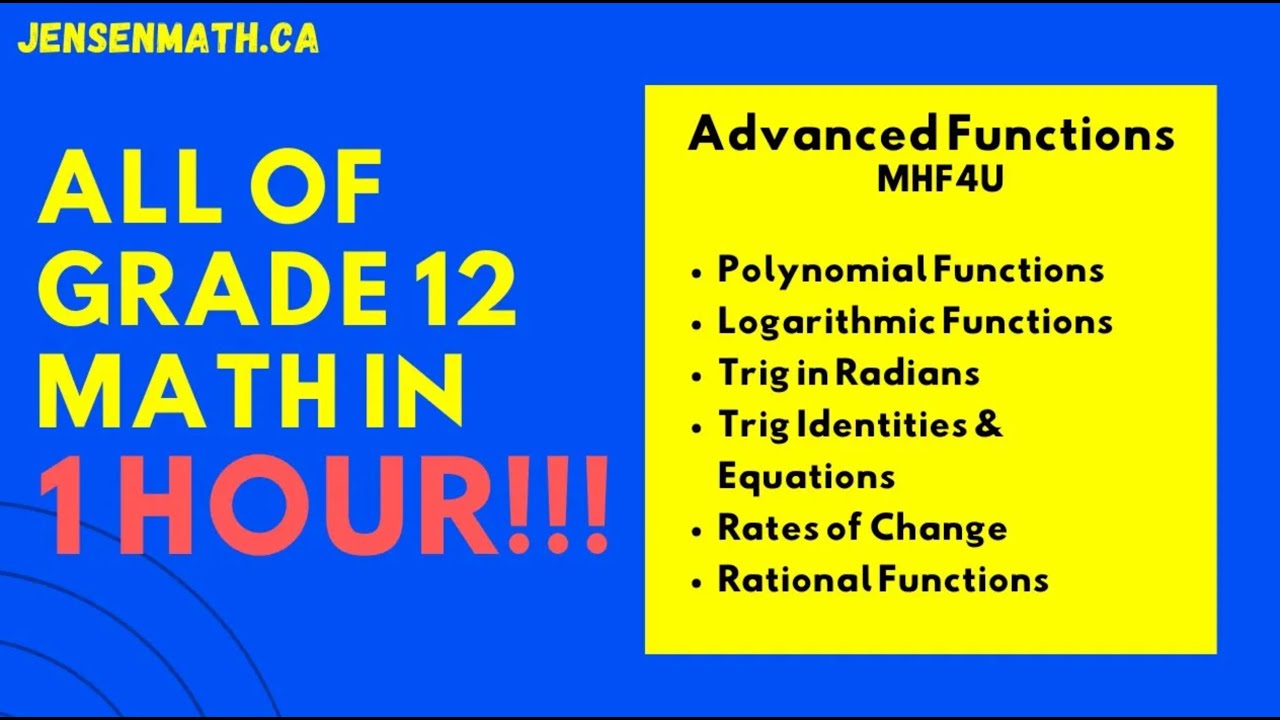
All of MHF4U - Grade 12 Advanced Functions in 1 Hour. This video is intended for EXAM REVIEW. Go to jensenmath.ca for more material.
Part 1: Polynomial Functions
- end behaviour
- factored form equation of polynomial from it's graph
- long and synthetic polynomial division
- factor theorem
- solve polynomial equations and inequalities
Part 2: Trigonometry
- what is a RADIAN
- special triangles
- exact trig values using special triangles and reference angles
- compound angle indentities
- double angle identities
- graphing transformed trig functions
- trig identities and equations
Part 3: Logarithmic Functions and Rational Functions
- what is a log function
- solving exponential and logarithmic equations
- graphing rational functions
- solving rational inequalities

► Follow me:
instagram | http://instagram.com/mathwithjanine
tiktok | http://tiktok.com/@mathwithjanine
twitter | http://twitter.com/mathwithjanine
soundcloud | http://soundcloud.com/mathwithjanine
Music by Epidemic Sounds

1st Grade math is awesome with these lesson videos! Each lesson can help students with word problems, math games and can line up with your curriculum! Learn subtraction, addition, even and odd, and more!
00:00 Addition
7:37 Equal parts
12:58 Subtraction
20:52 Even and odd numbers
32:09 2D and 3D shapes
50:06 Roman numerals
❤ Homeschool Pop? Join our team and get tattoos here: http://homeschoolpop.com
☃ You are SO cool! Say hello below, we would love to hear from you!
Thanks for watching this 1st grade math compilation learning video from Homeschool Pop! We hope to hear from you soon and we will see you next video!
Homeschool Pop Team
1st Grade Math Compilation

Instructional Goal: Students are able to utilize mathematical models to demonstrate conceptual understanding.
The quality of instruction is a function of the teacher’s knowledge and use of mathematical content, the teacher’s attention to and handling of students, and the student’s engagement in and use of mathematical tasks is the key for problem-centered classrooms.
Contact: www.TeachnKidsLearn.com
Email: PD@TeachnKidsLearn.com