Top videos

Counting by threes is a breeze with this fun song & video! Blast through space as you count all the way from three to sixty! The Counting by Threes song teaches skip counting by 3.
Like our videos? Help support us on Patreon (and access over 50 member-only videos!) ►► https://www.patreon.com/scratchgarden ◄◄
If you are learning to count or teaching math and early years numeracy, the Counting by 3's song by Scratch Garden is the best way to get there!
Watch more Counting Videos from Scratch Garden: https://www.youtube.com/playli....st?list=PL_ym6QHjS1s
Watch many more fun Scratch Garden Educational Videos here: https://www.youtube.com/playli....st?list=PL_ym6QHjS1s
Scratch Garden makes entertaining educational videos for people that like to laugh and learn! Please Subscribe to see more great fun learning videos from Scratch Garden! https://goo.gl/1biPjA
Website: https://www.scratchgarden.com
Instagram: https://www.instagram.com/scratchgarden
Facebook: https://www.facebook.com/scratchgarden
#scratchgardensongs #countingsongs #countingbythrees
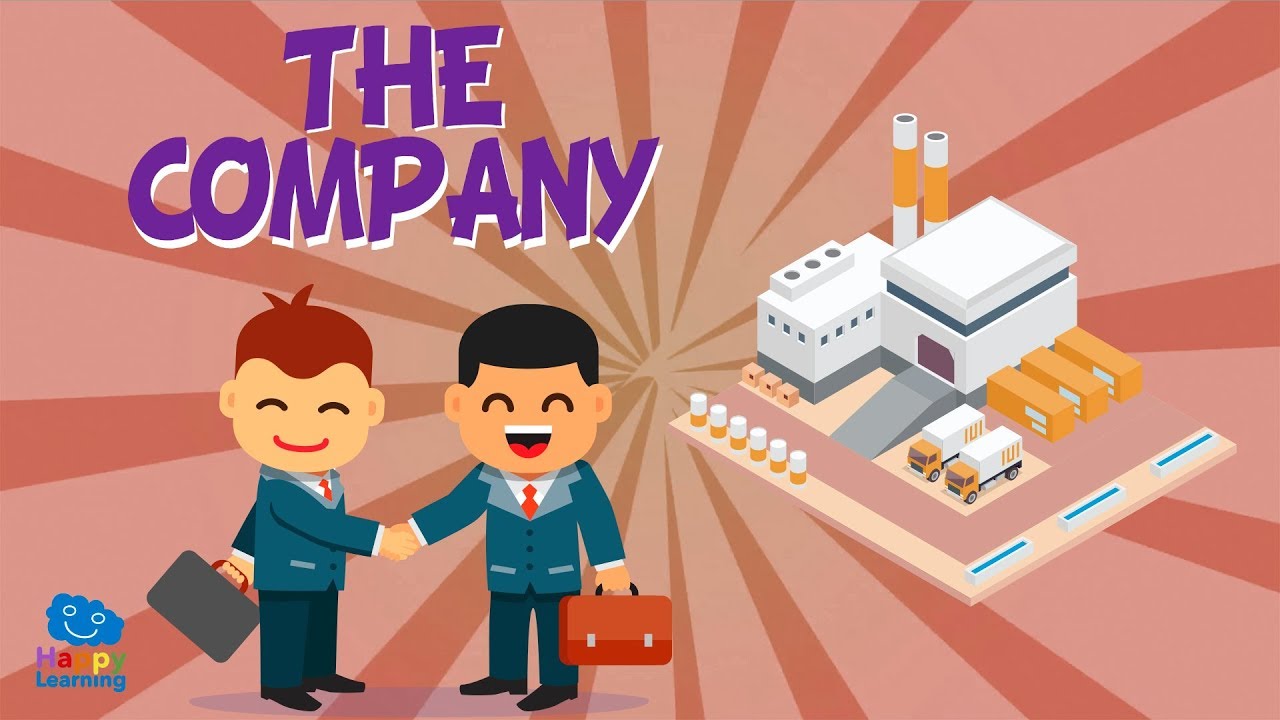
Discover hundreds of never-before-seen resources! Create your free account at https://my.happylearning.tv/ and start learning in the most entertaining way.
What are you waiting for? In this video we are going to know everything about the Company. As we always tell you, it is very important to know how the world works, to be a part of it.
▶SUBSCRIBE TO HAPPY LEARNING! http://bit.ly/HappyLearningTV
▶Web site: https://happylearning.tv/en/
▶Follow us on Facebook: https://www.facebook.com/HappyLearningTv
Recommended video: The Industrial Revolution
https://www.youtube.com/watch?v=Xh_Lk7kDrUI
Companies are organizations which dedicate themselves
to producing goods or services in exchange for a benefit,
or in other words, for money.
The goods are the products which the companies make.
Some companies make candy, clothes, books full of
stories, and there are companies which make cars. There
are loads of companies all dedicated in manufacturing all
sorts of different products!
If you look around you, all you see has been produced in a
company.
There are also companies which provide services, such as
the transport companies which take us from one place to
another, the hairdressers who don’t sell us anything but
cut our hair and brush it, giving us a service as well as
making us look preIy. Check out all these different hair
styles!
There are a great number of services offered by
companies.
To carry out these activities, companies need material and
human resources. The material resources are what the
companies need to manufacture or produce something.
For example, a bakery needs flour, ovens, utensils,
vehicles to deliver the bread to the clients etc, etc…
A company which produces fruit juice would need fruit, a
juice squeezer, refrigerators, packaging, and trucks for
transportation…
So as to create a product one needs many resources and
that is why we should never waste anything and we must
recycle the juice container for example.
The human resources are the people who work in the
companies. These people are the employees and
employers.
The employers are those who create a company, direct it
and make sure all is working correctly, besides they are
the ones who are risking their money.
The employees are the people who are working in the
company in exchange for a salary, from their pay sheet,
meaning money.
An enterprise´s spirit is one who plans projects and brings
them to life. If you want something, you can have it!
Well now we know what a company is all about. In the
next video we will learn more about different types of
companies.

Learn so EXCITING new things in this Labor Day facts video for kids! Learning is a blast as we look at facts like when Labor Day is, a common misconception about Labor Day, who made Labor Day an federal holiday and why we celebrate it in the first place!
00:00 Introduction
0:46 When is Labor Day?
1:54 Is Labor Day the end of summer?
2:58 The meaning of Labor Day
3:25 The history of Labor Day
6:26 Summary
Thanks for watching this Homeschool Pop video on Labor Day! We hope you enjoyed it and learned a lot of new things. Comment below if there is anything you would like to share with us. You are AWESOME!!! Happy Labor Day!! Unless if it isn't Labor Day yet.
Labor Day Facts for Kids | Learning Video

If you enjoy our videos, please help support us by buying us a coffee!
https://www.buymeacoffee.com/laughalongC
Sing along to our version of Meghan Trainor’s "Made You Look". Learn the 3 times tables easily and the fun way with Laugh Along and Learn. This three times song will have you singing in no time at all.
Great for primary / elementary / middle school, maths revision and teaching number facts. Learn fun facts quickly with Laugh Along and Learn.
Subscribe and watch new videos ★ YouTube Channel: https://www.youtube.com/c/laughalongandlearn

Learn all about octopuses in this video for kids! Octopuses are mollusks that live in water. See what makes the octopus one of the most fascinating sea creatures in the world! Special thanks to Aiden for the video suggestion!
Music Credit:
"Soaring" Kevin MacLeod (incompetech.com)
Licensed under Creative Commons: By Attribution 3.0 License
http://creativecommons.org/licenses/by/3.0/
❤️ Homeschool Pop? Join our team and get tattoos here: http://homeschoolpop.com
Thanks for learning with us today! We hope to see you next video!
Homeschool Pop Team
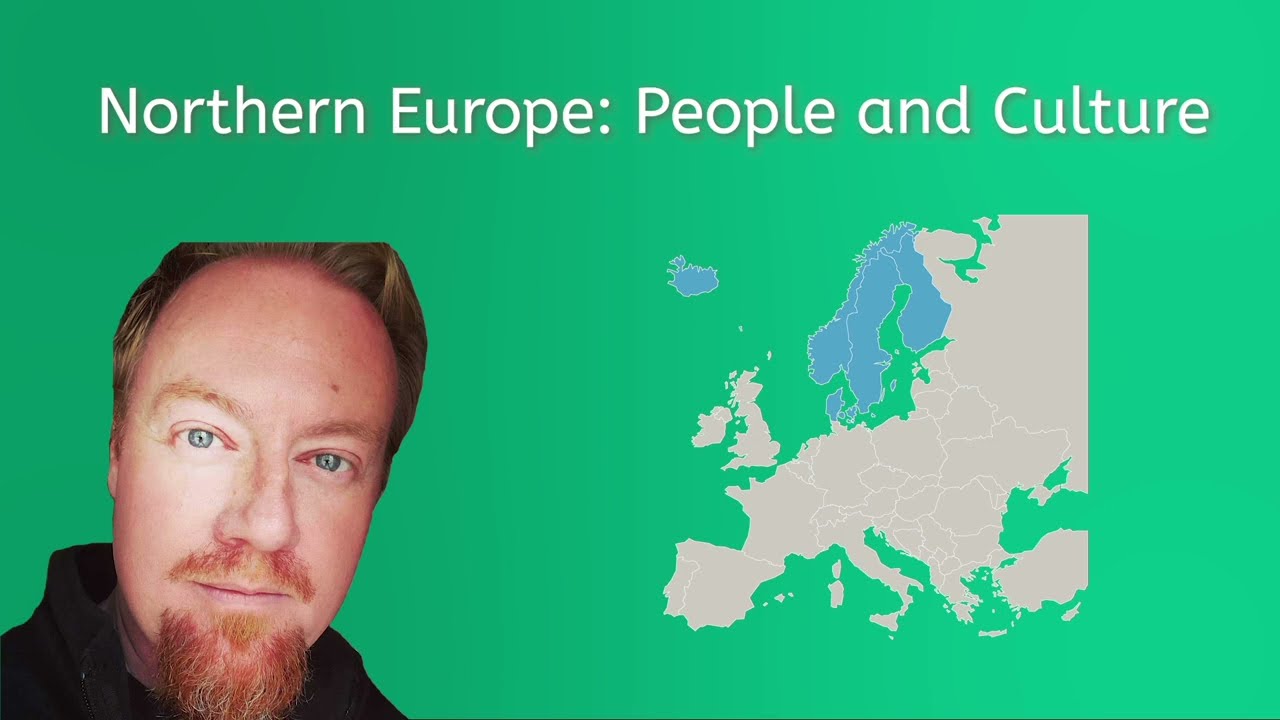
Learn about the peoples and cultures of the nations of northern Europe, including population, language, religion, and political and economic structures!
We hope you are enjoying our large selection of engaging core & elective K-12 learning videos. New videos are added all the time - make sure you come back often to learn more! If you’d like us to cover any additional topics, please let us know.
For practice, assessment, and many interactive activities that go along with each video, as well as a teacher/parent dashboard, go to Miacademy.co for Grades K-8 or Miaprep.com for grades 9-12!

We hope you are enjoying our large selection of engaging core & elective K-12 learning videos. New videos are added all the time - make sure you come back often to learn more! If you'd like us to cover any additional topics, please let us know.
For practice, assessment, and many interactive activities that go along with each video, as well as a teacher/parent dashboard, go to Miacademy.co for Grades K-8 or Miaprep.com for grades 9-12!


We hope you are enjoying our large selection of engaging core & elective K-12 learning videos. New videos are added all the time - make sure you come back often to learn more! If you'd like us to cover any additional topics, please let us know. For practice, assessment, and many interactive activities that go along with each video, as well as a teacher/parent dashboard, go to Miacademy.co for Grades K-8 or Miaprep.com for grades 9-12!
Get a 35% discount on our website - practice games, quizzes, and more to go along with each video: https://www.parents.miacademy.....co/coupon?code=VIDEO
Fish facts! This learning video for kids is the classroom edition of our Fish for Kids video. The classroom edition videos feature the learning content without the kids comments. Which fish fact was your favorite?
❤ Homeschool Pop? Join our team and get tattoos here: http://homeschoolpop.com
☃ You are SO cool! Say hello below, we would love to hear from you!
Special thanks to Chris 73 for the image of the gills. This image is freely available on Wikipedia.
Thanks for watching this classroom edition of the fish lesson video for kids!
We are so happy you took some time today to spend time with us!
Hope to see you next video. You are AWESOME (◕‿◕)
Homeschool Pop Team
Facts about Fish for Kids

How to Take Care of the Environment : THE PLASTIC | Happy Learning ♻️ 🌏
"Welcome to Happy Learning! 🌟 In this exciting video, we will explore the impact of plastic on our beloved environment and how we can take steps to care for nature. 🌍💚 Discover practical tips to reduce plastic usage in your daily life, how to reuse materials, and the importance of recycling. 🌱♻️ Together, we can make a difference and protect our planet for future generations! 🌊 Join us on this adventure towards a cleaner and more sustainable world. Don't miss out! 😊 #TakeCareOfTheEarth #ReduceRecycleReuse 🌎"
Discover hundreds of never-before-seen resources! Create your free account at https://my.happylearning.tv/ and start learning in the most entertaining way.
#earthday
#plastic
#environment
#green
#happylearning

Learn about all the parts of a plant cell and their functions!
We hope you are enjoying our large selection of engaging core & elective K-12 learning videos. New videos are added all the time - make sure you come back often to learn more! If you’d like us to cover any additional topics, please let us know.
For practice, assessment, and many interactive activities that go along with each video, as well as a teacher/parent dashboard, go to Miacademy.co for Grades K-8 or Miaprep.com for grades 9-12!

Capitalization for kids! Learn the capitalization rules in this language arts video for kids! We know our capital and lower-case letters, but when do you use capital letters? Find out in this exciting learning video!
❤️ Homeschool Pop? Join our team and get tattoos here: http://homeschoolpop.com
Thanks for learning with us today! We hope to see you next video!
Homeschool Pop Team

FUN! Learn about all about sheep in this animal learning video for kids! See why sheep are one of the most common farm animals in the world, and what makes them so unique!
❤️ Homeschool Pop? Join my team and get tattoos here: http://homeschoolpop.com
Thanks for learning with me today! I hope to see you next video!
Daniel
"Homeschool Pop"

For Free Practice go to: http://[a]www.ilearn.com%2Ffractions[/a]
iLearn provides professionally designed math instruction for all markets, including home, K-12, and college. Our instructional programs combine the best scientifically-designed curriculum with state-of-the art delivery systems. Our specialty is providing easy-to-use, highly effective support, for students who have difficulty learning math. It’s the easiest and fastest way to understand math and master math procedures.
This video is one of over 800 similar lessons from iLearn on math topics ranging from kindergarten through high school math.
• Subscribe to our channel and have access to all of our lessons here on YouTube.
• Share this video with your friends via your favorite social site.
For free access to unlimited online practice and tests, along with free access to these lessons, go to:
http://[a]www.ilearn.com%2Ffractions[/a]
For more information, contact us at: www.ilearn.com
1-877-789-2088 ext. 128 (toll free)
If you prefer to read, rather than watch this video, here’s the transcript:
Title: Equivalent Fractions: Reducing Fractions to Simplest Terms
You’ve already learned how to reduce fractions by rewriting them with a smaller denominator, and you’ve learned how to find the greatest common factor of two numbers.
In this lesson, you’ll put both of these together to rewrite fractions with the smallest possible numbers. This is referred to as “reducing the fraction to simplest terms.” Before we begin, lets’ look at some new words we use when describing fractions.
The first one is term. Term is another way of saying “number”. Five is a term.
Three-fourths is a term.
And two and five-eighths is a term.
When we write a proper or improper fraction, the numerator is a term and the denominator is a term.
When dealing with fractions we also refer to simplest terms or lowest terms. These both mean the same thing. When a fraction is written in simplest terms, or lowest terms, it means the fraction is written with the smallest possible numbers for the numerator and denominator. A fraction is written in simplest terms when the greatest common factor of the numerator and denominator is one.
Here’s an example. Five-twelfths is written in simplest terms. The greatest common factor of 5 and 12 is one. This means neither the numerator nor the denominator can be written with a smaller number.
Another example. Seven-thirds is written in simplest terms. The greatest common factor of the terms is one, so seven and three are the smallest numbers that can be used to write the fraction.
Nine-fourteenths is written in simplest terms. The greatest common factor of the terms is one.
Six-eighths is not written in simplest terms. One is not the greatest common factor of the terms.
This means we can write this fraction with smaller numbers without changing its value. To find the new numerator and denominator, we need the greatest common factor of six and eight. Two is the greatest common factor. We can use two to rewrite the fraction and reduce it to its simplest terms.
We reduce the terms by dividing each term by the greatest common factor, which is 2. When we divide six by two we get three.
And when we divide eight by two we get four.
Three-fourths is the same fraction as six-eighths, but it’s now written in simplest terms.
When we reduce the terms of a fraction using the greatest common factor, we refer to this as “reducing the fraction to simplest terms”. The value of the fraction remains the same, but the numbers used to write it are smaller.
In the remainder of this lesson, you’ll be asked to determine if a fraction is written in simplest terms. If the fraction is not written in simplest terms, you will be asked to reduce the fraction.
http://[a]www.ilearn.com%2Ffractions[/a]
https://youtu.be/JUWE4CIsFI8

As early astronomers studied the stars, using basic instruments they were able to figure out which day of the year was the longest, which day of the year was the shortest ,and which days had equal sunlight.
Welcome to MooMooMath and Science and what happens on the equinox and the solstice
Because the Earth is tilted at a 23.5 degrees angle and also rotates and revolves around the earth the length of the day varies though out the year
During each equinox, both hemispheres receive almost equal amounts of sunlight
12 hours of daylight and 12 hours of nighttime
The actual day in which both hemispheres receive exactly 12 hours sunlight and darkness is called the equilux and usually occurs a couple days before the march equinox and a few days after the September equinox.
The day of the solstice in either hemisphere has either the most sunlight of the year which is the summer solstice or the least sunlight of the year which is the (winter solstice) except at the equator.
Does the sun always rise exactly due east and due west ?
Remember the sun apears to rise and set due to the movement of the Earth
Actually the sun rises due east and sets due west two times a year. in each hemisphere
In the northern hemisphere on March 20 or 21 depending n the year you have the first day of spring and the sun is directly above the equator. This is called the vernal equinox. Vernal means fresh or new like spring. and the sun will rise due east. Moving forward the sun then starts rising a little more northeast each day until June 20th or 21st depending on the year . This is called the summer solstice and it is the longest day of the year. After the summer solstice sun starts rising less to the north until september 22nd or 23rd which is the autumn equinox. The sun will be directly above the equator again. After this the the sun will rise a little more southern until December 21st or 22nd which is the shortest day of the year called the winter solstice. After this day the sun will rise a little more northern until march 20th or 21st which is the vernal equinox. It takes a year to complete this cycle.
In the southern hemisphere the vernal equinox is september 22 or 23 the summer solstice is December 21 or 22, the autumnal equinox is March 20 or 21 and the winter solstice is June 20 or 21st.
Updated Video to fix some issues
https://youtu.be/ajWo6QnvqFU
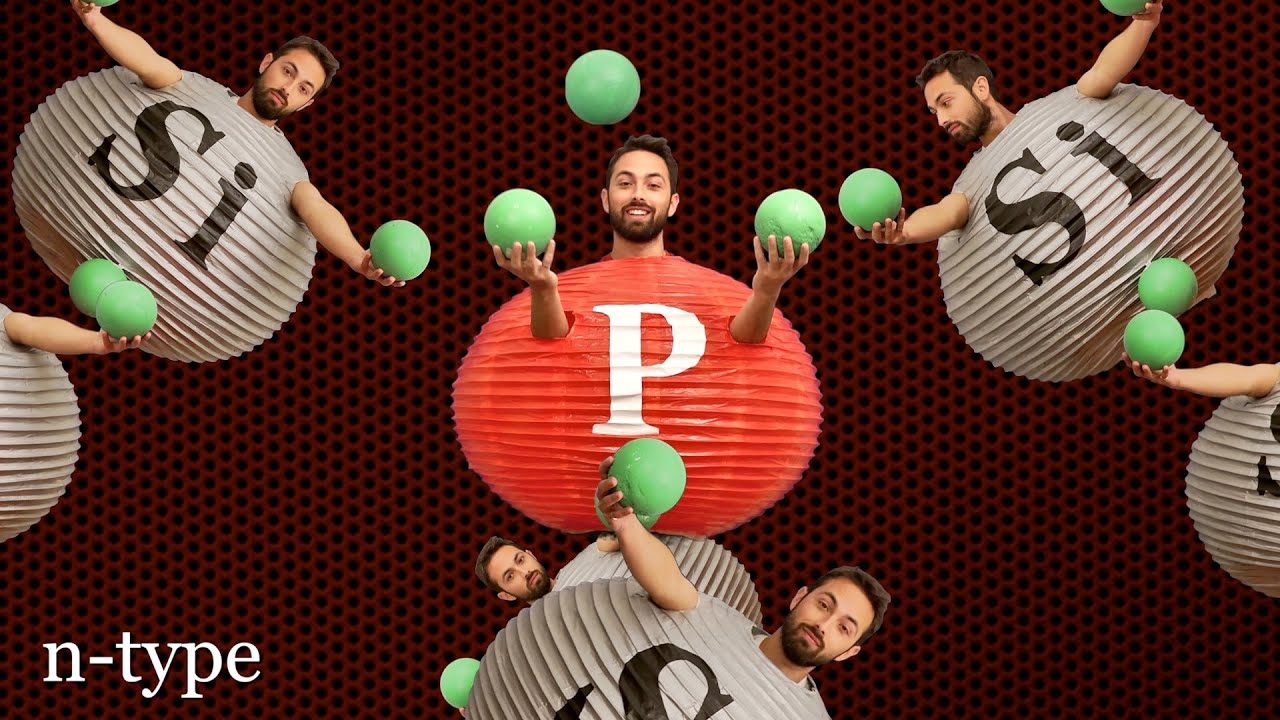
How does a transistor work? Our lives depend on this device.
Support Veritasium on Patreon: http://bit.ly/VePatreon
Subscribe to Veritasium - it's FREE! http://bit.ly/YSWpWm
When I mentioned to people that I was doing a video on transistors, they would say "as in a transistor radio?" Yes! That's exactly what I mean, but it goes so much deeper than that. After the transistor was invented in 1947 one of the first available consumer technologies it was applied to was radios, so they could be made portable and higher quality. Hence the line in 'Brown-eyed Girl' - "going down to the old mine with a transistor radio."
But more important to our lives today, the transistor made possible the microcomputer revolution, and hence the Internet, and also TVs, mobile phones, fancy washing machines, dishwashers, calculators, satellites, projectors etc. etc. A transistor is based on semiconductor material, usually silicon, which is 'doped' with impurities to carefully change its electrical properties. These n and p-type semiconductors are then put together in different configurations to achieve a desired electrical result. And in the case of the transistor, this is to make a tiny electrical switch. These switches are then connected together to perform computations, store information, and basically make everything electrical work intelligently.
Special thanks to PhD Comics for awesome animations: http://bit.ly/16ZXcVY
And thanks to Henry Reich and Vanessa Hill for reviews of earlier drafts of this video.
Music: Kevin MacLeod (incompetech.com) Decisions

Here’s what happens when you just keep zooming in. Use code veritasium at https://incogni.com/veritasium to get an exclusive 60% off an annual Incogni plan.
A big thank you to Magnus Garbrecht from the University of Sydney for showing us around the lab and for his feedback on the script.
Special thanks to Quentin Ramasse for his expertise on the video.
Sign up to the Veritasium newsletter for weekly science updates - https://ve42.co/Newsletter
▀▀▀
0:00 Why is it hard to see atoms?
2:12 How does an electron microscope work?
4:09 Transmission Electron Microscope (TEM)
5:11 Spherical Aberration
8:55 Field Ion Microscope
11:05 Scanning Transmission Electron Microscope (STEM)
13:24 Probe microscopes
14:02 An unlikely solution
18:08 Seeing atoms
▀▀▀
Join us on Patreon for early access videos, bonus content, and to support Veritasium! https://ve42.co/PatreonDE
Adam Foreman, Albert Wenger, Alexander Tamas, Anton Ragin, Autodidactic Studios, Bertrand Serlet, Blake Byers, Bruce, Dave Kircher, David Johnston, Evgeny Skvortsov, Garrett Mueller, Gnare, gpoly, Greg Scopel, Juan Benet, Keith England, KeyWestr, Kyi, Lee Redden, Marinus Kuivenhoven, Matthias Wrobel, Meekay, meg noah, Michael Krugman, Orlando Bassotto, Paul Peijzel, Richard Sundvall, Sam Lutfi, Tj Steyn, TTST, Ubiquity Ventures, and wolfee
If you’re looking for a molecular modeling kit, try Snatoms, a kit I invented where the atoms snap together magnetically - https://ve42.co/SnatomsV
▀▀▀
References:
Busch, H. (1926). Berechnung der Bahn von Kathodenstrahlen im axialsymmetrischen elektromagnetischen Felde. Annalen Der Physik - https://ve42.co/Busch1926
Ruska, E. (1986). The development of the electron microscope and of electron microscopy. Nobel Lecture - https://ve42.co/Ruska1986
Scherzer, O. (1936) - https://ve42.co/Scherzer1936
Jensen, G. (2015). Part 1: EM Lenses. Caltech - https://ve42.co/Jensen2015
Field Ion Microscope via Wikipedia - https://ve42.co/FieldIon
Transmission Electron Microscope via Wikipedia - https://ve42.co/MicroscopeTEM
Albert V. Crewe biography via UChicagoNews Microscopy Society of America - https://ve42.co/CreweBio
McMullan, D. (1993). Scanning Electron Microscopy 1928 - 1965. Microscopy Society of America, Cincinnati - https://ve42.co/McMullan1993
Electric and Magnetic Field Lenses via MIT - https://ve42.co/LensesMIT
Haider, M. et al. (1998). Towards 0.1 nm resolution with the first spherically corrected transmission electron microscope. Journal of Electron Microscopy - https://ve42.co/Haider1998_1
Haider, M. et al. (1998). Electron microscopy image enhanced. Nature - https://ve42.co/Haider1998_2
Krivanek, O. et al. (2022). Aberration correction in the STEM. CRC Press EBooks - https://ve42.co/Krivanek2022
Crewe, A. V., et al. (1970). Visibility of Single Atoms. Science - https://ve42.co/Crewe1970
Secrets of Size: Atoms to Supergalaxies via the BBC - https://ve42.co/AtomsBBC
Pennycook, S. J. (2012). Seeing the atoms more clearly: STEM imaging from the Crewe era to today. Ultramicroscopy - https://ve42.co/Pennycook2012
Rose, H. H. (2009). Historical aspects of aberration correction. Journal of Electron Microscopy - https://ve42.co/Rose2009
Kavli Prize in Nanoscience via kavliprize.org - https://ve42.co/Kavli2020
Vogt, T. (2019) Aberration-Corrected Electron Microscopy - https://ve42.co/Vogt2019
Images & Video:
Available here - https://ve42.co/AtomsVisuals
▀▀▀
Directed by Gregor Čavlović, Derek Muller, and Tim Usborne
Written by Gregor Čavlović, Tim Usborne, Emily Zhang, and Casper Mebius
Edited by Trenton Oliver and Charlie Grayley
Animated by Mike Radjabov, Fabio Albertelli, Ivy Tello, Emma Wright, and Andrew Neet
Illustrated by Jakub Misiek and Maria Gusakovich
Filmed by Charles Clements
Additional research by Gabe Strong, Geeta Thakur, and Emili Gyles
Produced by Casper Mebius, Derek Muller, Emily Zhang, Gregor Čavlović, Rob Beasley Spence, Tori Brittain, Gabe Strong, Luke Lewis, and Matthew Cavanagh
Thumbnail contributions by Ben Powell, Ren Hurley, and Peter Sheppard
Additional video/photos supplied by Getty Images, Storyblocks
Music from Epidemic Sound

Savanna- Biomes of the world.
The savanna is a type of biome with large stretches of grasslands mixed with trees and shrubs. It is a mix between a tropical forest and a temperate grassland
Savannas have warm temperatures year round. There are actually two very different seasons in a savanna; a very long dry season in the (winter), and a very wet season in the (summer). In the dry season, a savanna may only receive 4 inches of rain
The dry season is between December and February and occasional fires may occur.
In the summer it will rain often and will this biome may have 10 to 25 inches of rainfall.
Savannas are located in Africa, Brazil, India, and Australia
The savanna we are most familiar with is the East African savanna. This savanna is dotted trees and shrubs. The Serengeti Plains of Tanzania are some of the most well known. Here animals like lions, zebras, elephants, and giraffes are found
Many animals in the savanna have the ability to migrate.
Many types of grasses exist in the savanna and this biome is known for acacia trees and. Baobab trees.
You may also enjoy ......
Introduction to Biomes
https://youtu.be/cXo9YczQBo4
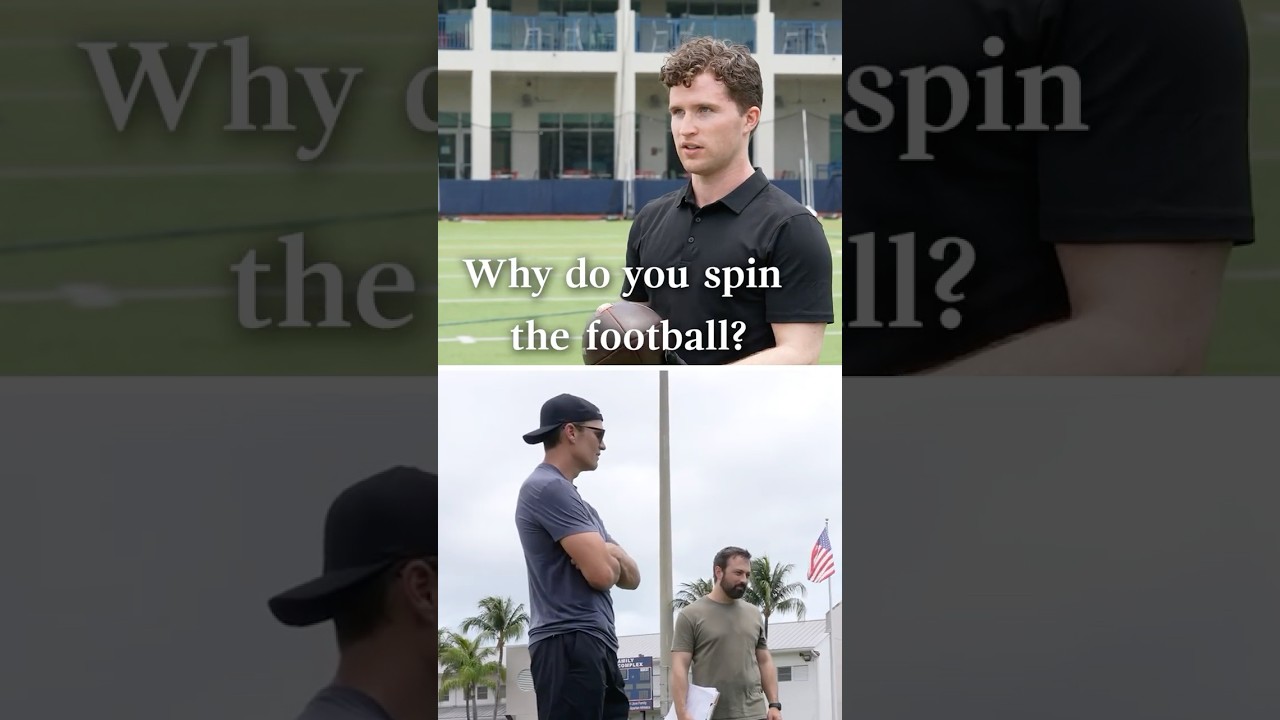
The real impact of spin on a football—explained with @tombrady.