Top videos
WEBSITE: http://www.teachertube.com random sample

Phases of the Moon is a great introduction to the moon for kids. In this video we will learn all about the moon, the effects that it has on the earth, and how it orbits. We also talk about the first people who landed on the moon (Neil Armstrong and Buzz Aldrin). Last but not least we will learn all about and explain the different phases of the moon, including: New Moon, First Quarter Moon, Last Quarter Moon, Full Moon, Gibbous Moon, and Crescent Moon.
After finishing the video, head over to our site and download our free 9 page moon lesson plan. This lesson plan is build for 1st - 3rd grade and comes complete with instruction pages, activities, worksheets and more! Download here: https://learnbright.org/lessons/science/the-moon/
Thank you for watching and learning with us! We’re constantly releasing new content and videos, so click that “Subscribe” button and you’ll get notified.
Find and Follow Us Online:
Facebook: https://www.facebook.com/LearnBright/
Instagram: https://instagram.com/LearnBrightEducation
Pinterest: https://pinterest.com/LearnBrightEducation
YouTube: https://www.youtube.com/LearnBright
Website: https://learnbright.org/
*Teachers and Parents! Did you know? In addition to these great videos, we have also created a library of high quality and engaging lessons for your elementary aged student(s). Visit us, sign up for a free account, and instantly you'll have access to thousands of lesson plans, learning materials, teaching instructions, activities, and assignments that your kids will really enjoy! We hope to see you soon!
Browse our entire collection of Science lesson plans: https://learnbright.org/lessons/?filter_subject=science
#PhasesOfTheMoon
#MoonForKids
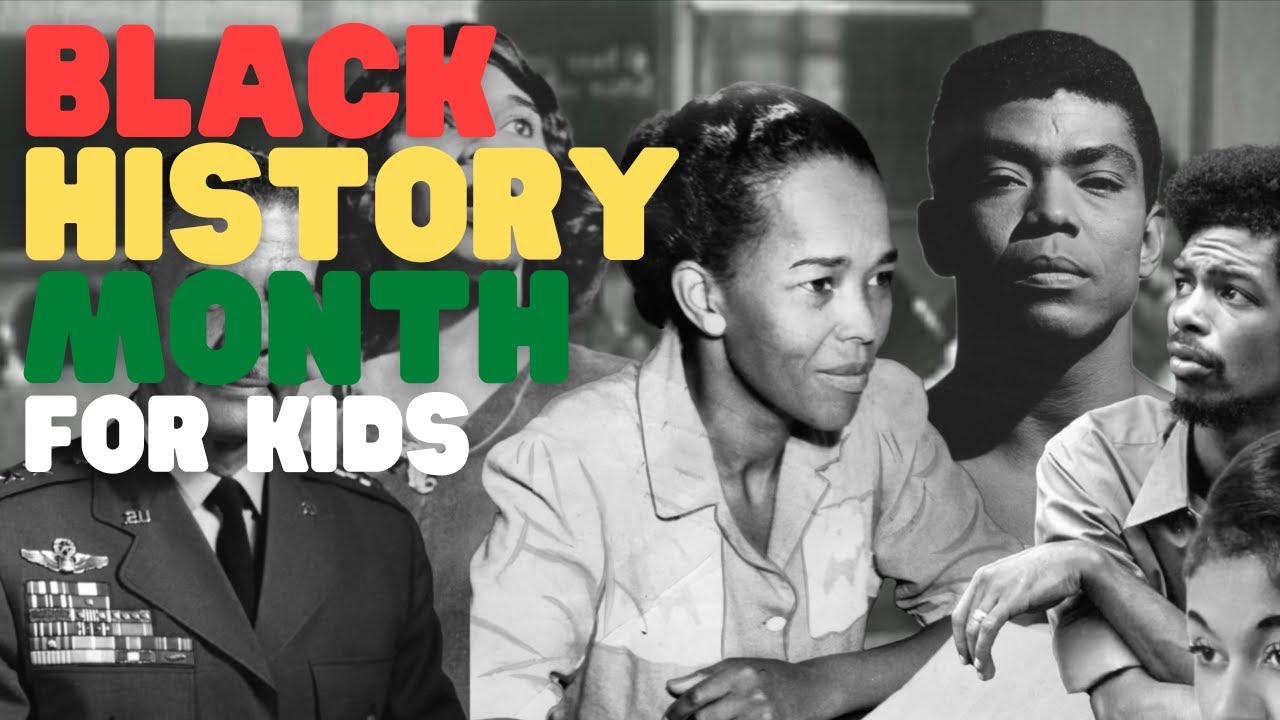
NOTE: Around the 4:40 mark, we mention that President Ford expanded the celebration of Black history from one week to the full month 50 years after President Lincoln announced the Emancipation Proclamation. The correct number is 113 years later. We apologize for the error.
Every February, Americans use the month to reflect on and celebrate the achievements of African Americans in American history. That is what Black History Month is all about. In this video for kids, you will learn how this particular month-long celebration came to be. At one point, the country didn't even study any events related to African American history because it dealt with such a tragic period in our history. In 1915, an African American historian named Carter G. Woodson decided to change that. "You must give your own story to the world," he wrote.
Woodson recognized that the predominately white historical association from which he was banned had no interest in attributing advances in science, technology, and other fields to non-White people. And very few people studied Black history at this time. School textbooks didn't even contain information about it. To give proper recognition to the accomplishments of Black Americans, he started the Association for the Study of Negro Life and History and declared the second week in February as "Negro History Week."
Carter Woodson chose this week because it commemorated the birthdays of two significant historical figures related to the freedom and equality of African Americans: Frederick Douglass and Abraham Lincoln. Frederick Douglass was an abolitionist who was born enslaved in the early 1800s. He was able to escape to the North and declared himself a free man, becoming an abolitionist and advocate for human rights. He met Abraham Lincoln on several occasions and may have influenced Lincoln's ideas on slavery.
It wasn't until Gerald Ford was president of the U.S. that the week-long celebration of Black history became a month-long period instead. Black History Month matters because it celebrates the sacrifices that so many Black Americans faced and endured to bring the country to where it is. As former President Obama stated, "We recommit to reaching for a day when no person is judged by anything but the content of their character."
We hope you and your student(s) enjoyed learning about Black History Month! If you want even more information, head over to our website and download one of our many free lesson plans, full of activities, worksheets, and more!
https://learnbright.org/lesson....s/social-studies/why
https://learnbright.org/lesson....s/social-studies/afr
Thank you for watching and learning with us! We’re constantly releasing new content and videos, so click that “Subscribe” button and you’ll get notified.
What you will learn in Black History Month for Kids:
0:00 Introduction to Black History Month
0:30 Various famous African Americans
1:05 History of African Americans in the U.S.
2:29 Carter G. Woodson documents Black history
3:37 Second week of February becomes Negro History Week
4:04 Frederick Douglass and Abraham Lincoln
4:59 Importance of Black History Month
Find and Follow Us Online:
Facebook: https://www.facebook.com/LearnBright/
Instagram: https://instagram.com/LearnBrightEducation
Pinterest: https://pinterest.com/LearnBrightEducation
YouTube: @LearnBright
Website: https://learnbright.org/
*Teachers and Parents! Did you know? In addition to these great videos, we have also created a library of high quality and engaging lessons for your elementary aged student(s). Visit us and sign up for a free account, and you'll instantly have access to thousands of lesson plans, learning materials, teaching instructions, activities, and assignments that your kids will really enjoy! We hope to see you soon!
Browse our entire collection of Social Studies lesson plans: https://learnbright.org/lessons/?filter_subject=social-studies
#BlackHistoryMonth
#AfricanAmerican

Angles for Kids - An intro into the world of Angles is a video that will introduce your kids to Angles, How to Measure Angles, and provide an introduction to the various kinds of angles ie Acute, Right, Obtuse, Straight, and Reflex.
After watching this video and completing the coursework found on our website your child will understand the various kinds of angles and how to measure them.
Thank you for watching and learning with us! We’re constantly releasing new content and videos so click that “Subscribe” button and you’ll notified.
Find and Follow Us Online:
Facebook: https://www.facebook.com/LearnBright/
Instagram: https://instagram.com/LearnBrightEducation
Pinterest: https://pinterest.com/LearnBrightEducation
YouTube: https://www.youtube.com/LearnBright
Website: https://learnbright.org/
*Teachers and Parents! Did you know? In addition to these great videos, we have also created a library of high quality and engaging lessons for your elementary aged student(s). Visit us, sign up for a free account, and instantly you'll have access to thousands of lesson plans, learning materials, teaching instructions, activities, and assignments that your kids will really enjoy! We hope to see you soon!
Browse our entire collection of Math lesson plans:
https://learnbright.org/lessons/?filter_subject=math
#AnglesForKids

In this video we learn all about the planets of our solar system. Our solar system so so large and vast and these enormous planets all orbiting around the sun are so amazing to look and and learn about. We will learn interesting things about each planet, including their size, orbit times, and other facts that are fun to know. After this video you will be able to recite the planets in order and share something unique about each planet.
After watching the video, head over to our website and download our Free comprehensive lesson plan about Planets and our Solar System. This lesson is packed with more engaging content, hands on activities, worksheets and more. Get your download here: https://learnbright.org/lesson....s/science/the-solar-
Timestamps:
0:00 Introductory Story about our Solar System
1:52 What is a Galaxy?
2:34 Our Solar System.
3:10 What is a Planet?
5:34 Planets Rotation and Spin
7:50 Closer Look at Each of Our 8 Planets
15:14 Learning the Names of the Planets in Order
15:48 Why is Pluto not a Planet Anymore?
16:45 Recap Planets Quiz / Activity
Thank you for watching and learning with us! We’re constantly releasing new content and videos, so click that “Subscribe” button and you’ll get notified.
Follow us across the web!
Facebook: https://www.facebook.com/LearnBright/
Instagram: https://instagram.com/LearnBrightEducation
Pinterest: https://pinterest.com/LearnBrightEducation
YouTube: https://www.youtube.com/learnbright
Website: https://learnbright.org/
*Teachers and Parents! Did you know? In addition to these great videos, we have also created a library of high quality and engaging lessons for your elementary aged student(s). Visit us, sign up for a free account, and instantly you'll have access to thousands of lesson plans, learning materials, teaching instructions, activities, and assignments that your kids will really enjoy! We hope to see you soon!
Browse our entire collection of Science lesson plans: https://learnbright.org/lessons/?filter_subject=science
#ASL
#PlanetsOfOurSolarSystem
#PlanetsForKids

How to solve a quadratic inequality. Visual intuition of what a quadratic inequality means.
Watch the next lesson: https://www.khanacademy.org/math/algebra2/polynomial_and_rational/polynomial_tutorial/v/terms-coefficients-and-exponents-in-a-polynomial?utm_source=YT&utm_medium=Desc&utm_campaign=AlgebraII
Missed the previous lesson?
https://www.khanacademy.org/math/algebra2/polynomial_and_rational/quad_ineq/v/quadratic-inequalities?utm_source=YT&utm_medium=Desc&utm_campaign=AlgebraII
Algebra II on Khan Academy: Your studies in algebra 1 have built a solid foundation from which you can explore linear equations, inequalities, and functions. In algebra 2 we build upon that foundation and not only extend our knowledge of algebra 1, but slowly become capable of tackling the BIG questions of the universe. We'll again touch on systems of equations, inequalities, and functions...but we'll also address exponential and logarithmic functions, logarithms, imaginary and complex numbers, conic sections, and matrices. Don't let these big words intimidate you. We're on this journey with you!
About Khan Academy: Khan Academy offers practice exercises, instructional videos, and a personalized learning dashboard that empower learners to study at their own pace in and outside of the classroom. We tackle math, science, computer programming, history, art history, economics, and more. Our math missions guide learners from kindergarten to calculus using state-of-the-art, adaptive technology that identifies strengths and learning gaps. We've also partnered with institutions like NASA, The Museum of Modern Art, The California Academy of Sciences, and MIT to offer specialized content.
For free. For everyone. Forever. #YouCanLearnAnything
Subscribe to Khan Academy’s Algebra II channel:
https://www.youtube.com/channe....l/UCsCA3_VozRtgUT7wW
Subscribe to Khan Academy: https://www.youtube.com/subscr....iption_center?add_us

How to determine the domain of algebraic functions (examples) | Functions | Algebra I | Khan Academy
Courses on Khan Academy are always 100% free. Start practicing—and saving your progress—now: https://www.khanacademy.org/ma....th/algebra-home/alg-
Sal gives many examples where he determines the domains of functions according to mathematical limitations.
Practice this lesson yourself on KhanAcademy.org right now:
https://www.khanacademy.org/math/algebra/algebra-functions/determining-the-domain-of-a-function/e/domain-of-algebraic-functions?utm_source=YT&utm_medium=Desc&utm_campaign=AlgebraI
Watch the next lesson: https://www.khanacademy.org/math/algebra/algebra-functions/determining-the-domain-of-a-function/v/domain-of-a-modeling-function-example-1?utm_source=YT&utm_medium=Desc&utm_campaign=AlgebraI
Missed the previous lesson?
https://www.khanacademy.org/math/algebra/algebra-functions/determining-the-domain-of-a-function/v/domain-of-a-radical-function?utm_source=YT&utm_medium=Desc&utm_campaign=AlgebraI
Algebra I on Khan Academy: Algebra is the language through which we describe patterns. Think of it as a shorthand, of sorts. As opposed to having to do something over and over again, algebra gives you a simple way to express that repetitive process. It's also seen as a "gatekeeper" subject. Once you achieve an understanding of algebra, the higher-level math subjects become accessible to you. Without it, it's impossible to move forward. It's used by people with lots of different jobs, like carpentry, engineering, and fashion design. In these tutorials, we'll cover a lot of ground. Some of the topics include linear equations, linear inequalities, linear functions, systems of equations, factoring expressions, quadratic expressions, exponents, functions, and ratios.
About Khan Academy: Khan Academy offers practice exercises, instructional videos, and a personalized learning dashboard that empower learners to study at their own pace in and outside of the classroom. We tackle math, science, computer programming, history, art history, economics, and more. Our math missions guide learners from kindergarten to calculus using state-of-the-art, adaptive technology that identifies strengths and learning gaps. We've also partnered with institutions like NASA, The Museum of Modern Art, The California Academy of Sciences, and MIT to offer specialized content.
For free. For everyone. Forever. #YouCanLearnAnything
Subscribe to Khan Academy’s Algebra channel:
https://www.youtube.com/channe....l/UCYZrCV8PNENpJt36V
Subscribe to Khan Academy: https://www.youtube.com/subscr....iption_center?add_us

We hope you enjoy our latest video giving you some great 4th of July facts and history for kids!
Thank you for following Clarendon Learning. Clarendon Learning is a non-profit that was organized with the sole purpose to aid in the education and strengthening of America’s youth. Clarendon Learning hopes to create bright futures for children across the country by supporting teachers and parents, and developing high quality educational content for kids.
Thank you for watching and learning with us! We’re constantly releasing new content and videos so click that “Subscribe” button and you’ll notified.
Find and Follow Us Online:
Facebook: https://www.facebook.com/LearnBright/
Instagram: https://instagram.com/LearnBrightEducation
Pinterest: https://pinterest.com/LearnBrightEducation
YouTube: https://www.youtube.com/LearnBright
Website: https://learnbright.org/
*Teachers and Parents! Did you know? In addition to these great videos, we have also created a library of high quality and engaging lessons for your elementary aged student(s). Visit us, sign up for a free account, and instantly you'll have access to thousands of lesson plans, learning materials, teaching instructions, activities, and assignments that your kids will really enjoy! We hope to see you soon!
Browse our entire collection of Social Studies lesson plans: https://learnbright.org/lessons/?filter_subject=social-studies
#ASL
#July4Facts
#IndependenceDay

Here's an original song for you to understand how to conjugate reflexive verbs. I also included 9 of them in here for you to see how they change! I hope it's helpful.
Help me make it viral by watching, rewatching and sharing it with everyone you know!
o!
👍Please share this video with others and like it to help me get the word out on my videos!
And let me know about other troublesome topics you’d like in bite-sized form.
🔔 Subscribe for more Spanish lessons: http://bit.ly/XGe7we
🤖Practice Your Spanish with Chateo! Get a discount off your first 6 months with code CHATEOBOT! Sign up at: https://www.senorjordan.com/chat
Social Media:
* YouTube: https://www.youtube.com/SeñorJordan
* Find “señor jordan videos” on Facebook, Twitter, Instagram, and TikTok
* Soundcloud: senorjordanspanish
Enjoying the content? Consider buying me a taco!
https://ko-fi.com/senorjordan
🌐 Private Lessons Available:
Interested in improving your Spanish conversational skills? Contact me: www.senorjordan.com/clases
📚 Practice Your Spanish with My Books!
https://www.tprsbooks.com/shop/?_product_type=novel&_author=jeremy-senor-jordan&_product_language_filter=spanish
Special thanks to Ely Saúl García for making the music sound way better and for helping with the production for this video!
instagram: @levitasrec
Please help me get the word out on these new videos and share with as many people possible!
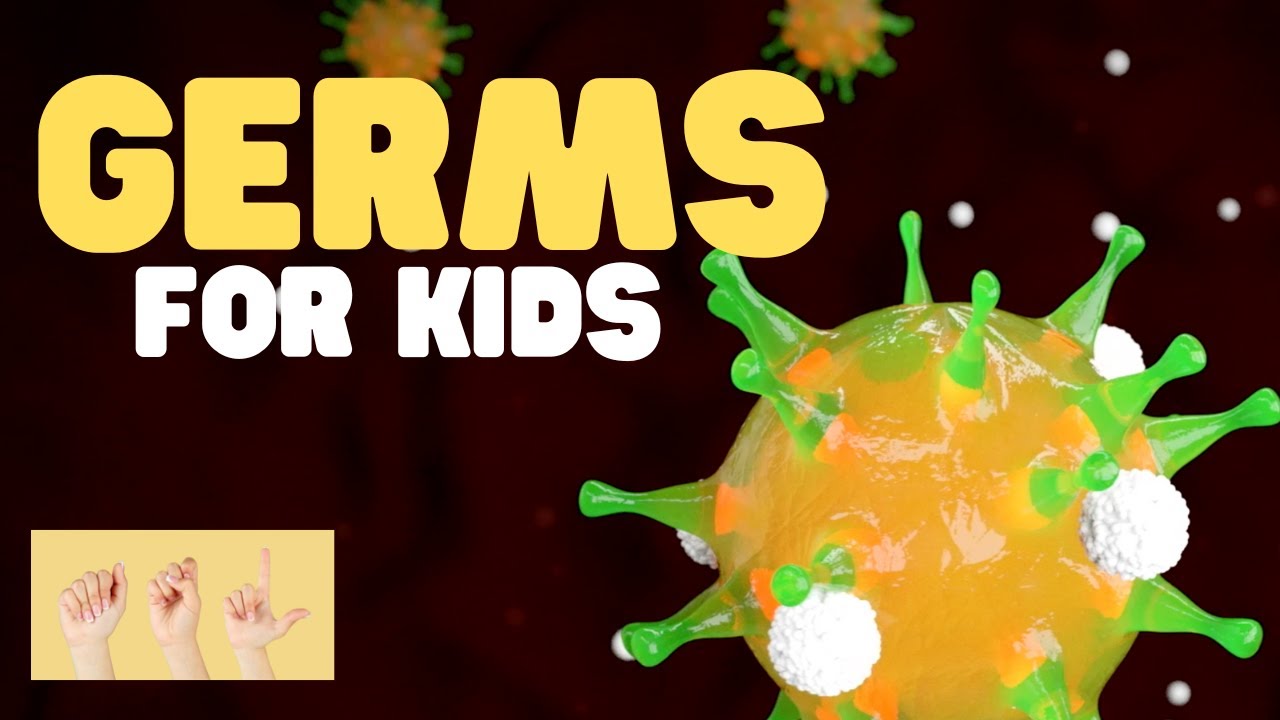
Germs are everywhere. They are often responsible for making people sick. They're so small, you can only see them with a microscope. In Germs for Kids, you and will learn all about the four types of germs that exist in the word: bacteria, viruses, fungi, and protozoa. Let's see what you already know and what you will learn throughout the video!
The first type is bacteria. Bacteria are single-celled organisms that live inside and outside of you body. They can cause ear infections, sore throats, cavities, and more. Not all bacteria are bad, though. In fact, there is lots of good bacteria in some of the food we eat, and our bodies need good germs to help use up the nutrients we ingest. Doctors even use good bacteria to create medicines and vaccines.
Viruses, on the other hand, are all bad. Some examples include chicken pox, the flu, and the measles. Viruses like to invade healthy cells and multiply as the host cell multiplies. Because our bodies have so many cells, there are lots of places for viruses to invade. When we get sick from a virus, we can get what's called a vaccine or immunization to help fight it.
The next type of germ is fungi. A fungus is like a plant and actually consists of many cells rather than just one. Fungi like to live in warm and wet places, such as between a person’s toes. Many fungi don’t cause problems for healthy people. Examples include athlete’s foot, skin infections, and other rashes. Some fungal infections are contagious and can pass from one person to another.
The last type of germ is a protozoa. Like fungi, protozoa live in wet places. And like bacteria and viruses, they also have only one cell. Many live in the water, which is how they spread diseases and infections. Water that is not safe to drink may contain protozoa. These germs can lead to stomach aches, diarrhea, and nausea. The video explains lots of ways to help stop the spread of germs. Keep watching to find out!
We hope you and your student(s) enjoyed learning about these different kinds of germs! If you want to learn even more, head over to our website and download one of our many free lesson plans about this topic, full of activities, worksheets, and more!
https://learnbright.org/lessons/science/germs/
https://learnbright.org/lesson....s/science/bacteria-a
https://learnbright.org/lesson....s/science/influenza-
https://learnbright.org/lesson....s/science/immune-sys
What you will learn in this video:
0:00 Introduction to what germs are
0:33 Scenario about viruses
1:05 Why we get sick
1:58 Facts about bacteria
3:17 Facts about viruses
4:31 Facts about fungi
5:23 Facts about protozoa
6:14 Ways to stay healthy
8:10 Review of the facts
Thank you for watching and learning with us! We’re constantly releasing new content and videos, so click that “Subscribe” button and you’ll get notified.
Find and Follow Us Online:
Facebook: https://www.facebook.com/LearnBright/
Instagram: https://instagram.com/LearnBrightEducation
Pinterest: https://pinterest.com/LearnBrightEducation
YouTube: @LearnBright
Website: https://learnbright.org/
*Teachers and Parents! Did you know? In addition to these great videos, we have also created a library of high-quality and engaging lessons for your elementary aged student(s). Visit us, sign up for a free account, and instantly you'll have access to thousands of lesson plans, learning materials, teaching instructions, activities, and assignments that your kids will really enjoy! We hope to see you soon!
Browse our entire collection of Science lesson plans: https://learnbright.org/lessons/?filter_subject=science
#ASL
#Germs
#bacteria #Virus

Have you ever asked "What is a Democrat?" Well, we have too! In this video, we cover the basics of the democratic party and learn all about what makes a democrat a democrat for kids. Come learn all about this party with us!
Be sure to check out our other video about Republicans so you can compare and contrast the differences: https://youtu.be/JLHByPpG10w
https://learnbright.org/lesson....s/social-studies/rep
Thank you for watching and learning with us! We’re constantly releasing new content and videos so click that “Subscribe” button and you’ll notified.
Find and Follow Us Online:
Facebook: https://www.facebook.com/LearnBright/
Instagram: https://instagram.com/LearnBrightEducation
Pinterest: https://pinterest.com/LearnBrightEducation
YouTube: https://www.youtube.com/LearnBright
Website: https://learnbright.org/
*Teachers and Parents! Did you know? In addition to these great videos, we have also created a library of high quality and engaging lessons for your elementary aged student(s). Visit us, sign up for a free account, and instantly you'll have access to thousands of lesson plans, learning materials, teaching instructions, activities, and assignments that your kids will really enjoy! We hope to see you soon!
Browse our entire collection of Social Studies lesson plans: https://learnbright.org/lessons/?filter_subject=social-studies
#ASL
#Democracy
#WhatIsADemocrat

Time to learn about King Tut in a different way! In fact, this fun, educational rap "raps" up everything we know about the Boy King of ancient Egypt in under a minute. Let's see if you can keep up! If you want even more information, head over to our website and download one of our many free lesson plans, full of activities, worksheets, and more!
https://learnbright.org/lesson....s/social-studies/kin
Thank you for watching and learning with us! We’re constantly releasing new content and videos, so click that “Subscribe” button and you’ll get notified.
Find and Follow Us Online:
Facebook: https://www.facebook.com/LearnBright/
Instagram: https://instagram.com/LearnBrightEducation
Pinterest: https://pinterest.com/LearnBrightEducation
YouTube: @LearnBright
Website: https://learnbright.org/
*Teachers and Parents! Did you know? In addition to these great videos, we have also created a library of high-quality and engaging lessons for your elementary aged student(s). Visit us and sign up for a free account, and you'll instantly have access to thousands of lesson plans, learning materials, teaching instructions, activities, and assignments that your kids will really enjoy! We hope to see you soon!
Browse our entire collection of Social Studies lesson plans: https://learnbright.org/lessons/?filter_subject=social-studies
#shorts
#Tutankhamun
#Pharaoh

LANGUAGE ENGLISH OR MALAYALAM

#sightwords
#learntoread
#learnhowtoread
#practiceREADINGatHOME
#EnglishWORDS
#EnglishGRADE1
#ENGLISHgrade2
#BASICenglishWORDS
#PracticeREADINGenglish
#TutorsaPAGBASA
#ReadingVideoTutorial
#Learn how to read English
#EnglishforKinder
#EnglishforGrade1

#practicereadingenglish #teacherayaonlinetutor #shortstory
This reading lesson will help kids develop their reading skills. Kids are expected to become fast readers and comprehend different English words throughout this reading lesson.
#ReadingLessonForBeginners
#ReadingTutorialforBeginners
#readinglessonforkids
#teacherayaonlinetutor
#practicereadingenglish
#practicereadingenglish
#learnhowtoread
#LearningIsFun
#englishgrade1
#EnglishReadingLessonGrade1
#EnglishReadingLessonGrade3
#EnglishReadingLessonKinder
#SHORTSTOYWITHQUIZ
#shortstory
#OnlineReadingLesson
#teacherayaonlinetutor

New York City Chancellor Richard Carranza talks forcefully about making public schools more equitable for the black, Latino, and poor students who comprise the majority in the nation’s largest school district. His blunt language about how segregated the schools are in New York is not typical of superintendents. But in his first year on the job, Carranza has run into strong headwinds and political pushback as he pursues an equity agenda that includes overhauling admissions for the city’s most elite high schools. In his upcoming keynote speech at Education Week’s Leaders To Learn From event, Carranza will share what motivates him to keep pushing to change long, entrenched practices that he believes are keeping far too many students from accessing opportunities to learn. To learn more about Carranza’s speech and Leaders To Learn From 2019, visit https://leaders.edweek.org/eve....nt-details/?intc=ltl
This video was produced as part of Education Week’s Leaders to Learn From project, recognizing outstanding school district leaders from around the country. More at http://leaders.edweek.org

Please do like and subscribe to my channel.....
https://youtu.be/NmDNSQYifKo
Please share like with others

Jack Ruby shoots and kills Lee Harvey Oswald in front of news cameras. From "The Assassination of President Kennedy."

Originally Published on October 12, 2006.

When an ambitious, hard-working animal lover sees the need for veterinary services in her own town, she plans to get the schooling she needs—starting with a solid, online education. Learning from the farm through her K12-powered school gives Ava time for practical hands-on skill development as she cares for more than 50 animals in her own sanctuary.
Ava has a clear vision for her future, and she knows the value of hard work. With the full support of her parents, she’s ready to begin fulfilling her vision of studying veterinary sciences and someday offering full-scale veterinary services to her community.
For more than 25 years, K12 has been heeding the call of families and students who asked for an alternative to traditional onsite education. We’re in awe of what Ava has done with this opportunity and can’t wait to see how the next generation of students will thrive. Learn more at https://bit.ly/40XuDKT.