Top videos

How to convert decimal to binary.
Here's the more detailed explanation:
https://www.youtube.com/watch?v=64bXbK104qk
Support us on Patreon:
https://www.patreon.com/join/tecmath To donate to the tecmath channel: https://paypal.me/tecmath?locale.x=en_AU
To support tecmath on Patreon: https://www.patreon.com/tecmath
To buy tecmath mechandise: https://teespring.com/stores/tecmath-store
#convertbinary
#binary
#binarydecimal

Claim $5 now: https://r.honeygain.io/history
Try Honeygain today & earn passive income effortlessly
What does M.A.D. mean? M.A.D. refers to the full-scale use of nuclear weapons by two opposing sides, resulting in one clear, obvious outcome – mutually assured destruction. The policy of M.A.D. rests on the idea that if two countries or continents are equally as capable of destroying one another through nuclear attack, then there is no incentive for either side to pull the trigger, or remove it. Instead, nuclear-capable countries keep each other in check with the knowledge of the MAD doctrine, and that any sort of “first move” would result in global nuclear devastation.
Become a Simple History member: https://www.youtube.com/simplehistory/join
Support us on Patreon: https://www.patreon.com/simplehistory
Copyright: DO NOT translate and re-upload our content on Youtube or other social media.
SIMPLE HISTORY MERCHANDISE
Get the Simple History books on Amazon:
https://www.amazon.com/Daniel-....Turner-%60/e/B00H5TY
T-Shirts
https://teespring.com/stores/s....imple-history-offici
Simple history gives you the facts, simple!
See the book collection here:
Amazon USA
http://www.amazon.com/Daniel-Turner/e/B00H5TYLAE/
Amazon UK
http://www.amazon.co.uk/Daniel....-Turner/e/B00H5TYLAE
https://www.facebook.com/Simpl....e-History-5494376751
https://twitter.com/SimpleHistoryYT
Credit:
Created by Daniel Turner (B.A. (Hons) in History, University College London)
Script Writer: Natasha Martell
Narrator:
Chris Kane
https://vocalforge.com/
Sources:
Mutual Assured Destruction
Robert Jervis
Foreign Policy
No. 133 (Nov. - Dec., 2002), pp. 40-42 (3 pages)
Published By: Slate Group, LLC
Nuclear Superiority or Mutually Assured Deterrence: The Development of the US Nuclear Deterrent
David S. McDonough
International Journal
Vol. 60, No. 3, Canada in the World: Annual John W. Holmes Issue on Canadian Foreign Policy (Summer, 2005), pp. 811-823 (13 pages)
Published By: Sage Publications, Ltd.
Between Assured Destruction and Nuclear Victory: The Case for the "Mad-Plus" Posture
Robert J. Art
Ethics
Vol. 95, No. 3, Special Issue: Symposium on Ethics and Nuclear Deterrence (Apr., 1985), pp. 497-516 (20 pages)
Published By: The University of Chicago Press
https://history.state.gov/mile....stones/1961-1968/cub

Order of operations explained simply...and as an added bonus we'll look at the solutions to some of those clickbaity problems that 'divided the internet'. To donate to the tecmath channel: https://paypal.me/tecmath?locale.x=en_AU
To support tecmath on Patreon: https://www.patreon.com/tecmath
To buy tecmath mechandise: https://teespring.com/stores/tecmath-store
#convertbinary
#binary
#binarydecimal

Learn more counting, addition, and subtraction lessons in the FREE Khan Academy Kids app! https://go.learn.khanacademy.o....rg/khanacademy/YouTu
Peck subtracts two buttons from six to find just the right number of buttons for his sweater. Way to subtract, Peck!
Visit us at http://www.khankids.org to learn more about Khan Academy Kids, a free educational app for preschool through 2nd grade available on Apple, Google Play, and Amazon app stores.
You can also access other videos on our Addition and Subtraction playlist here: http://khan.co/KhanKids-AdditionSubtraction
Subscribe to our channel for more videos like this.
Questions? Reach our team at khankids@khanacademy.org.
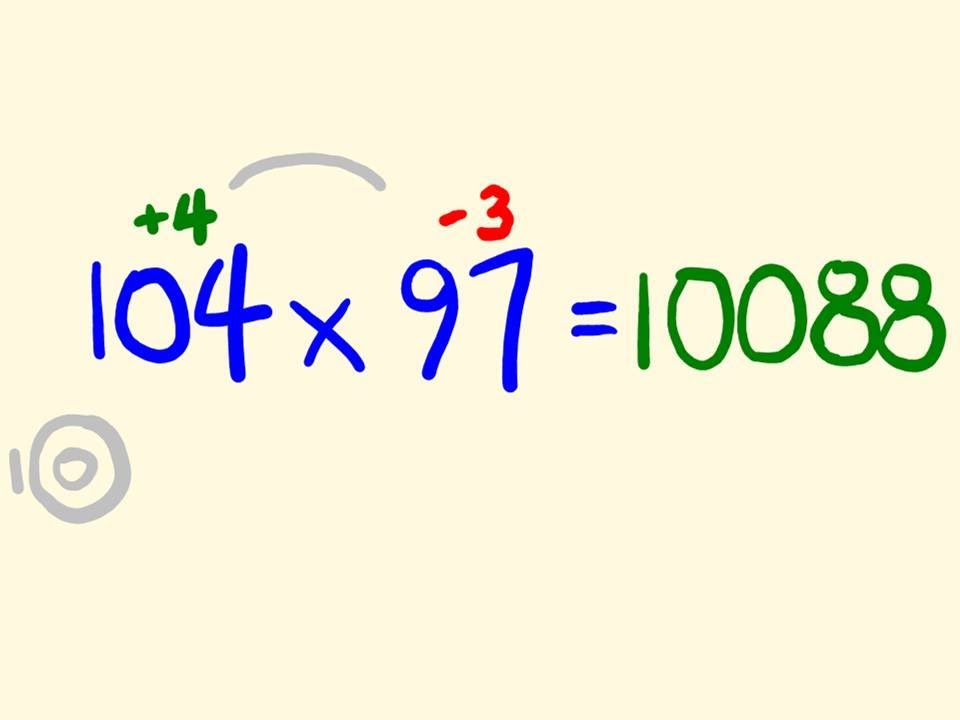
This mental multiplication math trick uses the idea of a third number - a base number - to help us multiply two numbers in your head. This series of videos first looks at multiplying numbers near 10 using base 10. The second video looks at multiplying using base 20 and 30. The third video looks at how to apply this mental multiplication trick to numbers near 50. The forth video the investigates ho to easilt mentally multiply numbers near to 100. Continue your mental math multiplication abilties here!
To donate to the tecmath channel:https://paypal.me/tecmath
To support tecmath on Patreon: https://www.patreon.com/tecmath
To buy tecmath mechandise: https://teespring.com/stores/tecmath-store
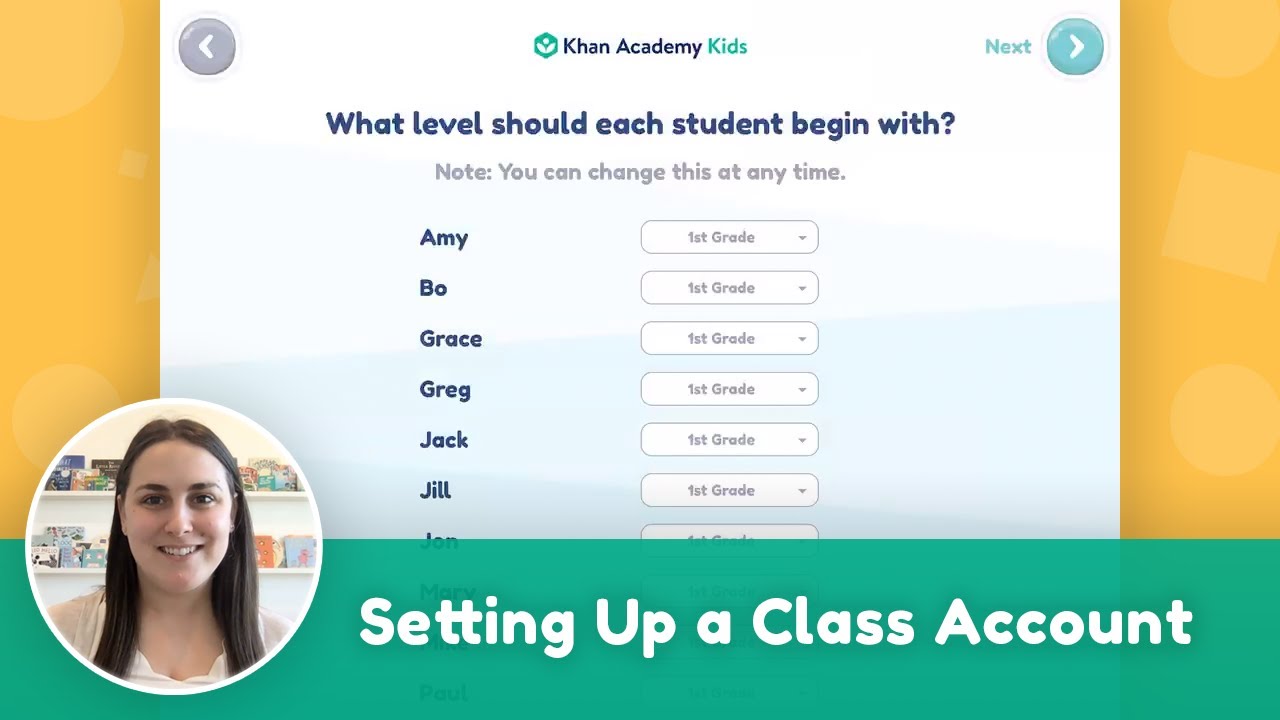
Learn how to set up a Class Account inside the Khan Academy Kids app so that you can set up a class, assign lessons, and view progress.
Start by signing up with an email address and activating the teacher set up. Then, add a teacher name, grade level, and student names. Colorful teacher and student avatars populate the screen once the class is complete.
If your school uses Clever, you will have different steps for setting up your account. Please refer to this video for instructions: https://youtu.be/jRWnJv9__CU
To view this information in an article with step-by-step instructions, click here: http://khan.co/KhanKids-TeacherSetup
--
Khan Academy Kids is an award-winning educational app for students in Pre-K through 2nd grade. The app engages kids in core subjects like early literacy, reading, writing, language, and math, while encouraging creativity and building social-emotional skills.
Learn more about Khan Academy Kids, our free educational app for students in Pre-K through 2nd grade, at http://www.khankids.org
Available on Apple, Google Play, and Amazon app stores:
http://khan.co/KhanKids-YT-Apple
http://khan.co/KhanKids-YT-Google
http://khan.co/KhanKids-YT-Amazon
Questions? Reach our team at khankids@khanacademy.org
#edtech #techtools #educationalapps #preschool #prek #kindergarten #firstgrade #secondgrade #remoteteaching #teacher #classroom #learninggames #teachertools #education #homeschool #appsforteachers

On this lesson, you will get some practice modeling and solving multiplication 3rd Grade Multiplication Word Problem Practice!
Let's gain some practice with solving word problems involving multiplicative comparison by using drawings and equations with a symbol for the unknown number to represent the problem, distinguishing multiplicative comparison from additive comparison.
★ Want more FREE weekly math videos? Subscribe Now: http://bit.ly/1OVJnyh
★★ Why Math? Download YOUR Free eBook and sign-up for our FREE weekly newsletter: http://www.mashupmath.com/resources/
★★★ Learn More About Anthony: http://bit.ly/1KQ1Td3
Learning Standards (4th Grade Operations and Alegbraic Thinking):
Use the four operations with whole numbers to solve problems.
4.OA.A.2
Multiply or divide to solve word problems involving multiplicative comparison, e.g., by using drawings and equations with a symbol for the unknown number to represent the problem, distinguishing multiplicative comparison from additive comparison.
How can I practice 4th grade common core math?
How can I model word problems?
How can I practice common core word problems?
Image Credit: Emojis provided free by http://emojione.com
Our lessons are perfect for flipped classroom math teachers and students. This lesson is aligned with the common core learning standards for math and the SAT math curriculum as well.
MashUp Math is a great free resource for math students, parents, and teachers. Our lessons are a great resource for struggling students, flipped classroom educators, and homeschool math students.
✔✔✔SUBSCRIBE FOR FREE: https://www.youtube.com/channel/UCtBt...
✔✔JOIN OUR MAILING LIST: http://bit.ly/1TqV94V
✔FOLLOW US ON TWITTER: http://www.twitter.com/mashupmath
✔FOLLOW US ON INSTAGRAM: http://www.instagram.com/mashupmath
✔FOLLOW US ON PINTEREST: http://www.pinterest.com/mashupmath
✔LIKE US ON FACEBOOK: http://www.facebook.com/mashupmath
Our Mission: MashUp Math is our creative solution to reviving students' passion and interest for learning mathematics. As young educators, we know that all students learn math differently and that a one-size-fits-all approach is simply ineffective. The idea that the ability to understand mathematics is reserved for a select few did not sit well with us.
In addition to sharing free teacher resources (which are teacher created resources) in the form of teacher worksheets, we share new YouTube math videos every week that help math teachers and students to better understand mathematics and the common core. Our lessons can be aligned with the common core standards for common core math and are immensely popular with flipped learning educators and anyone experimenting with flipped classroom learning.
As educators, we know what it takes to be a super math teacher and that we can’t always do it alone. In addition to our cool math videos, we share articles, blogs, inspirational quotes, teacher math worksheets, and math worksheets. Whether you teach in the flipped classroom, operate in blended education or online blended learning, or are interested in finding cool math online, MashUp Math will have something for you!
Many students think of us as a math tutor online or as their on-demand online tutor. Others trust us for all things related to online math education—coming to use when they find themselves thinking “I don’t understand my homework assignment! and need some homework help!
It is also a part of our mission to make progressive steps in mathematics education. For one, our content is created with the goal of moving students from a fixed mindset to a growth mindset. We also aim to meet the unique needs of ESL math students and support math for girls as well.
Many of our users serve as a special education teacher and use our cool videos to support their special education students with special needs. Our free online math lessons are also high adaptable to your homeschool curriculum and should be added to your list of free homeschool resources.
We are also very involved in the edtech world and are very popular with Google Classroom educators, Math Games Classroom Educators, and teachers who support the use of iPad for education!
So if you could use some help with everyday math and are a student with a unique learning style or learning styles—like Visual Auditory Learning! Or if you’re tired of math games and are more interested in an easy-to-follow tutorial, check us out and learn math with us. No matter your school’s standards of learning, our YouTube Math Videos Lessons will work for you!

Learn More at mathantics.com
Visit http://www.mathantics.com for more Free math videos and additional subscription based content!
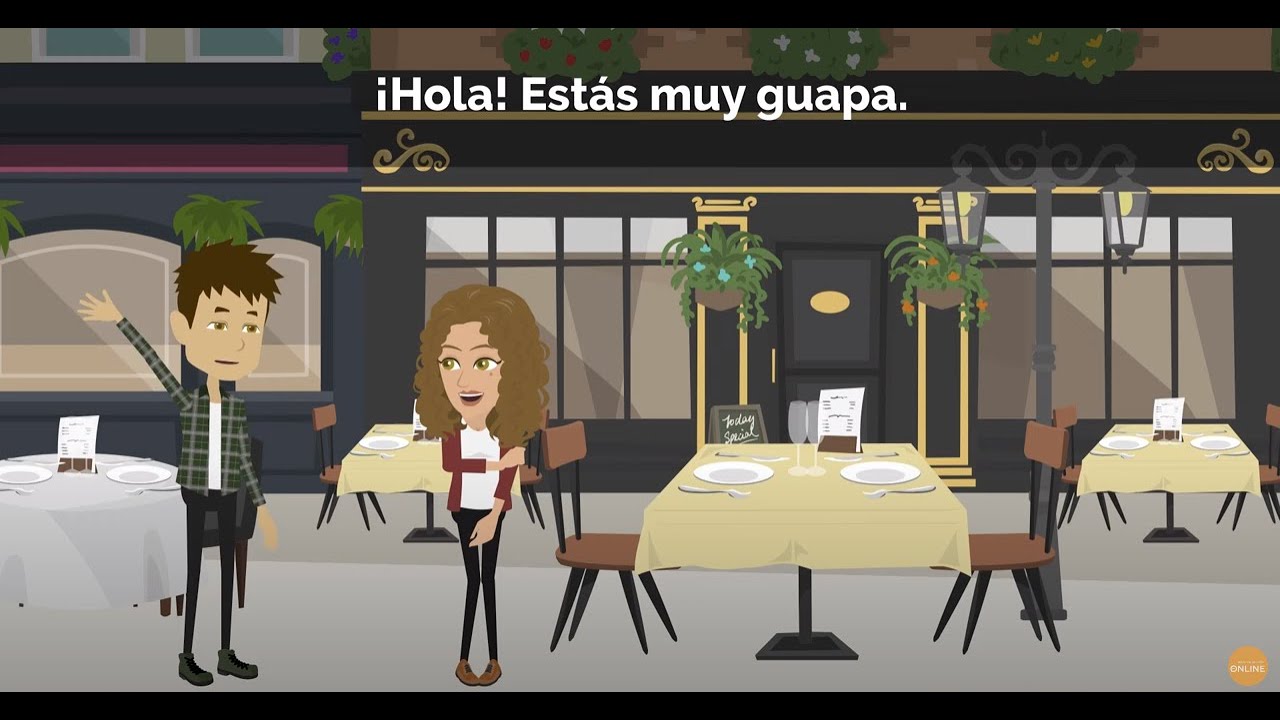
Sergio y Andrea nos traen una nueva historia para aprender español.
En este capítulo Sergio decide llamar a Andrea para invitarla a tomar algo por la noche.
¿Cómo invitar a alguien a salir en español?:
https://youtu.be/-mWavwOHAbY?t=56
Andrea acepta y quedan a encontrarse en un restaurante.
¿Cómo decir a una chica que es guapa?
https://youtu.be/-mWavwOHAbY?t=113
Una vez sentados tienen un diálogo en español con el camarero, a quien le piden lo que quieren comer y beber:
https://youtu.be/-mWavwOHAbY?t=173
La cosa se tuerce un poco cuando el camarero les dice que la mayoría de las cosas que quieren se han agotado:
https://youtu.be/-mWavwOHAbY?t=321
Finalmente logran superar el mal trago y tienen una cita muy agradable:
Diálogo en español para una cita: https://youtu.be/-mWavwOHAbY?t=372
A pesar de que el camarero sigue trayendo malas noticias:
https://youtu.be/-mWavwOHAbY?t=408
Esta es la 1ª parte de esta historia para aprender español. Suscríbete a nuestro canal 🔔 para seguir todas las historias de Sergio y Andrea:
https://youtube.com/playlist?l....ist=PLyhXDeW_WjhCXps
#Clase 138
This is a re-upload. It is mostly the same as the previous release, but clarifies some terminology regarding the use of the word "power".
To learn more about Math Antics, visit www.mathantics.com

En esta clase de español, exploraremos el mundo de las emociones a través de los sinónimos en español. Los sinónimos son palabras que comparten significados similares o idénticos, y son fundamentales para enriquecer nuestro vocabulario y expresarnos con precisión. Acompáñanos mientras analizamos ejemplos cotidianos que ilustran cómo los sinónimos pueden ofrecer matices emocionales y variación en nuestra comunicación.
Sinónimos que veremos en el video:
Felicidad:
Sinónimos: alegría, gozo, regocijo.
Tristeza:
Sinónimos: melancolía, desánimo, pesar.
Sorpresa:
Sinónimos: asombro, estupor, desconcierto.
Amor:
Sinónimos: cariño, afecto, pasión.
Miedo:
Sinónimos: temor, pavor, angustia.
Enfado:
Sinónimos: irritación, rabia, cólera.
Preocupación:
Sinónimos: inquietud, angustia, nerviosismo.
Asombro:
Sinónimos: maravilla, sorpresa, estupefacción.
Empatía:
Sinónimos: compasión, solidaridad, comprensión.
Suscribirse:https://www.youtube.com/Aprend....erespañolonline?sub_ 🔔
✅ Curso de español para principiantes: https://youtube.com/playlist?l....ist=PLyhXDeW_WjhBv8b
✅ Español nivel intermedio: https://youtube.com/playlist?l....ist=PLyhXDeW_WjhAlQR
✅ Verbos en español: https://youtube.com/playlist?l....ist=PLyhXDeW_WjhDyOv

Nueva clase para aprender español nivel principiante. En esta oportunidad vamos a aprender los días de la semana y los meses del año, con ejemplos de uso en oraciones.
Los días de la semana: https://youtu.be/GSZRucfB3sc?t=10
Lunes: https://youtu.be/GSZRucfB3sc?t=15
Martes: https://youtu.be/GSZRucfB3sc?t=55
Miércoles: https://youtu.be/GSZRucfB3sc?t=103
Jueves: https://youtu.be/GSZRucfB3sc?t=149
Viernes: https://youtu.be/GSZRucfB3sc?t=194
Sábado: https://youtu.be/GSZRucfB3sc?t=246
Domingo: https://youtu.be/GSZRucfB3sc?t=295
Los meses del año: https://youtu.be/GSZRucfB3sc?t=341
Enero: https://youtu.be/GSZRucfB3sc?t=349
Febrero: https://youtu.be/GSZRucfB3sc?t=395
Marzo: https://youtu.be/GSZRucfB3sc?t=437
Abril: https://youtu.be/GSZRucfB3sc?t=481
Mayo: https://youtu.be/GSZRucfB3sc?t=526
Junio: https://youtu.be/GSZRucfB3sc?t=574
Julio: https://youtu.be/GSZRucfB3sc?t=616
Agosto: https://youtu.be/GSZRucfB3sc?t=658
Septiembre: https://youtu.be/GSZRucfB3sc?t=701
Octubre: https://youtu.be/GSZRucfB3sc?t=751
Noviembre: https://youtu.be/GSZRucfB3sc?t=792
Diciembre: https://youtu.be/GSZRucfB3sc?t=835
/ Clase 124
Recuerda suscribite a nuestro canal y activar las notifcaciones🔔
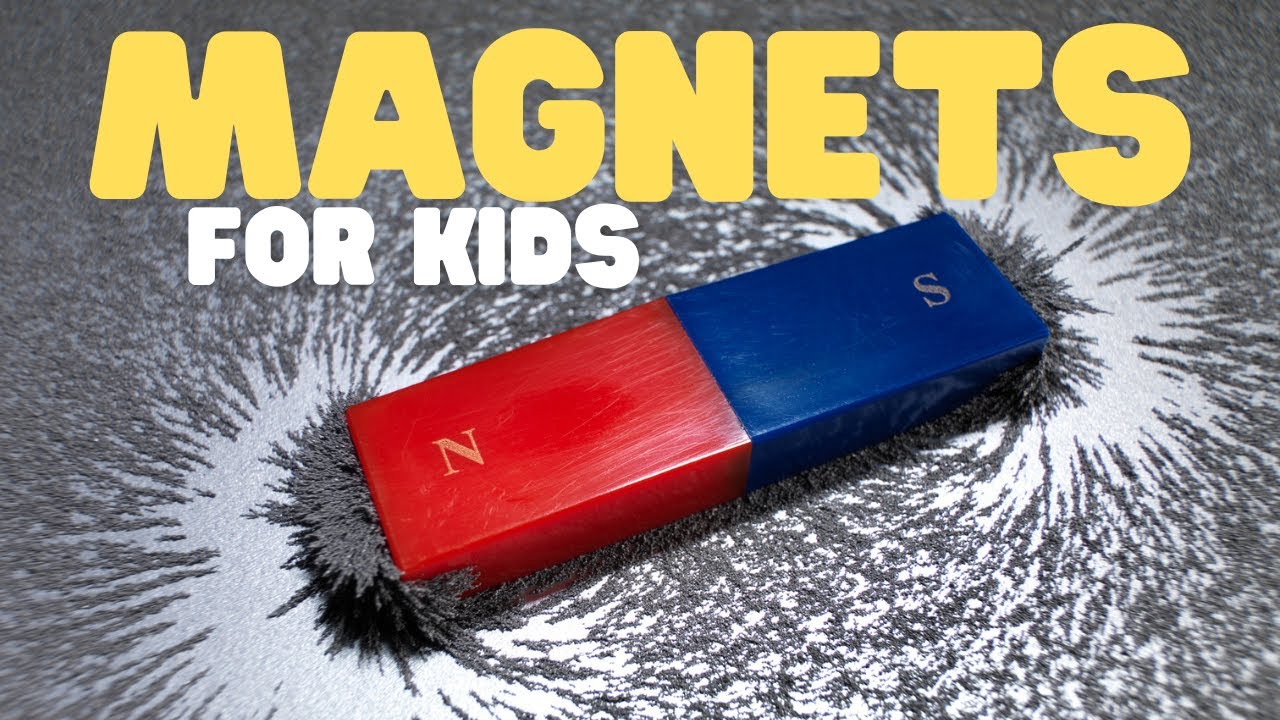
What do you know about magnets or magnetism? Magnets for Kids teaches you about magnets and how and why they work. People use magnets for more than just hanging up artwork and grocery lists on their refrigerators. In fact, the very center of the earth is made of two metals that cause a giant magnetic field! A magnetic field is the area surrounding a magnet. Let's see what else you learn!
Every magnet has a north pole and a south pole. A north and south pole will always pull toward each other, or attract to each other. If you try to take two magnets and face the north poles toward each other, they will repel. The same is true of the south poles.
There are a few types of magnets: temporary, permanent, and electromagnet. Temporary magnets become magnetized when a magnetic field is present. But they lose their magnetism when that magnetic field goes away. Permanent magnets, on the other hand, are made of materials like iron or nickel that are already magnetized and have their own magnetic field. In fact, the earth's core is made of iron and nickel, which is why it is magnetic.
Electromagnets are the last type. These magnets are created by running an electrical current through a coil with a metal core. The energized core creates a magnetic field. It stops working as soon as the electric current turns off. An MRI machine at a hospital is an example of an electromagnet. Other things with magnets in them include telephones, door bells, motors, and compasses.
We hope you and your student(s) enjoyed learning about magnetism and how magnets work! If you want to learn even more, head over to our website and download one of our many free lesson plans about magnets, full of activities, worksheets, and more!
https://learnbright.org/lessons/science/magnets/
What you will learn in Magnets for Kids:
0:00 Introduction to magnets
0:27 What is a magnet?
1:06 North and south poles of magnets
2:06 Three types of magnets—temporary, permanent, electromagnet
3:13 Where are magnets used?
4:04 Review of the facts
Thank you for watching and learning with us! We’re constantly releasing new content and videos, so click that “Subscribe” button and you’ll get notified.
Find and Follow Us Online:
Facebook: https://www.facebook.com/LearnBright/
Instagram: https://instagram.com/LearnBrightEducation
Pinterest: https://pinterest.com/LearnBrightEducation
YouTube: @LearnBright
Website: https://learnbright.org/
*Teachers and Parents! Did you know? In addition to these great videos, we have also created a library of high-quality and engaging lessons for your elementary aged student(s). Visit us, sign up for a free account, and instantly you'll have access to thousands of lesson plans, learning materials, teaching instructions, activities, and assignments that your kids will really enjoy! We hope to see you soon!
Browse our entire collection of Science lesson plans: https://learnbright.org/lessons/?filter_subject=science
#Magnets
#WhatIsAMagnet

WEBSITE: http://www.teachertube.com/math
How to find Area And Circumference Of Circle.

TeacherTube User: Klasky
TeacherTube URL: http://www.teachertube.com/vie....wVideo.php?video_id=
This is a math video lesson to help you with new math, math tricks, and or simple math questions you may have.
This video will assist you in converting your measurements from feet and inches multiples of 3 into inches by using 1/4 inch scale.

¡Aprende a expresarte con confianza en español!
En este video, aprenderem cómo hablar de tus sentimientos y emociones en español.
Aprenderás vocabulario clave para describir cómo te sientes y cómo expresar tus emociones en diferentes situaciones. Ya sea que quieras hablar con amigos, compañeros de trabajo o con alguien especial, este video te ayudará a comunicar tus sentimientos con claridad y precisión.
00:00 Sentimientos y emociones en español
00:03 Hola, ¿Cómo te sientes hoy?
00:13 Me siento un poco abrumado
00:57 Además me siento un poco triste
02:16 Me siento agradecido
03:45 ¿Qué te hace sentir tan positiva?
04:03 Me siento energizada y feliz
05:17 Me siento orgullosa de mi misma
07:01 ¿Qué te hace sentir tan feliz?
09:40 Me siento muy afortunada
10:08 Me siento un poco frustrada
11:32 Me siento un poco emocionada
12:32 ¿Cómo te sientes tú hoy?
12:40 Suscríbete y fin del video
Algunos sentimientos y emociones que podremos aprender en la clase de hoy:
Abrumado
Triste
Agradecido
Positiva
Energizada
Feliz
Orgullosa
Afortunada
Frustrada
Emocionada
Y tú ¿Cómo te sientes hoy? Escríbelo en los comentarios.
🔔 Suscribirse: https://www.youtube.com/Aprend....erespañolonline?sub_
✅ Curso de español para principiantes: https://youtube.com/playlist?l....ist=PLyhXDeW_WjhBv8b
✅ Español nivel intermedio: https://youtube.com/playlist?l....ist=PLyhXDeW_WjhAlQR
✅ Verbos en español: https://youtube.com/playlist?l....ist=PLyhXDeW_WjhDyOv

En este nuevo vídeo para aprender español, veremos cómo dos amigos tienen una conversación relajada y natural mientras disfrutan de un día de verano.
Destacaremos algunas frases importantes y analizaremos algunos aspectos gramaticales que os pueden ayudar a entender mejor este tipo de conversación.
Frases Importantes:
00:02 Escena 1: Saludo y Clima
¿Cómo estás? - Esta es una de las maneras más comunes de saludar a alguien y preguntar por su bienestar.
Es un hermoso día, ¿verdad? - Aquí usamos una expresión para comentar sobre el clima, algo que en la vida cotidiana es muy común para iniciar una conversación.
00:38 Escena 2: Hablando de Planes
¿Qué te gustaría hacer hoy? - Aquí usamos el condicional del verbo "gustar" para proponer una actividad, que es una estructura muy útil en conversaciones informales.
¡Me encanta el mar! - El verbo encantar es muy común cuando hablamos de nuestras preferencias o pasatiempos favoritos.
¡Deberíamos ir este fin de semana! - El uso de deberíamos es una forma de sugerir un plan. Es una forma educada de proponer una idea.
Yo nunca he estado en... - Esta es una estructura perfecta para hablar sobre lugares a los que no has ido, utilizando el presente perfecto (he estado).
02:04 Escena 3: Picnic y Paseo en Bicicleta
¿Qué tal si hacemos...? - Esta es una frase muy útil para hacer sugerencias o proponer actividades de manera casual.
¡Es una buena idea! - Una forma positiva y común de reaccionar ante una sugerencia.
02:49 Escena 4: Helado y Sabores
¿Te apetece...? - Es una manera muy coloquial y educada de preguntar si alguien tiene ganas de hacer algo o comer algo.
Yo quiero uno de chocolate. - Cuando pedimos comida o bebida, usamos el presente del indicativo (quiero).
03:28 Escena 5: Planes para el Fin de Semana
¿Qué te parece si...? - Otra forma muy común de hacer sugerencias, esta vez más dirigida a saber la opinión de la otra persona.
Me encantan los animales. - Aquí volvemos a usar el verbo encantar para expresar gusto.
04:10 Escena 6: Más Actividades de Verano
¿Te gustaría ir...? - El uso del condicional aquí es para preguntar de manera educada y suave si alguien tiene interés en una actividad.
¡Hacer una parrillada siempre es una buena idea! - Usamos el presente para hablar de algo que se considera una acción común o buena en general.
05:02 Escena 7: Parque de Atracciones
¡Me gustan las montañas rusas! - El verbo gustar es imprescindible cuando hablamos de cosas que disfrutamos.
¿Te gusta acampar? - Aquí estamos hablando de una actividad usando el verbo gustar en presente para preguntar por una preferencia.
06:03 Escena 8: Despedida
Gracias por el día tan agradable. - Es muy importante ser agradecido y usar frases de cortesía cuando nos despedimos.
Tiempos Verbales Destacados:
Presente del indicativo: Es el tiempo verbal más usado en este diálogo, ya que la mayor parte de las acciones están ocurriendo en el presente. Ejemplos: "Me gustan las montañas rusas", "Vamos a hacer un picnic."
Condicional: Se usa en sugerencias o para expresar deseos de manera educada. Ejemplos: "¿Qué te gustaría hacer hoy?", "Deberíamos ir al mar."
Presente perfecto: Se usa para hablar de experiencias pasadas que tienen relevancia en el presente. Ejemplo: "Yo nunca he estado en Valencia."
Vocabulario Importante:
Clima: Perfecto, hermoso, día soleado
Actividades de verano: Hacer senderismo, ir a la playa, hacer un picnic, montar en bicicleta
Comida: Helado, sabores (chocolate, fresa, limón, etc.)
Sugerencias: ¿Qué te parece si...? ¿Te gustaría...? ¿Qué tal si...?
¿Quieres aprender español con nosotros? ¡Suscríbete! 🔔

Have you ever wondered where the olympics began? In Ancient Greece, you and your kids will learn the answer to this question. In fact, you will learn a lot about this amazing ancient civilization and its lasting impact on the world today.
Even today, modern society continues to see influences of Ancient Greece. Most capitol buildings, as well as the U.S. capitol and the Supreme Court Building, are modeled after the architecture of Ancient Greece. The area was made up of independent city-states like Sparta, Athens, and Thebes; it was not one big country. And as far as the Olympics are concerned, which we still participate in today, they started in 776 B.C. in Ancient Greece!
Have you ever heard of or do you remember the Pythagorean theorem? This geometrical equation come from Pythagoras, who was an ancient Greek scientist. The famous philosophers Socrates and Aristotle lived during the Classical period of Ancient Greece. Alexander the Great was also born near the end of the Classical period. He died during the Hellenistic period, and his death marked the beginning of the end for the ancient civilization.
In Ancient Greece, boys received a formal education, but girls were taught homemaking skills like cooking and sewing. Most Greek men were farmers, but other occupations were soldiers, craftsmen, or government workers. As far as the diet goes, it is similar to what we call the Mediterranean diet. It consisted of olives, cheeses, fruits and vegetables, and fish.
We hope you and your student(s) enjoyed learning about Ancient Greece! If you want even more information, head over to our website and download one of our many free lesson plans, full of activities, worksheets, and more!
https://learnbright.org/lesson....s/social-studies/anc
What you will learn in Ancient Greece:
0:00 Introduction to Ancient Greece
0:40 How the ancient Greeks contributed to modern society
1:13 Where was Ancient Greece located?
2:26 Archaic period (between 800 and 480 B.C.)
3:00 Classical period (between 480 and 323 B.C.)
3:45 Hellenistic period (between 323 and 146 B.C.)
4:14 Daily life in Ancient Greece
6:19 Review of the facts
7:10 Impact of Ancient Greeks
Thank you for watching and learning with us! We’re constantly releasing new content and videos, so click that “Subscribe” button and you’ll get notified.
Find and Follow Us Online:
Facebook: https://www.facebook.com/LearnBright/
Instagram: https://instagram.com/LearnBrightEducation
Pinterest: https://pinterest.com/LearnBrightEducation
YouTube: @LearnBright
Website: https://learnbright.org/
*Teachers and Parents! Did you know? In addition to these great videos, we have also created a library of high-quality and engaging lessons for your elementary aged student(s). Visit us and sign up for a free account, and you'll instantly have access to thousands of lesson plans, learning materials, teaching instructions, activities, and assignments that your kids will really enjoy! We hope to see you soon!
Browse our entire collection of Social Studies lesson plans: https://learnbright.org/lessons/?filter_subject=social-studies
#AncientGreece
#AncientGreeceFacts

TeacherTube User: Lsondej
TeacherTube URL: http://www.teachertube.com/vie....wVideo.php?video_id=
This is a math video lesson to help you with new math, math tricks, and or simple math questions you may have.
video was shot to show students real life examples of parallel lines and angle relationships

Practice Your Spanish With Chateo - a Spanish-speaking chatbot! | Get a discount off your first 6 months with code CHATEOBOT | Sign up at: https://www.senorjordan.com/chat
~~~~~~~~~~~~~~~~~~~~~~~~~~~~~~
SUBSCRIBE for more Spanish videos: http://bit.ly/XGe7we
and make sure to click the notification bell!
Follow me on Facebook: https://www.facebook.com/srjordanspanish
Tweet me: https://twitter.com/senorjordan
Check out my website: http://www.senorjordan.com
Follow me on Instagram: @senorjordanvideos
Listen to my music on Soundcloud:
https://soundcloud.com/senorjordanspanish
Listen to my music on Spotify:
https://open.spotify.com/artis....t/2nyJ9GgLNMckXCuBHU
Buy my songs on iTunes:
https://music.apple.com/us/artist/1621526948
Buy my songs on Amazon:
https://www.amazon.com/music/p....layer/artists/B09Z35
Donate to my video-making project:
https://paypal.me/srjordanvideos?country.x=US&locale.x=en_US
~~~~~~~~~~~~~~~~~~~~~~~~~~~
This lesson covers some reflexive verbs dealing with daily routine and how to conjugate them. This level is a little more advanced and is for my Spanish two students.
Feel free to leave any questions, comments or suggestions.
For more free Spanish video lessons, wordbanks and verb conjugations, visit http://www.senorjordan.com
Had a little bit of a problem with my lighting this day when filming! Eventually I'll redo the older videos and they'll [hopefully] look better. :-)
~~~~~~~~~~~~~~~~~
For vosotros,
In the present tense, for ar verbs... os [verb - ar]+ áis
examples:
os cepilláis
os laváis
In the present tense, for ar verbs... os [verb - er] + éis
examples:
os ponéis
In the present tense, for ar verbs... os [verb - ir] + ís
os dormís
os vestís