Top videos

In this video, I'd like to talk about the difference between a solar and lunar and discuss different types of eclipses. As the moon orbits the Earth its position changes and may block the sun.
eclipse, when the shadow of one celestial body like the moon or the earth falls on another an eclipse, occurs.
A solar eclipse happens when the moon comes between the earth and the sun and the shadow of the moon falls on part of the
earth a lunar eclipse happens when the earth comes between the Sun and the moon
and the shadow of Earth falls on the moon.
I show a diagram of a partial solar eclipse, total solar eclipse, and an annular eclipse.
In addition, I diagram the types of shadows, umbra, penumbra, and antumbra.
Finally, I diagram the different types of Luna eclipses, penumbral, partial lunar eclipse, and a total lunar eclipse.

Hvordan du løser en ligning
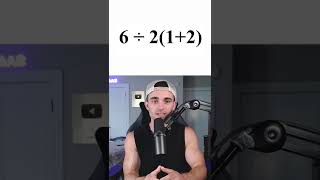
Subscribe and you'll have good luck forever :)
Check out my other socials! 🙌🏼
Instagram ► https://www.instagram.com/sambuchalul
Twitter ► https://www.twitter.com/sambucha
TikTok ► https://www.tiktok.com/@sambucha
Twitch ► https://www.twitch.tv/sambucha
IF YOU WANT TO WATCH MY ONE OF MY LONG VIDEOS: https://www.youtube.com/watch?v=jcRxYnNL704&ab_channel=Sambucha
#shorts #math #equation #test #orderofoperations #sambucha
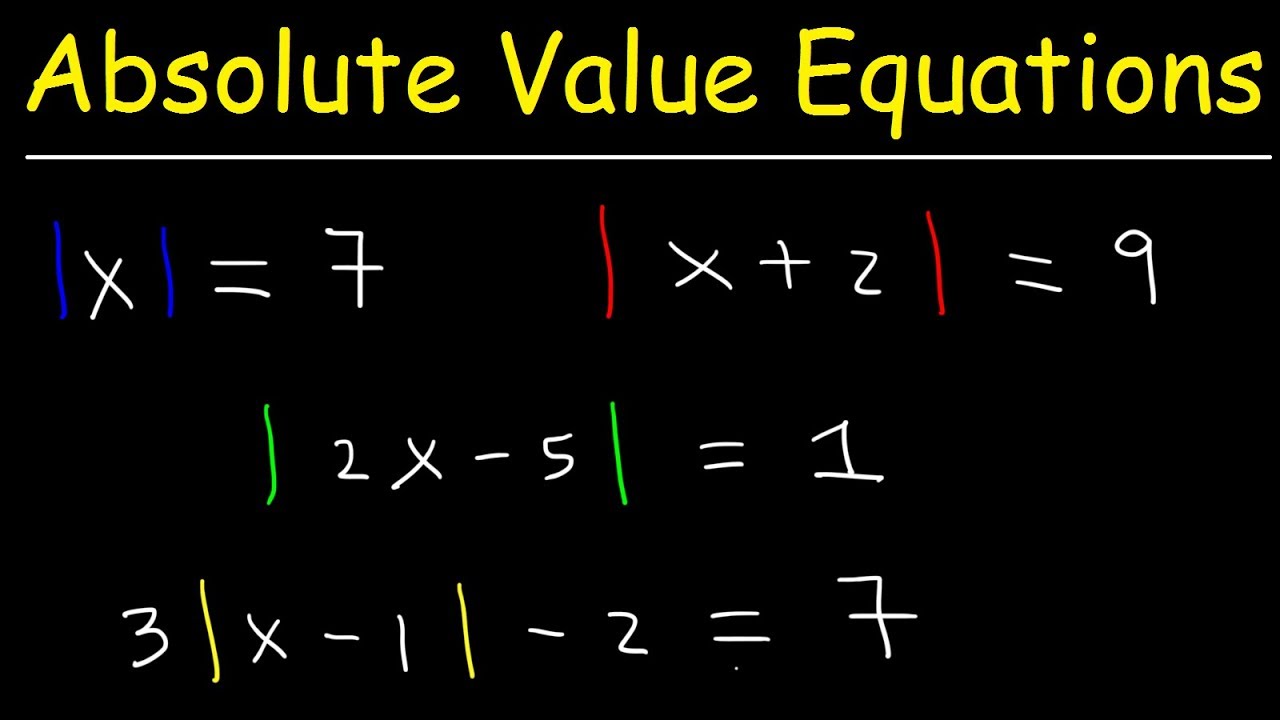
This algebra video tutorial provides a basic introduction into absolute value equations. it explains how to solve absolute value equations the easy way. It contains plenty of examples and practice problems for you to learn the concept.
Solving Absolute Value Equations:
https://www.youtube.com/watch?v=sCcsnuwihEw
Solving Absolute Value Inequalities:
https://www.youtube.com/watch?v=ZJvOGkykJ44
Graphing Absolute Value Functions:
https://www.youtube.com/watch?v=ld4UD98yHio
Extraneous Solutions - Absolute Value:
https://www.youtube.com/watch?v=zZMHbnswvbw
Absolute Value Functions - Vertex & AOS
https://www.youtube.com/watch?v=4V3VpwiwOKs
_____________________________________
Plotting Inequalities on a Number Line:
https://www.youtube.com/watch?v=KkiYqww4eg0
How To Solve Linear Inequalities:
https://www.youtube.com/watch?v=rIl2USa8XPY
Graphing Linear Inequalities In 2 Variables:
https://www.youtube.com/watch?v=cskHdgwB5k8
Graphing Systems of Linear Inequalities:
https://www.youtube.com/watch?v=FWbcKade3rw
How To Solve Compound Inequalities:
https://www.youtube.com/watch?v=msiceXvwriE
_______________________________________
Final Exams and Video Playlists:
https://www.video-tutor.net/
Full-Length Videos and Worksheets:
https://www.patreon.com/MathSc....ienceTutor/collectio
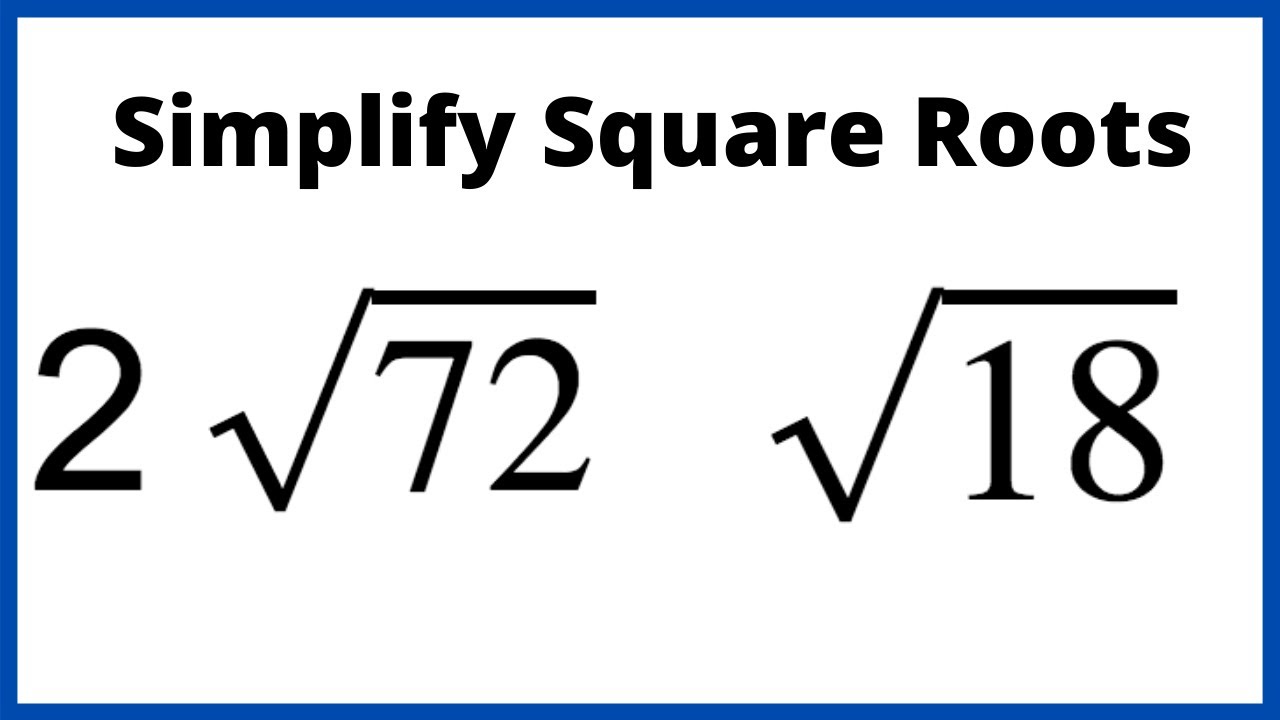
How to simplify square roots. I give step by step instructions on how to simplify a square root. Once you see a couple examples I think you will find the process pretty easy.
List Perfect Square, Cube, and Fourth Roots
http://www.moomoomathblog.com/....2020/07/perfert-squa

We would like to share this video to you, homeschoolers like us. For the parents who are looking for video materials to aid them in homeschooling their children, as well as for the children so that they may find an alternative way to enjoy studying and learning.
In this video, we are excited to present to you the basic shapes. We included some exercises for you to check how well you know the shapes. Enjoy!

Click to Attempt QUIZ - https://www.aatoonskids.com/ge....neral-knowledge-quiz
In this video, you will learn basic general knowledge questions and answers for kids. These general knowledge questions are quite simple and the answers are easy to remember.
GK for Kids | GK questions and answers for kids | Quiz Time | @AAtoonsKids
__________________________________________________________
Chapters
00:00 Introduction
00:12 How many legs does a spider have?
00:37 what's the name of the place you go to see lots of animals?
00:58 What do you use to write on blackboard?
01:13 How many vowels are there in the English alphabet?
01:33 How many sides are there in a square?
01:58 On which date Christmas is celebrated every year?
02:22 Which continent is known as the dark continent?
02:39 Which continent is also called Frozen Continent?
02:57 Which is the largest ocean on the earth?
03:14 Which is the hottest continent on the earth?
03:33 Which instrument is used for measuring body temperature?
03:58 Who painted the Mona Lisa?
04:16 How many bananas will there be in a dozen banana?
04:52 what is the full form of CPU?
05:12 Which is the national game of India
05:28 How many different layers of Earth?
05:51 who is known as Bapu?
06:17 What is the national game of the USA?
06:33 Which is the largest three-digit number?
06:45 What is the currency of the USA?
06:59 How many kidneys does an average human have?
07:29 What is the shape of an egg?
07:45 How many hours in 7 days?
08:11 Recap
11:13 End of Show
__________________________________________________________________
AAtoons Kids
play N learn
Website - http://www.aatoonskids.com
Facebook Page - https://www.facebook.com/aatoonskids1
Twitter - https://twitter.com/aatoonskids
_______________________________________________________________
Others Related Education Video
Quiz for kids video link - https://youtu.be/bRQoP9EgSZI
Quiz on world's first President and Prime ministers - https://youtu.be/8k5apjNrvCY
GK Quiz on Astronomy - https://youtu.be/NITVVslz1c8
Colors Quiz - https://youtu.be/5rYl3DGkmfo
GK questions for kids - https://youtu.be/pUC8FeeNfHw
_________________________________________________________________________
#gk_question_and_answers
#gk_for_kids
#Quiz_Time
#General_Knowledge
#Quiz_for_kids
#Kids_quiz
#AAtoonsKids
_______________________________________
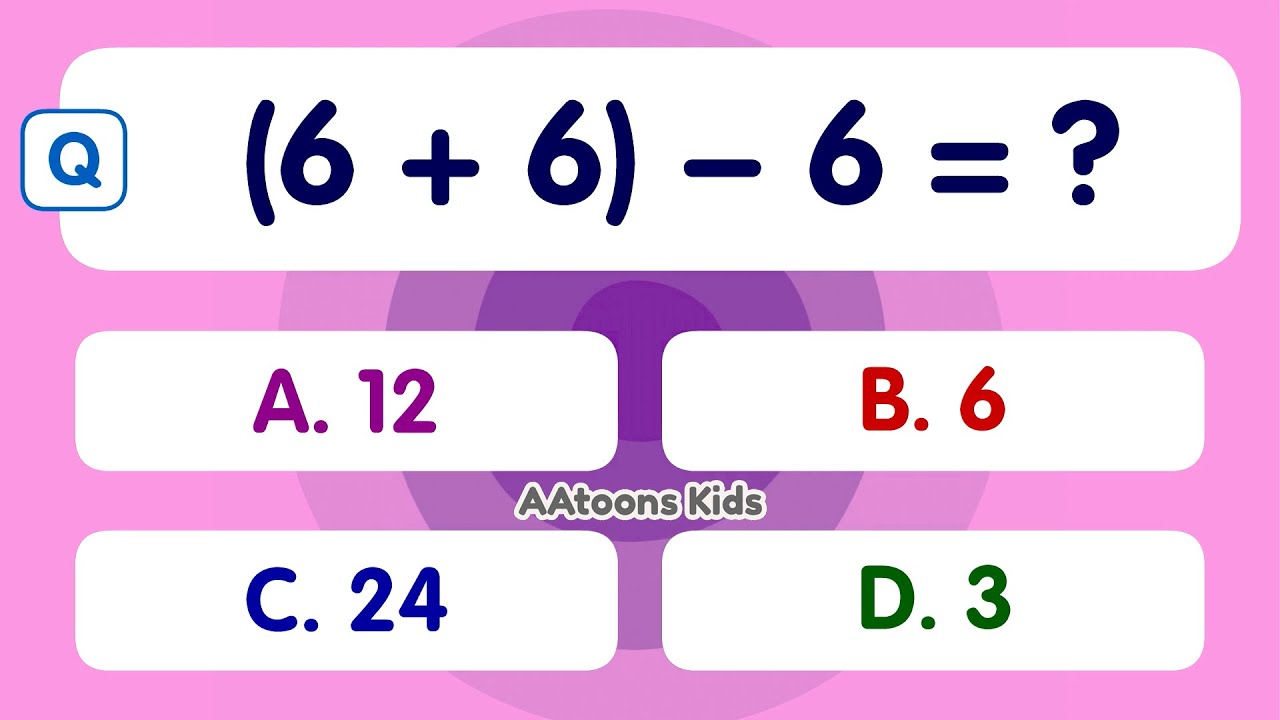
Quiz Link - https://www.aatoonskids.com/mixed-operations-quiz/
Quiz Time | Maths Quiz for Kids | Mixed Operations Quiz for Kids | Learn Mathematics | @AAtoonsKids @AAtoonsStudy
_______________________________________________________________
AAtoons Kids
play N learn
Website - http://www.aatoonskids.com
Facebook Page - https://www.facebook.com/aatoonskids1
Twitter - https://twitter.com/aatoonskids
_______________________________________________________________
Related Videos Links
Division Quiz - https://youtu.be/E4JYbixkyp8
Mental Maths Quiz - https://youtu.be/ELUmKEqqjEQ
Multiplication Table Quiz - https://youtu.be/OQjkFQAIOck
Addition Quiz - https://youtu.be/ITOXb8K74is
Maths Quiz - https://youtu.be/5sVe4m2lc0A
English Quiz - https://youtu.be/CRvB4wrOins
Worksheet Activity - https://youtu.be/W_xC6OKFOx8
________________________________________________________________
#quiz_time
#quiz_for_kids
#maths_quiz
#maths_for_kids
#learn_mathematics
#maths_trivia
#mixed_operations
#maths_trivia_for_kids
#AAtoonsKids
____________________
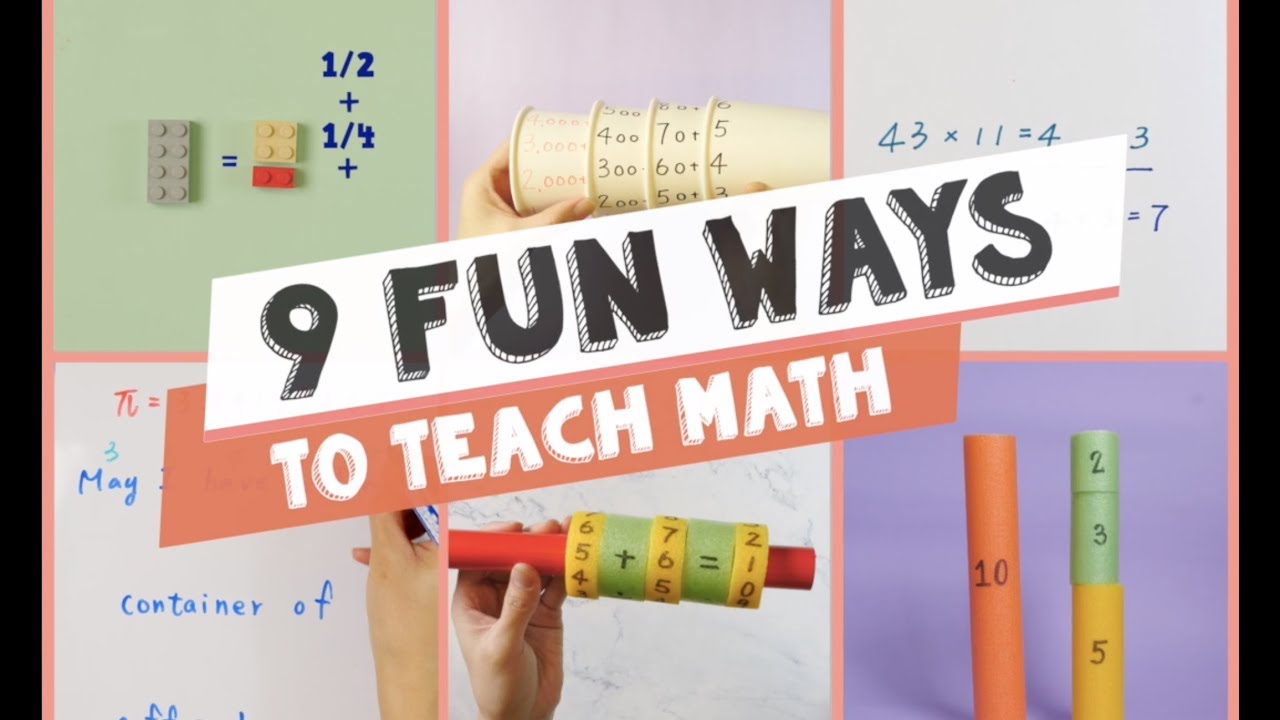
Bubbly Teacher Hacks is the only place where you can find crafty ideas to make your classroom awesome and make your teacher life easier!
Follow us on Facebook! https://www.facebook.com/BubblyTeacherHacks

Web Link - https://www.aatoonskids.com/li....st-of-singular-and-p
English Vocabulary for kids | 50 List of Singular and Plural Nouns | What are Singular and Plural Nouns? | @AAtoonsKids
_______________________________________________________________
AAtoons Kids
play N learn
Website - http://www.aatoonskids.com
Facebook Page - https://www.facebook.com/aatoonskids1
Twitter - https://twitter.com/aatoonskids
_______________________________________________________________
#singular_noun
#pluralnoun
#plurals
#learnenglish
#vocabularywords
#vocabularyenglish
#AAtoonsKids
____________________

How to Multiply Mixed Numbers? Basic Math Review
Fraction Playlist: https://youtube.com/playlist?l....ist=PL88eWltTZcUYyco
Join our facebook page: www.facebook.com/MathTutorialsforFree
Follow me on my social media accounts:
Youtube: www.youtube.com/c/MathTeacherGon/
Tiktok: https://vt.tiktok.com/ZSdHt9Nt3/
Facebook: www.facebook.com/MathTutorialsforFree
#fractions
#basicmaths
#mathteachergon
#civilserviceexam

📍歡迎收看《Revision Exercise系列》📍
Exercise 3_Prepositions of place
👉https://youtu.be/ExYRxnoHzMs
Exercise 2_Question Words
👉https://youtu.be/jyBpWyIsObg
Exercise 1_Tenses
👉https://youtu.be/ScD4qTywcZw
📍歡迎收看《English Speaking系列》📍
Talking about your neighbourhood
👉https://youtu.be/pVZsqtQ2pMA
Talking about different festivals
👉https://youtu.be/7XWE_QB0qEk
Introduce your school
👉https://www.youtube.com/watch?v=DPfvjdEI7Dw
Back to school
👉https://www.youtube.com/watch?v=NSv5QyPmhpw
Good manners_actions
👉https://youtu.be/_Swu0JtZke0
Good manners
👉https://www.youtube.com/watch?v=HGME2UCt6-M&t=29s
Talking about daily routines
👉https://youtu.be/Np8mJ1uw8c8
📍歡迎收看《Grammar系列》📍
Lesson 8_irregular plural nouns_part 1
👉https://youtu.be/ReaCiBtGZ2M
Lesson 7_uncountable nouns with quantifiers
👉https://youtu.be/pFSxA4egs8o
Lesson 6_Opposite words
👉https://youtu.be/OqULbwKTVwk
Lesson 5_irregular verbs_part3
👉https://youtu.be/2gGmVYQW_0k
Lesson4_common mistakes
👉https://youtu.be/A7Yz6eEcYPs
Lesson3_irregular verbs_part2
👉https://youtu.be/vE6AnyrYDZQ
Lesson2_irregular verbs_part 1
👉https://youtu.be/C_p_r053MeQ
Lesson1_Opposite words
👉https://youtu.be/ftz3u46E0Zo
📍📍歡迎收看《Cooking系列》📍📍
Make fresh juice
👉https://www.youtube.com/watch?v=VFOo2RW_qoI
📍📍歡迎收看《Shorts系列》📍📍
Funny jokes 3
👉https://youtube.com/shorts/VJe4DCE9lLs
Funny joke 2
👉https://youtube.com/shorts/2ouEf37QtdQ
Funny joke 1
👉https://youtube.com/shorts/OJ2-YEfl2uw
Tongue twister_birdie vs turdie vs pie
👉https://youtube.com/shorts/yvOv4EVm6Xc
Tongue twister_scream vs ice cream
👉https://youtube.com/shorts/KBi79AOOPow
Tongue twister_fuzzy vs wuzzy
👉https://youtube.com/shorts/pwGPW_cWdxc
Tongue twister_whether vs weather
👉https://youtube.com/shorts/_3yjqCC4ASA
Read with me_Irregular verbs Part A
👉https://youtube.com/shorts/OfA0FlrxVy8
Read with me_Irregular verbs Part B
👉https://youtube.com/shorts/GV9iXpKMUAk
📍📍歡迎收看《Fun Games系列》📍📍
Make a guess
👉https://youtu.be/J0E2LF9_chU
Quiz Time
👉https://youtu.be/M4JrGzedjH0
Quiz Time
👉https://youtu.be/k7cTb77sh1Q
Quiz Time
👉https://www.youtube.com/watch?v=QGwhG4Mk_Ow&t=5s
Quiz Time
👉https://www.youtube.com/watch?v=xDUJPNRh3mA
📍📍歡迎收看《Basic conversation系列》📍📍
Basic conversation Lesson 8_Talking about your best friend
👉https://youtu.be/NknxeVxhP7A
Basic conversation Fun Lesson_Different languages
👉https://youtu.be/mCJPRD7pahw
Basic conversation Lesson 7_Apply for a library card and borrow books
👉https://www.youtube.com/watch?v=5XCmL9clkQY
Basic conversation Lesson 6_Ordering food
👉https://youtu.be/xaJKiHn6vuc
Basic conversation Lesson 5_Visiting friends
👉https://youtu.be/5TkeC8iirVA
Basic conversation Lesson 4_Making phone calls
👉https://youtu.be/B2CUxLSK5CU
Basic conversation Lesson 3_Types of weather
👉https://youtu.be/ivyo-t50qnw
Basic conversation Lesson 2_Days in a week
👉https://youtu.be/fAtrVak5qLo
Basic conversation Lesson 1_Greetings
👉https://youtu.be/hl_foOF6EjY
📍📍歡迎收看其他《Vocabulary詞匯系列》📍📍
Animals on land_陸地動物
👉https://youtu.be/XxZXjGkJkCQ
Animals in the sea_海洋動物
👉https://youtu.be/gN7GsS6cCeg
Parts of the body_身體部份名稱
👉https://youtu.be/GviCG650sng
Theme Park facilities_主題公園設施
👉https://youtu.be/RiP4etv1ANs
Famous Landmarks_國家名勝地標名稱
👉https://youtu.be/-_rRauEiDic
Colour_顏色
👉Part 2https://youtu.be/78xUTO1My_E
Furniture in the living room_客廳內傢俱名稱
👉https://www.youtube.com/watch?v=smN7hHwHL1g
2D shapes_平面形狀的名稱
👉https://www.youtube.com/watch?v=P4wT5wmqIRY
Jobs_職業名稱
👉https://www.youtube.com/watch?v=NYDTE...
Hairstyle_不同髮型的英文名稱
👉https://www.youtube.com/watch?v=PU_BB2Kvj_w
Solar System_太陽系
👉https://www.youtube.com/watch?v=Qwwczge-_ks
Tableware_餐具名稱
👉https://www.youtube.com/watch?v=rm4FNlRQZxE
Hats_帽子的名稱
👉https://www.youtube.com/watch?v=Pl3g8JgXeGc
Egg_蛋的不同煮法名稱
👉https://www.youtube.com/watch?v=alwVK7zoplc
National Flags_國家及國旗
👉https://youtu.be/tBwHd6XHfE0
The 12 Chinese Zodiac_12生肖
👉https://youtu.be/ii8djvnF-pk
Fruit_水果名稱
👉https://youtu.be/ozwI9sk-bo4
Stationery_文具名稱
👉https://youtu.be/jsjwHTaWfkg
Colour_顏色 Part 1
👉https://youtu.be/AiiGKUEuWx4
📍📍歡迎收看《停課不停學系列》 📍📍
Number 1-10
👉https://youtu.be/wVn_0fY5i1o
Fruit
👉https://youtu.be/C3jy63nGhgA
Transportation in HK
👉https://youtu.be/5qQX0ymwwqo
Vegetables
👉https://m.youtube.com/watch?v=iu1OnlmqRI4
Sports
👉https://youtu.be/eF_Dv6owlM8
Relaxing activities
👉https://www.youtube.com/watch?v=ROv7OlyXe0A
📍📍歡迎收看《Writing a composition系列》 📍📍
👉School Picnic Day
https://youtu.be/GNXyS84JrQo
At the beach
👉https://www.youtube.com/watch?v=WcERiNMpb9s
📍📍歡迎收看《小一叩門面試》系列 📍📍
👉School Interview_Part 1:Talking about yourself
https://www.youtube.com/watch?v=wWTwr2o4_uo
👉小一叩門:不能不看題目背後的真正意義
https://m.youtube.com/watch?v=msqXn02v8tw
👉小一叩門:面試陷阱
https://m.youtube.com/watch?v=OrTx4B_cnkw
-----------------------------------------------------------------------------------
Please SUBSCRIBE to our channel, LIKE, and SHARE to encourage us to share more useful and interesting knowledge.
請訂閱我們的頻道、點讚、分享,鼓勵我們分享更多有用又有趣的知識。
-----------------------------------------------------------------------------------
Welcome to watch our videos
歡迎觀看我們所創作的的其他影片
1)Basic Conversation 會話
https://www.youtube.com/playli....st?list=PLPoPxSDq_eP
2) Grammar 語法
https://www.youtube.com/playli....st?list=PLPoPxSDq_eP
3)English Speaking
https://www.youtube.com/playli....st?list=PLPoPxSDq_eP
4)Funny Jokes 笑話
https://www.youtube.com/playli....st?list=PLPoPxSDq_eP
5)Vocabulary 詞彙
https://www.youtube.com/playli....st?list=PLPoPxSDq_eP
6)English Idioms 英語成語
https://www.youtube.com/playli....st?list=PLPoPxSDq_eP
7)Revision Exercise 重温練習
https://www.youtube.com/playli....st?list=PLPoPxSDq_eP
8)Fun Games 趣遊戲味
https://www.youtube.com/playli....st?list=PLPoPxSDq_eP
9) Tongue Twister 繞口令
https://www.youtube.com/playli....st?list=PLPoPxSDq_eP
10)Writing a composition 作文
https://www.youtube.com/playli....st?list=PLPoPxSDq_eP
-----------------------------------------------------------------------------------
Please SUBSCRIBE to our channel, LIKE, and SHARE to encourage us to share more useful and interesting knowledge.
請訂閱我們的頻道、點讚、分享,鼓勵我們分享更多有用又有趣的知識。
-----------------------------------------------------------------------------------

https://ABCmouse.com/abc/YouTube
"My Body" (See below for lyrics)
The original children's song "My Body" helps children learn basic body parts and motor skills, set to the tune of the classic "My Bonnie." This song helps teach young children beginning dance as well as rhyming, so be sure to encourage your child to dance, sway, and sing along to this song!
About Us:
ABCmouse.com is an award-winning website that uses a variety of activities, including these songs, to help children build a strong foundation for future academic success. ABCmouse.com Early Learning Academy provides a full online curriculum from preschool through 2nd grade, with more than 10,000 interactive learning activities that teach the subjects of reading, math, science, social studies, art, and music.
Parents, learn more about ABCmouse.com at http://ABCmouse.com/LearnMore.
Song Lyrics:
My head is on top of my body.
My head has a nose, mouth, and teeth.
My head has two eyes and ears.
My body is special to me!
Eyes, ears, mouth, teeth—
my body is special to me, to me!
My body can do many things.
My body is special to me!
My body has wrists and ankles.
My body has elbows and knees.
My body has hips and shoulders.
My body is special to me!
Ankles, wrists, elbows, knees—
my body is special to me, to me!
My body can do many things.
My body is special to me!
My body has ten toes and fingers.
My body has two hands and feet.
My body has two arms and legs.
My body is special to me!
Fingers, toes, hands, feet—
my body is special to me, to me!
My body can do many things.
My body is special to me!
Website: https://ABCmouse.com/abc/YouTube
Free Mobile Apps: http://ABCmouse.com/apps
Facebook: http://facebook.com/ABCmouse
Google+: http://google.com/+ABCmouse
Twitter: http://twitter.com/ABCmouse
Pinterest: http://pinterest.com/ABCmouse
YouTube Channel: http://youtube.com/ABCmouse
© Age of Learning, Inc. All rights reserved.

Khan Sir ने की Bihar के Math Guru Bobby Raj की तारीफ, 10वीं क्लास के बच्चों को पढ़ाते हैं, सुनिए..| Bihar News | LiveCities
#BobbyRaj #MathGuru #KhanSir #Patna #Bihar
Stay Connected with Us :
Subscribe Us for Latest News & Updates ► https://goo.gl/mjiPnp
Facebook ► https://goo.gl/5RLYLF
Twitter ► @Live_Cities

*Free: 20+ NotebookLM Tricks for Content Creation & Productivity* https://clickhubspot.com/gmhr
Summary:
Gemini and NotebookLM just merged and it's awesome. This video walks through exactly how Notebooks work inside Gemini, how they sync with NotebookLM, and when to use each tool depending on what you're trying to do. I cover every step, plus more unique and advanced real world examples.
Chapters
0:00 Intro
0:25 Overview
1:01 What is NotebookLM?
2:13 Creating a notebook: basics and customization
4:34 Jumping between NotebookLM and Gemini
6:29 Quick tips
7:12 Use Case 1
8:40 Use case 2: highlighting the differences
Welcome to how to change Improper Fractions to Mixed Numbers! Need help with the improper fractions to mixed numbers steps? You're in the right place!
Whether you're just starting out, or need a quick refresher, this is the video for you if you're looking for help changing improper fractions to mixed numbers! Mr. J will go through improper fraction examples and explain how to convert improper fractions to mixed numbers.
About Math with Mr. J: This channel offers instructional videos that are directly aligned with math standards. Teachers, parents/guardians, and students from around the world have used this channel to help with math content in many different ways. All material is absolutely free.
Click Here to Subscribe to the Greatest Math Channel On Earth: https://goo.gl/XHTrfY
Follow Mr. J on Twitter: @MrJMath5
Email: math5.mrj@gmail.com
Music: https://www.bensound.com/royalty-free-music
Hopefully this video is what you're looking for when it comes to changing improper fractions to mixed numbers!
This video is for you if you're looking for help with:
-converting improper fractions to mixed numbers
-how to convert improper fractions to mixed numbers
-how to change improper fractions to mixed numbers
-improper fractions
-mixed numbers
Have a great rest of your day and thanks again for watching!

https://ABCmouse.com/abc/YouTube
"Head, Shoulders, Knees, and Toes" (See below for lyrics)
"Head, Shoulders, Knees, and Toes" helps teach young children beginning dance skills and rhyming patterns all while they learn about basic body parts. Have your child practice motor skills by putting their hands on their head, shoulders, knees, and toes as each word comes up in the song!
About Us:
ABCmouse.com is an award-winning website that uses a variety of activities, including these songs, to help children build a strong foundation for future academic success. ABCmouse.com Early Learning Academy provides a full online curriculum from preschool through 2nd grade, with more than 10,000 interactive learning activities that teach the subjects of reading, math, science, social studies, art, and music.
Parents, learn more about ABCmouse.com at http://ABCmouse.com/LearnMore.
Song Lyrics:
Head, shoulders, knees and toes,
knees and toes.
Head, shoulders, knees and toes,
knees and toes.
Eyes, and ears, and mouth,
and nose.
Head, shoulders, knees and toes--
knees and toes!
Head, shoulders, knees and toes--
knees and toes!
Head, shoulders, knees and toes,
knees and toes.
Eyes, and ears, and mouth,
and nose.
Head, shoulders, knees and toes--
knees and toes!
Head, shoulders, knees and toes,
knees and toes.
Head, shoulders, knees and toes,
knees and toes.
Eyes, and ears, and mouth,
and nose.
Head, shoulders, knees and toes,
knees and toes.
Eyes, and ears, and mouth,
and nose.
Head, shoulders, knees and toes,
knees and toes.
Head, shoulders, knees and toes,
knees and toes.
Head, shoulders, knees and toes--
knees and toes!
Website: https://ABCmouse.com/abc/YouTube
Facebook: http://facebook.com/ABCmouse
Twitter: http://twitter.com/ABCmouse
YouTube Channel: http://www.youtube.com/ABCmouse
© Age of Learning, Inc. All rights reserved.

Pre-order our book YOU ARE AN ARTIST (which includes new assignments!) here: http://bit.ly/2kplj2h
This week we review some of the best responses to David Brooks's Art Assignment Ep. 4 -- Never Seen, Never Will: http://youtu.be/slCnZzsETVM.
To see more responses, visit our website or follow us on tumblr: http://theartassignment.com.
Many thanks to our participants who were featured:
-Jennifer: http://jenniferjamboree.tumblr.....com/post/8229205486
-Dafidaf: http://dafidaf.tumblr.com/post..../83115754756/18-4-14
-Laufey Haraldsdóttir: http://www.youtube.com/watch?v=Woloy-nnecM
-David Devine: https://www.youtube.com/watch?v=XSkZo8ROnRY
-Why-in-the-night-sky (father portrait): http://why-in-the-night-sky.tu....mblr.com/post/818452
-Nadia: http://nadiact1000.tumblr.com/....post/82149583863/the
-S.E. Vidrio: http://sethvidrio.blogspot.com..../2014/04/i-made-thin
-Abby: http://peppermintscribe.tumblr.....com/post/8176264898
-theemcyclopedia: http://theeemcyclopedia.tumblr.....com/post/8102833530
- iconiclly: http://iconiclly.tumblr.com/po....st/80930948194/for-t
- Leonie Connellan:http://onceuponaspacetime.tumb....lr.com/post/83184839
-Wes!ey Films and Projects: https://www.youtube.com/watch?v=3WJBNqhhBNk&feature=youtu.be

🚀 Voyez les résultats impressionnants de Notebook LM avec l'intégration de "google gemini" et notamment #gemini3 ! Cette "intelligence artificielle offre des outils puissants pour l'"éducation" à la "maison", permettant aux enfants d'acquérir plus de "connaissance" et de mieux apprendre.
Apprenez à maîtriser ces nouvelles fonctions pour accompagner efficacement vos enfants dans leur parcours scolaire. 🧠
Chapitres :
00:00 🚀 Whaou !
00:22 📚 Créez votre Notebook
02:07 🧩L'infographie de dingue générée par NotebookLM et Gemini 3
03:28 👨👩👧👦 Une présentation de folie en 15 slides
05:25 ✅ Des possibilités énormes à tester
Ressources utilisées dans la vidéo :
🔗Ma vidéo : https://youtu.be/AVjJ6dKo3IM
🔗Vidéo sur l'IA en chine : https://youtu.be/JMLsHI8aV0g
🔗PDF sur le guide IA pour enseignants : https://pedagogie.ac-guadeloup....e.fr/sites/default/f
🔗PDF pour aider les enfants à réussir : https://www.ebooks.education.p....f/wp-content/ebooks/
Liens utiles
🔗 Tester Gemini 3 : https://gemini.google.com/
🔗Tester NotebookLM : https://notebooklm.google/
📺 À voir ensuite sur la chaîne :
L'IA rend-elle bête ? https://youtu.be/0HyM8t-RgrU
Laurent Alexandre "Ne faites plus d'étude", Mon analyse réaliste : https://youtu.be/UKAQeRCuRUw