Top videos

Learn Kids Numbers Songs, Math Songs Compilation | Number rhymes for children | Patty Shukla Nursery
Learn Numbers counting songs for children, toddlers and kids | Number rhyme songs 70 minutes compilation by Patty Shukla | Count to 10, Add numbers, Learn numbers. Math songs for children.
Become a VIP member and access all Patty Shukla's videos without ads at https://pattysprimarysongs.com/shop/
Teaching children about numbers is crucial because it forms the basis for mathematical understanding and problem-solving skills. A solid foundation in numbers helps children in everyday tasks, from counting objects to managing finances. Furthermore, numerical literacy is essential for success in various academic and practical aspects of life, empowering children to navigate the world with confidence and precision.
For more videos http://www.pattysprimarysongs.com
Fruit, Cars, Bubbles, Planes, more!
Songs include
I Like Counting Fruit
Adding Doubles
Five Little Airplanes
Pop the Bubbles
Choo choo train
Follow Me
Lemonade
Discover educational resources by Patty Shukla, including CDs, DVDs, books, and more at https://linktr.ee/pattysprimarysongs. Dive into Miss Patty's music on various platforms like Amazon, Instagram, Facebook, Roku, iTunes, AppleTV, FireTV, Siri, Alexa, Spotify, and beyond. Search for Patty Shukla or Patty Primary Songs to find her content. For further inquiries, please contact info@pattysprimarysongs.com

Check out the NEW Math Game we made at https://www.MageMath.com/
It is a full video game called Mage Math that helps kids build confidence in math while having tons of fun.
Come learn some math magic with with us as we Compare Fractions for 4th grade kids!
Using different methods we can recognize whether to two fractions are equal or one is greater than the other. We compare two fractions with different numerators and denominators. By finding the Least Common Denominator we can find which fraction is greater or if they are equal to each other.
As your kids learn the basics of math (arithmetic) they will become more confident in their abilities. Our videos and math game are designed to help with their confidence in math.
-------------------------------------------------------------------------------------
Our math and learning videos are designed to help with the education of children in this important growing phase. The videos teach math and other subjects that help children in their education. We make videos for toddlers, preschool, kindergarten, 1st grade, 2nd grade, 3rd grade and even a few for 4th grade. It is our goal to help kids achieve their potential by giving them a head start in math and other areas of education.
Please Subscribe and Share the videos.
You can also join us on
https://www.commoncore4kids.com/
https://www.mathvids4kids.com/
https://www.magemath.com/
https://www.pinterest.com/commoncore4kids/
https://www.facebook.com/pages..../Common-Core-4-Kids/
https://twitter.com/jasoncore4kids

Learn how to predict which number comes next in a series of numbers.
We hope you are enjoying our large selection of engaging core & elective K-12 learning videos. New videos are added all the time - make sure you come back often to learn more! If you'd like us to cover any additional topics, please let us know.
For practice, assessment, and many interactive activities that go along with each video, as well as a teacher/parent dashboard, go to Miacademy.co for Grades K-8 or Miaprep.com for grades 9-12!

Looking for a fun outdoor game for kids?! This outdoor math game gets kids moving and practicing all sorts of math skills while they're outside and having fun! Watch the video to see how I played roll to win with my kindergarten and pre-K student to practice addition!
Check out more educational outdoor games for kids: https://bit.ly/SJToutdoorGames
SJT WRITING CLUB: https://sjtclub.mykajabi.com/SJT-writing-club
SJT MATH CLUB: https://sjtclub.mykajabi.com/SJT-math-club
SJT LITERACY CLUB: https://sjtclub.mykajabi.com/sjt-literacy-club
Join my FB group: https://www.facebook.com/groups/1666817543386771
If you happen to use any of these ideas at home or in your classroom, leave a comment below and let me know how they go! :) Also, if you share any of the games from Susan's Sunday Spotlight, please tag me on Instagram @susanjonesteaching so I can see!! You can also use the hashtag: #susanssundayspotlight
**SIGN UP FOR MY EMAIL LIST FOR THE LATEST UPDATES, TIPS, and FREEBIES!**
http://bit.ly/SJTnewsletter
Be sure to subscribe and click the bell to see all my future videos.
Happy teaching,
Susan Jones
MY BLOG:
http://susanjonesteaching.com/
MY STORE:
https://www.teacherspayteacher....s.com/Store/Susan-Jo
You can see tons of other games for first grade students below!
Math: http://bit.ly/SJTMathGames
Phonics: http://bit.ly/SJTphonicsgames
Sight Words: http://bit.ly/SJTsightwordgames
Full disclosure: Amazon links in my descriptions are usually affiliate links which means if you purchase through that link, I receive a very small percentage of the sale.
CONTACT: susanjonesteaching@gmail.com

Check out the NEW Math Game we made at https://www.MageMath.com/
It is a full video game called Mage Math that helps kids build confidence in math while having tons of fun.
Come join our Submarine as we dive with Sharks! We learn about how to solve multiplication problems by using the distributive property of multiplication. Kids will love following along and learning with the Number One.
These videos are used in many schools and homes to help children learn more about math. These math videos also help parents learn some of the new common core math that can be confusing to some. Mathematics taught in a fun way helps children learn easier by seeing how it helps them.
Come learn with us and check out our other 3rd Grade videos in our playlist here:
https://www.youtube.com/playli....st?list=PLrHqUbddzk2
Multiplication video here: https://youtu.be/TGVGwrM-vdo
Commutative Multiplication here: https://youtu.be/7e9r8_VOO-8
-------------------------------------------------------------------------------------
Our math and learning videos are designed to help with the education of children in this important growing phase. The videos teach math and other subjects that help children in their education. We make videos for toddlers, preschool, kindergarten, 1st grade, 2nd grade, 3rd grade and even a few for 4th grade. It is our goal to help kids achieve their potential by giving them a head start in math and other areas of education.
Please Subscribe and Share the videos.
You can also join us on
https://www.commoncore4kids.com/
https://www.mathvids4kids.com/
https://www.pinterest.com/commoncore4kids/
https://www.facebook.com/pages..../Common-Core-4-Kids/
https://twitter.com/jasoncore4kids

In this MightyOwl video you will learn about the value of different coins and the dollar bill. We will show you different strategies for counting up coins of different values. So next time you want to see how much money you have in your piggy bank just like Mia you will know how to count them all!
Key words: money, penny, nickel, dime, quarter, dollar, head, tail, cent, addition, subtraction
Aligned with Common Core State Standard - Math
2.MD.C.8 - Measurement & Data
Work with time and money: Solve word problems involving dollar bills, quarters, dimes, nickels, and pennies, using $ and ¢ symbols appropriately.

Use the subtraction facts you know to subtract hundreds.
#LampoFilm #Math #2ndGradeMath #2ndGrade
We have many drawing and educational video for kids in preschool, kindergarten, first grade, second grade and third grade from this channel. We have many more educational videos on math, language arts, science, art and drawing. Fun for the whole family.
We also have a Product Review Show that we have fun testing and having fun with products. If you are a company, feel free to contact us for reviews.
All videos and shows on my channel are kid safe. I am also a Teacher and a Dad, and I want this to be a safe and fun environment for kids of all ages.
Please help support us by subscribing, and also looking at our Amazon links of great STEM toys for kids. Feel free to contact us, and have a FUN day.
Best Educational Stem Toy https://amzn.to/3aBgNTf
MAgnetic Tiles https://amzn.to/3dWmrBl
(We like PlayMags the best!)

#geogebratutorial #mathematics #satvinderEdTech #technology #geogebraanimation


This video is a selected video from the Asynchronous Online Course - “Expanding the Curriculum with the Geogebra Application”.
The course (for 3 Graduate Credits) will be offered by Adams State University for just under $300.
The next session will begin in June.
If you would like to be included in the next cohort please fill out the following form.
https://docs.google.com/forms/....d/e/1FAIpQLSfyhfnfNe

Amazing graphs dictated by mathematical rules, now in the animated format.
This video is a part of the series.
Playlist: https://www.youtube.com/playli....st?list=PLAjLiSaFZ0U
Graphing calculator - https://desmos.com/calculator
https://enderman.ch

New! #GeoGebra Notes virtual whiteboards for remote learning!
Sketch your thoughts, type math, type your ideas, create tables, & more!
Create a class from the virtual whiteboards found here: https://www.geogebra.org/m/ckwrg8he or copy & edit to make your own custom activities!
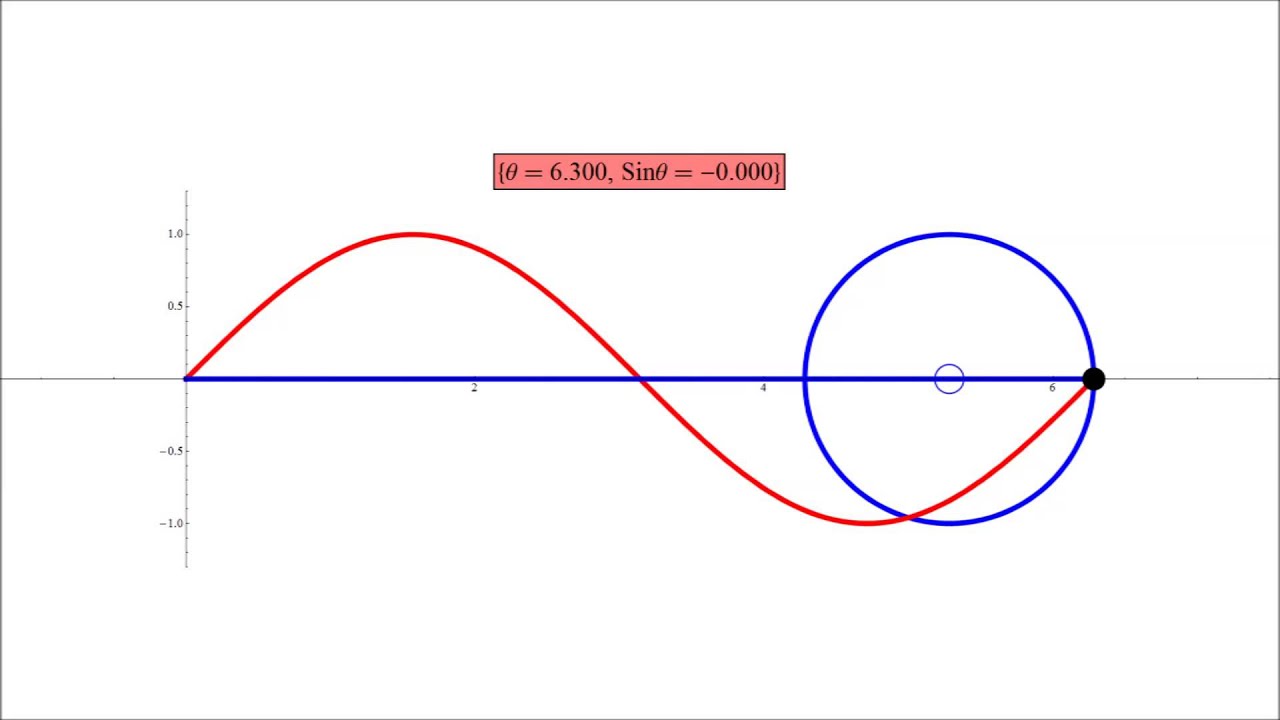
This animation illustrates how the sine curve is rolled out from the unit circle.
----------------------------- ----- -- -
Music used:
Alien Technology by Jens Kiilstofte
https://machinimasound.com/music/alien-technology/
Licensed under Creative Commons Attribution 4.0 International
(http://creativecommons.org/licenses/by/4.0/)


GeoGebra Classroom is a virtual platform through which teachers can
-assign interactive and engaging tasks for students
-view live updated progress of students working
Part-2 Link: https://youtu.be/MxSbypvbeks

Geogebra
The graphing calculator for functions.
GEOMETRY
ALGEBRA
CALCULUS
STATISTICS
3D MATH!
Dynamic mathematics for learning and teaching.
![[PART I] Mathematics made easy in online education - Geogebra - Basic concepts](https://i.ytimg.com/vi/h0k8bjE43Sg/maxresdefault.jpg)
GeoGebra is an interactive geometry, algebra, statistics and calculus application, intended for learning and teaching mathematics and science from primary school to university level. GeoGebra is available on multiple platforms, with apps for desktops, tablets and web.

GeoGebra's integration with the Google Classroom Coursework API

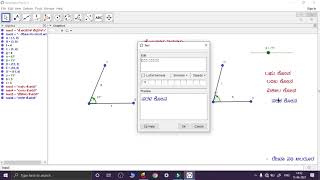

Imagine seeing, in REAL TIME, the work of 25+ students WITHOUT asking any to screen share! This is one of the many great features of #GeoGebra Classroom! And more great features are coming. Teacher view = left. Student view = right.
More info: https://www.geogebra.org/m/hncrgruu
This custom template: https://www.geogebra.org/m/dxx3zk5w

Class 6 |Mathematics|Angle|GeoGebra

Maths Lab + GeoGebra Training Day 11 By Try For Learn, 2nd Session: GeoGebra by Try For Learn Team
Presentation: Nabin Devkota

Music: Twinkle Twinkle Little Star intrusment
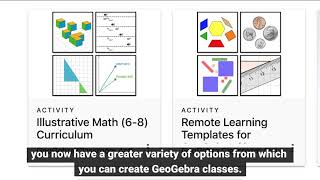
We’ve restructured our #IllustrativeMathematics & #OpenUpResources 6-8 curriculum so teachers can now create #GeoGebra classes with fewer tasks! Doing so can help some students not feel so overwhelmed all at once. https://geogebra.org/m/ckm3ffqh #lessismore