סרטונים מובילים

Video to help young learners discovers the letter ""o"". They’ll have fun learning how it sounds, how to write it, and words that start with it.
Thanks for visiting us! If you want your children to smile and learn, subscribe! :D
This video is part of a series of videos for young learners to work on the alphabet. Each video focuses on a letter, in this case the letter "o". Children learn how it sounds and how to write it. The video goes over words that start with the letter to check its sound and there’s a sing-a-long to practice!
Why is it good for children to see Smile and Learn’s videos?
+We only upload our own content, designed by educators so that children smile and learn while watching a video.
+All of our content reinforces educational values, encouraging the use of multiple intelligences and language learning.
*If you like our videos, download “The Smart Library” now. You’ll discover more than 30 interactive games and stories for children designed by educators. The stories are based on VALUES like friendship, respect, and generosity, and our games cover all of the MULTIPLE INTELLIGENCES. All our content is in SPANISH, ENGLISH, and FRENCH.
The perfect tool to use in and out of school.
Download it today!
-Apple Store: http://bit.ly/Biblioteca_Inteligente_...
-Google Play: http://bit.ly/Biblioteca_Inteligente_...
For more information, visit our website: https://smileandlearn.net/
If you want the latest news and new stories or games:
Follow us on:
+Facebook: https://www.facebook.com/Smileandlearn
+Instagram: https://www.instagram.com/smileandlea...
+Twitter: https://twitter.com/smileandlearn
+Pinterest: https://es.pinterest.com/smileandlearn/
Thank you for trusting us with your children's education!

Educational video where children can learn the letter "H". They’ll have fun learning how this letter sounds, how to write it, and the words that start with it.
This video is part of a series focusing on the letters of the alphabet. It teaches children how to write and pronounce letters. The video shows some words that start with the letter T in order to check its sound. At the end of the video, children can find a sing-along to practice!
Thanks for visiting us! If you want your children to smile and learn, subscribe! :D
Why is it good for children to see Smile and Learn’s videos?
+We only upload our own content, designed by educators so that children smile and learn while watching a video.
+All of our content reinforces educational values, encouraging the use of multiple intelligences and language learning.
*If you like our videos, download “The Smart Library” now. You’ll discover more than 30 interactive games and stories for children designed by educators. The stories are based on VALUES like friendship, respect, and generosity, and our games cover all of the MULTIPLE INTELLIGENCES. All our content is in SPANISH, ENGLISH, and FRENCH.
The perfect tool to use in and out of school.
Download it today!
-Apple Store: http://bit.ly/Biblioteca_Inteligente_...
-Google Play: http://bit.ly/Biblioteca_Inteligente_...
For more information, visit our website: https://smileandlearn.net/
If you want the latest news and new stories or games:
Follow us on:
+Facebook: https://www.facebook.com/Smileandlearn
+Instagram: https://www.instagram.com/smileandlea...
+Twitter: https://twitter.com/smileandlearn
+Pinterest: https://es.pinterest.com/smileandlearn/
Thank you for trusting us with your children's education!
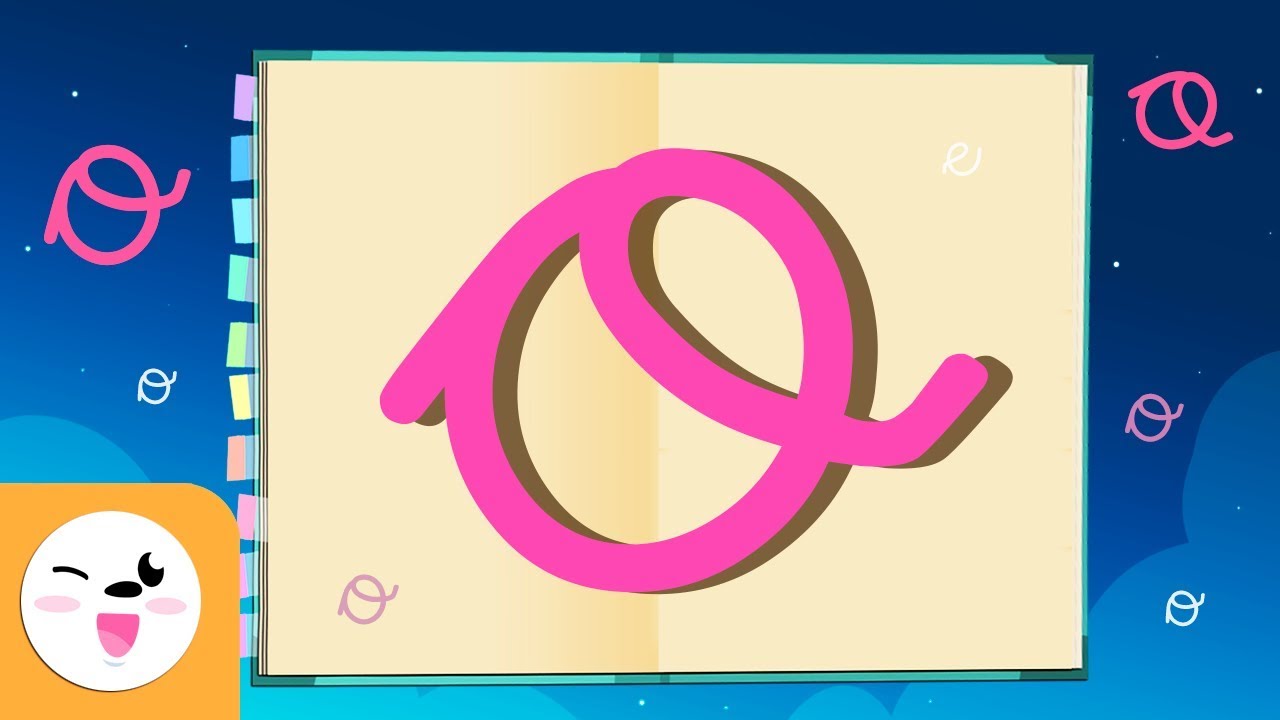
Educational video for kids which teaches them how to practice cursive script letter-writing for letter O. Kids will learn how to pronounce and write the alphabet letters with many word examples which start with or include the letter O.
This video is part of a larger collection of videos with alphabet learning teaching material and cursive writing material. Excellent resource for Preschool Education.
Thanks for visiting us! If you want your children to smile and learn, subscribe! :D
We only upload our own content, designed by educators so that children smile and learn while watching a video.
All of our content reinforces educational values, encouraging the use of multiple intelligences and language learning.
If you like our videos, download “The Smart Library” now. You’ll discover more than 70 interactive games and stories for children designed by educators. The stories are based on VALUES like friendship, respect, and generosity, and our games cover all of the MULTIPLE INTELLIGENCES. All our content is in SPANISH, ENGLISH, FRENCH, ITALIAN and PORTUGUESE.
The perfect tool to use in and out of school.
Download it today!
-Apple Store: https://itunes.apple.com/us/ap....p/smart-edutainment-
-Google Play: https://play.google.com/store/....apps/details?id=net.
www.smileandlearn.com
Thank you for trusting us with your children's education!
Water is an essential natural resource for life on planet earth, which is why we can't afford to waste it.
Thanks for visiting us! If you want your children to smile and learn, subscribe! :D
If you like our videos, download Smile and Learn now. You’ll discover thousands of activities for children aged 3 to 12 years, all designed by educators. We have hundreds of games, interactive stories and videos in five languages: English, Spanish, Portuguese, Italian, Turkish and French. Try a month for free and start the adventure!
www.smileandlearn.com

Educational video for children that teaches how to subtract and add angles. To measure angles we use the sexagesimal system, which uses degrees, minutes and seconds as units. One degree equals 60 minutes, and one minute equals 60 seconds. The first step is to arrange the measurements of the angles you want to add, one below the other. You have to be very careful when positioning them so that they match exactly. In other words, the degrees go under the degrees, the minutes go under the minutes and the seconds go under the seconds. Once we have the angles correctly placed, we have to add each column separately. We start by adding the seconds, then the minutes and finally the degrees. It is important that the results of the seconds and minutes columns have a value between 0 and 59. If the minutes or seconds go over 59, we have to subtract 60 minutes or seconds and add one unit to the left. To subtract angles the first step is to place the measurements of the angles in the standard subtraction format, the smaller angle under the larger angle. To find out which is greater, look at the degrees. The figure with the largest number of degrees is the larger angle. If the degrees are equal, look at the minutes. The one with the larger amount of minutes should go on top. If the minutes are also equal, look at the seconds. Now you have to place the degrees under the degrees, the minutes under the minutes and the seconds under the seconds. Once you have placed them properly, first subtract the seconds, then the minutes and finally the degrees. It is important that the results of the seconds and minutes columns have a value between 0 and 59. If the top number of minutes is less than the bottom one, subtract one from the degrees, add 60 to the minutes, and continue with the subtraction.
This video is a very useful and interesting resource for children. It is perfect for teaching addition and subtraction of angles. It is an excellent video for primary education.
Thanks for visiting us! If you want your children to smile and learn, subscribe! :D
If you like our videos, download Smile and Learn now. You’ll discover thousands of activities for children aged 3 to 12 years, all designed by educators. We have hundreds of games, interactive stories and videos in five languages: English, Spanish, Portuguese, Italian, Turkish and French. Try a month for free and start the adventure!
www.smileandlearn.com

Thanks for visiting us! If you want your children to smile and learn, subscribe! :D
We only upload our own content, designed by educators so that children smile and learn while watching a video.
All of our content reinforces educational values, encouraging the use of multiple intelligences and language learning.
If you like our videos, download Smile and Learn now. You’ll discover thousands of activities for children aged 3 to 12 yeards, all designed by educators. We have hundreds of games, interactive stories and videos in five languages: English, Spanish, Portuguese, Italian and French. Try a month for free and start the adventure!

Educational video for children to learn what electricity is and the different types of electricity that exist. They will also learn how an electrical circuit is created, which materials conduct electricity and which ones insulate it. Energy from natural resources such as fossil fuels, wind, water and the sun can be used to produce electricity. Energy is transported in different ways (e.g. through wires) and stored in cells or batteries. Static electricity is the accumulation of excess electric charge, positive or negative, in a material or object, while dynamic electricity is the flow of electric charges. We need a circuit for these charges to flow, i.e. a closed path in which the electric charges can move.
Thanks to our science videos, children can learn a lot of things while having fun. This video is an excellent resource for elementary education.
Thanks for visiting us! If you want your children to smile and learn, subscribe! :D
If you like our videos, download Smile and Learn now. You’ll discover thousands of activities for children aged 3 to 12 years, all designed by educators. We have hundreds of games, interactive stories and videos in five languages: English, Spanish, Portuguese, Italian, Turkish and French. Try a month for free and start the adventure!
www.smileandlearn.com
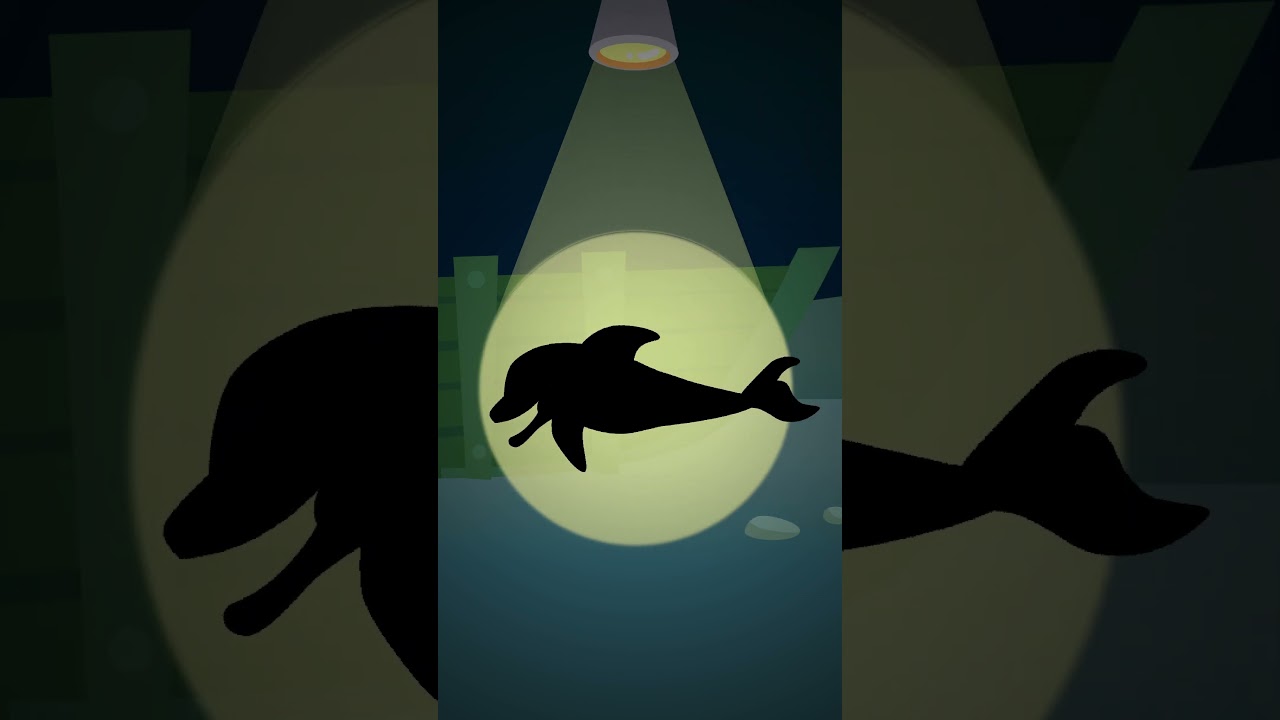
Dive into another exciting episode of YouTube Shorts! Today, the mysterious shadow seems to be jumping happily in the water. Is it a dolphin? Watch and find out if you got it right! This video is ideal for kids and educators interested in the fascinating world of dolphins and marine life. 🐬📘
Thanks for visiting us! If you want your children to smile and learn, subscribe! :D
If you like our videos, download Smile and Learn now. You’ll discover thousands of activities for children aged 3 to 12 years, all designed by educators. We have hundreds of games, interactive stories and videos in five languages: English, Spanish, Portuguese, Italian, Turkish and French. Try a month for free and start the adventure!
www.smileandlearn.com

Educational video for kids to discover all about another group of vertebrate animals: reptiles. These vertebrate animals are oviparous and their body is full of scales. You will learn how they breathe, where they live and how long they live for, along with lots more interesting facts about them.
This video is part of a larger Animals For Kids-video collection, which teaches kids about animals in a fun way. Wonderful resource for Primary Education.
Thanks for visiting us! If you want your children to smile and learn, subscribe! :D
We only upload our own content, designed by educators so that children smile and learn while watching a video.
All of our content reinforces educational values, encouraging the use of multiple intelligences and language learning.
If you like our videos, download “The Smart Library” now. You’ll discover more than 70 interactive games and stories for children designed by educators. The stories are based on VALUES like friendship, respect, and generosity, and our games cover all of the MULTIPLE INTELLIGENCES. All our content is in SPANISH, ENGLISH, FRENCH, ITALIAN and PORTUGUESE.
The perfect tool to use in and out of school.
Download it today!
-Apple Store: https://itunes.apple.com/us/ap....p/smart-edutainment-
-Google Play: https://play.google.com/store/....apps/details?id=net.
www.smileandlearn.com
Thank you for trusting us with your children's education!

Educational video to learn vocabulary on land transport vehicles. It Includes words like: bicycle, motorcycle, car, van, bus, truck and train. This video is part of a collection focused on learning vocabulary for kids. Ideal for Pre-K children.
Thanks for visiting us! If you want your children to smile and learn, subscribe! :D
We only upload our own content, designed by educators so that children smile and learn while watching a video.
All of our content reinforces educational values, encouraging the use of multiple intelligences and language learning.
If you like our videos, download “The Smart Library” now. You’ll discover more than 70 interactive games and stories for children designed by educators. The stories are based on VALUES like friendship, respect, and generosity, and our games cover all of the MULTIPLE INTELLIGENCES. All our content is in SPANISH, ENGLISH, FRENCH, ITALIAN and PORTUGUESE.
The perfect tool to use in and out of school.
Download it today!
-Apple Store: https://itunes.apple.com/us/ap....p/smart-edutainment-
-Google Play: https://play.google.com/store/....apps/details?id=net.
www.smileandlearn.com
Thank you for trusting us with your children's education!
#SmileAndLearn
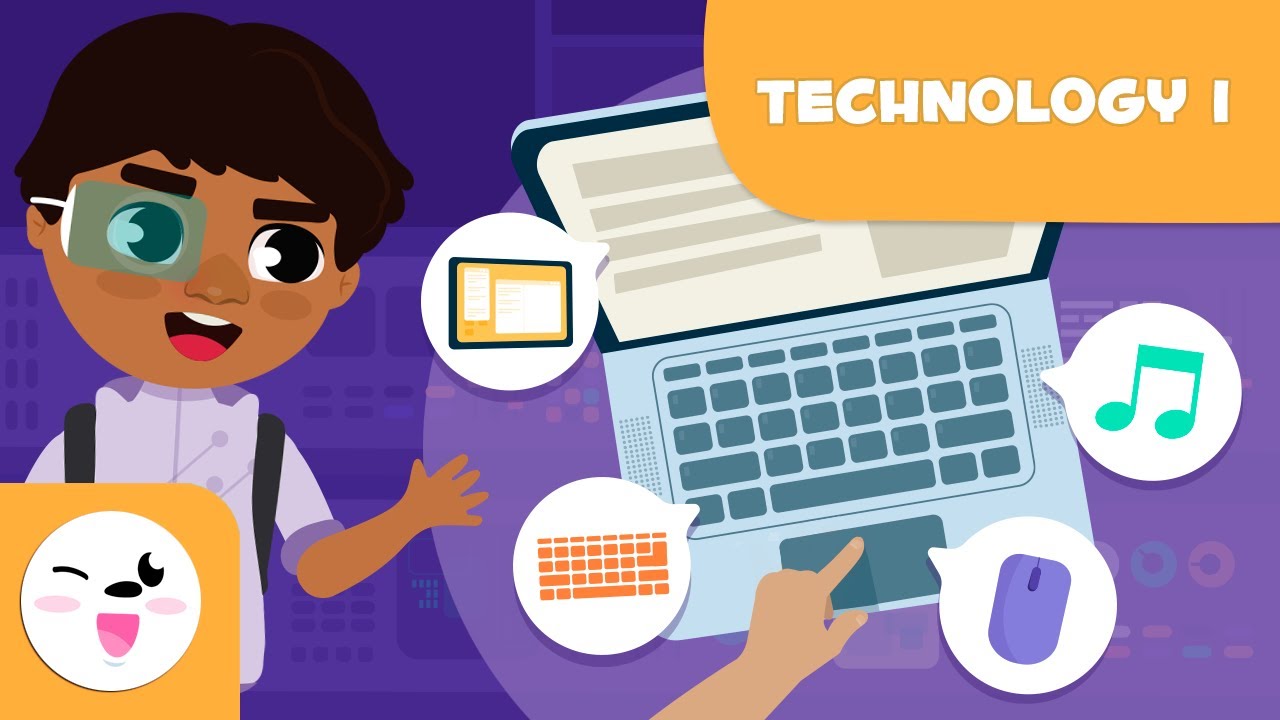
Educational video for children to learn technology vocabulary. Thanks to this video, they will discover technology words like computer, laptop, monitor, mouse, speakers, webcam, keyboard, microphone, printer, scanner and flash drive. At then of the video, the little ones will recap everything they learned. Excellent resource for preschool education.
Thanks for visiting us! If you want your children to smile and learn, subscribe! :D
We only upload our own content, designed by educators so that children smile and learn while watching a video.
All of our content reinforces educational values, encouraging the use of multiple intelligences and language learning.
If you like our videos, download Smile and Learn now. You’ll discover more than 5.000 activities for children aged 3 to 12 yeards, all designed by educators. We have 250 games and interactive stories and over 280 videos in five languages: English, Spanish, Portuguese, Italian and French. Try a month for free and start the adventure!
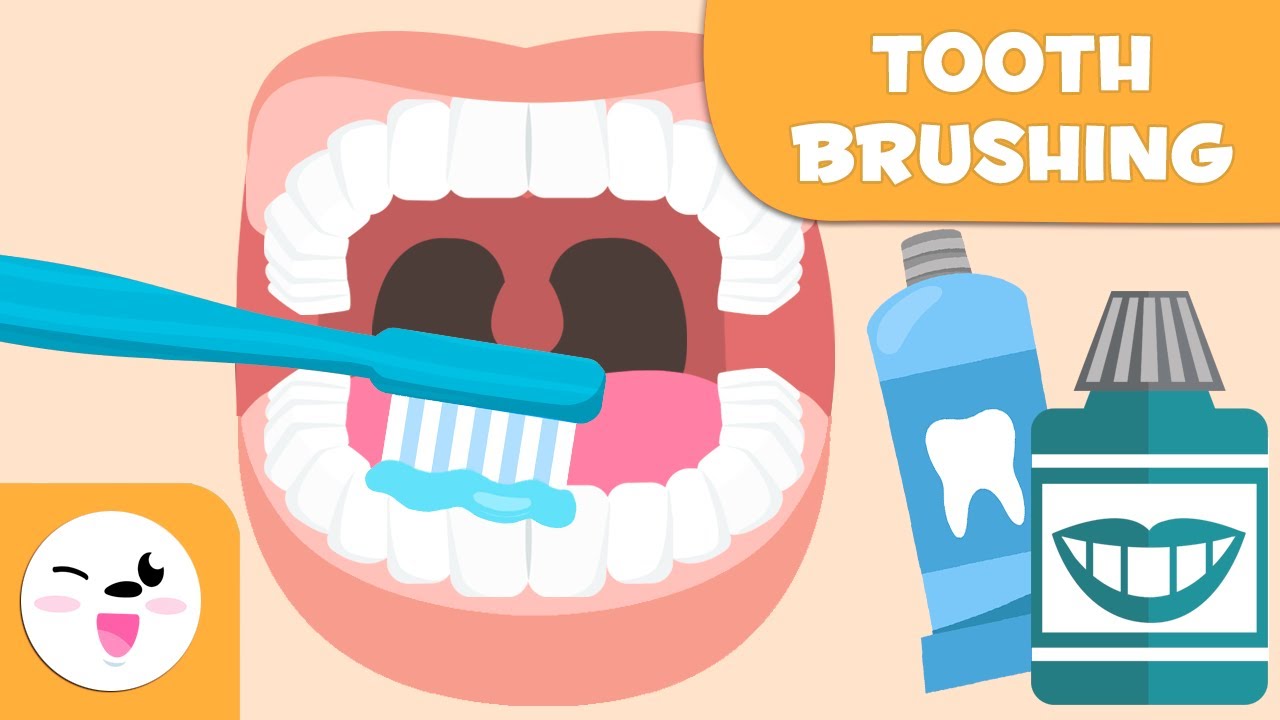
Educational video for children to learn the steps to brushing their teeth properly. The first step is to put some toothpaste on your toothbrush; then, start cleaning at the back of your mouth from top to bottom, the outside part. The third step is to clean the inside of your teeth and then their chewing surface. After that, clean the rest of your mouth: the inside of your cheeks and your tongue. Lastly, spit out any excess toothpaste and rinse well. Remember you can use dental floss to remove food remnants or a fluoride mouth rinse to complete your oral care routine. Having a balanced diet and avoiding too many sweets are two of the best practices to keep your teeth healthy. This video belongs to a collection of Heath and Hygiene Habits videos.
Thanks for visiting us! If you want your children to smile and learn, subscribe! :D
We only upload our own content, designed by educators so that children smile and learn while watching a video.
All of our content reinforces educational values, encouraging the use of multiple intelligences and language learning.
If you like our videos, download Smile and Learn now. You’ll discover more than 5.000 activities for children aged 3 to 12 yeards, all designed by educators. We have 250 games and interactive stories and over 280 videos in five languages: English, Spanish, Portuguese, Italian and French. Try a month for free and start the adventure!
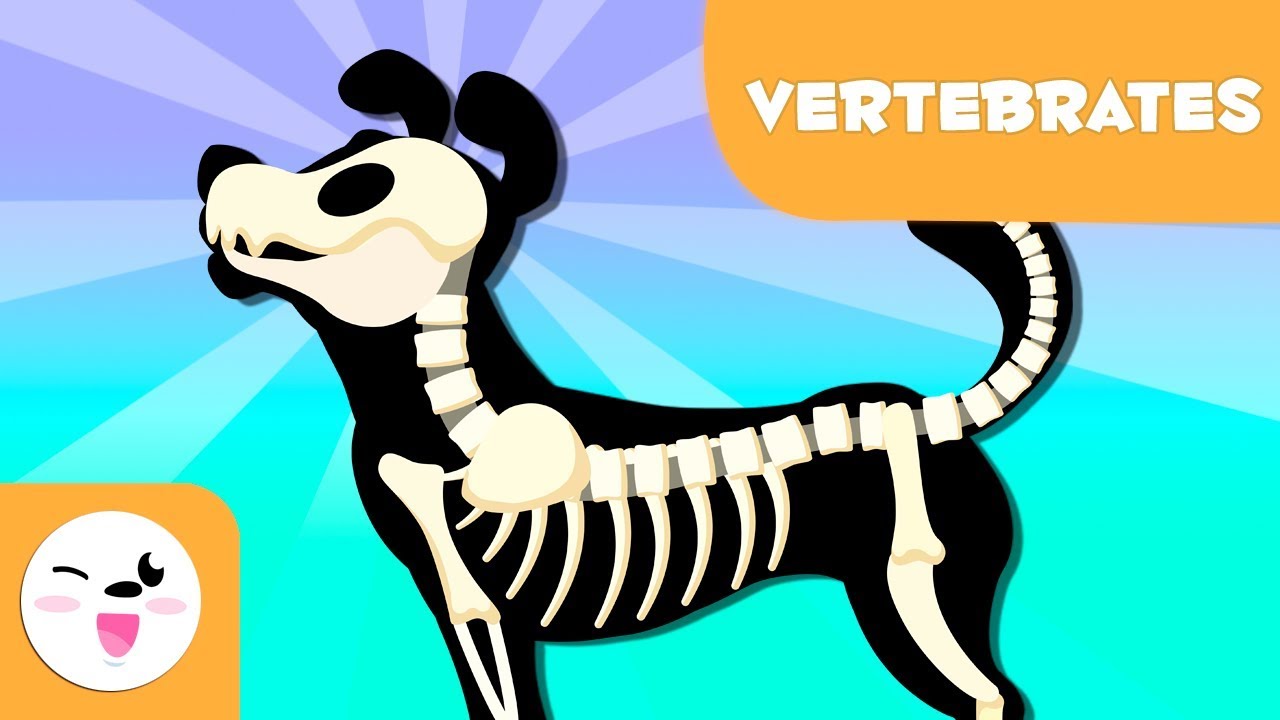
Educational video for kids to discover vertebrate animals like birds, fish, mammals, reptiles and amphibians. Among vertebrate animals, those that stand out are: the penguin, the eagle, the salmon, the frog, the toad, the crocodile, the snake and lots more. This is an introductory video to this animal group. Recommended for primary school kids.
Thanks for visiting us! If you want your children to smile and learn, subscribe! :D
We only upload our own content, designed by educators so that children smile and learn while watching a video.
All of our content reinforces educational values, encouraging the use of multiple intelligences and language learning.
If you like our videos, download “The Smart Library” now. You’ll discover more than 70 interactive games and stories for children designed by educators. The stories are based on VALUES like friendship, respect, and generosity, and our games cover all of the MULTIPLE INTELLIGENCES. All our content is in SPANISH, ENGLISH, FRENCH, ITALIAN and PORTUGUESE.
The perfect tool to use in and out of school.
Download it today!
-Apple Store: https://itunes.apple.com/us/ap....p/smart-edutainment-
-Google Play: https://play.google.com/store/....apps/details?id=net.
www.smileandlearn.com
Thank you for trusting us with your children's education!
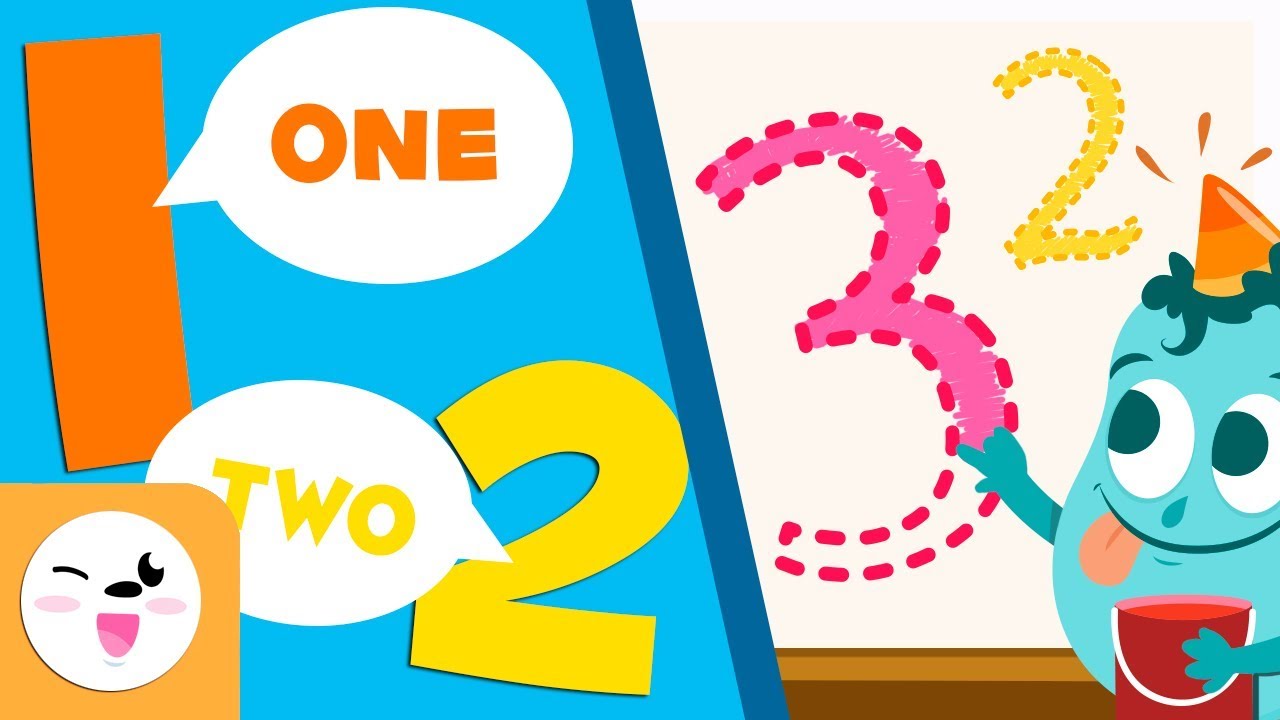
Educational video to learn to write and count from 1 to 10 in a fun way. This video is part of a larger collection of videos and its objective is for younger kids to learn the numbers, through several different examples. Ideal for preschool education.
Thanks for visiting us! If you want your children to smile and learn, subscribe! :D
We only upload our own content, designed by educators so that children smile and learn while watching a video.
All of our content reinforces educational values, encouraging the use of multiple intelligences and language learning.
If you like our videos, download “The Smart Library” now. You’ll discover more than 70 interactive games and stories for children designed by educators. The stories are based on VALUES like friendship, respect, and generosity, and our games cover all of the MULTIPLE INTELLIGENCES. All our content is in SPANISH, ENGLISH, FRENCH, ITALIAN and PORTUGUESE.
The perfect tool to use in and out of school.
Download it today!
-Apple Store: https://itunes.apple.com/us/ap....p/smart-edutainment-
-Google Play: https://play.google.com/store/....apps/details?id=net.
www.smileandlearn.com
Thank you for trusting us with your children's education!

Educational video for kids to learn the most unusual flags in the world. They'll only have a limited amount of time to spot the different flag. This challenge helps kids practice visual attention and mental agility skills. Do you know what countries have the most original flags? You'll have 15 seconds to spot the different flag; if you can't make it within this time frame, you could always stop the video and try again. Test your attention skills and find out how many levels you can go up! This video is part of a collection of Visual Attention videos to help kids practice their mental agility skills in a fun way. This video is suitable for all age groups.
Thanks for visiting us! If you want your children to smile and learn, subscribe! :D
We only upload our own content, designed by educators so that children smile and learn while watching a video.
All of our content reinforces educational values, encouraging the use of multiple intelligences and language learning.
If you like our videos, download “The Smart Library” now. You’ll discover more than 70 interactive games and stories for children designed by educators. The stories are based on VALUES like friendship, respect, and generosity, and our games cover all of the MULTIPLE INTELLIGENCES. All our content is in SPANISH, ENGLISH, FRENCH, ITALIAN and PORTUGUESE.

In this video you will learn an important lesson about following your dreams and never giving up with one of your favorite princesses, Snow White. Our modern Snow White dreams of learning about cooking and decides to visit the most famous restaurant in Spain "7 Chefs". Throughout this video you will see Snow White’s kindness, compassion, and persistence, despite her situation, that ultimately lead her to an extraordinary accomplishment.
Her wicked stepmother does not make this accomplishment easy, however! This video belongs to a collection of videos of short stories for kids. Each of these stories contains a valuable message that helps kids form a strong foundation of values.
Thanks for visiting us! If you want your children to smile and learn, subscribe! :D
We only upload our own content, designed by educators so that children smile and learn while watching a video.
All of our content reinforces educational values, encouraging the use of multiple intelligences and language learning.
If you like our videos, download “The Smart Library” now. You’ll discover more than 70 interactive games and stories for children designed by educators. The stories are based on VALUES like friendship, respect, and generosity, and our games cover all of the MULTIPLE INTELLIGENCES. All our content is in SPANISH, ENGLISH, FRENCH, ITALIAN and PORTUGUESE.
The perfect tool to use in and out of school.
Download it today!
-Apple Store: https://itunes.apple.com/us/ap....p/smart-edutainment-
-Google Play: https://play.google.com/store/....apps/details?id=net.
www.smileandlearn.com
Thank you for trusting us with your children's education!

Educational video for children to learn how to relate colors with objects in their environment. Children will learn about colors thanks to fun games where they will have to color different things.
This video is a great resource to practice the colors: yellow, blue, white, brown, purple, pink, orange, green, red, black. It's a perfect video for early childhood education.
Thanks for visiting us! If you want your children to smile and learn, subscribe! :D
We only upload our own content, designed by educators so that children smile and learn while watching a video.
All of our content reinforces educational values, encouraging the use of multiple intelligences and language learning.
If you like our videos, download Smile and Learn now. You’ll discover thousands of activities for children aged 3 to 12 yeards, all designed by educators. We have hundreds of games, interactive stories and videos in five languages: English, Spanish, Portuguese, Italian and French. Try a month for free and start the adventure!
Welcome to Crash Course Anatomy & Physiology!
--
Pssst... we made flashcards to help you review the content in this episode! Find them on the free Crash Course App!
Download it here for Apple Devices: https://apple.co/3d4eyZo
Download it here for Android Devices: https://bit.ly/2SrDulJ
--
Crash Course is on Patreon! You can support us directly by signing up at http://www.patreon.com/crashcourse
Want to find Crash Course elsewhere on the internet?
Facebook - http://www.facebook.com/YouTubeCrashCourse
Twitter - http://www.twitter.com/TheCrashCourse
Instagram - https://www.instagram.com/thecrashcourse/
CC Kids: http://www.youtube.com/crashcoursekids
So we ended last episode at the start of the 20th century with special purpose computing devices such as Herman Hollerith’s tabulating machines. But as the scale of human civilization continued to grow as did the demand for more sophisticated and powerful devices. Soon these cabinet-sized electro-mechanical computers would grow into room-sized behemoths that were prone to errors. But is was these computers that would help usher in a new era of computation - electronic computing.
Produced in collaboration with PBS Digital Studios: http://youtube.com/pbsdigitalstudios
The Latest from PBS Digital Studios: https://www.youtube.com/playlist?list...
We’ve got merch!
https://store.dftba.com/collections/crashcourse
Want to know more about Carrie Anne?
https://about.me/carrieannephilbin
Want to find Crash Course elsewhere on the internet?
Facebook - http://www.facebook.com/YouTubeCrashC...
Twitter - http://www.twitter.com/TheCrashCourse
Tumblr - http://thecrashcourse.tumblr.com
Support Crash Course on Patreon: http://patreon.com/crashcourse
CC Kids: http://www.youtube.com/crashcoursekids

So, what is geography? In our first episode of Crash Course Geography, we will endeavor to answer this seemingly simple question with the help of a similarly simple factoid: that the US imports more than 3 billion pounds of bananas from Guatemala each year. But as it turns out, beneath the kinds of factoids we usually associate with Geography are much grander stories that really are Geography. So let's go a little bananas as we explore the sordid history of the Chiquita banana.
Follow Alizé!
Twitter: https://twitter.com/alizecarrere
Instagram: https://www.instagram.com/alizecarrere/
Facebook: https://www.facebook.com/alizecarrere/
Website: https://www.alizecarrere.com/
[SOURCES]
http://sethrainforestecosystem.....weebly.com/the-rain
https://www.yourarticlelibrary.....com/essay/plantatio
https://www.tripsavvy.com/moun....t-everest-facts-1458
https://time.com/3923694/mount....-everest-nepal-earth
https://sajana1231.wordpress.c....om/2011/05/02/enviro
https://adventure.howstuffwork....s.com/outdoor-activi
https://theodora.com/wfbcurren....t/guatemala/guatemal
https://en.wikipedia.org/wiki/Center_of_origin
https://www.nytimes.com/1991/0....4/19/world/cholera-k
https://www.history.com/topics..../inventions/history-
https://www.farmingindia.in/banana-cultivation/
http://new-ag.info/en/country/profile.php?a=842
https://www.worldatlas.com/art....icles/where-do-ameri
https://insteading.com/blog/gl....obal-agriculture-thr
https://fews.net/sites/default..../files/documents/rep
https://www.mapsofworld.com/la....t_long/guatemala-lat
https://www.touropia.com/volcanoes-in-guatemala/
https://www.touropia.com/touri....st-attractions-in-gu
https://www.findlatitudeandlon....gitude.com/l/Tikal%2
Crash Course is on Patreon! You can support us directly by signing up at http://www.patreon.com/crashcourse
Thanks to the following patrons for their generous monthly contributions that help keep Crash Course free for everyone forever:
Vincent LaBarca, Bjartur Thorlacius, Scott Harrison, Alexander Thomson, Mark & Susan Billian, Junrong Eric Zhu, Alan Bridgeman, Jennifer Smith, Matt Curls, Tim Kwist, Jonathan Zbikowski, Jennifer Killen, Sarah & Nathan Catchings, Brandon Westmoreland, team dorsey, Trevin Beattie, Yasenia Cruz, Eric Koslow, Indika Siriwardena, Khaled El Shalakany, Shawn Arnold, Siobhán, Ken Penttinen, Nathan Taylor, William McGraw, Andrei Krishkevich, Sam Ferguson, Jirat, Brian Thomas Gossett, SR Foxley, Ian Dundore, Jason A Saslow, Jessica Wode, Caleb Weeks, Mark, Patty Laqua, Stephen Saar, John Lee, Eric Prestemon
__
Want to find Crash Course elsewhere on the internet?
Facebook - http://www.facebook.com/YouTubeCrashCourse
Twitter - http://www.twitter.com/TheCrashCourse
Tumblr - http://thecrashcourse.tumblr.com
Support Crash Course on Patreon: http://patreon.com/crashcourse
CC Kids: http://www.youtube.com/crashcoursekids

This week Craig is going to give you a broad overview of elections in the United States. So as you may have noticed, there are kind of a lot of people in the U.S, and holding individual issues up to a public vote doesn't seem particularly plausible. So to deal with this complexity, we vote for people, not policies, that represent our best interests. But as you'll see, this process was not thoroughly addressed in the Constitution, so there have been a number of amendments and laws at the state level implemented to create the election system we all know and (maybe) love today.
Produced in collaboration with PBS Digital Studios: http://youtube.com/pbsdigitalstudios
Support is provided by Voqal: http://www.voqal.org
All attributed images are licensed under Creative Commons by Attribution 4.0
https://creativecommons.org/licenses/...
Want to find Crash Course elsewhere on the internet?
Facebook - http://www.facebook.com/YouTubeCrashC...
Twitter - http://www.twitter.com/TheCrashCourse
Tumblr - http://thecrashcourse.tumblr.com
Support Crash Course on Patreon: http://patreon.com/crashcourse
CC Kids: http://www.youtube.com/crashcoursekids
This week Craig Benzine discusses bureaucracies. Bureaucracies tend to be associated with unintelligible rules and time-wasting procedures, but they play an important, though controversial, role in governing. From the FDA to the EPA, these agencies were established to help the government manage and carry out laws much more efficiently - to bring rule-making and enforcement closer to the experts. But the federal bureaucracy (which is part of the executive branch) has a lot of power and sometimes acts like Congress in creating regulations and like the courts through administrative adjudications. It's all a bit problematic for that whole "separation of powers" thing. So we'll talk about that too, and the arguments for and against increased federal bureaucracy.
Support is provided by Voqal: http://www.voqal.org
Chapters:
Introduction: Craig does paperwork 00:00
What is bureaucracy? 0:51
What do bureaucrats do? 1:34
Bureaucracy & division of powers 2:19
Bureaucracy & regulations 2:43
Bureaucracy & administrative adjudications 3:36
Why do we have bureaucracy? 4:15
Credits 6:25
--
Crash Course is on Patreon! You can support us directly by signing up at http://www.patreon.com/crashcourse
Want to find Crash Course elsewhere on the internet?
Facebook - http://www.facebook.com/YouTubeCrashCourse
Twitter - http://www.twitter.com/TheCrashCourse
Instagram - https://www.instagram.com/thecrashcourse/
CC Kids: http://www.youtube.com/crashcoursekids
This week Craig is going to continue our discussion of due process. Technically, we started last week with the 4th amendment and search and seizure, but this week we’re going to look at the 5th and 6th amendments and how they ensure a fair trial. We’ll talk about some stuff you tend to hear a lot on tv, like your right to an attorney and a jury of your peers and also terms like “double jeopardy” and “pleading the fifth”. Now, this stuff can get pretty complicated, which is where lawyers come in handy, but it’s important to know your liberties to keep the police and other judicial officers in check.
Produced in collaboration with PBS Digital Studios: http://youtube.com/pbsdigitalstudios
Support is provided by Voqal: http://www.voqal.org
All attributed images are licensed under Creative Commons by Attribution 2.0
https://creativecommons.org/licenses/...
Want to find Crash Course elsewhere on the internet?
Facebook - http://www.facebook.com/YouTubeCrashC...
Twitter - http://www.twitter.com/TheCrashCourse
Tumblr - http://thecrashcourse.tumblr.com
Support Crash Course on Patreon: http://patreon.com/crashcourse
CC Kids: http://www.youtube.com/crashcoursekids

Functional groups? Functional groups within functional groups? Hank takes today's Crash Course video to discuss some confusing ideas about Hydrocarbon Derivatives but then makes it all make more sense.
Pssst... we made flashcards to help you review the content in this episode! Find them on the free Crash Course App!
Download it here for Apple Devices: https://apple.co/3d4eyZo
Download it here for Android Devices: https://bit.ly/2SrDulJ
--
Table of Contents
Alcohols 1:53
Hydroxyl Groups 3:51
Aldehydes 2:47
Carboxylic Acid 4:06
Acetone is a Ketone 4:43
Ethers and Esters 5:49
Amines 6:39
--
Crash Course is on Patreon! You can support us directly by signing up at http://www.patreon.com/crashcourse
Want to find Crash Course elsewhere on the internet?
Facebook - http://www.facebook.com/YouTubeCrashCourse
Twitter - http://www.twitter.com/TheCrashCourse
Instagram - https://www.instagram.com/thecrashcourse/
CC Kids: http://www.youtube.com/crashcoursekids
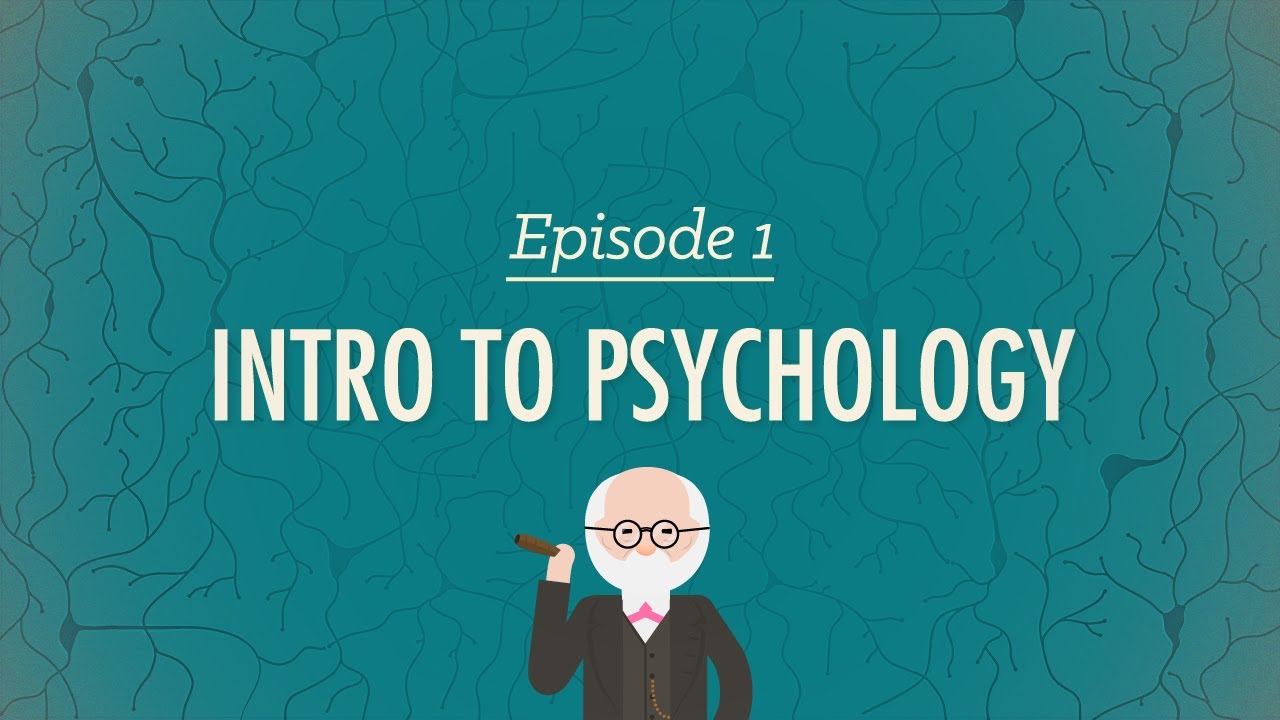
What does Psychology mean? Where does it come from? Hank gives you a 10-minute intro to one of the more tricky sciences and talks about some of the big names in the development of the field. Welcome to Crash Course Psychology!!!
Want more videos about psychology? Check out our sister channel SciShow Psych at https://www.youtube.com/scishowpsych!
--
Chapters:
Introduction: What is Psychology? 00:00
Early Thinkers in Psychology 0:46
Big Questions in Psychology 1:31
Sigmund Freud 2:21
Disciplines of Psychology 3:02
Structuralism 3:29
Functionalism 4:28
Psychoanalysis 4:58
Freud's Death & Legacy 7:01
Behaviorism 7:51
Psychodynamic Theories 8:21
Other Disciplines in Psychology 8:37
Credits 10:09
Crash Course is on Patreon! You can support us directly by signing up at http://www.patreon.com/crashcourse
Want to find Crash Course elsewhere on the internet?
Facebook - http://www.facebook.com/YouTubeCrashCourse
Twitter - http://www.twitter.com/TheCrashCourse
Instagram - https://www.instagram.com/thecrashcourse/
CC Kids: http://www.youtube.com/crashcoursekids