Video hàng đầu
First thing’s first: what is media literacy? In our first episode, Jay breaks this question down and explains how we’re going to use it to explore our media saturated world.
***
Resources & References:
U.S. Adults Consume an Entire Hour More of Media Per Day Than They Did Just Last Year http://www.adweek.com/tv-video..../us-adults-consume-e
Landmark Report: U.S. Teens Use an Average of Nine Hours of Media Per Day, Tweens Use Six Hours https://www.commonsensemedia.o....rg/about-us/news/pre
NAMLE: Media Literacy Defined https://namle.net/publications..../media-literacy-defi
***
Crash Course is on Patreon! You can support us directly by signing up at http://www.patreon.com/crashcourse
Thanks to the following Patrons for their generous monthly contributions that help keep Crash Course free for everyone forever:
Mark Brouwer, Nickie Miskell Jr., Jessica Wode, Eric Prestemon, Kathrin Benoit, Tom Trval, Jason Saslow, Nathan Taylor, Divonne Holmes à Court, Brian Thomas Gossett, Khaled El Shalakany, Indika Siriwardena, Robert Kunz, SR Foxley, Sam Ferguson, Yasenia Cruz, Daniel Baulig, Eric Koslow, Caleb Weeks, Tim Curwick, Evren Türkmenoğlu, Alexander Tamas, Justin Zingsheim, D.A. Noe, Shawn Arnold, mark austin, Ruth Perez, Malcolm Callis, Ken Penttinen, Advait Shinde, Cody Carpenter, Annamaria Herrera, William McGraw, Bader AlGhamdi, Vaso, Melissa Briski, Joey Quek, Andrei Krishkevich, Rachel Bright, Alex S, Mayumi Maeda, Kathy & Tim Philip, Montather, Jirat, Eric Kitchen, Moritz Schmidt, Ian Dundore, Chris Peters, Sandra Aft, Steve Marshall
--
Want to find Crash Course elsewhere on the internet?
Facebook - http://www.facebook.com/YouTubeCrashCourse
Twitter - http://www.twitter.com/TheCrashCourse
Tumblr - http://thecrashcourse.tumblr.com
Support Crash Course on Patreon: http://patreon.com/crashcourse
CC Kids: http://www.youtube.com/crashcoursekids

Moving on to our unit on the Physics of Electricity, it's time to talk about charge. What is charge? Is there a positive and negative charge? What do those things mean? In this episode, Shini talks about electrostatic forces, electrical charge, Coulomb's law, and the force between charged particles.
--
Produced in collaboration with PBS Digital Studios: http://youtube.com/pbsdigitalstudios
--
Want to find Crash Course elsewhere on the internet?
Facebook - http://www.facebook.com/YouTubeCrashC...
Twitter - http://www.twitter.com/TheCrashCourse
Tumblr - http://thecrashcourse.tumblr.com
Support CrashCourse on Patreon: http://www.patreon.com/crashcourse
CC Kids: http://www.youtube.com/crashcoursekids
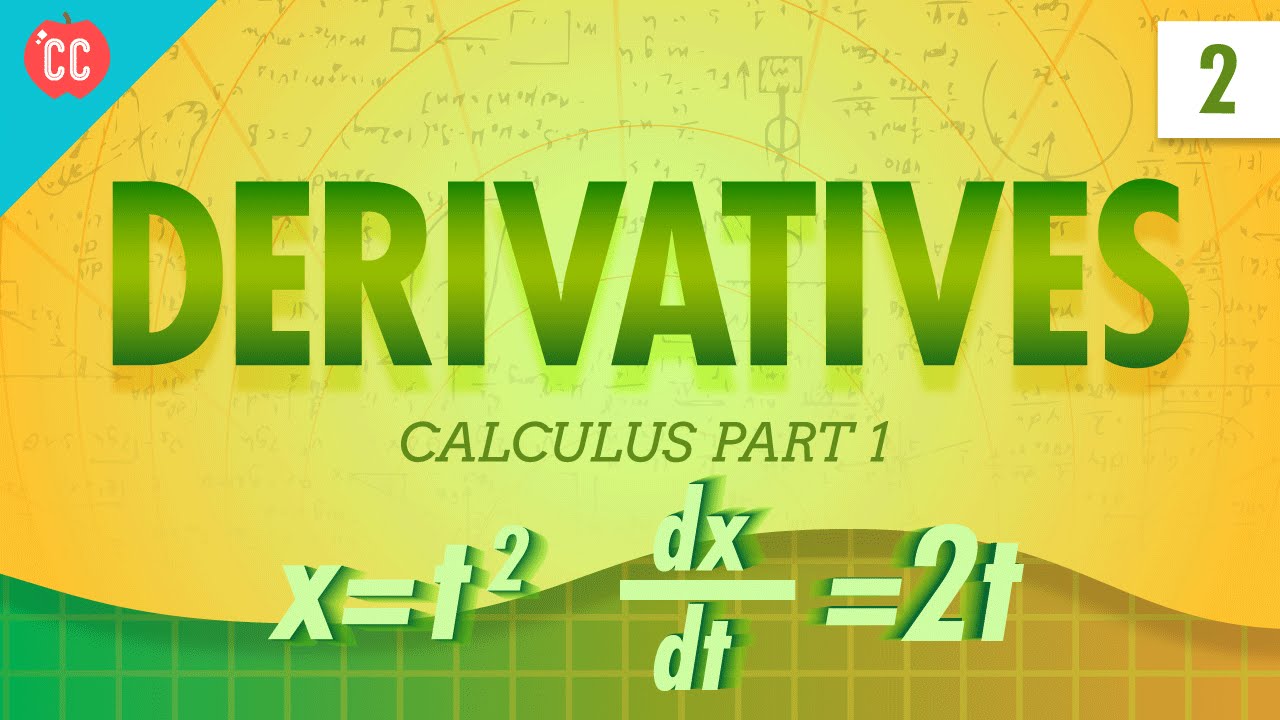
CALCULUS! Today we take our first steps into the language of Physics; mathematics. Every branch of science has its own way to describe the things that it investigates. And, with Physics, that's math. In this episode, Shini talks us through derivatives and how calculus helps us to understand the world around us.
--
Produced in collaboration with PBS Digital Studios: http://youtube.com/pbsdigitalstudios
--
Want to find Crash Course elsewhere on the internet?
Facebook - https://www.facebook.com/YouTubeCrashCourse/
Twitter - http://www.twitter.com/TheCrashCourse
Tumblr - http://thecrashcourse.tumblr.com
CC Kids: http://www.youtube.com/crashcoursekids
Support CrashCourse on Patreon: http://www.patreon.com/crashcourse
The Physics we're talking about today has saved your life! Whenever you walk across a bridge or lean on a building, Statics are at work. Statics is the study of objects when they're NOT accelerating. In this episode of Crash Course Physics, Shini talks to us about stretching, compressing, and springing as they relate to statics! Also... Game of Thrones.
--
Produced in collaboration with PBS Digital Studios: http://youtube.com/pbsdigitalstudios
--
Want to find Crash Course elsewhere on the internet?
Facebook - http://www.facebook.com/YouTubeCrashC...
Twitter - http://www.twitter.com/TheCrashCourse
Tumblr - http://thecrashcourse.tumblr.com
Support CrashCourse on Patreon: http://www.patreon.com/crashcourse
CC Kids: http://www.youtube.com/crashcoursekids

Today we kick off Crash Course Sociology by explaining what exactly sociology is. We’ll introduce the sociological perspective and discuss how sociology differentiates itself from the other social sciences. We’ll also explore what sociology can do, and how a concern with social problems was at the center of sociology's beginnings.
Crash Course is made with Adobe Creative Cloud. Get a free trial here: https://www.adobe.com/creativecloud.html
***
Marriage Equality Decision Day Rally photo by Elvert Barnes: https://www.flickr.com/photos/....perspective/18997209
***
Crash Course is on Patreon! You can support us directly by signing up at http://www.patreon.com/crashcourse
Thanks to the following Patrons for their generous monthly contributions that help keep Crash Course free for everyone forever:
Mark, Les Aker, Robert Kunz, William McGraw, Jeffrey Thompson, Jason A Saslow, Rizwan Kassim, Eric Prestemon, Malcolm Callis, Steve Marshall, Advait Shinde, Rachel Bright, Kyle Anderson, Ian Dundore, Tim Curwick, Ken Penttinen, Caleb Weeks, Kathrin Janßen, Nathan Taylor, Yana Leonor, Andrei Krishkevich, Brian Thomas Gossett, Chris Peters, Kathy & Tim Philip, Mayumi Maeda, Eric Kitchen, SR Foxley, Justin Zingsheim, Andrea Bareis, Moritz Schmidt, Bader AlGhamdi, Jessica Wode, Daniel Baulig, Jirat
--
Want to find Crash Course elsewhere on the internet?
Facebook - http://www.facebook.com/YouTubeCrashCourse
Twitter - http://www.twitter.com/TheCrashCourse
Tumblr - http://thecrashcourse.tumblr.com
Support Crash Course on Patreon: http://patreon.com/crashcourse
CC Kids: http://www.youtube.com/crashcoursekids

Today, we’re going to look at how computers use a stream of 1s and 0s to represent all of our data - from our text messages and photos to music and web pages. We’re going to focus on how these binary values are used to represent numbers and letters and discuss how our need to perform operations on more extensive and more complex matters brought us from our 8-bit video games to beautiful Instagram photos, and from unreadable garbled text in our emails to a universal language encoding scheme.
Produced in collaboration with PBS Digital Studios: http://youtube.com/pbsdigitalstudios
Want to know more about Carrie Anne?
https://about.me/carrieannephilbin
Want to find Crash Course elsewhere on the internet?
Facebook - http://www.facebook.com/YouTubeCrashC...
Twitter - http://www.twitter.com/TheCrashCourse
Tumblr - http://thecrashcourse.tumblr.com
Support Crash Course on Patreon: http://patreon.com/crashcourse
CC Kids: http://www.youtube.com/crashcoursekids

In which Craig Benzine teaches you about federalism, or the idea that in the United States, power is divided between the national government and the 50 state governments. Craig will teach you about how federalism has evolved over the history of the US, what powers are given to the federal government, and what stuff the states control on their own. And he punches an eagle, which may not surprise you at all.
Produced in collaboration with PBS Digital Studios: http://youtube.com/pbsdigitalstudios
Support is provided by Voqal: http://www.voqal.org
Chapters:
Introduction: Federalism 00:00
What is Federalism? 0:38
Dual Federalism 1:47
The Commerce Cause 3:34
Cooperative Federalism 4:18
Grants-in-aid 4:48
Regulated Federalism 6:04
New Federalism 7:00
Federalism Today 8:05
Credits 8:44
Crash Course is on Patreon! You can support us directly by signing up at http://www.patreon.com/crashcourse
Want to find Crash Course elsewhere on the internet?
Facebook - http://www.facebook.com/YouTubeCrashCourse
Twitter - http://www.twitter.com/TheCrashCourse
Instagram - https://www.instagram.com/thecrashcourse/
CC Kids: http://www.youtube.com/crashcoursekids

Hank introduces us to comparative anatomy, which studies the similarities and differences in animal anatomy to support the theory of evolution and the shared ancestry of living things.
References:
Campbell Biology, 9th ed.
CliffsAP Biology, 3rd ed.
Thomas Henry Huxley: http://www.strangescience.net/huxley.htm
Tissues: http://web.jjay.cuny.edu/~acar....pi/NSC/14-anatomy.ht
Divergence time estimates for the early history of animal phyla...
http://www.ncbi.nlm.nih.gov/pm....c/articles/PMC168965
Table of Contents:
1) Comparative Anatomy 0:00
2) Locomotion 1:19
3) Heterotophy 1:41
4) Convergent Evolution 2:40
5) Biolography 3:40
6) Tissues 6:00
a) Epithelial Tissue 6:11
b) Connective Tissue 6:33
c) Muscle Tissue 7:01
d) Nerve Tissue 7:14
7) Organs 7:32
8) Organ Systems 7:39
Crash Course is on Patreon! You can support us directly by signing up at http://www.patreon.com/crashcourse
Want to find Crash Course elsewhere on the internet?
Facebook - http://www.facebook.com/YouTubeCrashCourse
Twitter - http://www.twitter.com/TheCrashCourse
Instagram - https://www.instagram.com/thecrashcourse/
CC Kids: http://www.youtube.com/crashcoursekids
What exactly is consciousness? Well... that's kind of a gray area. In this episode of Crash Course Psychology, Hank gives you the basic ideas of what consciousness is, how our attention works, and why we shouldn't text and drive... ever... no, really, NEVER!
Want more videos about psychology? Check out our sister channel SciShow Psych at https://www.youtube.com/scishowpsych!
--
Chapters:
Introduction: What is Consciousness? 00:00
States of Consciousness 1:51
Cognitive Neuroscience & Neuroimaging 2:16
Dual Processing 3:33
Selective Attention 4:23
Inattentional Blindness 6:13
How Magicians Use Psychology 7:08
Review & Credits 8:38
--
Crash Course is on Patreon! You can support us directly by signing up at http://www.patreon.com/crashcourse
Want to find Crash Course elsewhere on the internet?
Facebook - http://www.facebook.com/YouTubeCrashCourse
Twitter - http://www.twitter.com/TheCrashCourse
Instagram - https://www.instagram.com/thecrashcourse/
CC Kids: http://www.youtube.com/crashcoursekids

What's that smell? Smell's like Organic Chemistry! This week Hank talks about Aromatics and Cyclic Compounds, naming their substituents, resonance, and common reactions & uses.
Pssst... we made flashcards to help you review the content in this episode! Find them on the free Crash Course App!
Download it here for Apple Devices: https://apple.co/3d4eyZo
Download it here for Android Devices: https://bit.ly/2SrDulJ
--
Table of Contents
Cyclic Organic Compounds & Naming Their Constituents 1:06
Aromatic Compounds 3:02
Resonance 3:18
Naming Aromatic Compounds 5:05
Common Reactions & Uses 7:24
--
Crash Course is on Patreon! You can support us directly by signing up at http://www.patreon.com/crashcourse
Want to find Crash Course elsewhere on the internet?
Facebook - http://www.facebook.com/YouTubeCrashCourse
Twitter - http://www.twitter.com/TheCrashCourse
Instagram - https://www.instagram.com/thecrashcourse/
CC Kids: http://www.youtube.com/crashcoursekids

Not sleeping for days on end. Long periods of euphoria. Racing thoughts. Grandiose ideas. Mania. Depression. All of these are symptoms of Bipolar Disorder. In this episode of Crash Course Psychology, Hank talks about mood disorders and their causes as well as how these disorders can impact people's lives.
Want more videos about psychology? Check out our sister channel SciShow Psych at https://www.youtube.com/scishowpsych!
--
Chapters:
Introduction: Bipolar Disorder 00:00
Mood Disorders 1:15
What are Moods? 2:00
Depressive Disorders 2:50
Bipolar Disorder 4:31
Genetic Causes of Mood Disorders 5:48
Environmental Triggers of Mood Disorders 6:14
Mood Disorders & Gender 6:45
Mood Disorders & the Brain 7:05
Social-Cognitive Perspective on Mood Disorders 7:58
Review & Credits 9:13
--
Crash Course is on Patreon! You can support us directly by signing up at http://www.patreon.com/crashcourse
Want to find Crash Course elsewhere on the internet?
Facebook - http://www.facebook.com/YouTubeCrashCourse
Twitter - http://www.twitter.com/TheCrashCourse
Instagram - https://www.instagram.com/thecrashcourse/
CC Kids: http://www.youtube.com/crashcoursekids
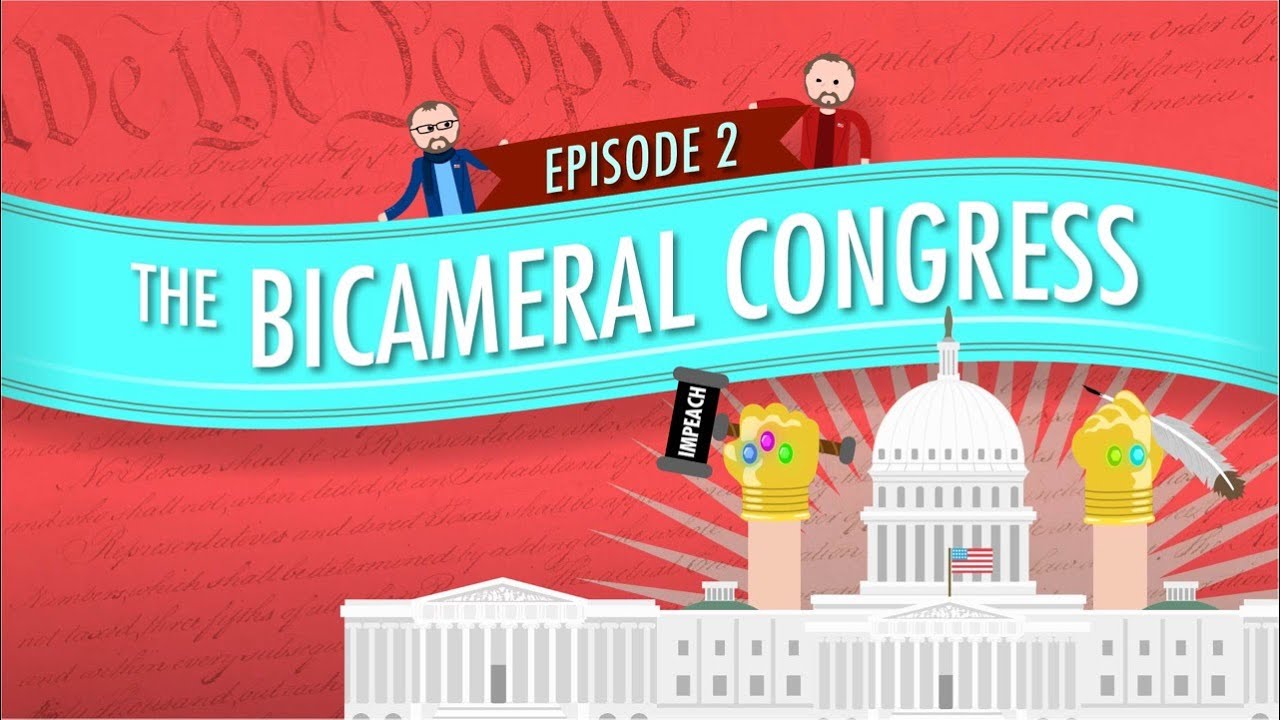
In which Craig Benzine teaches you about the United States Congress, why it's bicameral, and what bicameral means. Craig tells you what the Senate and House of Representatives are for, talks about some of the histories of the institutions, and reveals to you just how you can become a representative. It's not that easy. But an eagle gets punched, so there's that.
Produced in collaboration with PBS Digital Studios: http://youtube.com/pbsdigitalstudios
Support is provided by Voqal: http://www.voqal.org
Chapters:
Introduction: What is Congress? 00:00
Who makes up the House of Representatives? 1:09
Who makes up the Senate? 1:38
What does Congress do? 1:58
Powers of the House of Representatives 2:13
Powers of the Senate 3:13
Why is Congress bicameral? 3:52
What's the difference between the Senate and the House? 6:00
Credits 8:32
Crash Course is on Patreon! You can support us directly by signing up at http://www.patreon.com/crashcourse
Want to find Crash Course elsewhere on the internet?
Facebook - http://www.facebook.com/YouTubeCrashCourse
Twitter - http://www.twitter.com/TheCrashCourse
Instagram - https://www.instagram.com/thecrashcourse/
CC Kids: http://www.youtube.com/crashcoursekids

This week Craig Benzine talks about the importance of elections in the strongest branch of the U.S. Government: Congress. He'll talk about the frequency of elections in the Senate and House, the typical characteristics of a candidate, and the motivating factors our congresspeople follow to get re-elected.
Produced in collaboration with PBS Digital Studios: http://youtube.com/pbsdigitalstudios
Support is provided by Voqal: http://www.voqal.org
Chapters:
Introduction: Congressional Elections 00:00
How Congressional Elections Work 0:59
How Congressional Candidates Get Elected 2:16
Characteristics of Congressional Candidates 3:05
Incumbency Advantage 4:21
The Electoral Connection & Why Congressional Elections Matter 6:01
Credits 8:25
Crash Course is on Patreon! You can support us directly by signing up at http://www.patreon.com/crashcourse
Want to find Crash Course elsewhere on the internet?
Facebook - http://www.facebook.com/YouTubeCrashCourse
Twitter - http://www.twitter.com/TheCrashCourse
Instagram - https://www.instagram.com/thecrashcourse/
CC Kids: http://www.youtube.com/crashcoursekids
In which Craig Benzine teaches you about the United States Congress, why it's bicameral, and what bicameral means. Craig tells you what the Senate and House of Representatives are for, talks about some of the histories of the institutions, and reveals to you just how you can become a representative. It's not that easy. But an eagle gets punched, so there's that.
Produced in collaboration with PBS Digital Studios: http://youtube.com/pbsdigitalstudios
Support is provided by Voqal: http://www.voqal.org
Chapters:
Introduction: What is Congress? 00:00
Who makes up the House of Representatives? 1:09
Who makes up the Senate? 1:38
What does Congress do? 1:58
Powers of the House of Representatives 2:13
Powers of the Senate 3:13
Why is Congress bicameral? 3:52
What's the difference between the Senate and the House? 6:00
Credits 8:32
Crash Course is on Patreon! You can support us directly by signing up at http://www.patreon.com/crashcourse
Want to find Crash Course elsewhere on the internet?
Facebook - http://www.facebook.com/YouTubeCrashCourse
Twitter - http://www.twitter.com/TheCrashCourse
Instagram - https://www.instagram.com/thecrashcourse/
CC Kids: http://www.youtube.com/crashcoursekids

All of the sounds or handshapes in a language can be pronounced differently depending on the context, but in different languages, these differences may be significant, or not. The study of these patterns and variations is known as phonology. In this episode of Crash Course Linguistics, we’ll learn all about phonology and the different phonological systems we see in different languages, and we’ll begin to retrain our brains in order to gain a better understanding and appreciation for phonological patterns.
Want even more linguistics? Check out the Lingthusiasm podcast, hosted by the writers of Crash Course Linguistics: https://lingthusiasm.com/
Check out Self-Evident on PBS Voices: https://youtu.be/PZHAu09iObU
***
Watch our videos and review your learning with the Crash Course App!
Download here for Apple Devices: https://apple.co/3d4eyZo
Download here for Android Devices: https://bit.ly/2SrDulJ
Crash Course is on Patreon! You can support us directly by signing up at http://www.patreon.com/crashcourse
Thanks to the following patrons for their generous monthly contributions that help keep Crash Course free for everyone forever:
Vincent LaBarca, Bjartur Thorlacius, Scott Harrison, Alexander Thomson, Mark & Susan Billian, Junrong Eric Zhu, Alan Bridgeman, Jennifer Smith, Matt Curls, Tim Kwist, Jonathan Zbikowski, Jennifer Killen, Sarah & Nathan Catchings, Brandon Westmoreland, team dorsey, Trevin Beattie, Yasenia Cruz, Eric Koslow, Indika Siriwardena, Khaled El Shalakany, Shawn Arnold, Siobhán, Ken Penttinen, Nathan Taylor, William McGraw, Andrei Krishkevich, Sam Ferguson, Jirat, Brian Thomas Gossett, SR Foxley, Ian Dundore, Jason A Saslow, Jessica Wode, Caleb Weeks, Mark, Patty Laqua, Stephen Saar, John Lee, Eric Prestemon
__
Want to find Crash Course elsewhere on the internet?
Facebook - http://www.facebook.com/YouTubeCrashCourse
Twitter - http://www.twitter.com/TheCrashCourse
Tumblr - http://thecrashcourse.tumblr.com
Support Crash Course on Patreon: http://patreon.com/crashcourse
CC Kids: http://www.youtube.com/crashcoursekids
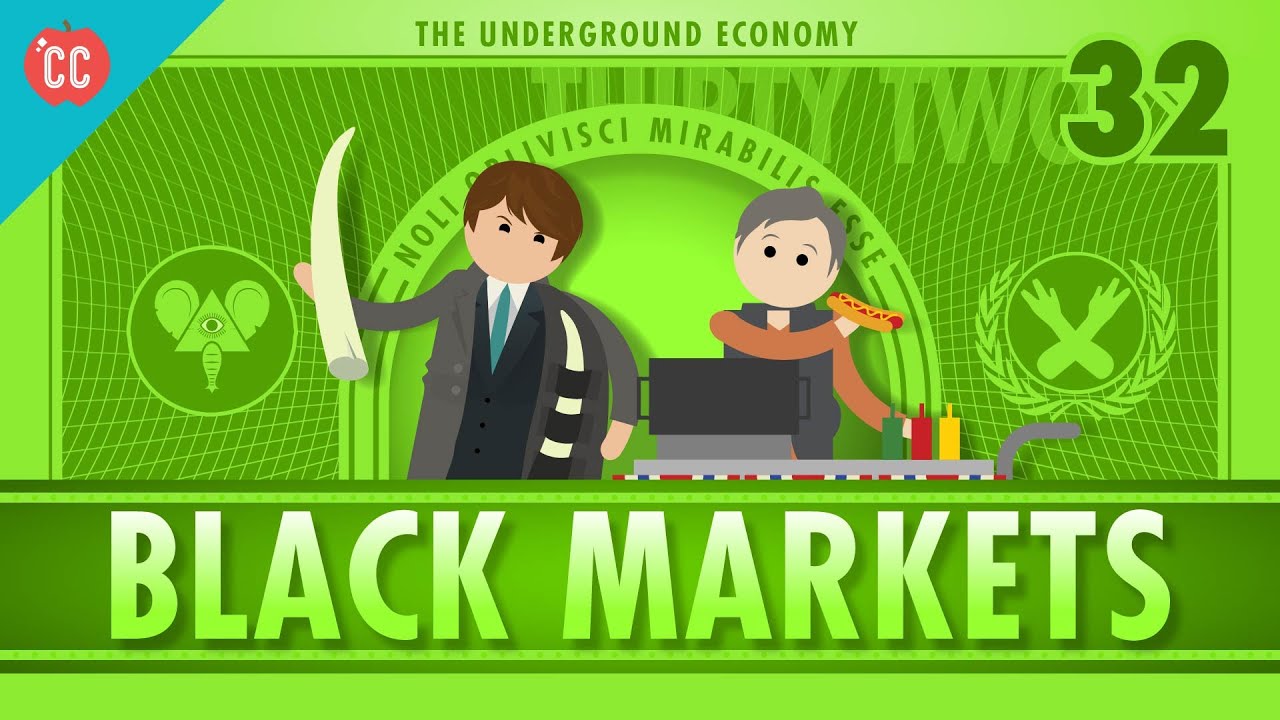
What is an underground economy? Whether you call it a black market, a grey market, or just the shop down the street, its about connecting people with goods outside of official channels. Some stuff happens in the underground economy because it's illegal, but a lot of the money that moves around this way is exchanged for pretty mundane goods and services. We'll talk about how these things work, and the awesome ways that economists figure out where all that money is.

Stan Muller teaches you a few things about copyright enforcement and talks about the exceptions to copyright enforcement. While there are several, the one you've probably heard of is Fair Use, and it's a pretty tricky one. We'll try to explain it and teach you just why fair use is so loosey-goosey.
Citation1: 17 USC 503
Citation 2: Hargreaves, Ian. Digital Opportunity: A Review of Intellectual Property and Growth. UK Intellectual Property Office. P 5
Citation 3: Iowa State Univ. Research Found., Inc. v. American Broadcasting Cos., 621 F.2d 57 (2d Cir. 1980)
Citation 4: Harper & Row, Publishers, Inc. v. Nation Enters., 471 U.S. 539, 551, 105 S. Ct. 2218, 85 L. Ed. 2d 588 (1985) (quoting) Joseph McDonald, Non-Infringing Uses, 9 Bull. Copyright Soc'y 466, 467 No. 355 (1962)
Links We Promised:
Copyright Office Fair Use Index: http://copyright.gov/fair-use/
Best Practices Documents:
http://www.cmsimpact.org/fair-use/best-practices
http://infringementnation.com
***
Thanks to the following Patrons for their generous monthly contributions that help keep Crash Course free for everyone forever:
Mark Brouwer, Jan Schmid, Steve MarshallAnna-Ester Volozh, Sandra Aft, Brad Wardell, Christian Ludvigsen, Robert Kunz, Jason, A Saslow, Jacob Ash, Jeffrey Thompson, Jessica Simmons, James Craver, Simun Niclasen, SR Foxley, Roger C. Rocha, Nevin, Spoljaric, Eric Knight, Elliot Beter, Jessica Wode, Sofie Harning, Sour Bags & Totes, Don Phillips, Christian Dodson, Christian Dodson (once again), Christian Dodson (again), Christian Dodson (NO EDGE), tuseroni, Amy Guerrero
Crash Course is on Patreon! You can support us directly by signing up at http://www.patreon.com/crashcourse
Want to find Crash Course elsewhere on the internet?
Facebook - http://www.facebook.com/YouTubeCrashCourse
Twitter - http://www.twitter.com/TheCrashCourse
Instagram - https://www.instagram.com/thecrashcourse/
CC Kids: http://www.youtube.com/crashcoursekids
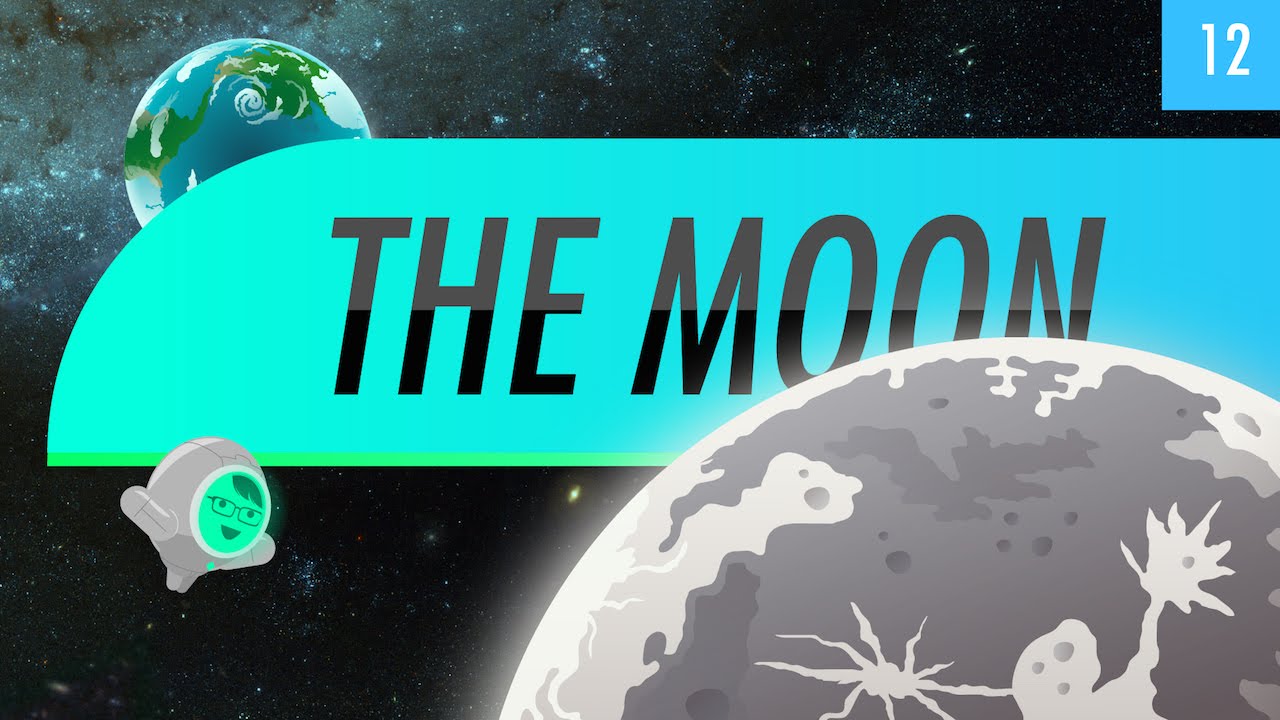
Join Phil for a tour of our capital-M Moon, from surface features, inside to the core, and back in time to theories about its formation.
This episode is brought to you by Squarespace: http://www.squarespace.com/crashcourse
Check out the Crash Course Astronomy solar system poster here: http://store.dftba.com/product....s/crashcourse-astron
--
Chapters:
Introduction: The Moon 00:00
How Big is the Moon? 0:54
Internal Structure of the Moon 1:56
The Moon's Surface: Highlands and Maria 2:15
How the Moon Formed: The Giant Impact Hypothesis 3:42
The Moon's Craters 6:32
Water on the Moon? H2O Yeah! 8:06
Review 9:06
--
PBS Digital Studios: http://youtube.com/pbsdigitalstudios
Follow Phil on Twitter: https://twitter.com/badastronomer
Crash Course is on Patreon! You can support us directly by signing up at http://www.patreon.com/crashcourse
Want to find Crash Course elsewhere on the internet?
Facebook - http://www.facebook.com/YouTubeCrashCourse
Twitter - http://www.twitter.com/TheCrashCourse
Instagram - https://www.instagram.com/thecrashcourse/
CC Kids: http://www.youtube.com/crashcoursekids
--
PHOTOS/VIDEOS
Moon Phase 47.7% http://svs.gsfc.nasa.gov/cgi-b....in/details.cgi?aid=3 [credit: NASA/Goddard Space Flight Center Scientific Visualization Studio]
The Blue Marble http://visibleearth.nasa.gov/view.php?id=57723 [credit: Credit: NASA Goddard Space Flight Center Image by Reto Stöckli]
Dramatic Moonset http://www.eso.org/public/images/potw1023a/ [credit: G.Gillet/European Southern Observatory]
Structure of the Moon: http://en.wikipedia.org/wiki/M....oon#mediaviewer/File [credit: Kelvin Song via WikiMedia Commons]
Crater Science Investigations: http://svs.gsfc.nasa.gov/cgi-b....in/details.cgi?aid=1 [credit: NASA/Goddard Space Flight Center]
Lunar crater Daealus http://commons.wikimedia.org/w....iki/File:Lunar_crate [credit: NASA]
Mare Humorum http://commons.wikimedia.org/w....iki/File:Mare_Humoru [credit: NASA]
Luna 3: http://nssdc.gsfc.nasa.gov/img....cat/html/object_page [credit: NASA]
Farside!: http://lroc.sese.asu.edu/posts/298 [credit: NASA/GSFC/Arizona State University]
Theia Earth Collision: http://io9.com/the-incredibly-....violent-history-of-e [credit: Ron Miller, used with permission]
Earth Seen From Early Moon: http://io9.com/the-incredibly-....violent-history-of-e [credit: Ron Miller, used with permission]
Moon Struck: http://svs.gsfc.nasa.gov/cgi-b....in/details.cgi?aid=1 [credit: NASA's Goddard Space Flight Center]
Tycho: http://www.nasa.gov/images/con....tent/417417main_tych [credit: NASA/Goddard/Arizona State University]
Double crater on the moon: http://www.esa.int/spaceinimag....es/Images/2006/09/Do [credit: ESA/SPACE-X (Space Exploration Institute)]
Stream of Craters: http://www.nasa.gov/mission_pa....ges/LRO/multimedia/l [credit: NASA/Goddard Space Flight Center/Arizona State University]
Full Moon: http://en.wikipedia.org/wiki/M....oon#mediaviewer/File [credit: Gregory H. Revera]
Rille on the valley floor, photographic mosaic from Apollo 15: http://en.wikipedia.org/wiki/S....chroter%27s_Valley#m [credit: NASA]
New Views of Lunar Pits: http://lroc.sese.asu.edu/posts/230 [credit: NASA/GSFC/Arizona State University]
Crater Erlanger: http://www.nasa.gov/mission_pa....ges/Mini-RF/multimed [credit: NASA/GSFC/Arizona State University]
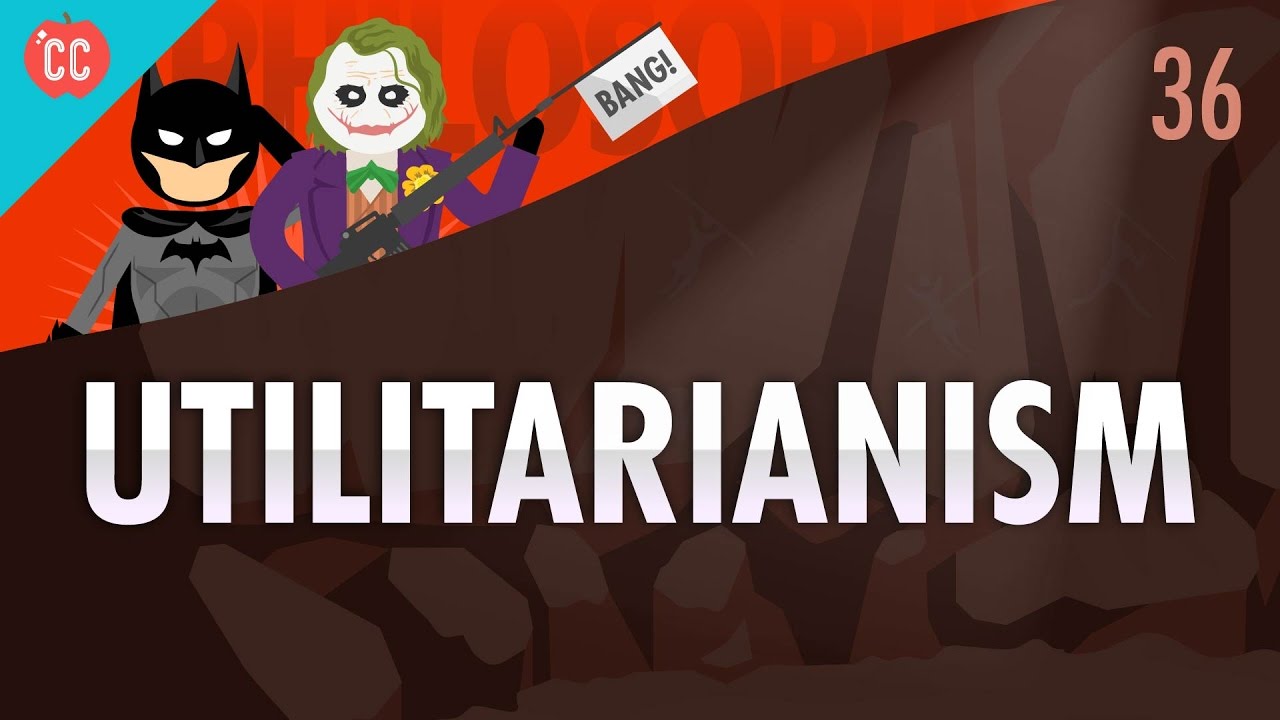
Our next stop in our tour of the ethical lay of the land is utilitarianism. With a little help from Batman, Hank explains the principle of utility, and the difference between act and rule utilitarianism.
--
Produced in collaboration with PBS Digital Studios: http://youtube.com/pbsdigitalstudios
--
Want to find Crash Course elsewhere on the internet?
Facebook - http://www.facebook.com/YouTubeCrashC...
Twitter - http://www.twitter.com/TheCrashCourse
Tumblr - http://thecrashcourse.tumblr.com
Support CrashCourse on Patreon: http://www.patreon.com/crashcourse
CC Kids: http://www.youtube.com/crashcoursekids
Literally, ‘mise-en-scene’ means “placing on stage.” But in film, mise-en-scene encompasses everything the camera is capturing. The artists and crafts-people who work in Production Design, Wardrobe, and Hair and Makeup are responsible for setting the stage of a film and making sure the characters fit on that stage. In this episode of Crash Course Film Production, Lily Gladstone talks us through the roles involved in designing the world of a film.
***
Produced in collaboration with PBS Digital Studios: http://youtube.com/pbsdigitalstudios
The Latest from PBS Digital Studios: https://www.youtube.com/playli....st?list=PL1mtdjDVOoO
***
Want to find Crash Course elsewhere on the internet?
Facebook - http://www.facebook.com/YouTubeCrashCourse
Twitter - http://www.twitter.com/TheCrashCourse
Tumblr - http://thecrashcourse.tumblr.com
Support Crash Course on Patreon: http://patreon.com/crashcourse
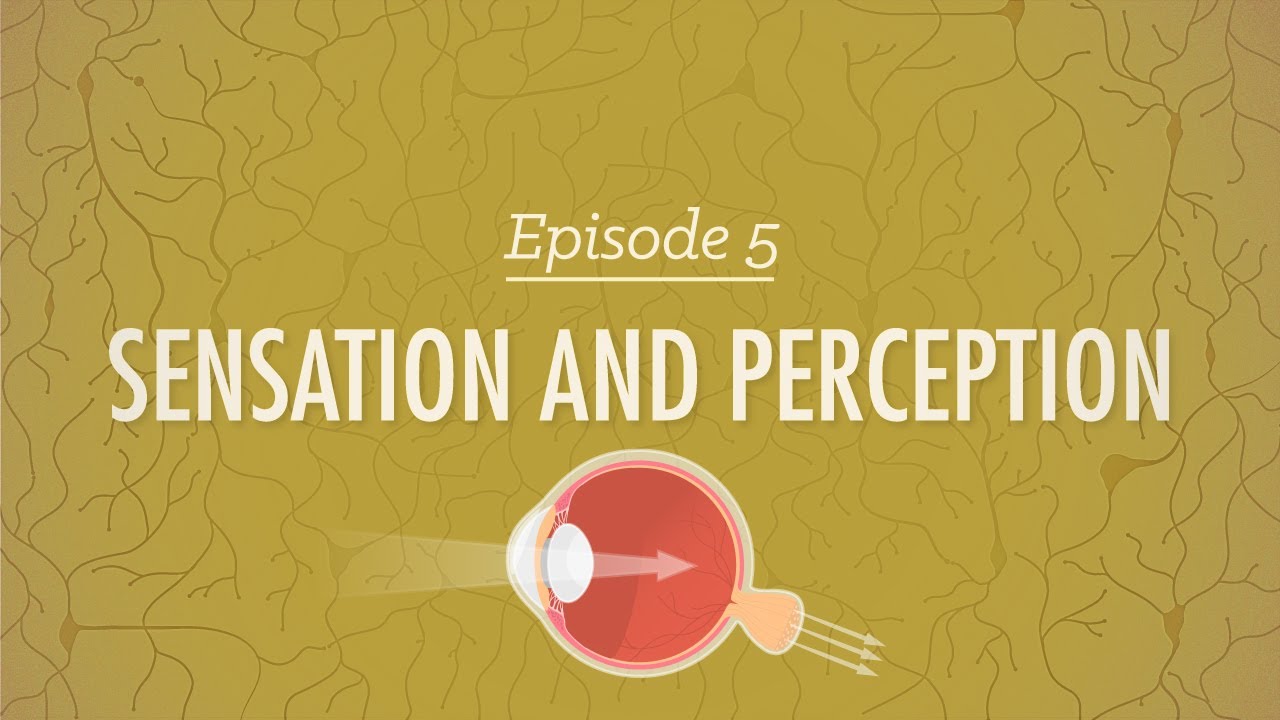
Just what is the difference between sensing and perceiving? And how does vision actually work? And what does this have to do with a Corgi? In this episode of Crash Course Psychology, Hank takes us on a journey through the brain to better explain these and other concepts. Plus, you know, CORGI!
Want more videos about psychology? Check out our sister channel SciShow Psych at https://www.youtube.com/scishowpsych!
--
Chapters:
Introduction: Face Blindness (Prosopagnosia) 00:00
Sensation vs. Perception 0:54
Sense Thresholds 1:43
How Human Vision Works 4:23
Visible Light Spectrum 5:00
How the Human Eye Processes Light 6:01
Rods & Cones 6:31
Human Color Vision 6:56
Visual Cortex 8:02
Parallel Processing 9:30
Review & Credits 9:52
--
Crash Course is on Patreon! You can support us directly by signing up at http://www.patreon.com/crashcourse
Want to find Crash Course elsewhere on the internet?
Facebook - http://www.facebook.com/YouTubeCrashCourse
Twitter - http://www.twitter.com/TheCrashCourse
Instagram - https://www.instagram.com/thecrashcourse/
CC Kids: http://www.youtube.com/crashcoursekids
We’ve talked about many important concepts for engineers, but today we’re going to discuss a hugely important one that you might not even realize is an engineering concept: ethics. We’ll talk about what a Code of Ethics is. We’ll explore engineering ethics and the ethical theories of utilitarianism, rights ethics, and duty ethics. We’ll also take a look at a few different real life examples of ethical problems in engineering.
Crash Course Engineering is produced in association with PBS Digital Studios: https://www.youtube.com/playli....st?list=PL1mtdjDVOoO
Check out Origin of Everything: https://www.youtube.com/channe....l/UCiB8h9jD2Mlxx96ZF
***
RESOURCES:
http://www.bbc.co.uk/ethics/in....troduction/intro_1.s
https://www.merriam-webster.com/dictionary/ethic
https://www.nspe.org/resources/ethics/code-ethics
https://www.asce.org/question-....of-ethics-articles/a
https://www.asce.org/question-....of-ethics-articles/j
http://www.asce.org/code-of-ethics/
https://plato.stanford.edu/ent....ries/utilitarianism-
https://onlinemasters.ohio.edu..../blog/ultimate-guide
https://www.raeng.org.uk/polic....y/engineering-ethics
https://interestingengineering.....com/understanding-h
***
Crash Course is on Patreon! You can support us directly by signing up at http://www.patreon.com/crashcourse
Thanks to the following Patrons for their generous monthly contributions that help keep Crash Course free for everyone forever:
Sam Buck, Mark Brouwer, Jennifer French Lee, Brandon Westmoreland, dorsey, Indika Siriwardena, James Hughes, Kenneth F Penttinen, Trevin Beattie, Satya Ridhima Parvathaneni, Erika & Alexa Saur, Glenn Elliott, Justin Zingsheim, Jessica Wode, Eric Prestemon, Kathrin Benoit, Tom Trval, Jason Saslow, Nathan Taylor, Brian Thomas Gossett, Khaled El Shalakany, SR Foxley, Sam Ferguson, Yasenia Cruz, Eric Koslow, Caleb Weeks, Tim Curwick, D.A. Noe, Shawn Arnold, Malcolm Callis, Advait Shinde, William McGraw, Andrei Krishkevich, Rachel Bright, Kathy & Tim Philip, Jirat, Ian Dundore
--
Want to find Crash Course elsewhere on the internet?
Facebook - http://www.facebook.com/YouTubeCrashCourse
Twitter - http://www.twitter.com/TheCrashCourse
Tumblr - http://thecrashcourse.tumblr.com
Support Crash Course on Patreon: http://patreon.com/crashcourse
CC Kids: http://www.youtube.com/crashcoursekids
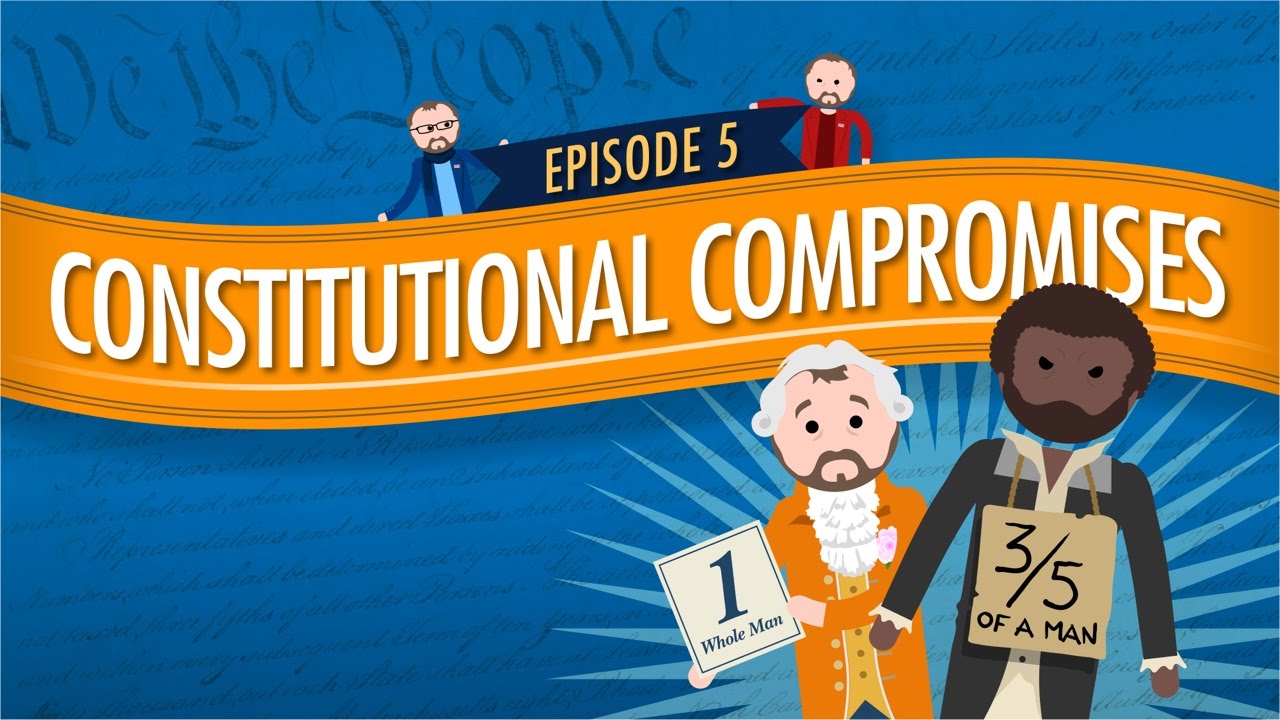
In which Craig Benzine teaches you about the compromises met in ratifying the U.S. Constitution. The United States didn’t always have its current system of government. Actually, this is its second attempt. Craig will delve into the failures (and few successes) of the Articles of Confederation, tell you how delegates settled on a two-house system of representation, discuss the issues of slavery and population that have been embedded into our constitution, and fire up the clone machine to discuss how federalists and anti-federalist opposition provided the U.S. a Bill of Rights. And who knows, maybe all this talk of compromise will even inspire Craig and eagle to find some middle ground.
Produced in collaboration with PBS Digital Studios: http://youtube.com/pbsdigitalstudios
Support is provided by Voqal: http://www.voqal.org
Chapters:
Introduction: The Constitution 00:00
The Articles of Confederation: Precursor to the Constitution 0:28
Why did the Articles of Confederation fail? 1:15
The Northwest Ordinance of 1787 2:06
The Virginia Plan 2:35
The New Jersey Plan 3:14
The Connecticut Compromise / The Great Compromise 3:30
The 3/5ths Compromise 4:00
Ratification of the U.S. Constitution 5:22
Federalists vs. Anti-Federalists 6:09
The Bill of Rights 7:36
Credits 8:23
Crash Course is on Patreon! You can support us directly by signing up at http://www.patreon.com/crashcourse
Want to find Crash Course elsewhere on the internet?
Facebook - http://www.facebook.com/YouTubeCrashCourse
Twitter - http://www.twitter.com/TheCrashCourse
Instagram - https://www.instagram.com/thecrashcourse/
CC Kids: http://www.youtube.com/crashcoursekids

Empire, imperialism, and colonialism are all interrelated tactics of geopolitics that are used to achieve similar goals of one state maintaining economic, political, or even cultural dominance over other territories. Today, we’re going to unravel the impacts of colonialism at different times throughout history from Taiwan to Myanmar as we examine the longstanding impacts of these relationships. We’ll also take a look at how some countries today, like Thailand, have taken the control of the narrative through culinary colonization.
SOURCES
General:
Getis, Bjelland, and Getis. Introduction to Geography, 15 ed. McGraw-Hill Education. 2017. ISBN: 978-1-259-57000-1
Gregory, Derek, Ron Johnston, Geraldine Pratt, Michael Watts, and Sarah Whatmore, eds. 2009. The Dictionary of Human Geography. 5th ed. Willey-Blackwell. ISBN: 978-1-4051-3288-6
For a free and open source option for Intro to Human Geography, see: https://humangeography.pressbooks.com/
For a free and open source option for World Regional Geography, see: https://worldgeography.pressbo....oks.com/front-matter
Cracking the AP Human Geography Exam: 2020 edition. The Princeton Review.
Taiwan:
http://dlc.dlib.indiana.edu/dlc/bitstream/handle/10535/7376/402.pdf?sequence=1&isAllowed=y
http://d-scholarship.pitt.edu/16493/
https://www.brookings.edu/rese....arch/taiwans-economi
https://www.cia.gov/the-world-....factbook/countries/t
https://eh.net/encyclopedia/th....e-economic-history-o
https://journals.openedition.o....rg/chinaperspectives
Condensed history of Asian Empire:
http://afe.easia.columbia.edu/....main_pop/kpct/kp_190
Mongolia:
https://www.nationalgeographic.....com/culture/article
https://geohistory.today/mongo....l-empire-effects-rus
Myanmar:
https://www.cia.gov/the-world-....factbook/countries/b
https://www.bbc.com/news/world....-asia-pacific-129928
https://www.newmandala.org/col....onialism-and-ethnic-
https://newint.org/features/2008/04/18/history/
https://en.wikipedia.org/wiki/History_of_Myanmar
Thailand
https://www.cia.gov/the-world-....factbook/countries/t
https://arrow.tudublin.ie/cgi/viewcontent.cgi?article=1140&context=dgs
Qing Dynasty
https://en.m.wikipedia.org/wiki/Qing_dynasty
Watch our videos and review your learning with the Crash Course App!
Download here for Apple Devices: https://apple.co/3d4eyZo
Download here for Android Devices: https://bit.ly/2SrDulJ
Crash Course is on Patreon! You can support us directly by signing up at http://www.patreon.com/crashcourse
Thanks to the following patrons for their generous monthly contributions that help keep Crash Course free for everyone forever:
Dave Freeman, Hasan Jamal, DL Singfield, Jeremy Mysliwiec, Shannon McCone, Amelia Ryczek, Ken Davidian, Stephen Akuffo, Toni Miles, Erin Switzer, Steve Segreto, Michael M. Varughese, Kyle & Katherine Callahan, Laurel A Stevens, Vincent, Michael Wang, Stacey Gillespie, Jaime Willis, Alexis B, Burt Humburg, Aziz Y, DAVID MORTON HUDSON, Perry Joyce, Scott Harrison, Mark & Susan Billian, Junrong Eric Zhu, Rachel Creager, Matt Curls, Tim Kwist, Jonathan Zbikowski, Jennifer Killen, Sarah & Nathan Catchings, Brandon Westmoreland, team dorsey, Trevin Beattie, Divonne Holmes à Court, Eric Koslow, Jennifer Dineen, Indika Siriwardena, Khaled El Shalakany, Jason Rostoker, Shawn Arnold, Siobhán, Ken Penttinen, Nathan Taylor, Les Aker, ThatAmericanClare, Rizwan Kassim, Sam Ferguson, Alex Hackman, Jirat, Katie Dean, Avi Yashchin, NileMatotle, Wai Jack Sin, Ian Dundore, Justin, Caleb Weeks
__
Want to find Crash Course elsewhere on the internet?
Facebook - http://www.facebook.com/YouTubeCrashCourse
Twitter - http://www.twitter.com/TheCrashCourse
Tumblr - http://thecrashcourse.tumblr.com
Support Crash Course on Patreon: http://patreon.com/crashcourse
CC Kids: http://www.youtube.com/crashcoursekids
#CrashCourse #Geography #Colonization
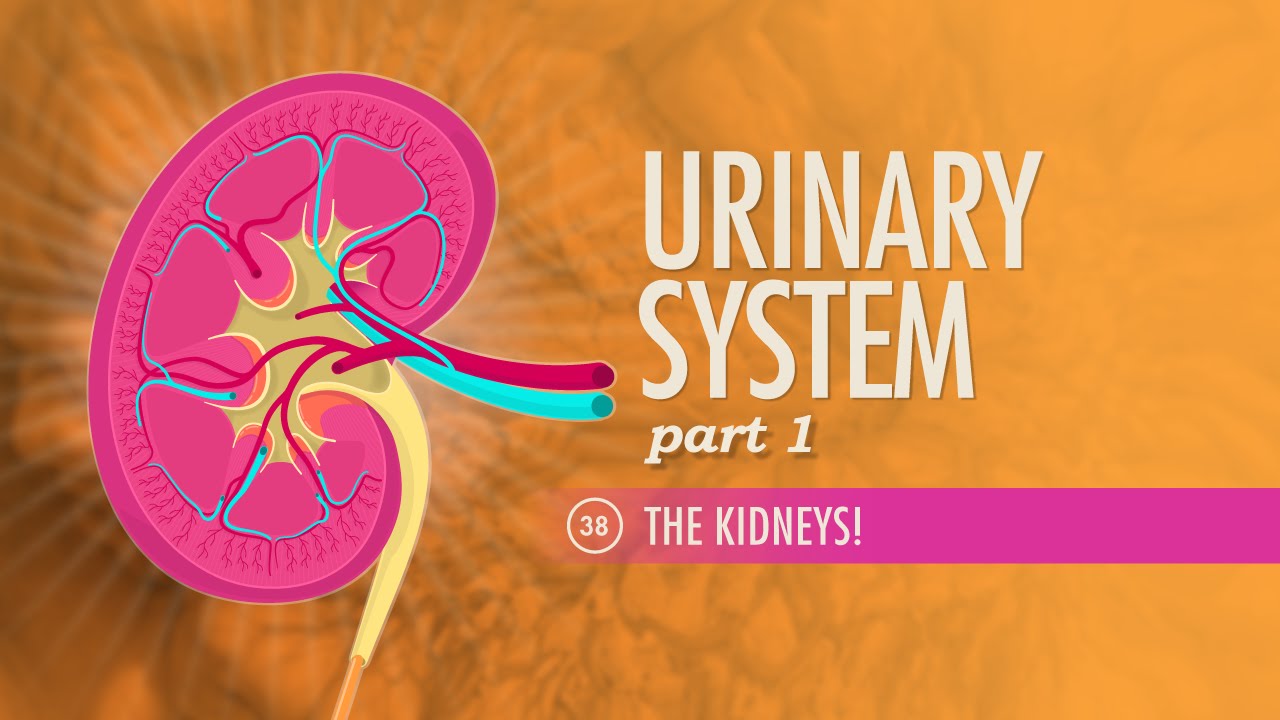
Even though you probably don't choose to spend a lot of time thinking about it, your pee is kind of a big deal. Today we're talking about the anatomy of your urinary system, and how your kidneys filter metabolic waste and balance salt and water concentrations in the blood. We'll cover how nephrons use glomerular filtration, tubular reabsorption, and tubular secretion to reabsorb water and nutrients back into the blood, and make urine with the leftovers.
Pssst... we made flashcards to help you review the content in this episode! Find them on the free Crash Course App!
Download it here for Apple Devices: https://apple.co/3d4eyZo
Download it here for Android Devices: https://bit.ly/2SrDulJ
Chapters:
Introduction: Urinary System 00:00
What Do Kidneys Do? 1:25
Urinary System Structure 3:02
Nephrons 4:13
Glomerular Filtration 4:37
Tubular Reabsorption 5:14
Tubular Secretion 8:17
Urine 8:40
Review 9:10
***
Crash Course is on Patreon! You can support us directly by signing up at http://www.patreon.com/crashcourse
Thanks to the following Patrons for their generous monthly contributions that help keep Crash Course free for everyone forever:
Fatima Iqbal, Penelope Flagg, Eugenia Karlson, Alex S, Jirat, Tim Curwick, Christy Huddleston, Eric Kitchen, Moritz Schmidt, Today I Found Out, Avi Yashchin, Chris Peters, Eric Knight, Jacob Ash, Simun Niclasen, Jan Schmid, Elliot Beter, Sandra Aft, SR Foxley, Ian Dundore, Daniel Baulig, Jason A Saslow, Robert Kunz, Jessica Wode, Steve Marshall, Anna-Ester Volozh, Christian, Caleb Weeks, Jeffrey Thompson, James Craver, and Markus Persson
--
Want to find Crash Course elsewhere on the internet?
Facebook - http://www.facebook.com/YouTubeCrashCourse
Twitter - http://www.twitter.com/TheCrashCourse
Tumblr - http://thecrashcourse.tumblr.com
Support Crash Course on Patreon: http://patreon.com/crashcourse
CC Kids: http://www.youtube.com/crashcoursekids