Top videos
Metabolism is a complex process that has a lot more going on than personal trainers and commercials might have you believe. Today we are exploring some of its key parts, including vital nutrients -- such as water, vitamins, minerals, carbs, fats, and proteins -- as well as how anabolic reactions build structures and require energy, while catabolic reactions tear things apart and release energy.
Pssst... we made flashcards to help you review the content in this episode! Find them on the free Crash Course App!
Download it here for Apple Devices: https://apple.co/3d4eyZo
Download it here for Android Devices: https://bit.ly/2SrDulJ
--
Chapters:
Introduction: Metabolism 00:00
Metabolism, Anabolism, & Catabolism 2:30
Essential Nutrients: Water, Vitamins, Minerals 3:47
Carbohydrates 4:44
Lipids 5:53
Proteins 7:15
Review 9:22
Credits 9:57
***
Crash Course is on Patreon! You can support us directly by signing up at http://www.patreon.com/crashcourse
Thanks to the following Patrons for their generous monthly contributions that help keep Crash Course free for everyone forever:
Mark , Elliot Beter, Moritz Schmidt, Jeffrey Thompson, Ian Dundore, Jacob Ash, Jessica Wode, Today I Found Out, Christy Huddleston, James Craver, Chris Peters, SR Foxley, Steve Marshall, Simun Niclasen, Eric Kitchen, Robert Kunz, Avi Yashchin, Jason A Saslow, Jan Schmid, Daniel Baulig, Christian , Anna-Ester Volozh
--
Want to find Crash Course elsewhere on the internet?
Facebook - http://www.facebook.com/YouTubeCrashCourse
Twitter - http://www.twitter.com/TheCrashCourse
Tumblr - http://thecrashcourse.tumblr.com
Support Crash Course on Patreon: http://patreon.com/crashcourse
CC Kids: http://www.youtube.com/crashcoursekids

In English, we have 5 (well, sometimes 6) vowel letters, but way more vowel sounds. That’s where the IPA can help us! In this episode of Crash Course Linguistics, we’ll learn about vowels, those sounds you can sing with your mouth open, and how we can represent them clearly using the IPA.
Want even more linguistics? Check out the Lingthusiasm podcast, hosted by the writers of Crash Course Linguistics: https://lingthusiasm.com/
***
Watch our videos and review your learning with the Crash Course App!
Download here for Apple Devices: https://apple.co/3d4eyZo
Download here for Android Devices: https://bit.ly/2SrDulJ
Crash Course is on Patreon! You can support us directly by signing up at http://www.patreon.com/crashcourse
Thanks to the following patrons for their generous monthly contributions that help keep Crash Course free for everyone forever:
Vincent LaBarca, Bjartur Thorlacius, Scott Harrison, Alexander Thomson, Mark & Susan Billian, Junrong Eric Zhu, Alan Bridgeman, Jennifer Smith, Matt Curls, Tim Kwist, Jonathan Zbikowski, Jennifer Killen, Sarah & Nathan Catchings, Brandon Westmoreland, team dorsey, Trevin Beattie, Yasenia Cruz, Eric Koslow, Indika Siriwardena, Khaled El Shalakany, Shawn Arnold, Siobhán, Ken Penttinen, Nathan Taylor, William McGraw, Andrei Krishkevich, Sam Ferguson, Jirat, Brian Thomas Gossett, SR Foxley, Ian Dundore, Jason A Saslow, Jessica Wode, Caleb Weeks, Mark, Patty Laqua, Stephen Saar, John Lee, Eric Prestemon
__
Want to find Crash Course elsewhere on the internet?
Facebook - http://www.facebook.com/YouTubeCrashCourse
Twitter - http://www.twitter.com/TheCrashCourse
Tumblr - http://thecrashcourse.tumblr.com
Support Crash Course on Patreon: http://patreon.com/crashcourse
CC Kids: http://www.youtube.com/crashcoursekids
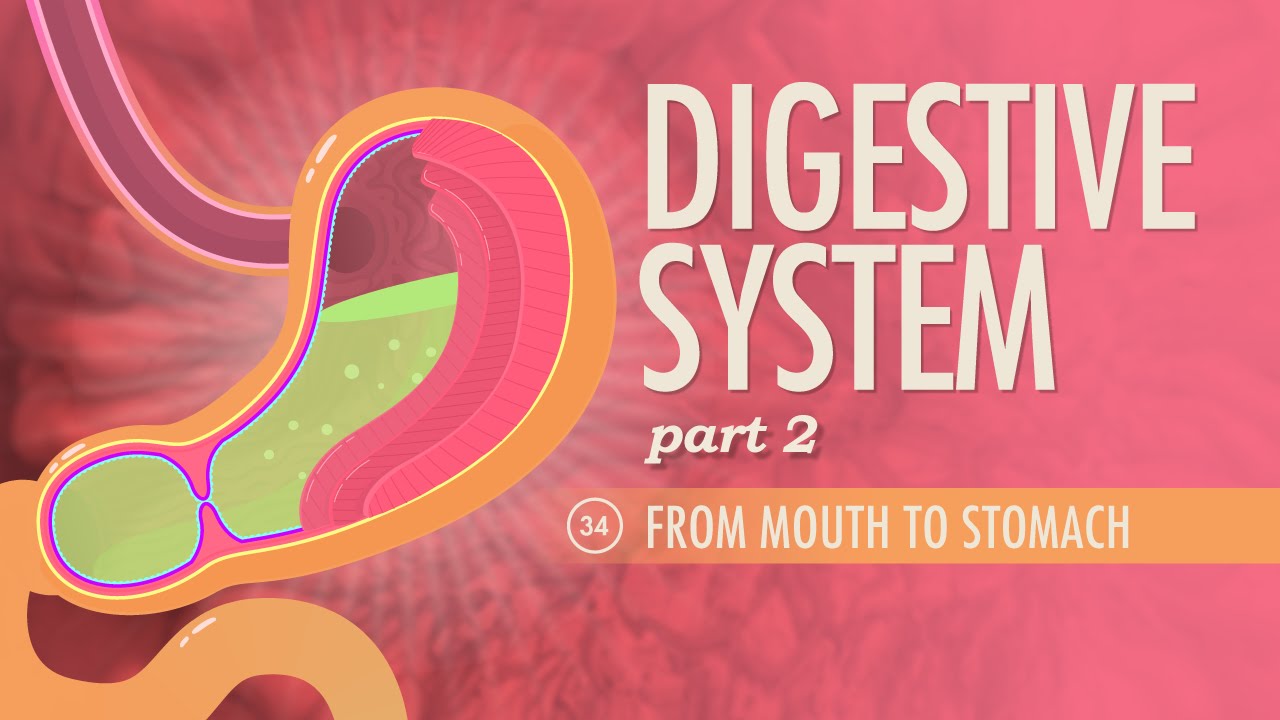
Nearly 200 years ago, Alexis St. Martin was shot in the stomach. He was saved by local army doctor William Beaumont but had to live out his remaining years with a gaping hole in the stomach -- allowing Beaumont to learn a lot about how human digestion works. So today we're going to walk you through that process. We'll cover how mechanical and chemical digestion starts in the mouth and continues in the stomach, where it’s pummeled by acids and enzymes and turned into chyme. We will also go over the stomach’s cephalic, gastric, and intestinal phases of digestive regulation.
Pssst... we made flashcards to help you review the content in this episode! Find them on the free Crash Course App!
Download it here for Apple Devices: https://apple.co/3d4eyZo
Download it here for Android Devices: https://bit.ly/2SrDulJ
Chapters:
Introduction: Alexis St. Martin's Stomach Hole 00:00
Digestion Starts in the Mouth 2:45
The Stomach 4:37
Stomach Acid 5:38
Phases of Digestive Regulation: Cephalic, Gastric, and Intestinal 7:17
The Mind-Stomach Connection 8:55
Review 9:54
Credits 10:29
***
Crash Course is on Patreon! You can support us directly by signing up at http://www.patreon.com/crashcourse
Thanks to the following Patrons for their generous monthly contributions that help keep Crash Course free for everyone forever:
Mark , Elliot Beter, Moritz Schmidt, Jeffrey Thompson, Ian Dundore, Jacob Ash, Jessica Wode, Today I Found Out, Christy Huddleston, James Craver, Chris Peters, SR Foxley, Steve Marshall, Simun Niclasen, Eric Kitchen, Robert Kunz, Avi Yashchin, Jason A Saslow, Jan Schmid, Daniel Baulig, Christian , Anna-Ester Volozh
--
Want to find Crash Course elsewhere on the internet?
Facebook - http://www.facebook.com/YouTubeCrashCourse
Twitter - http://www.twitter.com/TheCrashCourse
Tumblr - http://thecrashcourse.tumblr.com
Support Crash Course on Patreon: http://patreon.com/crashcourse
CC Kids: http://www.youtube.com/crashcoursekids

This week Craig Benzine talks about how the President gets things done. Filling the role of the Executive Branch is a pretty big job - much too big for just one person. It's so big that the President employs an entire federal bureaucracy! Today, we’re just going to focus on those closest to the President, like the Vice President, the Cabinet, and the Executive Office of the President. We’ll figure out which strategy is most useful in helping the President make things happen and we’ll discuss the controversy around the President’s gradual increase in power. Oh, and as many of you noticed - last episode eagle got off too easy. Let’s see if we can make it up to you.
Support is provided by Voqal: http://www.voqal.org
Chapters:
Introduction: Governing 00:00
Who makes up the Executive Branch? 0:36
Who makes up the Executive Office of the President? 1:36
Independent agencies & government corporations 2:35
How the President can use party leadership to govern 3:57
How the President can use the media to shift public opinion 5:00
How the President can use administrative strategy to govern 5:29
Why Presidents rely on administrative strategies 7:19
Credits 8:50
Crash Course is on Patreon! You can support us directly by signing up at http://www.patreon.com/crashcourse
Want to find Crash Course elsewhere on the internet?
Facebook - http://www.facebook.com/YouTubeCrashCourse
Twitter - http://www.twitter.com/TheCrashCourse
Instagram - https://www.instagram.com/thecrashcourse/
CC Kids: http://www.youtube.com/crashcoursekids

In this episode, Hank goes over Reversible Reactions, the water dissociation constant, what pH and pOH actually mean, Acids, Bases, and Neutral Substances as well as the not-so-terrifying Logarithms, strong acids, weak acids, and how to calculate pH and pOH. Oh, and litmus paper!
Pssst... we made flashcards to help you review the content in this episode! Find them on the free Crash Course App!
Download it here for Apple Devices: https://apple.co/3d4eyZo
Download it here for Android Devices: https://bit.ly/2SrDulJ
--
Table of Contents
Reversible Reactions 3:40
Water Dissociation Constant 5:00
Acids, Bases, & Neutral Substances 6:38
Strong and Weak Acids 7:43
Logarithms 1:46
Calculating pH and pOH 8:45
Cool Mathematical Connections 9:54
Crash Course is on Patreon! You can support us directly by signing up at http://www.patreon.com/crashcourse
Want to find Crash Course elsewhere on the internet?
Facebook - http://www.facebook.com/YouTubeCrashCourse
Twitter - http://www.twitter.com/TheCrashCourse
Instagram - https://www.instagram.com/thecrashcourse/
CC Kids: http://www.youtube.com/crashcoursekids
In which John Green teaches you about Sub-Saharan Africa! So, what exactly was going on there? It turns out, it was a lot of trade, converting to Islam, visits from Ibn Battuta, trade, beautiful women, trade, some impressive architecture, and several empires. John not only covers the West African Malian Empire, which is the one Mansa Musa ruled, but he also discusses the Ghanian Empire and even gets over to East Africa as well to discuss the trade-based city-states of Mogadishu, Mombasa, and Zanzibar. In addition to all this, John considers emigrating to Canada.
Chapters:
Introduction: African History 00:00
King Mansa Musa of Mali 1:22
Mali, the Berbers, and the Islamization of West Africa 3:23
An Open Letter to Ibn Battula 5:29
The End of the Malian Empire 6:17
The Swahili Civilizations of Eastern Africa 6:55
Credits 9:56
Crash Course is on Patreon! You can support us directly by signing up at http://www.patreon.com/crashcourse
Want to find Crash Course elsewhere on the internet?
Facebook - http://www.facebook.com/YouTubeCrashCourse
Twitter - http://www.twitter.com/TheCrashCourse
Instagram - https://www.instagram.com/thecrashcourse/
CC Kids: http://www.youtube.com/crashcoursekids

Crash Course Anatomy & Physiology continues the journey through sensory systems with a look at how your sense of hearing works. We follow sounds as they work their way into the ear where they are registered and transformed into action potentials. This mechanism not only helps you hear but also helps maintain your equilibrium.
Pssst... we made flashcards to help you review the content in this episode! Find them on the free Crash Course App!
Download it here for Apple Devices: https://apple.co/3d4eyZo
Download it here for Android Devices: https://bit.ly/2SrDulJ
Chapters:
Introduction 00:00
How Sound Works 1:17
External Ear Structure & Function 2:18
Middle Ear Structure & Function 3:06
Inner Ear Labyrinth 4:12
Cochlea: Basilar Membrane 5:00
Cochlea: Organ of Corti 6:33
Equilibrium: Vestibular Apparatus 7:34
What Causes Motion Sickness? 9:04
Review 9:39
Credits 10:13
***
Crash Course is now on Patreon! You can support us directly by signing up at http://www.patreon.com/crashcourse
Thanks to the following Patrons for their generous monthly contributions that help keep Crash Course free for everyone forever:
Mark Brouwer, Jan Schmid, Steve MarshallAnna-Ester Volozh, Sandra Aft, Brad Wardell, Christian Ludvigsen, Robert Kunz, Jason, A Saslow, Jacob Ash, Jeffrey Thompson, Jessica Simmons, James Craver, Simun Niclasen, SR Foxley, Roger C. Rocha, Nevin, Spoljaric, Eric Knight, Elliot Beter, Jessica Wode, Belinda Pearson, Caroline S., Ariela Karp and Gavi Lazan, Elizabeth Gregory, Amelia Gorlick, Andrea Black, Bill Wolf, Patrick Audley, Caitrin McCullough, Brandi Gates
--
Crash Course is on Patreon! You can support us directly by signing up at http://www.patreon.com/crashcourse
Want to find Crash Course elsewhere on the internet?
Facebook - http://www.facebook.com/YouTubeCrashCourse
Twitter - http://www.twitter.com/TheCrashCourse
Instagram - https://www.instagram.com/thecrashcourse/
CC Kids: http://www.youtube.com/crashcoursekids

In this episode of Crash Course Psychology, we get to meet the brain. Hank talks us through the Central Nervous System, the ancestral structures of the brain, the limbic system, and new structures of the brain. Plus, what does Phineas Gage have to do with all of this?
Want more videos about psychology? Check out our sister channel SciShow Psych at https://www.youtube.com/scishowpsych!
--
Chapters:
Introduction: Phrenology 00:00
Localized Parts of the Brain Control Different Functions 1:01
Basics of the Central Nervous System 2:15
The Curious Case of Phineas Gage 2:50
Brain Structures 5:15
Ancestral Structures of the Brain 5:37
"Old Brain" - Brain Stem, Medulla, Pons, Thalamus, Reticular Formation, Cerebellum 6:17
Limbic System - Amygdala, Hypothalamus, Hippocampus, Pituitary Gland 7:31
Gray Matter & Brain Hemispheres 8:32
Cerebral Cortex 9:31
Frontal, Parietal, Occipital, and Temporal Lobes 10:06
Specialized Regions: Motor Cortex, Somatosensory Cortex, & Association Areas 10:32
Review & Credits 11:39
--
Crash Course is on Patreon! You can support us directly by signing up at http://www.patreon.com/crashcourse
Want to find Crash Course elsewhere on the internet?
Facebook - http://www.facebook.com/YouTubeCrashCourse
Twitter - http://www.twitter.com/TheCrashCourse
Instagram - https://www.instagram.com/thecrashcourse/
CC Kids: http://www.youtube.com/crashcoursekids

We’re continuing our look at engineering materials with third main type of material that you’ll encounter as an engineer: polymers. They’re made of long, repeating chains of smaller molecules known as monomers and today we’ll explore their strange history of polymers and the things that contributed to how we use them today.
Crash Course Engineering is produced in association with PBS Digital Studios: https://www.youtube.com/playli....st?list=PL1mtdjDVOoO
Check out Hot Mess: https://www.youtube.com/channe....l/UCsaEBhRsI6tmmz12f
***
RESOURCES:
http://www.slate.com/articles/....news_and_politics/ex
https://www.britannica.com/science/polymer
http://www.pslc.ws/macrog/kidsmac/basics.htm
https://www.livescience.com/60682-polymers.html
https://www.britannica.com/science/copolymer
https://www.britannica.com/science/elastomer
https://www.cmu.edu/gelfand/ed....ucation/k12-teachers
http://pslc.ws/macrog/kidsmac/xlink.htm
https://www.britannica.com/tec....hnology/vulcanizatio
https://news.nationalgeographi....c.com/news/2010/06/1
https://www.britannica.com/sci....ence/polyvinyl-aceta
https://sciencebob.com/make-your-own-bouncy-ball/
https://www.smithsonianmag.com..../smart-news/once-upo
https://www.britannica.com/bio....graphy/Hermann-Staud
https://www.theatlantic.com/te....chnology/archive/201
https://www.britannica.com/sci....ence/polyethylene-te
https://physics.aps.org/articles/v11/29
***
Crash Course is on Patreon! You can support us directly by signing up at http://www.patreon.com/crashcourse
Thanks to the following Patrons for their generous monthly contributions that help keep Crash Course free for everyone forever:
Mark Brouwer, Kenneth F Penttinen, Trevin Beattie, Satya Ridhima Parvathaneni, Erika & Alexa Saur, Glenn Elliott, Justin Zingsheim, Jessica Wode, Eric Prestemon, Kathrin Benoit, Tom Trval, Jason Saslow, Nathan Taylor, Brian Thomas Gossett, Khaled El Shalakany, Indika Siriwardena, SR Foxley, Sam Ferguson, Yasenia Cruz, Eric Koslow, Caleb Weeks, D.A. Noe, Shawn Arnold, Malcolm Callis, Advait Shinde, William McGraw, Andrei Krishkevich, Rachel Bright, Mayumi Maeda, Kathy & Tim Philip, Jirat, Ian Dundore
--
Want to find Crash Course elsewhere on the internet?
Facebook - http://www.facebook.com/YouTubeCrashCourse
Twitter - http://www.twitter.com/TheCrashCourse
Tumblr - http://thecrashcourse.tumblr.com
Support Crash Course on Patreon: http://patreon.com/crashcourse
CC Kids: http://www.youtube.com/crashcoursekids

Well, it wouldn't be too long after we started developing Ecology that we would try to control the environment. In some ways this was helpful and likely prevented a lot of people from starving. But, there have been a few downsides.
***
Crash Course is on Patreon! You can support us directly by signing up at http://www.patreon.com/crashcourse
Thanks to the following patrons for their generous monthly contributions that help keep Crash Course free for everyone forever:
Eric Prestemon, Sam Buck, Mark Brouwer, Bob Doye, Jennifer Killen, Naman Goel, Nathan Catchings, Brandon Westmoreland, dorsey, Indika Siriwardena, Kenneth F Penttinen, Trevin Beattie, Erika & Alexa Saur, Glenn Elliott, Justin Zingsheim, Jessica Wode, Tom Trval, Jason Saslow, Nathan Taylor, Brian Thomas Gossett, Khaled El Shalakany, SR Foxley, Sam Ferguson, Yasenia Cruz, Eric Koslow, Caleb Weeks, Tim Curwick, D.A. Noe, Shawn Arnold, Malcolm Callis, William McGraw, Andrei Krishkevich, Rachel Bright, Jirat, Ian Dundore
--
Want to find Crash Course elsewhere on the internet?
Facebook - http://www.facebook.com/YouTubeCrashCourse
Twitter - http://www.twitter.com/TheCrashCourse
Tumblr - http://thecrashcourse.tumblr.com
Support Crash Course on Patreon: http://patreon.com/crashcourse
CC Kids: http://www.youtube.com/crashcoursekids
In which John Green teaches you about the Little Ice Age. The Little Ice Age was a period of global cooling that occurred from the 13th to the 19th centuries. This cooling was likely caused by a number of factors, including unusual solar activity and volcanic eruptions. The Little Ice Age greatly impacted human social orders, especially during the 17th century. When the climate changed, and the weather became unpredictable, the world changed profoundly. Poor harvests led to hunger, which led to even less productivity, which even resulted in violent upheaval in a lot of places. All this from a little change in the temperature? Definitely.
Reference:
Global Crisis by Geoffrey Parker: https://bit.ly/3M99AvQ
Crash Course is on Patreon! You can support us directly by signing up at http://www.patreon.com/crashcourse
Want to find Crash Course elsewhere on the internet?
Facebook - http://www.facebook.com/YouTubeCrashCourse
Twitter - http://www.twitter.com/TheCrashCourse
Instagram - https://www.instagram.com/thecrashcourse/
CC Kids: http://www.youtube.com/crashcoursekids

Hank brings us the story of the electron and describes how reality is a kind of music, discussing electron shells and orbitals, electron configurations, ionization and electron affinities, and how all these things can be understood via the periodic table.
Watch this video in Spanish on our Crash Course en Español channel! https://youtu.be/N5apS0tE67c
Pssst... we made flashcards to help you review the content in this episode! Find them on the free Crash Course App!
Download it here for Apple Devices: https://apple.co/3d4eyZo
Download it here for Android Devices: https://bit.ly/2SrDulJ
Table of Contents
Snobby Scientists 00:43
Great Dane/Bohr Model 01:57
Electrons as Music 04:13
Electron Shells and Orbitals 04:44
Electron Configurations 05:54
Ionization and Electron Affinities 08:17
Periodic Table 10:18
Crash Course is on Patreon! You can support us directly by signing up at http://www.patreon.com/crashcourse
Want to find Crash Course elsewhere on the internet?
Facebook - http://www.facebook.com/YouTubeCrashCourse
Twitter - http://www.twitter.com/TheCrashCourse
Instagram - https://www.instagram.com/thecrashcourse/
CC Kids: http://www.youtube.com/crashcoursekids
In which Hank does some push-ups for science and describes the "economy" of cellular respiration and the various processes whereby our bodies create energy in the form of ATP.
Special thanks go to Stafford Fitness (www.staffordfitness.net) for allowing us to shoot the gym scenes in their facilities.
This video uses sounds from Freesound.org
Table of Contents:
1) Cellular Respiration 01:00
2) Adenosine Triphosphate 01:29
3) Glycolysis 4:13
A) Pyruvate Molecules 5:00
B) Anaerobic Respiration/Fermentation 5:33
C) Aerobic Respiration 6:45
4) Krebs Cycle 7:06
A) Acetyl COA 7:38
B) Oxaloacetic Acid 8:21
C) Biolography: Hans Krebs 8:37
D) NAD/FAD 9:48
5) Electron Transport Chain 10:55
6) Check the Math 12:33
Crash Course is on Patreon! You can support us directly by signing up at http://www.patreon.com/crashcourse
Want to find Crash Course elsewhere on the internet?
Facebook - http://www.facebook.com/YouTubeCrashCourse
Twitter - http://www.twitter.com/TheCrashCourse
Instagram - https://www.instagram.com/thecrashcourse/
CC Kids: http://www.youtube.com/crashcoursekids
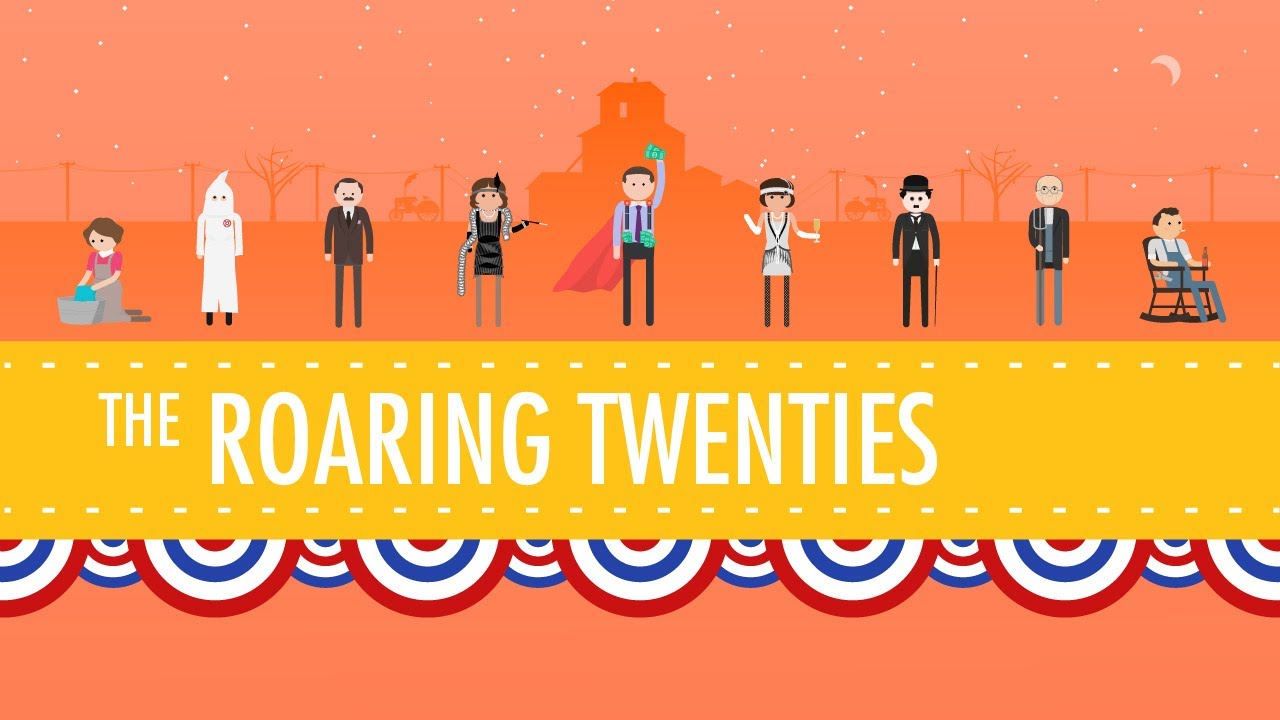
In which John Green teaches you about the United States in the 1920s. They were known as the roaring 20s, but not because there were lions running around everywhere. In the 1920s, America's economy was booming, and all kinds of social changes were in progress. Hollywood, flappers, jazz, there was all kinds of stuff going on in the 20s. But as usual with Crash Course, things were about to take a turn for the worse. John will teach you about the Charleston, the many Republican presidents of the 1920s, laissez-faire capitalism, jazz, consumer credit, the resurgent Klan, and all kinds of other stuff.
Hey teachers and students - Check out CommonLit's free collection of reading passages and curriculum resources to learn more about the events of this episode. The Roaring Twenties was characterized by great highs: https://www.commonlit.org/text....s/the-roaring-twenti
However, the Roaring Twenties ended with the country's most tragic low, the Great Depression: https://www.commonlit.org/text....s/the-great-depressi
Chapters:
Introduction: The 1920s 00:00
The Roaring 20's 0:46
Laissez-Faire Capitalism 1:14
Warren G. Harding's Corrupt Administration 1:55
Automobiles & Manufacturing 2:24
Leisure & Pop Culture 3:29
The Birth of the American Film Industry 3:57
Consumer Debt and the "American Standard of Living" 4:23
Contemporary Celebrity Culture 4:44
Mystery Document 5:33
Flappers & Women's Liberation 6:24
Wealth Disparities in the 1920s 7:12
The Supreme Court's Juris Prudence of Civil Liberties 8:50
Hyper-Patriotism and White Supremacy 9:38
Immigration Restriction Laws 10:15
The Scopes Trial & Teaching Evolution 11:13
The Legacy of the 1920s 12:04
Credits 12:36
Crash Course is on Patreon! You can support us directly by signing up at http://www.patreon.com/crashcourse
Want to find Crash Course elsewhere on the internet?
Facebook - http://www.facebook.com/YouTubeCrashCourse
Twitter - http://www.twitter.com/TheCrashCourse
Instagram - https://www.instagram.com/thecrashcourse/
CC Kids: http://www.youtube.com/crashcoursekids
In the aftermath of the revolutions and upheaval in 18th and early 19th century Europe, there was a hunger for reform across the continent. Reformers like Robert Owen, Charles Fourier, and Auguste Comte proposed radical new ideas, and at the same time, regular people began to stand up and ask for greater equality, and a louder voice in how they were governed. Results were mixed, but a lot of the ideas that emerged during this time are still echoing in our world today.
Sources
-Hosking, Geoffrey. Russia: People and Empire. Cambridge: Harvard University Press, 1997.
-Hunt, Lynn et al. The Making of the West: Peoples and Cultures. 6th ed. Boston: Bedford St. Martin’s, 2019.
-Judson, Pieter M. The Hapsburg Empire: A New History. Cambridge: Harvard University Press,
-Kent, Susan Kingsley. A New History of Britain: Four Nations and an Empire. New York: Oxford University Press, 2017.
-Sperber, Jonathan. Revolutionary Europe 1780-1850. 2nd ed. London: Routledge, 2017.
Crash Course is on Patreon! You can support us directly by signing up at http://www.patreon.com/crashcourse
Thanks to the following patrons for their generous monthly contributions that help keep Crash Course free for everyone forever:
Eric Prestemon, Sam Buck, Mark Brouwer, Indika Siriwardena, Avi Yashchin, Timothy J Kwist, Brian Thomas Gossett, Haixiang N/A Liu, Jonathan Zbikowski, Siobhan Sabino, Zach Van Stanley, Jennifer Killen, Nathan Catchings, Brandon Westmoreland, dorsey, Kenneth F Penttinen, Trevin Beattie, Erika & Alexa Saur, Justin Zingsheim, Jessica Wode, Tom Trval, Jason Saslow, Nathan Taylor, Khaled El Shalakany, SR Foxley, Sam Ferguson, Yasenia Cruz, Eric Koslow, Tim Curwick, David Noe, Shawn Arnold, William McGraw, Andrei Krishkevich, Rachel Bright, Jirat, Ian Dundore
--
Want to find Crash Course elsewhere on the internet?
Facebook - http://www.facebook.com/YouTubeCrashCourse
Twitter - http://www.twitter.com/TheCrashCourse
Tumblr - http://thecrashcourse.tumblr.com
Support Crash Course on Patreon: http://patreon.com/crashcourse
CC Kids: http://www.youtube.com/crashcoursekids
#crashcourse #history #europeanhistory
Hank explains the extremely complex series of reactions whereby plants feed themselves on sunlight, carbon dioxide and water, and also create some by products we're pretty fond of as well.
This video uses sounds from Freesound.org.
Citations:
http://biology.about.com/od/pl....antbiology/a/aa05060
http://www.rsc.org/Education/T....eachers/Resources/cf
http://www.ncbi.nlm.nih.gov/books/NBK21598/
http://www.life.illinois.edu/g....ovindjee/paper/gov.h
http://scienceaid.co.uk/biolog....y/biochemistry/photo
http://www.biology-innovation.....co.uk/pages/plant-bi
http://chemistry.about.com/od/....lecturenotesl3/a/pho
http://www.bio.umass.edu/biolo....gy/conn.river/calvin
http://www.talkorigins.org/faq....s/thermo/probability
Table of Contents:
1) Water 1:16
2) Carbon Dioxide 1:32
3) Sunlight/Photons 1:43
4) Chloroplasts 1:57
5) Light Reaction/Light-Dependent 2:42
a. Photosystem II 3:33
b. Cytochrome Complex 5:54
c. ATP Synthase 6:16
d. Photosystem I 7:06
6) Dark Reactions/Light-Independent 7:55
a. Phase 1 - Carbon Fixation 8:50
b. Phase 2 - Reduction 11:31
c. Phase 3 - Regeneration 12:02
Crash Course is on Patreon! You can support us directly by signing up at http://www.patreon.com/crashcourse
Want to find Crash Course elsewhere on the internet?
Facebook - http://www.facebook.com/YouTubeCrashCourse
Twitter - http://www.twitter.com/TheCrashCourse
Instagram - https://www.instagram.com/thecrashcourse/
CC Kids: http://www.youtube.com/crashcoursekids
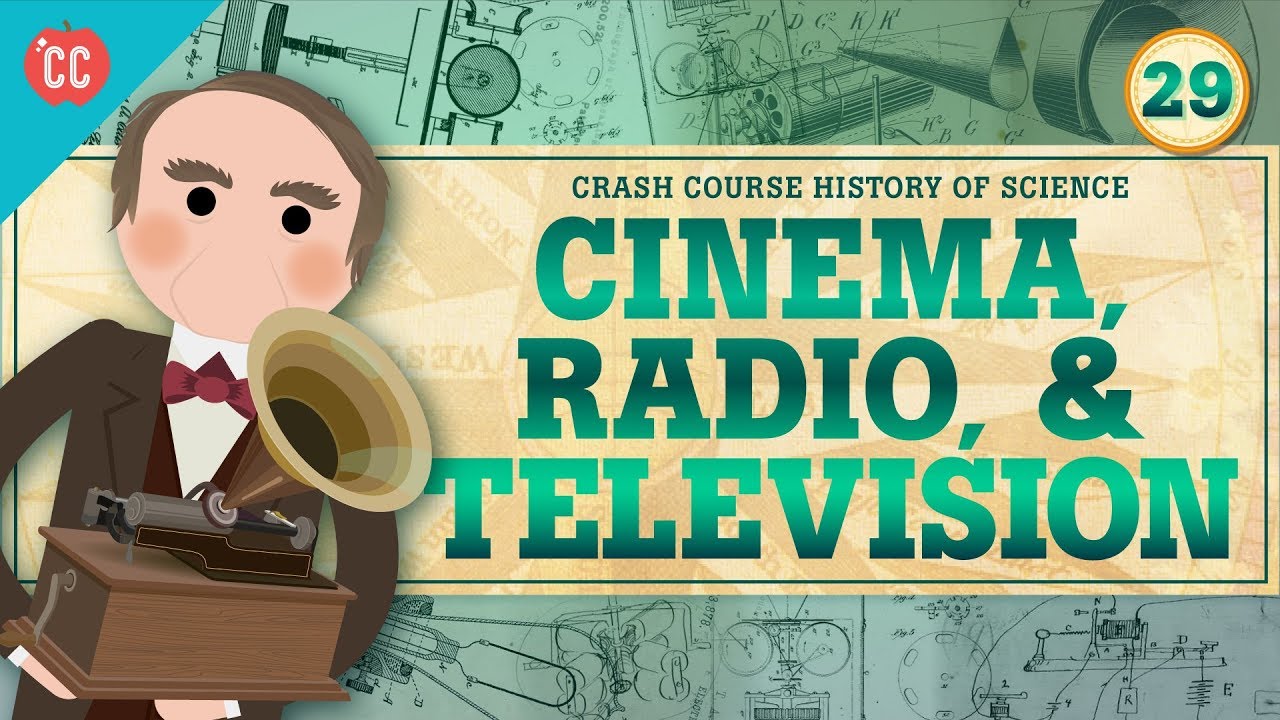
Radio, Cinema, and Television have been staples in news coverage, entertainment, and education for almost 100 years. But... where did they all come from? Who started what and when and why? In this episode, Hank Green talks to us about their birth and a dead elephant.
***
Crash Course is on Patreon! You can support us directly by signing up at http://www.patreon.com/crashcourse
Thanks to the following Patrons for their generous monthly contributions that help keep Crash Course free for everyone forever:
Mark Brouwer, Kenneth F Penttinen, Trevin Beattie, Satya Ridhima Parvathaneni, Erika & Alexa Saur, Glenn Elliott, Justin Zingsheim, Jessica Wode, Eric Prestemon, Kathrin Benoit, Tom Trval, Jason Saslow, Nathan Taylor, Brian Thomas Gossett, Khaled El Shalakany, Indika Siriwardena, SR Foxley, Sam Ferguson, Yasenia Cruz, Eric Koslow, Caleb Weeks, D.A. Noe, Shawn Arnold, Malcolm Callis, Advait Shinde, William McGraw, Andrei Krishkevich, Rachel Bright, Mayumi Maeda, Kathy & Tim Philip, Jirat, Ian Dundore
--
Want to find Crash Course elsewhere on the internet?
Facebook - http://www.facebook.com/YouTubeCrashCourse
Twitter - http://www.twitter.com/TheCrashCourse
Tumblr - http://thecrashcourse.tumblr.com
Support Crash Course on Patreon: http://patreon.com/crashcourse
CC Kids: http://www.youtube.com/crashcoursekids
Well, it wouldn't be too long after we started developing Ecology that we would try to control the environment. In some ways this was helpful and likely prevented a lot of people from starving. But, there have been a few downsides.
***
Crash Course is on Patreon! You can support us directly by signing up at http://www.patreon.com/crashcourse
Thanks to the following patrons for their generous monthly contributions that help keep Crash Course free for everyone forever:
Eric Prestemon, Sam Buck, Mark Brouwer, Bob Doye, Jennifer Killen, Naman Goel, Nathan Catchings, Brandon Westmoreland, dorsey, Indika Siriwardena, Kenneth F Penttinen, Trevin Beattie, Erika & Alexa Saur, Glenn Elliott, Justin Zingsheim, Jessica Wode, Tom Trval, Jason Saslow, Nathan Taylor, Brian Thomas Gossett, Khaled El Shalakany, SR Foxley, Sam Ferguson, Yasenia Cruz, Eric Koslow, Caleb Weeks, Tim Curwick, D.A. Noe, Shawn Arnold, Malcolm Callis, William McGraw, Andrei Krishkevich, Rachel Bright, Jirat, Ian Dundore
--
Want to find Crash Course elsewhere on the internet?
Facebook - http://www.facebook.com/YouTubeCrashCourse
Twitter - http://www.twitter.com/TheCrashCourse
Tumblr - http://thecrashcourse.tumblr.com
Support Crash Course on Patreon: http://patreon.com/crashcourse
CC Kids: http://www.youtube.com/crashcoursekids
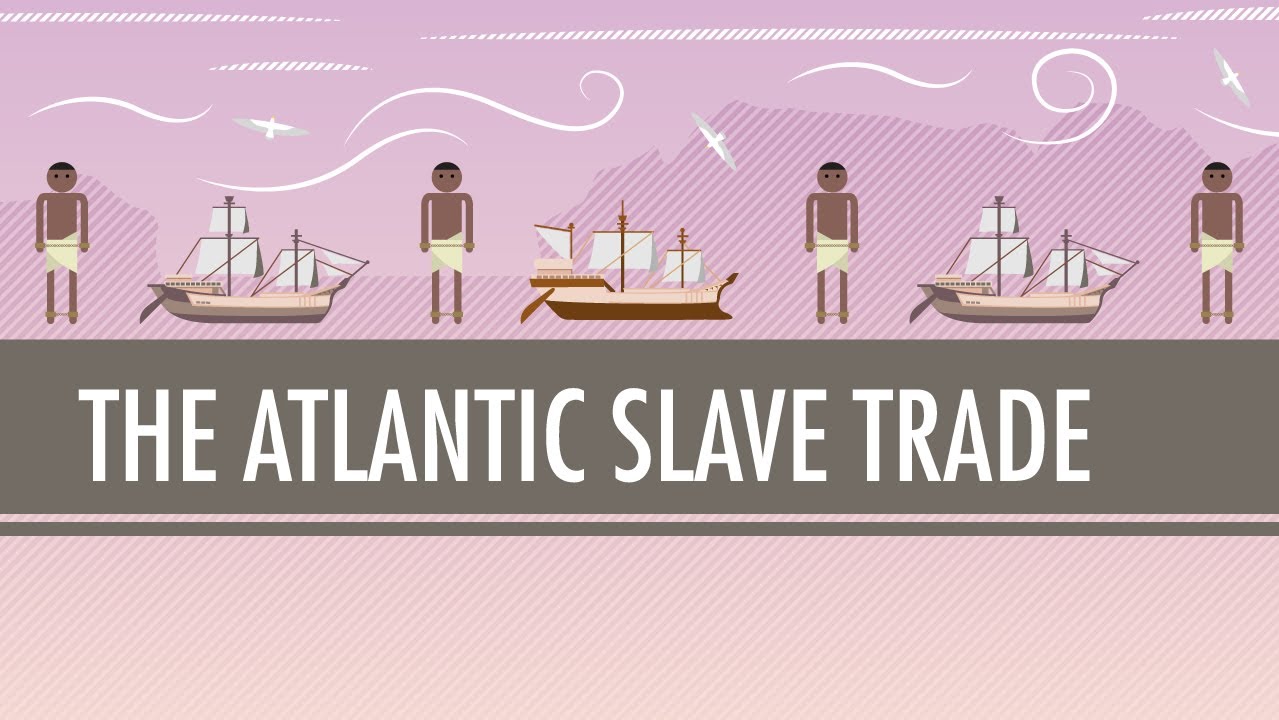
In which John Green teaches you about one of the least funny subjects in history: slavery. John investigates when and where slavery originated, how it changed over the centuries, and how Europeans and colonists in the Americas arrived at the idea that people could own other people based on skin color.
Slavery has existed as long as humans have had civilization, but the Atlantic Slave Trade was the height, or depth, of dehumanizing, brutal, chattel slavery. American slavery ended less than 150 years ago. In some parts of the world, it is still going on. So how do we reconcile that with modern life? In a desperate attempt at comic relief, Boba Fett makes an appearance.
Learn more about the Transatlantic Slave Trade in Episode #1 of Crash Course Black American History here: https://youtu.be/S72vvfBTQws
Chapters:
Introduction 00:00
The Atlantic Slave Trade 0:30
The History of European Slave Trade 1:12
How Africans Became Enslaved 1:54
Living Conditions of Enslaved People 2:55
An Open Letter to the Word 'Slave' 5:41
What is the Definition of Slavery? 6:45
Other Models of Slavery: Greek, Roman, Judeo-Christian, and Muslim 7:26
Credits 10:35
Resources:
Inhuman Bondage by David Brion Davis: https://bit.ly/3vdSdTX
Up From Slavery by Booker T Washington: https://bit.ly/3JJlxH4
Crash Course is on Patreon! You can support us directly by signing up at http://www.patreon.com/crashcourse
Want to find Crash Course elsewhere on the internet?
Facebook - http://www.facebook.com/YouTubeCrashCourse
Twitter - http://www.twitter.com/TheCrashCourse
Instagram - https://www.instagram.com/thecrashcourse/
CC Kids: http://www.youtube.com/crashcoursekids
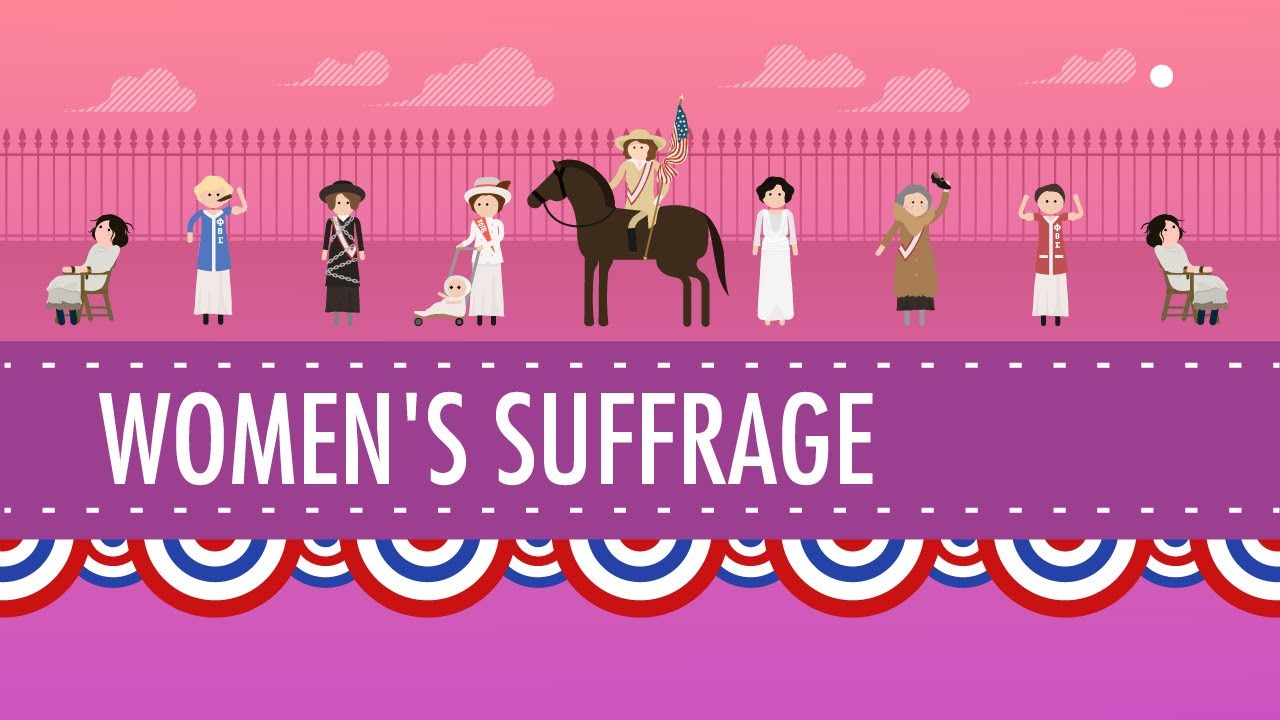
In which John Green teaches you about American women in the Progressive Era and, well, the progress they made. So the big deal is, of course, the right to vote women gained when the 19th amendment was passed and ratified. But women made a lot of other gains in the 30 years between 1890 and 1920. More women joined the workforce, they acquired lots of other legal rights related to property, and they also became key consumers in the industrial economy. Women also continued to play a vital role in reform movements. Sadly, they got Prohibition enacted in the US, but they did a lot of good stuff, too. The field of social work emerged as women like Jane Addams created settlement houses to assist immigrants in their integration into the United States. Women also began to work to make birth control widely available. You'll learn about famous reformers and activists like Alice Paul, Margaret Sanger, and Emma Goldman, among others.
Hey teachers and students - Check out CommonLit's free collection of reading passages and curriculum resources to learn more about the events of this episode. Suffragists faced a decades-long debate on women’s right to vote: https://www.commonlit.org/text....s/address-to-congres
While it was a hard fight to get the vote, women eventually received suffrage in 1920: https://www.commonlit.org/text....s/was-hard-fight-to-
Chapters:
Introduction: Women in the Progressive Era 00:00
The Women's Era 1:01
The Women's Christian Temperance Union 1:54
The Role of Women in Politics During the Progressive Era 2:52
National Consumers League 3:15
Women Working Outside the Home 4:08
Mystery Document 4:58
Birth Control 5:57
Why Access to Birth Control Matters 7:07
Jane Addams & The Settlement House Movement 7:47
Women and Electoral Politics 8:13
The 19th Amendment 8:42
The Suffrage Movement 9:03
The National Women's Party 9:44
The Equal Rights Amendment 11:03
The Legacy of the Suffragettes 12:13
Credits 13:00
Crash Course is on Patreon! You can support us directly by signing up at http://www.patreon.com/crashcourse
Want to find Crash Course elsewhere on the internet?
Facebook - http://www.facebook.com/YouTubeCrashCourse
Twitter - http://www.twitter.com/TheCrashCourse
Instagram - https://www.instagram.com/thecrashcourse/
CC Kids: http://www.youtube.com/crashcoursekids
Radio, Cinema, and Television have been staples in news coverage, entertainment, and education for almost 100 years. But... where did they all come from? Who started what and when and why? In this episode, Hank Green talks to us about their birth and a dead elephant.
***
Crash Course is on Patreon! You can support us directly by signing up at http://www.patreon.com/crashcourse
Thanks to the following Patrons for their generous monthly contributions that help keep Crash Course free for everyone forever:
Mark Brouwer, Kenneth F Penttinen, Trevin Beattie, Satya Ridhima Parvathaneni, Erika & Alexa Saur, Glenn Elliott, Justin Zingsheim, Jessica Wode, Eric Prestemon, Kathrin Benoit, Tom Trval, Jason Saslow, Nathan Taylor, Brian Thomas Gossett, Khaled El Shalakany, Indika Siriwardena, SR Foxley, Sam Ferguson, Yasenia Cruz, Eric Koslow, Caleb Weeks, D.A. Noe, Shawn Arnold, Malcolm Callis, Advait Shinde, William McGraw, Andrei Krishkevich, Rachel Bright, Mayumi Maeda, Kathy & Tim Philip, Jirat, Ian Dundore
--
Want to find Crash Course elsewhere on the internet?
Facebook - http://www.facebook.com/YouTubeCrashCourse
Twitter - http://www.twitter.com/TheCrashCourse
Tumblr - http://thecrashcourse.tumblr.com
Support Crash Course on Patreon: http://patreon.com/crashcourse
CC Kids: http://www.youtube.com/crashcoursekids
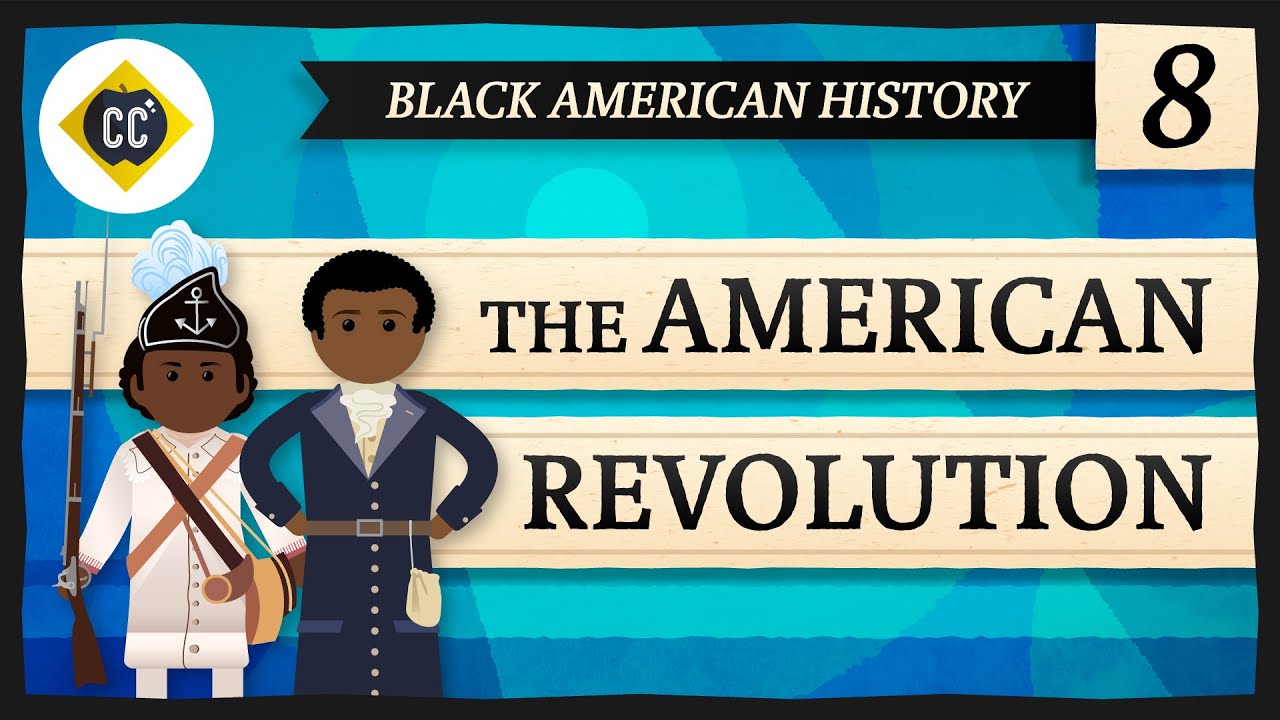
When we talk about the American Revolution and Revolutionary War, the discussion often involves lofty ideals like liberty, freedom, and justice. The Declaration of Independence even opens with the idea that "all men are created equal." But it turns out, the war wasn't being fought on behalf of "all men." The war was mainly about freedom for white colonists, and liberty, justice, and the pursuit of happiness didn't apply to the Black people living in the British colonies. During the war, Black people took up arms on both sides of the conflict, and today we're going to learn how and why they participated.
Clint's book, How the Word is Passed is available now! https://bookshop.org/a/3859/9780316492935
Sources and References
Sylvia R. Frey, Water From the Rock: Black Resistance in a Revolutionary Age (Princeton: Princeton University Press, 1991).
Woody Holton, Forced Founders: Indians, debtors, slaves, and the making of the American Revolution in Virginia (Chapel Hill: UNC Press, 1998).
Cassandra Pybus, Epic Journeys of Freedom: Runaway Slaves of the American Revolution and Their Global Quest for Liberty (Boston: Beacon Press, 2006).
Benjamin Quarles, The Negro in the American Revolution (Chapel Hill: University of North Carolina Press, 1961).
Watch our videos and review your learning with the Crash Course App!
Download here for Apple Devices: https://apple.co/3d4eyZo
Download here for Android Devices: https://bit.ly/2SrDulJ
Sources and References
-Sylvia R. Frey, Water From the Rock: Black Resistance in a Revolutionary Age (Princeton: Princeton University Press, 1991).
-Woody Holton, Forced Founders: Indians, debtors, slaves, and the making of the American Revolution in Virginia (Chapel Hill: UNC Press, 1998).
-Cassandra Pybus, Epic Journeys of Freedom: Runaway Slaves of the American Revolution and Their Global Quest for Liberty (Boston: Beacon Press, 2006).
-Benjamin Quarles, The Negro in the American Revolution (Chapel Hill: University of North Carolina Press, 1961).
Crash Course is on Patreon! You can support us directly by signing up at http://www.patreon.com/crashcourse
Thanks to the following patrons for their generous monthly contributions that help keep Crash Course free for everyone forever:
Michael M. Varughese, Ben Follows, Kyle & Katherine Callahan, Laurel A Stevens, Chris Routh, Evan Lawrence Henderson, Vincent, Emilee Murphy, Michael Wang, Jordan willis, Krystle Young, Michael Dowling, Alexis B, Rene Duedam, Burt Humburg, Aziz, Nick, DAVID MORTON HUDSON, Perry Joyce, Scott Harrison, Mark & Susan Billian, Junrong Eric Zhu, Alan Bridgeman, Rachel Creager, Jennifer Smith, Matt Curls, Tim Kwist, Jonathan Zbikowski, Jennifer Killen, Sarah & Nathan Catchings, Brandon Westmoreland, team dorsey, Trevin Beattie, Divonne Holmes à Court, Eric Koslow, Indika Siriwardena, Khaled El Shalakany, Jason Rostoker, Shawn Arnold, Siobhán, Ken Penttinen, Nathan Taylor, William McGraw, Andrei Krishkevich, ThatAmericanClare, Rizwan Kassim, Sam Ferguson, Alex Hackman, Eric Prestemon, Jirat, Katie Dean, TheDaemonCatJr, Wai Jack Sin, Ian Dundore, Matthew, Jason A Saslow, Justin, Jessica Wode, Mark, Caleb Weeks
__
Want to find Crash Course elsewhere on the internet?
Facebook - http://www.facebook.com/YouTubeCrashCourse
Twitter - http://www.twitter.com/TheCrashCourse
Tumblr - http://thecrashcourse.tumblr.com
Support Crash Course on Patreon: http://patreon.com/crashcourse
CC Kids: http://www.youtube.com/crashcoursekids
#crashcourse #blackhistory #americanrevolution
In which John Green teaches you about the Crusades embarked upon by European Christians in the 12th and 13th centuries. Our traditional perception of the Crusades as European Colonization thinly veiled in religion isn't quite right. John covers the First through the Fourth Crusades, telling you which were successful, which were well-intentioned yet ultimately destructive, and which were just plain crazy. Before you ask, no, he doesn't cover the Children's Crusade, in which children were provoked to gather for a Crusade, and then promptly sold into slavery by the organizers of said Crusade. While this story is charming, it turns out to be complete and utter hooey.
Chapters:
Introduction: The Crusades 00:00
What Prompted the Crusades? 0:44
The First Crusade 1:44
An Open Letter to Animal Crackers 2:45
What Motivated the Crusaders? 3:24
The Third Crusade 6:20
The Fourth Crusade 7:55
What Did The Crusades Accomplish? 9:50
Credits 10:50
Crash Course is on Patreon! You can support us directly by signing up at http://www.patreon.com/crashcourse
Want to find Crash Course elsewhere on the internet?
Facebook - http://www.facebook.com/YouTubeCrashCourse
Twitter - http://www.twitter.com/TheCrashCourse
Instagram - https://www.instagram.com/thecrashcourse/
CC Kids: http://www.youtube.com/crashcoursekids

In which John Green teaches you about the Mexican-American War in the late 1840s and the expansion of the United States into the western end of North America. In this episode of Crash Course, US territory finally reaches from the Atlantic coast to the Pacific Ocean. After Oregon was secured from the UK and the southwest was ceded by Mexico, that is. Famous Americans abound in this episode, including James K Polk (Young Hickory, Napoleon of the Stump), Martin Van Buren, Zachary Taylor, and Winfield Scott. You'll also learn about the California Gold Rush of 1848, and California's admission as a state, which necessitated the Compromise of 1850. Once more slavery is a crucial issue. Something is going to have to be done about slavery, I think. Maybe it will come to a head next week. Support CrashCourse on Patreon: https://www.patreon.com/crashcourse
Hey teachers and students - Check out CommonLit's free collection of reading passages and curriculum resources to learn more about the events of this episode. America’s Westward expansion was fueled by both Manifest Destiny and a desire to grow the nation and its resources — though at a cost: https://www.commonlit.org/texts/manifest-destiny
Chapters:
Introduction: Texas & California 00:00
Manifest Destiny 0:41
The Oregon Trail 1:21
Western Settlements 1:37
How Texas Became a State 2:02
Polk's Wars for Expansion 4:04
Critics of the Mexican-American War 4:51
The End of the Mexican-American War 5:32
The Know-Nothings 6:20
The California Gold Rush 7:26
Mystery Document 8:08
California & the Free Soil Party 9:21
California Statehood and the Compromise of 1850 10:25
The Problem with Manifest Destiny 11:40
Credits 12:14
Crash Course is on Patreon! You can support us directly by signing up at http://www.patreon.com/crashcourse
Want to find Crash Course elsewhere on the internet?
Facebook - http://www.facebook.com/YouTubeCrashCourse
Twitter - http://www.twitter.com/TheCrashCourse
Instagram - https://www.instagram.com/thecrashcourse/
CC Kids: http://www.youtube.com/crashcoursekids

So far, the rulers of Europe have been working to consolidate their power and expand their kingdoms, and this is it. The moment they've been working toward: Absolute Monarchy. We're going to learn about how kings and queens became absolute rulers in Europe, and where better to start than with Louis XIV of France, who is really the model for absolute rule.
Crash Course is on Patreon! You can support us directly by signing up at http://www.patreon.com/crashcourse
Thanks to the following patrons for their generous monthly contributions that help keep Crash Course free for everyone forever:
Eric Prestemon, Sam Buck, Mark Brouwer, Timothy J Kwist, Brian Thomas Gossett, HAIXIANG N/A LIU, Jonathan Zbikowski, Siobhan Sabino, Zach Van Stanley, Bob Doye, Jennifer Killen, Nathan Catchings, Brandon Westmoreland, dorsey, Indika Siriwardena, Kenneth F Penttinen, Trevin Beattie, Erika & Alexa Saur, Justin Zingsheim, Jessica Wode, Tom Trval, Jason Saslow, Nathan Taylor, Khaled El Shalakany, SR Foxley, Sam Ferguson, Yasenia Cruz, Eric Koslow, Caleb Weeks, DAVID NOE, Shawn Arnold, Malcolm Callis, William McGraw, Andrei Krishkevich, Rachel Bright, Jirat, Ian Dundore
--
Want to find Crash Course elsewhere on the internet?
Facebook - http://www.facebook.com/YouTubeCrashCourse
Twitter - http://www.twitter.com/TheCrashCourse
Tumblr - http://thecrashcourse.tumblr.com
Support Crash Course on Patreon: http://patreon.com/crashcourse
CC Kids: http://www.youtube.com/crashcoursekids
#CrashCourse #EuropeanHistory #history