热门视频

Refreshed with an understanding of the six simple machines; screw, wedge, pully, incline plane, wheel and axle, and lever, student groups receive materials and an allotted amount of time to act as mechanical engineers to design and create machines that can complete specified tasks. For the competition, they choose from pre-determined goal options such as: 1) dumping goldfish into a bowl, 2) popping a balloon, or 3) dropping mint candies into soda pop (creating a fizzy reaction). Students demonstrate their functioning contraptions to the class, earning points for using all six simple machines, successful transitions from one chain reaction to the next, and completion of the end goal.
View the full activity at TeachEngineering:
https://www.teachengineering.o....rg/activities/view/c
TeachEngineering has over 1,500 FREE lessons and activities. Visit https://www.teachengineering.org/ for more!
Music: Stand - Anno Domini Beats

Students conduct an experiment to determine the relationship between the speed of a wooden toy car at the bottom of an incline and the height at which it is released. They observe how the photogate-based speedometer instrument "clocks" the average speed of an object (the train). They gather data and create graphs plotting the measured speed against start height. After the experiment, as an optional extension activity, students design brakes to moderate the speed of the cart at the bottom of the hill to within a specified speed range.
View the full activity on TeachEngineering:
https://www.teachengineering.o....rg/activities/view/n
TeachEngineering has over 1,500 FREE lessons and activities. Visit https://www.teachengineering.org/ for more!
Music: Educated Man - Max McFerren

Students use their understanding of projectile physics and fluid dynamics to find the water pressure in water guns. By measuring the range of the water jets, they are able to calculate the theoretical pressure. Students create graphs to analyze how the predicted pressure relates to the number of times they pump the water gun before shooting.
View the full activity at TeachEngineering:
https://www.teachengineering.o....rg/activities/view/c
TeachEngineering has over 1,500 FREE lessons and activities. Visit http://www.TeachEngineering.org for more!
Music: New Land

Students explore the properties of composites using inexpensive materials and processing techniques. They create beams using Laffy Taffy and water, and a choice of various reinforcements (pasta, rice, candies) and fabricating temperatures. Student groups compete for the highest strength beam. They measure flexure strength with three-point bend tests and calculations. Results are compared and discussed to learn how different materials and reinforcement shapes affect material properties and performance.
View the full activity on TeachEngineering: https://www.teachengineering.o....rg/activities/view/u
TeachEngineering has over 1,500 FREE lessons and activities. Visit http://www.TeachEngineering.org for more!
Music: Straighty Baby - Audionautix
Straighty Baby by Audionautix is licensed under a Creative Commons Attribution license (https://creativecommons.org/licenses/by/4.0/)
Artist: http://audionautix.com/

Student teams creatively construct mobiles using hangers and assorted materials and objects while exploring the principles of balance and center of mass. They build complex, free-hanging structures by balancing pieces with different lengths, weights, shapes and sizes.
View the full activity at TeachEngineering:
https://www.teachengineering.o....rg/activities/view/m
TeachEngineering has over 1,500 FREE lessons and activities. Visit http://www.TeachEngineering.org for more!
Music: City of Jewels - Density & Time

Students use the engineering design process while learning about accessibility for people with physical disabilities in Egypt. Students are challenged to create a reusable prototype to help a wheelchair table tennis team pick up ping pong balls. Before building their prototypes, students research the trash and waste problem in Egypt, compiling a list of sustainable materials that can be used to build their devices. Students then individually brainstorm and plan at least two different devices before coming together in teams to develop one group prototype design. After building, testing, and improving their prototypes, student groups present their prototypes to the class.
View the full lesson on TeachEngineering:
https://www.teachengineering.o....rg/activities/view/u
TeachEngineering has over 1,900 FREE lessons and activities. Visit http://www.TeachEngineering.org for more!
Daily Beetle - Kevin MacLeod

Students are introduced to the concept and steps of the engineering design process and taught how to apply it. Students first receive some background information about biomedical engineering (aka bioengineering). Then they learn about material selection and material properties by using a provided guide. In small groups, students learn of their design challenge (improve a cast for a broken arm), brainstorm solutions, are given materials and create prototypes. To finish, teams communicate their design solutions through class poster presentations.
View the full activity on TeachEngineering:
https://www.teachengineering.o....rg/activities/view/b
TeachEngineering has over 1,500 FREE lessons and activities. Visit https://www.teachengineering.org/ for more!
Music: Dragonfly

Students are introduced to the differences between acids and bases and how to use indicators, such as pH paper and red cabbage juice, to distinguish between them. They learn why it is important for engineers to understand acids and bases.
View the full activity on TeachEngineering: https://www.teachengineering.o....rg/activities/view/c
TeachEngineering has over 1,500 FREE lessons and activities. Visit http://www.TeachEngineering.org for more!
Music: Bubblegum Ballgame - JR Tundra

In this activity, students gain first-hand experience with the mechanical advantage of pulleys. They set up different pulley systems, compare the theoretical and actual mechanical advantage of each and develop an understanding of error in experiments.
View the full lesson on TeachEngineering:
https://www.teachengineering.o....rg/activities/view/c
TeachEngineering has over 1,500 FREE lessons and activities. Visit https://www.teachengineering.org/ for more
Music - EDM Detection Mode By Kevin MacLeod
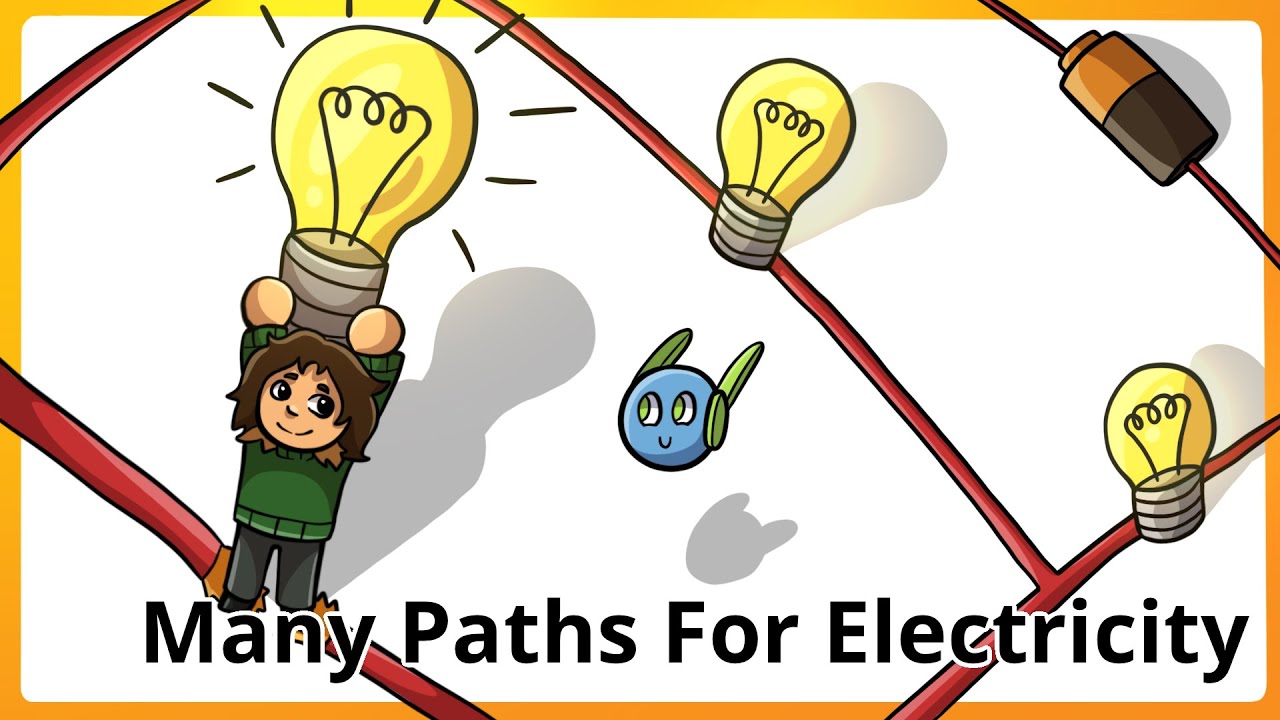
Students explore the composition and practical application of parallel circuitry, compared to series circuitry. Students design and build parallel circuits and investigate their characteristics, and apply Ohm's law.
View the full lesson on TeachEngineering:
https://www.teachengineering.o....rg/lessons/view/cub_
TeachEngineering has over 1,900 FREE lessons and activities. Visit http://www.TeachEngineering.org for more!

With an introduction to the ideas of energy, students discuss specific energy types and practical energy sources. Associated hands-on activities help them identify energy types in their surroundings and enhance their understanding of the concept of energy.
View the full lesson on TeachEngineering:
https://www.teachengineering.o....rg/lessons/view/cub_
TeachEngineering has over 1,500 FREE lessons and activities. Visit https://www.teachengineering.org/ for more
Music: Redwood Highway

To further their understanding of sound energy, students identify the different pitches and frequencies created by a vibrating ruler and a straw kazoo. They create high- and low-pitch sound waves.
This engineering curriculum aligns to Next Generation Science Standards (NGSS).
View the full activity on TeachEngineering:
https://www.teachengineering.o....rg/activities/view/c
TeachEngineering has over 1,500 FREE lessons and activities. Visit https://www.teachengineering.org/ for more
Music: Tyler Kimbell

Student groups are challenged to design and construct model towers out of newspaper. They are given limited supplies including newspaper, tape and scissors, paralleling the real-world limitations faced by engineers, such as economic restrictions as to how much material can be used in a structure. Students aim to build their towers for height and stability, as well as the strength to withstand a simulated lateral "wind" load.
View the full activity at TeachEngineering:
https://www.teachengineering.o....rg/activities/view/d
TeachEngineering has over 1,500 FREE lessons and activities. Visit https://www.teachengineering.org/ for more!
Music: Fugetaboutit - Dan Lebowitz
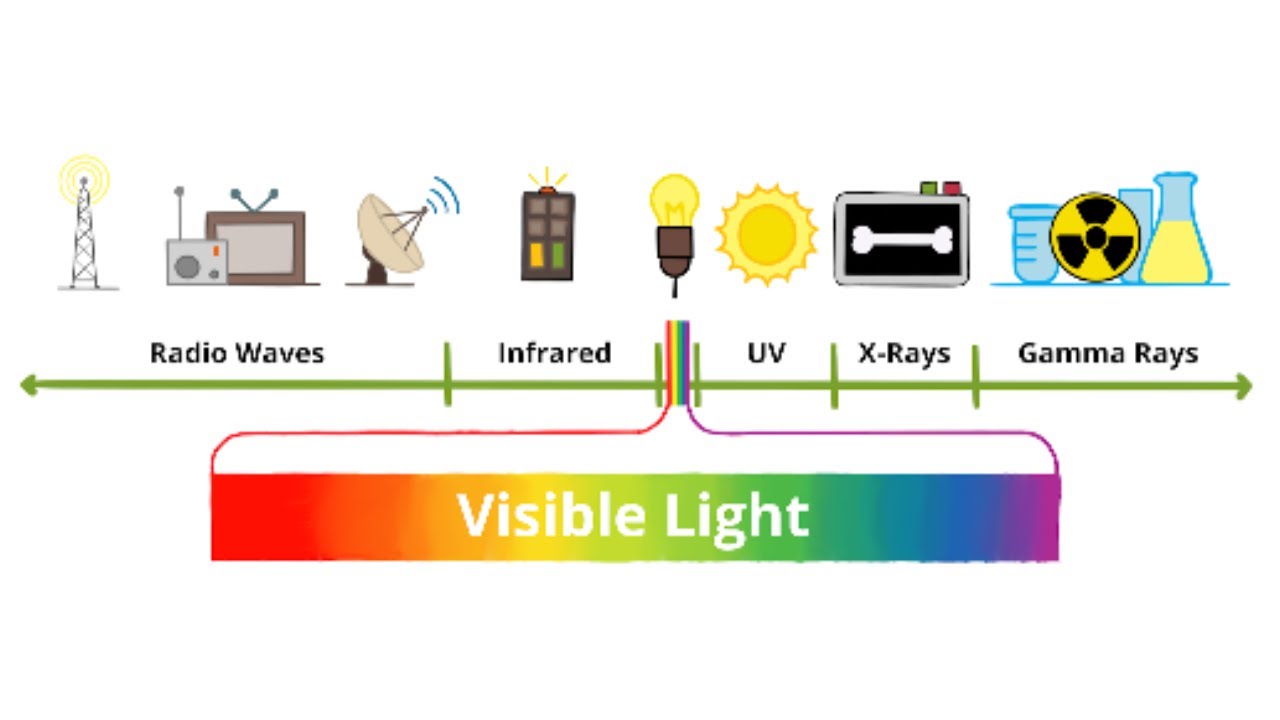
Students learn the basics of the electromagnetic spectrum and how various types of electromagnetic waves are related in terms of wavelength and energy. In addition, they are introduced to the various types of waves that make up the electromagnetic spectrum including, radio waves, ultraviolet waves, visible light and infrared waves. These topics help inform students before they turn to designing solutions to an overarching engineering challenge question.
View the full lesson on TeachEngineering:
https://www.teachengineering.o....rg/lessons/view/clem
TeachEngineering has over 1,500 FREE lessons and activities. Visit https://www.teachengineering.org/ for more

Students use water balloons and a length of string to understand how the force of gravity between two objects and the velocity of a spacecraft can balance to form an orbit. They see that when the velocity becomes too great for gravity to hold the spacecraft in orbit, the object escapes the orbit and travels further away from the planet.
View the full activity on TeachEngineering:
https://www.teachengineering.o....rg/activities/view/c
TeachEngineering has over 1,500 FREE lessons and activities. Visit https://www.teachengineering.org/ for more!
Music: Above and Beyond - Silent Partner

Students investigate circuits and their components by building a basic thermostat. They learn why key parts are necessary for the circuit to function, and alter the circuit to optimize the thermostat temperature range. They also gain an awareness of how electrical engineers design circuits for the countless electronic products in our world.
View the full activity at TeachEngineering:
https://www.teachengineering.o....rg/activities/view/c
TeachEngineering has over 1,500 FREE lessons and activities.
Visit http://www.TeachEngineering.org for more!
Music: Electrodoodle- Kevin MacLeod

Students explore how different materials (sand, gravel, lava rock) with different water contents on different slopes result in landslides of different severity. They measure the severity by how far the landslide debris extends into model houses placed in the flood plain. This activity is a small-scale model of a debris chute currently being used by engineers and scientists to study landslide characteristics. Much of this activity setup is the same as for the Survive That Tsunami activity in Lesson 5 of the Natural Disasters unit.
View the full activity at TeachEngineering:
https://www.teachengineering.o....rg/activities/view/c
TeachEngineering has over 1,500 FREE lessons and activities. Visit http://www.TeachEngineering.org for more!
Music: Sky Scraper - Geographer

Students construct paper recombinant plasmids to simulate the methods genetic engineers use to create modified bacteria. They learn what role enzymes, DNA and genes play in the modification of organisms. For the particular model they work on, they isolate a mammal insulin gene and combine it with a bacteria's gene sequence (plasmid DNA) for production of the protein insulin.
View the full activity at TeachEngineering:
https://www.teachengineering.o....rg/activities/view/u
TeachEngineering has over 1,500 FREE lessons and activities. Visit http://www.TeachEngineering.org for more!
Music: How We Like It - Dan Lebowitz

Students drop water from different heights to demonstrate the conversion of water's potential energy to kinetic energy. They see how varying the height from which water is dropped affects the splash size. They follow good experiment protocol, take measurements, calculate averages and graph results. In seeing how falling water can be used to do work, they also learn how this energy transformation figures into the engineering design and construction of hydroelectric power plants, dams and reservoirs.
View the full activity at TeachEngineering:
https://www.teachengineering.o....rg/activities/view/c
TeachEngineering has over 1,500 FREE lessons and activities. Visit http://www.TeachEngineering.org for more!
Music: Rank and File - Silent Partner

Students examine various materials to investigate how they interact with light. They use five characteristics—translucency, transparency, opaqueness, reflectivity and refractivity—to describe how light interacts with the objects.
View the full activity on TeachEngineering:
https://www.teachengineering.o....rg/activities/view/c
TeachEngineering has over 1,500 FREE lessons and activities. Visit https://www.teachengineering.org/ for more
Music - Orange Octopus