Top videos

This activity demonstrates how potential energy (PE) can be converted to kinetic energy (KE) and back again. Given a pendulum height, students calculate and predict how fast the pendulum will swing by understanding conservation of energy and using the equations for PE and KE. The equations are justified as students experimentally measure the speed of the pendulum and compare theory with reality.
View the full activity at TeachEngineering:
https://www.teachengineering.o....rg/activities/view/c
TeachEngineering has over 1,500 FREE lessons and activities. Visit http://www.TeachEngineering.org for more!
Music: Comparsa Latinesque - Kevin MacLeod
Comparsa - Latinesque by Kevin MacLeod is licensed under a Creative Commons Attribution license (https://creativecommons.org/licenses/by/4.0/)
Source: http://incompetech.com/music/r....oyalty-free/index.ht
Artist: http://incompetech.com/

Students make two different formulations of imitation Silly Putty with varying degrees of cross-linking. They witness how changes in the degree of cross-linking influence the putty properties.
View the full activity at TeachEngineering:
https://www.teachengineering.o....rg/activities/view/c
TeachEngineering has over 1,500 FREE lessons and activities. Visit http://www.TeachEngineering.org for more!
Music: Sky Scraper - Geographer

Students learn about civil engineers and work through each step of the engineering design process in two mini-activities that prepare them for a culminating challenge to design and build the tallest straw tower possible, given limited time and resources. First they examine the profiles of the tallest 20 towers in the world. Then in the first mini-activity (one-straw tall tower), student pairs each design a way to keep one straw upright with the least amount of tape and fewest additional straws. In the second mini-activity (no "fishing pole"), the pairs determine the most number of straws possible to construct a vertical straw tower before it bends at 45 degrees—resembling a fishing pole shape. Students learn that the taller a structure, the more tendency it has to topple over. In the culminating challenge (tallest straw tower), student pairs apply what they have learned and follow the steps of the engineering design process to create the tallest possible model tower within time, material and building constraints, mirroring the real-world engineering experience of designing solutions within constraints. Three worksheets are provided, for each of two levels, grades K-2 and grades 3-5. The activity scales up to school-wide, district or regional competition scale.
View the full activity on TeachEngineering: https://www.teachengineering.o....rg/activities/view/u
TeachEngineering has over 1,500 FREE lessons and activities. Visit https://www.teachengineering.org/ for more!
Music: Someone Your Own Size - RW Smith
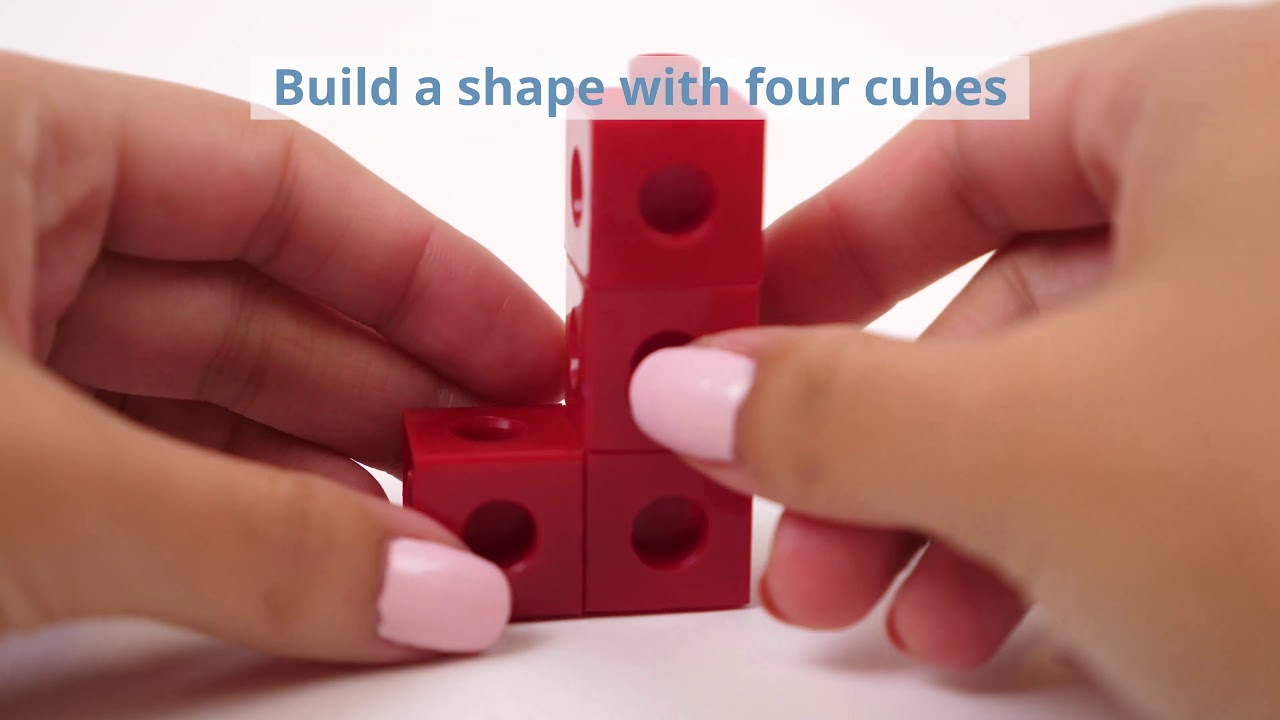
Students learn about isometric drawings and practice sketching on triangle-dot paper the shapes they make using multiple simple cubes. They also learn how to use coded plans to envision objects and draw them on triangle-dot paper. A PowerPoint® presentation, worksheet and triangle-dot (isometric) paper printout are provided. This activity is part of a multi-activity series towards improving spatial visualization skills.
View the full activity at TeachEngineering:
https://www.teachengineering.o....rg/activities/view/c
TeachEngineering has over 1,500 FREE lessons and activities. Visit http://www.TeachEngineering.org for more!
Music: Coffee Stains-Riot
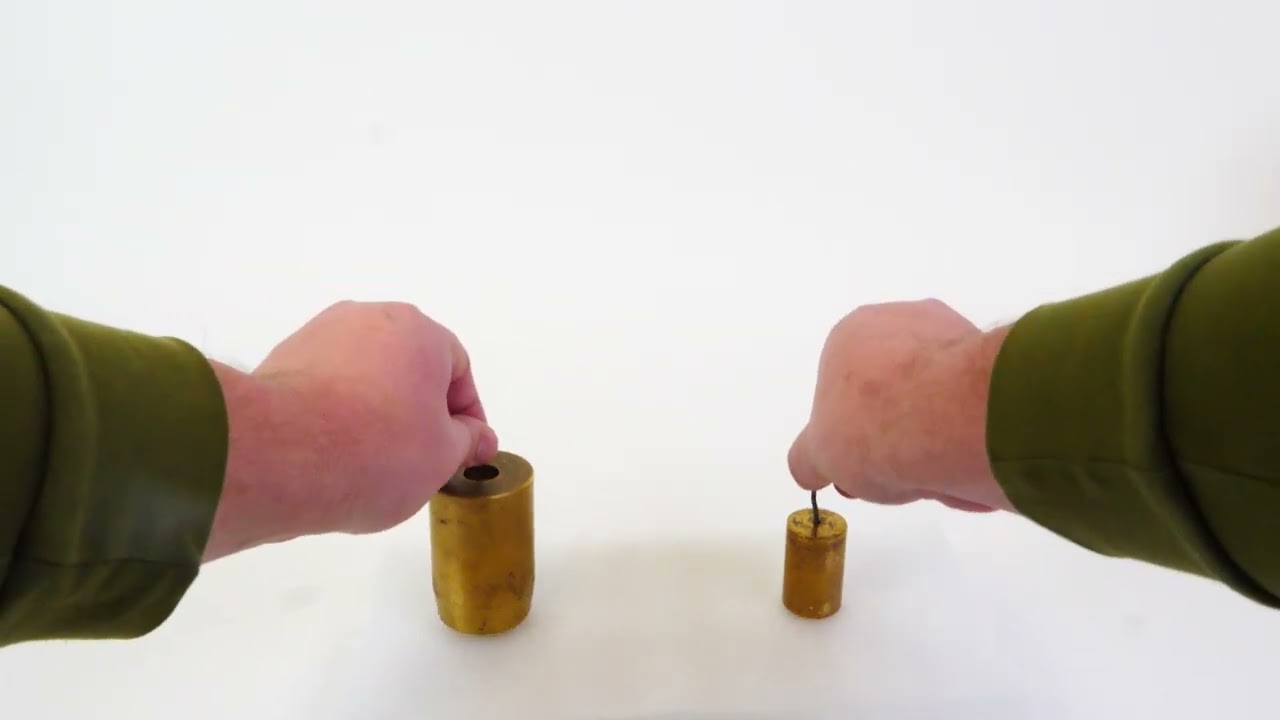
Students explore how pendulums work and why they are useful in everyday applications. In a hands-on activity, they experiment with string length, pendulum weight and angle of release. In an associated literacy activity, students explore the mechanical concept of rhythm, based on the principle of oscillation, in a broader biological and cultural context — in dance and sports, poetry and other literary forms, and communication in general.
View the full lesson on TeachEngineering:
https://www.teachengineering.o....rg/lessons/view/cub_
TeachEngineering has over 1,500 FREE lessons and activities. Visit https://www.teachengineering.org/ for more
Music -Tyler Kimbell

Students first explore different materials to see what types reduce the most amount of sound when placed in a box. Each group is assigned a different material and they fill their box with that specific material. Students measure the sound level of a tone playing from inside the box using a decibel reader from outside the box. Students share this data with the class and analyze which types of materials absorb the most sound and which reflect the most sound.
View the full activity on TeachEngineering:
https://www.teachengineering.o....rg/activities/view/u
TeachEngineering has over 1,500 FREE lessons and activities. Visit https://www.teachengineering.org/ for more!
Music: Night at the Dance Hall- Twin Musicom

PREMIERES! 👉 https://www.youtube.com/playli....st?list=PLLF_mZmNqOn
Discover hundreds of never-before-seen resources! Create your free account at https://my.happylearning.tv/ and start learning in the most entertaining way.
What are you waiting for? Did you know that spiders are one of the animals that most people are scared of? There are millions of people who have arachnophobia, meaning that when they see a spider, they run away screaming. The majority of these arachnids of eight legs, have six or eight eyes, and yet they have poor sight.
Did you know that the silk that comes out of the spider´s abdomen is much more resistant than steel wire of the same thickness? Well it is, and it’s a lot more elastic. Some say that if you were to use a spider’s web with the thickness of a pencil, it could stop a plane in flight. That’s incredible! Humans can use the spider´s web for many different things, such as bulletproof jackets, threads of suture for stitching wounds, clothes, violin strings or ropes used to hold a lot of weight, such as the one used by this mountaineer.
Did you know that spiders use their web to hunt as well as to travel? The spider’s web is very sticky and when an insect lands on it, it gets stuck and can’t escape and the spider then makes the most of it to eat it up. They also use their web to make cocoons for their eggs and some to glide from one place to another with the help of the wind, just like Spiderman.
The truth is spiders and the webs they make with their silk are one of the most fascinating facts we can learn from our nature, don’t you think?

Discover hundreds of never-before-seen resources! Create your free account at https://my.happylearning.tv/ and start learning in the most entertaining way.

Subscribe to Happy Learning: https://my.happylearning.tv/
More related videos: https://www.youtube.com/playli....st?list=PLLF_mZmNqOn
Curiosities for kids:https://www.youtube.com/playli....st?list=PLLF_mZmNqOn
THE NERVOUS SYSTEM | Educational Videos for Kids | Happy Learning
Hello, Happy Learners! 🎉🧠 In this new Happy Learning video, we're going to discover the fascinating nervous system. 🌟✨ Learn how this amazing system works, controlling all of our actions, from moving to thinking and feeling. You'll see how the nerves and brain work together to keep us active and moving! 🤔🔍
Did you know that the brain is like the "command center" of the human body? 🚀🧠 Join us on this educational adventure and find out how the nervous system works, with fun facts that will surprise you. It will be an experience full of learning and fun! 😄🎉
Don't forget to like 👍, subscribe 🔔, and share this video with all your friends. Let's learn together! 🚀😊
#NervousSystem #ScienceForKids #Curiosities #HappyLearning #LearningIsFun
Discover hundreds of never-before-seen resources! Create your free account at https://my.happylearning.tv/ and learn in the most fun way.
#happylearning #learning #happy
Discover hundreds of never-before-seen resources! Create your free account at https://my.happylearning.tv/ and start learning in the most entertaining way.

DEFORESTATION | Ways to Take Care of the Environment | Happy Learning ♻️🌴🐒
Hello, Happy Learners! 🎉🌳 Welcome to a new Happy Learning video. Today we are going to discover what **deforestation** is and learn how we can better take care of **nature**. ✨🌍 Yes, we are going to explore why it is important to protect our forests and how we can all help! 🌟
Did you know that deforestation is when many trees are cut down in forests and jungles? 🤔🌳💔 And that this can cause big problems for animals, plants, and also for us? 🌿💡 Join us on this educational adventure and learn how you can make a difference by taking care of the environment in a fun and easy-to-understand way. 🧠😊🎉
Don’t miss it! Give it a like 👍, subscribe 🔔, and share this video with all your friends. Let’s learn and take care of nature together! 🚀😊
#Deforestation #TakeCareOfNature #Education #LearnWhilePlaying #HappyLearning #Fun #LearningIsFun
Discover hundreds of never-before-seen resources! Create your free account at https://my.happylearning.tv/ and learn in the most fun way.
#happylearning #learning #happy
Discover hundreds of never-before-seen resources! Create your free account at https://my.happylearning.tv/ and learn in the most fun way.
#happylearning
#learning
#happy
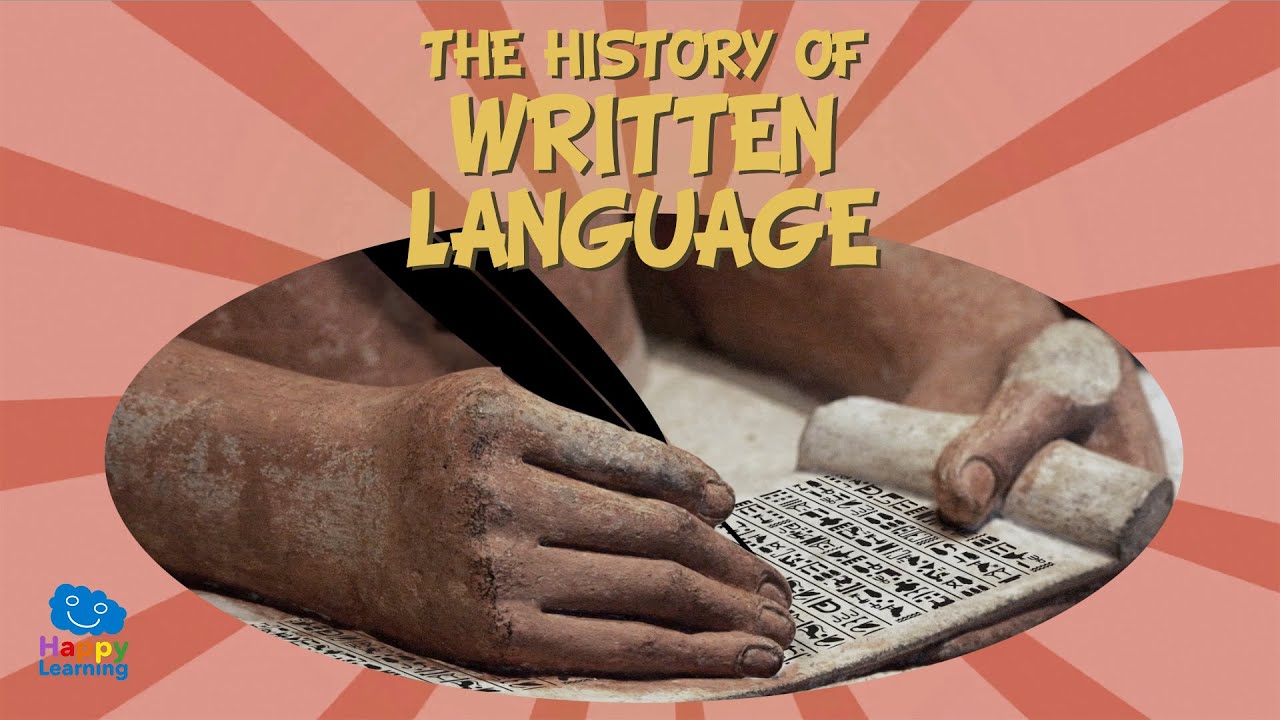
Discover hundreds of never-before-seen resources! Create your free account at https://my.happylearning.tv/ and start learning in the most entertaining way.
What are you waiting for? We all know how to read and write but... Did you know how it all started?
?? What was the first ever paper called?
?? Where did our ancestors write if they didn't have paper?
?? What does your favorite pen or pencil look like?
👉SUBSCRIBE TO HAPPY LEARNING! http://bit.ly/HappyLearningTV
👉Web site: https://happylearning.tv/en/
👉Follow us on Facebook: https://www.facebook.com/HappyLearningTv
Recommended video: Prehistory
https://youtu.be/rLFGra2TiTE

VITAL FUNCTIONS https://youtu.be/SKy_C2cr63M
PREMIERES! 👉 https://www.youtube.com/playli....st?list=PLLF_mZmNqOn
PLANT KINGDOM https://www.youtube.com/playli....st?list=PLLF_mZmNqOn
Discover hundreds of never-before-seen resources! Create your free account at https://my.happylearning.tv/ and start learning in the most entertaining way.
What are you waiting for? Did you know how plants eat 😋? It's not like you and me, take a look!
👉SUBSCRIBE TO HAPPY LEARNING! http://bit.ly/HappyLearningTV
👉Web site: https://happylearning.tv/en/
👉Follow us on Facebook: https://www.facebook.com/HappyLearningTv
Recommended video: Climate Change
https://www.youtube.com/watch?v=YsvABLmrpX4&t=2s
----
Hello friends! Welcome to a new Happy Learning video.
Have you ever wondered how plants feed? To answer this question, we need to understand photosynthesis!
Photosynthesis is a process in which plants make their own food to be able to grow and develop. In order to perform photosynthesis, they need various elements: sunlight, carbon dioxide, obtained from air and water. They also need chlorophyll, which is a green substance that all plants have, and is fundamental for performing photosynthesis, since it could not happen without it. By the way! chlorophyll is what gives all plants their green colour!
But how does photosynthesis take place?
Look at this plant. As you can see, its roots are anchored to the ground, and through them, the plant absorbs water and minerals in the soil.
Water with minerals are transported up the stem, reaching the leaves. The leaves are full of tiny pores, called stomata, which absorb carbon dioxide that air in their surrounding contains.
All this containing water, minerals and carbon dioxide is called raw sap.
Now it’s chlorophyll’s turn!
The chlorophyll in the leaves has all the necessary ingredients for photosynthesis to take place and when it receives sunlight, the process begins by transforming the raw sap into elaborated sap, which also circulates around the plant and works as food.
All plants feed from elaborated sap, and they store it in their roots, like a carrot. Or in their fruit, like an apple or a pear.
Now we know how photosynthesis takes place but…
Why is it so important?
Without plants, there would not be life on Earth, we wouldn't have oxygen to breathe or food to feed on. You already know that herbivores eat plants and carnivores, eat herbivores. Plants are fundamental for the food chain. And they are also fundamental for our respiration. Actually, when humans breathe, we turn oxygen into carbon dioxide, quite the opposite of when plants perform photosynthesis. A curious fact you need to know is that, at night, because plants don’t have sunlight to photosynthesise, they breathe like humans do. They take in oxygen and release carbon dioxide. Remember that!
And one last thing so you understand the importance of photosynthesis. When plants absorb dirty and contaminated gases, they transform them into pure air, into oxygen! This way, they clean the atmosphere and all nature. Plants are the best solution to fight against contamination, don’t you think?
Goodbye friends! And don’t forget to subscribe to Happy Learning Tv!

PREMIERES! 👉 https://www.youtube.com/playli....st?list=PLLF_mZmNqOn
Discover hundreds of never-before-seen resources! Create your free account at https://my.happylearning.tv/ and start learning in the most entertaining way.
What are you waiting for? Happy Learning is channel for kids. Here they can find educational videos with which they can learn and have fun.
▶ SUBSCRIBE HAPPY LEARNING! http://bit.ly/HappyLearningTV
Today we are going to learn about the invertebrate animals
You all know that the animals are divided into two big groups, the vertebrates that have an internal skeleton formed by bones and the invertebrates that have no bones.
All the invertebrates are oviparous, and we classify them in 6 big groups:
Sponges, jellyfish, corals, worms, mollusks, echinoderms and arthropods
The sponges are aquatic animals, that are sac shaped and their body is full of pores. It is very easy to remember this group because many times we use them in the shower for our personal hygiene. Yes, many of the sponges we use in the shower are invertebrate animals.
The jellyfish are invertebrate animals that live in the ocean. Their bodies are gelatinous and have tentacles. The truth is that when they appear in the beach it is very annoying because their tentacles have small venomous stingers that produce very unpleasant bites.
Corals are tiny marine animals that produce limestone residue, which give rise to beautiful shapes.
Do you know this animal? Exactly, it’s a worm. Worms are soft and long invertebrate animals that move by dragging their body in the ground, because they have no feet. They can be aquatic or terrestrial. There are some worms that can be harmful and that is why we must be careful with them.
Can you see this snail? Well snails form part of the mollusk group.
Mollusks have a soft body, without legs and can also be aquatic or terrestrial.
Some, like this snail, this clam and mussels, protect their soft body with shells, but there are other mollusks that don’t have a shell to protect themselves like slugs or octopuses.
The echinoderms are exclusively aquatic animals. Their bodies have calcareous plates that form a shell.
Some echinoderms are balloon shaped and are covered in spikes that they use to defend themselves, like sea urchins.
Others are star shaped, and are of course called starfish.
The arthropods are the most abundant animals on the earth. Of every 100 animals that exist, 80 are arthropods.
These invertebrate animals have their body covered by an external skeleton called a cuticle.
The most common way to classify the arthropods is by the number of legs they have. This way we can classify them in four big groups.
Arthropods with 6 legs. In this group insects like ants and flies are present.
Arthropods with 8 legs, where for example the arachnids like spiders and scorpions are.
Arthropods with 10 legs include the crustaceans, like crabs and lobster.
Arthropods with more than 10 legs like this centipede that as you can see has much more than 100 legs are called myriapods.
Well now you know a bit more about the invertebrates.
Bye friends, and don’t forget to subscribe to the happy learning channel.

Discover hundreds of never-before-seen resources! Create your free account at https://my.happylearning.tv/ and start learning in the most entertaining way.
What are you waiting for? In this video we are going to learn the farm animals in spanish. Spanish vocabulary for children. vaca (cow), perro (dog), gato (cat), oveja (sheep), gallo (cock), cerdo (pig), caballo (horse), pato (duck), burro (donkey), gallina (chicken)
▶SUBSCRIBE TO HAPPY LEARNING! http://bit.ly/HappyLearningTV
▶Follow us on Twitter: https://twitter.com/HappyLearningTv
▶Follow us on Facebook: https://www.facebook.com/HappyLearningTv
Discover hundreds of never-before-seen resources! Create your free account at https://my.happylearning.tv/ and start learning in the most entertaining way.
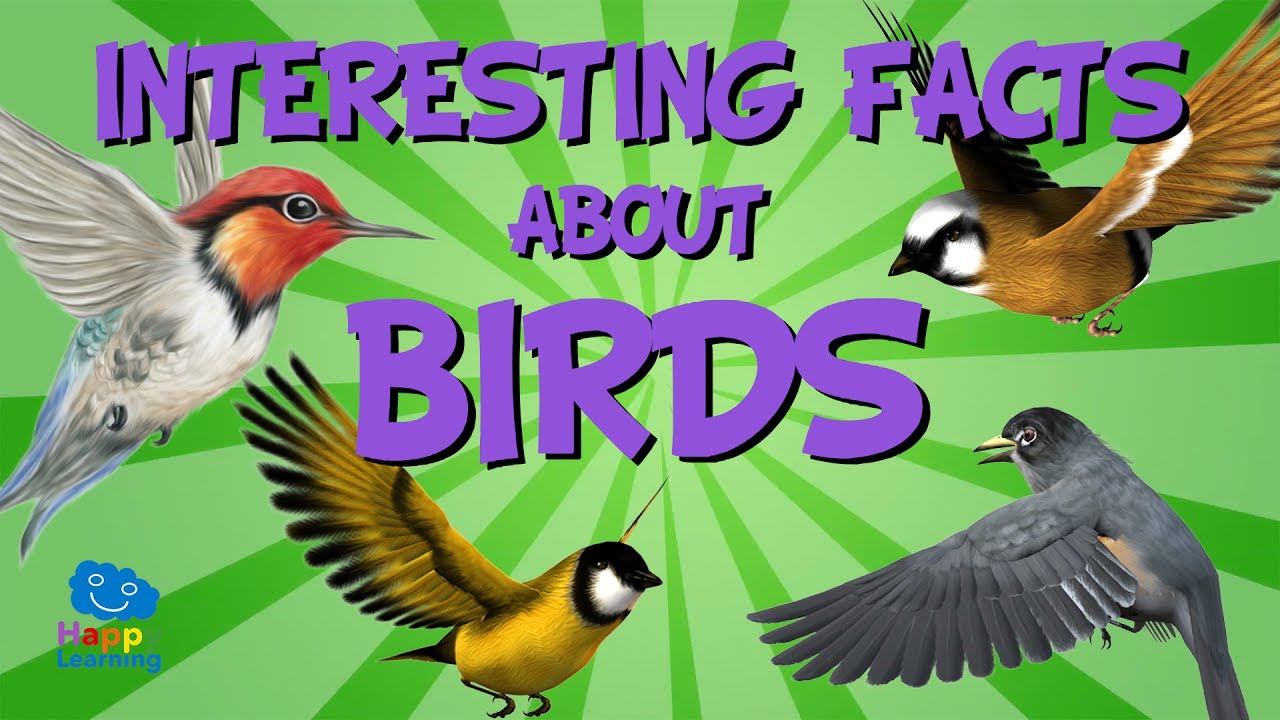
What are you waiting for? Did you now that the fastest bird is the peregrine hawk? This bird of prey can reach up to 400 kilometers per hour whist free falling. Wow it’s so fast, poor dove if it were to cross its path…
On the other hand, the American Woodcock is the slowest bird on the planet, flying at a mere speed of 8 km per hour. Oh, check out
it´s cute little babies!
And did you know that the fastest land bird is the ostrich? This huge bird, actually the largest in the world, cannot fly but can reach up to 70 kilometers per hour…running…it’s faster than a moped!
This tiny hummingbird also holds an impressive record. Besides being the smallest bird, it can also flap its wings 200 times per second or in other words, 12 thousand times in a minute…incredible! They beat so fast that you can hardly even see them, and it looks like they are floating in the air whilst eating…
Did you know that the penguin is the aquatic bird champion? Penguins don’t fly and on land are rather clumsy, but they are incredible in the water. Some species can reach the speed of…36 kilometers per hour. They swim four times faster than a person can…but the most impressive penguin is the emperor penguin. A person can dive to the depth of 260 meters whereas this penguin species dives 535 meters deep and can hold its breath for 5 to 18 minutes. It’s a bird, it has a beak and feathers but it seems as if it wants to be a fish…
Now we have learnt a few records and fascinating facts about birds. The truth is it is beautiful observing them fly in the sky or swim in the sea but as we are always reminding you in Happy Learning, so as to continue enjoying them, we must look after our environment; do not contaminate the air, the sky, the rivers and seas. We must take care of our nature and all that is around us, and like that we will be able to live in a happier world.

Discover hundreds of never-before-seen resources! Create your free account at https://my.happylearning.tv/ and start learning in the most entertaining way.
What are you waiting for? New plants can originate from a single cell, a tissue, an organ or a part of a mother plant.
Wow! Plants are so amazing! 🌷🌿
👉SUBSCRIBE TO HAPPY LEARNING! http://bit.ly/HappyLearningTV
👉Web site: https://happylearning.tv/en/
👉Follow us on Facebook: https://www.facebook.com/HappyLearningTv
Recommended video: Why are some snakes venomous? | Educational Videos for Kids
https://youtu.be/MIhBYmUtILs
-----------------
Hello Happy friends! Welcome to a new Happy Learning Video!
Plants, like all living things need to reproduce to perpetuate their species, to survive though time.
They can have a sexual or asexual reproduction. Today, we’re going to get to know plant asexual reproduction.
In asexual plant reproduction, flowers don’t intervene, there’s no need for a gamete or female and male cell. In asexual reproduction, there’s only one parent, so the new plants will be genetically identical to this. New plants can originate from a single cell, a tissue, an organ or a part of a mother plant.
There are two types of asexual reproduction: vegetative reproduction and reproduction without seeds. Let’s get to know them.
Vegetative reproduction is when new plants are formed from a part of a mother plant, generally from the tip of the stem. This type of reproduction is used a lot in agriculture and gardening. There are four types: root vegetables, bulbs, stolons and rhizomes.
Root vegetables, are underground stems which store lots of nutrients, lots of nutritive substances. Examples include potatoes or sweet potatoes. As you can see in the images, a new plant can come from each potato.
Bulbs, are also underground stems but formed by fleshy leaves which store nutrients. Onions, garlics and tulips reproduce through bulbs.
Stolons, are stems which grow horizontally parallel to the floor. When they come into contact with the floor, they form roots and a new plant is born. Strawberries and mint are examples of stolons.
Rhizomes are the same stems as stolons, but underground and new plants are formed from them. Rhizomes grow indefinitely, so they can cover a wide surface. Lots of types of grass, reeds and trees like populus and oaks are examples of rhizomes.
Plant reproduction without seeds is present in mosses and ferns. These plants combine sexual and asexual reproduction. When the female and male gamete meet, structures are formed called spores. These spores, once they are developed and mature, are then impulsed by wind until they fall on the floor and germinate, then new plants are born.
The truth is that nature is wonderful, it’s incredible Did you know, that the oldest ferns are older than the dinosaurs? They have been reproducing on earth for over 420 million years! It’s incredible!
Goodbye friends! And don’t forget to subscribe to Happy Learning, Tv.

Cool facts about REPTILES | Happy Learning 🐉 🦎 🐍
"Welcome to Happy Learning! 🌟 In this fascinating video, we're going to dive into the world of reptiles and uncover amazing facts about these fascinating creatures. 🐍🦎 From their incredible diversity to their unique survival skills, you'll be amazed at everything you'll learn about these extraordinary animals. 🌿💡 Get ready to be thrilled and marvel at the incredible world of reptiles! 🌎🔍 Don't miss out and join us on this adventure full of discoveries. Let's explore together! 🌟 #ReptileCuriosities #DiscoverTheAnimalWorld 🐢🌟"
Discover hundreds of never-before-seen resources! Create your free account at https://my.happylearning.tv/ and start learning in the most entertaining way.
#reptiles
#snakes
#lizard
#happylearning

PREMIERES! 👉 https://www.youtube.com/playli....st?list=PLLF_mZmNqOn
THE EVOLUTION OF HUMAN BEINGS https://www.youtube.com/playli....st?list=PLLF_mZmNqOn
Learn about human evolution from australopithecus to homo sapiens sapiens!
Discover hundreds of never-before-seen resources! Create your free account at https://my.happylearning.tv/ and start learning in the most entertaining way.
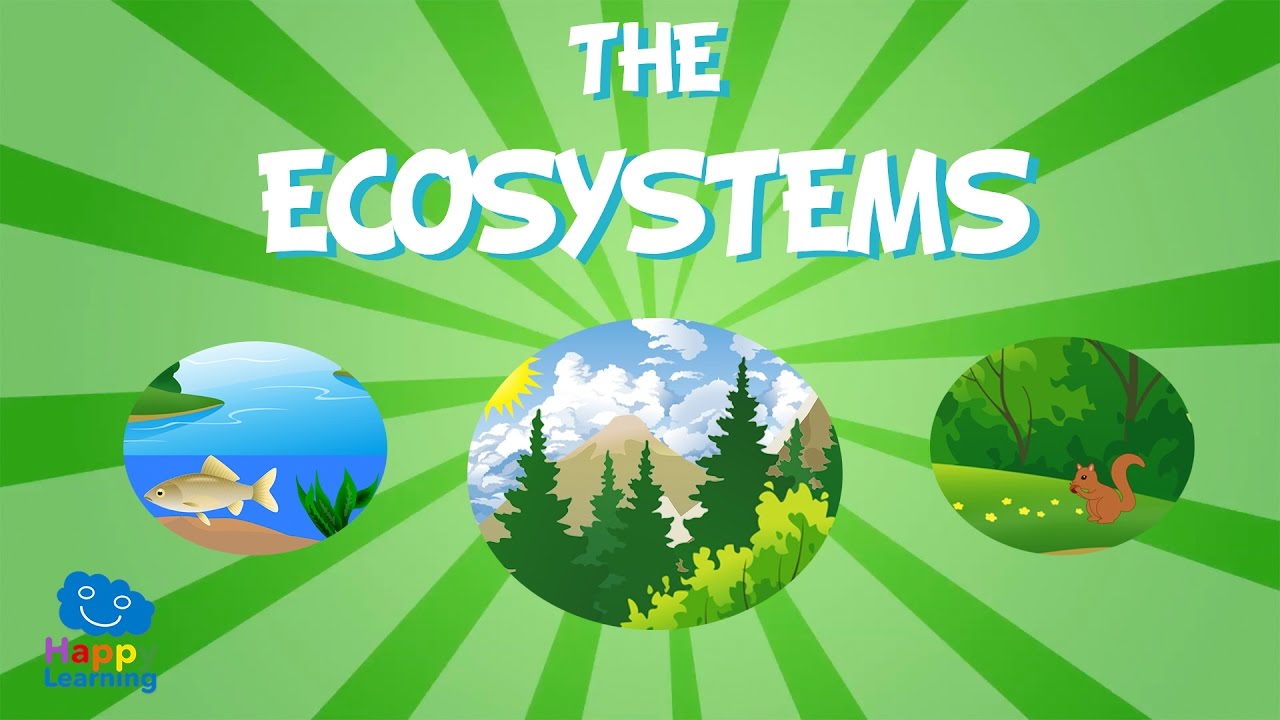
What are you waiting for? The ecosystem
Hello friends and welcome to a new Happy Learning video. Today we are going to learn about the ecosystems.
But…do you know what an ecosystem is? An ecosystem is a community of living things in a given area. For example, this river is an ecosystem and is made up of water, the river bed, the river banks and all the living creatures which live in it, such as this frog, these lily pads or this shy duck which hides as soon as it sees us.
An ecosystem can be very small, such as this puddle, or very big such as this enormous desert…
The ecosystems are made up of two components: the Abiotic and the Biotic components.
The Abiotic components include the non-living things like the ground, the climate, or the water and it determines which living things can survive in an ecosystem. For example a desert is a very dry place and so only animals and plants which can survive without much water can live there, like this slippery lizard or these humped back camels.
On our planet there are loads of ecosystems, and they are divided into aquatic and terrestrial. (And these can be either aquatic or terrestrial)
There are two types of aquatic ecosystems: freshwater and Marine.
The freshwater ones are those which have freshwater such as rivers or lakes where Lily pads, otters, or frogs live…Whoops, and here are our friendly ducks again…
The marine ecosystems are those found in the sea such as this beautiful colorful reef so full of life, fish, corals, octopuses and many more fascinating creatures.
When talking about the terrestrial ecosystems we imagine prairies… large plains in the savanna were zebras or antelope like to graze…jungles where trees are extremely high and are the homes for these monkeys called orangutans…or even mountain ecosystems where there tends to be plenty of snow.
Well now we know a bit more about ecosystems and as always, on behalf of Happy Learning we ask you to please look after them… they are so beautiful, we mustn’t destroy them. (We must preserve them)
Goodbye friends and don’t forget to subscribe to Happy Learning
PREMIERES! 👉 https://www.youtube.com/playli....st?list=PLLF_mZmNqOn
Discover hundreds of never-before-seen resources! Create your free account at https://my.happylearning.tv/ and start learning in the most entertaining way.
What are you waiting for? Happy Learning is channel for kids. Here they can find educational videos with which they can learn and have fun.
We have two playlist, the first one is for toddlers and the second is for children a little bit older;
▶ PreSchool Playlist: http://bit.ly/Preschool-HL
▶ Educational Videos: http://bit.ly/EducationalVideos-HL
▶ SUBSCRIBE HAPPY LEARNING! http://bit.ly/HappyLearningTV
The Moon and the Earth
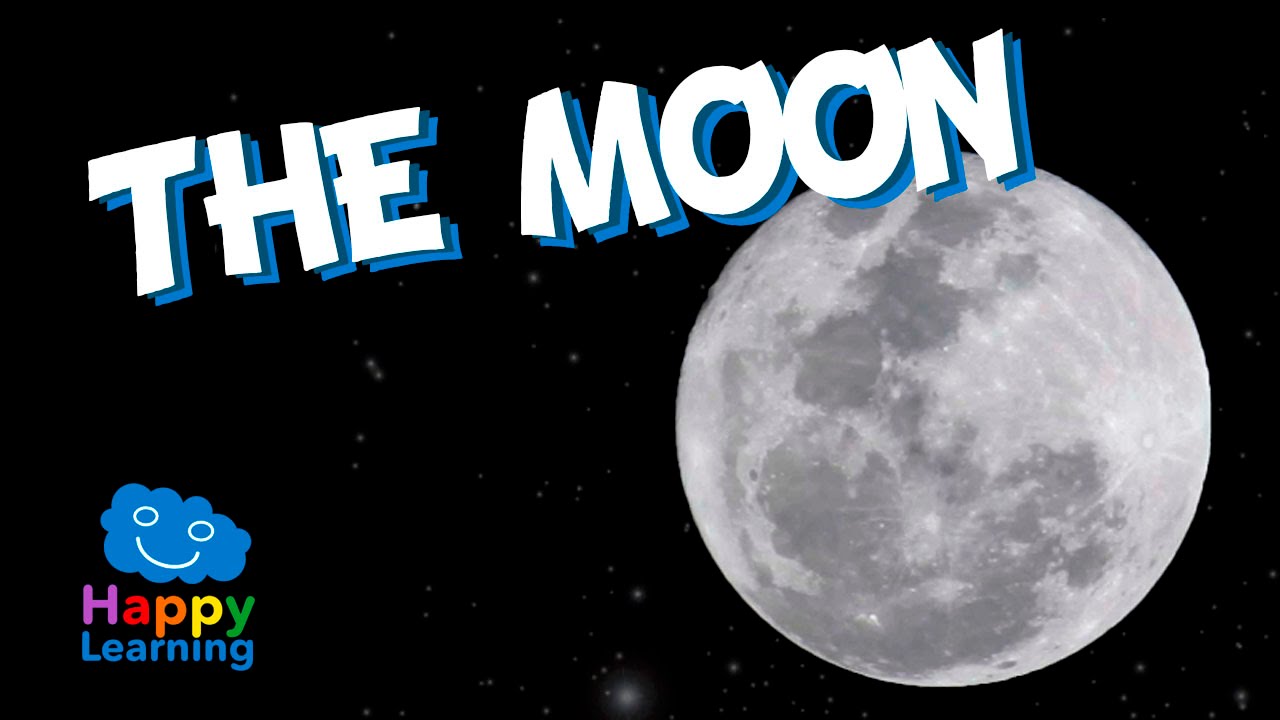
Hello friends, welcome to a new video from Happy Learning. Today we are going to learn about… the Moon.
The Moon is the only satellite that rotates around our planet and it takes 28 days to completely go around the Earth. But, do we now what a satellite is? A natural satellite is any kind of celestial body that rotates, or actually, orbits around a planet.
The Moon is never still, it moves and in two ways. It has a movement of rotation, which means it turns in its own axis, and a movement of translation, that is to say, it rotates around the Earth.
The duration of the movement of rotation and translation is 28 days. Because it takes the same amount to rotate on its own axis and to completely go around the Earth, the Moon always shows us the same face.
When we observe the Moon along a period of time it appears to change shape. These changes in appearance are called lunar phases and they repeat every 28 days. There are four: full Moon, first quarter, new Moon and last quarter. The Moon phases are produced by two reasons: the movement of the Moon around the Earth and because the Moon reflects light form the sun as a mirror.
New Moon
In this phase the Moon is passing between the Earth and the Sun. The illuminated face of the Moon is facing the opposite direction to Earth. The dark side ends up facing the Earth, and this is why we cannot see the Moon.
First Quarter
You can see it approximately one week after the new Moon. One half of the illuminated side faces the Earth. It is called the first quarter because, from the new Moon phase, the zone illuminated by the sun grows every time.
Full Moon
Approximately a week after the first quarter, we can see the whole Moon illuminated. The Earth is between the Moon and the sun and we can see it fully.
Last Quarter
The Moon presents its other half face illuminated. The name of the last quarter comes from the fact that the illuminated side becomes smaller and smaller each time
A very easy trick to now whether the Moon is in its first or last quarter is the following. If the Moon has the shape of a C, it is in its last quarter and if it has the shape of a D, it is in its first quarter.
So now you know, the Moon has 4 phases:
New Moon, first quarter, full Moon and last quarter.
Know we are going to learn a few facts about the Moon
Do you know the distance between the Moon and the Earth? Although it looks as though it is not very far away, the Moon is about 385,000 kilometers from the Earth.
Another very interesting fact is that a rocket takes three days to get to the Moon. Its incredible, isn’t it?
The first astronaut that stepped on the Moon was Neil Armstrong and this very important accomplishment occurred in the year 1969 aboard the Apollo 11 rocket.
The Moon is 4 times smaller than the Earth, but it is very important for the sustainability of life in our planet. The Moon generates tides; Do you now what that is? A tide is the rise and fall of the sea level. They occur every 6 hours approximately.
Well now you know a little bit more about the Moon, very interesting, right?
Bye friends and don’t forget to subscribe to the Happy learning channel.