Top videos

🎉 NEW Videos: https://www.youtube.com/playli....st?list=PLLF_mZmNqOn
🕵️♀️ Amazing Things for Kids: https://www.youtube.com/playli....st?list=PLLF_mZmNqOn
Subscribe to Happy Learning: https://my.happylearning.tv/
Travel to the world of the smartest animals! In this educational video for primary school kids, you'll meet the top 5 most intelligent animals on the planet: the pig, the raven, the elephant, the dolphin, and the chimpanzee. Discover their incredible abilities, how they communicate, how smart they are, and why they are so amazing. Learn also how humans interact with these animals and how they help us in many areas of life. 🐖🦅🐘🐬🦧
Primary Science aims to help kids understand the animal world and its amazing skills, promoting curiosity, critical thinking, and empathy for all living beings. With clear explanations and visual examples, we foster respect for nature and its protection.
Curiosities for kids:https://www.youtube.com/playli....st?list=PLLF_mZmNqOn
Discover hundreds of never-before-seen resources! Create your free account at https://my.happylearning.tv/ and start learning in the most entertaining way.

🎉 NEW Videos: https://www.youtube.com/playli....st?list=PLLF_mZmNqOn
🕵️♀️ Amazing Things for Kids: https://www.youtube.com/playli....st?list=PLLF_mZmNqOn
0:00 - Introduction
0:08 - Great Inventions: The Wheel
3:05 - Great Inventions: The Bicycle
7:25 - History of the Telephone
12:36 - Great Inventions: The Printing Press
17:04 - Great Inventions: The Steam Engine
Subscribe to Happy Learning: https://my.happylearning.tv/
From the wheel to the telephone, discover the most important inventions in history in this educational video for children. Learn how these creations changed the world and who their inventors were. A journey through science, technology, and human creativity. 🛠️🌍
History in Primary School helps children understand the past to grasp the present and build the future. From Prehistory, Ancient Egypt, and the Roman Empire, to the Middle Ages, discoveries, and revolutions, each video is designed to make learning dynamic and exciting. They will learn how societies have evolved, how inventions and advances have transformed the world, and the importance of learning from history to make better decisions.
Curiosities for kids:https://www.youtube.com/playli....st?list=PLLF_mZmNqOn
Discover hundreds of never-before-seen resources! Create your free account at https://my.happylearning.tv/ and start learning in the most entertaining way.
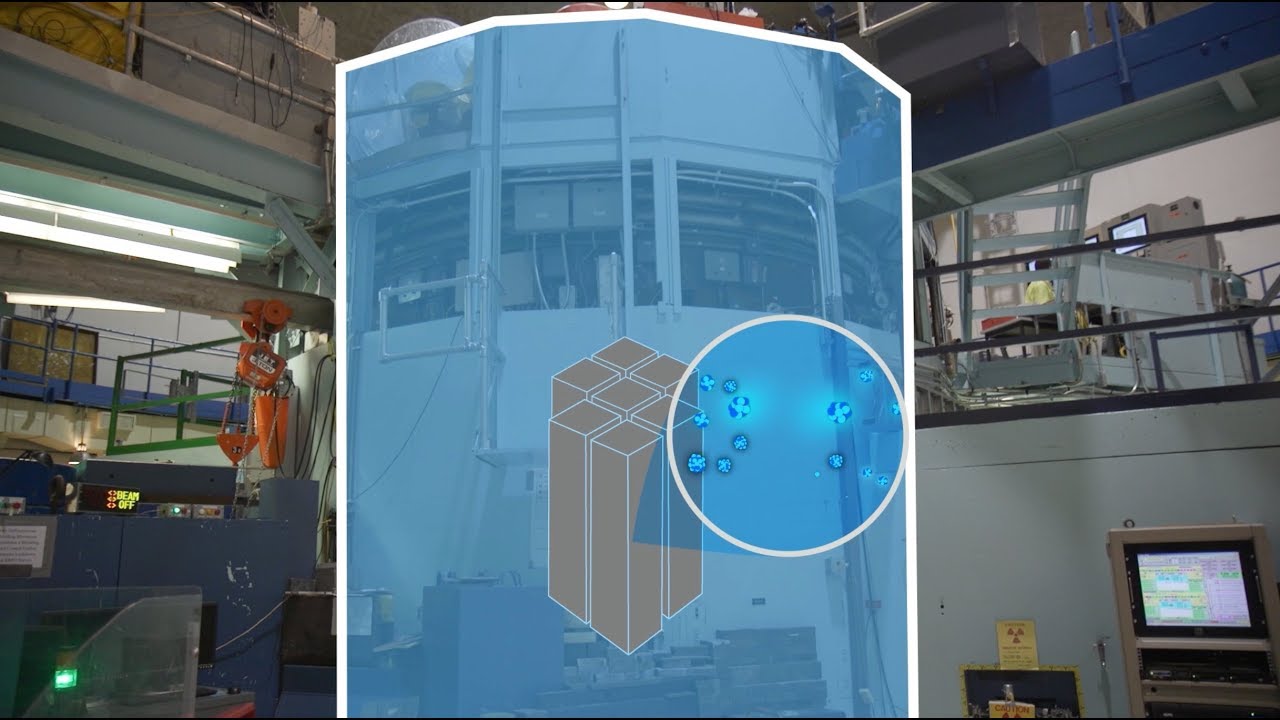
Ever wonder what actually goes on, day-to-day, at a nuclear reactor? Get an insider's tour of MIT's!
----------
Find us online!
Facebook: http://www.facebook.com/MITK12
Twitter: http://www.twitter.com/MITK12Videos
http://k12videos.mit.edu
----------
Leaves by airtone (http://ccmixter.org/files/airtone/34427)
Elevator Music Two Point Oh by JackBillPlatypus (https://soundcloud.com/jackbil....lplatypus/elevator-m
----------
made with love at MIT
Creative Commons: CC BY-NC-SA, MIT
http://k12videos.mit.edu/terms-and-conditions
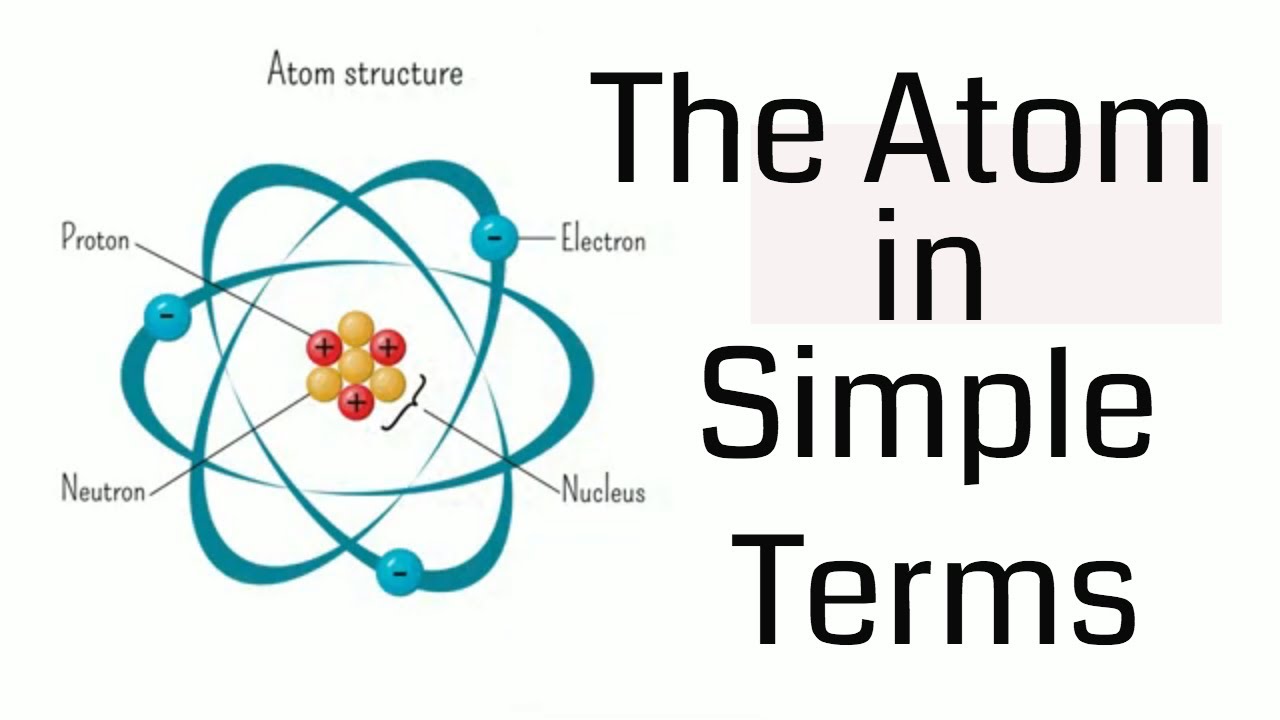
Matter is made up of atoms.
An atom is subdivided into protons, neutrons, and electrons.
The proton and neutron are found in the center of the atom and make up the nucleus.
The negatively charged particles called the electrons are found orbiting the atom.
The orbit of an electron is described as an electron cloud.
Transcript: http://www.moomoomathblog.com/....2021/05/atom-explain

Subscribe to Happy Learning: https://my.happylearning.tv/
More related videos: https://www.youtube.com/playli....st?list=PLLF_mZmNqOn
Curiosities for kids:https://www.youtube.com/playli....st?list=PLLF_mZmNqOn
The Solar System for Kids | Happy Learning 🌍🪐✨
Hello, little astronauts! 🚀✨ Today, on Happy Learning, we’ll take an exciting journey through the fascinating Solar System—our home in the universe. 🌍🌌 We’ll uncover the secrets of the Sun, the star that gives us light and warmth, and learn how the planets orbit around it like a cosmic dance. 🌞🔄
Meet the eight planets of the Solar System: Mercury, the closest to the Sun; Venus, with its super-hot atmosphere; Earth, our beloved home; and Mars, the mysterious red planet. 🌕🌟 We’ll also explore the giants Jupiter and Saturn, with their amazing rings, and finish with the icy worlds of Uranus and Neptune. ❄️🪐
Discover fun facts about how many moons the planets have, their unique atmospheres, and what makes them so special. 🛰️🌠 We’ll also talk about dwarf planets like Pluto and other fascinating objects floating in space. 🌟🌌
Hop aboard our spaceship and discover just how incredible the universe is! With this video, you’ll learn and have fun while exploring space together. 🌠✨
Discover hundreds of never-before-seen resources! Create your free account at https://my.happylearning.tv/ and start learning in the most entertaining way.
#happylearning
#learning
#happy

We hope you are enjoying our large selection of engaging core & elective K-12 learning videos. New videos are added all the time - make sure you come back often to learn more! If you'd like us to cover any additional topics, please let us know. For practice, assessment, and many interactive activities that go along with each video, as well as a teacher/parent dashboard, go to Miacademy.co for Grades K-8 or Miaprep.com for grades 9-12!
Get a 35% discount on our website - practice games, quizzes, and more to go along with each video: https://www.parents.miacademy.....co/coupon?code=VIDEO


Let's learn about the different types of weather!
We hope you are enjoying our large selection of engaging core & elective K-12 learning videos. New videos are added all the time - make sure you come back often to learn more! If you'd like us to cover any additional topics, please let us know. For practice, assessment, and many interactive activities that go along with each video, as well as a teacher/parent dashboard, go to Miacademy.co for Grades K-8 or Miaprep.com for grades 9-12!
Get a 35% discount on our website - practice games, quizzes, and more to go along with each video: https://www.parents.miacademy.....co/coupon?code=VIDEO
AI Basics for Beginners
#coding #ai #basics #beginners #machinelearning #deeplearning #aiagents #generativeai

Something huge is moving through space — and it’s headed our way. Scientists have detected massive shockwaves racing toward Earth, the kind that can rattle magnetic fields, disrupt satellites, and light up the skies with dazzling auroras. But what’s driving them? Exploding stars? Solar eruptions? Or something even stranger? In this video, we’ll break down what shockwaves are, how they reach us, and what might happen when they do. Stick around, because space just sent us a reminder of how small — and vulnerable — our planet really is.
Credit:
SDO Video Toolkit: By NASA's Goddard Space Flight Center, https://svs.gsfc.nasa.gov/14126/
Parker Solar Probe: By NASA's Goddard Space Flight Center, https://svs.gsfc.nasa.gov/14035/
Solar Wind Animations: By NASA's Goddard Space Flight Center, https://svs.gsfc.nasa.gov/14892/
ice core segment: By NASA's Goddard Space Flight Center/Ludovic Brucker - http://www.nasa.gov/content/go....ddard/enormous-aquif Public Domain, https://commons.wikimedia.org/....w/index.php?curid=30
Icecorestorage: By international.usgs.gov, , Kjag2009https://commons.wikimedia.org/....w/index.php?curid=86
Milkyway Galaxy zoom: By NASA/Goddard Space Flight Center Conceptual Image Lab, https://svs.gsfc.nasa.gov/20108
Skylab: By NASA Marshall Space Flight Center, https://commons.wikimedia.org/....w/index.php?curid=15
Milky Way galaxy1: By National Aeronautics and Space Administration - https://www.nasa.gov/sites/def....ault/files/thumbnail https://commons.wikimedia.org/....w/index.php?curid=11
Fermi telescope: By Walt Feimer/NASA/Goddard Space Flight Center, https://svs.gsfc.nasa.gov/10531/
Cygnus X3: By NASA - https://science.nasa.gov/scien....ce-news/science-at-n https://commons.wikimedia.org/....w/index.php?curid=97
into Cygnus X-3: By NASA's Goddard Space Flight Center, https://svs.gsfc.nasa.gov/14707
Solar Wind: By NASA's Goddard Space Flight Center, https://svs.gsfc.nasa.gov/13506/
CC BY-SA 4.0 https://creativecommons.org/licenses/by-sa/4.0:
Ice core extracted: By Dargaud, https://commons.wikimedia.org/....w/index.php?curid=87
CC BY 4.0 https://creativecommons.org/licenses/by/4.0:
Shallow ice core drilling: By Helle Astrid Kjær, https://commons.wikimedia.org/....w/index.php?curid=64
Sagittarius A*: By ESO/Gravity Consortium/L. Calçada/N. Risinger (skysurvey.org), Music: Johan B. Monell, https://www.eso.org/public/videos/eso1835c/
Centre of the Milky Way: By ESO/S. Gillessen et al - http://www.eso.org/public/images/eso0846a/, https://commons.wikimedia.org/....w/index.php?curid=21
Animation is created by Bright Side.
----------------------------------------------------------------------------------------
Music from TheSoul Sound: https://thesoul-sound.com/
Check our Bright Side podcast on Spotify and leave a positive review! https://open.spotify.com/show/....0hUkPxD34jRLrMrJux4V
Subscribe to Bright Side: https://goo.gl/rQTJZz
----------------------------------------------------------------------------------------
Our Social Media:
Facebook: https://www.facebook.com/brightplanet/
Instagram: https://www.instagram.com/brightside.official
TikTok: https://www.tiktok.com/@bright....side.official?lang=e
Stock materials (photos, footages and other):
https://www.depositphotos.com
https://www.shutterstock.com
https://www.eastnews.ru
----------------------------------------------------------------------------------------
For more videos and articles visit: http://www.brightside.me
----------------------------------------------------------------------------------------
This video is made for entertainment purposes. We do not make any warranties about the completeness, safety and reliability. Any action you take upon the information in this video is strictly at your own risk, and we will not be liable for any damages or losses. It is the viewer's responsibility to use judgement, care and precaution if you plan to replicate.

Think you’ve got what it takes to outsmart the toughest mysteries? In this video, you’ll face 18 riddles designed to push your detective skills to the limit. Some are tricky crime puzzles, others hide answers in plain sight — but every single one will make you think twice. Sharpen your instincts, trust your logic, and see how many you can solve before time runs out. Are you the mastermind who cracks them all… or will these riddles leave you stumped?
Animation is created by Bright Side.
----------------------------------------------------------------------------------------
Music from TheSoul Sound: https://thesoul-sound.com/
Check our Bright Side podcast on Spotify and leave a positive review! https://open.spotify.com/show/....0hUkPxD34jRLrMrJux4V
Subscribe to Bright Side: https://goo.gl/rQTJZz
----------------------------------------------------------------------------------------
Our Social Media:
Facebook: https://www.facebook.com/brightplanet/
Instagram: https://www.instagram.com/brightside.official
TikTok: https://www.tiktok.com/@bright....side.official?lang=e
Stock materials (photos, footages and other):
https://www.depositphotos.com
https://www.shutterstock.com
https://www.eastnews.ru
----------------------------------------------------------------------------------------
For more videos and articles visit: http://www.brightside.me
----------------------------------------------------------------------------------------
This video is made for entertainment purposes. We do not make any warranties about the completeness, safety and reliability. Any action you take upon the information in this video is strictly at your own risk, and we will not be liable for any damages or losses. It is the viewer's responsibility to use judgement, care and precaution if you plan to replicate.

India is preparing to introduce artificial intelligence into school education through a new CBSE draft curriculum for Classes 3 to 12. The plan, aligned with NEP 2020 and the National Curriculum Framework 2023, proposes a phased rollout from the 2026–27 academic year. Younger classes will study computational thinking, while middle grades will learn foundational AI. Advanced AI and machine learning will be offered in higher classes. Teacher training, digital content and guides are expected by December. But implementation will remain a challenge.
---
India | Education | AI Curriculum | CBSE | NCERT | Firstpost | World News | News Live | Vantage | Palki Sharma | News
#india #education #cbse #aicurriculum #ncert #firstpost #vantageonfirstpost #palkisharma #worldnews
Firstpost is an Indian news and media website. Get all the incisive opinions, in-depth analyses and other visual stories that matter to you and the world right here on this channel.
Subscribe to Firstpost channel and press the bell icon to get notified when we go live.
https://www.youtube.com/@Firstpost
Follow Firstpost on Website:
https://www.firstpost.com
Follow Firstpost on Instagram:
https://www.instagram.com/firstpost/
Follow Firstpost on Facebook:
https://www.facebook.com/firstpostin/
Follow Firstpost on X:
https://twitter.com/firstpost
Follow Firstpost on WhatsApp:
https://www.whatsapp.com/chann....el/0029Va6zOIrEQIams

Beskrivelse

In this video, I show you how to use Google’s new NotebookLM update with Gemini to turn raw notes, PDFs, and research into clean, professional slide decks in minutes, covering the exact workflow for generating presenter slides, detailed reports, and brand-styled presentations without touching PowerPoint or design tools.
Get more AI tips that don't make it into videos 👉 https://parker-prompts.com/join
Watch next https://youtu.be/SogSf-1p9t4
I'm Parker. I started this YouTube Channel with the goal to learn more about AI myself and to then pass on the knowledge to anyone willing to listen.
let's work together: partnerships @ parker-prompts.com

Learn all about chromosomes. Chromosomes contain the genetic information for our traits. In this video, I cover sister chromatids, homolous chromosomes, and when chromosomes appear.
More about Chromosomes
http://www.moomoomathblog.com/....2022/06/what-is-chro
Genetics in 3 Minutes
https://youtu.be/8rbMQwzmQrk


Flowers Name in English | Flowers Name with picture for Kids | @AAtoonsKids
Read on Web - https://www.aatoonskids.com/flowers-name/
_______________________________________________________________
AAtoons Kids
play N learn
Website - http://www.aatoonskids.com
Facebook Page - https://www.facebook.com/aatoonskids1
Twitter - https://twitter.com/aatoonskids
_______________________________________________________________
#flowers_name
#flowers_name_list
#Flowers_name_with_Image
#फूल_का_नाम
#Flowers_Name_in_English
#Flowers_name_for_kids
#AAtoonsKids
____________________

In this video, I show you an easy Math trick that you can use to read anyone's mind! All that you have to do is make them choose a number between 1 and 10, and have them go through a series of mathematical operations using that number. If they have done the Math correctly, they will end up with 3 as their final number! It's actually not a real magic trick, but it simply uses Math to lead the person to end up with the number 3, regardless of the first number that they chose to start with!
CONNECT WITH ME:
Instagram - https://www.instagram.com/mikechimmy/
SUBSCRIBE TO MY CHANNEL:
https://youtube.com/subscripti....on_center?add_user=h
FREE DIY ADVICE EBOOK:
https://gumroad.com/l/vFujc
Disclaimer: Some of the links in this description may be affiliate links. All opinions are my own.

Google の最新AI Gemini 3.0 と、Googleのノート型AI NotebookLM を組み合わせた、2026年最新の英語学習ルーティンを徹底解説します。
スマホ1台でできるGemini Liveでの英会話から、NotebookLMを使った「自分専用教材」の作り方まで、デモを交えて分かりやすくお届けします。
📌 目次
00:00|オープニング
00:55|Gemini3 と NotebookLMってなに?
02:47|Google AI pro プランお試し開始!
06:29|Gemini proプランで英語学習: Gemini live で英会話
08:49|Geminiで英語添削
17:50|エンディング
【関連動画】
https://youtu.be/c4NBDMP1OyM
https://youtu.be/0ysSW30KqLw
【使用ツール】
・Gemini 3.0 (Google) ・NotebookLM (Google)
#Gemini3
#NotebookLM
#英語学習
#AI英語
#英会話
Learn how to turn PDFS and information into interactive dashboards and websites instantly with Google Gemini's new Dynamic View.
In this video, I’m showing you a massive upgrade to Google Gemini called Dynamic View. Unlike the standard "chat" interface we are used to, Dynamic View builds interactive custom user interfaces like charts, timelines, and mini-apps.
I’ll show you how to take a simple file such as a PDF and have Gemini visualize it instantly, so you can spot trends and key information