Science
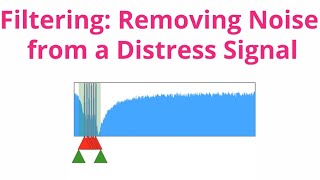

Students learn the basic principles of filtering as well as how to apply digital filters to extract part of an audio signal by using an interactive online demo website. They apply this knowledge in order to isolate a voice recording from a heavily noise-contaminated sound wave. After completing the associated lesson, expect students to be able to attempt (and many successfully finish) this activity with minimal help from the instructor.
View the full activity on TeachEngineering:
https://www.teachengineering.o....rg/activities/view/c
TeachEngineering has over 1,500 FREE lessons and activities. Visit https://www.teachengineering.org/ for more
music - water please

Can you communicate without electricity? In this activity, students explore a problem in which a school’s power has gone out and they need to deliver an important message to a neighboring first grade classroom. However, they must stay within the following constraints: they cannot use cell phones and they have to stay in their classroom while doing so. Students research and use a variety of tools and materials to build, test, and retest a device that communicates sound the most clearly while learning about and demonstrating how sound causes vibrations.
This engineering curriculum aligns to Next Generation Science Standards (NGSS).
View the full activity on TeachEngineering:
https://www.teachengineering.o....rg/activities/view/u
TeachEngineering has over 1,500 FREE lessons and activities. Visit https://www.teachengineering.org/ for more
Music:

Through Internet research, patent research, standards and codes research, user interviews (if possible) and other techniques (idea web, reverse engineering), students further develop the context for their design challenge. In subsequent activities, the design teams use this body of knowledge about the problem to generate product design ideas. (Note: Conduct this activity in the context of a design project that students are working on, which could be a challenge determined by the teacher, brainstormed with the class, or the example project challenge provided [to design a prosthetic arm that can perform a mechanical function]. This activity is Step 2 in a series of seven steps that guide students through the engineering design process.)
View the full activity on TeachEngineering:
https://www.teachengineering.o....rg/activities/view/c
TeachEngineering has over 1,500 FREE lessons and activities. Visit https://www.teachengineering.org/ for more
Music - Aimless Amos

Students examine how the power output of a photovoltaic (PV) solar panel is affected by temperature changes. Using a 100-watt lamp and a small PV panel connected to a digital multimeter, teams vary the temperature of the panel and record the resulting voltage output. They plot the panel's power output and calculate the panel's temperature coefficient.
View the full lesson on TeachEngineering:
https://www.teachengineering.o....rg/activities/view/c
TeachEngineering has over 1,500 FREE lessons and activities. Visit https://www.teachengineering.org/ for more
Music: Cats and Gats by Dyalla
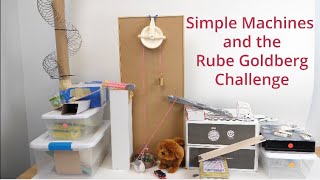
Students research simple machines and other mechanisms as they learn about and make Rube Goldberg machines. Working in teams, students design and build their own Rube Goldberg devices with 10 separate steps, including at least six simple machines. In addition to the use of readily available classroom craft supplies, 3D printers may be used (if available) to design and print one or more device mechanisms. Students love this open-ended, team-building project with great potential for creativity and humor.
View the full activity at TeachEngineering:
https://www.teachengineering.o....rg/makerchallenges/v
TeachEngineering has over 1,500 FREE lessons and activities. Visit http://www.TeachEngineering.org for more!
Music: Roger That - Silent Partner

Students are presented with examples of the types of problems that environmental engineers solve, specifically focusing on water quality issues. Topics include the importance of clean water, the scarcity of fresh water, tap water contamination sources, and ways environmental engineers treat contaminated water.
View the full lesson on TeachEngineering:
https://www.teachengineering.o....rg/lessons/view/wst_
TeachEngineering has over 1,900 FREE lessons and activities. Visit http://www.TeachEngineering.org for more!

Students work as engineers to design and test trebuchets (in this case LEGO® MINDSTORMS® robots) that can launch objects. During the testing stage, they change one variable at a time to study its effect on the outcome of their designs. Specifically, they determine how far objects travel depending on their weights. As students learn about the different components of robot design and the specific function controls, they determine what design features are important for launching objects.
View the full activity at TeachEngineering:
https://www.teachengineering.o....rg/activities/view/n
TeachEngineering has over 1,500 FREE lessons and activities. Visit http://www.TeachEngineering.org for more!
Music: Straighty Baby - Audionautix
Straighty Baby by Audionautix is licensed under a Creative Commons Attribution license (https://creativecommons.org/licenses/by/4.0/)
Artist: http://audionautix.com/

Building on an introduction to statics, dynamics free-body diagrams, combustion and thermodynamics provided by the associated lesson, students design, construct and test their own rocket engines using sugar and potassium nitrate—an opportunity to apply their knowledge of stoichiometry. This activity helps students understand that the energy required to launch a rocket comes from the chemical energy stored in the rocket fuel. The performance of each engine is tested during a rocket launch, after which students determine the reasons for the success or failure of their rockets.
View the full lesson on TeachEngineering:
https://www.teachengineering.o....rg/activities/view/u
TeachEngineering has over 1,500 FREE lessons and activities. Visit https://www.teachengineering.org/ for more

Students learn about viscoelastic material behavior, such as strain rate dependence and creep, by using silly putty, an easy-to-make polymer material. They learn how to make silly putty, observe its behavior with different strain rates, and then measure the creep time of different formulations of silly putty. By seeing the viscoelastic behavior of silly putty, students start to gain an understanding of how biological materials function. Students gain experience in data collection, graph interpretation, and comparison of material properties to elucidate material behavior. It is recommended that students perform Part 1 of the activity first (making and playing with silly putty), then receive the content and concept information in the associated lesson, and then complete Part 2 of the activity (experimenting and making measurements with silly putty).
View the full activity on TeachEngineering:
https://www.teachengineering.org/acti...
TeachEngineering has over 1,500 FREE lessons and activities. Visit https://www.teachengineering.org/ for more!
Music: Hyperfun - Kevin MacLeod
Hyperfun by Kevin MacLeod is licensed under a Creative Commons Attribution license (https://creativecommons.org/licenses/...)
Source: http://incompetech.com/music/royalty-...
Artist: http://incompetech.com/
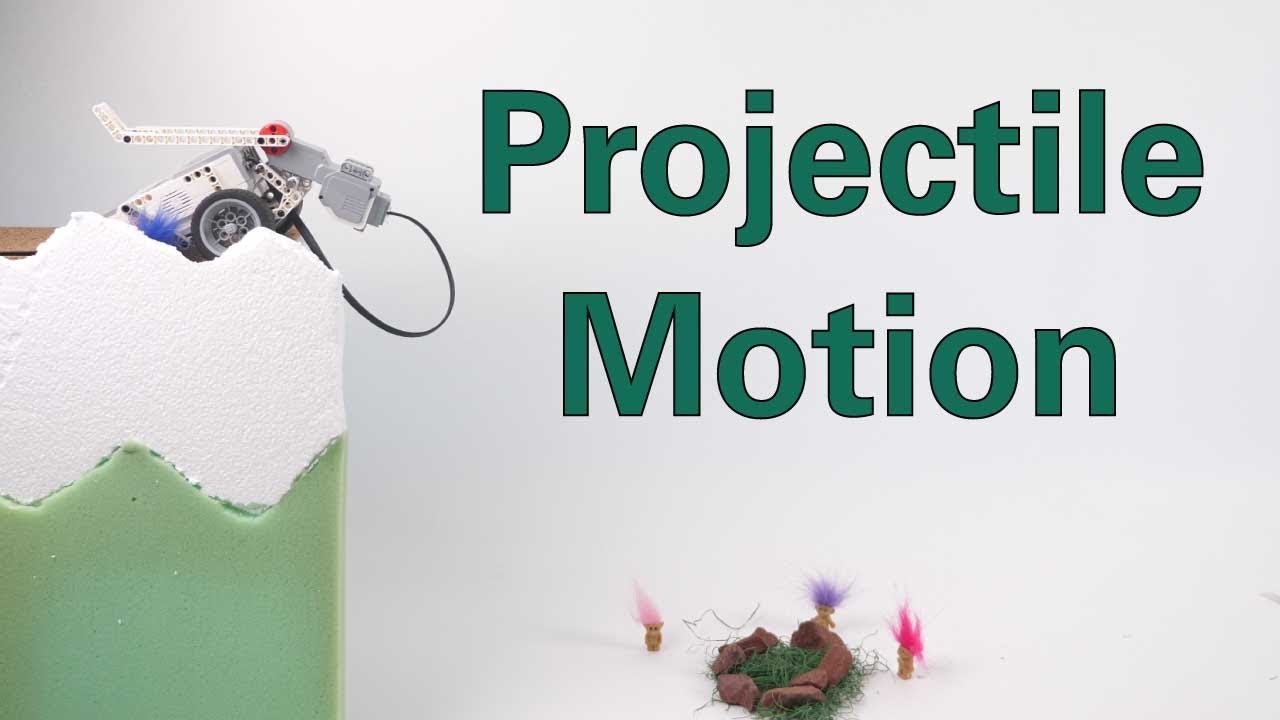
Students are introduced to the concept of projectile motion, of which they are often familiar from life experiences, such as playing sports like basketball and baseball, even though they may not understand the physics involved. Students use tabletop-sized robots to build projectile throwers and measure motion using sensors. They compute distances and velocities using simple kinematic equations and confirm their results through measurements by hand. To apply the concept, students calculate the necessary speed of an object to reach a certain distance in a hypothetical scenario: A group of hikers stranded at the bottom of a cliff need food, but rescuers cannot deliver it themselves, so they must devise a way to get the food to the hikers. A student worksheet is provided.
View the full activity at TeachEngineering:
https://www.teachengineering.o....rg/activities/view/n
TeachEngineering has over 1,500 FREE lessons and activities. Visit http://www.TeachEngineering.org for more!
Music: Dream of a Day - Density & Time

On your mark… get set… design! Students discover how sports arenas, rules, and equipment would change if the Olympic Games were conducted on the Moon. During the process, they learn about the engineering design process and physics concepts such as gravity, velocity, acceleration, and friction. They use free online design and programming tools which help them to improve their conceptions and design skills. This activity was developed to be implemented fully online; however, it could easily be adapted for in-class or hybrid classroom use.
This engineering curriculum aligns to Next Generation Science Standards (NGSS).
View the full activity on TeachEngineering:
https://www.teachengineering.o....rg/activities/view/p
TeachEngineering has over 1,500 FREE lessons and activities. Visit https://www.teachengineering.org/ for more
Music: Believer

Students use simple household materials, such as PVC piping and compact mirrors, to construct models of laser-based security systems. The protected object (a "mummified troll" or another treasure of your choosing) is placed "on display" in the center of the modeled room and protected by a laser system that utilizes a laser beam reflected off mirrors to trigger a light trip sensor with alarm.
View the full activity on TeachEngineering: https://www.teachengineering.o....rg/activities/view/v
TeachEngineering has over 1,500 FREE lessons and activities. Visit http://www.TeachEngineering.org for more!
Music: Double Agent - Everet Almond

Students design systems that use microbes to break down a water pollutant (in this case, sugar). They explore how temperature affects the rate of pollutant decomposition.
View the full activity at TeachEngineering:
https://www.teachengineering.o....rg/activities/view/u
TeachEngineering has over 1,500 FREE lessons and activities. Visit http://www.TeachEngineering.org for more!
Music: Why Did You Do It - Everet Almond

Students apply the mechanical advantages and problem-solving capabilities of six types of simple machines (wedge, wheel and axle, lever, inclined plane, screw, pulley) as they discuss modern structures in the spirit of the engineers and builders of the great pyramids. While learning the steps of the engineering design process, students practice teamwork, creativity and problem solving.
View the full lesson on TeachEngineering:
https://www.teachengineering.o....rg/lessons/view/cub_
Teach Engineering has over 1,900 FREE lessons and activities. Visit http://www.TeachEngineering.org for more!

By tracing the movement of radiation released during an accident at the Chernobyl nuclear power plant, students see how air pollution, like particulate matter, can become a global issue.
View the full activity on TeachEngineering:
https://www.teachengineering.o....rg/activities/view/c
TeachEngineering has over 1,500 FREE lessons and activities. Visit https://www.teachengineering.org/ for more
Music: Blue Macaw

Students are asked to design methods to filter water using ordinary materials, while also considering their designs' material and cost efficiencies. They learn about the importance of water and its role in our everyday lives. They come to understand what must occur each day so that they can have clean water.
View the full activity on TeachEngineering:
https://www.teachengineering.o....rg/activities/view/w
TeachEngineering has over 1,500 FREE lessons and activities. Visit http://www.TeachEngineering.org for more!

Student teams investigate the properties of electromagnets. They create their own small electromagnets and experiment with ways to change their strength to pick up more paperclips. Students learn about ways that engineers use electromagnets in everyday applications.
View the full activity on TeachEngineering:
https://www.teachengineering.o....rg/activities/view/c
TeachEngineering has over 1,500 FREE lessons and activities. Visit https://www.teachengineering.org/ for more!
Music: Hyperfun - Kevin MacLeod
Hyperfun by Kevin MacLeod is licensed under a Creative Commons Attribution license (https://creativecommons.org/licenses/by/4.0/)
Source: http://incompetech.com/music/r....oyalty-free/index.ht
Artist: http://incompetech.com/

In the ongoing "Lost in the Amazon" scenario, students are provided with a list of supplies that survived their plane's crash in the Amazon jungle. They organize the supplies to classify which items are useful for surviving in the Amazon. They use estimation and basic math skills to determine how much they can carry and decide which items to bring with them to survive in the jungle until they reach their destination.
This engineering curriculum aligns to Next Generation Science Standards (NGSS).
View the full activity on TeachEngineering:
https://www.teachengineering.o....rg/activities/view/c
TeachEngineering has over 1,500 FREE lessons and activities. Visit https://www.teachengineering.org/ for more
Music: Straighty Baby

What is engineering? What does it take to be an engineer? Do you need to be a math whiz? Aspiring engineers tackle these questions and help demystify their chosen profession.
This video was created by the National Science Foundation
https://www.youtube.com/watch?v=FAJGx3zP-Eo
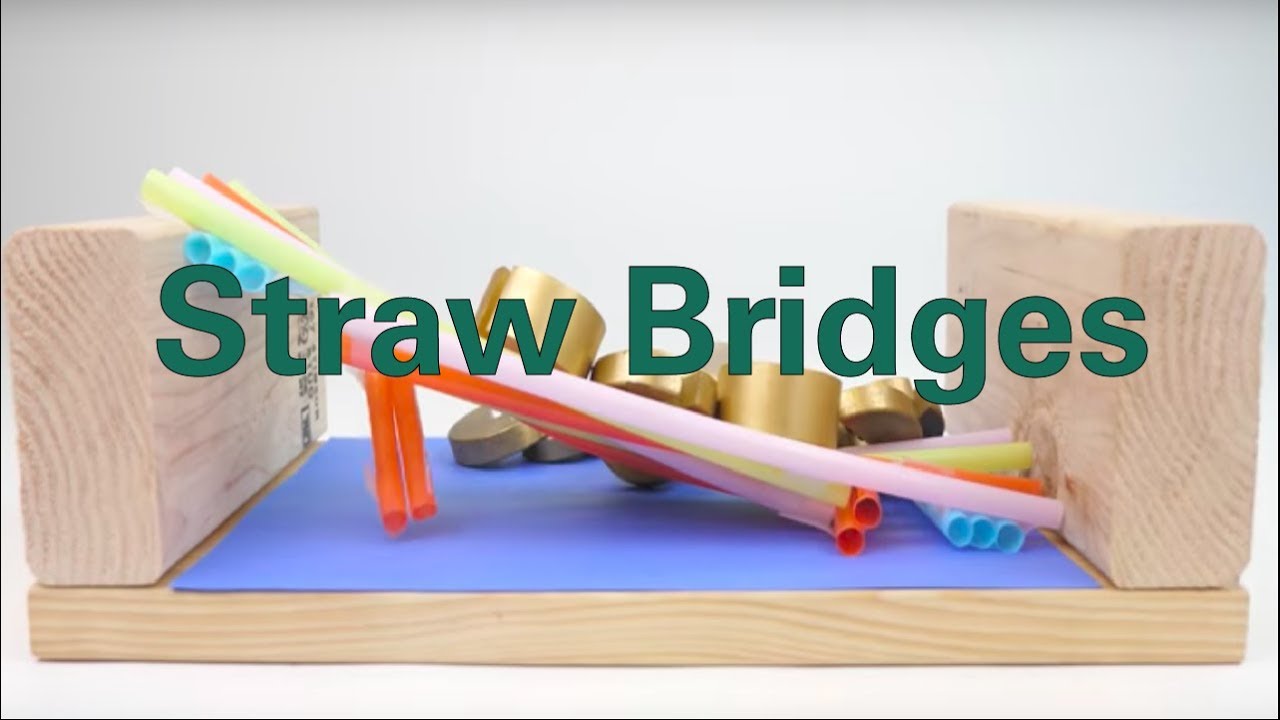
Working as engineering teams, students design and create model beam bridges using plastic drinking straws and tape as their construction materials. Their goal is to build the strongest bridge with a truss pattern of their own design, while meeting the design criteria and constraints. They experiment with different geometric shapes and determine how shapes affect the strength of materials. Let the competition begin!
View the full activity on TeachEngineering: https://www.teachengineering.o....rg/activities/view/c
TeachEngineering has over 1,500 FREE lessons and activities. Visit http://www.TeachEngineering.org for more!
Music: Above and Beyond - Silent Partner

For this maker challenge, students move through the engineering design process. They investigate Python and Jupyter Notebook to analyze real astronomical images in order to calculate the interstellar distance to a star cluster across the Milky Way from our own Solar System. They learn how to write Python code that runs in a Jupyter Notebook so they can determine the brightness of stars in an astronomical image. Next, students complete the functions in the project to determine how far away a single star in the cluster is from Earth. This is a chance to try hands-on astronomical research techniques in the field of aperture photometry. The real astronomical image data will be directly manipulated and analyzed by code the students create. Groups compare their final images and results to answer questions about the astronomy of stars and stellar distances within the Milky Way. Students experience their discoveries the same way Harvard scientist Harlow Shapley first learned the true size and shape of the Milky Way.
View the full activity on TeachEngineering:
https://www.teachengineering.o....rg/makerchallenges/v
TeachEngineering has over 1,500 FREE lessons and activities. Visit https://www.teachengineering.org/ for more
Music: Aimless Amos

In this activity, students learn about the engineering design process and use it to solve a design problem involving detergent and dirty clothes. The problem presented is a spot on a favorite shirt while on a camping trip. Students move through the engineering design process, as they design, build, and test a prototype of a portable washing machine
View the full activity on TeachEngineering:
https://www.teachengineering.o....rg/activities/view/u
TeachEngineering has over 1,500 FREE lessons and activities. Visit https://www.teachengineering.org/ for more
Music: Fig Leaf Rag - Kevin MacLeod

Students see how potential energy (stored energy) can be converted into kinetic energy (motion). Acting as if they were engineers designing vehicles, they use rubber bands, pencils and spools to explore how elastic potential energy from twisted rubber bands can roll the spools. They brainstorm, prototype, modify, test and redesign variations to the basic spool racer design in order to meet different design criteria, ultimately facing off in a race competition. These simple-to-make devices store potential energy in twisted rubber bands and then convert the potential energy to kinetic energy upon release.
View the full activity on TeachEngineering:
https://www.teachengineering.o....rg/activities/view/u
TeachEngineering has over 1,500 FREE lessons and activities. Visit https://www.teachengineering.org/ for more!
Music: Double Agent - Everet Almond

Students are introduced to the structure, function and purpose of locks and dams, which involves an introduction to Pascal's law, water pressure and gravity.
View the full lesson on TeachEngineering:
https://www.teachengineering.o....rg/lessons/view/cub_
TeachEngineering has over 1,500 FREE lessons and activities. Visit http://www.TeachEngineering.org for more!

Students apply several methods developed to identify and interpret patterns to the identification of fingerprints. They look at their classmates' fingerprints, snowflakes, and "spectral fingerprints" of elements. They learn to identify each image as unique, yet part of a group containing recognizable similarities.
View the full activity on TeachEngineering:
https://www.teachengineering.o....rg/activities/view/c
TeachEngineering has over 1,500 FREE lessons and activities. Visit http://www.TeachEngineering.org for more!
Audio: campfire_song