Science


In this activity, students examine how different balls react when colliding with different surfaces. Also, they will have plenty of opportunity to learn how to calculate momentum and understand the principle of conservation of momentum.
View the full activity at TeachEngineering:
https://www.teachengineering.o....rg/activities/view/c
TeachEngineering has over 1,500 FREE lessons and activities. Visit http://www.TeachEngineering.org for more!
Music: Electrodoodle- Kevin MacLeod

Demonstrations explain the concepts of energy forms (sound, chemical, radiant [light], electrical, atomic [nuclear], mechanical, thermal [heat], and states (potential, kinetic).
View the full activity on TeachEngineering:
https://www.teachengineering.o....rg/activities/view/c
TeachEngineering has over 1,500 FREE lessons and activities. Visit https://www.teachengineering.org/ for more
Music: Milos - Eveningland

Students take the concept of etch-a-sketch a step further. Using iron filings, they begin visualizing magnetic field lines. To do so, they use a compass to read the direction of the magnet's magnetic field. Then, as they rotate the filings about the magnet, they observe the behavior of iron filings near the magnet. Finally, students study the behavior of iron filings suspended in mineral oil, which displays the magnetic field in three dimensions.
View the full lesson on TeachEngineering:
https://www.teachengineering.o....rg/activities/view/v
TeachEngineering has over 1,500 FREE lessons and activities. Visit https://www.teachengineering.org/ for more
Music - Bicycle Reunited by Kevin MacLeod

The engineers at Splash Engineering (the students) have been commissioned by Thirsty County to conduct a study of evaporation and transpiration in their region. During one week, students observe and measure (by weight) the ongoing evaporation of water in pans set up with different variables, and then assess what factors may affect evaporation. Variables include adding to the water an amount of soil and an amount of soil with growing plants.
View the full lesson on TeachEngineering:
https://www.teachengineering.o....rg/activities/view/c
TeachEngineering has over 1,900 FREE lessons and activities. Visit http://www.TeachEngineering.org for more!
Daily Beetle - Kevin MacLeod

Students investigate motors and electromagnets as they construct their own simple electric motors using batteries, magnets, paperclips and wire.
View the full activity on TeachEngineering:
https://www.teachengineering.org/acti...
TeachEngineering has over 1,500 FREE lessons and activities. Visit https://www.teachengineering.org/ for more!
Music: Deep Hat - Vibe Tracks

Students use a spring scale to drag an object such as a ceramic coffee cup along a table top or the floor. The spring scale allows them to measure the frictional force that exists between the moving cup and the surface it slides on. By modifying the bottom surface of the cup, students find out what kinds of surfaces generate more or less friction.
View the full lesson on TeachEngineering:
https://www.teachengineering.o....rg/activities/view/d
TeachEngineering has over 1,500 FREE lessons and activities. Visit https://www.teachengineering.org/ for more
Music: Coffee Stains, Riot

In the culminating activity of the unit, students explore and apply their knowledge of forces, friction, acceleration and gravity in a two-part experiment. First, student groups measure the average acceleration of a textbook pulled along a table by varying weights (with optional extensions, such as with the addition of a pulley or an inclined plane). Then, with a simple modification to the same experimental setup, teams test different surfaces for the effects of friction, graphing and analyzing their results. Students also consider the real-world applications for high- and low-friction surfaces for different situations and purposes, seeing how forces play a role in engineering design and material choices.
View the full activity on TeachEngineering:
https://www.teachengineering.o....rg/activities/view/u
TeachEngineering has over 1,500 FREE lessons and activities. Visit https://www.teachengineering.org/ for more
Music - Brightly Fancy Oddities

Three short, hands-on, in-class demos expand students' understanding of energy. First, using peanuts and heat, students see how the human body uses food to make energy. Then, students create paper snake mobiles to explore how heat energy can cause motion. Finally, students determine the effect that heat energy from the sun (or a lamp) has on temperature by placing pans of water in different locations.
View the full activity at TeachEngineering:
https://www.teachengineering.o....rg/activities/view/c
TeachEngineering has over 1,500 FREE lessons and activities. Visit http://www.TeachEngineering.org for more!
Music: Turn Up Burn Up - Diamond Ortiz

For this maker challenge, students become biomedical engineers who design, create, and test a medical device that measures a patient’s pulse using a microcontroller, LED, and light sensor. Students use data collected from the device they build to determine how to best visualize the results, so that a doctor can view the patient’s pulse on the computer screen. During the challenge, students learn about basic coding, the capabilities of microcontrollers, how sensors gather data, how the human circulatory system works, and how to plot real data. Finally, students are challenged to make their systems portable so that they create wearable health technology. This is a great project for a high school senior design team project.
View the full activity at TeachEngineering:
https://www.teachengineering.o....rg/makerchallenges/v
TeachEngineering has over 1,500 FREE lessons and activities. Visit http://www.TeachEngineering.org for more!
Music: Komputo - Francis Preve

Students learn about the importance of creating and testing prototypes during the engineering design process. They start by building prototypes, which is a special type of model used to test new design ideas. Students gain experience using a variety of simple building materials, such as foam core board, balsa wood, cardstock and hot glue. They present their prototypes to the class for user testing and in the following activity create prototype iterations based on feedback. (Note: Conduct this activity in the context of a design project that students are working on; this activity reflects Step 5 and Step 6 in a series of seven steps that guide students through the engineering design loop.)
This engineering curriculum aligns to Next Generation Science Standards (NGSS).
View the full activity on TeachEngineering:
https://www.teachengineering.o....rg/activities/view/c
TeachEngineering has over 1,500 FREE lessons and activities. Visit https://www.teachengineering.org/ for more
Music: Limo Ride

Using spaghetti and marshmallows, students experiment with different structures to determine which ones are able to handle the greatest amount of load. Their experiments help them to further understand the effects that compression and tension forces have with respect to the strength of structures. Spaghetti cannot hold much tension or compression; therefore, it breaks very easily. Marshmallows handle compression well, but do not hold up to tension.
View the full activity at TeachEngineering:
https://www.teachengineering.o....rg/activities/view/c
TeachEngineering has over 1,500 FREE lessons and activities. Visit https://www.teachengineering.org/ for more!
Music: Toe Jam - Diamond Ortiz

Students work within constraints to construct model trusses and then test them to failure as a way to evaluate the relative strength of different truss configurations and construction styles. Each student group uses Popsicle sticks and hot glue to build a different truss configuration from a provided diagram of truss styles. Within each group, each student builds two exact copies of the team's truss configuration using his/her own construction method, one of which is tested under shear conditions and the other tested under compression conditions. Results are compiled and reviewed as a class to analyze the strength of different types of shapes and construction methods under the two types of loads. Students make and review predictions, and normalize strengths. Teams give brief presentations to recap their decisions, results and analysis.
View the full activity on TeachEngineering:
https://www.teachengineering.o....rg/activities/view/c
TeachEngineering has over 1,500 FREE lessons and activities. Visit https://www.teachengineering.org/ for more
Music - Daily_Beetle by Kevin MacLeod

Students learn about the engineering design process and how products may be reinvented to serve new purposes. Working in groups, students design a type of slime. After creating their slime, the teacher turns out the lights and the students see that the slime they made actually glows in the dark! The groups investigate how to take their new discoveries and apply them to industrial applications. Once they have determined a use for their glowing slime, each group must build/design and test their product outside of class. The groups then create advertisements (videos, brochures, performances, etc.) for their new product(s) or application(s), and present to the judges for review similar to a “Shark Tank” environment.
View the full activity at TeachEngineering:
https://www.teachengineering.o....rg/makerchallenges/v
TeachEngineering has over 1,500 FREE lessons and activities. Visit http://www.TeachEngineering.org for more!
Music: Aimless Amos

Students use their creative skills to determine a way to safely mail raw (dry, uncooked) spaghetti using only the provided materials. To test the packing designs, the spaghetti is mailed through the postal system and evaluated after delivery.
View the full activity on TeachEngineering: https://www.youtube.com/watch?v=sP2KF1HWXZQ&t=7s
TeachEngineering has over 1,500 FREE lessons and activities. Visit http://www.TeachEngineering.org for more!
Music: Italian Afternoon - Twin Musicom
Italian Afternoon by Twin Musicom is licensed under a Creative Commons Attribution license (https://creativecommons.org/licenses/by/4.0/)
Artist: http://www.twinmusicom.org/

Through this activity, Bernoulli's principle as it relates to winged flight is demonstrated. Student pairs use computers and an online virtual wind tunnel to see the influence of camber and airfoil angle of attack on lift. Activity and math worksheets are provided.
View the full activity on TeachEngineering:
https://www.teachengineering.o....rg/activities/view/c
TeachEngineering has over 1,500 FREE lessons and activities. Visit https://www.teachengineering.org/ for more
Music - Santo_Rico
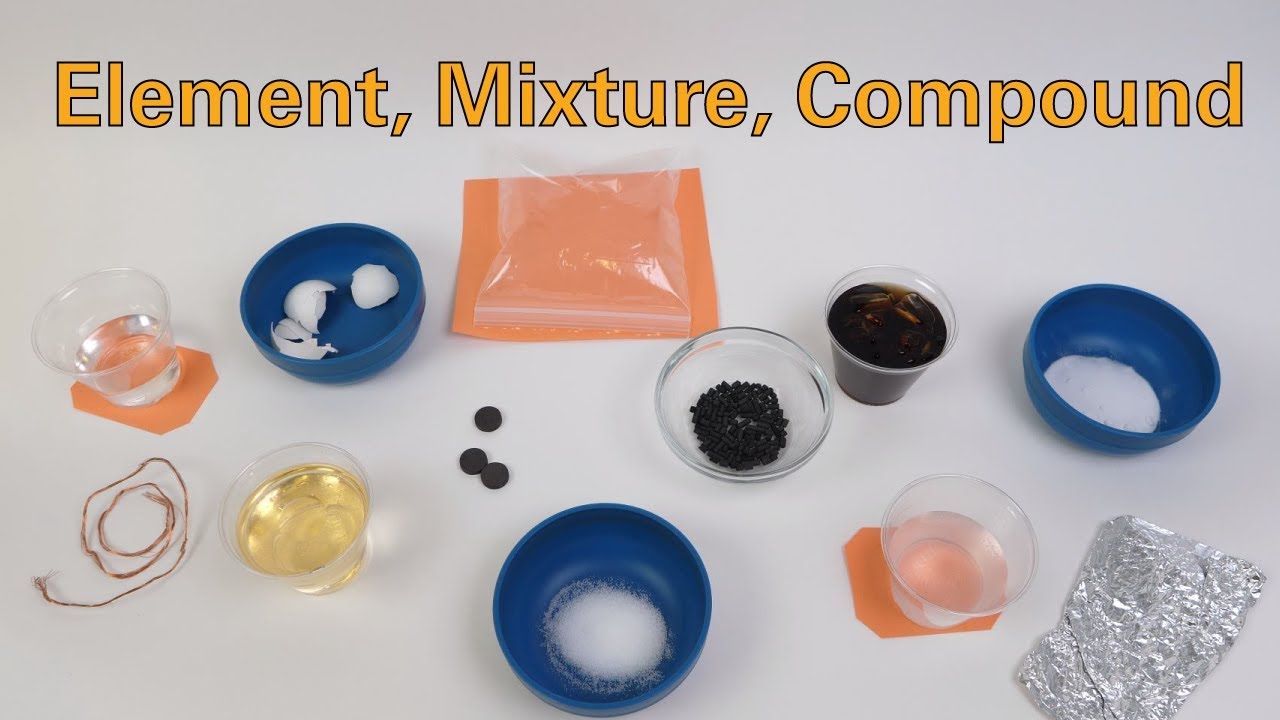
Students gain a better understanding of the different types of materials as pure substances and mixtures and learn to distinguish between homogeneous and heterogeneous mixtures by discussing an assortment of example materials they use and encounter in their daily lives.
View the full activity at TeachEngineering:
https://www.teachengineering.o....rg/activities/view/u
TeachEngineering has over 1,500 FREE lessons and activities. Visit http://www.TeachEngineering.org for more!
Music: Sky Scraper - Geographer

Student groups are provided with a generic car base on which to design a device/enclosure to protect an egg as it rolls down a ramp at increasing slopes. During this in-depth physics-science-technology-math activity, student teams design, build and test their prototype creations to meet the design challenge, and then perform basic mathematical calculations using collected data, including a summative cost-benefit ratio. The activity has great potential to build on with additional physics and math explorations. Many student handouts are provided.
This engineering curriculum aligns to Next Generation Science Standards (NGSS).
View the full activity on TeachEngineering:
https://www.teachengineering.o....rg/activities/view/s
TeachEngineering has over 1,500 FREE lessons and activities. Visit https://www.teachengineering.org/ for more
Music: California Wind - Bruno E

How can you tell if harmful bacteria are growing in your food? Students learn to culture bacteria in order to examine ground meat and bagged salad samples, looking for common foodborne bacteria such as E. coli or salmonella. After 2-7 days of incubation, they observe and identify the resulting bacteria. Based on their first-hand experiences conducting this conventional biological culturing process, they consider its suitability in meeting society's need for ongoing detection of harmful bacteria in its food supply, leading them to see the need for bioengineering inventions for rapid response bio-detection systems.
View the full activity on TeachEngineering: https://www.teachengineering.o....rg/curriculum/browse
TeachEngineering has over 1,500 FREE lessons and activities. Visit http://www.TeachEngineering.org for more!
Music: Jazzy Frenchy- Bensound.com

Students control small electric motors with Arduino microcontrollers to make simple sticky-note spinning fans and then explore other variations of basic motor systems. Through this exercise, students create circuits that include transistors acting as switches. They alter and experiment with given basic motor code, learning about the Arduino analogWrite command and pulse width modulation (PWM). Students learn the motor system nuances that enable them to create their own motor-controlled projects. They are challenged to make their motor systems respond to temperature or light, to control speed with knob or soft potentiometers, and/or make their motors go in reverse (using a motor driver shield or an H-bridge). Electric motors are used extensively in industrial and consumer products and the fundamental principles that students learn can be applied to motors of all shapes and sizes.
View the full activity at TeachEngineering:
https://www.teachengineering.o....rg/makerchallenges/v
TeachEngineering has over 1,500 FREE lessons and activities. Visit http://www.TeachEngineering.org for more!
Music: Fuggetaboutit

What are simple machines? How do engineers use them to accomplish tasks and make work easier? TeachEngineering explores how to utilize and combine the six simple machines to make tools and devices that engineers use every day!
TeachEngineering has over 1,500 FREE lessons and activities. Visit https://www.teachengineering.org for more!
Music: Awaken

Students test the insulation properties of different materials by timing how long it takes ice cubes to melt in the presence of various insulating materials. Students learn about the role that thermal insulation materials can play in reducing heat transfer by conduction, convection and radiation, as well as the design and implementation of insulating materials in construction and engineering.
View the full activity at TeachEngineering:
https://www.teachengineering.o....rg/activities/view/u
TeachEngineering has over 1,500 FREE lessons and activities. Visit http://www.TeachEngineering.org for more!
Music: Cali Buzz - Yung Logos

Students learn more about assistive devices, specifically biomedical engineering applied to computer engineering concepts, with an engineering challenge to create an automatic floor cleaner computer program. Following the steps of the design process, they design computer programs and test them by programming a simulated robot vacuum cleaner (a LEGO robot) to move in designated patterns. Successful programs meet all the design requirements.
View the full activity at TeachEngineering:
https://www.teachengineering.o....rg/activities/view/w
TeachEngineering has over 1,500 FREE lessons and activities. Visit http://www.TeachEngineering.org for more!
Music: Feel Good Rock - Audionautix

Students collect data from a sugar-level simulation by categorizing different food and drink solutions and measuring their impact on glucose levels. They then use this data to train a machine learning model using the "Machine Learning for Kids" platform. By inputting and organizing their data, students train the model to predict blood sugar responses and classify meals as either healthy or unhealthy. They test their model’s accuracy with new inputs and make adjustments to improve its performance. Through this hands-on process, students gain an understanding of how machine learning works, the importance of high-quality data, and how these technologies can support real-world health applications, such as managing diabetes.
View the full lesson on TeachEngineering:
https://www.teachengineering.o....rg/activities/view/r
TeachEngineering has over 1,900 FREE lessons and activities. Visit http://www.TeachEngineering.org for more!
Cold Funk Funkorama - Kevin MacLeod

Civil engineers design structures such as buildings, dams, highways and bridges. Student teams explore the field of engineering by making bridges using spaghetti as their primary building material. Then they test their bridges to see how much weight they can carry before breaking.
View the full activity at TeachEngineering:
https://www.teachengineering.o....rg/activities/view/w
TeachEngineering has over 1,500 FREE lessons and activities. Visit http://www.TeachEngineering.org for more!
Music: Undeniable - Vibe Tracks

In this activity, students are divided into a group of hormones and a group of receptors. The hormones have to find their matching receptors, and the pair, once matched, perform a given action. This activity helps students learn about the specificity of hormone-receptor interactions within the endocrine system.
View the full activity on TeachEngineering:
https://www.teachengineering.o....rg/activities/view/n
TeachEngineering has over 1,500 FREE lessons and activities. Visit https://www.teachengineering.org/ for more
Music: Unicorn Heads - Orange Octopus