Science


Students work in teams of two to discover the relative positions of the Earth, Sun and Moon that produce the different phases of the Moon. Groups are each given a Styrofoam ball that they attach to a pencil so that it looks like a lollipop. In this acting-out model exercise, this ball on a stick represents the Moon, the students represent the Earth and a hanging lightbulb serves as the Sun. Students move the "Moon" around them to discover the different phases. They fill in the position of the Moon and its corresponding phase in a worksheet.
View the full activity on TeachEngineering:
https://www.teachengineering.o....rg/activities/view/d
TeachEngineering has over 1,500 FREE lessons and activities. Visit https://www.teachengineering.org/ for more
music - cosmos

Concluding a two-part lab activity, students use triple balance beams and graduated cylinders to take measurements and calculate densities of several household liquids and compare them to the densities of irregularly shaped objects (as determined in Part 1). Then they create density columns with the three liquids and four solid items to test their calculations and predictions of the different densities. Once their density columns are complete, students determine the effect of adding detergent to the columns. After this activity, present the associated Density & Miscibility lesson for a discussion about why the column layers do not mix.
View the full lesson on TeachEngineering:
https://www.teachengineering.o....rg/activities/view/w
TeachEngineering has over 1,500 FREE lessons and activities. Visit https://www.teachengineering.org/ for more
Music: Electrodoodle
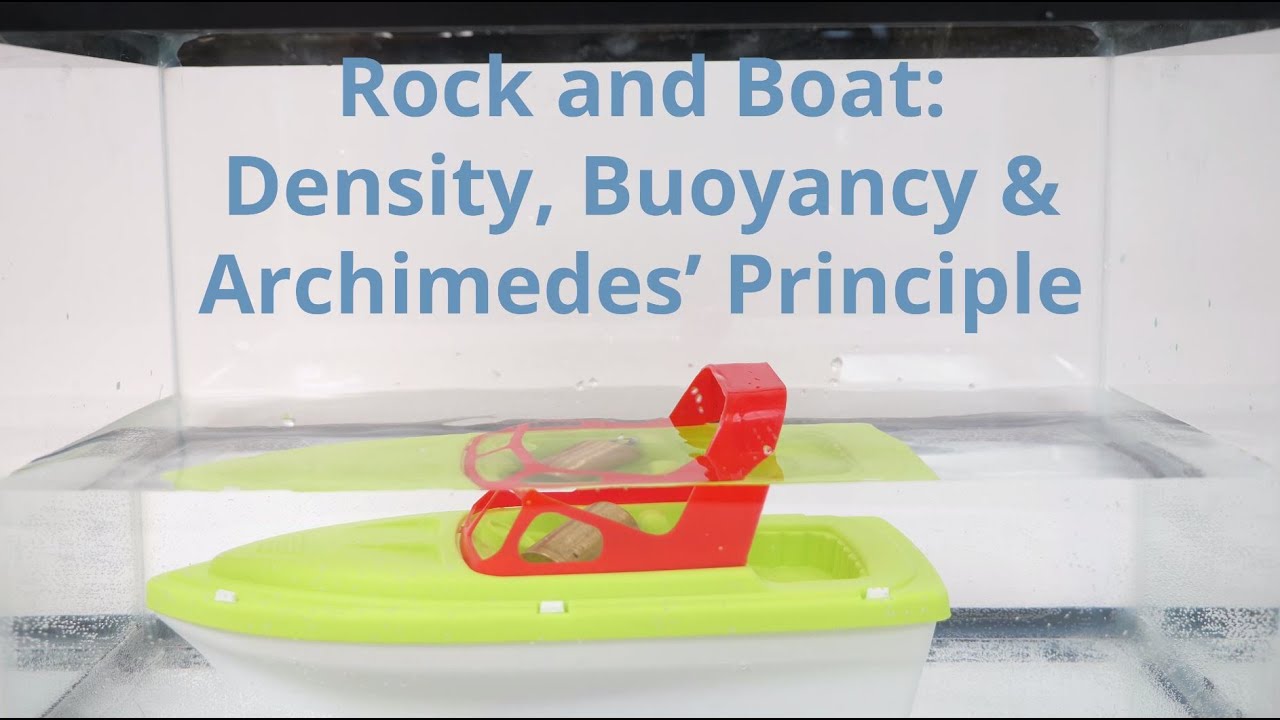
Students are presented with a challenge question that they must answer with scientific and mathematical reasoning. The challenge question is: "You have a large rock on a boat that is floating in a pond. You throw the rock overboard and it sinks to the bottom of the pond. Does the water level in the pond rise, drop or remain the same?" Students observe Archimedes' principle in action in this model recreation of the challenge question when a toy boat is placed in a container of water and a rock is placed on the floating boat. Students use terminology learned in the classroom as well as critical thinking skills to derive equations needed to answer this question.
View the full activity at TeachEngineering:
https://www.teachengineering.o....rg/activities/view/u
TeachEngineering has over 1,500 FREE lessons and activities. Visit http://www.TeachEngineering.org for more!
Music: Roger That - Silent Partner

Students learn how to create two-dimensional representations of three-dimensional objects by utilizing orthographic projection techniques. They build shapes using cube blocks and then draw orthographic and isometric views of those shapes—which are the side views, such as top, front, right—with no depth indicated. Then working in pairs, one blindfolded partner describes a shape by feel alone as the other partner draws what is described. A worksheet is provided. This activity is part of a multi-activity series towards improving spatial visualization skills.
View the full activity on TeachEngineering:
https://www.teachengineering.o....rg/activities/view/c
TeachEngineering has over 1,500 FREE lessons and activities. Visit https://www.teachengineering.org/ for more
Music: EDM Detection Mode

Students design and build their own model levees. Acting as engineers for their city, teams create sturdy barriers to prevent water from flooding a city in the event of a hurricane.
View the full activity on TeachEngineering:
https://www.teachengineering.o....rg/activities/view/c
TeachEngineering has over 1,500 FREE lessons and activities. Visit http://www.TeachEngineering.org for more!
Music: Jazzy Frenchy - Bensound.com

While the creation of a dam provides many benefits, it can have negative impacts on local ecosystems. Using the associated activity students learn about the major environmental impacts of dams and the engineering solutions used to address them.
View the full lesson on Teach Engineering:
https://www.teachengineering.o....rg/lessons/view/cub_
Teach Engineering has over 1,500 FREE lessons and activities. Visit https://www.teachengineering.org/ for more
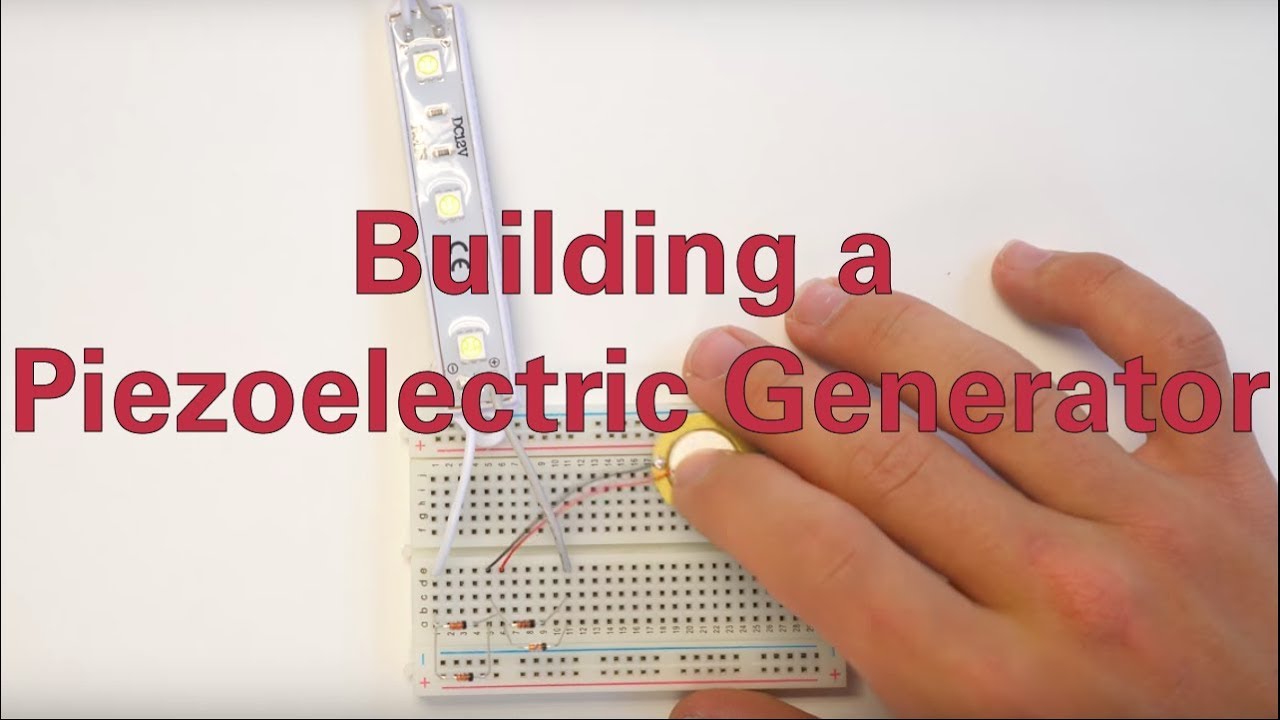
Students learn how to build simple piezoelectric generators to power LEDs. To do this, they incorporate into a circuit a piezoelectric element that converts movements they make (mechanical energy) into electrical energy, which is stored in a capacitor (short-term battery). Once enough energy is stored, they flip a switch to light up an LED. Students also learn how much (surprisingly little) energy can be converted using the current state of technology for piezoelectric materials.
View the full activity on TeachEngineering: https://www.teachengineering.o....rg/activities/view/u
TeachEngineering has over 1,500 FREE lessons and activities. Visit http://www.TeachEngineering.org for more!
Music: Sugar - Vibe Tracks

This activity allows students to gain a better understanding for how algorithms work. Students engage in an activity which symbolizes the Google PageRank algorithm. Students divide into groups and follow specific steps, in the form of a ball game, in order to match the results of the Google PageRank algorithm. They also gain a general understanding for the functionality of networking on the internet. Students visualize the fundamental importance of algorithms, which can make calculations fast and easy.
View the full activity on TeachEngineering:
https://www.teachengineering.o....rg/activities/view/c
TeachEngineering has over 1,500 FREE lessons and activities. Visit https://www.teachengineering.org/ for more
Music: Cold Funk - Funkorama

Students perform a macroinvertebrate survey to gauge the health of a local river. They collect water samples and count macroinvertebrates to learn how the health of a river's ecosystem can be determined by its river insect population.
View the full lesson on TeachEngineering:
https://www.teachengineering.o....rg/activities/view/c
TeachEngineering has over 1,900 FREE lessons and activities. Visit http://www.TeachEngineering.org for more!
Music: Fudgetaboutit

Students design and build paper rockets around film canisters, which serve as engines. An antacid tablet and water are put into each canister, reacting to form carbon dioxide gas, and acting as the pop rocket's propellant. With the lid snapped on, the continuous creation of gas causes pressure to build up until the lid pops off, sending the rocket into the air. The pop rockets demonstrate Newton's third law of motion: for every action, there is an equal and opposite reaction. An instructions handout, worksheets (English and Spanish) and quiz are provided.
View the full activity on TeachEngineering: https://www.teachengineering.o....rg/activities/view/c
TeachEngineering has over 1,500 FREE lessons and activities. Visit http://www.TeachEngineering.org for more!
Music: Little Idea - Bensound.com

Students investigate the property dependence between concentrations and boiling point. In section 1, students first investigate the boiling point of various liquid solutions. In section 2, they analyze data collected by the entire class to generate two boiling point curves, one for salt solutions and one for sugar solutions. Finally, in section 3, students use the data they have analyzed to determine how to create a solution that has a particular boiling point and is a cost-effective design.
View the full activity on TeachEngineering:
https://www.teachengineering.o....rg/activities/view/w
TeachEngineering has over 1,500 FREE lessons and activities. Visit https://www.teachengineering.org/ for more
Music: Trancer

An exploration of an engineering brief from a mock toy company leads students to explore a new slime with a unique set of characteristics. Using simple directions, students create five different types of slime and classify their slime properties against the criteria provided by the mock toy company. Based on their observations, they identify the best slime recipe based on the resulting physical properties.
View the full activity on TeachEngineering:
https://www.teachengineering.o....rg/activities/view/i
TeachEngineering has over 1,500 FREE lessons and activities. Visit https://www.teachengineering.org/ for more
Music: Cats and Gats - Dyalla
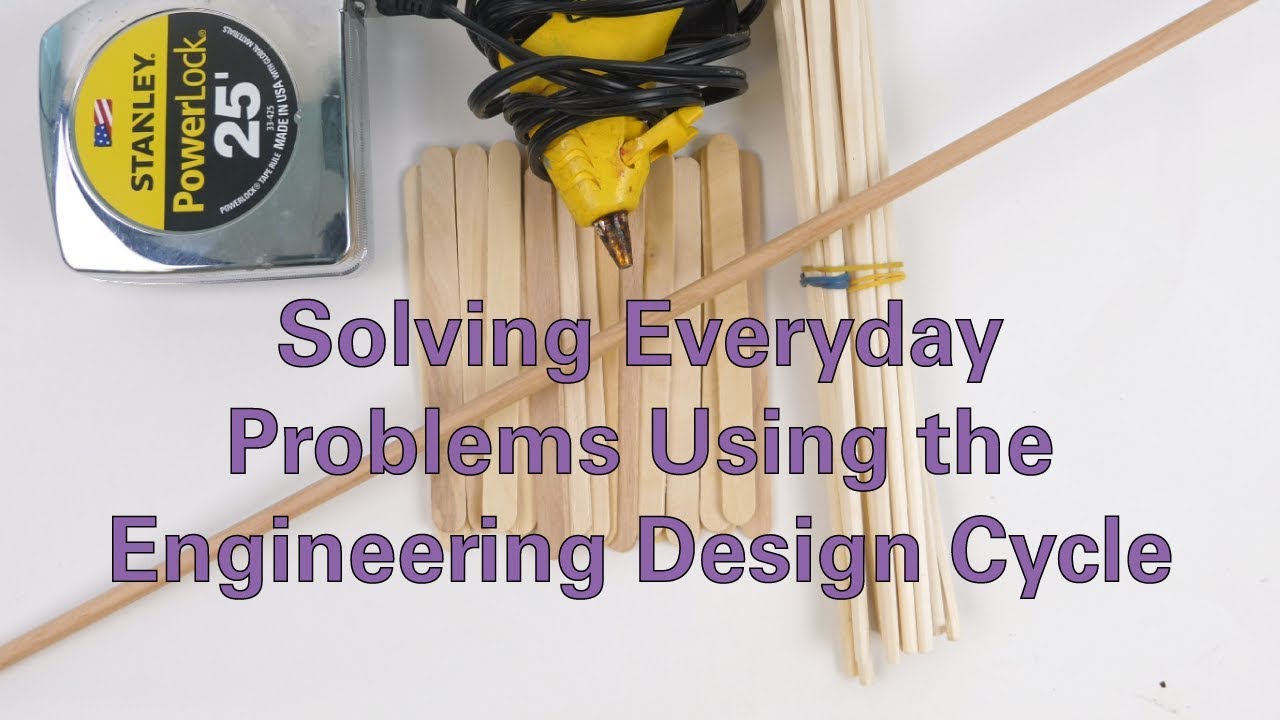
Students are introduced to two real-life problems that can be solved by using the engineering design process. For the first one, they follow along with a slide presentation that describes how a group of students built an organizer to help organize their teacher’s desk. The presentation introduces students to the key steps in the engineering design process. Next, in discussion groups, they read through a scenario in which middle school student Marisol struggles to keep her locker organized. They read the case study together, stopping and discussing at key points to share ideas and consider Marisol’s progress as she moves through the engineering design cycle to design and implement a solution. As an optional hands-on activity extension, students construct their own locker organizer using scrap materials. This introduction to the engineering design process sets up students to be able to conduct their own real-world design projects. A case study handout, group leader discussion sheet and slide presentation are provided.
View the full activity at TeachEngineering:
https://www.teachengineering.o....rg/activities/view/u
TeachEngineering has over 1,500 FREE lessons and activities. Visit https://www.teachengineering.org/ for more!
Music: Side Steppin' - Otis McDonald

Student teams investigate biomedical engineering and the technology of prosthetics. Students create lower-leg prosthetic prototypes using various ordinary materials. Each team demonstrate its device's strength and consider its pros and cons, giving insight into the characteristics and materials biomedical engineers consider in designing artificial limbs.
View the full activity on TeachEngineering: https://www.teachengineering.o....rg/activities/view/c
TeachEngineering has over 1,500 FREE lessons and activities. Visit https://www.teachengineering.org/ for more!
Music: Daily Beetle - Kevin MacLeod

Students learn about energy flow in food webs, including the roles of the sun, producers, consumers and decomposers in the energy cycle. They model a food web and create diagrams of food webs using their own drawings and/or images from nature or wildlife magazines. Students investigate the links between the sun, plants and animals, building their understanding of the web of nutrient dependency and energy transfer.
View the full activity at TeachEngineering:
https://www.teachengineering.o....rg/activities/view/c
TeachEngineering has over 1,500 FREE lessons and activities. Visit http://www.TeachEngineering.org for more!
Music: Ruination_2

Students learn about material reuse by designing and building the strongest and tallest towers they can, using only recycled materials. They follow design constraints and build their towers to withstand earthquake and high wind simulations.
View the full activity on TeachEngineering:
https://www.teachengineering.o....rg/activities/view/c
TeachEngineering has over 1,500 FREE lessons and activities. Visit http://www.TeachEngineering.org for more!
Music: Cruiser by Silent Partner

Students learn how the force of water helps determine the size and shape of dams. They use clay to build models of four types of dams, and observe the force of the water against each type. They conclude by deciding which type of dam they, as Splash Engineering engineers, will design for Thirsty County.
View the full activity at TeachEngineering:
https://www.teachengineering.o....rg/activities/view/c
TeachEngineering has over 1,500 FREE lessons and activities. Visit http://www.TeachEngineering.org for more!
Music: Splashing Around - The Green Orbs

To learn how friction affects motion, students explore how different textures provide varying amounts of friction to objects moving across them. They build a tool to measure the amount of friction between a note card and various surfaces by measuring the distance that a rubber band stretches. They experiment with a range of materials to determine which provides the least/most friction.
View the full activity on TeachEngineering:
https://www.teachengineering.o....rg/activities/view/c
TeachEngineering has over 1,500 FREE lessons and activities. Visit http://www.TeachEngineering.org for more!
Music: Morning Mist- Quincas Moreira

In this activity, students will experience echolocation themselves. They actually try echolocation by wearing blindfolds while another student makes snapping noises in front of, behind, or to the side of them.
View the full activity on TeachEngineering:
https://www.teachengineering.o....rg/activities/view/c
TeachEngineering has over 1,500 FREE lessons and activities. Visit https://www.teachengineering.org/ for more
Music: Stuck In The Air - The Tower of Light
Dive into the rapidly emerging world of machine learning, where students come to understand the first attempts at developing the perceptron model—a simplified model of a biological neuron. Students also learn about the logic of the perceptron model and its limitations, which led to the development of multi-layer networks.
View the full lesson on TeachEngineering:
https://www.teachengineering.o....rg/lessons/view/mis-
Teach Engineering has over 1,900 FREE lessons and activities. Visit http://www.TeachEngineering.org for more!

As an introduction to analyzing sinusoidal waves, students learn how to use a Jupyter Notebook. They learn how to identify the frequency, wavelength, amplitude, period, and phase of a simple sinusoidal waveform. As they learn how to label the parts and properties of the waves, they connect these characteristics of waves to various real-world wave examples such as ocean waves, visible light, and sound. Students will examine a mathematical model of a sinusoidal waveform and connect each variable to its corresponding wave property. They will manipulate each variable of the model using Python code in a Jupyter Notebook and examine the effect of changing each variable on the resulting waveform.
This engineering curriculum aligns to Next Generation Science Standards (NGSS).
View the full activity on TeachEngineering:
https://www.teachengineering.o....rg/activities/view/u
TeachEngineering has over 1,500 FREE lessons and activities. Visit https://www.teachengineering.org/ for more
Music: Aimless Amos
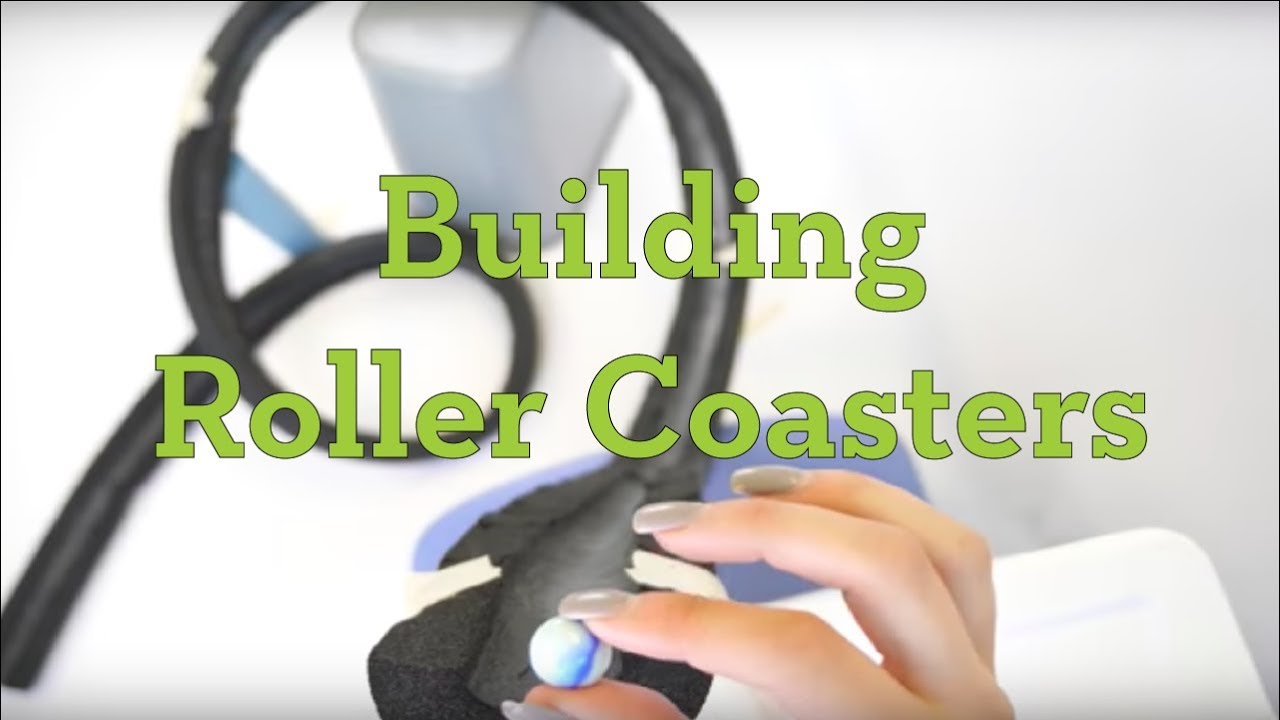
Students build their own small-scale model roller coasters using pipe insulation and marbles, and then analyze them using physics principles learned in the associated lesson. They examine conversions between kinetic and potential energy and frictional effects to design roller coasters that are completely driven by gravity. A class competition using different marbles types to represent different passenger loads determines the most innovative and successful roller coasters.
View the full activity on TeachEngineering: https://www.teachengineering.o....rg/activities/view/d
TeachEngineering has over 1,500 FREE lessons and activities. Visit http://www.TeachEngineering.org for more!
Music: Moose - Bensound.com
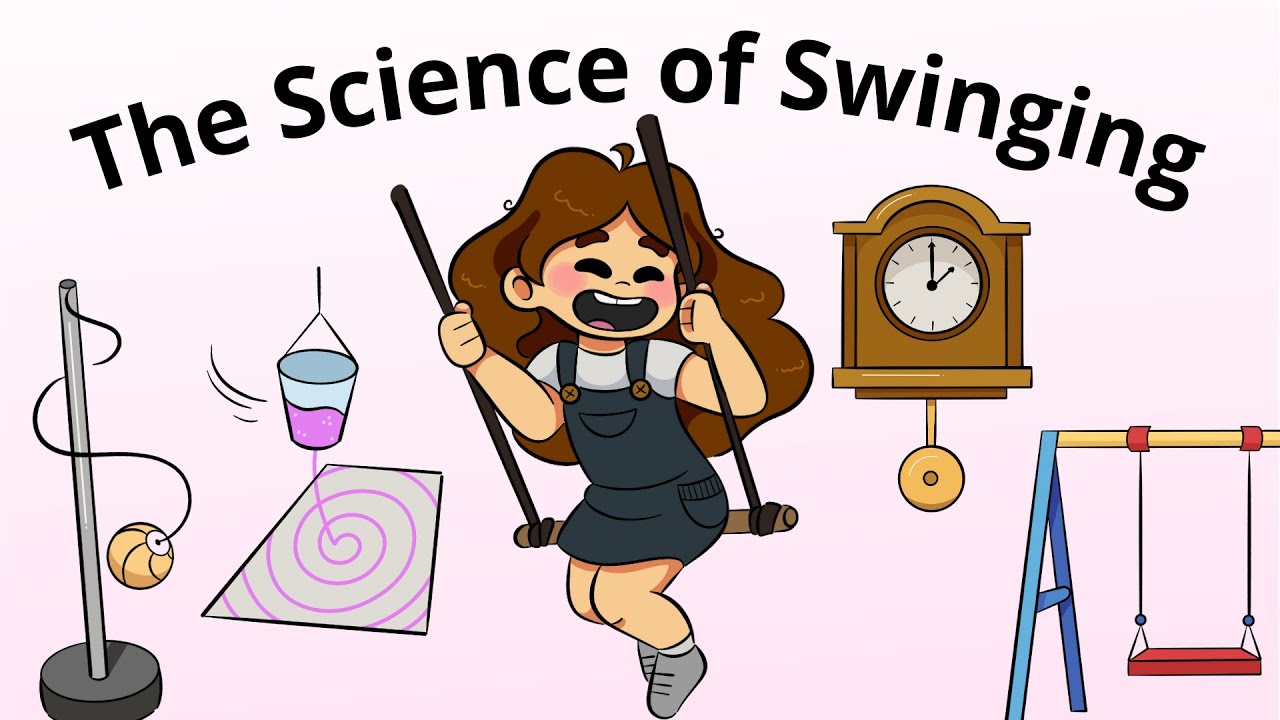
Students learn what a pendulum is and how it works in the context of amusement park rides. While exploring the physics of pendulums, they are also introduced to Newton's first law of motion — about continuous motion and inertia.
View the full lesson on TeachEngineering: https://www.teachengineering.o....rg/lessons/view/cub_
TeachEngineering has over 1,500 FREE lessons and activities. Visit https://www.teachengineering.org/ for more
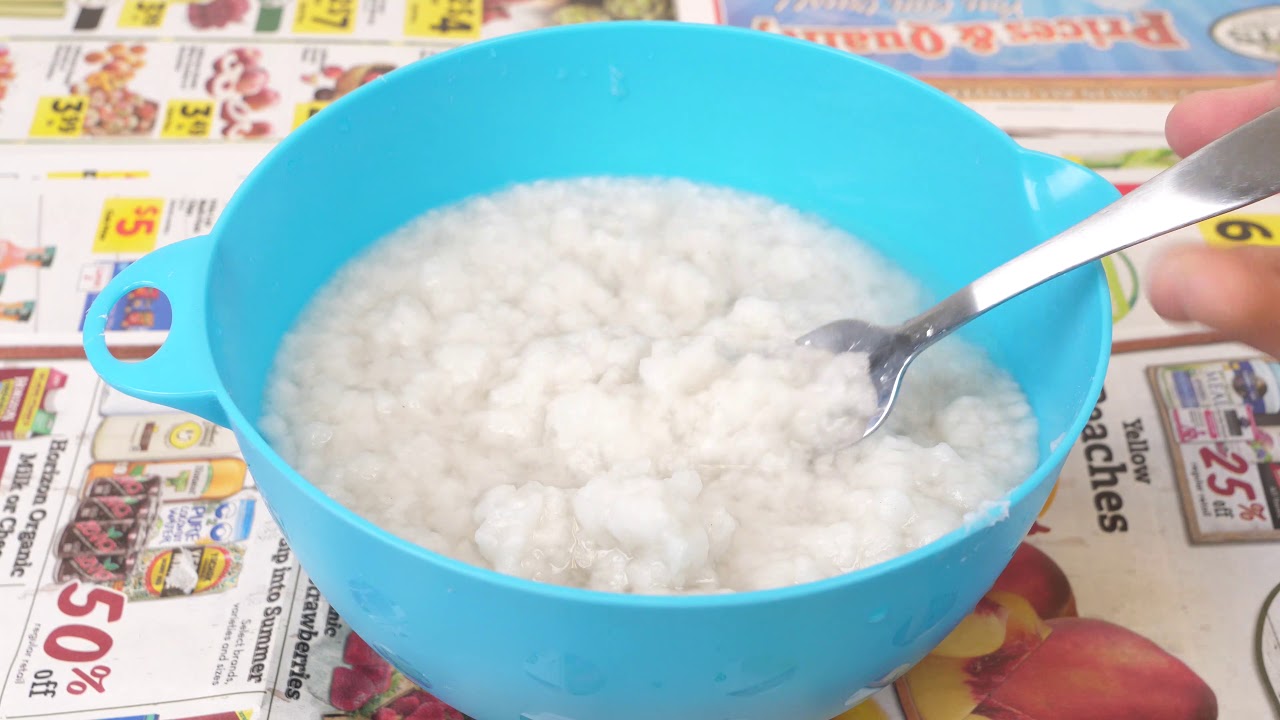
Students learn how paper is made. Working together, student teams make their own paper. This activity introduces students to recycling; what it is, its value and benefits, and how it affects their lives.
View the full activity at TeachEngineering:
https://www.teachengineering.o....rg/activities/view/m
TeachEngineering has over 1,500 FREE lessons and activities. Visit http://www.TeachEngineering.org for more!
Music: Coffee Stains - Riot

Students engineer a working pair of shin guards for soccer or similar contact sport from everyday materials. Since many factors go into the design of a shin guard, students follow the Engineering Design Process to create a prototype. Along the way, students keep a notebook documenting each stage of the process and reflect on what they learned during the design.
View the full activity at TeachEngineering:
https://www.teachengineering.o....rg/makerchallenges/v
TeachEngineering has over 1,500 FREE lessons and activities.
Visit http://www.TeachEngineering.org for more!
Music: Safety Net- Riot