热门视频

Partial Fraction Decomposition Form for Repeated Factors:
A factor is repeated if it has multiplicity greater than 1.
If the repeated factor is linear, then each of these rational expressions will have a constant numerator coefficient.
If the factor is to the power of 3. Therefore, 3 rational expressions are needed in the partial fraction decomposition, with each of the denominator is raised to a different positive integer power up to 3, wih 1, 2 and 3 respectively. Since it's linear factor, each of these rational expressions will have a constant numerator coefficient.

Buy the book You Are an Artist: http://bit.ly/2kplj2h
You Are an Artist virtual tour: http://www.theartassignment.com/tour
Sorted Books - Nina Katchadourian - original assignment video:
https://www.youtube.com/watch?v=A24MRdNMOIA

Welcome to “Why Do We Need a Common Denominator When Adding and Subtracting Fractions?” with Mr. J! Ever wonder why we need common denominators when adding and subtracting fractions? You're in the right place!
Whether you're just starting out, or need a quick refresher, this is the video for you if you're looking for help with common denominators. Mr. J will go through an example of adding fractions to show why we need common denominators and explain why common denominators are needed when doing things like adding fractions, subtracting fractions, comparing fractions, and ordering fractions.
About Math with Mr. J: This channel offers instructional videos that are directly aligned with math standards. Teachers, parents/guardians, and students from around the world have used this channel to help with math content in many different ways. All material is absolutely free. #MathWithMrJ
Click Here to Subscribe to the Greatest Math Channel On Earth: https://goo.gl/XHTrfY
Follow Mr. J on Twitter: @MrJMath5
Email: math5.mrj@gmail.com
Music: https://www.bensound.com/royalty-free-music
Hopefully this video is what you're looking for when it comes to why we need common denominators when adding and subtracting fractions.
Have a great rest of your day and thanks again for watching! ✌️✌️✌️
✅ Thanks to Aloud, this video has been dubbed into Spanish and Portuguese. #DubbedWithAloud
English
This video has been dubbed into Spanish (United States) and Portuguese (Brazil) using an artificial voice via https://aloud.area120.google.com to increase accessibility. You can change the audio track language in the Settings menu.
Spanish
Este video ha sido doblado al español con voz artificial con https://aloud.area120.google.com para aumentar la accesibilidad. Puede cambiar el idioma de la pista de audio en el menú Configuración.
Portuguese
Este vídeo foi dublado para o português usando uma voz artificial via https://aloud.area120.google.com para melhorar sua acessibilidade. Você pode alterar o idioma do áudio no menu Configurações.

Discover how Anthropic’s Model Context Protocol is transforming AI connectivity and efficiency.

Viewers like you help make PBS (Thank you 😃) . Support your local PBS Member Station here: https://to.pbs.org/PBSDSDonate
This episode is brought to you by Dropbox https://www.dropbox.com/
Follow me to Gross Science: https://youtu.be/kRUt9pqMCSg and BrainCraft: https://youtu.be/Joalg73L_gw
↓ More info and sources below ↓
Tweet ⇒ http://bit.ly/OKTBSmourn Share on FB ⇒ http://bit.ly/OKTBSmournFB
We’ve got t-shirts! Get yours here: http://store.dftba.com/collect....ions/its-okay-to-be-
BOOK RECOMMENDATION: Barbara J. King "How Animals Grieve" http://amzn.to/1MD7Jz5
References:
Barbara J. King “When Animals Mourn” Scientific American http://www.nature.com/scientif....icamerican/journal/v
Jason G. Goldman “Death Rituals In The Animal Kingdom” http://www.bbc.com/future/stor....y/20120919-respect-t
Iain Douglas Hamilton “Behavioural reactions of elephants towards a dying and deceased matriarch” Applied Animal Behavior Science http://www.appliedanimalbehavi....our.com/article/S016
Chimpanzees mourning dead infants:
http://www.mpg.de/1071360/mourning_chimpanzee
http://www.cell.com/current-bi....ology/abstract/S0960
(video: https://www.youtube.com/watch?v=nM9GLhuPDXA)
Have an idea for an episode or an amazing science question you want answered? Leave a comment or check us out at the links below!
Follow on Twitter: http://twitter.com/okaytobesmart
http://twitter.com/jtotheizzoe
Follow on Tumblr: http://www.itsokaytobesmart.com
Follow on Instagram: http://instagram.com/jtotheizzoe
Follow on Snapchat: YoDrJoe
-----------------
It’s Okay To Be Smart is written and hosted by Joe Hanson, Ph.D.
Follow me on Twitter: @jtotheizzoe
Email me: itsokaytobesmart AT gmail DOT com
Facebook: http://www.facebook.com/itsokaytobesmart
For more awesome science, check out: http://www.itsokaytobesmart.com
Produced by PBS Digital Studios: http://www.youtube.com/user/pbsdigitalstudios
Joe Hanson - Creator/Host/Writer
Joe Nicolosi - Director
Amanda Fox - Producer, Spotzen Inc.
Kate Eads - Producer
Andrew Matthews - Editing/Motion Graphics/Animation
Katie Graham - Camera
John Knudsen - Gaffer
Theme music: “Ouroboros” by Kevin MacLeod
Other music via APM
Stock images from Shutterstock, stock footage from Videoblocks (unless otherwise noted)

Viewers like you help make PBS (Thank you 😃) . Support your local PBS Member Station here: https://to.pbs.org/PBSDSDonate
The book:
“The Fly Trap” by Fredrik Sjöberg http://amzn.to/1TlWrkw
Have an idea for an episode or an amazing science question you want answered? Leave a comment or check us out at the links below!
Follow on Twitter: @okaytobesmart @DrJoeHanson
http://www.itsokaytobesmart.com
Follow on Instagram: @DrJoeHanson
Produced by PBS Digital Studios: http://www.youtube.com/user/pbsdigitalstudios
Music:
Monkeys Spinning Monkeys Kevin MacLeod (incompetech.com)
Licensed under Creative Commons: By Attribution 3.0 License
http://creativecommons.org/licenses/by/3.0/
Thousands of parents and educators are turning to the kids’ learning app that makes real learning truly fun. Try Kids Academy with
3-day FREE TRIAL! https://bit.ly/2GuGyL2
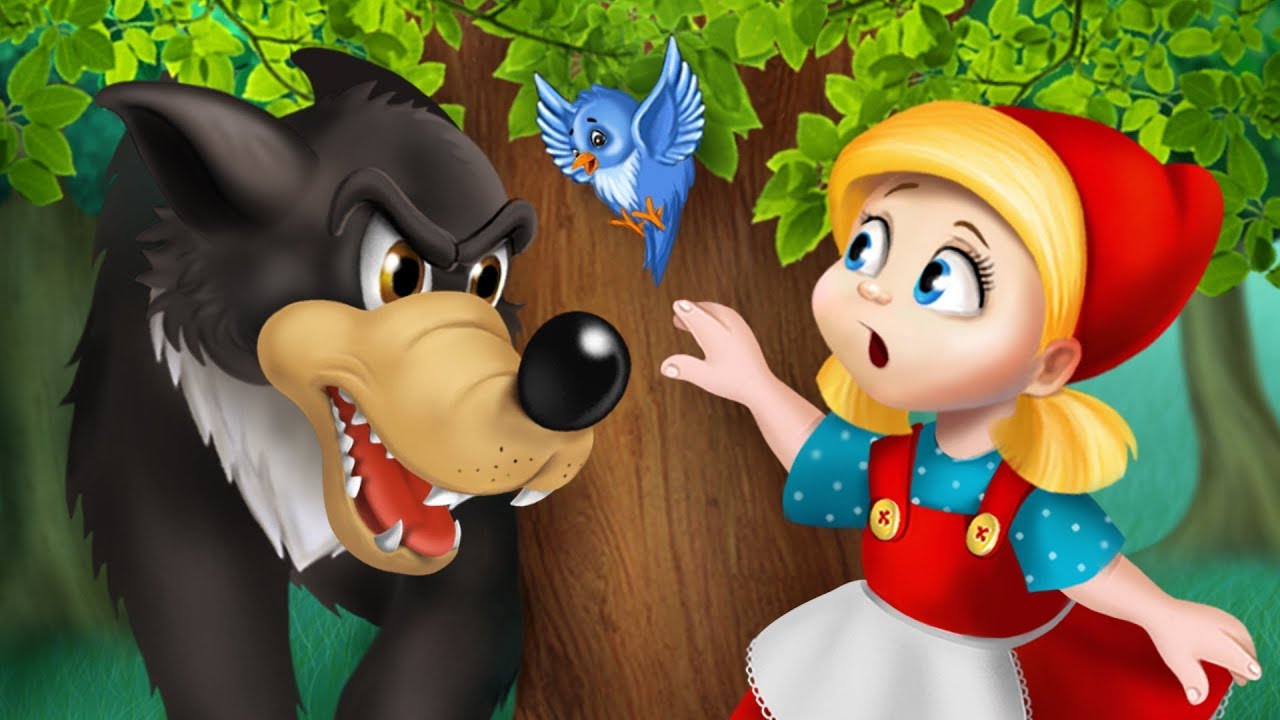
Welcome back to the Kids Academy channel. Little Red Riding Hood is a classic bedtime story about the little girl and her trip from mother's house to granny. The story revolves around a girl called Little Red Riding Hood. The girl walks through the woods to deliver food to her sickly grandmother.
A Big Bad Wolf wants to eat the girl and the food in the basket. He secretly stalks her behind trees, bushes, shrubs, and patches of little and tall grass. He approaches Little Red Riding Hood, and she naively tells him where she is going. He suggests that the girl pick some flowers, which she does. In the meantime, he goes to the grandmother's house and gains entry by pretending to be the girl. He swallows the grandmother whole and waits for the girl, disguised as the grandma.
Smash like button and share this video!
Subscribe to our channel: https://goo.gl/iG2Bdr
Connect with us on :
Facebook: https://www.facebook.com/KidsAcademyC...
Twitter: https://twitter.com/KidsAcademyCo
App Store: https://smart.link/59833db06a6b8
Google Play: https://smart.link/5a1bea3272481
Our website: https://www.kidsacademy.mobi/
Once there was a sweet little girl. She was very pretty, and everyone loved her. She lived with her mother. Her mother gave her a lot of presents all the time. Once she made a little red riding hood from a piece of velvet. It was a very pretty hood and the little girl looked very pretty when she wore it. She loved the hood so much that she wore it all the time and did not wear anything else. As she always wore the red riding hood she was given the name of Little Red Riding Hood.
One day her mother baked some cakes for her mother. She gave the cakes to Little Red Riding Hood and asked her to deliver them to her grandmother’s. Her grandmother lived on the other side of the forest in another village. Her mother advised the Little Red Riding Hood to go on the straight path and do not wander in the forest as it was very dangerous to go in there alone.
Little Red Riding Hood took the cakes and started her journey to her grandmother’s house. While she was on her way and was passing through the woods, a wolf saw her. The wolf’s mouth filled with water and he wanted to eat her immediately. However, he was afraid of the woodcutters working nearby. Little Red Riding Hood was unaware of his wickedness and how dangerous he was. She was not all afraid of him. The wolf came up with a very cunning plan to eat Little Red Riding Hood.
He greeted Little Red Riding Hood and asked her where she was going. Little Red Riding Hood was very sweet, and she told him that he was going to her grandmother’s house who lived on the other side of the forest. The wolf was very cunning. He knew the shortcut way to the grandmother’s house. As soon as he knew that Little Red Riding Hood was going to her grandmother’s house, he ran as fast as he could to reach there before the little girl. Little Red Riding Hood, however, continued on her normal path.
As she was passing through the woods she saw some beautiful and very colorful flowers on the ground. She wanted to make her grandmother very happy, so she decided to make a bouquet of the flowers for her. She thought that her grandmother would feel very happy after seeing the flowers. She started picking flowers, however as she kept on picking up the flowers she kept on going further and further into the woods. She did not realize that she was going deep into the forest and it was very dangerous.
This gave the wolf even more time to reach the grandmother’s house before her. When the wolf reached the house, he knocked on the door. The grandmother was old and seemed sick. She couldn’t come to the door, so she asked from inside who was at the door. The clever wolf replied in Little Red Riding Hood voice that it was her grandchild, Little Red Riding Hood. The grandmother could not sense that it was someone else, she told him to come in as the door was not locked.
The wolf immediately entered the house and went straight to the grandmother’s bed and ate her up. Then he carried out the next part of his plan as he still wanted to eat Little Red Riding Hood. He took the grandmother’s clothes, wore her cap and laid down in her bed. He also dropped the curtains so that Little Red Riding Hood does not recognize him.
After some time, Little Red Riding Hood arrived at her grandmother’s house and knocked at the door. The wolf now used her grandmother’s voice to ask who was on the door. The sweet little girl replied that it was her and that she had brought the cakes and butter that her mother had made for her in the morning. The wolf very cleverly said to Little Red Riding Hood that the door was open, and she could come in. The little girl went into the house, not knowing the danger that laid ahead of her.

Educational video for kids to discover invertebrate animals, like arthropods, worms, cnidarians, mollusks, sponges, echinoderms... Among the invertebrate animals, we draw attention to the frog, the jellyfish, the starfish, the earthworm, the snail, the silkworms and lots more.
This is an introductory video to this animal group. Recommended for primary school children.
Thanks for visiting us! If you want your children to smile and learn, subscribe! :D
We only upload our own content, designed by educators so that children smile and learn while watching a video.
All of our content reinforces educational values, encouraging the use of multiple intelligences and language learning.
If you like our videos, download “The Smart Library” now. You’ll discover more than 70 interactive games and stories for children designed by educators. The stories are based on VALUES like friendship, respect, and generosity, and our games cover all of the MULTIPLE INTELLIGENCES. All our content is in SPANISH, ENGLISH, FRENCH, ITALIAN and PORTUGUESE.

You really otter subscribe! http://bit.ly/iotbs_sub
Support your local PBS Member Station here: https://to.pbs.org/PBSDSDonate
↓ More info and sources below ↓
Otters are more than just cute, adorable little fuzzballs, they are one of the greatest conservation success stories of all time. Sea otters are a keystone species, meaning that an entire ecosystem depends on their presence. After they were nearly hunted to extinction for their dense fur, sea urchins (the otters' favorite food) nearly destroyed the Pacific kelp forests, a habitat that hundreds of species rely on for food and shelter.
Thanks to the hard work of conservation scientists at places like the Monterey Bay Aquarium, sea otter populations are on their way back. Here's the story of one orphaned sea otter pup's journey back to the wild
(Whale illustrations by Nobu Tamura/CC-BY-3.0)
Have an idea for an episode or an amazing science question you want answered? Leave a comment or check us out at the links below!
Follow on Twitter: http://twitter.com/okaytobesmart
Follow on Tumblr: http://www.itsokaytobesmart.com
Follow on Instagram: http://instagram.com/okaytobesmart
Joe Hanson - Creator/Host/Writer
Joe Nicolosi - Director
Amanda Fox - Producer, Spotzen IncKate Eads - Producer
Andrew Matthews - Editing/Motion Graphics/Animation
Katie Graham - Camera
John Knudsen - Gaffer
Theme music: "Ouroboros" by Kevin MacLeod
Other music via APM
Stock images from Shutterstock, stock footage from Videoblocks (unless otherwise noted)
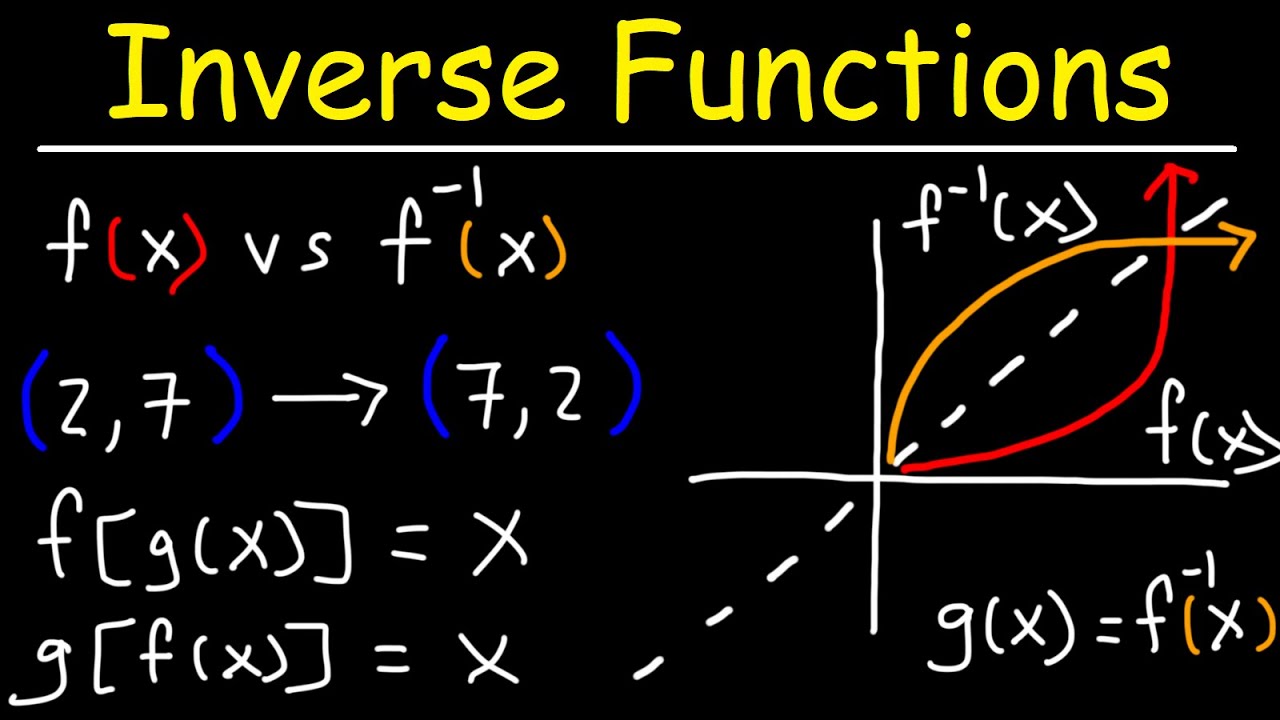
This algebra video tutorial provides a basic introduction into inverse functions. it explains how to find the inverse function by switching the x and y variables. It also explains how to prove if two functions are inverses of each by checking to see if the composite functions of f(g(x)) and g(f(x)) are equal to x. In addition, it explains how to graph the inverse function around the line y=x. Finally, it highlights the difference between the vertical line test and the horizontal line test as it relates to one to one functions and inverse functions. The vertical line test tells if a relation is a function. The horizontal line test tells you if the function is one to one and if the inverse relation is a function.
Introduction to Functions:
https://www.youtube.com/watch?v=DrEXTC6mIO8
Evaluating Functions:
https://www.youtube.com/watch?v=HyNie_PYgsY
Function Operations:
https://www.youtube.com/watch?v=3gaxVHVI4cI
Increasing and Decreasing Functions:
https://www.youtube.com/watch?v=Dyl7jPlJXOM
Relative Maximum & Minimum Values:
https://www.youtube.com/watch?v=GaltHJF6WyI
_____________________________________
Relations and Functions:
https://www.youtube.com/watch?v=wbBY2tTqXDA
Domain and Range From a Graph:
https://www.youtube.com/watch?v=KirGQOwjBVI
How To Find The Domain of a Function:
https://www.youtube.com/watch?v=djT6-YamHaA
Average Rate of Change of a Function:
https://www.youtube.com/watch?v=f_Q0qlwlclQ
The Difference Quotient of a Function:
https://www.youtube.com/watch?v=qQgVomi8lCc
_____________________________________
Evaluating Piecewise Functions:
https://www.youtube.com/watch?v=OYOXMyFKotc
Graphing Piecewise Functions:
https://www.youtube.com/watch?v=Uzw9tsGq2Pw
Composite Functions:
https://www.youtube.com/watch?v=ZFPkQkURSxk
How To Evaluate Composite Functions:
https://www.youtube.com/watch?v=6vQxIG4lJ3w
Composite Functions - Data Table:
https://www.youtube.com/watch?v=6vQxIG4lJ3w
Comp. of 3 Functions - Data Table:
https://www.youtube.com/watch?v=Ote1KvW6BXw
Decomposing Functions:
https://www.youtube.com/watch?v=NmfaC7etZms
_________________________________
Introduction to Inverse Functions:
https://www.youtube.com/watch?v=TN4ybFiuV3k
How To Find The Inverse of a Function:
https://www.youtube.com/watch?v=2zeYEx4eTdc
Verifying Inverse Functions:
https://www.youtube.com/watch?v=6QamgSPprjA
Horizontal Line Test - 1 to 1 Functions:
https://www.youtube.com/watch?v=6u9Qh1Vi_Qw
Vertical Line Test:
https://www.youtube.com/watch?v=Mxe2lX1htNk
Graphing Inverse Functions:
https://www.youtube.com/watch?v=ukEtad_aml4
Composite and Inverse Functions:
https://www.youtube.com/watch?v=GEgFmxxOJno
__________________________________
Even and Odd Functions:
https://www.youtube.com/watch?v=fKyBOLsqRlo
Transformations of Functions:
https://www.youtube.com/watch?v=Tmdrjs9xufc
Linear Functions:
https://www.youtube.com/watch?v=BtcKotD6Ni8
Functions and Graphs - Problems:
https://www.youtube.com/watch?v=kvU9sOzT2mk
Functions - Test Review:
https://www.youtube.com/watch?v=1xATmTI-YY8
______________________________________
Final Exams and Video Playlists:
https://www.video-tutor.net/
Full-Length Videos and Worksheets:
https://www.patreon.com/MathSc....ienceTutor/collectio

In this episode of Crash Course Anatomy & Physiology, Hank gives you a brief history of histology and introduces you to the different types and functions of your body's tissues.
Pssst... we made flashcards to help you review the content in this episode! Find them on the free Crash Course App!
Download it here for Apple Devices: https://apple.co/3d4eyZo
Download it here for Android Devices: https://bit.ly/2SrDulJ
Chapters:
Introduction 00:00
Nervous, Muscle, Epithelial & Connective Tissues 1:23
History of Histology 2:07
Nervous Tissue Forms the Nervous System 5:17
Muscle Tissue Facilitates All Your Movements 7:00
Identifying Samples 9:03
Review 9:48
Credits 10:22
Crash Course is on Patreon! You can support us directly by signing up at http://www.patreon.com/crashcourse
Want to find Crash Course elsewhere on the internet?
Facebook - http://www.facebook.com/YouTubeCrashCourse
Twitter - http://www.twitter.com/TheCrashCourse
Instagram - https://www.instagram.com/thecrashcourse/
CC Kids: http://www.youtube.com/crashcoursekids

This chemistry video tutorial answers the question - what are isotopes? Isotopes are substances that are composed of the same element but consist of different mass numbers and number of neutrons. They share the same atomic number and therefore the same number of protons. This video contains plenty of examples and practice problems associated with isotopes and writing the atomic symbol for it.
Chemistry - Basic Introduction:
https://www.youtube.com/watch?v=-KfG8kH-r3Y
Significant Figures Review:
https://www.youtube.com/watch?v=l2yuDvwYq5g
Unit Conversion Problems:
https://www.youtube.com/watch?v=eK8gXP3pImU
Pure Substances & Mixtures:
https://www.youtube.com/watch?v=OHhnm2p5G3o
Physical and Chemical Changes:
https://www.youtube.com/watch?v=YE2xaMsoGFU
_________________________________
Atoms - Basic Introduction:
https://www.youtube.com/watch?v=acdkMeEKCNQ
Cations and Anions Explained:
https://www.youtube.com/watch?v=aAV2DMAI5f8
Diatomic Elements & Molecules:
https://www.youtube.com/watch?v=gi337Mx7wTc
Elements, Atoms, & Molecules:
https://www.youtube.com/watch?v=pSJeMJaCkVU
Protons, Neutrons, & Electrons:
https://www.youtube.com/watch?v=65dDZulPhtg
__________________________________
Average Atomic Mass:
https://www.youtube.com/watch?v=JT18bDAadQ0
What Are Isotopes?
https://www.youtube.com/watch?v=bagegEZBtOs
Percent Abundance of Isotopes:
https://www.youtube.com/watch?v=w-WhwWNC8-Q
Ionic and Covalent Bonding:
https://www.youtube.com/watch?v=uDFLHTDJ4XA
Naming Molecular Compounds:
https://www.youtube.com/watch?v=3agUL7-ezXk
Writing Formulas - Ionic Compounds:
https://www.youtube.com/watch?v=GJ4Mds0CWLE
__________________________________
Final Exams and Video Playlists:
https://www.video-tutor.net/
Full-Length Videos and Worksheets:
https://www.patreon.com/MathSc....ienceTutor/collectio
In which Jacob and Adriene teach you about the evils of fiscal policy and stimulus. Well, maybe the policies aren't evil, but there is an evil lair involved. In this episode we learn how government use taxes and spending influence the economy. Sometimes the government gives, and sometimes it takes. And the giving and the taking can have a profound effect on how economies behave.
Crash Course is on Patreon! You can support us directly by signing up at http://www.patreon.com/crashcourse
Thanks to the following Patrons for their generous monthly contributions that help keep Crash Course free for everyone forever:
Mark , Elliot Beter, Moritz Schmidt, Jeffrey Thompson, Ian Dundore, Jacob Ash, Jessica Wode, Today I Found Out, Christy Huddleston, James Craver, Chris Peters, SR Foxley, Steve Marshall, Simun Niclasen, Eric Kitchen, Robert Kunz, Avi Yashchin, Jason A Saslow, Jan Schmid, Daniel Baulig, Christian , Anna-Ester Volozh
Want to find Crash Course elsewhere on the internet?
Facebook - http://www.facebook.com/YouTubeCrashCourse
Twitter - http://www.twitter.com/TheCrashCourse
Tumblr - http://thecrashcourse.tumblr.com
Support Crash Course on Patreon: http://patreon.com/crashcourse
CC Kids: http://www.youtube.com/crashcoursekids
This week, Adriene and Jacob teach you about macroeconomics. This is the stuff of big picture economics, and the major movers in the economy. Like taxes and monetary policy and inflation and policy. We need this stuff, because if you don't have a big picture of the economy, crashes and panics are more likely. Of course, economics is extremely complex and unpredictable. Today we'll talk about GDP as a measure of a country's economic health, the basics of economic analysis, and even a little about full employment, unemployment
Crash Course is on Patreon! You can support us directly by signing up at http://www.patreon.com/crashcourse
Thanks to the following Patrons for their generous monthly contributions that help keep Crash Course free for everyone forever:
Mark, Jan Schmid, Simun Niclasen, Robert Kunz, Daniel Baulig, Jason A Saslow, Eric Kitchen, Christian, Beatrice Jin, Anna-Ester Volozh, Eric Knight, Elliot Beter, Jeffrey Thompson, Ian Dundore, Stephen Lawless, Today I Found Out, James Craver, Jessica Wode, Sandra Aft, Jacob Ash, SR Foxley, Christy Huddleston, Steve Marshall, Chris Peters
--
Want to find Crash Course elsewhere on the internet?
Facebook - http://www.facebook.com/YouTubeCrashCourse
Twitter - http://www.twitter.com/TheCrashCourse
Tumblr - http://thecrashcourse.tumblr.com
Support Crash Course on Patreon: http://patreon.com/crashcourse
CC Kids: http://www.youtube.com/crashcoursekids
In which John Green teaches you about one of the least funny subjects in history: slavery. John investigates when and where slavery originated, how it changed over the centuries, and how Europeans and colonists in the Americas arrived at the idea that people could own other people based on skin color.
Slavery has existed as long as humans have had civilization, but the Atlantic Slave Trade was the height, or depth, of dehumanizing, brutal, chattel slavery. American slavery ended less than 150 years ago. In some parts of the world, it is still going on. So how do we reconcile that with modern life? In a desperate attempt at comic relief, Boba Fett makes an appearance.
Learn more about the Transatlantic Slave Trade in Episode #1 of Crash Course Black American History here: https://youtu.be/S72vvfBTQws
Chapters:
Introduction 00:00
The Atlantic Slave Trade 0:30
The History of European Slave Trade 1:12
How Africans Became Enslaved 1:54
Living Conditions of Enslaved People 2:55
An Open Letter to the Word 'Slave' 5:41
What is the Definition of Slavery? 6:45
Other Models of Slavery: Greek, Roman, Judeo-Christian, and Muslim 7:26
Credits 10:35
Resources:
Inhuman Bondage by David Brion Davis: https://bit.ly/3vdSdTX
Up From Slavery by Booker T Washington: https://bit.ly/3JJlxH4
Crash Course is on Patreon! You can support us directly by signing up at http://www.patreon.com/crashcourse
Want to find Crash Course elsewhere on the internet?
Facebook - http://www.facebook.com/YouTubeCrashCourse
Twitter - http://www.twitter.com/TheCrashCourse
Instagram - https://www.instagram.com/thecrashcourse/
CC Kids: http://www.youtube.com/crashcoursekids
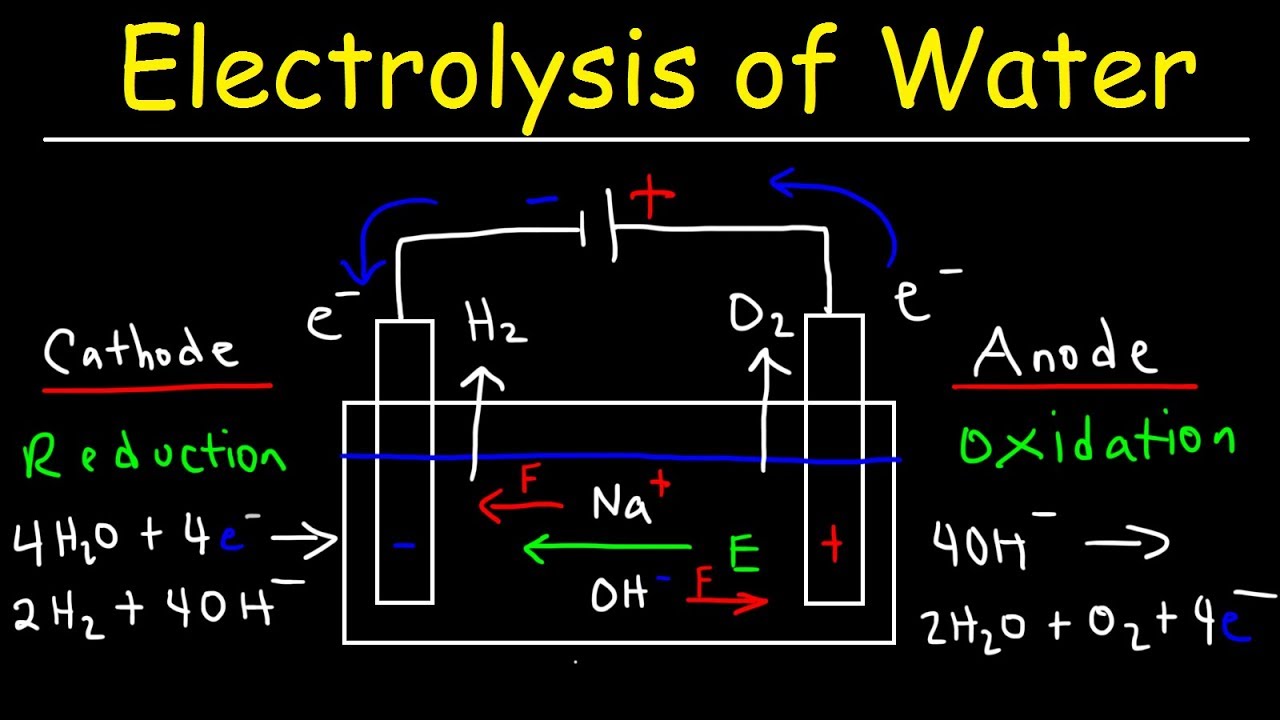
This chemistry video tutorial provides a basic introduction into the electrolysis of water which splits H2O into H2 (hydrogen has) and O2 (oxygen gas). Oxygen gas is produced at the anode and hydrogen gas is produced at the cathode. Electrons flow from the anode to the cathode. Oxidation always occurs at the anode and reduction occurs at the cathode.
Intro to Galvanic & Voltaic Cells:
https://www.youtube.com/watch?v=9blB-uMTIAM
How To Draw Galvanic Cells:
https://www.youtube.com/watch?v=vLCf4_NKjGU
Standard Reduction Potentials:
https://www.youtube.com/watch?v=lUXP856WluE
Cell Potential Problems:
https://www.youtube.com/watch?v=UzkLP8segcs
Cell Notation Problems:
https://www.youtube.com/watch?v=iWqUWwyPkSs
___________________________________
Concentration Cells:
https://www.youtube.com/watch?v=oOb-knvShdw
Cell Potential & Gibbs Free Energy:
https://www.youtube.com/watch?v=LqAfREfwt1Y
Cell Potential & Equilibrium K:
https://www.youtube.com/watch?v=n4JCEFJKWA0
Nernst Equation:
https://www.youtube.com/watch?v=jousNNceCXs
Electrolysis of Water:
https://www.youtube.com/watch?v=zMLNHm4nUCQ
_____________________________________
Electrolysis of Sodium Chloride:
https://www.youtube.com/watch?v=1nAe_T5mO2o
Electrolysis & Electroplating Problems:
https://www.youtube.com/watch?v=DnvKfiLa_HQ
Electrochemistry Practice Problems:
https://www.youtube.com/watch?v=S9frctwDyL0
SAT Chemistry Subject Test Review:
https://www.youtube.com/watch?v=ygpTfaSFqH8
Carbon -14 Dating:
https://www.youtube.com/watch?v=6aDswTVFGfs
Beer Lambert's Law:
https://www.youtube.com/watch?v=rllHziqWlgU
______________________________________
Final Exams and Video Playlists:
https://www.video-tutor.net/
Full-Length Videos and Worksheets:
https://www.patreon.com/MathSc....ienceTutor/collectio
Chemistry PDF Worksheets:
https://www.video-tutor.net/chemistry-basic-introduction.html
Much has been written about what exactly caused World War I. As befits a true global war, the reality is that there isn't a single cause. There aren't even three causes. There are a vast array of causes. Today we'll get into just a few of those causes, including the complex system of alliances in Europe, the myriad military conflicts that played out in the years and decades leading up to the war, and the event that many point to as the beginning: the assassination of Archduke Franz Ferdinand.
Sources
-Hunt, Lynn. Making of the West: Peoples and Cultures. Boston: Bedford St. Martins, 2019.
-Smith, Bonnie G. Europe in the Contemporary World Since 1900. 2nd ed. London; Bloomsbury, 2020.
Crash Course is on Patreon! You can support us directly by signing up at http://www.patreon.com/crashcourse
Thanks to the following patrons for their generous monthly contributions that help keep Crash Course free for everyone forever:
Eric Prestemon, Sam Buck, Mark Brouwer, Efrain R. Pedroza, Matthew Curls, Indika Siriwardena, Avi Yashchin, Timothy J Kwist, Brian Thomas Gossett, Haixiang N/A Liu, Jonathan Zbikowski, Siobhan Sabino, Jennifer Killen, Nathan Catchings, Brandon Westmoreland, dorsey, Kenneth F Penttinen, Trevin Beattie, Erika & Alexa Saur, Justin Zingsheim, Jessica Wode, Tom Trval, Jason Saslow, Nathan Taylor, Khaled El Shalakany, SR Foxley, Sam Ferguson, Yasenia Cruz, Eric Koslow, Caleb Weeks, Tim Curwick, David Noe, Shawn Arnold, William McGraw, Andrei Krishkevich, Rachel Bright, Jirat, Ian Dundore
--
Want to find Crash Course elsewhere on the internet?
Facebook - http://www.facebook.com/YouTubeCrashCourse
Twitter - http://www.twitter.com/TheCrashCourse
Tumblr - http://thecrashcourse.tumblr.com
Support Crash Course on Patreon: http://patreon.com/crashcourse
CC Kids: http://www.youtube.com/crashcoursekids

Basic working out of wages involving flat rates of pay, and overtime.
Also shown is how to fill in a timesheet, and work out pay from a timesheet. To donate to the tecmath channel: https://paypal.me/tecmath?locale.x=en_AU To donate to the tecmath channel: https://paypal.me/tecmath?locale.x=en_AU
To support tecmath on Patreon: https://www.patreon.com/tecmath
To buy tecmath mechandise: https://teespring.com/stores/tecmath-store

In this video we look at how to multiply binomial expressions with trinomial expressions instantly, as well as how to check our answer quickly for greater accuracy. In addition to this, we look at the application of multiplying trinomial with binomials to solve everyday math multiplication. This is an essential component of algebra. To donate to the tecmath channel: https://paypal.me/tecmath?locale.x=en_AU To donate to the tecmath channel: https://paypal.me/tecmath?locale.x=en_AU
To support tecmath on Patreon: https://www.patreon.com/tecmath
To buy tecmath mechandise: https://teespring.com/stores/tecmath-store
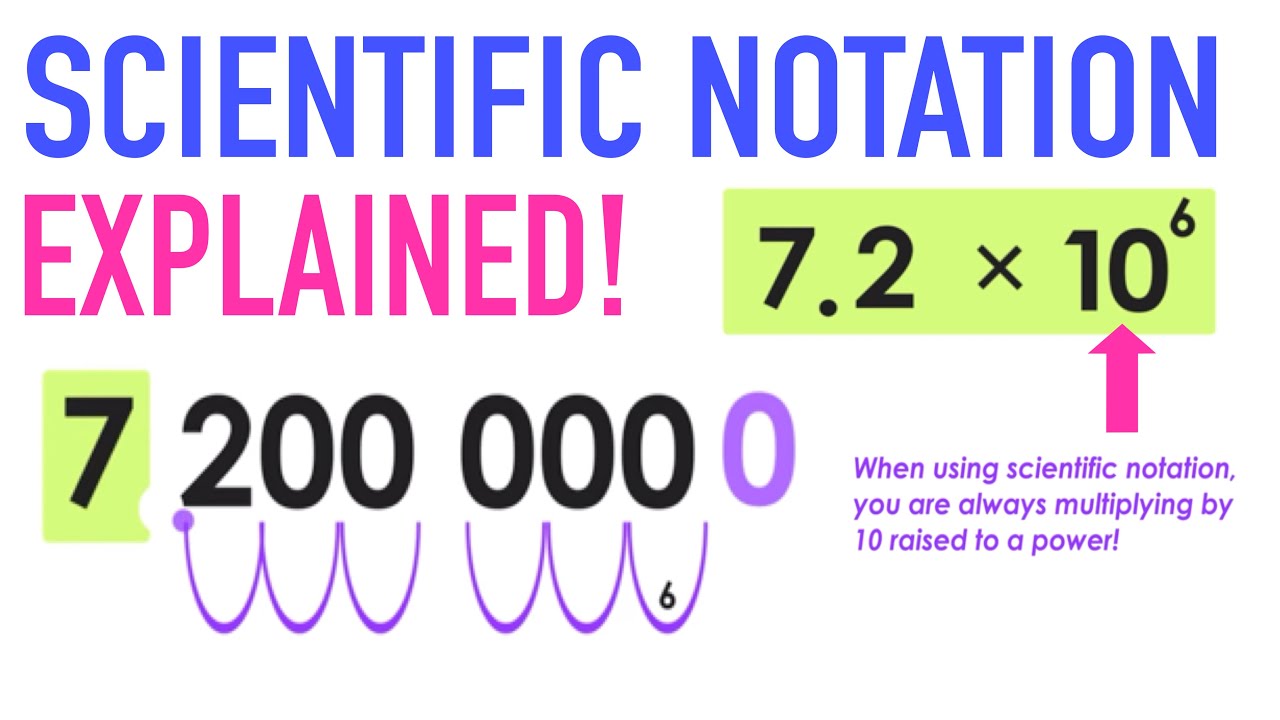
On this lesson, you will learn all about converting to scientific notation and calculating scientific notation!
What is scientific notation?
How do I write a number in scientific notation?
When should I use scientific notation?
★ Want more FREE weekly math videos? Subscribe Now: http://bit.ly/1OVJnyh
★★ Why Math? Download YOUR Free eBook and sign-up for our FREE weekly newsletter: http://www.mashupmath.com/resources/
★★★ Learn More About Anthony: http://bit.ly/1KQ1Td3
Expressions and Equations Work with radicals and integer exponents.
Perform operations with numbers expressed in scientific notation, including problems where both decimal and scientific notation are used. Use scientific notation and choose units of appropriate size for measurements of very large or very small quantities (e.g., use millimeters per year for seafloor spreading). Interpret scientific notation that has been generated by technology.