סרטונים מובילים

Denne video handler om verber.

Professor John Tagg talks briefly about how probiotic Streptococcus salivarius BLIS K12 fights the bacteria that cause bad breath.

NASA's Kepler mission has confirmed the first near-Earth-size planet in the “habitable zone” around a sun-like star. This discovery and the introduction of 11 other new small habitable zone candidate planets mark another milestone in the journey to finding another “Earth.”
The newly discovered Kepler-452b is the smallest planet to date discovered orbiting in the habitable zone -- the area around a star where liquid water could pool on the surface of an orbiting planet -- of a G2-type star, like our sun. The confirmation of Kepler-452b brings the total number of confirmed planets to 1,030.
Instagram : https://www.instagram.com/madangowri
Twitter : https://twitter.com/madan3
Snapchat : madangowri

Discover India's Remarkable Transformation from 2012 to 2016 through this Stunning NASA Time-Lapse Video. The bright lights of major cities like Delhi and Mumbai showcase the country's rapid economic growth and modernization. From space, the change is simply astonishing and truly showcases the progress that India has made in just four short years. The future holds great potential for India as its cities continue to grow and light up. Join us as we take a closer look at this incredible journey and leave your thoughts and observations in the comments. This time-lapse video provides a unique perspective on India's transformation and is a must-watch for anyone interested in the country's progress and future trajectory.
#IndiaTransformation #TimeLapseVideo #EconomicGrowth #CityLights #ExploringIndia #FuturePotential #India'sDevelopmentJourney #RapidProgress #Urbanization #SatellitePerspective #IndiaRising #InnovativeIndia
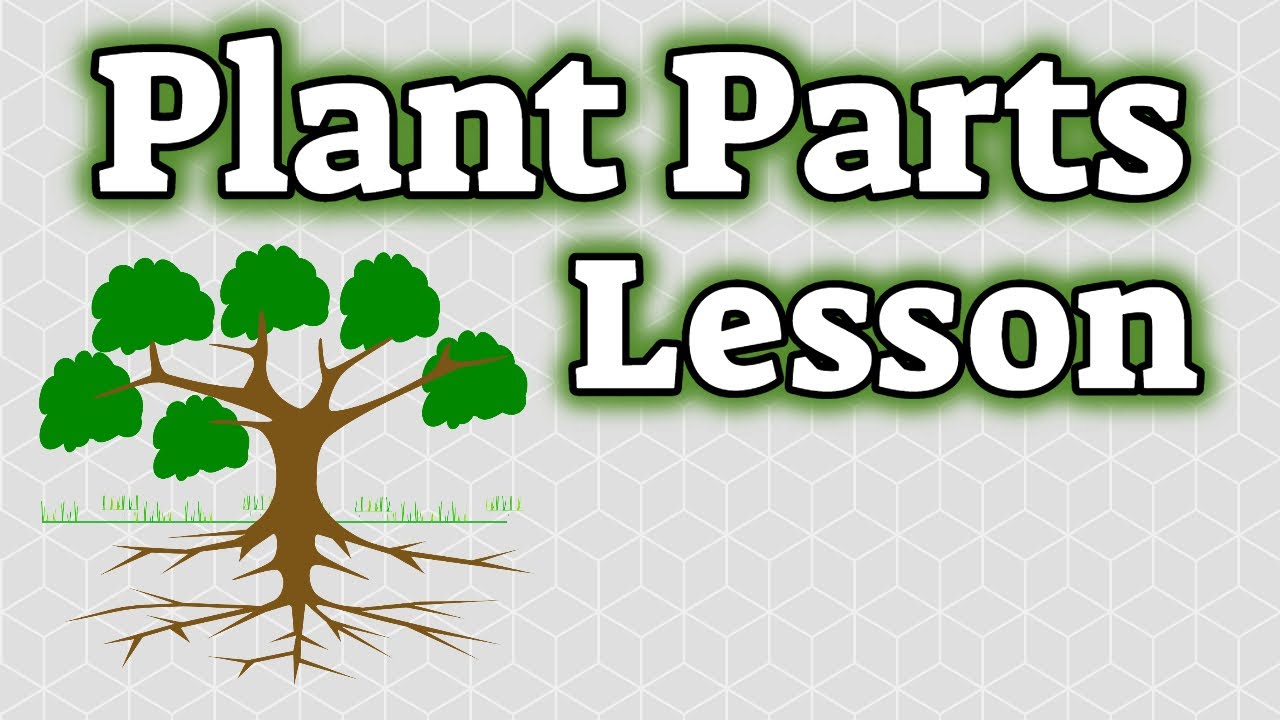
Kids will learn all of the plant parts and their functions in this educational video. Homeschool Pop offers a unique, dynamic learning experience. We strive to have the right balance of silliness and learning to keep students engaged as we study the plant parts and their functions!
We hope you enjoyed the classroom edition of the plant video! Thanks for watching, and we hope you will keep watching and learning. You are awesome!
Plant Parts and their Functions | Classroom Video Edition

K2-18b is an exoplanet orbiting the red dwarf K2-18, located 124 light-years (38 pc) away from Earth.The planet, initially discovered through the Kepler space telescope, is about eight times the mass of Earth, and thus is classified as a super Earth. It has a 33-day orbit within the star's habitable zone.
WATCH NEXT
The Sad Story of Laika First Dog in Space
https://www.youtube.com/watch?v=YmcUU...
What If Everyone Disappeared EXCEPT You From The EARTH
https://www.youtube.com/watch?v=60UVi...
This Video Will Change YOUR FUTURE In Hindi
https://www.youtube.com/watch?v=hwzkp...
What if Black Hole Comes Into Our Solar System
https://youtu.be/7upCwL5fWVg
Animal Who Lived 5000000 Years Ago In The EARTH
https://www.youtube.com/watch?v=HSpFX...
Copyright Disclaimer Under Section 107 of the Copyright Act 1976, allowance is made for "fair use" for purposes such as criticism, comment, news reporting, teaching, scholarship, and research. Fair use is a use permitted by copyright statute that might otherwise be infringing. Non-profit, educational or personal use tips the balance in favor of fair use.
Thanks For Watching....

Scientists Reveal That Jupiter Is Not What We're Beeing Told
► Subscribe: https://goo.gl/r5jd1F
In the vast reaches of our solar system, Jupiter reigns supreme as a gigantic mystery, captivating scientists and astronomers for centuries.
Just when we think we understand the gas giant, this celestial behemoth shatters our assumptions. With its blend of unpredictable and often hostile behavior, mesmerizing storms with winds of up to 640 kilometers per hour [400 miles per hour] and the enshrouded mysteries of concealed metallic oceans within its core, Jupiter still leaves scientists puzzled.
Join us on an extraordinary journey as we delve into the depths of this enigmatic world, uncovering its secrets.
We are on social media:
www.facebook.com/destinymediaa
www.instagram.com/destiny.media.yt/
The Destiny voice:
www.TomsVoiceovers.co.uk
Sourses: https://pastebin.com/raw/7APHRjF1

Subscribe to KLT: https://www.youtube.com/channe....l/UC7EFWpvc1wYuUwrtZ
Listen to KLT Music on Spotify: https://open.spotify.com/artist/3RvQsrlQFlGXHeLl1Vl9e0?si=Q-yVLAGmQEO-4hnbXvWe_Q&nd=1
Learn everything you need to know about the 8 planets in our solar system with this Planet Song featuring Mercury, Venus, Earth, Mars, Jupiter, Saturn, Uranus, and Neptune Planet Song.
Subscribe to my channel: https://www.youtube.com/channe....l/UC7EFWpvc1wYuUwrtZ
Check out my newest videos: https://youtube.com/playlist?l....ist=PLmIHwWY0hiuyOsg
Here are my most popular videos: https://youtube.com/playlist?l....ist=PLmIHwWY0hiuwJoM
KLT educates kids about the solar system and geography through music and animation with a fun and unique approach to learning! Join us for weekly videos about geography, stars, space, planets, shapes, and more educational videos . Our videos make learning about the world so much fun!
KLT App for iPhone & iPad
* https://apps.apple.com/us/app/....kids-learning-tube/i
Android Phone and Tablet
* https://play.google.com/store/....apps/details?id=com.
https://kidslearningtubeshop.c....om/products/video-me
Watch KLT ad-free for $12 a YEAR! See the latest videos before anyone else in the world. Sign up today for ad-free video streaming for all KLT videos!
KLT Website: https://kidslearningtubeshop.com/
T-Shirts, Blankets and More: https://kidslearningtubeshop.com/
Music Downloads: https://kidslearningtubeshop.com/collections/music
Facebook: https://www.facebook.com/kidslearningtube
Tweet Us: https://twitter.com/learningtube
Instagram: https://instagram.com/kidslearningtube
iTunes: http://itunes.apple.com/album/id1192890817?ls=1&app=itunes
#solarsystem #planetsong #planetsongforkids

#shorts
How Planets Rotate (Slow It Down to 0.25x to See 1 Hour in 1 Second)
The rotation periods of the planets cast to a single sphere. Rotations relative to background stars.
To measure a day is to count the amount of time it takes for a planet to completely spin around and make one full rotation. This is called a sidereal day. On Earth, a sidereal day is almost exactly 23 hours and 56 minutes.
We know how long an Earth day is, but how about the other planets in our solar system? How long does it take for those planets to spin one full rotation? And what is the best way to show the answer to this question?
The simple answer is:
Mercury: 58d 16h, 10.83 km/h
Venus: 243d 26m, 6.52 km/h
Earth: 23h 56m, 1574 km/h
Mars: 24h 36m, 866 km/h
Jupiter: 9h 55m, 45,583 km/h
Saturn: 10h 33m, 36,840 km/h
Uranus: 17h 14m, 14,794 km/h
Neptune: 16h, 9,719 km/h
In this dataset, it's possible to see all 8 planets on the sphere rotating at once and we have set Earth's ~24 hour day/rotation to happen in 60 seconds. Next to each planet's name, we have listed the time it takes for each planet to make one full rotation as well as the speed each planet moves at its equator. Jupiter, for example, makes one rotation in 9h 55m but moves 27 times faster than Earth at its equator, spinning at a whopping 45,583 km/h!
We have included two PIPs (picture in pictures) that can be toggled on for further explanation related to this concept. A PIP of the approximate sizes of the planets relative to each other and a PIP illustrating that if you viewed all the planets from the same point and at an angular diameter of 30 degrees - about ten feet from the sphere - each planet would appear to have a similar size.
Credit: Dr James O'Donoghue / NASA
Friend me on Facebook! http://on.fb.me/gCSs8F
For freelance/business inquiries - business@jeremiahwarren.com
Read more about Thomas Edison http://www.todayifoundout.com/....index.php/2012/09/th Made for the 165th anniversary of the birth of Thomas Edison. I figured I should do a video on him since I did one on Tesla. :D

Learn all about solids and liquids in this lesson for kids! Solids and liquids are two different states of matter. You'll learn all about them, along with some examples!
This was originally uploaded as a shortened version of my "Solids and Liquids for Kids" video back when YouTube allowed comments on videos made for children.
❤️ the videos? Consider supporting the channel here: http://homeschoolpop.com
Thanks for learning with me! I think you are super awesome and I hope to see you again soon!
Daniel
"Homeschool Pop"

History should be celebrated! Come Experience it like never before in Virtual Reality!
1-800-218-5709
www.k12prepacademy.com
#history #k12 #school #education #highschool #homeschool #students #parents #virtualreality #vr #gaming

This historical movie slideshow explains the foundation of American business competition. Visit http://www.ftc.gov/YouAreHere to learn more about the slideshow and to play games that demonstrate the effects of advertising and the benefits of competition.
The Federal Trade Commission deals with issues that touch the economic life of every American. It is the only federal agency with both consumer protection and competition jurisdiction in broad sectors of the economy. The FTC pursues vigorous and effective law enforcement; advances consumers' interests by sharing its expertise with federal and state legislatures and U.S. and international government agencies; develops policy and research tools through hearings, workshops, and conferences; and creates practical and plain-language educational programs for consumers and businesses in a global marketplace with constantly changing technologies.
Comment Moderation Policy
We welcome your comments and thoughts about the information on this page. If you do have something to say, please be courteous and respectful to other commenters. We won't routinely review or edit any comments before they are posted, but we will delete any comments that:
1) contain spam or are off-topic
2) use vulgar language or offensive terms that target specific groups or contain personal attacks
3) are sales pitches, promotions, urls or links to commercial sites
4) spread clearly misleading or false information
or
5) include personal information, like home addresses

More from Inside Edition: http://bit.ly/2bF0iuC
It was pomp and no consequence for a Pennsylvania high school student who took her her diploma and just kept on walking. Each of the graduates of Parkland High School in Allentown came on stage when their names were called and returned to their assigned seats... except for Tayler Michelle Gray. In a video that has gone viral this week, Gray proudly accepts her diploma and walks off the stage just like all the other students, poses for the official photo and then walked past her seat and out the door. #InsideEdition

Let's get personal on Whatsapp: https://whatsapp.com/channel/0....029Va8VC502ER6r1yk1y
Millions of years ago, Earth looked very different. All the continents were fused into one, teeming with life that was both beautiful and terrifying. When you think of prehistoric times, you might picture a T. rex rampaging through the jungle with its razor-sharp teeth. But even before the dinosaurs, there were other giant creatures ruling the Earth.
00:00 What Was Earth Like Before the Dinosaurs?
01:54 299 Million Years Ago
02:50 290 Million Years Ago
04:53 273 Million Years Ago
06:07 260 Million Years Ago
07:24 252 Million Years Ago
Questions or concerns? Contact us at https://underknown.com/contact/
Interested in sponsoring our episodes or collaborating? Email us: inquiries@underknown.com
Get our 100 best episodes in one mind-blowing book: http://bit.ly/ytc-the-what-if-100-book
Join this channel to get access to perks:
https://www.youtube.com/channe....l/UCphTF9wHwhCt-BzIq
Check out our other channels:
How to Survive: https://bit.ly/how-to-survive-show
Aperture: https://bit.ly/aperture-show
Your Body On: https://bit.ly/your-body-on-show
Watch more what-if scenarios:
Planet Earth: http://bit.ly/YT-what-if-Earth
The Cosmos: http://bit.ly/YT-what-if-Cosmos
Technology: http://bit.ly/YT-what-if-Technology
Your Body: http://bit.ly/YT-what-if-Body
Humanity: http://bit.ly/YT-what-if-Humanity
T-shirts and merch: http://bit.ly/whatifstore
Suggest an episode: http://bit.ly/suggest-whatif
Newsletter: http://bit.ly/whatif-newsletter
What If elsewhere:
Instagram: http://bit.ly/whatif-instagram
Discord: https://discord.gg/Bj5UnspbwE
Twitter: http://bit.ly/whatif-twitter
Facebook: http://bit.ly/facebook-whatif
What If in Spanish: http://bit.ly/YT-Spanish-what-if
What If in Mandarin: http://bit.ly/YT-Chinese-what-if
Podcast: http://bit.ly/yt-what-if-show-podcast
What If is a mini-documentary web series that takes you on an epic journey through hypothetical worlds and possibilities. Join us on an imaginary adventure through time, space and chance while we (hopefully) boil down complex subjects in a fun and entertaining way.
Produced with love by Underknown in Toronto: https://underknown.com
Contact us at https://underknown.com/contact/
#whatif #dinosaurs #permianperiod #prehistoric #earth #planetearth

Historian Yohuru Williams talks about the Plessy v. Ferguson case and its effects on the Civil Rights Movement.
Subscribe for more from HISTORY on YouTube:
http://histv.co/SubscribeHistoryYT
Newsletter: https://www.history.com/newsletter
Website - http://www.history.com
Facebook - https://www.facebook.com/History
Twitter - https://twitter.com/history
HISTORY Topical Video
Season 1
Episode 1
Whether you're looking for more on American Revolution battles, WWII generals, architectural wonders, secrets of the ancient world, U.S. presidents, Civil War leaders, famous explorers or the stories behind your favorite holidays.
HISTORY®, now reaching more than 98 million homes, is the leading destination for award-winning original series and specials that connect viewers with history in an informative, immersive, and entertaining manner across all platforms. The network’s all-original programming slate features a roster of hit series, epic miniseries, and scripted event programming. Visit us at HISTORY.com for more info.
In which John Green teaches you about globalization, a subject so epic, so, um, global, it requires two videos. In this video, John follows the surprisingly complex path of a t-shirt as it crisscrosses the world before coming to rest on your doorstep, and eventually in your dresser. The story of the t-shirt and its manufacture in far-flung places like China, Guatemala, and India is a microcosm of what's going on in the global economy. Globalization is a bit of a mixed bag, and there have definitely been winners and losers along the way. In this episode, John will talk about some of the benefits that have come along with it. Next week, he'll get into some of the less-positive side effects of globalization.
Chapters:
Introduction: Globalization 00:00
Globalized Trade 0:55
The Journey of a T-Shirt 1:51
Government Regulation of Free Trade 3:11
International vs Domestic Manufacturing and Consumption 4:00
An Open Letter to Cookie Monster 5:06
The Effects of Global Capitalism 5:50
Migration & Globalized Culture 7:04
Why We Study History 9:08
Credits 11:18
Thanks to Destin from Smarter Every Day for the cotton footage! http://www.youtube.com/destinws2
Crash Course is on Patreon! You can support us directly by signing up at http://www.patreon.com/crashcourse
Want to find Crash Course elsewhere on the internet?
Facebook - http://www.facebook.com/YouTubeCrashCourse
Twitter - http://www.twitter.com/TheCrashCourse
Instagram - https://www.instagram.com/thecrashcourse/
CC Kids: http://www.youtube.com/crashcoursekids

View full lesson: http://ed.ted.com/lessons/the-....wacky-history-of-cel
Scientific discovery isn't as simple as one good experiment. The weird and wonderful history of cell theory illuminates the twists and turns that came together to build the foundations of biology.
Lesson by Lauren Royal-Woods, animation by Augenblick Studios.

History and scoence 4th grade unboxing into detail!
Hope you like it!
Leave a like comment and subscribe!
Graduation means pomp, circumstance, and entirely too much drip. Seeing a student wearing a graduation cap and gown means they have worked hard and accomplished something significant. So, the cap and gown regalia symbolizes success and celebration.
Join us on a remarkable journey to discover why graduates wear caps and gowns for graduation ceremonies. Congratulations on your achievement, Graduates!
#K12TeachingMoment #K12 #GraduationCap #GraduationDay

This lesson teaches how to subtract 2-digit numbers from 3-digit numbers with regrouping. Practice free:
http://www.ilearn.com/subtract
This playlist teaches how to subtract numbers from two digits through 4 digits. The make a ten strategy covered in the Addition and Subtraction playlist is used in these lessons to teach regrouping. http://www.ilearn.com/subtract
The playlist is organized so that students progress from the simplest cases with the smallest number of digits and no regrouping to the more difficult cases with 4-digit numbers and regrouping in more than one place.
iLearn provides professionally designed math instruction for all markets, including home, K-12, and college. Our instructional programs combine the best scientifically-designed curriculum with state-of-the art delivery systems.
Our specialty is providing easy-to-use, highly effective support, for students who have difficulty learning math. It’s the easiest and fastest way to understand math and master math procedures.
This video is one of over 800 lessons from iLearn on math topics ranging from kindergarten through high school math.
• Subscribe to our channel and have access to all of our lessons here on YouTube.
• Share this video with your friends via your favorite social site.
For free access to unlimited online practice and tests, along with free access to these lessons, go to:
http://www.ilearn.com/subtract
For more information, contact us at:
http://www.ilearn.com
1-877-789-2088 ext. 128 (toll free)
If you prefer to read, rather than watch this video, here’s the transcript:
Title: Learn to subtract 2-digit numbers from 3-digit numbers with regrouping.
You can already subtract tens from a 3-digit number with hundreds, tens, and ones. In this lesson, you'll learn to subtract any two-digit number from some 3-digit numbers, like this.
142 minus 77.
We start subtracting in the ones place.
We can't subtract 7 from 2, so we have to take a ten to make ten ones.
We cross out the 4 to show that we took a ten.
We put 3 here to show there are 3 tens left and we put a 1 here to show we have 10 ones.
Now we have 12 minus 7, which is 5.
Now the tens place.
We have 3 minus 7. We can't subtract 7 from 3, so we have to take a hundred to make ten tens.
We cross out the 1 to show we took a hundred.
We don't need to put anything here, because there are no hundreds left.
We put a 1 here to show that we made ten tens.
Now we have 13 tens minus 7 tens, which is 6 tens.
Now the hundreds place.
We have no hundreds left, since we crossed out the one hundred and no number here.
That means we're done.
The answer is 65.
Another example. 137 minus 68.
We start subtracting in the ones place.
We can't subtract 8 from 7, so we have to take a ten to make ten ones.
We cross out the 3 and put 2 here to show there are 2 tens left.
We put a 1 here to show we have 10 ones.
Now we have 17 minus 8 which is 9.
Now the tens place.
We have 2 minus 6, so we have to take a hundred to make ten tens.
We cross out the 1, but we don't put anything here because there are no hundreds left.
We put a 1 here to show that we made ten tens.
Now we have 12 tens minus 6 tens, which is 6 tens.
Now the hundreds place.
We have no hundreds left, since we crossed out the one hundred and no number here.
That means we're done.
The answer is 69.
Another example. 113 minus 45.
We start subtracting in the ones place.
We can't subtract 5 from 3, so we have to take a ten to make ten ones.
We cross out the 1 and put 0 here to show there are no tens left.
We put a 1 here to show we have 10 ones.
Now we have 13 minus 5, which is 8.
Now the tens place.
We have 0 minus 4, so we have to take a hundred to make ten tens.
We cross out the 1, but we don't put anything here because we have no hundreds left.
We put a 1 here to show that we made ten tens.
Now we have 10 tens minus 4 tens, which is 6 tens.
Now the hundreds place.
We have no hundreds left, since we crossed out the one hundred and no number here.
That means we're done.
The answer is 68.
In the rest of this lesson, you'll solve problems like these.
http://www.ilearn.com/subtract
https://youtu.be/lG8VFhmV1pk

———————————————————•
———————————————————•
———————————————————•
Please give a like if this video was helpful!
And subscribe and turn on the notification bell to be notified for math videos.

Center Grove Elementary 2nd Grade teacher Samantha Dikeman shares lessons on subtraction strategies. See more lessons at www.centergrove.k12.in.us/LearnCG.

=================================================
More Animated Bible Stories here https://ouo.io/QRLcnJ
=================================================
BUY YourvOwn Bible @ ALIEXPRESS http://ivononic.com/5EY7
FREE Math Videos for Toddlers
http://vismuene.com/6b7a
Buy your own multi-purpose learning module https://invol.co/cl18o24
Buy Rosary here https://invol.co/cl18kr6
Click this link to buy Math Game https://invol.co/cl16v3h
Subtraction 1: Learn Numbers/Mathematics
Download Math Interactive Whiteboard Lessons and flash games here: http://iwb-resources.blogspot.com
Lyrics, MIDI files, Sheet Music, Videos of Filipino Folk Songs, American Folk Songs, Canadian Folk Songs, Irish Folk Songs, Kids Songs, Nursery Rhymes http://filipinofolksongsatbp.blogspot.com
Kids' Songs and Nursery Rhymes Piano Tutorial and Karaoke http://kidssongsandnurseryrhymes.blogspot.com

Center Grove Elementary 1st Grade teacher Katelyn Meadors shares subtraction strategies to 20. See more lessons at www.centergrove.k12.in.us/LearnCG.