Top videos

See more at https://www.underwatermath.com. Underwater Math provides engaging learning solutions for students. This time we explore subtracting with 3 digit numbers and regrouping. Perfect for 3rd grade math. TEKS 3.4.A
3rd grade math is a blast with these review videos! Each lesson in the video (division, multiplication, fractions, and more) will help your student review and understand important 3rd grade math concepts! We hope you enjoy them as much as we enjoyed making them!
00:00 Multiplication
9:46 Division
18:05 Fractions
26:23 Perimeter
33:10 Roman numerals
❤ Homeschool Pop? Join our team and get tattoos here: http://homeschoolpop.com
Thanks for watching this 3rd grade math compilation learning video from Homeschool Pop! We hope to hear from you soon and we will see you next video!
Homeschool Pop Team
3rd Grade Math Compilation


Unlock all Numberock resources with a free trial:
https://learnmore.numberock.com/free-ns1.
Join Edwin on this exciting expedition where he learns that mathematical statements using numbers and symbols are called number sentences, numeric forms of what often begin as addition and subtraction word problems.
He learns to write number sentences in the traditional way most of us learn about number sentences... hangin' out with a troop of wild monkeys, of course!
Thank you for watching our Addition and Subtraction Number Sentences Song.
◌ ◌ ◌ ◌ ◌ ◌ ◌ ◌ ◌ ◌ ◌ ◌ ◌ ◌ ◌ ◌ ◌ ◌ ◌ ◌ ◌ ◌ ◌◌ ◌ ◌ ◌ ◌ ◌ ◌ ◌ ◌ ◌ ◌ ◌ ◌ ◌ ◌ ◌ ◌
Newly Available for Website Subscribers:
Number Notes | Highly-visual math worksheets that integrate drawing and creative processes that make problem-solving and note-taking way more fun.
Research has shown that resources like these worksheets help students to integrate their artistic side with the mathematical side of their brain and as a result aides with long-term memory retention.
Our own research has shown us that teachers who try these activities love them! It seems to be a natural extension beyond song and video and into additional visual learning tools that when used in concert with our videos, cater to the many different types of learners that in your classroom - especially those non-mathy types.
Hope to see you at https://learnmore.numberock.com/free-ns1.
◌ ◌ ◌ ◌ ◌ ◌ ◌ ◌ ◌ ◌ ◌ ◌ ◌ ◌ ◌ ◌ ◌ ◌ ◌ ◌ ◌ ◌ ◌◌ ◌ ◌ ◌ ◌ ◌ ◌ ◌ ◌ ◌ ◌ ◌ ◌ ◌ ◌ ◌ ◌
Q. Where did you guys come from?
A. Numberock is a project that I, Mr. Hehn, began as a 5th Grade math teacher of 7 years. It came together after years of experimenting with my lessons trying to figure out the best way to help my students retain the math concepts they were learning.
Q. Does Numberock drive real results in the classroom?
A. I knew I found the secret sauce when not only were my students retaining the concepts longer, they were singing the songs outside of the classroom during recess and at home with their parents during dinnertime. The songs were so catchy, my students couldn't get the math songs out of their head!
During testing, I often found my students humming the melodies in order to jostle their memory of a rule or problem solving process. As we've all experienced, there is something about the power of music that allows us to retain information easier and for longer periods of time. Without getting into the finer details of multi-sensory learning and how it often helps the students who most need the help, the power of a catchy song is hard to deny.
◌ ◌ ◌ ◌ ◌ ◌ ◌ ◌ ◌ ◌ ◌ ◌ ◌ ◌ ◌ ◌ ◌ ◌ ◌ ◌ ◌ ◌ ◌◌ ◌ ◌ ◌ ◌ ◌ ◌ ◌ ◌ ◌ ◌ ◌ ◌ ◌ ◌ ◌ ◌
This song aligns with the following common core standards:
1.OA.1
Use addition and subtraction within 20 to solve word problems involving situations of adding to, taking from, putting together, taking apart, and comparing, with unknowns in all positions, e.g., by using objects, drawings, and equations with a symbol for the unknown number to represent the problem
2.OA.1
Use addition and subtraction within 100 to solve one- and two-step word problems involving situations of adding to, taking from, putting together, taking apart, and comparing, with unknowns in all positions, e.g., by using drawings and equations with a symbol for the unknown number to represent the problem
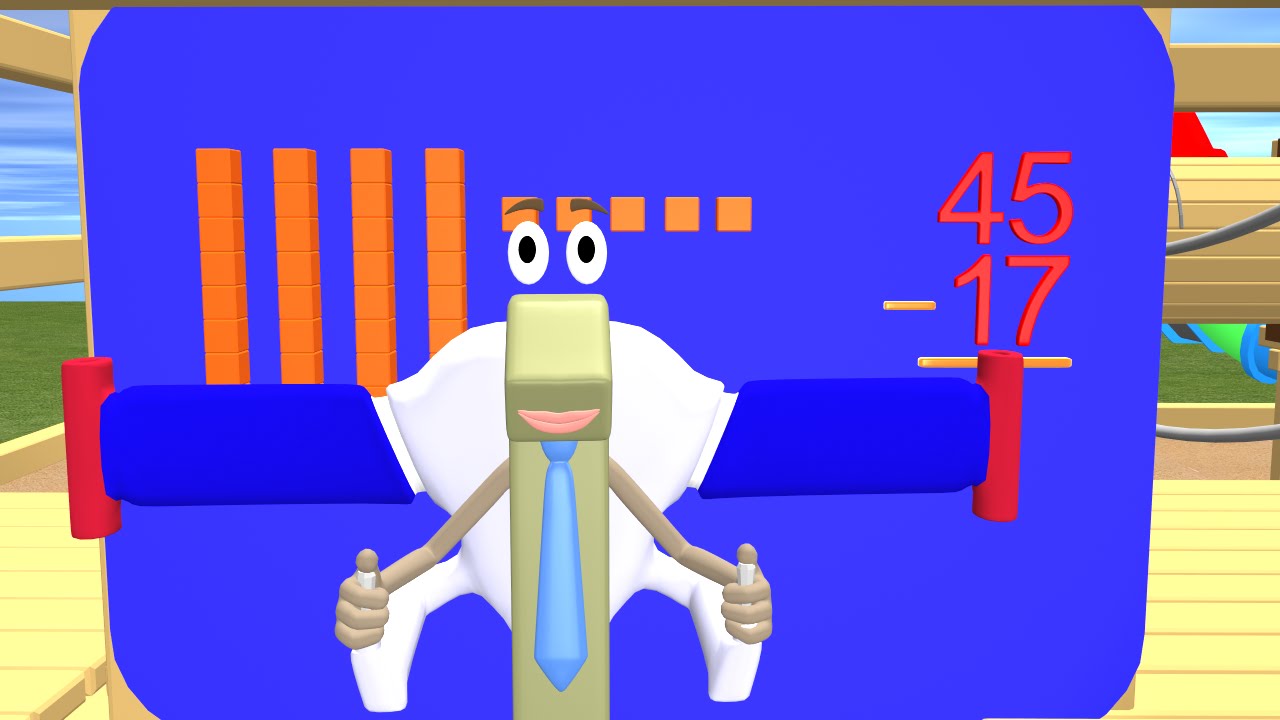
This is a short clip that shows the first part of a video that teaches how to subtract with regrouping. The full video is on our youtube channel now. Subscribe and check it out. This was meant for 2nd graders but can be used by any child at that stage of learning. Subtraction can be hard to learn which is why we made this video to help kids in this process.
Check out the new math game we made at https://www.MageMath.com/
It is a full video game called Mage Math that helps kids build confidence in math while having tons of fun.
Kids will learn to take from the next place value to be able to subtract. They learn in a fun way with 3d animated objects.
-------------------------------------------------------------------------------------
Our math and learning videos are designed to help with the education of children in this important growing phase. The videos teach math and other subjects that help children in their education. We make videos for toddlers, preschool, kindergarten, 1st grade, 2nd grade, 3rd grade and even a few for 4th grade. It is our goal to help kids achieve their potential by giving them a head start in math and other areas of education.
Please Subscribe and Share the videos.
You can also join us on
https://www.commoncore4kids.com/
https://www.mathvids4kids.com/
https://www.pinterest.com/commoncore4kids/
https://www.facebook.com/pages..../Common-Core-4-Kids/
https://twitter.com/jasoncore4kids

Check out the NEW Math Game we made at https://www.MageMath.com/
It is a full video game called Mage Math that helps kids build confidence in math while having tons of fun.
Come learn all about Multiplication with the Number One in this fun Video. Kids will learn not only how to multiply numbers but also learn about groups and numbers within groups.
Students should learn how multiplication works and be able to use images to multiply numbers. Math education is important especially with STEM being used in so many schools. The M on the end stands for Math so let's have some fun learning! Online education is great for helping with common core math and mathematics in general.
Check out our Distributive Property of Multiplication Video here https://youtu.be/APWCe2KtpjQ
Visit our website for ad free videos and math games.
-------------------------------------------------------------------------------------
Please Subscribe and Share the videos.
You can also join us on
https://www.commoncore4kids.com/
https://www.mathvids4kids.com/
https://www.pinterest.com/commoncore4kids/
https://www.facebook.com/pages..../Common-Core-4-Kids/
https://twitter.com/jasoncore4kids

If you use key words to teach word problems to students, you may be doing more harm than good.
Sarah Powell from UT shows the dangers of using key words when teaching math to students and offers suggestions for how to better help students understand key concepts. If you are teaching math at any grade level, this video is a must see.
This video is part of Project STAIR, a resource for teachers and parents who are interested in helping their students learn math.
If you have video suggestions or would like to let us know your thoughts, please complete our survey after you watch this video:
https://utexas.qualtrics.com/j....fe/form/SV_bdrM4xOXo

Sometimes it's really hard to understand a particular topic. You spend hours and hours on it and it just doesn't click. In this video I talk about what you should do when this happens. I hope this helps someone.
Useful Math Supplies https://amzn.to/3Y5TGcv
My Recording Gear https://amzn.to/3BFvcxp
(these are my affiliate links)
**********Math, Physics, and Computer Science Books**********
Epic Math Book List https://amzn.to/3F98vT1
Pre-algebra, Algebra, and Geometry https://amzn.to/3FdbwSn
College Algebra, Precalculus, and Trigonometry https://amzn.to/3UKjvfb
Probability and Statistics https://amzn.to/3FaaxCq
Discrete Mathematics https://amzn.to/3P6jPE4
Proof Writing https://amzn.to/3XXukxo
Calculus https://amzn.to/3iEH3F3
Differential Equations Books https://amzn.to/3Fac5wi
Partial Differential Equations Books https://amzn.to/3uyk1SV
Linear Algebra https://amzn.to/3VHiN3G
Abstract Algebra Books https://amzn.to/3FzLZEr
Real Analysis/Advanced Calculus https://amzn.to/3VIO4Ua
Complex Analysis https://amzn.to/3P6kbuo
Number Theory https://amzn.to/3UEm3vw
Graph Theory https://amzn.to/3BfRd5m
Topology https://amzn.to/3BiAGhe
Graduate Level Books https://amzn.to/3uv1eIg
Computer Science https://amzn.to/3Hh8kaU
Physics https://amzn.to/3BhPCMp
These are my affiliate links. As an Amazon Associate I earn from qualifying purchases.
If you enjoyed this video please consider liking, sharing, and subscribing.
Udemy Courses Via My Website: https://mathsorcerer.com
My FaceBook Page: https://www.facebook.com/themathsorcerer
There are several ways that you can help support my channel:)
Consider becoming a member of the channel: https://www.youtube.com/channe....l/UCr7lmzIk63PZnBw3b
My GoFundMe Page: https://www.gofundme.com/f/sup....port-math-education-
My Patreon Page: https://www.patreon.com/themathsorcerer
Donate via PayPal: https://paypal.com/donate/?cmd=_s-xclick&hosted_button_id=7XNKUGJUENSYU
************Udemy Courses(Please Use These Links If You Sign Up!)*************
Abstract Algebra Course
https://www.udemy.com/course/a....bstract-algebra-grou
Advanced Calculus Course
https://www.udemy.com/course/a....dvanced-calculusreal
Calculus 1 Course
https://www.udemy.com/course/c....alculus-1-with-the-m
Calculus 2 Course
https://www.udemy.com/course/c....alculus-2-with-the-m
Calculus 3 Course
https://www.udemy.com/course/c....alculus-3-with-the-m
Calculus Integration Insanity
https://www.udemy.com/course/c....alculus-integration-
Differential Equations Course
https://www.udemy.com/course/d....ifferential-equation
College Algebra Course
https://www.udemy.com/course/c....ollege-algebra-with-
How to Write Proofs with Sets Course
https://www.udemy.com/course/h....ow-to-write-proofs-i
How to Write Proofs with Functions Course
https://www.udemy.com/course/h....ow-to-write-proofs-w
Statistics with StatCrunch Course
https://www.udemy.com/course/s....tatistics-with-statc
Math Graduate Programs, Applying, Advice, Motivation
https://www.udemy.com/course/m....ath-graduate-program
Daily Devotionals for Motivation with The Math Sorcerer
https://www.udemy.com/course/d....aily-math-devotional
Thank you:)
Need a custom math course? Visit https://www.MathHelp.com.
MathHelp.com offers custom 11th grade math courses with a teacher. Our 11th grade math courses include Geometry and Algebra 2. Perfect for homeschoolers or for any student who needs lots of extra help getting back up to speed in 11th grade math.

Experience everything NUMBEROCK has to offer with a complete Fractions Lesson along with a Board Game, Lesson Plan, Google Classroom Activity, Printables, HD Video Download and more: https://learnmore.numberock.com/free-itf.
Thank you for watching our Fractions Song For Kids. We hope you liked it!
»»-------------¤-------------««»»-------------¤-------------««
Newly Available for Website Subscribers:
1. Number Notes | Highly-visual math worksheets that integrate drawing and creative processes that make problem-solving and note-taking way more fun.
Research has shown that resources like these worksheets help students to integrate their artistic side with the mathematical side of their brain and as a result aides with long-term memory retention.
Our own research has shown us that teachers who try these activities love them! It seems to be a natural extension beyond song and video and into additional visual learning tools that when used in concert with our videos, cater to the many different types of learners that in your classroom - especially those non-mathy types.
Hope to see you at https://learnmore.numberock.com/free-itf.

Discover everything a NUMBEROCK subscription has to offer!
FREE TRIAL LINK: https://learnmore.numberock.com/free-fnl.
»»-------------¤-------------««»»-------------¤-------------««
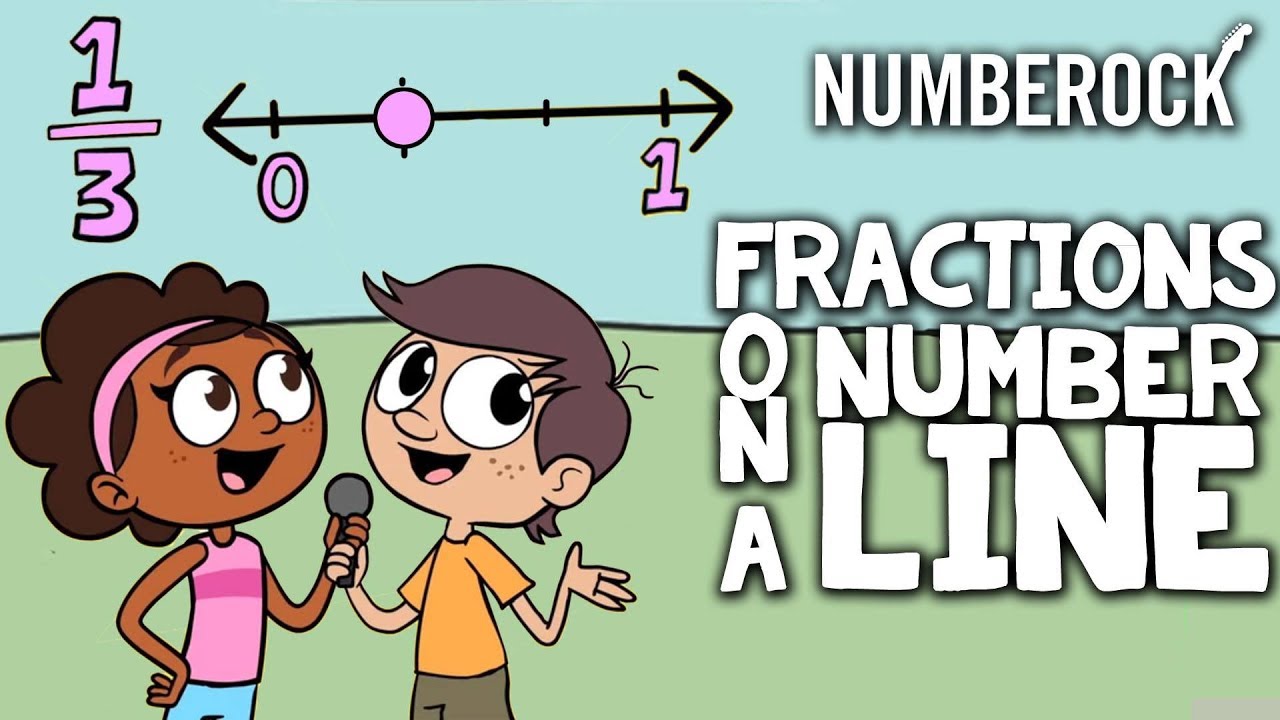
Thank you for watching our Fractions on a Number Line Song.
Newly Available for Website Subscribers:
1. Number Notes | Highly-visual math worksheets that integrate drawing and creative processes that make problem-solving and note-taking way more fun.
Research has shown that resources like these worksheets help students to integrate their artistic side with the mathematical side of their brain and as a result aides with long-term memory retention.
Our own research has shown us that teachers who try these activities love them! It seems to be a natural extension beyond song and video and into additional visual learning tools that when used in concert with our videos, cater to the many different types of learners that in your classroom - especially those non-mathy types.
Hope to see you at https://learnmore.numberock.com/free-fnl.

Adding Fractions?
Subtracting Fractions?
Multiplying Fractions?
Dividing Fractions?
Mixed Numbers?
Simplifying Fractions?
It's all here.
To support tecmath on Patreon: https://www.patreon.com/tecmath
It really helps and is appreciated!

This primary math fractions lesson is all about fractions! Use this video as a great introduction to fractions. Featuring fraction examples in everyday life along with equal share and fair-share problems, this fun with fractions educational video is also useful for learning quarters and halves, or even figuring out one quarter vs. one fourth!
00:00 - Introduction
00:23 - Introducing Fractions
01:05 - Dividing a Whole into Halves
02:03 - Dividing a Whole into Quarters
02:56 - Reviewing Quarters & Halves
03:44 - Equal Share Problems & Solutions
06:10 - Outro
Mini Math Movies is a new mathematics educational series from Scratch Garden full of in depth math lessons for kids! Check out the full playlist here: https://tinyurl.com/minimathmovies
Scratch Garden makes entertaining educational videos for people that like to laugh and learn! Please Subscribe to see more great fun learning videos from Scratch Garden! https://goo.gl/1biPjA
Website: https://www.scratchgarden.com
Instagram: https://www.instagram.com/scratchgarden
Facebook: https://www.facebook.com/scratchgarden
#minimathmovies #learningfractions #mathlessonsforkids

Writing short sentences all the time an get pretty boring. Conjunctions are a way to spice up your prose! In Conjunctions for Kids, you will learn about the three different types of conjunctions and how they work in sentences. Conjunctions can combine words, phrases, and sentences. But this video concentrates specifically on combining sentences.
Sometimes, using conjunctions in your writing can make it more interesting, and even easier to understand! But what exactly is a conjunction? Well, let's first explain what a junction is. A junction is a place where two different things come together. Think of a train junction where a road meets train tracks. Conjunctions do the same things in language.
Coordinating conjunctions are the ones you might be the most familiar with. These are the words like and, but, and or. A common acronym people use to remember the seven coordinating conjunctions is FANBOYS: for, and, nor, but, or, yet, so. If you can remember that acronym, it will really easy to remember the coordinating conjunctions!
Another type of conjunction is the correlative. To correlate means to compare or relate. These conjunctions are used in pairs to combine alternative or equal elements. Examples of correlative conjunctions include either/or, if/then, and not only/but also. Subordinating conjunctions are the last type. These are words or phrases that connect dependent clauses to independent clauses. You can also use subordinating conjunctions to introduce adverb clauses.
We hope you and your student(s) enjoyed learning how to identify different types of conjunctions! If you want even more practice, head over to our website and download one of our many lesson plans about conjunctions, full of activities, worksheets, and more!
https://learnbright.org/lesson....s/language-arts/conj
https://learnbright.org/lesson....s/language-arts/corr
https://learnbright.org/lesson....s/language-arts/conj
Thank you for watching and learning with us! We’re constantly releasing new content and videos, so click that “Subscribe” button to get notified of any new content.
Find and Follow Us Online:
Facebook: https://www.facebook.com/LearnBright/
Instagram: https://instagram.com/LearnBrightEducation
Pinterest: https://pinterest.com/LearnBrightEducation
YouTube: @LearnBright
Website: https://learnbright.org/
*Teachers and Parents! Did you know? In addition to these great videos, we have also created a library of high-quality and engaging lessons for your elementary aged student(s). Visit us and sign up for a free account, and you will instantly have access to thousands of lesson plans, learning materials, teaching instructions, activities, and assignments that your kids will really enjoy! We hope to see you soon!
Browse our entire collection of Language Arts lesson plans: https://learnbright.org/lessons/?filter_subject=language-arts
#ConjunctionsForKids
#Conjunctions

Did you know that bats are the only mammals that fly? It's true! Many people mistake bats for birds for this very reason. Believe it or not, bats are more closely related to humans than they are to birds. They don't have feathers; instead, they have fur in various colors. They have fingers and thumbs just as we do!
There are over a thousand bat species. Some of them are very small, but some are so large that their wing spans are 5 feet wide! Their wings are pretty unique. They are made of a thin skin-like material that connects all their fingers and thumb to their feet. And despite what people think, bats have excellent eyesight and hearing.
Some bats eat other animals, like small birds, reptiles, mice, or even other bats. But most bats just stick to an insect diet. In fact, small bats about the size of an adult thumb can eat 4-8 grams of insects every night. That may not seem like much, but even if only a million bats ate that many insects, it equates to a thousand metric tons every single night!
We hope you and your student(s) enjoyed learning about this exciting unique mammal! If you want to learn even more, head over to our website and download one of our many lesson plans about animals, full of activities, worksheets, and more!
https://learnbright.org/lessons/science/bats/
https://learnbright.org/lesson....s/science/reptiles-a
Thank you for watching and learning with us! We’re constantly releasing new content and videos, so click that “Subscribe” button and you’ll get notified.
Find and Follow Us Online:
Facebook: https://www.facebook.com/LearnBright/
Instagram: https://instagram.com/LearnBrightEducation
Pinterest: https://pinterest.com/LearnBrightEducation
YouTube: @LearnBright
Website: https://learnbright.org/
*Teachers and Parents! Did you know? In addition to these great videos, we have also created a library of high-quality and engaging lessons for your elementary aged student(s). Visit us, sign up for a free account, and instantly you'll have access to thousands of lesson plans, learning materials, teaching instructions, activities, and assignments that your kids will really enjoy! We hope to see you soon!
Browse our entire collection of Science lesson plans: https://learnbright.org/lessons/?filter_subject=science
#Bats
#Mammals

John F. Kennedy for Kids is a great video that discusses the life of one of the country's most popular presidents. He was born at the end of May in 1917, and he was the second of nine children. Growing up, he was often sick and even battled a sever case of scarlet fever when he was only three years old. But he worked really hard and had lots of help to get better.
At age 19, he enrolled in Harvard University and focused on history and government. He graduated college and then joined the Navy. Once there, he immediately distinguished himself when he earned a purple heart and became a war hero after the boat he commanded was destroyed. He gained the nickname of JFK, which is often what people refer to him as.
After the war, JFK pursued politics and ran for office as a Democrat. He first served in the House of Representatives and then in the senate of Massachusetts. He married Jacqueline Bouvier and had two living children. John F. Kennedy ran for president with Lyndon B. Johnson as his VP. And he won! He became the youngest person ever elected, and the first Catholic, to the office of president.
JFK was a huge supporter of the civil rights movement and wanted to pass more laws that guaranteed equal rights for people. Sadly, he was assassinated in 1963, less than three years after he was elected. Despite his short presidency, his legacy lives on. His call for peace, justice, and equality are still important today.
We hope you and your student(s) enjoyed learning about the youngest president of the United States! If you want even more information, head over to our website and download one of our many lesson plans, full of activities, worksheets, and more!
https://learnbright.org/lesson....s/social-studies/joh
Thank you for watching and learning with us! We’re constantly releasing new content and videos, so click that “Subscribe” button and you’ll get notified.
What you will learn in John F. Kennedy for Kids:
0:00 Introduction to JFK
0:43 Childhood and being sick
1:31 Education and time in the Navy
2:26 Pursuit of politics
3:37 World events during JFK's term
4:28 Assassination of John F. Kennedy
4:49 Things to think about
Find and Follow Us Online:
Facebook: https://www.facebook.com/LearnBright/
Instagram: https://instagram.com/LearnBrightEducation
Pinterest: https://pinterest.com/LearnBrightEducation
YouTube: @LearnBright
Website: https://learnbright.org/
*Teachers and Parents! Did you know? In addition to these great videos, we have also created a library of high-quality and engaging lessons for your elementary aged student(s). Visit us and sign up for a free account, and you'll instantly have access to thousands of lesson plans, learning materials, teaching instructions, activities, and assignments that your kids will really enjoy! We hope to see you soon!
Browse our entire collection of Social Studies lesson plans: https://learnbright.org/lessons/?filter_subject=social-studies
#ASL
#JohnFKennedy
#JFKforKids

Have you ever asked "What is a Democrat?" Well, we have too! In this video, we cover the basics of the democratic party and learn all about what makes a democrat a democrat for kids. Come learn all about this party with us!
Be sure to check out our other video about Republicans so you can compare and contrast the differences: https://youtu.be/JLHByPpG10w
https://learnbright.org/lesson....s/social-studies/rep
Thank you for watching and learning with us! We’re constantly releasing new content and videos so click that “Subscribe” button and you’ll notified.
Find and Follow Us Online:
Facebook: https://www.facebook.com/LearnBright/
Instagram: https://instagram.com/LearnBrightEducation
Pinterest: https://pinterest.com/LearnBrightEducation
YouTube: https://www.youtube.com/LearnBright
Website: https://learnbright.org/
*Teachers and Parents! Did you know? In addition to these great videos, we have also created a library of high quality and engaging lessons for your elementary aged student(s). Visit us, sign up for a free account, and instantly you'll have access to thousands of lesson plans, learning materials, teaching instructions, activities, and assignments that your kids will really enjoy! We hope to see you soon!
Browse our entire collection of Social Studies lesson plans: https://learnbright.org/lessons/?filter_subject=social-studies
#ASL
#Democracy
#WhatIsADemocrat

Have you ever seen a duck-billed platypus? This video for kids talks all about one of the most curious mammals in the world. With a duck bill, beaver tail, and otter foot, the platypus is quite strange. Despite being a mammal, it actually lays eggs instead of experiencing live births. They lay their eggs in underground burrows near water that hatch around two weeks later. The young stay with their mother for only about four weeks before swimming off to forage on its own.
While its features are odd, they all have their use. The duck bill is flexible and soft and has thousands of receptors to help them find food in the dark. Their webbed feet push through water quickly. And their tails act like rudders on a ship. They steer the platypuses where they want to go. Additionally, a platypus can remain under water for nearly two minutes before coming up for air!
Believe it or not, a platypus doesn't have any teeth. When it shovels mud and silt into its bill, it also captures gravel. It uses the gravel to chew and grind food. These shy creatures are also very small. Adults weight only around three pounds. That makes them pretty easy prey. However, male platypuses have venomous stingers on their rear feet that can deliver a poisonous sting to attackers.
We hope you and your student(s) enjoyed learning about this interesting creature! If you want to learn even more, head over to our website and download one of our many lesson plans about animals, full of activities, worksheets, and more!
https://learnbright.org/lesson....s/science/duck-bille
https://learnbright.org/lesson....s/science/reptiles-a
Thank you for watching and learning with us! We’re constantly releasing new content and videos, so click that “Subscribe” button and you’ll get notified.
Find and Follow Us Online:
Facebook: https://www.facebook.com/LearnBright/
Instagram: https://instagram.com/LearnBrightEducation
Pinterest: https://pinterest.com/LearnBrightEducation
YouTube: @LearnBright
Website: https://learnbright.org/
*Teachers and Parents! Did you know? In addition to these great videos, we have also created a library of high-quality and engaging lessons for your elementary aged student(s). Visit us, sign up for a free account, and instantly you'll have access to thousands of lesson plans, learning materials, teaching instructions, activities, and assignments that your kids will really enjoy! We hope to see you soon!
Browse our entire collection of Science lesson plans: https://learnbright.org/lessons/?filter_subject=science
#Platypus
#Mammals
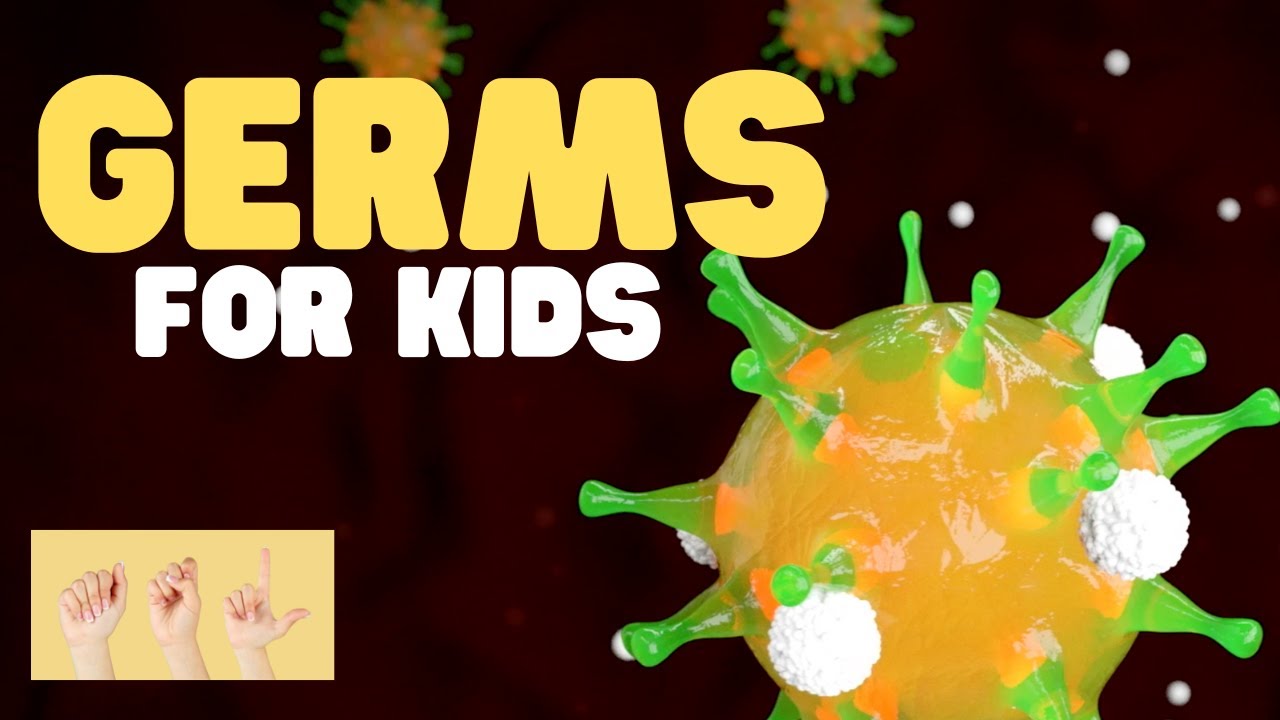
Germs are everywhere. They are often responsible for making people sick. They're so small, you can only see them with a microscope. In Germs for Kids, you and will learn all about the four types of germs that exist in the word: bacteria, viruses, fungi, and protozoa. Let's see what you already know and what you will learn throughout the video!
The first type is bacteria. Bacteria are single-celled organisms that live inside and outside of you body. They can cause ear infections, sore throats, cavities, and more. Not all bacteria are bad, though. In fact, there is lots of good bacteria in some of the food we eat, and our bodies need good germs to help use up the nutrients we ingest. Doctors even use good bacteria to create medicines and vaccines.
Viruses, on the other hand, are all bad. Some examples include chicken pox, the flu, and the measles. Viruses like to invade healthy cells and multiply as the host cell multiplies. Because our bodies have so many cells, there are lots of places for viruses to invade. When we get sick from a virus, we can get what's called a vaccine or immunization to help fight it.
The next type of germ is fungi. A fungus is like a plant and actually consists of many cells rather than just one. Fungi like to live in warm and wet places, such as between a person’s toes. Many fungi don’t cause problems for healthy people. Examples include athlete’s foot, skin infections, and other rashes. Some fungal infections are contagious and can pass from one person to another.
The last type of germ is a protozoa. Like fungi, protozoa live in wet places. And like bacteria and viruses, they also have only one cell. Many live in the water, which is how they spread diseases and infections. Water that is not safe to drink may contain protozoa. These germs can lead to stomach aches, diarrhea, and nausea. The video explains lots of ways to help stop the spread of germs. Keep watching to find out!
We hope you and your student(s) enjoyed learning about these different kinds of germs! If you want to learn even more, head over to our website and download one of our many free lesson plans about this topic, full of activities, worksheets, and more!
https://learnbright.org/lessons/science/germs/
https://learnbright.org/lesson....s/science/bacteria-a
https://learnbright.org/lesson....s/science/influenza-
https://learnbright.org/lesson....s/science/immune-sys
What you will learn in this video:
0:00 Introduction to what germs are
0:33 Scenario about viruses
1:05 Why we get sick
1:58 Facts about bacteria
3:17 Facts about viruses
4:31 Facts about fungi
5:23 Facts about protozoa
6:14 Ways to stay healthy
8:10 Review of the facts
Thank you for watching and learning with us! We’re constantly releasing new content and videos, so click that “Subscribe” button and you’ll get notified.
Find and Follow Us Online:
Facebook: https://www.facebook.com/LearnBright/
Instagram: https://instagram.com/LearnBrightEducation
Pinterest: https://pinterest.com/LearnBrightEducation
YouTube: @LearnBright
Website: https://learnbright.org/
*Teachers and Parents! Did you know? In addition to these great videos, we have also created a library of high-quality and engaging lessons for your elementary aged student(s). Visit us, sign up for a free account, and instantly you'll have access to thousands of lesson plans, learning materials, teaching instructions, activities, and assignments that your kids will really enjoy! We hope to see you soon!
Browse our entire collection of Science lesson plans: https://learnbright.org/lessons/?filter_subject=science
#ASL
#Germs
#bacteria #Virus

What would it be like to work for 16 hours a day, days a week? Nowadays, that is very uncommon in the United States. But during colonial times, that was the way life was for most people. In Colonial Times for Kids, you will learn about the daily life and habits of people who lived during this period of American history.
Let's start by talking about the children and what typical life was like for them. They had the chance to go to school, but they had better access to education if they lived in the city rather than on a farm. Many farm children learned to read and write from their father or church minister. Wealthier families might hire special tutors to teach their kids or send them to schools in England. Boys and girls did not have the same educational opportunities, though. In fact, many girls never learned to read or write.
Unfortunately, this was also a time during which people employed indentured servants, laborers brought over from Britain, or owned slaves. Indentured servants agreed to work for about seven years in return for their passage to America. But slavery grew in the colonies because the indentured servants were not easy to control and more difficult and costly to obtain. Some of the first African American indentured servants were forced into slavery rather than gaining their freedom after the seven-year work period.
Houses of this era were generally small, sometimes containing just a single room. The frames were made of wood, roofs of dried grasses, and floors of dirt. A fireplace inside was used for cooking and producing heat during the winter. Eventually homes on plantations grew larger, adorned with glass windows, wooden or carpeted floors, and quality furniture.
We hope you and your student(s) enjoyed learning about this period in American history! If you want even more information, head over to our website and download one of our many lesson plans, full of activities, worksheets, and more!
https://learnbright.org/lesson....s/social-studies/col
What you will learn in this video:
0:00 Introduction to this period
0:23 Farm life
1:41 Life for colonist children
2:20 Colonists in the city
3:37 Jobs of men depended on where they lived
4:42 Colonial terms for level of profession
5:25 Importance of religion
6:28 The Revolutionary War
7:17 Indentured servants and slavery
8:24 Construction of the farm homes
Thank you for watching and learning with us! We’re constantly releasing new content and videos, so click that “Subscribe” button and you’ll get notified.
Find and Follow Us Online:
Facebook: https://www.facebook.com/LearnBright/
Instagram: https://instagram.com/LearnBrightEducation
Pinterest: https://pinterest.com/LearnBrightEducation
YouTube: @LearnBright
Website: https://learnbright.org/
*Teachers and Parents! Did you know? In addition to these great videos, we have also created a library of high-quality and engaging lessons for your elementary aged student(s). Visit us and sign up for a free account, and you'll instantly have access to thousands of lesson plans, learning materials, teaching instructions, activities, and assignments that your kids will really enjoy! We hope to see you soon!
Browse our entire collection of Social Studies lesson plans: https://learnbright.org/lessons/?filter_subject=social-studies
#ASL
#ColonialAmerica
#ColonialTimes

Ancient Rome for Kids is an engaging overview of the history of the roman empire. In this video we will learn about Ancient Rome and its early emperors. We will highlight Romes early government, values, people, cities, gods and goddesses, and we will even talk about the gladiators.
After watching the video we invite you to download our full 14 page lesson plan (built for grades 4-6) all about Ancient Rome complete with worksheets, activities, quizzes and much more to help your student learn all about this ancient civilization. You can download the lesson here: https://learnbright.org/lesson....s/social-studies/anc
Thank you for watching and learning with us! We’re constantly releasing new content and videos so click that “Subscribe” button and you’ll notified.
Find and Follow Us Online:
Facebook: https://www.facebook.com/LearnBright/
Instagram: https://instagram.com/LearnBrightEducation
Pinterest: https://pinterest.com/LearnBrightEducation
YouTube: https://www.youtube.com/LearnBright
Website: https://learnbright.org/
*Teachers and Parents! Did you know? In addition to these great videos, we have also created a library of high quality and engaging lessons for your elementary aged student(s). Visit us, sign up for a free account, and instantly you'll have access to thousands of lesson plans, learning materials, teaching instructions, activities, and assignments that your kids will really enjoy! We hope to see you soon!
Browse our entire collection of Social Studies lesson plans: https://learnbright.org/lessons/?filter_subject=social-studies
#ASL
#AncientRomeForKids
#AncientRome

What would it be like to be a king or queen as a kid? That's what life was like for King Tutankhamun, or King Tut! He was a pharaoh of ancient Egypt in the 1300s BCE. Historians believe he became the pharaoh, or king, of Egypt around the age of nine. And his reign was pretty short, lasting only about 10 years.
The ancient Egyptians were very religious and believed their pharaohs were earthly gods who communicated with the other gods. Their beliefs focused a lot on the afterlife, and the people believed people passed through to the afterlife in the same form as when they were alive. They developed burial processes to preserve the body for its afterlife. This process is known as mummification.
King Tut was mummified and buried in a beautiful tomb like any other pharaoh. Tombs included other items the pharaoh might need in addition to just the body, such as food, jewelry, weapons, art, and even pets. The reason we know so much about King Tut specifically is that archaeologists who discovered his tomb in 1922 found the tomb completely untouched. There were over 5,000 artifacts! Because the items included in a tomb were personal items, the archaeologists studied the artifacts to recreate King Tut's life!
The boy king died pretty young at about 18 or 19 years old. There are several theories. Some historians believe he was murdered by his advisors who wanted to seize his power. Others think his own family killed him. Thanks to modern DNA testing and physical evidence, however, most scientists believe that the young pharaoh died because of poor health.
We hope you and your student(s) enjoyed learning about George Washington Carver! If you want even more information, head over to our website and download one of our many free lesson plans, full of activities, worksheets, and more!
https://learnbright.org/lesson....s/social-studies/kin
What you will learn in King Tut for Kids:
0:00 Introduction to the "boy king"
0:44 King Tut is pharaoh of Egypt in 1300s BCE
1:02 The reign of King Tut
2:22 Afterlife and mummification
3:15 Reason we know so much about King Tut
4:33 Why King Tut died so young
5:22 Review of the facts
Thank you for watching and learning with us! We’re constantly releasing new content and videos, so click that “Subscribe” button and you’ll get notified.
Find and Follow Us Online:
Facebook: https://www.facebook.com/LearnBright/
Instagram: https://instagram.com/LearnBrightEducation
Pinterest: https://pinterest.com/LearnBrightEducation
YouTube: @LearnBright
Website: https://learnbright.org/
*Teachers and Parents! Did you know? In addition to these great videos, we have also created a library of high-quality and engaging lessons for your elementary aged student(s). Visit us and sign up for a free account, and you'll instantly have access to thousands of lesson plans, learning materials, teaching instructions, activities, and assignments that your kids will really enjoy! We hope to see you soon!
Browse our entire collection of Social Studies lesson plans: https://learnbright.org/lessons/?filter_subject=social-studies
#ASL
#Tutankhamun
#Pharaoh

What do you know about sharks? Did you know they are technically a type of fish? Did you know they have been around for about 450 million years? That's older than the dinosaurs! In this video, you and your kids will learn all about sharks and what makes them a unique creature on this earth.
For one thing, sharks don't have any bones in their bodies! Their skeletons are made of cartilage, which is what your ears and noses are made of. Sharks also have up to 14 gill slits that help them filter oxygen from the water. Most sharks look pretty similar to one another, but there a number of species that looks pretty interesting! Hammerheads and saw sharks are among those odd-looking fish.
The biggest fish in the world is the whale shark, which can weigh up to 41,000 pounds and be as long as 33 feet. Whale sharks are among the 400 currently known species of shark. And all these sharks often have distinct shapes, colors, teeth, diet, and more. In addition, there are a number of very unique qualities that make sharks special. Watch the video to find out!
We hope you and your student(s) enjoyed learning about sharks! If you want to learn even more, head over to our website and download one of our many free lesson plans about these cool fish, full of activities, worksheets, and more!
https://learnbright.org/lesson....s/science/types-of-f
https://learnbright.org/lesson....s/science/identify-a
What you will learn in Landforms for Kids:
0:00 Introduction to sharks and what they are
1:00 Different types of sharks and their characteristics
1:51 Largest shark and its traits
2:23 How many species of sharks are there?
3:03 Unique qualities of shark (tapetum, electroreceptors, placoid scales)
4:22 All about sharks' teeth
5:36 Tonic immobility
6:22 Review about sharks
Check out some of our other shark-related videos here:
Oceans: https://youtu.be/1WZsxVDTqcU
Ocean Animals: https://youtu.be/8adtdg0N2-g
All about Fish: https://youtu.be/TwVAMry3SQ0
Thank you for watching and learning with us! We’re constantly releasing new content and videos, so click that “Subscribe” button and you’ll get notified.
Find and Follow Us Online:
Facebook: https://www.facebook.com/LearnBright/
Instagram: https://instagram.com/LearnBrightEducation
Pinterest: https://pinterest.com/LearnBrightEducation
YouTube: @LearnBright
Website: https://learnbright.org/
*Teachers and Parents! Did you know? In addition to these great videos, we have also created a library of high-quality and engaging lessons for your elementary aged student(s). Visit us, sign up for a free account, and instantly you'll have access to thousands of lesson plans, learning materials, teaching instructions, activities, and assignments that your kids will really enjoy! We hope to see you soon!
Browse our entire collection of Science lesson plans: https://learnbright.org/lessons/?filter_subject=science
#ASL
#AllAboutSharksForKids
#Sharks

What is camouflage? Why do animals need to use it? Well, in Animal Camouflage, your kids and students will learn the answers to these questions! First off, there are many different kinds of camouflage, and we will discuss four of the main kinds that apply to animals in this video. Did you know that there is actually more than one reason that animals use camouflage?
A lot of animals use camouflage to hide from predators. The colors of their skin or fur helps them blend into the environment around them. Some animals, though, use camouflage to hunt. For the same reason that camouflage helps some animals hide to avoid predators, other animals blend into their surroundings to catch their prey unaware! In addition to hiding and hunting, a few animals use their coloring to communicate. Take the chameleon, for example. Most people think chameleons use color changing to fool predators. But that's not actually true! Chameleons change colors to communicate to other chameleons! They change color to communicate danger, to attract a mate, or simply to signal a change of environment.
These animals are so cool! You and your kids will discover just how many different types of animals take advantage of this amazing characteristic. And maybe you just might stumble upon one of these incredible creatures!
We hope you and your student(s) enjoyed learning about all these amazing and colorful animals! If you want to learn more, head over to our website and download our free lesson plan about animal camouflage, which is full of activities, worksheets, and more!
https://learnbright.org/lesson....s/science/animal-cam
What you will learn in this video:
0:00 Animal camouflage
0:31 Why animals use camouflage
1:09 4 types of camouflage
1:34 Concealing coloration camouflage
2:18 Disruptive coloration (patterning) camouflage
4:05 Disguise camouflage
5:23 Mimicry camouflage
6:45 Other reasons animals use camouflage
8:04 Review quiz
Thank you for watching and learning with us! We’re constantly releasing new content and videos, so click that “Subscribe” button and you’ll get notified.
Find and Follow Us Online:
Facebook: https://www.facebook.com/LearnBright/
Instagram: https://instagram.com/LearnBrightEducation
Pinterest: https://pinterest.com/LearnBrightEducation
YouTube: @LearnBright
Website: https://learnbright.org/
*Teachers and Parents! Did you know? In addition to these great videos, we have also created a library of high quality and engaging lessons for your elementary aged student(s). Visit us and sign up for a free account, and instantly you'll have access to thousands of lesson plans, learning materials, teaching instructions, activities, and assignments that your kids will really enjoy! We hope to see you soon!
Browse our entire collection of Science lesson plans: https://learnbright.org/lessons/?filter_subject=science
#ASL
#animalcamouflage
#camouflageforkids