Top videos

This video covers everything you need to know about how to divide by a power of ten.
In this video we cover:
Review of Powers of Ten
Multiplying By A Power of Ten
Dividing By A Power of Ten
Other Videos Mentioned:
Multiplying Whole Numbers By A Power of Ten: https://youtu.be/kiEMc0CrNQY
Powers of Ten: https://youtu.be/9bx4ChX82_8
Improved math is a channel created to provide additional instruction on essential math concepts. I know firsthand how important math concepts are in the real world.
Teachers, parents, guardians, homeschoolers, and students can use these videos to help reinforce math skills.
For more information on math topics or for free additional resources, you can also visit my website at improvedmath.com
#poweroften
#dividingbypoweroften
#exponents
#dividebypoweroften
#division
#mathhelpvideos
#learnmath
#teachmath
#freemathvideos
https://www.youtube.com/c/ImprovedMath
https://improvedmath.com
https://www.tiktok.com/@improvedmath1?
https://www.pinterest.com/improvedmath/
Don’t forget to like, share, and subscribe!
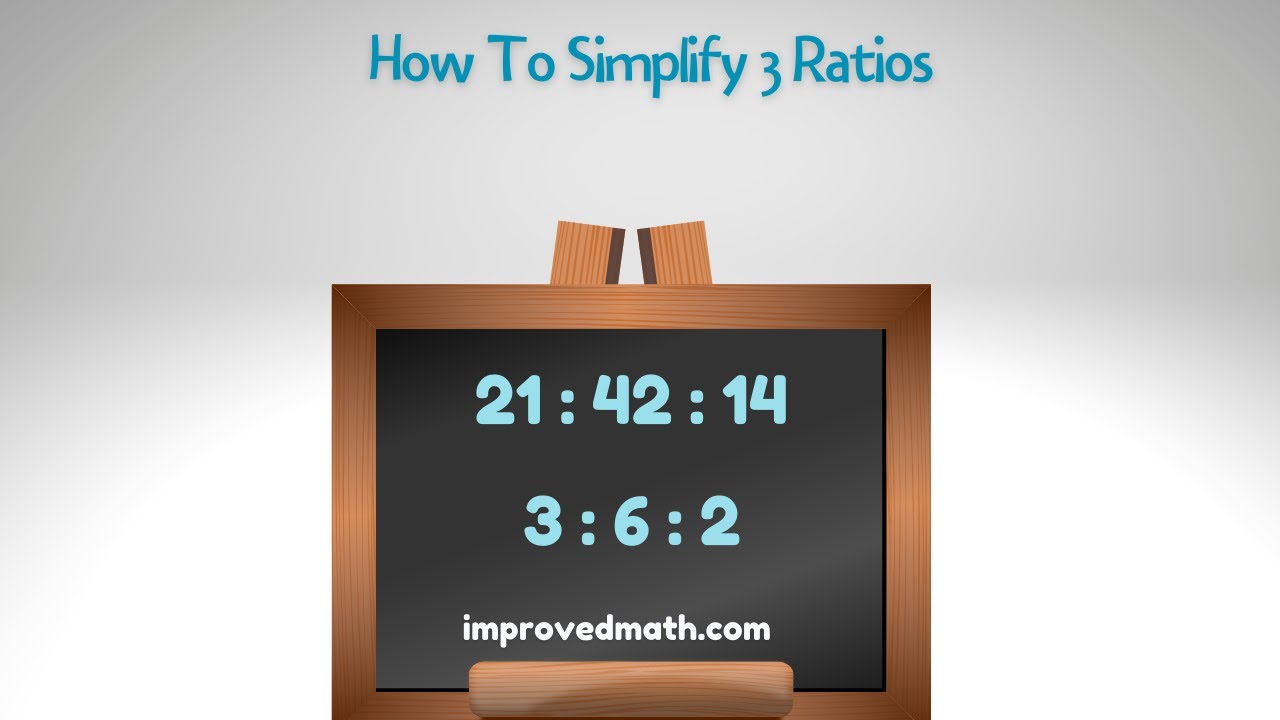
This video walks through the step-by-step process for simplifying 3 or more ratios.
In this video I cover:
How to find factors of numbers in a ratio
Identifying the greatest common factor of those numbers
Dividing the ratio numbers by that greatest common factor
How to simplify multiple ratios
Improved math is a channel created to provide additional instruction on essential math concepts. I’m passionate about math and I know first-hand how important math concepts are in the real world.
Teachers, parents, guardians, homeschoolers, and students can use these videos to help reinforce math skills.
For more information on math topics or for free printable worksheets and answer sheets, you can also visit my website at improvedmath.com
https://www.youtube.com/c/ImprovedMath
https://improvedmath.com
https://www.tiktok.com/@improvedmath1?
https://www.pinterest.com/improvedmath/
Don’t forget to like, share, and subscribe!
#ratios
#simplifyratios
#reduceratios
#homeschoolmath
#mathtipsnadtricks

Want to learn all about the Powers of Ten? You have come to the right place!
In this video we cover:
Review of Exponents
How exponents are written
Exponents with a base of 10
The Powers of 10 - examples
For a free printable worksheet and answers on the powers of ten, check out my post here: https://improvedmath.com/under....standing-the-powers-
Improved math is a channel created to provide additional instruction on essential math concepts. I’m not a math teacher, I’m an accountant. I know firsthand how important math concepts are in the real world.
Teachers, parents, guardians, homeschoolers, and students can use these videos to help reinforce math skills.
For more information on math topics or for free additional resources, you can also visit my website at improvedmath.com
#exponents
#powersof10
#base10
#mathhelp
#virtualmathtutor
#mathvideos
#teachyourselfmath
https://www.youtube.com/c/ImprovedMath
https://improvedmath.com
https://www.tiktok.com/@improvedmath1?
https://www.pinterest.com/improvedmath/
Don’t forget to like, share, and subscribe!

In this video, I show you 4 practice problems to ensure you have mastered the concept of comparing fractions with different denominators.
In this video we cover:
Quick review of comparing fractions with different denominators
Quick review of cross multiplication
4 practice problems that you can solve at your own pace and unpause to check against the answers
Improved math is a channel created to provide additional instruction on essential math concepts. I’m passionate about math and I know first-hand how important math concepts are in the real world.
Teachers, parents, guardians, homeschoolers, and students can use these videos to help reinforce math skills.
For more information on math topics or for free printable worksheets and answer sheets, you can also visit my website at improvedmath.com
https://www.youtube.com/c/ImprovedMath
https://improvedmath.com
https://www.tiktok.com/@improvedmath1?
https://www.pinterest.com/improvedmath/
Don’t forget to like, share, and subscribe!

This video walks through the basics of what are prime and composite numbers. It shows you what prime numbers are as well as what composite numbers are.
This video shows basic math knowledge for prime and composite numbers. For a continuation on this topic, check out my video below on Prime Factorization that shows how to break a number down into its prime factors using a factor tree.
Other Videos Mentioned:
Prime Factorization: https://youtu.be/fGY0nqJ1fYI
For a free printable worksheet on prime and composite numbers, check out my post here: https://improvedmath.com/the-d....ifference-between-pr
Improved math is a channel created to provide additional instruction on essential math concepts. I’m not a math teacher, I’m an accountant. I know firsthand how important math concepts are in the real world.
Teachers, parents, guardians, homeschoolers, and students can use these videos to help reinforce math skills.
For more information on math topics or for free additional resources, you can also visit my website at improvedmath.com
https://www.youtube.com/c/ImprovedMath
https://improvedmath.com
https://www.tiktok.com/@improvedmath1?
https://www.pinterest.com/improvedmath/
#primenumbers
#compositenumbers
#primefactorization
#mathhelpvideo
#primeandcompositenumbers
#math help
#matheducation
#primemeaninmath
Don’t forget to like, share, and subscribe!

#math #fractions #subtractingfractions #homeschoolmath
This video shows you how to subtract fractions that have different denominators. I walk you through 4 examples and have one example you can try on your own. I show you how to get common denominators by using the lowest common multiple and also how to subtract using the butterfly method.
🔴 Subscribe for more free YouTube tips: https://www.youtube.com/c/ImprovedMath
🔴 Share this video with a friend:
🔴 Check out this playlist:
✅ For business inquiries contact me at improvedmath@gmail.com
✅ Let's connect:
https://www.youtube.com/c/ImprovedMath
https://www.tiktok.com/@improvedmath1?
https://www.pinterest.com/improvedmath/
Improved math is a channel created to provide additional instruction on essential math concepts. I’m passionate about math and I know first-hand how important math concepts are in the real world.
Teachers, parents, guardians, homeschoolers, and students can use these videos to help reinforce math skills. These math videos are designed to help teach yourself math or provide self-study math tools to assist when additional instruction is needed. Teaching math and learning math has changed the way many students learn in this virtual environment. Having on-demand math videos can provide math tutoring needed when children are not able to get help from their teachers after school hours or when trying to do math at home.
The library of math tutorials that I create can also be used as supplemental instructional material for homeschool math. Each full-length video comes with a subsequent knowledge check or math practice problems which serve as a virtual math topic worksheet to test your understanding of each skill. These videos can be paused to work out the problems on your own, then unpaused to check your answers. All of these videos can be found under the Knowledge Check playlist.
I also have a library of shorter videos (less than 1 minute in length - shorts) that are quick math tips and tricks on basic math topics. Some of these short math help videos include problems that you can work on yourself and submit your answers in the comments. They are all listed under my Math Tips and Tricks playlist.
Improved math is creating more videos every day to cover topics from 4th grade, 5th grade, 6th grade, and 7th-grade math. The videos focus on fractions, basic math operations, geometry, and ratios but more topics are being added all the time. If there is a specific topic you would like to see covered, drop me a comment in one of my videos and let me know!
Free math help videos will be posted every Thursday and Friday. For additional math resources, check out my math help website at improvedmath.com where I post math worksheets and answers along with additional context on math basics.
Thanks for watching my channel.

This video shows you how to find items on a map using a coordinate plane. By looking at the intersection of x and y coordinates, you can determine the location of objects. This video gives you 4 examples to identify coordinates on a map.
🔴 Subscribe for more free YouTube tips: https://www.youtube.com/c/ImprovedMath
🔴 Share this video with a friend: https://youtu.be/XNdQtduPA2Q
🔴 Check out this playlist:
✅ For business inquiries contact me at improvedmath@gmail.com
✅ Let's connect:
https://www.youtube.com/c/ImprovedMath
https://www.tiktok.com/@improvedmath1?
https://www.pinterest.com/improvedmath/
Improved math is a channel created to provide additional instruction on essential math concepts. I’m passionate about math and I know first-hand how important math concepts are in the real world.
Teachers, parents, guardians, homeschoolers, and students can use these videos to help reinforce math skills. These math videos are designed to help teach yourself math or provide self-study math tools to assist when additional instruction is needed. Teaching math and learning math has changed the way many students learn in this virtual environment. Having on-demand math videos can provide math tutoring needed when children are not able to get help from their teachers after school hours or when trying to do math at home.
The library of math tutorials that I create can also be used as supplemental instructional material for homeschool math. Each full-length video comes with a subsequent knowledge check or math practice problems which serve as a virtual math topic worksheet to test your understanding of each skill. These videos can be paused to work out the problems on your own, then unpaused to check your answers. All of these videos can be found under the Knowledge Check playlist.
I also have a library of shorter videos (less than 1 minute in length - shorts) that are quick math tips and tricks on basic math topics. Some of these short math help videos include problems that you can work on yourself and submit your answers in the comments. They are all listed under my Math Tips and Tricks playlist.
Improved math is creating more videos every day to cover topics from 4th grade, 5th grade, 6th grade, and 7th-grade math. The videos focus on fractions, basic math operations, geometry, and ratios but more topics are being added all the time. If there is a specific topic you would like to see covered, drop me a comment in one of my videos and let me know!
Free math help videos will be posted every Thursday and Friday. For additional math resources, check out my math help website at improvedmath.com where I post math worksheets and answers along with additional context on math basics.
Thanks for watching my channel.

This video shows the step-by-step process for how to simplify ratios.
In this video we cover:
* Quick review of ratios, factors, and the greatest common factor
* How to simplify ratios / how to reduce ratios
* Examples of simplifying ratios
Other Videos Mentioned:
Factors and the Greatest Common Factor: https://youtu.be/RaWciR9iyyU
Check out my post and free printable worksheet on simplifying ratios here: https://improvedmath.com/how-to-simplify-ratios/
Improved math is a channel created to provide additional instruction on essential math concepts. I’m not a math teacher, I’m an accountant. I know firsthand how important math concepts are in the real world.
Teachers, parents, guardians, homeschoolers, and students can use these videos to help reinforce math skills.
For more information on math topics or for free additional resources, you can also visit my website at improvedmath.com
https://www.youtube.com/c/ImprovedMath
https://www.tiktok.com/@improvedmath1?
https://www.pinterest.com/improvedmath/
https://improvedmath.com/
Don’t forget to like, share, and subscribe!
#simplifyingratios
#howtosimplifyaratio
#ratiossimplifying
#stepstosimplifyingaratio
#ratios6thgrademath
#ratios5thgrademath
#reducingratios
#middleschoolmath
#greatestcommonfactor
#mathtips
#mathtricks
#mathhelp

If you are looking for a tutorial on comparing fractions when they have different denominators, you have come to the right place! In this video, I show you 3 methods for comparing fractions when they have unlike denominators.
In this video we cover:
How to compare fractions with the same denominator
Using equivalent fractions to compare fractions with different denominators
Using cross multiplication to compare fractions with different denominators
Using decimal value to compare fractions with different denominators
Share this video with a friend: https://youtu.be/iIEK4QalN0E
Other Mentioned Videos:
A Beginners Guide to Equivalent Fractions: https://youtu.be/Y_xJugQN3AM
Check out my post and free printable worksheet on comparing fractions with different denominators here: https://improvedmath.com/how-t....o-compare-fractions-
Improved math is a channel created to provide additional instruction on essential math concepts. I’m not a math teacher, I’m an accountant. I know firsthand how important math concepts are in the real world.
Teachers, parents, guardians, homeschoolers, and students can use these videos to help reinforce math skills.
For more information on math topics or for free additional resources, you can also visit my website at improvedmath.com
https://www.youtube.com/c/ImprovedMath
https://improvedmath.com
https://www.tiktok.com/@improvedmath1?
https://www.pinterest.com/improvedmath/
Don’t forget to like, share, and subscribe!
#comparingfractions
#fractionswithunlikedenominators
#fractionswithdifferentdenominators
#mathtips
#mathtricks
#mathhelp
#math
#learnmath
#homeschoolmath
#teachyourselfmath
This video shows you how to find the lowest or least common multiple (LCM) when looking at sets of numbers. I walk through finding the LCM of 2 numbers and even 3 numbers.
Share this video with a friend: https://youtu.be/_fIoO4xHMmY
In this video we cover:
What is a multiple
How to find the least common multiple for sets of 2 and 3 numbers
Other Videos Mentioned:
* Comparing Fractions with Different Denominators: https://youtu.be/iIEK4QalN0E
Check out my post and free printable worksheet on the least common or lowest common multiple here: https://improvedmath.com/how-t....o-find-the-lowest-co
Improved math is a channel created to provide additional instruction on essential math concepts. I’m not a math teacher, I’m an accountant. I know firsthand how important math concepts are in the real world.
Teachers, parents, guardians, homeschoolers, and students can use these videos to help reinforce math skills.
For more information on math topics or for free additional resources, you can also visit my website at improvedmath.com
https://www.youtube.com/c/ImprovedMath
https://improvedmath.com
https://www.tiktok.com/@improvedmath1?
https://www.pinterest.com/improvedmath/
Don’t forget to like, share, and subscribe!
#leastcommonmultiple
#lowestcommonmultiple
#mathtips
#mathtricks
#mathhelp
#learnmath
#homeschoolmath
#mathvideos

Lær 2 metoder - på 3 minutter
2 metoder: med og uden mellemregninger forklares

भिन्न का जोड़ घटाव गुणा और भाग सीखे | bhinn ka jod, ghatav, bhinn ka guna, bhag | fractions in maths
भिन्न का जोड़ घटाव गुणा और भाग सीखे | bhinn ka jod, ghatav, bhinn ka guna, bhag | fractions in maths @Explain4U
भिन्न का जोड़ घटाव गुणा भाग एक साथ
https://youtu.be/2NyvvSCGq8M
Doston aaj ke is video me humne teen bhinn ka jod ghatav guna bhag kaise krte hain is topic ko explain kiya he. jisme aap badi aasani se bhinn ka jodna ghatana guna bhag sikh sakte he. fractions ka addition subtraction multiplication division maths me bahut important concept me se ek he. jise aap is video me aasani se sikh jayege fractions ko solve krna, fractions ko add krna etc. aap sabhi bhinn ke sawalo ko hal karne he tarike is video me bahut aasan concept ke sath sikh sakte he. fractions class 7th maths me bhi pucha jata he. so aap basic maths improve krne ke liye fractions ko solve krna sikh jayege. kyuki is maths me 3 ank ka bhinn ka jod ghatana guna bhag aapko bahut aasani se solve krna aa jayega.
bhinn ka jor, bhinn ka ghatav, bhinn ka guna, bhinn ka bhag, bhinn ke sawal kaise hal kren
Agar aap ko video achcha laga to like kijiye or aaise hi maths ke basic videos dekhne ke liye hamare channel explain 4u ko subscribe kijiye Thank you.
Like | Share | Subscribe |
More Videos Links ;-
1) Maths kaise strong kare
https://youtu.be/NA0vpBYT7bY
2) Lcm और Hcf निकालना सीखे |
https://youtu.be/gyLXf01rqzc
3) भिन्न का जोड़ घटाव गुणा भाग | Fractions
https://youtu.be/ad7Q0XmHy0c
4) प्रतिशत निकालना सीखे | Percentage
https://youtu.be/jnzdpaKyxqg
5) रूट का जोड़ घटाव गुणा और भाग |
https://youtu.be/gpfaEdQtnpg
More Playlists Links:-
1) समीकरण ( Equations ): https://www.youtube.com/playli....st?list=PLUfMjsqKXxW
2) भिन्न के सवाल ( Fractions ): https://www.youtube.com/playli....st?list=PLUfMjsqKXxW
3) भाग करने की सबसे आसान विधि |
https://youtu.be/OFBSO3CLySE
Follow me on :-
Telegram -
https://telegram.me/Explain_4u
Instagram Page - https://www.instagram.com/explain_4u/
Instagram - https://www.instagram.com/hemant_patil97/
Facebook Page - https://m.facebook.com/Explain4u/
Facebook - https://www.facebook.com/patil.sahab.376
Time Stamps:-
00:00 Introduction
00:40 भिन्न को जोड़ना सीखे
06:32 भिन्न को घटाना सीखे
12:53 भिन्न का गुणा करना सीखे
18:18 भिन्न का भाग करना सीखे
22:02 Conclusion
About This Video:
1) bhinn ka jod ghatav guna bhag kaise kren
2) bhinno ka jod ghatav guna aur bhag
3) addition of fractions
4) bhinn ka guna kaise banaye
5) bhinn ka bhag kaise kare
6) addition subtraction multiplication division of fractions
7) भिन्न का जोड़, घटाव, गुणा, भाग
8) fractions addition subtraction
9) fractions multiplication division
10) bhinn ke sawal
11) भिन्न का जोड़ घटाव गुणा भाग एक साथ
12) bhinn ka jod ghatav guna bhag
13) bhinn ke sawal by explain 4u
14) तीन भिन्नों का जोड़ घटाव गुणा भाग
15) 3 ank ka bhinn ka jod kaise karen
16) tin ank ka bhinn ka jod ghatav
#bhinn_ka_jod_ghatana_guna_bhag
#bhinn_ka_jod #division
#bhinn_ka_ghatana
#bhinn_ka_guna #addition
#bhinn_ka_bhag #multiplication
#explain4u #mishritbhinn #divide
#fractions #bhinnkajor #maths
#class7thmaths #basicmaths
#class8maths

Simplification of Fractions I Part - 2 I Simplification Tricks in Telugu I Concepts and Short Tricks
#Simplification_Of_Fractions #Simplification_Tricks #Fractions_Part_2
Simplification of Fractions I Part - 1 I Simplification Tricks in Telugu I Concepts and Short Tricks
Hi Everyone !
In this video I have explained All the operations between Fractions. I have explained all the Concepts belong to Fractions and Comparison of Fractions using simple trick in Part-1. In this Part -2, I have explained simple tricks to simplify the Fractions. If you watch these two parts completely, you can able to solve any problem related to Fractions. So watch the video till end also share to your friends. Thanks for watching...
Also watch the following videos as well...
Fractions (All Concepts) Part - 1
https://youtu.be/qHwAumaS_0g
LCM Short Trick
https://youtu.be/7x0K94bj9Co
Amazing Division Trick
https://youtu.be/Q7rgGUfQ-BQ
Division Trick - 1
https://youtu.be/D6r3XcEztp0
Division Trick - 2
https://youtu.be/keam5D9bykU
Balancing Mathematical Equations
https://youtu.be/T6eb-cFhS8g
How to success in NMMS/NTSE in 15 days
https://youtu.be/cI7L6xbBU-I
BODMAS Rule (Simplification Tricks Part-1)
https://youtu.be/pLNMdbZFEOY
Counting Cubes Trick
https://youtu.be/PA9X0bnOyfs
Number Series Part - 2
https://youtu.be/wrg4kzGkuD8
Picture Series,
https://youtu.be/BEVjpkmU_tI
NMMS(SAT) - Mensuration
https://youtu.be/_Fqd2G6PHT8
NMMS(SAT) - Exponents & Powers
https://youtu.be/pHXXY311qFY
NMMS 2019 Maths Bits Answers with Explanation
https://youtu.be/zh2OPw8OvRI
Simplification Tricks Part - 1
https://youtu.be/KNT7EpBuw6o
Simplification Tricks Part - 2
https://youtu.be/-LuNboS71kk
Simplification Tricks Part - 3
https://youtu.be/B0rU1j2Njug
How to Remember Opposite Alphabets
https://youtu.be/Q6jrXAPfUuM
Classification (Odd man out based on numbers)
https://youtu.be/jjJJ-9eFnns
Completing Figures Trick
https://youtu.be/JJp9pJdCd3I
Square root infinite series trick
https://youtu.be/QLb2R0RGlR4
Coding - Decoding Part - 1
https://youtu.be/u_yjyFThn-I
Alphabet Analogy(Letter Analogy)
https://youtu.be/KejyZEqoHRU
Number Analogy
https://youtu.be/m93nt--I6-M
Word Analogy
https://youtu.be/41lGfVou_Wo
Missing Numbers Tricks
https://youtu.be/VQjUAG5gxdg
Number Series Tricks
https://youtu.be/0pCFnmM1jB0
Repeated Letter Series
https://youtu.be/bFJp7RKgyVU
Counting Figures(Triangles)
https://youtu.be/4JmeG4KeO_g
Counting figures Part-2
https://youtu.be/910Wp20iwaQ
Counting Figures Part-3
https://youtu.be/Fg9WjXZi1gE
Calendar Trick Part- 1
https://youtu.be/n1xqo6VtvH0
Time & Work Part - 1
https://youtu.be/HSByvHGp8tY
Time & Work Part - 2
https://youtu.be/g3kaopXpx-o
Mirror & Water Images
https://youtu.be/Jk77cPzVxz4
Average Trick
https://youtu.be/JcxCzbDujRE
Clock Trick
https://youtu.be/cVn4O2M6dWE
Calendar Tricks Part - 2
https://youtu.be/QRzWipsIYF8
Logical Venn Diagrams
https://youtu.be/t9jtX1qpL-k
Dot Situation
https://youtu.be/n2tymdmp-nc
Profit and Loss
https://youtu.be/ToeUKWkZmlc
Odd man out Part-1(Based on Numbers)
https://youtu.be/dDkRnAjT9oE
Odd man out Part-2(Based on Word)
Opposite Alphabets
https://youtu.be/Q6jrXAPfUuM
Alphabet Numbers
https://youtu.be/RBrMc_khTxI
Odd Man Out (Alphabets)
https://youtu.be/5kGnL5uyK20
Don’t forget to suggest our channel to someone who needs it :- https://www.youtube.com/channe....l/UCWKWBq9tXVs_BRNev
-----Thank You for Watching-----
“Ramesh Sir"

Which is greatest Fraction ? Comparison of Fractions I Easy Tricks to compare Fractions I Ramesh Sir
#Comparison_Of_Fractions #Ramesh_Sir
Which is greatest Fraction ? Comparison of Fractions I Easy Tricks to compare Fractions I Ramesh Sir
Hi Everyone !
In this video I have explained how to compare fraction by using simple tricks. I have taken different types of fraction o compare which were asked in previous competitive exams. These tricks are so useful to all competitive exams like ssc, ssc gd, rrb, rrb mts, banks, etc and also scholarship tests like nmms and ntse. So watch the video till the end and also share to your friends. Thanks for watching..
Also watch the following videos as well...
Decimal Simplifications
https://youtu.be/DA33AC9ST5Q
Which is Greatest ?
https://youtu.be/G4DrGVKmvNg
Amazing Simplification Trick
https://youtu.be/C5EmtxhEHMA
Percentage Tricks Part-1
https://youtu.be/1xGSzT1ByWI
Percentage Tricks Part-2
https://youtu.be/Jn_Hstr6RaE
Percentage Part - 4
https://youtu.be/025MiZoq5wQ
Percentage Part - 5
https://youtu.be/dPXnfnziBJ0
HCF Part - 1
https://youtu.be/UdbLS9KeH38
HCF Part - 2
https://youtu.be/hyCgL72fxVk
HCF Part - 3
Problems on LCM (Part - 1)
https://youtu.be/PVSivIIaZSc
Problems on LCM (Prt - 2)
https://youtu.be/uLrMtvNW6fE
Simplification Tricks (Sum of Series)
https://youtu.be/QuYC-_Z-edE
Fractions (All Concepts) Part - 1
https://youtu.be/qHwAumaS_0g
Simplification of Surds Part - 2
https://youtu.be/5PXjk-NIFic
LCM Short Trick
https://youtu.be/7x0K94bj9Co
Amazing Division Trick
https://youtu.be/Q7rgGUfQ-BQ
Division Trick - 1
https://youtu.be/D6r3XcEztp0
Division Trick - 2
https://youtu.be/keam5D9bykU
Balancing Mathematical Equations
https://youtu.be/T6eb-cFhS8g
How to success in NMMS/NTSE in 15 days
https://youtu.be/cI7L6xbBU-I
BODMAS Rule (Simplification Tricks Part-1)
https://youtu.be/pLNMdbZFEOY
Counting Cubes Trick
https://youtu.be/PA9X0bnOyfs
Number Series Part - 2
https://youtu.be/wrg4kzGkuD8
Picture Series,
https://youtu.be/BEVjpkmU_tI
NMMS(SAT) - Mensuration
https://youtu.be/_Fqd2G6PHT8
NMMS(SAT) - Exponents & Powers
https://youtu.be/pHXXY311qFY
NMMS 2019 Maths Bits Answers with Explanation
https://youtu.be/zh2OPw8OvRI
Simplification Tricks Part - 1
https://youtu.be/KNT7EpBuw6o
Simplification Tricks Part - 2
https://youtu.be/-LuNboS71kk
Simplification Tricks Part - 3
https://youtu.be/B0rU1j2Njug
How to Remember Opposite Alphabets
https://youtu.be/Q6jrXAPfUuM
Classification (Odd man out based on numbers)
https://youtu.be/jjJJ-9eFnns
Completing Figures Trick
https://youtu.be/JJp9pJdCd3I
Square root infinite series trick
https://youtu.be/QLb2R0RGlR4
Coding - Decoding Part - 1
https://youtu.be/u_yjyFThn-I
Alphabet Analogy(Letter Analogy)
https://youtu.be/KejyZEqoHRU
Number Analogy
https://youtu.be/m93nt--I6-M
Word Analogy
https://youtu.be/41lGfVou_Wo
Missing Numbers Tricks
https://youtu.be/VQjUAG5gxdg
Number Series Tricks
https://youtu.be/0pCFnmM1jB0
Repeated Letter Series
https://youtu.be/bFJp7RKgyVU
Counting Figures(Triangles)
https://youtu.be/4JmeG4KeO_g
Counting figures Part-2
https://youtu.be/910Wp20iwaQ
Counting Figures Part-3
https://youtu.be/Fg9WjXZi1gE
Calendar Trick Part- 1
https://youtu.be/n1xqo6VtvH0
Time & Work Part - 1
https://youtu.be/HSByvHGp8tY
Time & Work Part - 2
https://youtu.be/g3kaopXpx-o
Mirror & Water Images
https://youtu.be/Jk77cPzVxz4
Average Trick
https://youtu.be/JcxCzbDujRE
Clock Trick
https://youtu.be/cVn4O2M6dWE
Calendar Tricks Part - 2
https://youtu.be/QRzWipsIYF8
Logical Venn Diagrams
https://youtu.be/t9jtX1qpL-k
Dot Situation
https://youtu.be/n2tymdmp-nc
Profit and Loss
https://youtu.be/ToeUKWkZmlc
Odd man out Part-1(Based on Numbers)
https://youtu.be/dDkRnAjT9oE
Odd man out Part-2(Based on Word)
Opposite Alphabets
https://youtu.be/Q6jrXAPfUuM
Alphabet Numbers
https://youtu.be/RBrMc_khTxI
Odd Man Out (Alphabets)
https://youtu.be/5kGnL5uyK20
Don’t forget to suggest our channel to someone who needs it :- https://www.youtube.com/channe....l/UCWKWBq9tXVs_BRNev
-----Thank You for Watching-----
“Ramesh Sir"

Hello students,
Thank you so much for your immense support. We have tried our best to explain this chapter in a very simple and easy to understand Hindi language. Still you might have some doubts or suggestions for us.
In this video we have gone through the following:
what are fractions?
Types of Fractions,
Conversion of fractions,
Mixed fractions into Improper fractions,
Improper fractions into Mixed fractions,
Register for Online Course for Class 5 here
Course details: Recorded videos for all chapters, Doubts Session: Every Sunday, MCQ tests (topic- wise and chapter-wise)
https://www.descipal.com/cours....es/706818?utm_source
Register for Online Course for Class 6 here
https://www.descipal.com/cours....es/700839?utm_source
Register for Online Course for Class 7 here
https://www.descipal.com/cours....es/705963?utm_source
Thank you,
Raj sir
Don't forget to check out the following videos for class 5 Maths:
Multiplication of Fractions https://www.youtube.com/watch?v=gY_TN3AVeeg
Decimals- Complete chapter https://www.youtube.com/watch?v=QrRfkFbumes&t=289s
Percentage-https://www.youtube.com/watch?v=UiD9W7V_Bh4&t=702s
Geometry -part 1 https://www.youtube.com/watch?v=Z4bYk0f9iBw
Geometry -part 2 https://www.youtube.com/watch?v=Xs-mPiAYlPI&t=20s
Divisibility rules https://www.youtube.com/watch?v=5zl1zSAUGs4
Factors multiples HCF https://www.youtube.com/watch?v=a8O8BB-l-0M&t=339s
HCF by long division method https://www.youtube.com/watch?v=X1NJiue1TvQ&t=240s
Measurement -complete chapter https://www.youtube.com/watch?v=amBmxx5ptOE&t=139s
Rounding off to nearest 10, 100, 1000 https://www.youtube.com/watch?v=RYB6Ij0Hz-k
Comparing fractions,
class 5 fractions,
class 5 fractions in hindi,
Fractions in Hindi,
Fractions by Revolutionary teachers
Fractions full chapter explanation,
fractions complete chapter,
Fractions class 5,
Fractions class 6.
Maths class 5,
Class 5 Maths,
Maths class 6,
Class 6 Maths,
Maths tricks,
Maths short tricks,
Maths concepts in hindi,
maths by raj sir,
maths by revolutionary teachers


(http://www.mathshelter.com)
Welcome to our **Intro to Fractions** lesson! 🎉 In this video, we’ll break down the basics of **representing fractions** in a clear and simple way. Perfect for Year 7 maths students (and anyone wanting a refresher), this lesson will help you:
✅ Understand what fractions are
✅ Learn how to represent fractions visually and numerically
✅ See real-world examples that make fractions easier to grasp
✅ Build a strong foundation for more advanced fraction skills
Whether you’re a student, teacher, or parent, this video will give you the tools to feel confident with fractions from the very start.
👉 Don’t forget to subscribe to *Math Shelter* for more easy-to-follow maths lessons every week!
📌 Timestamps:
0:00 Intro
0:10 What is a fraction?
2:43 Fraction wall
3:52 Fractions on number lines
\#Fractions #MathsLesson #Year7Maths #MathShelter
---

Welcome to day 1 of our new series: Fractions!
You're bound to encounter a few here and there on the ASVAB so it's worth mastering!
We're starting with simplifying fractions today and continue with the rest of the series to keep building on knowledge we've just learned.
Fractions 1: Simplifying Fractions 🎥 https://youtu.be/ELIKimbR_io
Fractions 2: Improper Fractions to Mixed Numbers 🎥 https://youtu.be/4TsXk3fr2Sc
Fractions 3: Fractions to Decimals 🎥 https://youtu.be/c8ziIt43IEo
Fractions 4: Fractions to Percents 🎥 https://youtu.be/IX19osvVSh0
Fractions 5: Adding and Subtracting Fractions 🎥 https://youtu.be/z97MUJvAc_E
Fractions 6: Multiplying Fractions 🎥 https://youtu.be/EZvwCyu26tI
Fractions 7: Dividing Fractions 🎥 https://youtu.be/pjcmZY7WIGg
After mastering these basics on fractions, you are one step closer to being able to master word problems with fractions!! Let's #AcetheASVAB
Want the worksheet? Sign Up for the All-Access Program to get everything you need to beat the test!
Click here: https://asvab.info/ASVABprogram
Use the Code: YOUTUBE at checkout for 10% off!
Check out the ASVAB Class schedule: https://asvab.info/Calendar
Thank you to all my subscribers for liking and commenting on the videos! Your support helps me continue being the best ASVAB Coach I can be 💪🏾
Register for a free class: https://asvab.info/freehelpyt
Raise your ASVAB score guaranteed: https://asvab.info/ASVABprogram
-----------------------------------------------------------------------
🔥🔥 Full Program Details:
You want to raise your score and pass the ASVAB. Stop letting test anxiety get in the way.
With the ASVAB All-Access Program, you'll be able to watch, practice, and master your way to a higher score!
1️⃣ Watch:
- Watch me teach in fun live classes
- Or conveniently watch the full recordings anytime (300+ past recordings included too)
2️⃣ Practice:
- Build your confidence with Guided Practice Videos and Worksheets
- Learn from every mistake with over 5000 practice problems and video solutions
3️⃣ Master
- Build speed + confidence with speed drills for every math concept
- Get test ready with Practice Tests and video walkthroughs
📍Subtests we cover: AR, MK, WK, PC, and GS
So basically, I’ll have your back all the way until you pass.
If you believe this will help you succeed, then click the link below, sign up, and start raising your score. Let's #AceTheASVAB
https://asvab.info/ASVABprogram
#AceTheASVAB #ASVAB #ASVABMath

🔴FRACTION COMPARISON || MISSION 2024 || ब्रह्मास्त्र SERIES |By ADITYA RANJAN SIR#fractioncomparison
सभी EXAMS के लिए BOOKS,CLASS NOTES AND PDF के लिए JOIN करें TELEGRAM चैनल
LINK - https://t.me/mathsbyadityaranjan ✅ (FREE PDF OF ALL BOOKS)
💥𝐁𝐑𝐀𝐇𝐌𝐀𝐒𝐓𝐑𝐀 𝐅𝐎𝐑𝐌𝐔𝐋𝐀 𝐁𝐎𝐎𝐊 को अभी 𝐎𝐫𝐝𝐞𝐫 करने के लिए नीचे दिए 𝐋𝐢𝐧𝐤 पर 𝐂𝐋𝐈𝐂𝐊 करें
Amazon: https://bit.ly/BrahmashtraFormulaBook2ndEdition
Flipkart : https://dl.flipkart.com/s/vBeQ2uNNNN
👉𝐃𝐨𝐰𝐧𝐥𝐨𝐚𝐝 𝐍𝐨𝐰 𝐑𝐆 𝐌𝐎𝐂𝐊 𝐓𝐄𝐒𝐓:
LINK - https://clpdiy.page.link/UHGx
𝐑𝐚𝐧𝐤𝐞𝐫𝐬' 𝐆𝐮𝐫𝐮𝐤𝐮𝐥 𝐋𝐈𝐕𝐄 🔴 𝐎𝐟𝐟𝐢𝐜𝐢𝐚𝐥 𝐓𝐞𝐥𝐞𝐠𝐫𝐚𝐦 ( 𝐅𝐎𝐑 𝐏𝐃𝐅)
👉https://t.me/mathsbyadityaranjan ✅
👉https://t.me/RankersGurukulLive ✅
@RankersGurukul
🔴FRACTION COMPARISON || MISSION 2024 || ब्रह्मास्त्र SERIES |By ADITYA RANJAN SIR#fractioncomparison
💥𝐁𝐚𝐭𝐜𝐡 𝐉𝐨𝐢𝐧 करने के लिए अभी 𝐏𝐥𝐚𝐲 𝐒𝐭𝐨𝐫𝐞 से 𝐑𝐆 𝐕𝐈𝐊𝐑𝐀𝐌𝐉𝐄𝐄𝐓 🖥𝐀𝐩𝐩 𝐃𝐨𝐰𝐧𝐥𝐨𝐚𝐝 करे।
App लिंक- https://bit.ly/RGVIKRAMJEET
▀▀▀▀▀▀▀▀▀▀▀▀▀▀▀▀▀▀▀▀▀▀▀▀▀▀
👇👇𝗖𝗛𝗘𝗖𝗞 𝗢𝗨𝗧 𝗢𝗨𝗥 𝗖𝗢𝗨𝗥𝗦𝗘𝗦 ?👇👇
👉 𝐌𝐀𝐓𝐇𝐒 𝐑𝐄𝐂𝐎𝐑𝐃𝐄𝐃 (𝐕𝐎𝐃) 𝐁𝐀𝐓𝐂𝐇 - @𝟔𝟗𝟗 𝐎𝐧𝐥𝐲
(𝐒𝐏𝐄𝐂𝐈𝐀𝐋 𝐅𝐎𝐑 𝐂𝐆𝐋 𝐂𝐇𝐒𝐋 𝟐𝟎𝟐𝟐, 𝟐𝟎𝟐𝟑)
𝐎𝐔𝐑 𝐋𝐈𝐕𝐄 𝐁𝐀𝐓𝐂𝐇𝐄𝐒 📌
----------------------------------
👉 𝐌𝐚𝐭𝐡𝐬 𝗠𝗮𝘁𝗵𝘀 𝗦𝗽𝗲𝗰𝗶𝗮𝗹 𝗟𝗜𝗩𝗘 𝗕𝗔𝗧𝗖𝗛(𝐏𝐀𝐈𝐃) (𝐁𝐲 𝐀𝐝𝐢𝐭𝐲𝐚 𝐑𝐚𝐧𝐣𝐚𝐧 𝐒𝐢𝐫)
𝐒𝐭𝐚𝐫𝐭𝐞𝐝 𝐨𝐧 𝟐𝟖 𝐭𝐡 𝐀𝐔𝐆.. - @𝟗𝟗𝟗 𝐨𝐧𝐥𝐲 (🔴 𝐋𝐈𝐕𝐄 𝐁𝐀𝐓𝐂𝐇 )
👉 REASONING Special SSC 2023 Batch (PAID) (By Vikramjeet Sir)
𝐒𝐭𝐚𝐫𝐭𝐞𝐝 𝐨𝐧 𝟐𝟖 𝐭𝐡 𝐀𝐔𝐆.. - @𝟗𝟗𝟗 𝐨𝐧𝐥𝐲 (🔴 𝐋𝐈𝐕𝐄 𝐁𝐀𝐓𝐂𝐇 )
👉 English Special SSC 2023 Batch (PAID) (By Prashant Solanki Sir)
𝐒𝐭𝐚𝐫𝐭𝐞𝐝 𝐨𝐧 𝟐𝟖 𝐭𝐡 𝐀𝐔𝐆.. - @𝟗𝟗𝟗 𝐨𝐧𝐥𝐲 (🔴 𝐋𝐈𝐕𝐄 𝐁𝐀𝐓𝐂𝐇 )
👉 𝐂𝐨𝐦𝐛𝐨 𝐒𝐩𝐞𝐜𝐢𝐚𝐥 𝐁𝐚𝐭𝐜𝐡 (𝐏𝐀𝐈𝐃) (𝐁𝐲 𝐈𝐧𝐝𝐢𝐚'𝐬 𝐛𝐞𝐬𝐭 𝐅𝐚𝐜𝐮𝐥𝐭𝐲 )
𝐒𝐭𝐚𝐫𝐭𝐞𝐝 𝐨𝐧 𝟐𝟖 𝐭𝐡 𝐀𝐔𝐆.. - @𝟐𝟔𝟗𝟗 𝐨𝐧𝐥𝐲 (🔴 𝐋𝐈𝐕𝐄 𝐁𝐀𝐓𝐂𝐇 )
𝐂𝐆𝐋 𝐌𝐀𝐈𝐍𝐒 2023 SPECIAL BATCHES 📌
👉 𝐒𝐒𝐂 𝐂𝐆𝐋 𝐌𝐀𝐈𝐍𝐒 𝐌𝐀𝐓𝐇𝐒 𝐒𝐏𝐄𝐂𝐈𝐀𝐋 (𝐏𝐀𝐈𝐃) (𝐁𝐲 𝐀𝐝𝐢𝐭𝐲𝐚 𝐑𝐚𝐧𝐣𝐚𝐧 𝐒𝐢𝐫) 𝐒𝐭𝐚𝐫𝐭𝐞𝐝 𝐨𝐧 𝟎𝟐𝐧𝐝 𝐀𝐔𝐆 - @999 𝐨𝐧𝐥𝐲 (🔴 𝐋𝐈𝐕𝐄 𝐁𝐀𝐓𝐂𝐇 )
👉 𝐒𝐒𝐂 𝐂𝐆𝐋 𝐌𝐀𝐈𝐍𝐒 𝐑𝐄𝐀𝐒𝐎𝐍𝐈𝐍𝐆 𝐒𝐏𝐄𝐂𝐈𝐀𝐋 (𝐏𝐀𝐈𝐃) (𝐁𝐲 𝐕𝐢𝐤𝐫𝐚𝐦𝐣𝐞𝐞𝐭 𝐒𝐢𝐫) 𝐒𝐭𝐚𝐫𝐭𝐞𝐝 𝐨𝐧 𝟎𝟐𝐧𝐝 𝐀𝐔𝐆 - @999 𝐨𝐧𝐥𝐲 (🔴 𝐋𝐈𝐕𝐄 𝐁𝐀𝐓𝐂𝐇 )
👉 𝐒𝐒𝐂 𝐂𝐆𝐋 𝐌𝐀𝐈𝐍𝐒 𝐄𝐍𝐆𝐋𝐈𝐒𝐇 𝐒𝐏𝐄𝐂𝐈𝐀𝐋 (𝐏𝐀𝐈𝐃) (𝐁𝐲 𝐏𝐫𝐚𝐬𝐡𝐚𝐧𝐭 𝐒𝐨𝐥𝐚𝐧𝐤𝐢 𝐒𝐢𝐫) 𝐒𝐭𝐚𝐫𝐭𝐞𝐝 𝐨𝐧 𝟎𝟐𝐧𝐝 𝐀𝐔𝐆 - @999 𝐨𝐧𝐥𝐲 (🔴 𝐋𝐈𝐕𝐄 𝐁𝐀𝐓𝐂𝐇 )
👉 𝐒𝐒𝐂 𝐂𝐆𝐋 𝐌𝐀𝐈𝐍𝐒 𝐆𝐒. 𝐒𝐏𝐄𝐂𝐈𝐀𝐋 (𝐏𝐀𝐈𝐃) ( 𝐁𝐲 𝐆𝐊 / 𝐆𝐒 𝐓𝐄𝐀𝐌 ) 𝐒𝐭𝐚𝐫𝐭𝐞𝐝 𝐨𝐧 𝟎𝟐𝐧𝐝 𝐀𝐔𝐆 - @999 𝐨𝐧𝐥𝐲 (🔴 𝐋𝐈𝐕𝐄 𝐁𝐀𝐓𝐂𝐇 )
▀▀▀▀▀▀▀▀▀▀▀▀▀▀▀▀▀▀▀▀▀▀▀▀▀▀
💥𝗦𝗦𝗖 𝗠𝗔𝗧𝗛𝗦 𝗘-𝗕𝗼𝗼𝗸 𝟮.𝟬 𝗕𝗬 𝗔𝗗𝗜𝗧𝗬𝗔 𝗥𝗔𝗡𝗝𝗔𝗡 𝗦𝗜𝗥 𝗣𝗗𝗙 𝗱𝗼𝘄𝗻𝗹𝗼𝗮𝗱 𝗟𝗜𝗡𝗞 - 𝗵𝘁𝘁𝗽𝘀://𝘁.𝗺𝗲/𝗺𝗮𝘁𝗵𝘀𝗯𝘆𝗮𝗱𝗶𝘁𝘆𝗮𝗿𝗮𝗻𝗷𝗮𝗻/𝟯𝟳𝟯𝟰 ✅
𝗪𝗵𝘆 𝘂𝘀 ? 💭💭
📢 𝗨𝗣𝗗𝗔𝗧𝗘𝗗 𝗖𝗢𝗡𝗧𝗘𝗡𝗧
( 𝗨𝗣𝗗𝗔𝗧𝗜𝗢𝗡 𝗦𝗼𝘂𝗿𝗰𝗲- ( 𝗦𝗦𝗖 , 𝗨𝗣𝗦𝗜 , 𝗖𝗚𝗟 , 𝗖𝗛𝗦𝗟 , 𝗖𝗣𝗢
𝟮𝟬𝟮3 , 𝟮𝟬𝟮2, 𝗖𝗗𝗦 , 𝗖𝗔𝗧 , 𝗖𝗚𝗟 𝟮𝟬21, 𝟮𝟬𝟮2, 𝟮𝟬𝟮3 𝗠𝗔𝗜𝗡𝗦 )
📢 𝗗𝗜𝗚𝗜𝗧𝗔𝗟 𝗕𝗢𝗔𝗥𝗗 𝗖𝗟𝗔𝗦𝗦𝗘𝗦
📢 𝗭𝗘𝗥𝗢 𝗧𝗢 𝗛𝗘𝗥𝗢 𝗟𝗘𝗩𝗘𝗟
📢 𝗣𝗗𝗙 + 𝗛𝗔𝗡𝗗𝗪𝗥𝗜𝗧𝗧𝗘𝗡 𝗖𝗟𝗔𝗦𝗦 𝗡𝗢𝗧𝗘𝗦
🎁Note:-Videos की Recording कभी भी और कितनी भी बार देख सकते है
👉 बैच के फायदे Advantage of this Batch 👈
- Basic Concepts Clarity
- Best Approach to solve a Question
- Direct Shortcut + Skill development to create a new shortcut.
- Focus on concepts as well as practice of Questions
- Questions Sheets are divided type-wise & level-wise according to weightage of topic
- Previous Year Questions as well as new TCS pattern Questions
▀▀▀▀▀▀▀▀▀▀▀▀▀▀▀▀▀▀▀▀▀▀▀▀▀▀
👉 Like and share the videos with your friends.
▀▀▀▀▀▀▀▀▀▀▀▀▀▀▀▀▀▀▀▀▀▀▀▀▀▀
(YOUTUBE) 📒📕 (PLAYLIST)
🟡𝐌𝐚𝐡𝐚𝐛𝐡𝐚𝐫𝐚𝐭 𝐁𝐚𝐭𝐜𝐡 𝐌𝐚𝐭𝐡𝐬 𝐛𝐲 𝐀𝐝𝐢𝐭𝐲𝐚 𝐑𝐚𝐧𝐣𝐚𝐧 𝐒𝐢𝐫 🟡
Link - https://bit.ly/MahabharatBatchByAdityaRanjanSir
🟡𝟔𝟎 दिन 𝟔𝟎 मैराथन 𝐛𝐲 𝐀𝐝𝐢𝐭𝐲𝐚 𝐒𝐢𝐫 🟡
Link - https://youtube.com/playlist?l....ist=PLXTyt_wUBqQ64JI
🟡 𝐂𝐨𝐦𝐩𝐥𝐞𝐭𝐞 𝐏𝐄𝐑𝐂𝐄𝐍𝐓𝐀𝐆𝐄 (प्रतिशत) 𝐁𝐘 𝐀𝐃𝐈𝐓𝐘𝐀 𝐒𝐈𝐑 -
LINK -https://youtu.be/x7fnKbK1GAE
🟡 𝐂𝐨𝐦𝐩𝐥𝐞𝐭𝐞 𝐀𝐋𝐆𝐄𝐁𝐑𝐀(बीजगणित) 𝐁𝐘 𝐀𝐃𝐈𝐓𝐘𝐀 𝐒𝐈𝐑 -
LINK -https://youtube.com/playlist?l....ist=PLXTyt_wUBqQ70Vb
🟡 𝐂𝐨𝐦𝐩𝐥𝐞𝐭𝐞 𝐓𝐑𝐈𝐆𝐎𝐍𝐎𝐌𝐄𝐓𝐑𝐘 (त्रिकोणमिति) 𝐁𝐘 𝐀𝐃𝐈𝐓𝐘𝐀 𝐒𝐈𝐑 -
LINK -https://youtube.com/playlist?l....ist=PLXTyt_wUBqQ73Ws
_______________________________________________________________________
Rankers Gurukul LIVE is building India's #1 Student Learning Community.
______________________________________________________________________
📲FOLLOW ME ON -
👉 𝐈𝐍𝐒𝐓𝐀𝐆𝐑𝐀𝐌 :
https://bit.ly/ADITYARANJANINSTA
👉𝐅𝐎𝐋𝐋𝐎𝐖 𝐌𝐄 𝐎𝐍 𝐍𝐄𝐖 𝐅𝐀𝐂𝐄𝐁𝐎𝐎𝐊 𝐀𝐂𝐂𝐎𝐔𝐍𝐓 ( 𝐀𝐃𝐈𝐓𝐘𝐀 𝐒𝐈𝐑 ):
Link-https://bit.ly/3QfKbob
👉𝐓𝐖𝐈𝐓𝐓𝐄𝐑:
https://bit.ly/3OEXjDy
👉𝗧𝗛𝗥𝗘𝗔𝗗𝗦 :
https://bit.ly/3ODFEfo
👉𝗪𝐇𝐀𝐓𝐒𝐀𝐏𝐏 𝐋𝐢𝐧𝐤 :
http://bit.ly/46yLxAX
#ssccgl2023 #rankers_gurukul #cglmains #aditya_ranjan_maths #mathstricks #aditya_ranjan_sir adityaranjan #math #tcs_pattern #ssc #viral #revolution #surprisegiftsfromadityaranjansir #simplification

👉JOIN THE COMMUNITY https://trainingsites.io/join
Everyone's talking about Google's new Gemini 3, but most course creators and educators have no idea what it actually means for their business. In this live demo, I'll show you how Gemini 3 can replace any lessons using just a single image.
Links: https://aistudio.google.com
https://youtu.be/aAKeoOizHqQ - Gemini 3 Demo
https://youtu.be/JXaz_Rk6OQg - Gemini 3 Overview
⚡ Skip the course chaos — and meet your new AI team.
https://trainingsites.io/profitable-skill
https://trainingsites.io/education-skill-creator/
🎯 Perfect for: Teachers, Educators, Course creators, coaches, consultants, and experts who to start, build and grow their education business.
👉 Don’t forget to like, comment, and subscribe for more tips on creating and teaching online effectively."
#ChatGPT #chatgptatlas #ContentCreation #OnlineCourses #DigitalEducation #YouTubeCreators #AIAgents #FutureOfContent #OnlineEducation #CourseCreators
Category: Education / Tech News
👉 Watch now to see how to future-proof your education business.
👉 Subscribe for weekly strategies on building your own AI Campus.
✨FOLLOW US ON SOCIAL MEDIA✨
Facebook: https://www.facebook.com/trainingsites
LinkedIn: https://www.linkedin.com/company/trainingsites/
Twitter: https://x.com/aitrainingsites
YouTube: https://youtube.com/@trainingsites
📲LINKS & RESOURCES
Campus Toolkit: https://trainingsites.io/resources/
FREE Courses: https://trainingsites.io/members/
Disclaimer: Some of the links contain affiliate links, meaning I will earn a small commission when you purchase through my link at no additional cost to you.

Need Help with Basic Math?
Get full lessons, practice problems, and expert teacher instruction at TabletClass Math Academy:
🔗 https://TCMathAcademy.com
Question: How do you convert mixed fractions to improper fractions?
This is one of the most important basic math skills and a foundation for working with fractions in Pre-Algebra and Algebra. Many students forget the steps, but once you know the method, it’s easy!
In this lesson, you’ll learn:
✅ How to change a mixed fraction into an improper fraction
✅ The step-by-step method explained clearly
✅ Why this skill is essential for fraction operations (addition, subtraction, multiplication, division)
✅ Common mistakes students make when converting fractions
This is perfect practice for elementary math, middle school, pre-algebra, and test prep.
Perfect for:
• Basic Math and Pre-Algebra Students
• Homeschool Math Practice
• GED, SAT, and ACT Prep
• Anyone who struggles with fractions
Popular Math Courses:
Math Foundations
https://tabletclass-academy.te....achable.com/p/founda
Math Skills Rebuilder Course:
https://tabletclass-academy.te....achable.com/p/math-s
Pre-Algebra
https://tabletclass-academy.te....achable.com/p/tablet
Algebra
https://tabletclass-academy.te....achable.com/p/tablet
Geometry
https://tabletclass-academy.te....achable.com/p/tablet
Algebra 2
https://tabletclass-academy.te....achable.com/p/tablet
Pre-Calculus
https://tabletclass-academy.te....achable.com/p/tablet
Math Notes: https://tcmathshop.com/
If you’re looking for a math course for any of the following, check out my full Course Catalog at: https://TCMathAcademy.com/courses/
• MIDDLE & HIGH SCHOOL MATH
• HOMESCHOOL MATH
• COLLEGE MATH
• TEST PREP MATH
• TEACHER CERTIFICATION TEST MATH

Welcome to Dividing Mixed Numbers with Mr. J! Need help with how to divide mixed numbers? You're in the right place!
Whether you're just starting out, or need a quick refresher, this is the video for you if you're looking for how to divide mixed numbers. Mr. J will go through dividing mixed numbers examples and explain the dividing mixed numbers steps.
About Math with Mr. J: This channel offers instructional videos that are directly aligned with math standards. Teachers, parents/guardians, and students from around the world have used this channel to help with math content in many different ways. All material is absolutely free.
Click Here to Subscribe to the Greatest Math Channel On Earth: https://goo.gl/XHTrfY
Follow Mr. J on Twitter: @MrJMath5
Email: math5.mrj@gmail.com
Music: https://www.bensound.com/royalty-free-music
Hopefully this video is what you're looking for when it comes to dividing mixed numbers.
Have a great rest of your day and thanks again for watching!

In this video, I give you a complete review of fractions, including how to add, subtract, multiply, and divide fractions. In the beginning of the video, I also discuss how to reduce fractions and find common denominators, and toward the end of the video, I discuss mixed numbers and how to convert fractions to decimals.
0:00 Introduction
1:45 Fraction Terminology: Numerator, Denominator, Improper Fraction, and Equivalent Fractions
4:12 Reducing Fractions
8:34 Finding Common Denominators and Writing Equivalent Fractions
18:30 Adding and Subtracting Fractions
34:20 Multiplying Fractions: Multiply Straight Across and Reduce!
37:52 Dividing Fractions: Keep, Change, Flip!
42:42 Improper Fractions and Mixed Numbers
1:06:39 Converting Fractions to Decimals
1:15:02 Outro
Affiliate Test Prep Resources
ASVAB AFQT For Dummies
2018 / 2019 ASVAB For Dummies
ASVAB Prep Plus 2018-2019
ASVAB Study Guide 2019-2020 Secrets: ASVAB Test Prep:
Barron's ASVAB Flash Cards, 2nd Edition
1,001 ASVAB Practice Questions For Dummies (+ Free Online Practice)
ASVAB Bilingual
#GrammarHero #Fractions #ASVAB #PiCAT #AFQT #AceTheASVAB #ASVABVersion
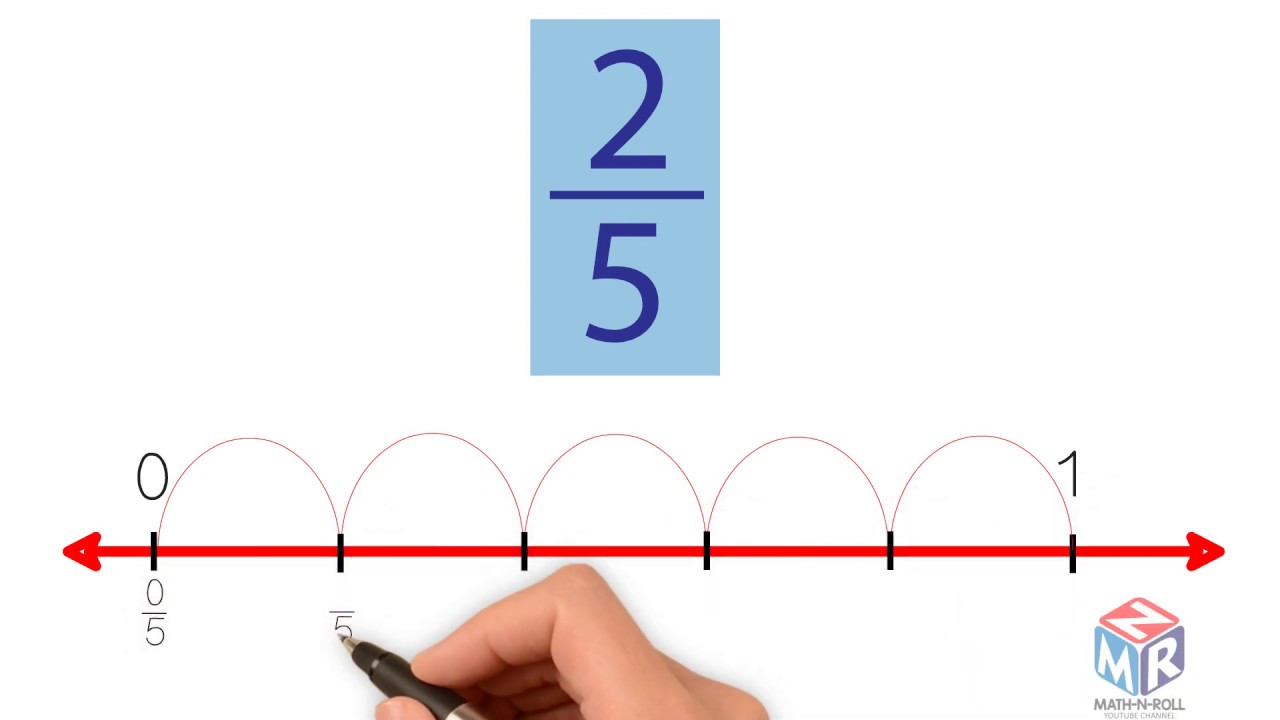
In this video you will learn how to identify fractions on a number line. Grade 3. Lesson 8.5.
Watch also INTRODUCTION TO FRACTIONS https://youtu.be/CG-yfc8Mv5I
#fractions #numberline #addsubtractfractions #numerator #denominator

Welcome back to The Maths Guy
This is lesson 4 in our 10 part lesson series to teach you everything you need to know in Year 5 Maths.
This lesson focusses on Fractions. Fractions are an essential part of Year 5 maths and play an important part of the progress you'll make in year 5
We will begin by looking at equivalent fractions, then we will look at ordering and comparing fractions before converting back and forth from mixed number fractions to improper. Finally we will finish this lesson looking at how to add fractions which will include all the skills we had in this lesson.