Top videos

What are fractions? You will learn how fractions are a way of writing the part or parts of something. All fractions have a numerator and a denominator. Parts that are the same size and shape are called congruent parts. Rock ‘N Learn’s Fractions & Decimals has been around a long time, helping kids understand fractions and seeing how they are used in everyday life. We hope you enjoy the new animation. Look for more episodes coming soon. Be sure to subscribe and hit like.
To view more Rock ‘N Learn videos visit youtube.com/rocknlearn.

Welcome to Modeling Fractions Divided by Fractions with Mr. J! Need help with how to model fractions divided by fractions? You're in the right place!
Whether you're just starting out, or need a quick refresher, this is the video for you if you're looking for help with how to divide a fraction by a fraction using a model. Mr. J will go through modeling fractions divided by fractions examples and explain the steps of dividing fractions by fractions using models.
✅ More Dividing Fractions Modeling Videos
Dividing Unit Fractions by Whole Numbers Models: https://youtu.be/hPgw3ts3PVQ
Dividing Whole Numbers by Unit Fractions Models: https://youtu.be/st-4Ixe-37E
Dividing Fractions by Whole Numbers Models: https://youtu.be/2i7xzg9kaEU
Dividing Whole Numbers by Fractions Models: https://youtu.be/F8rOFgNz0vA
✅ Dividing Fractions Videos
Dividing Unit Fractions by Whole Numbers: https://youtu.be/bWJizgCMO7Q
Dividing Whole Numbers by Unit Fractions: https://youtu.be/NAIMo9UQ20I
Dividing Fractions by Whole Numbers: https://youtu.be/AwSMewrnQXg
Dividing Whole Numbers by Fractions: https://youtu.be/OSFxuPw2N8w
Dividing Fractions by Fractions: https://youtu.be/yKCBspYtrSU
About Math with Mr. J: This channel offers instructional videos that are directly aligned with math standards. Teachers, parents/guardians, and students from around the world have used this channel to help with math content in many different ways. All material is absolutely free.
Click Here to Subscribe to the Greatest Math Channel On Earth: https://goo.gl/XHTrfY
Follow Mr. J on Twitter: @MrJMath5
Email: math5.mrj@gmail.com
Music: https://www.bensound.com/royalty-free-music
Hopefully this video is what you're looking for when it comes to how to model a fraction divided by a fraction.
Have a great rest of your day and thanks again for watching!

#learnandplayonline #teach #teacher #educational #forkids #learnandplay #maths #fractions

Our mission? Make math fun, engaging, and oh-so-easy for both you & your students. Our library of lesson materials is not only super-affordable but is also FREE to try out at http://numberock.com/letsrockmath.
Thank you for watching Dividing Fractions with KEEP, CHANGE, FLIP Song.
»»-------------¤-------------««»»-------------¤-------------««
Q. How to divide fractions by fractions?
A. Dividing a fraction by a fraction might seem confusing at first, but it is really very simple. All you need to do is flip the second fractions, multiply, and reduce.
Q. What grade levels do this video target?
A. This video targets learning standards in 5th Grade and 6th Grade. This video also targets standards in the UK from KS2 (Year 6) to KS3 (Year 7).
Q. Where did you guys come from?
A. Numberock is a project that I, Mr. Hehn, began as a 5th Grade math teacher of 7 years. It came together after years of experimenting with my lessons trying to figure out the best way to help my students retain the math concepts they were learning.
Q. Does Numberock drive real results in the classroom?
A. I knew I found the secret sauce when not only were my students retaining the concepts longer, they were singing the songs outside of the classroom during recess and at home with their parents during dinnertime. The songs were so catchy, my students couldn't get the math songs out of their head!
During testing, I often found my students humming the melodies in order to jostle their memory of a rule or problem solving process. As we've all experienced, there is something about the power of music that allows us to retain information easier and for longer periods of time. Without getting into the finer details of multi-sensory learning and how it often helps the students who most need the help, the power of a catchy song is hard to deny.
Q. I love your songs. Where can I experience more of what NUMBEROCK has to offer?
We have additional teaching resources that are always expanding over at https://www.numberock.com. For the low price of $4.95/month, premium members gain access to video-aligned activities like worksheets, printable posters/anchor charts, task cards, self-graded assessments, games, and more.
Coming Soon:
1. Self-Graded Assessments | These will soon be available for every Common Core and TEKS standard from 2nd-6th Grade so you'll be able to track and monitor student progress while your students complete standards-aligned quizzes that are integrated with the NUMBEROCK video they just watched.
2. Number Notes | Were currently working on creating exercises where students will be able to take notes artistically on printable templates featuring characters from the videos.
Research has shown that this will help to integrate their artistic side side of the student's brain with the mathematical side of their brain which helps with long-term memory retention. Our own research has shown us that teacher's who use start using these templates love them! It seems to be a natural fit as we move beyond our unique auditory learning tools into visual learning tools, that when used in concert, cater to the different types of learners that you teach everyday.
🍎 Hope to see you at https://numberock.com! 🍎
Our telling Dividing Fractions with KEEP, CHANGE, FLIP | Fractions Rap video is aligned with the following Common Core standards:
CCSS.Math.Content.5.NF.B.7
CCSS.Math.Content.5.NF.B.7.a
CCSS.Math.Content.5.NF.B.7.b
CCSS.Math.Content.5.NF.B.7.c
CCSS.Math.Content.6.NS.A.1

PBS Member Stations rely on viewers like you. To support your local station, go to: http://to.pbs.org/DonateOKAY
↓ More info and sources below ↓
Check out some beautiful music made from space itself
Click here to SUBSCRIBE, it's FREE! -- http://bit.ly/iotbs_sub
There is no sound in space. In the near-vacuum of space, there is nothing to transmit the physical waves that we need to perceive sound. But that doesn't mean we can't MAKE sound from space. This week, I feature several artists using scientific data to create "space sonification" projects. From the longest palindrome ever created to a chorus created from Earth's magnetic field, these pieces lie at the intersection of art and science. More than just art, they allow us to perceive patterns in complex data in a completely new way
Perhaps it answers the question: If the universe had a voice, what song would it sing?
FULL Versions of Pieces Featured:
Robert Alexander - Transit of Venus http://www.itsokaytobesmart.co....m/post/42845983348/r
Semiconductor Films - "20 Hz"
http://www.itsokaytobesmart.co....m/post/44264199289/2
Van Allen Belt chorus
http://www.itsokaytobesmart.co....m/post/32692373350/c
Daniel Starr-Tambor - "Mandala"
http://www.itsokaytobesmart.co....m/post/15977543553/m (this piece is the longest palndrome ever created, at 62 viginitillion notes!!)
Written and hosted by Joe Hanson
Produced by Painted On Productions (http://www.paintedon.com/)
-----------
Join us on Patreon!
https://patreon.com/itsokaytobesmart
Twitter
http://www.twitter.com/DrJoeHanson
http://www.twitter.com/okaytobesmart
Instagram
http://www.instagram.com/DrJoeHanson
http://www.instagram.com/okaytobesmart
Merch
https://store.dftba.com/collec....tions/its-okay-to-be
Facebook
https://www.facebook.com/itsokaytobesmartpbs/

PBS Member Stations rely on viewers like you. To support your local station, go to: http://to.pbs.org/DonateOKAY
↓ More info and sources below ↓
Do you ever freak out about the scale of time and space? Me too!
Don’t miss our next video! SUBSCRIBE! ►► http://bit.ly/iotbs_sub
From the very large to the very small, the universe is an amazing place. Here's my favorite ways to explore its scale. Explore them yourself:
Scale of the Universe 2 - http://htwins.net/scale2/
Powers of Ten - Charles and Ray Eames http://www.youtube.com/watch?v=0fKBhvDjuy0
Here is Today - http://hereistoday.com/
Deep Time clock - http://deeptime.info/
More on "yugen" - http://plato.stanford.edu/entr....ies/japanese-aesthet
Created by Joe Hanson
Music by Podington Bear http://podingtonbear.com/
Video footage from http://www.videoblocks.com/
Produced for PBS Digital Studios
-----------
Join us on Patreon!
https://patreon.com/itsokaytobesmart
Twitter
http://www.twitter.com/DrJoeHanson
http://www.twitter.com/okaytobesmart
Instagram
http://www.instagram.com/DrJoeHanson
http://www.instagram.com/okaytobesmart
Merch
https://store.dftba.com/collec....tions/its-okay-to-be
Facebook
https://www.facebook.com/itsokaytobesmartpbs/

PBS Member Stations rely on viewers like you. To support your local station, go to: http://to.pbs.org/DonateOKAY
↓ More info and sources below ↓
We're on PATREON now! Join the community ►► https://www.patreon.com/itsokaytobesmart
SUBSCRIBE so you don't miss a video! ►► http://bit.ly/iotbs_sub
Stay informed. Stay cautious, but not scared. Listen to scientists and public health officials and follow their guidance. By protecting yourself, you're protecting the most vulnerable among us. Together we can flatten the curve on COVID-19 and SARS-CoV-2. More resources below!
#COVID-19 #SARS-CoV-2 #FlattenTheCurve
3Blue1Brown on exponential growth: https://www.youtube.com/watch?v=Kas0tIxDvrg
Get info from trusted sources:
https://www.cdc.gov/coronaviru....s/2019-ncov/index.ht
https://www.who.int/emergencie....s/diseases/novel-cor
https://ourworldindata.org/coronavirus
References used: https://sites.google.com/view/....covid-19-flattenthec
Special thanks to our Brain Trust Patrons:
AlecZero
Brent M.
Diego Lombeida
Dustin
Ernesto Silva
George Gladding
Marcus Tuepker
Ron Kakar
vincbis
-----------
Join us on Patreon!
https://patreon.com/itsokaytobesmart
Twitter
http://www.twitter.com/DrJoeHanson
http://www.twitter.com/okaytobesmart
Instagram
http://www.instagram.com/DrJoeHanson
http://www.instagram.com/okaytobesmart
Merch
https://store.dftba.com/collec....tions/its-okay-to-be
Facebook
https://www.facebook.com/itsokaytobesmartpbs/

Can we really clean our way out of this problem?
We’re on PATREON! Join the community https://www.patreon.com/itsokaytobesmart
↓↓↓ More info and sources below ↓↓↓
There’s been a lot of talk on YouTube lately about ocean plastic pollution and #TeamSeas. But there hasn’t been enough talk about the **ridiculously unthinkable scale of the ocean plastic pollution problem** or how it intersects with other environmental issues like climate change. And here’s a big spoiler alert: Nearly all environmental scientists agree that ocean plastic pollution isn’t a problem we can clean our way out of. So what CAN we do? That’s what this video is about.
Detailed references and annotations: https://sites.google.com/view/....besmart-plasticpollu
We’d like to thank the following researchers for helpful interviews and background materials for this episode:
Winnie Lau - Pew Charitable Trusts
Dr. Max Liboiron - Civic Laboratory for Environmental Action Research (CLEAR)
Dr. Miriam Goldstein
0:00 Intro
1:21 History of plastic
2:59 How much plastic are we making?
4:28 Plastic is petroleum
5:29 How much plastic is in the ocean?
7:38 How plastic gets to the ocean
9:09 Can we clean our way out of this?
10:30 The ACTUAL solutions
13:09 Final thoughts
-----------
Special thanks to our Brain Trust Patrons:
Barbora Bei
Ken Board
The Clinger-Hamilton Family
Attila Pix
Burt Humburg
DeliciousKashmiri
Brian Chang
Roy Lasris
dani bowman
David Johnston
Salih Arslan
Baerbel Winkler
Robert Young
Amy Sowada
Eric Meer
Dustin
Karen Haskell
AlecZero
Join us on Patreon!
https://patreon.com/itsokaytobesmart
Twitter
http://www.twitter.com/DrJoeHanson
http://www.twitter.com/okaytobesmart
Instagram
http://www.instagram.com/DrJoeHanson
http://www.instagram.com/okaytobesmart
Merch
https://store.dftba.com/collec....tions/its-okay-to-be
Facebook
https://www.facebook.com/itsokaytobesmartpbs/
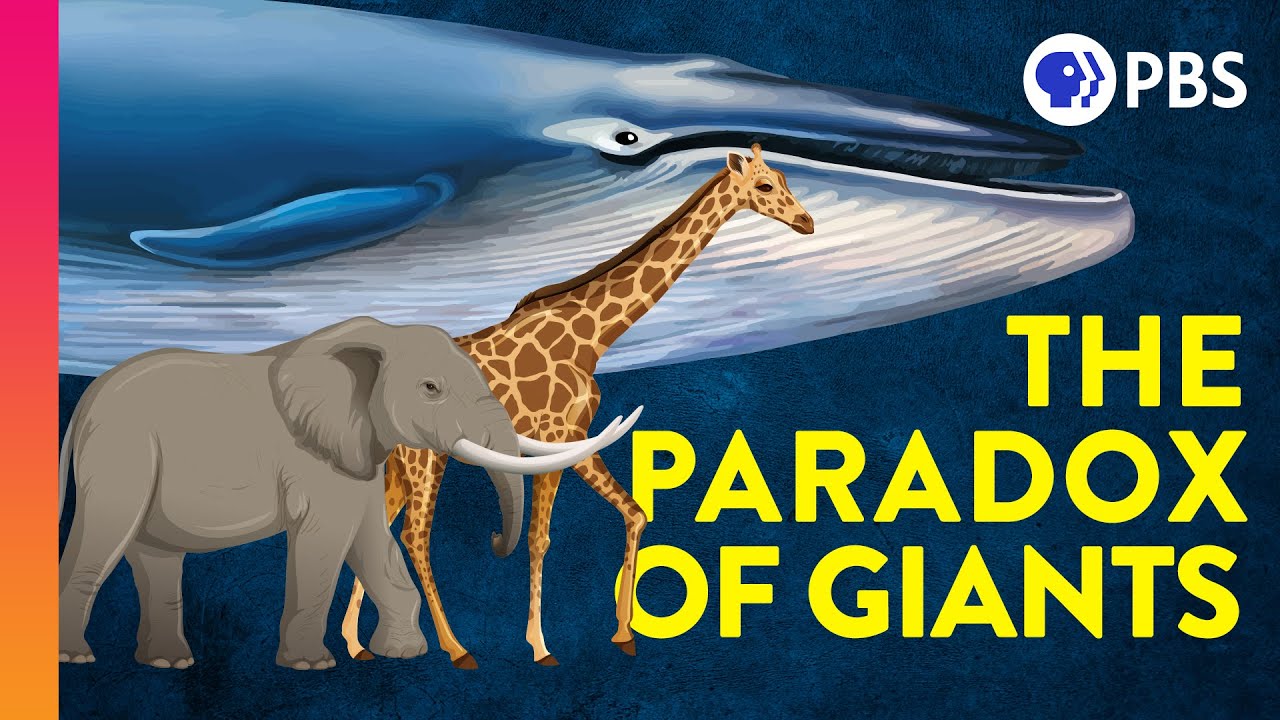
A solution to the cancer paradox? Cetacean needed!
We’re on PATREON! Join the community https://www.patreon.com/itsokaytobesmart
↓↓↓ More info and sources below ↓↓↓
Why do whales, elephants, and other large animals not get cancer? Logically, the larger an animal is, and the longer it lives, the more likely it should be to get cancer. But these giants don’t. Why is that? And can the answer help humanity?
References: https://sites.google.com/view/....besmart-petos-parado
-----------
Special thanks to our Brain Trust Patrons:
Mehdi Damou
Barbora Bei
Ken Board
The Clinger-Hamilton Family
Attila Pix
Burt Humburg
DeliciousKashmiri
Brian Chang
Roy Lasris
dani bowman
David Johnston
Salih Arslan
Baerbel Winkler
Robert Young
Amy Sowada
Eric Meer
Dustin
Karen Haskell
AlecZero
Join us on Patreon!
https://patreon.com/itsokaytobesmart
Twitter
http://www.twitter.com/DrJoeHanson
http://www.twitter.com/okaytobesmart
Instagram
http://www.instagram.com/DrJoeHanson
http://www.instagram.com/okaytobesmart
Merch
https://store.dftba.com/collec....tions/its-okay-to-be
Facebook
https://www.facebook.com/itsokaytobesmartpbs/

SUBSCRIBE so you don’t miss a video! ►► http://bit.ly/iotbs_sub
We’re on PATREON! Join the community https://www.patreon.com/itsokaytobesmart
↓↓↓ More info and sources below ↓↓↓
There is an absolutely weird, but surprisingly common phenomenon called sensory adaptation that you experience every day in countless ways without even realizing it. Without this very strange phenomenon, you would be lost, overwhelmed, and completely unable to navigate the external world. In this episode, we’ll explore the many ways your brain “tunes out” most of what’s going on around you so that you can be the high-functioning smart people that we know you are.
-----------
Special thanks to our Brain Trust Patrons:
Ali Freiburger
Mehdi Damou
Barbora Bei
Ken Board
Clinger-Hamilton Family
Attila Pix
Burt Humburg
DeliciousKashmiri
Roy Lasris
dani bowman
David Johnston
Salih Arslan
Baerbel Winkler
Robert Young
Amy Sowada
Eric Meer
Dustin
Karen Haskell
Join us on Patreon!
https://patreon.com/itsokaytobesmart
Twitter
http://www.twitter.com/DrJoeHanson
http://www.twitter.com/okaytobesmart
Instagram
http://www.instagram.com/DrJoeHanson
http://www.instagram.com/okaytobesmart
Merch
https://store.dftba.com/collec....tions/its-okay-to-be
Facebook
https://www.facebook.com/itsokaytobesmartpbs/

Thank you to Policygenius for supporting PBS. To learn more, go to https://Policygenius.com/BeSmart
↓↓↓ More info and sources below ↓↓↓
Optical illusions are fun, but they can also teach us a lot about how our brains work. In particular, how our brains accomplish the incredible feat of constructing a three-dimensional reality using nothing but 2-D images from our eyes. A young artist and psychology researcher named Adelbert Ames, Jr. developed a series of illusions that help us understand how this process of constructing reality actually works. Sometimes we need to be fooled in order to gain understanding.
We'd like to acknowledge Dr. Phil Kellman from UCLA for his helpful discussions about the principles of spatial perception at play in these illusions https://kellmanlab.psych.ucla.edu/
Special thanks to Brian from Real Engineering for 3D printing the anamorphic cube for me! https://www.youtube.com/c/RealEngineering
References used in this episode: https://sites.google.com/view/....references-ames-illu
-----------
We’re on PATREON!
Join the community https://www.patreon.com/itsokaytobesmart
Special thanks to our Brain Trust Patrons:
Ali Freiburger
Amy Sowada
Attila Pix
Baerbel Winkler
Barbora Bei
Burt Humburg
Clinger-Hamilton Family
dani bowman
David Johnston
DeliciousKashmiri
Dustin
Eric Meer
Karen Haskell
Ken Board
Mehdi Damou
Robert Young
Roy Lasris
Salih Arslan
Twitter
http://www.twitter.com/DrJoeHanson
http://www.twitter.com/okaytobesmart
Instagram
http://www.instagram.com/DrJoeHanson
http://www.instagram.com/okaytobesmart
Merch
https://store.dftba.com/collec....tions/its-okay-to-be
Facebook
https://www.facebook.com/itsokaytobesmartpbs/

Thank you to Morning Brew for supporting PBS. To learn more, head over to https://bit.ly/mbokaytobesmart
We're on PATREON! Join the community ►► https://www.patreon.com/itsokaytobesmart
↓↓↓ More info and sources below ↓↓↓
Hold on to your butts. This episode is about… butts. The science and evolutionary history of your rear end, the down-low on your derriere, shining a little light where the sun don't shine… you get the picture. But(t) seriously, we don't talk about this all-important hole enough, and how, from an evolutionary perspective, it might be the most important orifice on your body.
References: https://sites.google.com/view/....briefhistoryofbutts-
-----------
Special thanks to our Brain Trust Patrons:
DeliciousKashmiri
Mario Orso
Brian Chang
Roy Lasris
Javier Soto
dani bowman
David Johnston
Zenimal
Salih Arslan
Baerbel Winkler
Robert Young
Amy Sowada
Benjamin Teinby
Eric Meer
Peter Ehrnstrom
Dustin
Marcus Tuepker
Karen Haskell
AlecZero
SUBSCRIBE so you don't miss a video! ►► http://bit.ly/iotbs_sub
Join us on Patreon!
https://patreon.com/itsokaytobesmart
Twitter
http://www.twitter.com/DrJoeHanson
http://www.twitter.com/okaytobesmart
Instagram
http://www.instagram.com/DrJoeHanson
http://www.instagram.com/okaytobesmart
Merch
https://store.dftba.com/collec....tions/its-okay-to-be
Facebook
https://www.facebook.com/itsokaytobesmartpbs/

You can learn more at https://curiositystream.com/smart
Go check out Sound Field! http://bit.ly/2HH9sG1
SUBSCRIBE so you don’t miss a video! ►► http://bit.ly/iotbs_sub
More people have food allergies than ever before. Peanuts, tree nuts, shellfish, eggs, and even milk… the list of possibly dangerous foods seems to get longer every day. But why do some people’s bodies have deadly reactions food? And why are food allergies on the rise? In this video we explain what food allergies really are, and what the difference is between food allergy and food intolerance. Some fellow YouTubers tell us their stories of what it’s like to live with food allergies, and we bring you the best current science on how to prevent food allergies in kids and adults. It’s a tough nut to crack. #FoodAllergy #Allergies #FoodScience
Special thanks to WheezyWaiter and Emily Graslie for sharing their food allergy stories with us!
https://www.youtube.com/user/wheezywaiter
https://www.youtube.com/user/thebrainscoop
Want to learn more about allergies? Watch this: https://www.youtube.com/watch?v=sqrnShjM4II
-----------
REFERENCES:
Anagnostou, Katherine, and Andrew Clark. "Oral immunotherapy for peanut allergy." Annual review of medicine 67 (2016): 375-385.
Sathe, S. K., Liu, C., & Zaffran, V. D. (2016). "Food allergy." Annual review of food science and technology, 7, 191-220.
Tyagi, Nidhi, et al. "Comparisons of allergenic and metazoan parasite proteins: allergy the price of immunity." PLoS computational biology 11.10 (2015): e1004546.
Willits, Erin K., et al. "Food Allergy: A Comprehensive Population-Based Cohort Study." Mayo Clinic Proceedings. Vol. 93. No. 10. Elsevier, 2018.
Wong, L., Huang, C. H., & Lee, B. W. (2016). "Shellfish and house dust mite allergies: is the link tropomyosin?." Allergy, asthma & immunology research, 8(2), 101-106.
-----------
FOLLOW US for more curiosity:
Twitter
http://www.twitter.com/DrJoeHanson
http://www.twitter.com/okaytobesmart
Instagram
http://www.instagram.com/DrJoeHanson
http://www.instagram.com/okaytobesmart
Merch
https://store.dftba.com/collec....tions/its-okay-to-be
Facebook
http://www.facebook.com/itsokaytobesmart
Books from our episodes:
http://smart-books.tumblr.com/
PBS Member Stations rely on viewers like you. To support your local station, go to: http://to.pbs.org/DonateOKAY
↓ More info and sources below ↓
Check out Antarctic Extremes on @pbsterra : https://www.youtube.com/watch?v=EvRAuy1ZmTc
We’re on PATREON now! Join the community ►► https://www.patreon.com/itsokaytobesmart
SUBSCRIBE so you don’t miss a video! ►► http://bit.ly/iotbs_sub
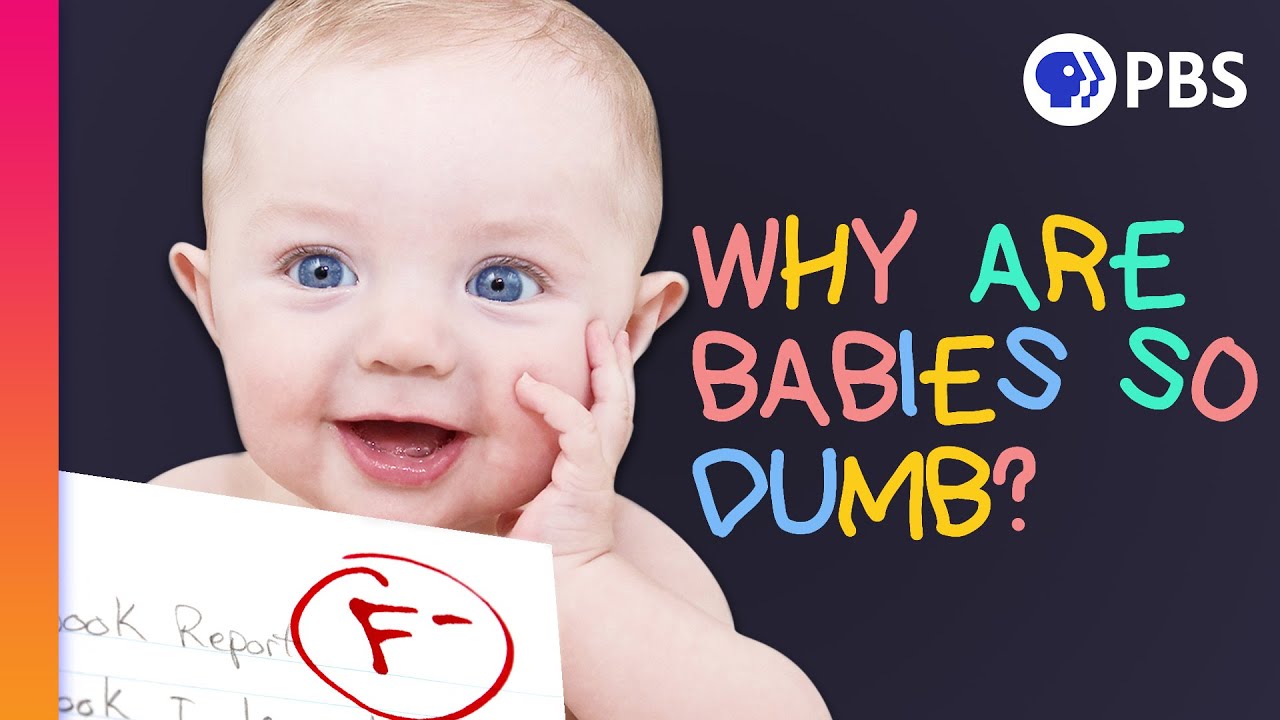
The first thing a baby giraffe experiences after being born is a 2 meter fall straight down to the ground. But within an hour, it’s standing, walking, and nursing on its own. And a blue whale calf, after nearly a year growing inside mom, can swim to the surface moments after being born. Human babies on the other hand? We’re born unable to move or eat on our own, we can’t communicate or fully sense our world, and we leak EVERYWHERE. If humans are so smart, why are our babies so… un-smart? You may think it’s all about head size, but the real science is more complex.
References: https://sites.google.com/view/....why-babies-helpless-
Note: In videos like this one, we use the terms male and female to refer to biological sex and typical secondary characteristics seen across the human population.
Special thanks to our Brain Trust Patrons:
AlecZero
Bob Rosset
Brent M.
Diego Lombeida
Ron Kakar
vincbis
-----------
Join us on Patreon!
https://patreon.com/itsokaytobesmart
Twitter
http://www.twitter.com/DrJoeHanson
http://www.twitter.com/okaytobesmart
Instagram
http://www.instagram.com/DrJoeHanson
http://www.instagram.com/okaytobesmart
Merch
https://store.dftba.com/collec....tions/its-okay-to-be
Facebook
https://www.facebook.com/itsokaytobesmartpbs/

Heroes on the half shell… Oyster power?
SUBSCRIBE so you don’t miss a video! ►► http://bit.ly/iotbs_sub
↓↓↓ More info and sources below ↓↓↓
When people picture New York City they see skyscrapers, subways, and a concrete jungle. But the Big Apple is really a seaside city built on an archipelago. In the wake of a century of industrial pollution and climate change-fueled superstorms like Hurricane Sandy, New York’s waterways need help. Learn how Billion Oyster Project is working to restore one of the world’s greatest lost ecosystems in order to clean up New York’s water and protect it from an uncertain climate future.
Learn more about Billion Oyster Project: https://www.billionoysterproject.org/
Join our Patreon community: https://www.patreon.com/itsokaytobesmart
-----------
High fives to all our Brain Trust Patrons:
Ed Eyden
Jennifer Burton
Charles Horton, Jr
Holly, Brett, and Ashe Bullion
Jaap Westera
Mehdi Damou
Barbora Bei
Burt Humburg
dani bowman
David Johnston
Baerbel Winkler
Eric Meer
Karen Haskell
Join us on Patreon!
https://patreon.com/itsokaytobesmart
Twitter
http://www.twitter.com/okaytobesmart
Instagram
http://www.instagram.com/DrJoeHanson
http://www.instagram.com/okaytobesmart
Merch
https://store.dftba.com/collec....tions/its-okay-to-be
Facebook
https://www.facebook.com/itsokaytobesmartpbs/
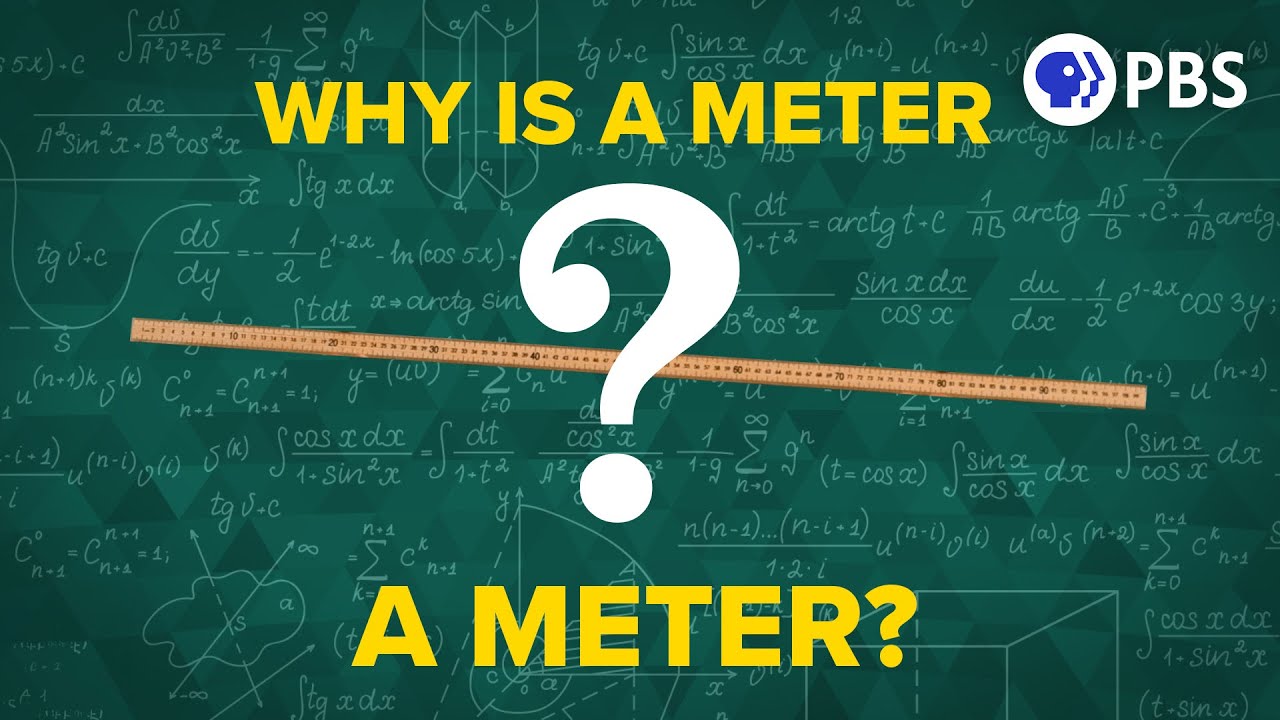
Meter? …or Metre?
Try CuriosityStream and learn something new today: http://curiositystream.com/smart
↓ More info and sources below ↓
Why is a meter a meter? The meter is the world’s ultimate measure, but how did it become “the” meter? What is this measurement based on? The story of this revolution in measurement traces its roots to the French Revolution. Scientists decided that an equal and united people should have equal and united measures. So they sent a pair of young astronomers out to measure the world, and invent the meter. Little did they know they’d find nothing but war, deception, and strife along the way. As a result of this ill-fated mission, the meter carries an error that still persists today. Still think the metric system is so perfect?
Viewers like you help make PBS (Thank you 😃) . Support your local PBS Member Station here: https://to.pbs.org/PBSDSDonate
-----------
LEARN MORE:
This episode would not have been possible without one incredible book: “The Measure of All Things” by Ken Alder.
There’s so much more to this story that we couldn’t fit in the video, and this book has it all. War, madness, deception, shame, spies, the dawn of the Enlightenment, the birth of modern economics, lots more beheadings… Highly recommended!
Amazon: http://amzn.to/2lNuEyD
Public library: http://www.worldcat.org/oclc/893130606
MORE:
Interesting chronology of the meter: http://www.dozenalsociety.org.....uk/metrix/chronology
Calculating the length of a meridian arc: http://www.cantab.net/users/mi....chael.behrend/map_fo
Williams, Jeffrey H. “Quantifying Measurement: The Tyranny of Numbers.” Morgan & Claypool Publishers, 2016
Murdin, Paul. “Full meridian of glory: perilous adventures in the competition to measure the Earth.” Springer Science & Business Media, 2008.
-----------
FOLLOW US:
Merch: https://store.dftba.com/collec....tions/its-okay-to-be
Facebook: http://www.facebook.com/itsokaytobesmart
Twitter: @okaytobesmart @DrJoeHanson
Tumblr: http://www.itsokaytobesmart.com
Instagram: @DrJoeHanson
-----------
It’s Okay To Be Smart is hosted by Joe Hanson, Ph.D.
Director: Joe Nicolosi
Writer: Joe Hanson
Producer/editor/animator: Andrew Matthews
Producer: Stephanie Noone and Amanda Fox
Produced by PBS Digital Studios
Music via APM
Stock images from Shutterstock http://www.shutterstock.com

Check out Otherwords on @pbsstoried! https://www.youtube.com/pbsstoried
We’re on PATREON! Join the community https://www.patreon.com/itsokaytobesmart
↓↓↓ More info and sources below ↓↓↓
Reading. You’re doing it right now. I bet you don’t even have to think about it. But have you ever wondered what’s happening in your brain to turn all these weird symbols into meaning? This video will teach you how to read all over again. What you’re doing right now is way more amazing than you ever realized.
-----------
Special thanks to our Brain Trust Patrons:
Mehdi Damou
Barbora Bei
Ken Board
The Clinger-Hamilton Family
Attila Pix
Burt Humburg
DeliciousKashmiri
Brian Chang
Roy Lasris
dani bowman
David Johnston
Salih Arslan
Baerbel Winkler
Robert Young
Amy Sowada
Eric Meer
Dustin
Karen Haskell
AlecZero
Join us on Patreon!
https://patreon.com/itsokaytobesmart
Twitter
http://www.twitter.com/DrJoeHanson
http://www.twitter.com/okaytobesmart
Instagram
http://www.instagram.com/DrJoeHanson
http://www.instagram.com/okaytobesmart
Merch
https://store.dftba.com/collec....tions/its-okay-to-be
Facebook
https://www.facebook.com/itsokaytobesmartpbs/
Viewers like you help make PBS (Thank you 😃) . Support your local PBS Member Station here: https://to.pbs.org/PBSDSDonate
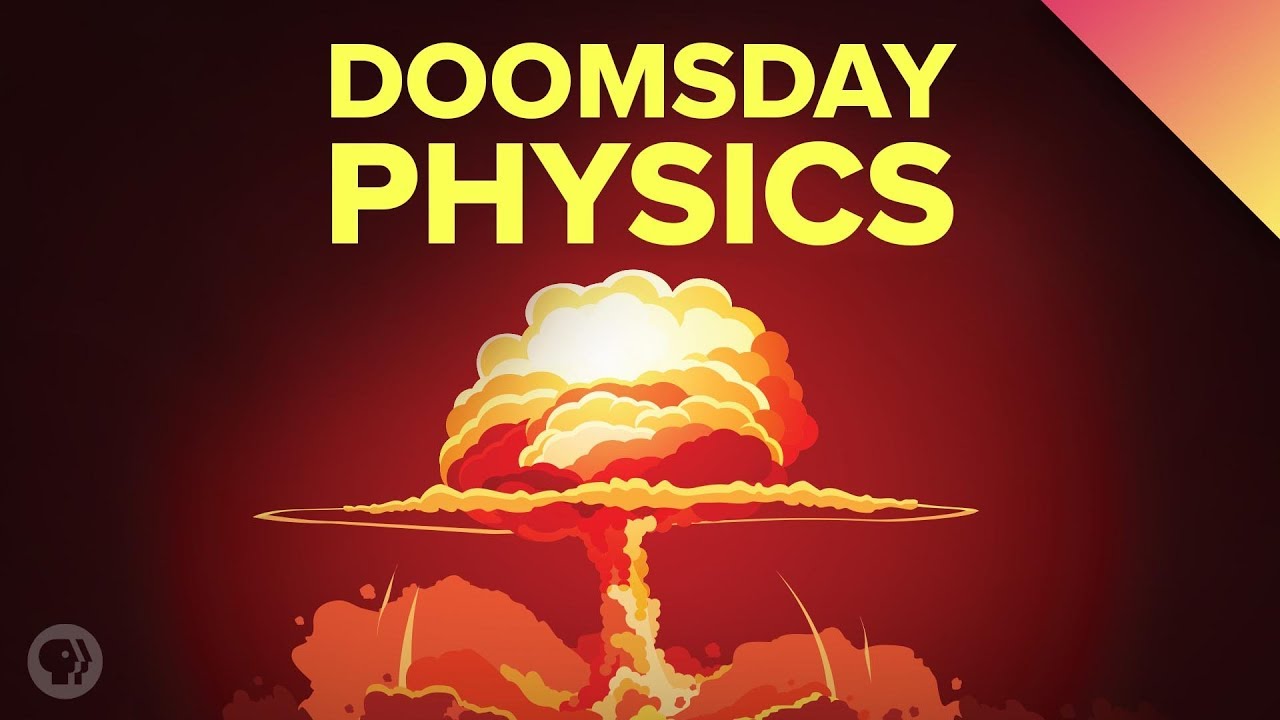
…or how I learned to study physics and start fearing the bomb
Don’t miss our next video! SUBSCRIBE! ►► http://bit.ly/iotbs_sub
↓↓↓ More info and sources below ↓↓↓
Nuclear weapons represent the darker side of E=mc^2. Science has given us the ability to understand what will happen if these weapons are ever used again… and what will happen if they are *never* used again.
Atomic test footage from the archives of the Department of Energy, the United States Air Force, the United States Army, and the Nevada Nuclear Testing Archive:
https://archive.org
https://www.nnss.gov/pages/res....ources/NuclearTestin
Turco, R. P., Toon, O. B., Ackerman, T. P., Pollack, J. B., & Sagan, C. (1983). Nuclear winter: global consequences of multiple nuclear explosions. Science, 222.
Oh look, an easter egg: https://youtu.be/xtyU78RHWAo
-----------
FOLLOW US:
Merch: https://store.dftba.com/collec....tions/its-okay-to-be
Facebook: http://www.facebook.com/itsokaytobesmart
Twitter: @okaytobesmart @DrJoeHanson
Tumblr: http://www.itsokaytobesmart.com
Instagram: @DrJoeHanson
Snapchat: YoDrJoe
-----------
It’s Okay To Be Smart is hosted by Joe Hanson, Ph.D.
Director: Joe Nicolosi
Writer: Sarah Keartes
Editor/animator: Andrew Orsak
Producer: Stephanie Noone and Amanda Fox
Produced by PBS Digital Studios
Music via APM
Stock images from Shutterstock http://www.shutterstock.com
-----------

SUBSCRIBE so you don’t miss a video! ►► http://bit.ly/iotbs_sub
↓↓↓ More info and sources below ↓↓↓
2023 was a wild year with everything from scorching temperatures to massive wildfires. Even with more renewable energy than ever, 2023’s climate data still seems really bad. So how should we think about climate change today? And what can we do about it? Learn what climate scientists think about 2023’s climate milestones, what the models tell us about the future of Earth’s climate, and how we can tackle climate doomerism.
Join our Patreon community: https://www.patreon.com/itsokaytobesmart
-----------
High fives to all our Brain Trust Patrons:
Ed Eyden
Jennifer Burton
Charles Horton, Jr
Holly, Brett, and Ashe Bullion
Jaap Westera
Mehdi Damou
Barbora Bei
Burt Humburg
dani bowman
David Johnston
Baerbel Winkler
Eric Meer
Karen Haskell
Join us on Patreon!
https://patreon.com/itsokaytobesmart
Instagram
http://www.instagram.com/DrJoeHanson
http://www.instagram.com/okaytobesmart
Facebook
https://www.facebook.com/itsokaytobesmartpbs/
Merch
https://store.dftba.com/collec....tions/its-okay-to-be

PBS Member Stations rely on viewers like you. To support your local station, go to: http://to.pbs.org/DonateOKAY
↓ More info and sources below ↓
We all breathe the same air. Literally.
Click here to SUBSCRIBE, it's FREE! -- http://bit.ly/iotbs_sub
Take a deep breath. Smell that? It could be a little eau de Einstein. Or maybe a whiff of Cleopatra. Here's an amazing thought: every time you breathe, you could be sharing air with everyone who's ever lived. A few million of the same air molecules that enter your lungs in a lifetime also entered Albert Einstein or Marie Curie's lungs! That's some smart air.
Earth's atmosphere is big, but not as big as many people think. All the air that keeps us alive is just a thin candy shell around our planet. In this episode, echoing the words of John F. Kennedy, I'll show you the science of how we all share the same air. So let's be careful about what we're putting in it!
References for this episode: http://dft.ba/-5AuU
Read about John F. Kennedy's American University speech: http://en.wikipedia.org/wiki/A....merican_University_s
Earth's atmosphere illustrated by Adam Nieman: http://adamnieman.posterous.com/
Written and hosted by Joe Hanson
Produced by Painted On Productions (http://www.paintedon.com/)
Music: Johnny Ripper (with Ekoda) - Speak
-----------
Join us on Patreon!
https://patreon.com/itsokaytobesmart
Twitter
http://www.twitter.com/DrJoeHanson
http://www.twitter.com/okaytobesmart
Instagram
http://www.instagram.com/DrJoeHanson
http://www.instagram.com/okaytobesmart
Merch
https://store.dftba.com/collec....tions/its-okay-to-be
Facebook
https://www.facebook.com/itsokaytobesmartpbs/

Check out Nourish from PBS! https://www.youtube.com/PBSNourish
SUBSCRIBE to It's Okay To Be Smart! ►► http://bit.ly/iotbs_sub
↓↓↓ More info and sources below ↓↓↓
People who live near the equator use more spices per recipe than people who live far from the equator. But that isn't for the reason you think. Spices and other plant ingredients have special powers that make them a truly magical superfood!
REFERENCES:
Billing, J., & Sherman, P. W. (1998). Antimicrobial functions of spices: why some like it hot. The Quarterly review of biology, 73(1), 3-49.
Juneja, V. K., Dwivedi, H. P., & Yan, X. (2012). Novel natural food antimicrobials. Annual review of food science and technology, 3, 381-403.
Sherman, P. W., & Billing, J. (1999). Darwinian gastronomy: why we use spices: spices taste good because they are good for us. BioScience, 49(6), 453-463.
Li, Z., Henning, S. M., Zhang, Y., Zerlin, A., Li, L., Gao, K., ... & Heber, D. (2010). Antioxidant-rich spice added to hamburger meat during cooking results in reduced meat, plasma, and urine malondialdehyde concentrations–. The American journal of clinical nutrition, 91(5), 1180-1184.
-----------
FOLLOW US:
Twitter: @DrJoeHanson @okaytobesmart
Instagram: @DrJoeHanson
Merch: https://store.dftba.com/collec....tions/its-okay-to-be
Facebook: http://www.facebook.com/itsokaytobesmart
BOOKS WE’VE FEATURED:
http://smart-books.tumblr.com/
-----------
It’s Okay To Be Smart is hosted by Joe Hanson, Ph.D.
Director: Joe Nicolosi
Writer: Sarah Keartes
Creative Director: David Schulte
Editor/animator: Derek Borsheim
Producers: Stephanie Noone and Amanda Fox
Produced by PBS Digital Studios
Music via APM
Stock images from Shutterstock http://www.shutterstock.com

Viewers like you help make PBS (Thank you 😃) . Support your local PBS Member Station here: https://to.pbs.org/PBSDSDonate
Check out our whole series on ENERGY! http://bit.ly/1BnH5zu
Subscribe: http://bit.ly/iotbs_sub Twitter: @okaytobesmart
↓ More info and sources below ↓
We use a LOT of energy, but we waste a lot too. Where that waste happens might surprise, you though. We don't just waste energy when we leave the lights on or the thermostat cranked down too low. It happens at the dinner table and the water faucet as too!
LEARN MORE:
Special thanks to Sheril Kirshenbaum and the Webber Energy Group at the University of Texas at Austin for their help with this series. http://www.webberenergygroup.com/
Check out their awesome online course "Energy 101" to learn about energy and energy policy from A to Z! http://www.energy101.com/
And to find out what people think about energy, check out the UT Energy Poll: http://www.utenergypoll.com/
Have an idea for an episode or an amazing science question you want answered? Leave a comment or check us out at the links below!
Follow on Twitter: http://twitter.com/okaytobesmart
http://twitter.com/jtotheizzoe
Follow on Tumblr: http://www.itsokaytobesmart.com
Follow on Instagram: http://instagram.com/jtotheizzoe
-----------------
It's Okay To Be Smart is written and hosted by Joe Hanson, Ph.DFollow me on Twitter: @jtotheizzoe
Email me: itsokaytobesmart AT gmail DOT com
Facebook: http://www.facebook.com/itsokaytobesmart
Google+ https://plus.google.com/+itsokaytobesmart
For more awesome science, check out: http://www.itsokaytobesmart.com
Produced by PBS Digital Studios: http://www.youtube.com/user/pbsdigitalstudios
Joe Hanson - Creator/Host/Writer
Joe Nicolosi - Director
Amanda Fox - Producer, Spotzen IncKate Eads - Associate Producer
Andrew Matthews - Editing/Motion Graphics/Animation
Katie Graham - Director of Photography
John Knudsen - Gaffer
Theme music:
"Ouroboros" by Kevin MacLeod
Other music via APM
Stock images from Shutterstock, stock footage from Videoblocks
-----------------
Last week's video:
Does the Moon Orbit the Earth? https://www.youtube.com/watch?v=3cJ3AemeUFM
More videos:
Why Does February Have 28 Days? https://www.youtube.com/watch?v=AgKaHTh-_Gs
Why Vaccines Work https://www.youtube.com/watch?v=3aNhzLUL2ys
Why Are Some People Left-Handed? https://www.youtube.com/watch?v=NPvMUpcxPSA
Where Does the Smell of Rain Come From? https://www.youtube.com/watch?v=lGcE5x8s0B8
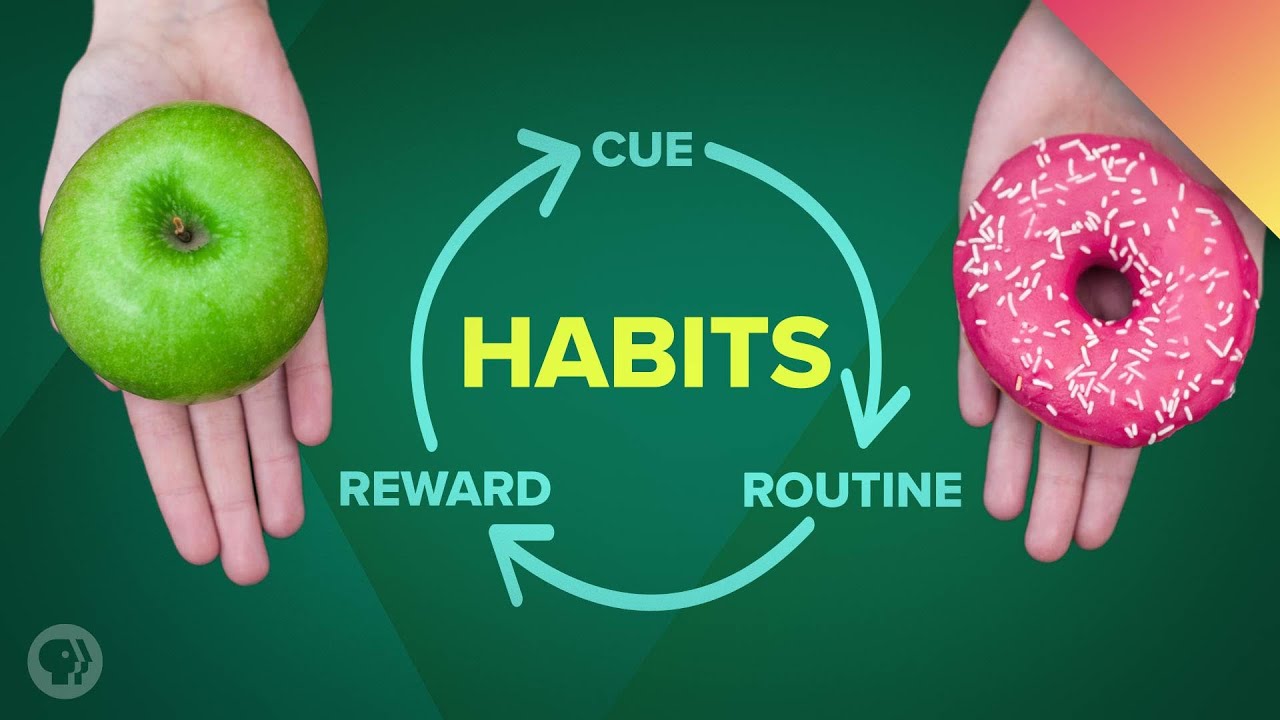
You have the power to change your brain!
Make watching our videos a habit and SUBSCRIBE! ►► http://bit.ly/iotbs_sub
↓↓↓ More info and sources below ↓↓↓
Got a bad habit you just can’t seem to break? That’s because it’s literally wired into your brain.
Every single thought, action, and feeling changes your brain. When repeated enough times, a habit is formed. This week we’ll talk about how an advertiser in the early 1900s got half of Americans to pick up a new behavior - and make it a habit we all know today.
#habits #brain #neuroscience
REFERENCES:
The power of habit: Why we do what we do in life and in business, Charles Duhill, 2012.
Smith, K. (2016). Habit formation. Dialogues Clin Neurosci, 18(1), 33–43.
Schultz, W., Apicella, P., and Ljungbergb , T. (1993). Responses of Monkey Dopamine Neurons to Reward and Conditioned Stimuli during Successive Steps of Learning a Delayed Response Task. The Journal of Neuroscience, 13(3), 900-913
Christina M.Gremel, C. M., Chancey, J.H., Atwood, B.K., Luo, G., Neve, R., Ramakrishnan, C., Deisseroth, K., Lovinger, D.M., and Costa, R.M. (2016). Endocannabinoid Modulation of Orbitostriatal Circuits Gates Habit Formation. Neuron, 93(6), 1312-1324.
-----------
FOLLOW US:
Twitter: @DrJoeHanson @okaytobesmart
Instagram: @DrJoeHanson
Merch: https://store.dftba.com/collec....tions/its-okay-to-be
Facebook: http://www.facebook.com/itsokaytobesmart
-----------
It’s Okay To Be Smart is hosted by Joe Hanson, Ph.D.
Director: Joe Nicolosi
Writer: Kimberly McCoy, Ph.D.
Creative Director: David Schulte
Editor/animator: Karl Boettcher
Producers: Stephanie Noone and Amanda Fox
Produced by PBS Digital Studios
Music via APM
Stock images from Shutterstock http://www.shutterstock.com

SUBSCRIBE so you don’t miss a video! ►► http://bit.ly/iotbs_sub
↓↓↓ More info and sources below ↓↓↓
Imagine the scale of raindrops if you were the size of a small bird. Or mosquito. Flying through a drizzle should be deadly! Like flying through falling cars and boulders. And yet it’s not, because nature has given them a superpower—superhydrophobic surfaces that repel water and keep them airborne. How do these microscopic structures work? And how has modern engineering been inspired by them?
References: https://sites.google.com/view/....superhydrophobic-ref
Mosquito vs. Raindrop footage courtesy of David Hu and Andrew Dickerson
-----------
High fives to all our Brain Trust Patrons:
Olivia Ruiz
Mike and Patty Loftis
Ed Eyden
Jennifer Burton
Holly, Brett, and Ashe Bullion
Jaap Westera
Barbora Bei
dani bowman
David Johnston
Baerbel Winkler
Eric Meer
Karen Haskell
Join us on Patreon!
https://patreon.com/itsokaytobesmart
Instagram
http://www.instagram.com/DrJoeHanson
http://www.instagram.com/okaytobesmart
Facebook
https://www.facebook.com/itsokaytobesmartpbs/
Merch
https://store.dftba.com/collec....tions/its-okay-to-be

Another YouTube #shorts from Dr. Joe! Subscribe for more fun science stories.
Join us on Patreon!
https://patreon.com/itsokaytobesmart
Instagram
http://www.instagram.com/DrJoeHanson
http://www.instagram.com/okaytobesmart
Facebook
https://www.facebook.com/itsokaytobesmartpbs/