Top videos

Subscribe to Happy Learning: https://my.happylearning.tv/
More related videos: https://www.youtube.com/playli....st?list=PLLF_mZmNqOn
Curiosities for kids:https://www.youtube.com/playli....st?list=PLLF_mZmNqOn
Did you know emotions can be positive or negative? 😊😢 In this video by Happy Learning, we explore what emotions are, how they affect us, and learn tips to manage them, like controlling anger through breathing. Discover how to master your emotions and not let them control you! 🌈💪 Don’t forget to subscribe for more educational content.
Discover hundreds of never-before-seen resources! Create your free account at https://my.happylearning.tv/ and start learning in the most entertaining way.

🎉 NEW Videos: https://www.youtube.com/playli....st?list=PLLF_mZmNqOn
🕵️♀️ Amazing Things for Kids: https://www.youtube.com/playli....st?list=PLLF_mZmNqOn
Curiosities for kids:https://www.youtube.com/playli....st?list=PLLF_mZmNqOn
Welcome to a new SOS animals video! Today, we focus on gorillas, fascinating animals that are endangered. Although many believe gorillas are aggressive, they are actually calm and peaceful creatures. Discover why their population is declining and how illegal hunting and deforestation are pushing them to the brink of extinction. What can we do to help save them? Join us in this educational video and learn how we can protect gorillas and other endangered animals.
Subscribe to Happy Learning: https://my.happylearning.tv/
Discover hundreds of never-before-seen resources! Create your free account at https://my.happylearning.tv/ and start learning in the most entertaining way.
Discover hundreds of never-before-seen resources! Create your free account at https://my.happylearning.tv/ and start learning in the most entertaining way.
What are you waiting for? Learning with Sarah, you'll find this out and much more by learning with Sarah... in www.happylearning.tv/en/
👉SUBSCRIBE TO HAPPY LEARNING! http://bit.ly/HappyLearningTV
👉Web site: https://happylearning.tv/en/
👉Follow us on Facebook: https://www.facebook.com/HappyLearningTv
Recommended video: RIDDLE: THE ANTS CROSSING A BRIDGE
https://youtu.be/EJZ_oWuxYnE
-----------
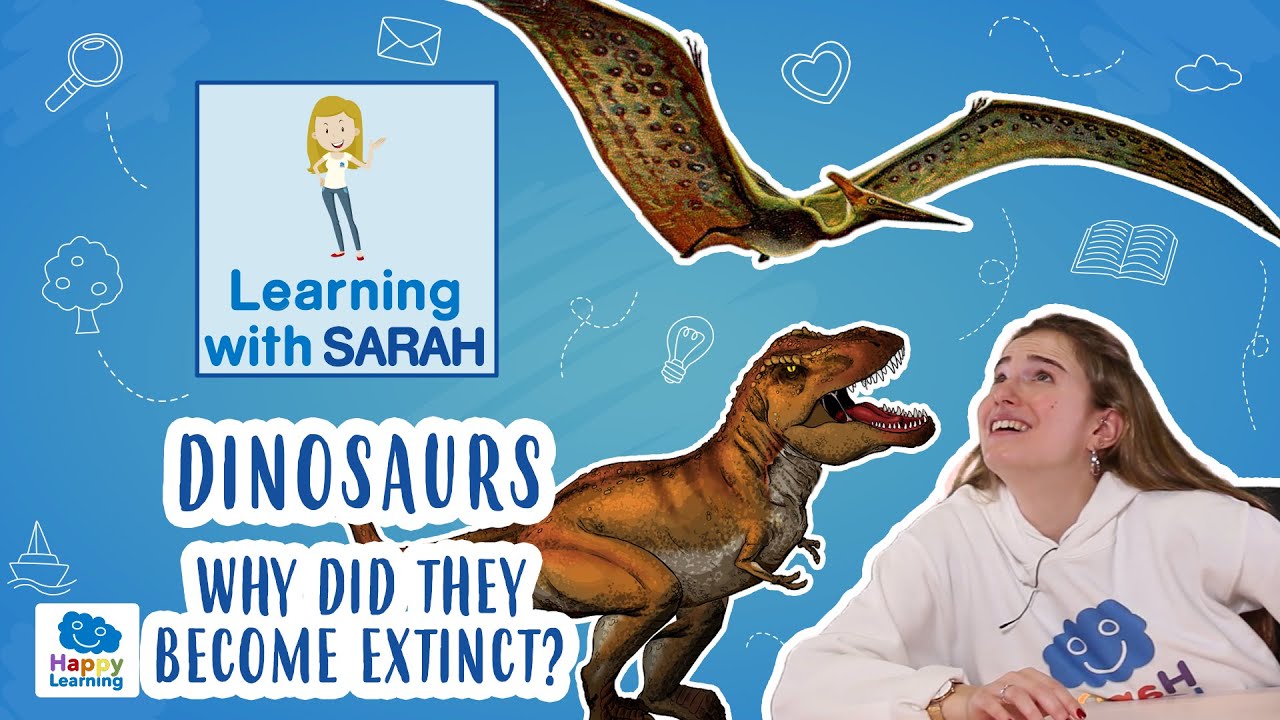
Hello Happy friends! Are you ready to learn?I’m Sarah, and today, I want to talk to you about animals that disappeared from Earth a long time ago, exactly 65 million years ago!Do you know what animals I’m talking about?Well done! Today, we’re going to learn about why the dinosaurs vanished from Earth! The word Dinosaur means Terrible lizard.But… Not all dinosaurs looked like lizards, and not all were terrible!Actually, did you know that some of them used to fly, and had feathers?They looked similar to birds, rather than lizards! Look! Like this one! Dinosaurs, lived on earth for 150 million years, and they left many footprints behind.But… We still don’t know why they disappeared.
There are various theories, but the one supported by most scientists, and the most believable one, is…. the meteorite theory!Apparently, a great asteroid hit the Earth, and created a huge explosion.
This great explosion, made the climate on Earth undergo dramatic changes. It changed from humid and warm, to cold, and very dry.
This climate change caused by the meteorite, destroyed all the dinosaurs in our planet.But, fortunately, it didn’t terminate all animal species that were there at the time.
Do you know some of the animals that saved their lives?For example, birds and crocodiles! I think it’s so cool, because I love birds… Although… I’m not such a big fan of crocodiles, because I’m a little scared of them.Oh-oh, there’s one coming here! I’m leaving!!!Goodbye Happy Friends,I hope you’re always ready to learn! Bye!

NEW VIDEOS https://www.youtube.com/playli....st?list=PLLF_mZmNqOn
ENVIRONMENTAL EDUCATION https://www.youtube.com/playli....st?list=PLLF_mZmNqOn
0:00 - Introduction
0:10 - The Lungs of the Planet
4:12 - The Importance of Trees. Deforestation
🌳🍃 Did you know that trees produce the oxygen we breathe and help keep the planet healthy? In this educational video for primary school kids, you’ll learn all about trees—how they grow, their parts, how they feed, and why they’re known as the lungs of the Earth. 🫁🌍
Environmental education is key to helping children understand the importance of protecting the planet. Through our educational natural science videos, young learners explore topics like climate change, biodiversity, recycling, and ecosystem conservation.
With simple explanations and hands-on activities, we promote values of responsibility, sustainability, and respect for nature. We teach how our daily actions impact the environment and what we can do to protect it.
📖 SUBJECT PLAYLISTS
🦖⛰️🐅 NATURAL SCIENCES for Primary School: https://www.youtube.com/playli....st?list=PLLF_mZmNqOn
👨🏫 SOCIAL SCIENCES for Primary School: https://www.youtube.com/playli....st?list=PLLF_mZmNqOn
➕✖️ MATH for Primary School Children: https://www.youtube.com/playli....st?list=PLLF_mZmNqOn
🤴🏰 HISTORY for Primary School Children: https://www.youtube.com/playli....st?list=PLLF_mZmNqOn
🌍⛰️ GEOGRAPHY for Primary School Children: https://www.youtube.com/playli....st?list=PLLF_mZmNqOn
🤝😊 Values and Emotions for Primary School Children: https://www.youtube.com/playli....st?list=PLLF_mZmNqOn v=KkCIIQyevjo&list=PL_Y3qbepMRoY7gwuwniiq11oMo6Ofe724
🌍 THE HAPPY LEARNING UNIVERSE
✅ Learn more about Happy Learning and our educational platform: https://happylearning.tv/en/
✅ Discover our social mission: https://happylearning.tv/en/nemesio-diez-foundation/
✅ Download the Happy Learning App:
- iOS: https://apps.apple.com/es/app/....happy-learning-tv/id
- Android: https://play.google.com/store/apps/details?id=tv.happylearning.canal&pli=1
🎓 ABOUT HAPPY LEARNING
Happy Learning is a social enterprise created by the Nemesio Diez Foundation, working to improve people's quality of life through education, health, sports and culture.
As a social company, our mission is to educate all children in the world in values and knowledge, to promote their holistic development and their commitment to society and the planet.
We offer educational resources to families, schools, hospitals and NGOs to ensure that children everywhere have access to a high-quality, comprehensive education.
At Happy Learning, we turn learning into an exciting adventure for primary school children. 🚀
We offer over 2,000 educational resources that combine fun and learning through animated videos, reading materials, interactive games and real-world activities.
📺 HAPPY LEARNING YOUTUBE CHANNEL
Welcome to Happy Learning! 🚀📚
The educational channel where learning is an adventure. Our goal is to spark curiosity and a love for knowledge in primary school children through fun and dynamic educational videos.
Discover the fascinating world of science with videos on Dinosaurs, the Solar System, Invertebrate Animals, Arachnids and much more. Travel back in time with history videos covering Prehistory, the Discovery of America or Ancient Egypt. Learn geography with content about The Earth and Its Movements, the Water Cycle and Parts of the Earth. Strengthen math skills with videos on Multiplication, Subtraction and Matter and Its Properties, and improve Spanish language understanding with lessons on Nouns, Sentences and Subject and Predicate.
Happy Learning transforms education into an exciting experience through animated videos, clear explanations and interactive activities. Perfect for children, parents and teachers seeking high-quality educational content.
🌟 Join our community of explorers!

Get ready for an exciting journey through space in this educational live video about the Solar System, specially designed for elementary school kids, teachers, and families. We’ll learn about the planets, the Sun, asteroids, galaxies, and many other wonders of the cosmos with clear, engaging, and fun explanations.
🚀 Did you know that Saturn has more than 80 moons? Or that asteroids can have their own orbits? In this live session, we’ll explore the most amazing space facts, answer questions in real-time, and dive into phenomena like eclipses, the Earth’s movements, the Milky Way, dwarf planets like Pluto, and much more.
🌍 This live broadcast is perfect for covering social science, astronomy, and science education topics at home or in the classroom. Tune in and join us on this stellar adventure to uncover the secrets of the universe while nurturing curiosity and a love for learning.

Subscribe to Happy Learning: https://my.happylearning.tv/
🐬 Did you know dolphins sleep with one eye open and only half of their brain? Learn this and more amazing facts about these intelligent marine mammals.
🌊 What will you discover in this video?
How do dolphins sleep? The incredible reason behind their unique sleeping habit.
Personal names: Find out how dolphins call each other with unique sounds.
Echolocation: Discover how dolphins use sound waves to locate prey and detect dangers in the water.
Fun body facts: While dolphins have great hearing and vision, they cannot smell.
🌍 Let’s protect nature: Pollution is harming dolphins and other marine animals. Help preserve the oceans so dolphins can continue to live free and happy!
👉 Watch the full video, learn more about dolphins, and subscribe to Happy Learning to keep exploring the natural world. 🌟
Curiosities for kids:https://www.youtube.com/playli....st?list=PLLF_mZmNqOn
Discover hundreds of never-before-seen resources! Create your free account at https://my.happylearning.tv/ and start learning in the most entertaining way.
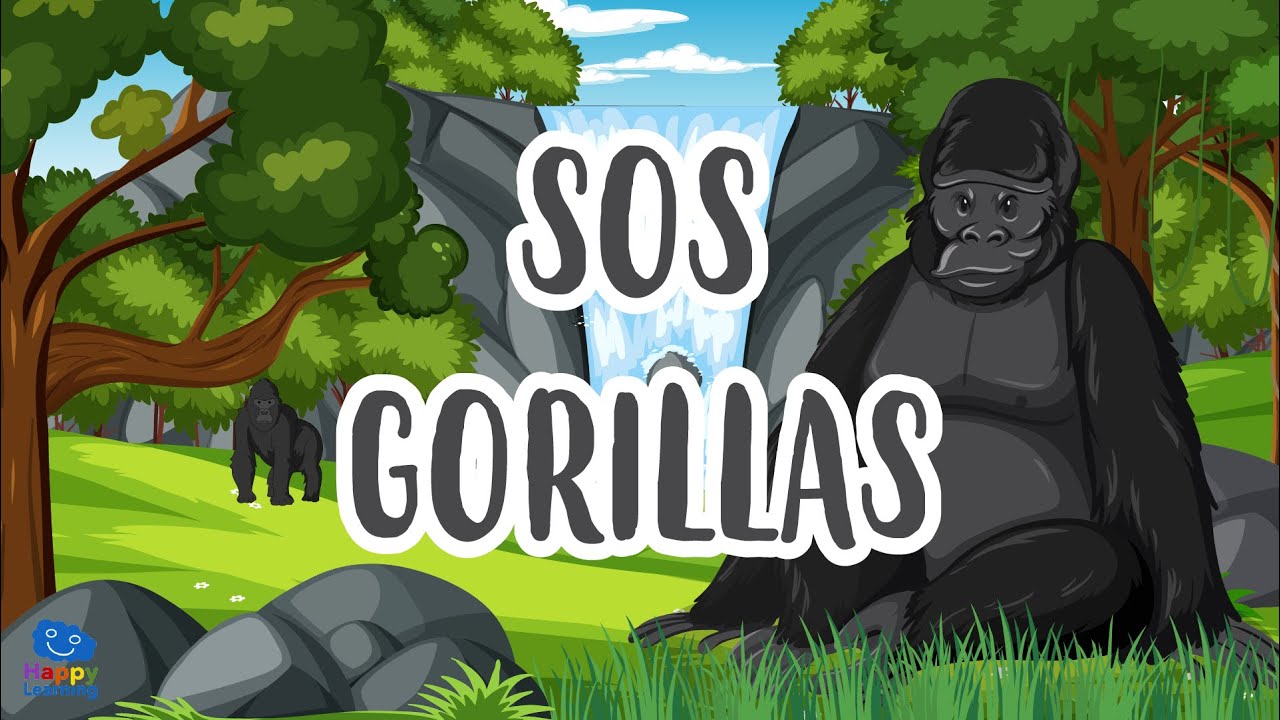
SOS, gorillas in danger of extinction! Did you know that gorillas are endangered because they have nowhere to live? 😰 Find out why they are becoming homeless.

INTERESTING ANIMALS! https://www.youtube.com/playli....st?list=PLLF_mZmNqOn
LONG VIDEOS https://www.youtube.com/playli....st?list=PLLF_mZmNqOn
🦖🧠 Travel back in time and discover the different types of dinosaurs that lived on Earth millions of years ago! In this educational video for kids, you’ll learn how they were classified based on their diet, size, and how they moved. Enjoy learning fun facts about these amazing prehistoric animals. 🌍🦕
📖 SUBJECT PLAYLISTS
🦖⛰️🐅 NATURAL SCIENCES for Primary School: https://www.youtube.com/playli....st?list=PLLF_mZmNqOn
👨🏫 SOCIAL SCIENCES for Primary School: https://www.youtube.com/playli....st?list=PLLF_mZmNqOn
➕✖️ MATH for Primary School Children: https://www.youtube.com/playli....st?list=PLLF_mZmNqOn
🤴🏰 HISTORY for Primary School Children: https://www.youtube.com/playli....st?list=PLLF_mZmNqOn
🌍⛰️ GEOGRAPHY for Primary School Children: https://www.youtube.com/playli....st?list=PLLF_mZmNqOn
🤝😊 Values and Emotions for Primary School Children: https://www.youtube.com/playli....st?list=PLLF_mZmNqOn v=KkCIIQyevjo&list=PL_Y3qbepMRoY7gwuwniiq11oMo6Ofe724
🌍 THE HAPPY LEARNING UNIVERSE
✅ Learn more about Happy Learning and our educational platform: https://happylearning.tv/en/
✅ Discover our social mission: https://happylearning.tv/en/nemesio-diez-foundation/
✅ Download the Happy Learning App:
- iOS: https://apps.apple.com/es/app/....happy-learning-tv/id
- Android: https://play.google.com/store/apps/details?id=tv.happylearning.canal&pli=1
🎓 ABOUT HAPPY LEARNING
Happy Learning is a social enterprise created by the Nemesio Diez Foundation, working to improve people's quality of life through education, health, sports and culture.
As a social company, our mission is to educate all children in the world in values and knowledge, to promote their holistic development and their commitment to society and the planet.
We offer educational resources to families, schools, hospitals and NGOs to ensure that children everywhere have access to a high-quality, comprehensive education.
At Happy Learning, we turn learning into an exciting adventure for primary school children. 🚀
We offer over 2,000 educational resources that combine fun and learning through animated videos, reading materials, interactive games and real-world activities.
📺 HAPPY LEARNING YOUTUBE CHANNEL
Welcome to Happy Learning! 🚀📚
The educational channel where learning is an adventure. Our goal is to spark curiosity and a love for knowledge in primary school children through fun and dynamic educational videos.
Discover the fascinating world of science with videos on Dinosaurs, the Solar System, Invertebrate Animals, Arachnids and much more. Travel back in time with history videos covering Prehistory, the Discovery of America or Ancient Egypt. Learn geography with content about The Earth and Its Movements, the Water Cycle and Parts of the Earth. Strengthen math skills with videos on Multiplication, Subtraction and Matter and Its Properties, and improve Spanish language understanding with lessons on Nouns, Sentences and Subject and Predicate.
Happy Learning transforms education into an exciting experience through animated videos, clear explanations and interactive activities. Perfect for children, parents and teachers seeking high-quality educational content.
🌟 Join our community of explorers!

🎉 NEW Videos: https://www.youtube.com/playli....st?list=PLLF_mZmNqOn
🕵️♀️ Amazing Things for Kids: https://www.youtube.com/playli....st?list=PLLF_mZmNqOn
🐜🧠 Can you solve the Bridge and Ants Riddle? In this fun and educational video for kids, we present a clever riddle that will make you think! Join us as we explore a curious situation: a group of ants needs to cross a bridge in the dark, and they only have one flashlight... but there's a twist! Can you figure it out before we reveal the answer? 🌉🔦
This video is perfect for children who enjoy challenges, brain teasers, and creative thinking. It’s a great activity to encourage logical reasoning, teamwork, and imagination—ideal for classrooms, homeschooling, or simply having fun while learning.
Subscribe to Happy Learning: https://my.happylearning.tv/
More related videos:
Curiosities for kids:https://www.youtube.com/playli....st?list=PLLF_mZmNqOn
Discover hundreds of never-before-seen resources! Create your free account at https://my.happylearning.tv/ and start learning in the most entertaining way.

AMAZING CURIOSITIES ABOUT FISHES | Happy Learning 🐟🐡🐠
Hello, little marine explorers! 🐠🌊 At Happy Learning, we dive into the fascinating world of fish 🐟 to uncover curious and amazing facts about these ocean inhabitants. Did you know that some fish can change color or that there are species that can "breathe" outside of water? 😲💦 Join us on this exciting underwater adventure as we explore the diversity and wonders of the aquatic world. 🌏💙 Get ready to dive into an ocean of knowledge and fun! 🚀🐬 #HappyLearning #ExploringTheSea #FishCuriosities 🌈🐙
Discover hundreds of never-before-seen resources! Create your free account at https://my.happylearning.tv/ and start learning in the most entertaining way.
#fishing
#happylearning
#fish
#shark
#sea

Discover hundreds of never-before-seen resources! Create your free account at https://my.happylearning.tv/ and start learning in the most entertaining way.

Subscribe to Happy Learning: https://my.happylearning.tv/
More related videos: https://www.youtube.com/playli....st?list=PLLF_mZmNqOn
Curiosities for kids:https://www.youtube.com/playli....st?list=PLLF_mZmNqOn
Learn Spanish: Living Room Vocabulary | Happy Learning 🪑📚✨
In this Happy Learning video, we invite you to learn Spanish words related to the objects we find in our living room. 🪑🏡 Did you know that practicing Spanish at home can be super fun? Especially when you point at things like the sofa, lamp, or television while learning new words! 🛋️💡
We’ll go over essential terms like sofa, table, lamp, television, and more. 📺✨ Plus, we’ll learn how to use them in simple sentences like “This is a sofa” or “I see a lamp.” All in a dynamic and entertaining way that makes remembering vocabulary easy! 🌟📖
Whether you’re just starting with Spanish or already know a little, this video is perfect for expanding your knowledge and improving your vocabulary. Get ready to learn Spanish while having fun! 📝✨
Discover hundreds of never-before-seen resources! Create your free account at https://my.happylearning.tv/ and start learning in the most entertaining way.

Create AI Videos with OpenArt 👉 https://youricreates.com/start
In this video, I break down a simple 3-step roadmap that takes you from total beginner to making AI videos that look near-professional without wasting money on five different subscriptions. I’ll show you the two core creation methods every AI video uses, how to pick the right model tier for your budget, and the exact prompt structures that consistently produce good results. Then I walk you through a full image-to-video workflow with start/end frames so you can control your shots, create seamless transitions, and get cinematic results you can actually post.
Prompt Architect:
https://chatgpt.com/g/g-68cab3....e1b35c81919004c52437
for inquiries: youri (at) mediaflow.group

✅ New Year Sale is On Web Hosting :- https://www.hostg.xyz/SHFx4
N8N + Web Hosting :- https://www.hostg.xyz/SHI3T
Use Coupon Code "PA20" and Get up to an Extra 20% Discount
How To Create Long AI Videos FREE | AI Se Lambe Video Kaise Banaye | FREE AI Video Generator
In this video, we share the complete process of creating high-quality, long AI videos for free using only your mobile phone. Many creators struggle with character consistency and video length, but with the tools and techniques shown here, you can create seamless 3D animation stories that are perfect for YouTube, Facebook, and Instagram.
Whether you want to start a kids' story channel, a horror niche, or any other storytelling platform, this step-by-step tutorial covers everything from script writing to final editing.
🚀 Tools Used in This Video:
Script & Prompts: Gemini AI
Image & Video Generation: Grok AI
Voiceover: Google AI Studio (High-quality Indian accent)
Video Editing: VN Editor (Free Mobile App)
📌 Video Highlights:
[00:00] Intro: Creating unlimited long AI videos for free.
[00:44] Examples of successful AI channels and their views.
[01:20] Best niches for high engagement (Horror & Kids' stories).
[02:16] Sample 3D AI animation video demonstration.
[03:04] How to monetize your content (Social Media & Blogging).
[03:36] Hosting & Blog setup with Hostinger (Discount code: PA20).
[05:13] Step 1: Generating a family-friendly script with Gemini.
[06:00] Step 2: Ensuring character consistency across scenes.
[07:16] Step 3: Creating 3D Disney-style images.
[08:21] Step 4: Converting images to video using Grok AI.
[11:01] Step 5: Generating realistic AI voiceovers with Google AI Studio.
[12:44] Step 6: Final editing and compiling your video in VN Editor.
💡 Key Benefits of This Method:
✅ 100% Free Tools: No expensive subscriptions required. ✅ Mobile-Friendly: Everything is done on your smartphone. ✅ Character Consistency: Learn the secret to keeping your characters the same throughout the story. ✅ Unlimited Content: No limits on the number of videos you can create.
You have landed on right video if you were looking for
Queries Answered in this Video:
ai video kaise banaye
ai se video kaise banaye
ai video generator free
3d cartoon video kaise banaye
ai cartoon video
ai animation video maker
text to video ai free
ai video banane wala app
ai youtube video kaise banaye
ai tools for youtube
faceless youtube video ai
ai story video generator
ai animation generator free
ai video editing
ai content creation tools
ai reels video maker
ai video creator hindi
free ai animation maker
ai movie maker free
cartoon video maker ai
ai automation youtube
ai short video generator
ai voice video generator
text to animation ai
ai kids story video maker
3d animation ai free
ai tutorial hindi
best ai tools for youtube
ai video making tutorial
ai video for youtube
ai video generator for youtube
free animation video maker
ai se animation kaise banaye
ai video editing tutorial
how to create ai video
ai video kaise banaye free
ai cartoon animation
ai video script to video
youtube automation ai video
ai content creation hindi
Free AI video generator app
Text to video AI app for mobile
YouTube ke liye AI video kaise banaye
AI video editing app for beginners
AI voice ke sath video kaise banaye
Mobile se AI reel kaise banaye
Best free AI tools for video creation
AI se cartoon video kaise banaye
AI me background music kaise lagaye
Bina face dikhaye AI video kaise banaye
Text to speech AI video generator
Reels banane wala best AI app
Free AI animation video kaise banaye
AI se educational video kaise banaye
Trending AI video ideas for YouTube
AI video banane ke liye best website
AI face animation video kaise banaye
AI tools se viral short video kaise banaye
Beginner ke liye AI video creation guide
AI green screen video kaise banaye
AI app se YouTube ke liye video kaise banaye
ai video kaise banaye
how to make animation video
how to create 3d animation video
animation video kaise banaye
3d animation video
ai cartoon video generator free
ai animation
copy paste youtube channel ai
youtube channel ideas
copy paste video
how to create animated videos in mobile
Hashtags:
#AIVideo #TextToVideoAI #3dcartoon #AIVideoBanana #cartoonvideomaker #NoFaceNoVoice #AIContentCreation
#withoutfacechannelidea #aivideo #aivideokaisebanaye #invisiblegyan #ai
**Affiliate Disclaimer**
This video and description may contain affiliate links (e.g., Hostinger). If you purchase through these links, the channel may earn a small commission at **no extra cost to you**. This helps support free educational content.
**Educational Disclaimer**
This content is for educational purposes only. While AI automation skills can help create income opportunities, results depend on effort, execution, and market demand. No financial guarantees are made, and the creator is not responsible for any losses or technical issues.

Message me “PROMPT” on Instagram: https://bit.ly/4jcjD4s
▸▸ Building an AI-first software company? Partner with Martell Ventures: https://bit.ly/44PDbXR
▸▸ Subscribe to The Martell Method Newsletter: https://bit.ly/3XEBXez
▸▸ Get My New Book (Buy Back Your Time): https://bit.ly/3pCTG78
The game is changing fast, and those who win will be the ones who master AI.
Not programmers. Not marketers. **AI Power Users.**
After watching this shift inside my own companies, I’m revealing the **9 highest-income AI skills** you need to learn right now.
The last one? It’s the most powerful of all.
This is not just a ChatGPT crash course, it’s your blueprint to AI domination.
IG: @danmartell
X: @danmartell

🎃 Get Hostinger to build your website using AI in minutes for just $3-4/month: https://www.hostinger.com/charliechang
^ use code CHARLIECHANG for an exclusive discount!
Join my free AI Community (templates, workflows, AI news, making money with AI, etc): https://www.skool.com/ai-os
If you’re trying to figure out how to actually use ChatGPT the right way, this video is for you. In this ChatGPT tutorial for beginners, I’m going to show you how to use it so well it almost feels illegal.
Most people are barely scratching the surface with ChatGPT. They’re still treating it like a simple text bot when in reality you can use it for your day-to-day life, your career, and even your business. The difference between a beginner and someone who really knows how to use ChatGPT comes down to understanding the tools, features, and updates that keep rolling out. I'll go through 10 ways I use ChatGPT on a day to day basis :)
ChatGPT: https://chat.openai.com/
► Get access to my FREE side hustle courses:
https://www.sidehustlemastery.com
My favorite finance + business products:
💳 My favorite credit cards: https://yourbestcreditcards.co....m/card-finder/?ccid=
🏦 Favorite online savings accounts: https://www.bankrate.com/landi....ng/charlie-chang/bes
📈 Get up to 12 Free Stocks on WeBull: https://bit.ly/webull12stocks
🖥️ Best AI website builder (Less than $3/month using code CHARLIECHANG): https://hostinger.com/charliechang
🥇 Hire the top 1% of overseas talent: https://paired.so
► Join my FREE newsletter:
https://buildabetterbusiness.co/subscribe
Stick around until the end because I’ll go through 11 ways you can start using ChatGPT today. I’ll show you how to build it into your daily workflow, save time, and make it do things most people don’t even realize it can do. The trick is to think of ChatGPT like the smartest person you could ever talk to. You can feed it your data, ask it complex questions, have it create content, even generate videos and images, and it’ll help you like an expert would.
There are so many ways to use ChatGPT to make everything you do faster and more effective. This AI tool keeps getting better with updates, and the more you use it, the more you’ll realize how much easier it makes problem-solving, content creation, and your everyday work. Once you learn how to actually use ChatGPT the right way, you’re going to be ahead of 99% of people still using it the old-school way.
If you want to see more videos like this, check out my other videos:
How To Use ChatGPT To Learn ANY Skill Quickly (Tutorial):
https://www.youtube.com/watch?v=vYvOTGk7hOA
12 ChatGPT Life Hacks That Will Blow Your Mind!:
https://www.youtube.com/watch?v=0-2nw8E5v6M
I hope you guys found this video helpful, and if you did, please SHARE it with a friend or family member who you think could benefit and also LIKE and subscribe for more videos like this in the future!
Thank you for watching, and I hope you have a wonderful rest of your day!
– Charlie
#ChatGPT #AI #Tutorial
Timeline:
0:00 - Introduction
0:40 - New ChatGPT Feature: ChatGPT Can See Images
2:23 - ChatGPT for Data Analysis (Beginner Friendly)
5:10 - How to Use ChatGPT Projects
6:17 - Hostinger (AI Website Builder)
7:28 - How to Use ChatGPT for Writing
8:39 - How to Use ChatGPT as a Voice Assistant
10:06 - How to Learn Anything with ChatGPT
11:51 - How to Create Images with ChatGPT
14:12 - How to Generate Images and Videos from Text in ChatGPT
14:57 - What Are GPTs? (Paid ChatGPT Plans Explained)
16:01 - How to Use ChatGPT as a Service Provider
17:32 - Understanding ChatGPT Models (Free vs Paid)
20:12 - Final Thoughts and ChatGPT Tips
Disclaimer: Some of the links above may be affiliate links, which means that if you click on them, I may receive a small commission. The retailers and financial services companies pay the commission at no cost to you, and this helps to support our channel and keep our videos free. Thank you!
In addition, I am not a financial advisor. Charlie Chang does not provide tax, legal or accounting advice. The ideas presented in this video are for entertainment purposes only. Please do your own due diligence before making any financial decisions.
► My Instagram: https://www.instagram.com/charlie__chang/
Another Handy AI Video Editor to Create Faceless YouTube Channel : https://bit.ly/4gZOZJM
✅ Want to Work with me: https://bit.ly/446FLHR
In this video, I show you how you can launch a channel that makes $10,000/month using free AI tools like ChatGPT, Leonardo, ElevenLabs, and PixVerse.
👇TOOLS USED IN THIS VIDEO👇
1. Chat GPT - https://chatgpt.com/
2. Leonardo AI - https://app.leonardo.ai/?via=all-about-money
3. Eleven Labs - https://try.elevenlabs.io/all-about-money
4. PixVerse Ai - https://pixverse.ai/
5. Pixabay - https://pixabay.com/
6. CapCut - https://capcut.com/
7. Canva - https://canva.com/
8. RapidTags - https://rapidtags.io
👉 PROMPTS GOOGLE DOC -
https://docs.google.com/docume....nt/d/1nGw9WhahdicssU
🔗 SOCIAL LINKS 🔗
Instagram: https://bit.ly/3Y59HBz
Telegram Channel: https://t.me/all_about_money_official
👇Other Videos 👇
https://youtu.be/aW5r-rx68bE
https://youtu.be/dvXe5v9k70I
Thank you for watching! If you found this video helpful, please like and subscribe to my channel for more content.
Sponsorships or other business inquiries? Email us at: Khatriadnan2@gmail.com
Music from Uppbeat (free for Creators!):
https://uppbeat.io/t/monument-....music/mellifluous-mi
License code: AFMMSJGSEWZCEMLI
Music by Retrositive from Pixabay
Licensee:
u_sr2edn06d2
tags (ignore)
How To Make $10k/month with Faceless AI Videos (FULL COURSE), how to create viral shorts, viral motivational shorts, motivational shorts, viral historical shorts, how to create historical shorts, motivation shorts tutorial, how to create motivation shorts, how to viral short video on youtube, youtube shorts monetization. tiktok creativity program, tiktok partner program, wisdom shorts, how to create wisdom shorts, wisdom niche, how i made wisdom shorts, make money online, make money on youtube, ai tools, life wisdom, create videos like life wisdom, easiest way to make money online, chat gpt, capcut course, youtube automation course, stoicism videos tutorial, AI BUSINESS, How I Make Viral MONETIZABLE Faceless Youtube Videos ($900/Day), stoic tutorial, stoic videos, stoicism tutorial, ffw, how to create videos like far from weak, far from weak, make money on amazon, how to make money with ai, chat gpt, chat gpt 4o, how much youtube paid me, youtube earnings, youtube automation with ai, ffw, what is youtube automation, cash cow youtube channel, youtube full course,
youtube affiliate marketing, youtube automation,faceless youtube channel, i tried youtube automation,faceless youtube channel ideas,how to make a faceless youtube channel,youtube automation tutorial,youtube automation channels,best niche for youtube channel 2024,youtube automation niches,how to make money on youtube,how to start a youtube channel,how to go viral on youtube,grow on youtube 2024,make money on youtube,blow up on youtube,youtube algorithm,digital income project, youtube advice, how to make money on youtube without showing your face, ai youtube course, editing course, how to create a stoic channel, ffw tutorial, far from weak tutorial, how to make a faceless youtube channel with ai, ai avatar

Blippi learns all about textures, colors, shapes and art.
Subscribe! ►http://www.youtube.com/channel..../UC1VCt1ecU8In4va9F2
Thanks for watching this Blippi play and learn video with Blippi's songs for toddlers and videos for toddlers.
Timecodes:
00:00 Blippi Plays with Clay - Learn Shapes and Spelling
15:32 Learn to Cook - Yummy Vegetable Treats
36:56 Velocity Race - Cool Science Experiments for Kids
46:16 Blippi Learns About the Weather - Educational Science Videos for Kids
Blippi Complete Collection: https://Blippi.lnk.to/CompleteCollectionYT!About
Meekah Complete Collection: https://Meekah.lnk.to/CompleteCollectionYT!About
Big Dino Adventures Playlist: https://Blippi.lnk.to/BigDinoAdventuresYT!About
Blippi's Halloween Party Playlist: https://Blippi.lnk.to/HalloweenPartyYT!About
Portuguese Complete Collection: https://Blippi.lnk.to/PortugueseCCYT!About
Espanol Complete Collection: https://Blippi.lnk.to/EspanolCCYT!About
More educational fun for kids with Blippi: https://www.youtube.com/watch?v=LfuEad93Ap0&list=PLzgk_uTg08P-UbUdr1x0gPdC5tVAixw8_&index=2
Learn Machines with Blippi: https://www.youtube.com/watch?v=eTvrSLFWmLo&list=PLzgk_uTg08P_nhILV2WV8LEAeSwOmVqNQ&index=2
Blippi Sink Or Float: https://www.youtube.com/watch?v=astwv4c_iP0
Blippi Learns About Bubbles: https://www.youtube.com/watch?v=Enbvtr78mqo
Blippi Makes Healthy Fruit Popsicles: https://www.youtube.com/watch?v=CxKN-Aab3U0
Blippi The Pirate! https://www.youtube.com/watch?v=1jDjonQpLz0
Come explore the wonderous world with everybody's best friend, Blippi. How does a recycling truck work? What does a baker do? What is the best playground around? There are so many exciting things to explore and learn. Feed your kids’ curiosity while they learn about vehicles, animals, the natural world and so much more. Blippi helps children‘s understanding of the world and encourages vocabulary development. Blippi loves visiting exciting places such as children’s museums and the zoo! He loves singing, dancing, playing and exploring. His contagious curiosity engages young viewers in learning adventures that help them both grow and develop.
Hi KIDZ! Welcome to a BRAND NEW SEASON of the DR. Binocs show. Watch this video by Dr. Binocs and learn why do we stop growing? Keep commenting your answers to win a shout out in the next video :D
#WhyDoWeStopGrowing
#DrBinocsshow
Watch all episodes of Season 5 - https://www.youtube.com/playli....st?list=PLmJ33rwb1zZ
Catch Dr.Binocs At - https://goo.gl/SXhLmc
Copyrights and Publishing: Rajshri Entertainment Private Limited
All rights reserved.
To Watch More Popular Nursery Rhymes Go To - https://goo.gl/CV0Xoo
To Watch Alphabet Rhymes Go To - https://goo.gl/qmIRLv
To Watch Compilations Go To - https://goo.gl/nW3kw9
Catch More Lyricals At - https://goo.gl/A7kEmO
Subscribe to Peekaboo Kidz: http://bit.ly/peekabookidz
Like our Facebook page: https://www.facebook.com/peekabootv
For brand collaborations and inquiries, reach out to us at : collab@rajshri.com

Best Learning Videos For Kids | The Dr.Binocs Show | Fun Learning Videos For Kids | By Peekaboo Kids
Best Learning Videos For Kids from The Dr.Binocs Show
Fun Learning Videos For Kids By Peekaboo Kids
Share on Facebook - http://goo.gl/82lfRP
Tweet about this - http://goo.gl/LLgZvX
SUBSCRIBE to Peekaboo Kidz:http://bit.ly/SubscribeTo-Peekabookidz
Catch Dr.Binocs At - https://goo.gl/SXhLmc
To Watch More Popular Nursery Rhymes Go To - https://goo.gl/CV0Xoo
To Watch Alphabet Rhymes Go To - https://goo.gl/qmIRLv
To Watch Compilations Go To - https://goo.gl/nW3kw9
Catch More Lyricals At - https://goo.gl/A7kEmO
Like our Facebook page: https://www.facebook.com/peekabootv ,
For brand collaborations and inquiries, reach out to us at : collab@rajshri.com

Hey kids! This time, Ms. Tab is learning about what makes good manners - from your pleases right through to your thank yous. She’s got a packed show in store where she’s taking the Manners Express with Lenny the Lightning Bug, learning how to act around the dinner table with Randy Respect (the good manners champion of the world!), and making Thank You cards and Peas and Thank You Peacocks! Thank you VERY much, Ms. Tab!
Check out the official Tab Time channel for more content: https://www.youtube.com/@ItsTabTime

AI tools are increasingly being used in schools. But does this make learning easier? Are young people being trained for the jobs of tomorrow? Or are they losing their ability to think critically and creatively?
▸ subscribe to our channel: https://goo.gl/UupwgM
#dwdigital #technology #innovation #AI #communication #school #university #chatbot #learning

The hosts spotlight Alpha Schools' exponential leap: AI mastery academics in 2 hours daily - top 1% SATs - plus life skills workshops to thrive in an AI world. With CEO Mackenzie Price and principal Joe Lamont, they dismantle failing systems for a 10X future.
Get notified once we go live during Abundance360: https://www.abundance360.com/livestream
Get access to metatrends 10+ years before anyone else - https://qr.diamandis.com/metatrends
Learn about Alpha School: https://alpha.school/
Peter H. Diamandis, MD, is the Founder of XPRIZE, Singularity University, ZeroG, and A360
MacKenzie Price is the co-founder of Alpha School
Joe Liemandt is principal at Alpha School
Salim Ismail is the founder of OpenExO
Dave Blundin is the founder & GP of Link Ventures
Dr. Alexander Wissner-Gross is a computer scientist and founder of Reified
Chapters
00:00 - Reimagining School for the AI Age
06:11 - Alpha Schools' Academic Excellence: 10x Faster Learning and High Scores
14:47 - Using AI to Teach Kids 10x Faster
19:52 - The Role of Guides and Mentors in Alpha Schools
29:03 - The Impact of AI and Motivation on Learning
42:36 - Personalized Learning and AI Coaching
52:49 - Motivating Kids in a New Educational Paradigm
01:00:56 - Overcoming Parental and Cultural Barriers
01:13:23 - Challenges and Resistance from Legacy Education Systems
01:17:54 - Global Perspectives and Government Adoption
01:25:48 - Where to Learn More About Alpha Schools
01:28:15 - Final Thoughts: The Urgency and Opportunity in Education Reform
–
My companies:
Apply to Dave's and my new fund: https://qr.diamandis.com/linkventureslanding
Go to Blitzy to book a free demo and start building today: https://qr.diamandis.com/blitzy
_
Connect with Peter:
X: https://qr.diamandis.com/twitter
Instagram: https://qr.diamandis.com/instagram
Connect with Dave:
X: https://x.com/davidblundin
LinkedIn: https://www.linkedin.com/in/david-blundin/
Connect with Salim:
X: https://x.com/salimismail
Join Salim's Workshop to build your ExO https://openexo.com/10x-shift?video=PeterD062625
Connect with Alex
Web: https://www.alexwg.org
LinkedIn: https://www.linkedin.com/in/alexwg/
X: https://x.com/alexwg
Email: alexwg@alexwg.org
Substack: https://theinnermostloop.substack.com/
Spotify: https://open.spotify.com/show/....1thtZk5vHTXbtDHezPT7
Threads: https://www.threads.com/@alexwissnergross
Connect with McKenzie
X: https://x.com/mackenzieprice?s=20
Instagram: https://www.instagram.com/futu....reof_education/?hl=e
Linkedin: https://www.linkedin.com/in/mackenzielprice/
Connect with Joe
X: https://x.com/jliemandt?s=20
Linkedin: https://www.linkedin.com/in/liemandt/
Listen to MOONSHOTS:
Apple: https://qr.diamandis.com/applepodcast
Spotify: https://qr.diamandis.com/spotifypodcast
–
*Recorded on December 9th, 2025
*The views expressed by me and all guests are personal opinions and do not constitute Financial, Medical, or Legal advice.

Tired of spending hours on lesson plans, grading, and creating engaging materials? 🤯 Say hello to Gemini AI in Google Classroom – your new AI-powered teaching assistant! 🤖
In this video, I'll show you how to use Gemini to:
Generate creative lesson plans in seconds
Craft captivating hooks that grab students' attention
Build quizzes and assessments effortlessly
Differentiate instruction with ease
And SO much more!
Get ready to unlock a world of teaching magic! ✨ Watch now and transform your classroom with the power of AI. Gemini for Education is a paid for application.

Can AI (ChatGPT) be a useful tool for teaching guitar? Today, we test it! 🌹 Start your romantic date with Dice Dreams for FREE now! https://t2m.io/DD_SteveTerreberry 🌹
SUBSCRIBE! - https://www.youtube.com/user/S....teveTerreberry?sub_c
STEVIE LINKS:
Stevie T MERCH - https://crowdmade.com/collections/steveterreberry
Patreon - http://www.patreon.com/SteveTerreberry
Instagram - https://www.instagram.com/steventerreberry/
Spotify - https://goo.gl/jZ0STa
iTunes - https://goo.gl/Ky70iC
Facebook - https://www.facebook.com/steveterreberry
#StevieT #SteveTerreberry #ChatGPT #guitar #AI