Top videos
Learn how to use Generative AI with Digital Marketing in this free course. Practical, beginner-friendly, and job-oriented – perfect for today’s career needs!
💡 Who is this course for?
✅ Students
✅ Career gap individuals
✅ Women job seekers
✅ Business owners
✅ Digital Marketing learners
🚀 What you’ll learn in this video:
✅ What is Generative AI?
✅ Introduction to ChatGPT & AI Tools
✅ How to create content using AI
✅ Resume, blogs, and video creation with AI
✅ Freelancing & job opportunities using Generative AI
💼 100% Practical Training
Offered by Kareer9, a top Digital Marketing Institute in Hyderabad
🌐 Visit: www.kareer9.com
📞 Contact for details:
📲 7989803089
👍 Like the video if you found it helpful
💬 Comment your questions below
🔔 Subscribe to Kareer9 for more useful content
#GenerativeAI #FreeAIcourse #Kareer9 #DigitalMarketing #AItools #ChatGPT #AItraining #SushmitaMadhu #Hyderabad #CareerWithAI

❤️ Check out Perceptilabs and sign up for a free demo here: https://www.perceptilabs.com/papers
❤️ Watch these videos in early access on our Patreon page or join us here on YouTube:
- https://www.patreon.com/TwoMinutePapers
- https://www.youtube.com/channe....l/UCbfYPyITQ-7l4upoX
📝 The paper "Control Strategies for Physically Simulated Characters Performing Two-player Competitive Sports" is available here:
https://research.fb.com/public....ations/control-strat
🙏 We would like to thank our generous Patreon supporters who make Two Minute Papers possible:
Aleksandr Mashrabov, Alex Haro, Andrew Melnychuk, Angelos Evripiotis, Benji Rabhan, Bryan Learn, Christian Ahlin, Eric Haddad, Eric Martel, Gordon Child, Ivo Galic, Jace O'Brien, Javier Bustamante, John Le, Jonas, Kenneth Davis, Klaus Busse, Lorin Atzberger, Lukas Biewald, Matthew Allen Fisher, Mark Oates, Michael Albrecht, Nikhil Velpanur, Owen Campbell-Moore, Owen Skarpness, Ramsey Elbasheer, Steef, Taras Bobrovytsky, Thomas Krcmar, Timothy Sum Hon Mun, Torsten Reil, Tybie Fitzhugh, Ueli Gallizzi.
If you wish to appear here or pick up other perks, click here: https://www.patreon.com/TwoMinutePapers
Thumbnail background design: Felícia Zsolnai-Fehér - http://felicia.hu
00:00 Intro - You shall not pass!
00:49 Does nothing - still wins!
01:30 Boxing - but not so well
02:13 Learning is happening
02:39 After 250 million training steps
03:10 Drunkards no more!
03:29 Serious knockout power!
04:00 It works for fencing too
04:20 First Law of Papers
04:43 An important lesson
Károly Zsolnai-Fehér's links:
Instagram: https://www.instagram.com/twominutepapers/
Twitter: https://twitter.com/twominutepapers
Web: https://cg.tuwien.ac.at/~zsolnai/

Try out a free trial with StraighterLine to save thousands on tuition: https://www.straighterline.com/bk
Want to get ahead in your career using AI? Join the waitlist for my AI Agent Bootcamp: https://www.lonelyoctopus.com/ai-agent-bootcamp
🤝 Business Inquiries: https://tally.so/r/mRDV99
I took Google’s AI Prompting Essentials course and here’s the cliff notes version if you also want to improve your AI prompt engineering skills!
🖱️Links mentioned in video
========================
If you want to check out the full AI Prompting Essentials course 👉 https://imp.i384100.net/WyyJ1A
🔗Affiliates
========================
My SQL for data science interviews course (10 full interviews):
https://365datascience.com/lea....rn-sql-for-data-scie
365 Data Science:
https://365datascience.pxf.io/WD0za3 (link for 57% discount for their complete data science training)
Check out StrataScratch for data science interview prep:
https://stratascratch.com/?via=tina
🎥 My filming setup
========================
📷 camera: https://amzn.to/3LHbi7N
🎤 mic: https://amzn.to/3LqoFJb
🔭 tripod: https://amzn.to/3DkjGHe
💡 lights: https://amzn.to/3LmOhqk
⏰Timestamps
========================
00:00 — Intro
00:20 — Course structure
00:57 — Fundamentals
03:45 — 4 iteration methods
05:51 — Multimodal prompting
08:09 — Prompt examples for everyday tasks
10:48 — Prompt examples for data analysis and presentations
12:15 — Advanced prompting techniques
16:03 — AI agent guidelines & examples
19:55 — Quiz
📲Socials
========================
instagram: https://www.instagram.com/hellotinah/
linkedin: https://www.linkedin.com/in/tinaw-h/
discord: https://discord.gg/5mMAtprshX
🎥Other videos you might be interested in
========================
How I consistently study with a full time job:
https://www.youtube.com/watch?v=INymz5VwLmk
How I would learn to code (if I could start over):
https://www.youtube.com/watch?v=MHPGeQD8TvI&t=84s
🐈⬛🐈⬛About me
========================
Hi, my name is Tina and I'm an ex-Meta data scientist turned internet person!
📧Contact
========================
youtube: youtube comments are by far the best way to get a response from me!
linkedin: https://www.linkedin.com/in/tinaw-h/
email for business inquiries only: hellotinah@gmail.com
========================
Some links are affiliate links and I may receive a small portion of sales price at no cost to you. I really appreciate your support in helping improve this channel! :)
Generative AI tools are here to stay. There’s a debate around whether or not they should be embraced in spaces of learning. Recent reports suggest that the risks of using these tools might outweigh the benefits, threatening cognitive development by doing the thinking for their users. This is forcing educators into a dilemma: how do they make the most of AI’s potential, while also protecting students’ ability to think for themselves? In this episode, host Samantha Laine Perfas talks with cognitive scientist Tina Grotzer, applied mathematics professor Michael Brenner, and educator Ying Xu about how to use AI tools to enhance learning, rather than replace it.

AI is showing up more and more in schools — but many teachers are still unsure what it actually means for teaching and learning.
In this episode, we explore one big question: Where does AI belong in primary education?
The conversation looks at:
- why AI has become such a big topic in education
- the concerns and hesitations many teachers are feeling
- how AI is already being used in schools
- what pupils need to learn about AI and digital literacy
- realistic ways teachers can start exploring AI
The episode explores AI in education in the UK and what it means in practice for primary schools.
Featuring:
- Miles Berry (Professor of Computing Education, University of Roehampton)
- Sophia Elhamid (Computing Content Creator, Kapow Primary)
- Adam Sumner (Curriculum Designer, Kapow Primary)
🎧 Primary Focus is a podcast for primary teachers and school leaders. New episodes released fortnightly.
Never miss an episode — subscribe:
🔔 Join the Kapow Primary newsletter for updates, tips and resources
https://kapowprimary.com/#:~:t....ext=sign%20up%20to%2
Content in this video -
00:00 - Introduction
01:26 - Why is AI a huge discussion point
03:36 - Three dimensions of AI in schools
05:47 - The problem of hallucination and critical thinking
10:24 - Teacher concerns and professional development
13:02 - Practical strategies for getting started with AI
16:00 - Accountability, safety and AI in the classroom
17:50 - AI education for children
26:35 - Progression and embedding AI across the curriculum
30:15 - Getting started with AI
32.22 - Final thoughts and key takeaways

China Just Made AI Education Mandatory for Every 6-Year-Old
============================================
👇Subscribe To The Channel By Clicking Below!👇
https://www.youtube.com/user/a....niksingalcom?sub_con
CHECK OUT THESE TOP TRENDING PLAYLISTS NOW!
Fighting Entrepreneur - https://www.youtube.com/watch?v=D9nsNOu3gIE&list=PLEmF7qw7SECK1hy5U5nodHoCg7ANzXukz
Master Copywriting With Anik Singal - https://www.youtube.com/watch?v=CjOAWP1DKAk&list=PLEmF7qw7SECKouq97MqF5zFi1Xb-VFyMY&index=2&t=0s
Facebook Advertising Strategies -
https://www.youtube.com/watch?v=BMQh6zA3HUY&list=PLEmF7qw7SECJUULNlnAGHvcegeQbIAHZp
How To Become A Better Entrepreneur - https://www.youtube.com/playli....st?list=PLEmF7qw7SEC
============================================
In May 2022, my life changed.
Up until that point, I had spent over 20 years as a serial entrepreneur, founding multiple companies and becoming globally recognized for my expertise in direct marketing, copywriting, compliant marketing, and now, investing in AI & Martech SaaS.
In 2022, my company, Lurn, was on track to hit $40 million/year, and I was preparing to sell it—ready to step back, spend more time with my kids, and move on to my next chapter.
But then, in May 2022, everything changed.
A FedEx package from the FTC landed on my desk.
And just like that, my entire world turned upside down.
The Fight of My Life
For the next 18 months, I battled through a grueling legal process.
- My company was in trouble.
- The sale I had planned was gone.
- The lawsuit cost me over $15 million—$2.5M in fines, plus millions more on my team, lawyers, and discovery.
It was one of the hardest times of my life. But as painful as it was, it taught me something invaluable.
Something that I’ve always taught to millions of Entrepreneurs over the
years…
When Life Pushes You Stand Straight, Smile & Push It The Heck Back
When I finally settled the case, I realized something:
Most entrepreneurs don’t understand compliance… until it’s too late.
#chinaai #china #ai #aitools #aiforkids #aischool #aiforbusiness #aiforbeginners

First Lady Melania Trump turned heads on Wednesday morning at the White House, but not for her usual high-class fashion statements.
On day two of the Fostering the Future Together Global Coalition Summit, Mrs. Trump was seen walking out with a humanoid robot built in the United States as she was prepared to speak to leaders from 45 nations and 28 best-in-class technology entities.
Like a scene out of a sci-fi movie, the robot named Figure 03 gave brief remarks and welcomed roundtable guests in their native languages.
"It's fair to state you're my first American-made humanoid guest in the White House," Melania quipped before joining leaders.
https://thenationaldesk.com/ne....ws/americas-news-now
#Melaniatrump #humanoidrobot #robot #ai #americanmade #technology #whitehouse #politics
________________________
Follow us on other social media:
KTXS News on Facebook
https://www.facebook.com/KTXSTelevision
KTXS News on X
https://x.com/KTXS_News
KTXS News on Instagram
https://www.instagram.com/ktxsnews/?hl=en
For more information, visit https://ktxs.com/
Have a news tip? Send it to us at news@ktxs.com

As AI becomes more common in our classrooms, shaping how we learn and teach, it presents new opportunities and significant challenges. How can we navigate this change to ensure we are preparing young people to thrive in a complex world?
For the second episode of Better Future Conversations, join host Wendy Kopp (CEO & Co-founder, Teach For All) for a discussion with Sal Khan (Founder & CEO, Khan Academy) about the promise and challenges of AI in education. They explore the evolving role of teachers, the skills young people will need for the future, and how schools can rethink learning to foster student agency and ensure equity in an age defined by artificial intelligence.
Chapters:
00:00 – Intro
00:27 – What AI Means for the Purpose of Education
01:47 – Content Knowledge Still Matters
02:25 – Why People With Deeper Expertise Will Benefit Most From AI
03:06 – Tool Entrepreneurship
03:52 – How AI Could Expand Assessment
05:10 – Rethinking GPAs and College Degrees
05:29 – Misinformation & Critical Thinking
08:08 – AI Learning in Alpha Schools and Khan Lab
12:25 – The Role of Teachers in an AI World
15:20 – The Future of Classrooms
18:32 – Student Agency and Unlearning Old Paradigms
22:00 – AI and Academic Integrity
26:09 – Student Self-Regulation and Responsible Use of AI
26:17 – Mental Health & Safety
31:39 – Equity of Access & Fluency
38:20 – Future-Proof Skills
42:29 – Talking With Your Kids About AI
44:41 – Involving Students in Shaping AI Tools
46:02 – Teacher Adoption of AI Tools
48:00 - Book Recommendations for Teachers
49:06 - Can AI Close the Gap for Poorer Communities?

It's long been a concern for teachers that growing admin is taking their focus away from the classroom, but a new report from the Productivity Commission has found that outsourcing that work to artificial intelligence could be the solution. | Subscribe and 🔔: http://9Soci.al/KM6e50GjSK9 | Get more breaking news at 9News.com.au: http://9Soci.al/iyCO50GjSK6
FOLLOW 9News Australia
► Facebook: https://www.facebook.com/9News/
► Twitter: https://twitter.com/9NewsAUS
► Instagram: https://www.instagram.com/9news/
Join 9News for the latest in news and events that affect you in your local city, as well as news from across Australia and the world.
#9News #BreakingNews #NineNewsAustralia #9NewsAUS

A special conversation with Sanjay Kumar, Secretary, School Education & Literacy, on integrating Artificial Intelligence into classrooms, strengthening digital literacy, and preparing India’s school system for the future.
Anchor & Producer: Nav Vikram Singh
Sansad Television is the Parliamentary channel of India. It was created in 2021 by merging Lok Sabha Television and Rajya Sabha Television.
Follow us on:
-Twitter: https://twitter.com/sansad_tv
-Insta: https://www.instagram.com/sansad.tv
-FB: https://www.facebook.com/SansadTelevision/
-https://whatsapp.com/channel/0....029VanOx2c3wtbCBjvk2
-WhatsApp: https://whatsapp.com/channel/0....029VanOx2c3wtbCBjvk2
-https://www.linkedin.com/compa....ny/105232558/admin/p
Visit Sansad TV website: https://sansadtv.nic.in/

In this conversation, Satvik Paramkusham talks about learning AI through tools, how to approach modern AI platforms, and how hands-on experimentation accelerates understanding.
We discuss practical ways to build skills, choose the right tools to learn faster, and why using AI daily is becoming a core part of education and long-term growth in tech.
Build Fast with AI: https://www.buildfastwithai.com/
Satvik's LinkedIn: https://www.linkedin.com/in/satvik-paramkusham/
Get the Agentic AI Master Bundle Kit: https://aianytime5.gumroad.com/l/uqmyk
Build real-world AI with tutorials, tools, and research from India’s fastest-growing AI community.
👤 Creator’s LinkedIn (Sonu Kumar) Portfolio Site: https://sonukumar.site/
🌐 AI Anytime's Website: https://aianytime.net/
🗓️ Office Hours (AI Consulting): https://officehours.aianytime.net/
👥 LinkedIn (Community Page): https://www.linkedin.com/company/ai-anytime/
💬 Join Our Discord: https://discord.com/invite/4aGc9PSMgE
👤 Creator’s LinkedIn (Sonu Kumar): https://www.linkedin.com/in/sonukr0/
🎁 Support the Channel
💸 UPI ID: sonu1000raw@ybl
₿ Bitcoin Wallet: bc1qsneqznxpzyxzzv006jthz4c8v8h5cs57myw342
✅ Join this Channel for Perks
Get access to members-only content and community perks:
https://www.youtube.com/channe....l/UC-zVytOQB62OwMhKR
#aipodcast #aianytime #ai

We got AI Schools before GTA VI
Become a Member:
https://www.youtube.com/channe....l/UCWBWgCD4oAqT3hUeq
Follow me here:
Instagram ► https://www.instagram.com/sambucha
X ► https://www.x.com/sambucha
Edited by: https://twitter.com/JariVFX

Education has constantly been evolving, from simple tools like the abacus to the valuable scrolls in ancient schools. How have these changes shaped the way we learn? The invention of the printing press drastically changed our access to knowledge, making us wonder: How would we learn without physical books to read? And moving into the digital age, with online platforms like Khan Academy, could we have imagined the global reach of education without the internet?
Now, as we move further into the 21st century, AI is set to change education once again. Imagine a history lesson powered by AI, or a math lesson that solves problems in real time, adjusting to each learner's pace! But these exciting advances bring up important questions. If AI can predict and meet student needs, is this a new form of active teaching? And, can AI, even with its precision, replace the human touch and connection in our classrooms? When AI speeds up language learning, should we reconsider traditional teaching methods?
While AI offers wide and transformative possibilities, we must ask ourselves: Can technology genuinely encompass the full experience of education? Can machines reflect human emotion and shared experiences? In our pursuit of efficiency, do we risk losing the depth of human experience? Isn't education more than just gaining information?
Isn't education more than just gaining information? Isn't it also about transformation and growth? Perhaps AI can enhance that. But as we embrace this digital evolution, we must consider: How do we balance technological advancement with preserving the intrinsic human elements that have always been the foundation of meaningful education?
#EducationEvolution #AIEducation #highereducation #aiethics #ai #schooleducation #EducationTransformation #university #universities #learning #teaching #school #students #aiineducation #digitalclassroom #online #onlineclasses #onlineearning #artificialintelligence #EducationalTools #EducationTech #InteractiveLearning #TransformativeEducation #artificialintelligencetechnology #universityeducation #universitystudent #schoolstudents #study #studymotivation #educational #evolution #schoollife #schools #learning #teaching #pedagogy #learningtechnology

🦅 Dangerous Bird 🐦 #shortsvideo #viral #shorts #cartoon #comedy #youtubeshorts #ai #educational
#facts #factshorts
#animals
#wildlife
#viral
#animals
#factshorts
#viralcontent
factsinhindi
#factshorts
#facts
#viral
#shortsvideo
#shortsvideo
#funny
#facts
#funny
#facts
#shorts
#viral
#factshorts
#hindifacts
#amazingfacts
#weirdanimals
#animalfacts
#wildlife
#ajabgajab
#funnyfacts
#cartoonvideo
#aivideo
#trending
#youtubeindia
#entertainment
#knowledge
#didyouknow
#shockingfacts
#naturefacts
#viralshorts
#viralshorts
#youtubeshorts
#shortsfeed
#trending
#explorepage
#fyp
#foryou
#viralvideo
#trendingshorts
#shortsvideo
😂 Funny / Comedy Tags
#funnyshorts
#comedyvideo
#funnyvideo
#memeshorts
#lol
#funnyclip
#cartoonfunny
#comedysketch
#relatable
🏠 Home Design / Room Makeover (Since you make these 😉)
#homedesign
#roommakeover
#smallroomideas
#interiordesign
#homeinspiration
#beforeafter
#tinyroom
#smartdesign
#spacehack
#modernhome
🤯 Fact / Entertainment (For Fact Surya style content 🔥)
#facts
#amazingfacts
#mindblowing
#didyouknow
#factshorts
#interestingfacts
#knowledge
#viralcontent
#educational
🚀 Universal Viral Tags
#shorts
#youtubeshorts
#viral
#trending
#viralshorts
#shortsvideo
#explore
#foryou
#fyp
#trendingshorts
😂 Funny / Comedy Tags
#funny
#comedy
#funnyvideo
#lol
#memes
#relatable
#comedyshorts
#funnyreels
🏠 Home Design / Makeover Tags
#homedesign
#interiordesign
#roommakeover
#smallroomdesign
#homeinspiration
#beforeandafter
#smartdesign
#spacehack
🤯 Fact Channel Tags (Great for Fact Surya 🔥)
#facts
#amazingfacts
#didyouknow
#mindblowing
#factshorts
#unknownfacts
#factvideo
#interestingfacts
#shorts
#youtubeshorts
#viralshorts
#trending
#viralvideo
#shortsvideo
#explore
#fyp
#foryou
#trendingshorts
🏠 Home Design Shorts Tags
#homedesign
#interiordesign
#smallroommakeover
#roommakeover
#tinyhouse
#smallspaceliving
#smartdesign
#homeideas
#beforeandafter
#modernhome
😂 Funny / Comedy Tags
#funny
#comedy
#funnyvideo
#relatable
#lol
#familyfun
#funnyshorts
#desicomedy
#cartoonstory
#entertainment
#facts
#amazingfacts
#interestingfacts
#didyouknow
#factshorts
#mindblowingfacts
#viralshorts
#youtubeshorts
#shortsvideo
#trendingfacts
🌎 USA Audience Target Tags
#usa
#americanfacts
#worldfacts
#historyfacts
#sciencefacts
#spacefacts
#randomfacts
#dailyfacts
#educationalshorts
🚀 High Engagement Tags
#unbelievable
#crazyfacts
#topfacts
#factvideo
#knowledge
#learnsomethingnew
#funfacts
#shockingshorts
#amazingfacts
#facts
#viral
#shorts #youtubeshorts #viralshorts #trending #viralvideo #shortvideo #explorepage #foryou #fyp #trendingshorts #reels #funnyshorts #comedyvideo #factshorts #amazingfacts #mindblowing #wow #mustwatch #dailyshorts #subscribe #viralcontent #shortsfeed #india #usa #contentcreator #youtubecreator
#facts

Ethics, Fairness, and Justice
Speakers: Ezekiel Dixon-Román, Shayan Doroudi

Discover how personalized learning, automation, and data insights powered by AI agents in education are transforming classrooms. Read this article to learn more.
https://sam-solutions.com/blog..../ai-agents-for-educa
0:00 - Intro
1:00 - What Are AI Agents in Education?
1:17 - How AI Agents Differ from Traditional AI?
1:37 - Key Applications of AI Agents in Education
2:25 - Benefits of AI Agents in Education
2:43 - Implementing AI Agents in Schools
3:16 - Challenges and Ethical Considerations
3:50 - The Future of AI Agents in Education
5:11 - Conclusion
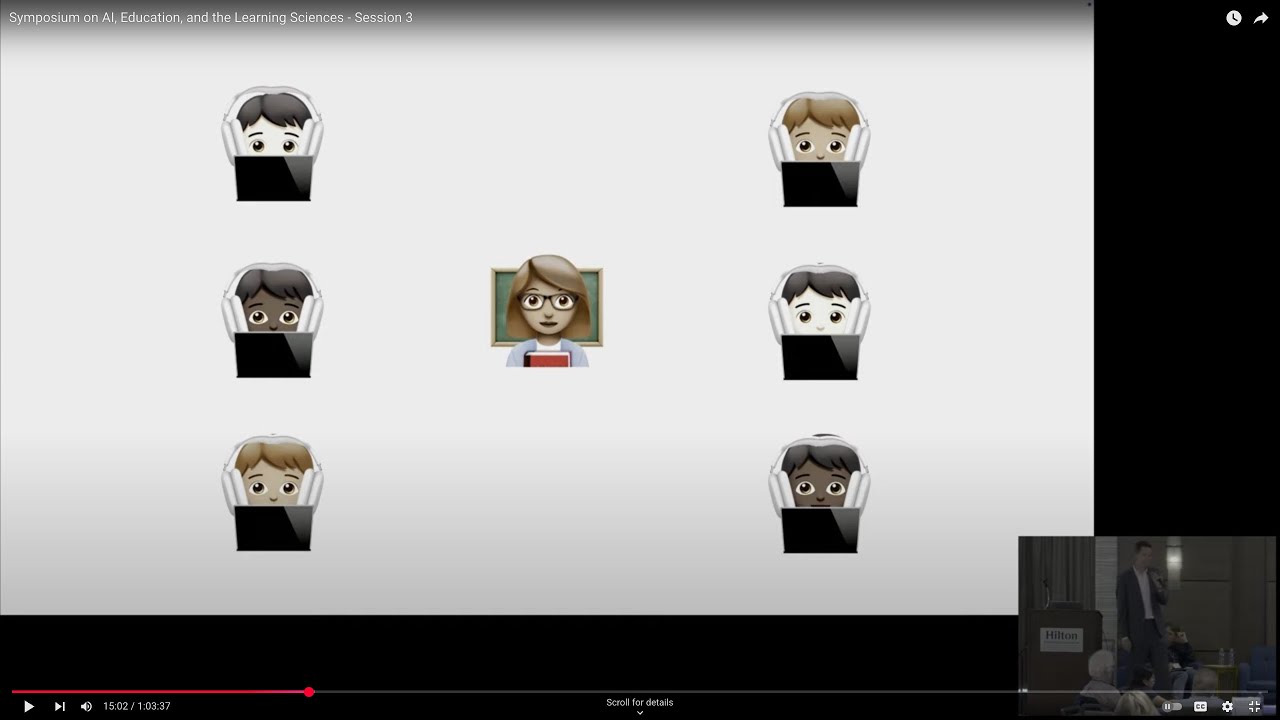
K-12 Schools and Classrooms
Speakers: Dan Meyer, Alexander Fishman

In this video, I show you how to use Google’s new NotebookLM update with Gemini to turn raw notes, PDFs, and research into clean, professional slide decks in minutes, covering the exact workflow for generating presenter slides, detailed reports, and brand-styled presentations without touching PowerPoint or design tools.
Get more AI tips that don't make it into videos 👉 https://parker-prompts.com/join
Watch next https://youtu.be/SogSf-1p9t4
I'm Parker. I started this YouTube Channel with the goal to learn more about AI myself and to then pass on the knowledge to anyone willing to listen.
let's work together: partnerships @ parker-prompts.com

🖥️ Download the free Gemini x NotebookLM PDFs: https://clickhubspot.com/160c05
More from Futurepedia:
👉 Join the fastest-growing AI education platform! Try it free and explore 20+ top-rated courses in AI: https://bit.ly/futurepediaSL
Summary:
Gemini's NotebookLM integration isn't just about accessing your notebooks - it unlocks capabilities you can't get from either tool alone. I'll show you how to connect notebooks to Gemini for better answers, use multiple notebooks for cross-topic synthesis, and build permanent Gems that auto-sync as you add sources. This combines NotebookLM's grounded, cited knowledge with Gemini's reasoning, creativity, and live web search. Game-changer for research, content creation, and any knowledge-heavy workflow.
Chapters
0:00 Intro
0:21 Quick Refresher
1:20 Knowledge + Capabilities
4:15 Cross-Notebook Synthesis
8:05 Why This Matters
9:49 Gems: Specialized Brains
15:04 Summary

Optimize Your Prompts with MyPromptBuddy for free: https://mypromptbuddy.ai/
This video shows you every new NotebookLM feature and Google Gemini’s new features and upgrades. If you want to learn how to use NotebookLM inside of Google Gemini, how to import memory to gemini and more this video will benefit you.

Want to make money and save time with AI? Join here: https://juliangoldieai.com/784-sH

Ever wonder how to create Gemini Gems that actually produce high-end results? Today, I’m pulling back the curtain on my personal Gemini Gem workflow. I’ll show you how to use Gemini Gems alongside a deep-dive NotebookLM tutorial to build a "Creative Director" that handles your heavy lifting.
We aren't just writing basic prompts; I’m showing you how to use NotebookLM to find viral AI ads and using JSON prompting to make sure our output is professional every time. This Google NotebookLM strategy is a game-changer for anyone into AI video generation with Kling 3.0 or veo3.1 (seedance 2.0 or any ai video models) or creating stunning visuals with Nano Banana 2 and Nano Banana Pro.
I’ll also show you Claude AI to audit our instructions so your AI video ads look like they cost thousands to make.
Gemini said
Key Moments
0:00 – The Secret to High-Converting AI Ads
0:15 – Bright & Playful: The Gemini Gem in Action
1:21 – Step 1: Gathering Inspiration with NotebookLM
2:38 – Step 2: Building the "Creative Director" Persona
3:35 – Step 3: Creating Your Custom Gem from Scratch
4:22 – The Secret Refinement Loop: Gemini + Claude
5:10 – The 4-Step Blueprint Summary
5:25 – Final Results with Kling 3.0
5:45 – Outro: Your Turn to Build!
my prompts:
https://docs.google.com/docume....nt/d/11F7xlYZVbDC7xE
https://docs.google.com/docume....nt/d/1zHcnPEJdbOaPgC
#GeminiGems #NotebookLM #ClaudeAI #AIVideo #NanoBanana #AIVideoAds

Want to make money and save time with AI? Get AI Coaching, Support & Courses 👉 https://juliangoldieai.com/07L1kg
Get a FREE AI Course + 1000 NEW AI Agents 👉 https://juliangoldieai.com/5iUeBR
Want to know how I make videos like these? Join the AI Profit Boardroom → https://juliangoldieai.com/07L1kg
NotebookLM & Gemini Integration: The Ultimate AI Game Changer!
Discover how the massive NotebookLM and Gemini integration transforms your business workflow by centralizing your entire knowledge base. Learn how to use your own research, notes, and data to create high-converting content and make data-driven decisions with ease.
00:00 - Intro: NotebookLM's Massive Upgrade
00:36 - Gemini & NotebookLM Integration Explained
01:05 - Real-World Business Use Cases
02:51 - Research, Reports & Course Creation
03:53 - Mastering Follow-up Questions
04:41 - 5 Tips for Better AI Results
05:44 - Technical Specs & Rollout Info
07:33 - Outro & How to Scale with AI
Turn your ideas into stunning visual mind maps, and take them one step further with interactive visuals.
In this video, I walk you through a simple workflow using NotebookLM and Google Gemini to transform basic mind maps into clean, structured, presentation-ready visuals or even interactive, explorable formats.
If you’ve been using NotebookLM for research or learning, you already know how powerful its mind maps are for structure, but they can still be fairly basic.
This workflow fixes that.
You’ll learn how to:
Take a NotebookLM mind map and turn it into a high-quality visual mind map
Use Gemini Canvas to create interactive mind maps
Improve clarity, layout, and hierarchy for better understanding
Create visuals that are perfect for studying, teaching, or presenting
This is especially useful if you’re working on:
Research projects
Studying complex topics
Creating content or presentations
Organising ideas visually
Prompts used in video:
https://docs.google.com/docume....nt/d/1FTF_WOcR8yEb65
Subscribe for more practical AI workflows:
www.youtube.com/@AIandTechforE....ducation?sub_confirm
AI mindmaps, notebooklm tutorial, google gemini ai, ai for research, ai for studying, mind mapping techniques, interactive mindmap, visual learning tools, ai workflows, study with ai, research productivity, ai tools for students, knowledge organization, digital note taking, ai visualization, learning strategies, productivity tools, ai content creation
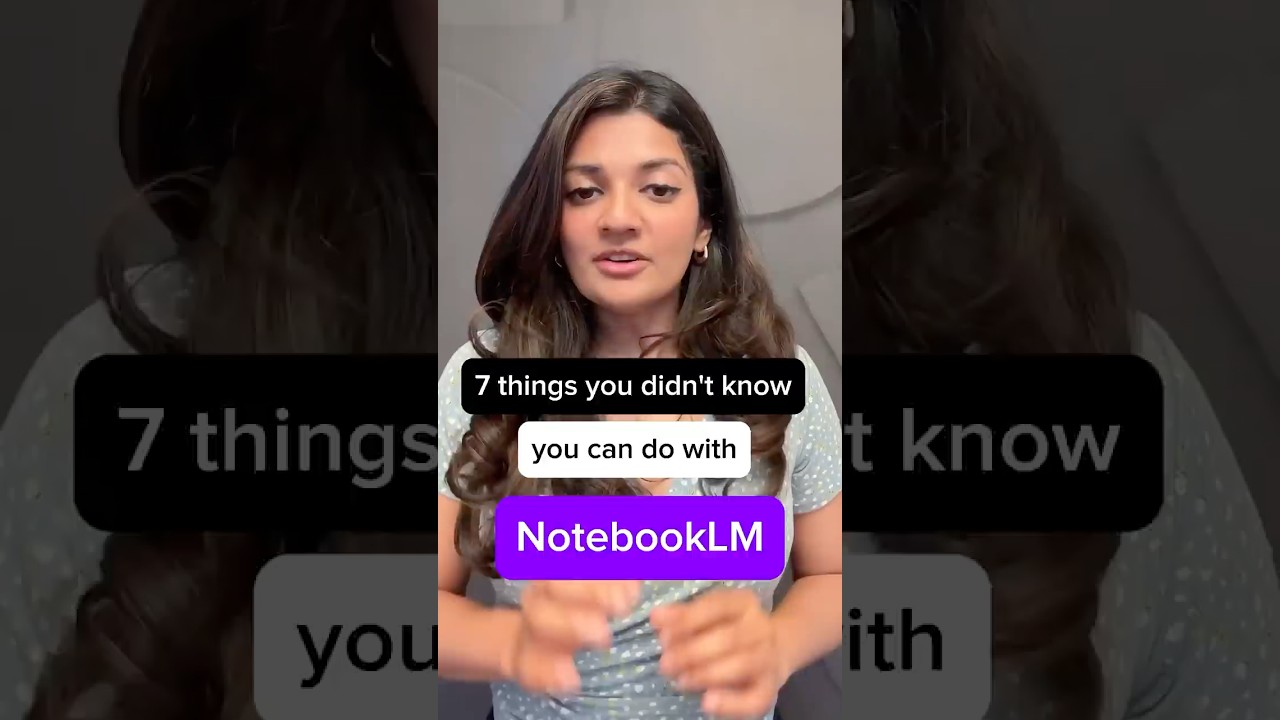
NotebookLM is one of the most underrated AI tools out there right now.
Most people think of it as just a basic note summarizer.
But here are 7 advanced ways you can actually use it to supercharge your workflow:
👉 1. Mock interview prep
Upload your resume, the job description, and any related docs. NotebookLM will simulate a podcast-style conversation between experts, almost like practicing for an interview with a coach.
👉 2. Action items from meeting notes
Upload your meeting transcripts or slides. It will extract key takeaways, deadlines, and next steps, so you can leave every meeting with a clear action plan.
👉 3. Research faster
Use the “Discover” feature to explore new topics fast, or simply click I’m feeling curious to let NotebookLM guide your learning.
👉 4. Explain complex topics clearly
NotebookLM can turn your dense documents into structured mind maps, making it easier to teach, present, or learn any subject.
👉 5. Compare anything
From investment options to real estate brochures, NotebookLM can break them down into simple bullet points so you can make smarter decisions quickly.
👉 6. Mobile-first research
With the NotebookLM mobile app, you can prep, review, and even listen to AI-generated podcast summaries on the go.
👉 7. Turn documents into content
Upload your PDFs, PPTs, or notes, and instantly turn them into ready-to-use summaries for your social media posts, newsletters, or internal content.
If you haven’t explored NotebookLM deeply yet, you’re missing out.
This is an AI tool I’m keeping in my daily stack.
Follow along for more real-world AI insights and practical use cases!