Top videos

This video shows basic operation of CASIO ClassWiz for Signed Numbers.
[Compatible models ] fx-82EX, fx-350EX, fx-570EX, fx-991EX
[Related Topics] Pre Algebra, Signed Numbers
ClassWiz is New Classroom Standard With High-resolution LCD Technology Non-programmable Scientific Calculator.
For more How To Video or User's Guide: http://edu.casio.com/support/

2 1/4 + 3 1/2 – 2 1/3 =
3 2/5 – 3/4 + 5 1/2 =
Order of Operations:
1. https://youtu.be/xc2vTTNJmtk
2. https://youtu.be/H9pGgZiPnW0
3. https://youtu.be/erBUPGvisKA
4. https://youtu.be/X0KvWNfPeeI
5. https://youtu.be/vKNxfR-xD-Q
6. https://youtu.be/sJMPHWvIR28
7. https://youtu.be/0dyqntVf2WY
LCD
1. https://youtu.be/xddo-X_1xAY
2. https://youtu.be/9z6iZOu0kK4
3. https://youtu.be/k9L_2W49FEw
4. https://youtu.be/KYv7QmJutUs
Paano Mag SELF REVIEW | Sekreto para PUMASA:
1. https://youtu.be/cY9WMaMmaKk
2. https://youtu.be/SiZFsdcvSqw
Paano e turn OFF ang annoying SUBTITLE:
https://youtu.be/ID2YekF5Ka4
You can SHARE the LINK of my videos but DO NOT re-upload.
FB Page:
Free Civil Service Reviewers managed by Leonalyn
https://www.facebook.com/Leona....lynMutiaTayoneFreeRe
FB Group:
Philippine Civil Service Review for all
https://www.facebook.com/group....s/121644125187853/?r
Huwag nyong lagyan ng SUBTITLE mga videos ko para makapanood kayo ng buo at walang sagabal. Watch this kung paano:
https://youtu.be/ID2YekF5Ka4
Behind the scene:
https://youtu.be/qJgEzWnDp_8
Editing Apps: VivaVideo
SamsungNote5: Snote
Back-up: SamsungNote9
Solving Math Problems for:
AFPSAT AQE SWE MATH CIVIL SERVICE EXAM
UPCAT LET PNPACAT PMA NCAE NAPOLCOM College Entrance Test DOST PMAEE


Simplification Tricks | Fraction Based simplification|Simplification tricks for all competitive exam
Hello friends
Watch this video till the end and if any doubt is there please write in comment section..
Simplification Tricks
https://www.youtube.com/playli....st?list=PLNLFUrpFioa
Algebra Shortcut Tricks
https://www.youtube.com/playli....st?list=PLNLFUrpFioa
Reasoning Tricks
https://www.youtube.com/playli....st?list=PLNLFUrpFioa
Counting Figures Tricks
https://www.youtube.com/playli....st?list=PLNLFUrpFioa
Time And Work Trick
https://www.youtube.com/playli....st?list=PLNLFUrpFioa
Profit And Loss Tricks
https://www.youtube.com/playli....st?list=PLNLFUrpFioa
Maths Puzzle
https://www.youtube.com/playli....st?list=PLNLFUrpFioa
Dice Reasoning Trick
https://www.youtube.com/playli....st?list=PLNLFUrpFioa
Boat and Stream Tricks
https://www.youtube.com/playli....st?list=PLNLFUrpFioa
Pipe And Cistern Tricks
https://www.youtube.com/playli....st?list=PLNLFUrpFioa

Addition and Subtraction of Fractions With Unlike Denominators || Fractions Class 5 || 6 || CBSE || NCERT Fractions || Fractions in Simplest Form || Maths
#additionoffraction
#fractionsubtraction
#mathematics


Fractions With Different Denominators || Multiplication of Mixed Fractions || Solve Mixed Fractions || Class 4 and 5 Fractions || How to Solve Mixed Fractions || 5th Grade Mathematics Fractions Question
#Fractions
#Multiply
#Multiplication

Hi all
This video is about #Addition and #Subtraction of #UnlikeFractions. Students find it confusing to add or subtract unlike fractions, but after watching this video you all will have clear understanding of how to add or subtract unlike fractions.
2 1/4 + 3 1/2 – 2 1/3 =
3 2/5 – 3/4 + 5 1/2 =
Order of Operations:
1. https://youtu.be/xc2vTTNJmtk
2. https://youtu.be/H9pGgZiPnW0
3. https://youtu.be/erBUPGvisKA
4. https://youtu.be/X0KvWNfPeeI
5. https://youtu.be/vKNxfR-xD-Q
6. https://youtu.be/sJMPHWvIR28
7. https://youtu.be/0dyqntVf2WY
LCD
1. https://youtu.be/xddo-X_1xAY
2. https://youtu.be/9z6iZOu0kK4
3. https://youtu.be/k9L_2W49FEw
4. https://youtu.be/KYv7QmJutUs
Paano Mag SELF REVIEW | Sekreto para PUMASA:
1. https://youtu.be/cY9WMaMmaKk
2. https://youtu.be/SiZFsdcvSqw
Paano e turn OFF ang annoying SUBTITLE:
https://youtu.be/ID2YekF5Ka4
You can SHARE the LINK of my videos but DO NOT re-upload.
FB Page:
Free Civil Service Reviewers managed by Leonalyn
https://www.facebook.com/Leona....lynMutiaTayoneFreeRe
FB Group:
Philippine Civil Service Review for all
https://www.facebook.com/group....s/121644125187853/?r
Huwag nyong lagyan ng SUBTITLE mga videos ko para makapanood kayo ng buo at walang sagabal. Watch this kung paano:
https://youtu.be/ID2YekF5Ka4
Behind the scene:
https://youtu.be/qJgEzWnDp_8
Editing Apps: VivaVideo
SamsungNote5: Snote
Back-up: SamsungNote9
Solving Math Problems for:
AFPSAT AQE SWE MATH CIVIL SERVICE EXAM
UPCAT LET PNPACAT PMA NCAE NAPOLCOM College Entrance Test DOST PMAEE
Hi all
This video is about #Addition and #Subtraction of #UnlikeFractions. Students find it confusing to add or subtract unlike fractions, but after watching this video you all will have clear understanding of how to add or subtract unlike fractions.

Partial Fraction Decomposition | How to solve Partial Fraction using the Cover Up Method | Example 3
#partialfractionmethod #partialfractions #fractions
This precalculus video tutorial provides a basic introduction to partial fraction decomposition. Partial fraction decomposition is the process of taking a complex fraction and breaking it into multiple simpler fractions. It's the reverse of adding or combining two fractions into a single fraction.
This is the second video which will be followed by others

When we see an integral of a rational function, we often proceed by doing partial fraction decomposition first. However for the Integral of 1/(x+x^8), or in general, the integral of 1/(x+x^(n)), we can use this nice trick to avoid the usual partial fractions. This problem is from Reddit r/calculus
Original post: https://www.reddit.com/r/calcu....lus/comments/1agdhec
-----------------------------
Support this channel and get my calculus notes on Patreon: 👉
https://www.patreon.com/blackpenredpen
Get the coolest math shirts from my Amazon store 👉 https://amzn.to/3qBeuw6
-----------------------------
#calculus #bprpcalculus #apcalculus #tutorial #math

This is a step by step video tutorial on How to Add Mixed Fractions / Fraction Addition / Adding Fractions / Learn Addition of Fractions / Addition of Mixed numbers
For more math video subscribe @Reenu Math.
Subscribe here : UCFgS_SfBjtYkW4KfMUGNG5A
#howtoaddfractions
#fractionaddition
#additionofmixedfraction
#additionoffractions
#addingfractions
#class6math
#class5math
#class7math
#ncertmath
#cbsemath
#sscmath
#ReenuMath
#onlinemath

Educational video for kids to learn about the four seasons of the year: spring, summer, autumn and winter. This educational video will teach you all about the four seasons. You'll also find out lots of interesting facts about them. Which is your favorite season?
This video is part of larger collection of vocabulary videos for kids to learn new words in a fun way. Wonderful resource for preschool education.
Thanks for visiting us! If you want your children to smile and learn, subscribe! :D
We only upload our own content, designed by educators so that children smile and learn while watching a video.
All of our content reinforces educational values, encouraging the use of multiple intelligences and language learning.
If you like our videos, download “The Smart Library” now. You’ll discover more than 70 interactive games and stories for children designed by educators. The stories are based on VALUES like friendship, respect, and generosity, and our games cover all of the MULTIPLE INTELLIGENCES. All our content is in SPANISH, ENGLISH, FRENCH, ITALIAN and PORTUGUESE.

In this video your child will learn 8 new words and the different items they can find in a living room. This video is focused on increasing your children vocabulary. Your child will about the armchair, sofa, television and much more.
This video is part of a collection that focuses on increasing your childs vocabulary. This collection of videos consists of common household objects your child probably uses everyday.
Thanks for visiting us! If you want your children to smile and learn, subscribe! :D
We only upload our own content, designed by educators so that children smile and learn while watching a video.
All of our content reinforces educational values, encouraging the use of multiple intelligences and language learning.
If you like our videos, download “The Smart Library” now. You’ll discover more than 70 interactive games and stories for children designed by educators. The stories are based on VALUES like friendship, respect, and generosity, and our games cover all of the MULTIPLE INTELLIGENCES. All our content is in SPANISH, ENGLISH, FRENCH, ITALIAN and PORTUGUESE.
The perfect tool to use in and out of school.
Download it today!
-Apple Store: https://itunes.apple.com/us/ap....p/smart-edutainment-
-Google Play: https://play.google.com/store/....apps/details?id=net.
www.smileandlearn.com
Thank you for trusting us with your children's education!

In this video you will learn about all of the items you can find in the bedroom. This video focuses on expanding your child's vocabulary by teaching them how to pronounce different items. Come along and learn about the bed, closet, desk and much more!
This video is part of a collection that allows children to build their vocabulary on several different topics. Our focus it to provide a simple and fun way for your child to develop their language skills.
Thanks for visiting us! If you want your children to smile and learn, subscribe! :D
We only upload our own content, designed by educators so that children smile and learn while watching a video.
All of our content reinforces educational values, encouraging the use of multiple intelligences and language learning.
If you like our videos, download “The Smart Library” now. You’ll discover more than 70 interactive games and stories for children designed by educators. The stories are based on VALUES like friendship, respect, and generosity, and our games cover all of the MULTIPLE INTELLIGENCES. All our content is in SPANISH, ENGLISH, FRENCH, ITALIAN and PORTUGUESE.
The perfect tool to use in and out of school.
Download it today!
-Apple Store: https://itunes.apple.com/us/ap....p/smart-edutainment-
-Google Play: https://play.google.com/store/....apps/details?id=net.
www.smileandlearn.com
Thank you for trusting us with your children's education!

Educational video for children that talks about the second of the Sustainable Development Goals (SDGs). The second SDGs is Zero Hunger. Hunger is a physical sensation, indicating the need to eat, but hunger also refers to the lack of basic food for adequate nutrition. It is estimated that more than 800 million people in the world suffer from this situation on a daily basis. For this reason, the United Nations has made ending hunger one of its most important sustainable development goals. Hunger is an international problem, but it mainly affects African and Asian countries. More than 26 million children under the age of five suffer from malnutrition worldwide, meaning that they do not have access to the necessary amount of nutrients to grow healthy and strong. It is important to tackle this problem to ensure a better future and a more dignified life for them. The United Nations has proposed a series of measures to end hunger in the world. One of them, for example, is helping developing countries to improve their food production, so that they become more autonomous and do not depend as much on other countries.
This video is a very useful and interesting resource for children. It is perfect for teaching what the Sustainable Development Goals are. It is an excellent video for primary education.
#SDGs #ZeroHunger
Thanks for visiting us! If you want your children to smile and learn, subscribe! :D
If you like our videos, download Smile and Learn now. You’ll discover thousands of activities for children aged 3 to 12 years, all designed by educators. We have hundreds of games, interactive stories and videos in five languages: English, Spanish, Portuguese, Italian, Turkish and French. Try a month for free and start the adventure!
www.smileandlearn.com
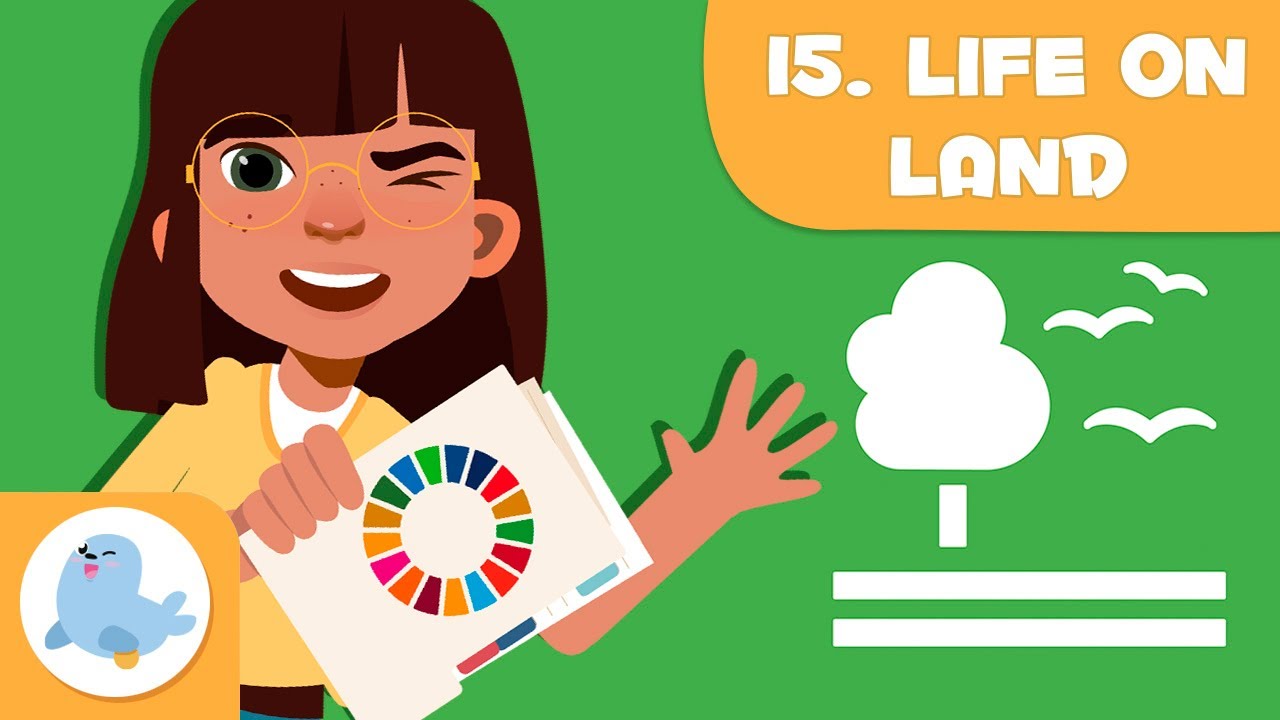
Educational video for children that talks about the fifteenth of the Sustainable Development Goals (SDGs), life on land. An ecosystem is a community of living beings and the physical characteristics of the environment where they live. On planet Earth there are many types of ecosystems, both aquatic and terrestrial. Terrestrial ecosystems are those that occur on land masses such as continents or islands such as deserts, forests or jungles. Forests help to clean up air pollution and are home to more than 80% of all terrestrial species of animals, plants and insects. Millions of people living in or near forests depend on them for their livelihoods. Due to human activity, some 13 million hectares of forest disappear every year, putting the preservation of biodiversity at risk. This is one of the reasons why it is so important to promote sustainable forest management, in addition to controlling logging.
This video is a very useful and interesting resource for children. It is perfect for teaching what the Sustainable Development Goals are. It is an excellent video for primary education.
Thanks for visiting us! If you want your children to smile and learn, subscribe! :D
If you like our videos, download Smile and Learn now. You’ll discover thousands of activities for children aged 3 to 12 years, all designed by educators. We have hundreds of games, interactive stories and videos in five languages: English, Spanish, Portuguese, Italian, Turkish and French. Try a month for free and start the adventure!
www.smileandlearn.com

Educational video for children in which children will learn the /h/ sound in English. Little ones will discover how to pronounce the sound of the letter H through a fun song and numerous examples alongside our favorite seal, Feli. Phonics is a very successful method used to teach reading through letter sounds. In this simple video for children who are beginning to read, we work on phonemic awareness and phonological awareness, two important skills for early readers and young children who are developing reading skills. It is an interactive video that asks viewers to participate by singing and repeating the sounds along with Feli.
This video is a very useful and interesting resource for children to learn the sounds of the English language. It is an excellent video for preschool, primary, and bilingual education.
Thanks for visiting us! If you want your children to smile and learn, subscribe! :D
If you like our videos, download Smile and Learn now. You’ll discover thousands of activities for children aged 3 to 12 years, all designed by educators. We have hundreds of games, interactive stories and videos in five languages: English, Spanish, Portuguese, Italian, Turkish and French. Try a month for free and start the adventure!
www.smileandlearn.com

Educational video for children to learn the number 1. The little ones will learn how to trace number 1, how to pronounce it and also how to count with a series of super fun examples. How many fish are there in the fishbowl? How many candles are there on the cake? Besides, at the of the video children will be able to enjoy singing a song. How about learning to count all together?
This video belongs to a larger collection of numbers videos for children to learn how to count in a fun way. It's an excellent resource for Preschool Education.
Thanks for visiting us! If you want your children to smile and learn, subscribe! :D
We only upload our own content, designed by educators so that children smile and learn while watching a video.
All of our content reinforces educational values, encouraging the use of multiple intelligences and language learning.
If you like our videos, download “The Smart Library” now. You’ll discover more than 70 interactive games and stories for children designed by educators. The stories are based on VALUES like friendship, respect, and generosity, and our games cover all of the MULTIPLE INTELLIGENCES. All our content is in SPANISH, ENGLISH, FRENCH, ITALIAN and PORTUGUESE.

Educational video for children to learn color purple. The little ones will learn how to pronounce the word "purple" and will watch super fun examples of purple objects. They will also try to spot purple objects to learn how to distinguish this color. At the end of the video, children will enjoy singing a song. Let's learn the colors together! This video is part of a collection of colors videos for children, to learn colors in a fun way. Excellent resource for preschool education.
Thanks for visiting us! If you want your children to smile and learn, subscribe! :D
We only upload our own content, designed by educators so that children smile and learn while watching a video.
All of our content reinforces educational values, encouraging the use of multiple intelligences and language learning.
If you like our videos, download Smile and Learn now. You’ll discover more than 5.000 activities for children aged 3 to 12 years, all designed by educators. We have 250 games and interactive stories and over 280 videos in five languages: English, Spanish, Portuguese, Italian and French. Try a month for free and start the adventure!

An educational video for kids about Mexico City. Kids will learn about the most important buildings like El Zócalo or the Teotihuacan Pyramids, and people like Frida Kahlo.
Thanks for visiting us! If you want kids to smile and learn SUBSCRIBE! :D
Lola and Javi have to do a project for school about their family. Thanks to their dad and a family map, they will travel around the world, they will meet their relatives and visit incredible cities. They will learn interesting facts about building, people and the most famous customs. Thanks to this educational video for kids, they will learn about geography and different members of the family.
Why is it good for children to see Smile and Learn’s videos?
+We only upload our own content, designed by educators so that children smile and learn while watching a video.
+All of our content reinforces educational values, encouraging the use of multiple intelligences and language learning.
*If you like our videos, download “The Smart Library” now. You’ll discover more than 30 interactive games and stories for children designed by educators. The stories are based on VALUES like friendship, respect, and generosity, and our games cover all of the MULTIPLE INTELLIGENCES. All our content is in SPANISH, ENGLISH, and FRENCH.
The perfect tool to use in and out of school.
Download it today!
-Apple Store: http://bit.ly/Biblioteca_Intel....igente_SmileandLearn
-Google Play: http://bit.ly/Biblioteca_Inteligente_GooglePlay
For more information, visit our website: https://smileandlearn.net/
If you want the latest news and new stories or games:
Follow us on:
+Facebook: https://www.facebook.com/Smileandlearn
+Instagram: https://www.instagram.com/smileandlearnapp/
+Twitter: https://twitter.com/smileandlearn
+Pinterest: https://es.pinterest.com/smileandlearn/
Thank you for trusting us with your children's education!

Educational video for children to learn what synonyms are, with the help of our friends, Hippo and Mouse. These two funny characters will be explaining that synonyms are words that have the same o similar meaning; and they'll play together to practice what they learned. Excellent resource for preschool education.
Thanks for visiting us! If you want your children to smile and learn, subscribe! :D
We only upload our own content, designed by educators so that children smile and learn while watching a video.
All of our content reinforces educational values, encouraging the use of multiple intelligences and language learning.
If you like our videos, download Smile and Learn now. You’ll discover more than 5.000 activities for children aged 3 to 12 yeards, all designed by educators. We have 250 games and interactive stories and over 280 videos in five languages: English, Spanish, Portuguese, Italian and French. Try a month for free and start the adventure!

Educational video for children to learn what empathy is and how to practice it following easy examples. First, they will be given the definition of empathy. And then, they will look at situations in their everyday lives in school to understand better what empathy means and learn how to put themselves in the position of others. This video is an excellent resource to work with emotions, for both preschool education and elementary school.
Thanks for visiting us! If you want your children to smile and learn, subscribe! :D
We only upload our own content, designed by educators so that children smile and learn while watching a video.
All of our content reinforces educational values, encouraging the use of multiple intelligences and language learning.
If you like our videos, download Smile and Learn now. You’ll discover more than 5.000 activities for children aged 3 to 12 yeards, all designed by educators. We have 250 games and interactive stories and over 280 videos in five languages: English, Spanish, Portuguese, Italian and French. Try a month for free and start the adventure!