סרטונים מובילים

🚀 Become an AI Master – All-in-one AI Learning https://aimaster.me/pro
These AI tools can replace ChatGPT now! In this video, I have collected for you the best neural networks that can shock you with their capabilities! They can destroy ChatGPT, because they can do much more than this neural network! Artificial intelligence is developing faster and faster every month, new platforms and AI tools have already begun to appear, which cannot but shock with their functionality! So I advise you to watch this video from beginning to end to learn about the best AI tools that are better than ChatGPT!
Learn more about Abacus here! http://chatllm.abacus.ai
🚀 Become an AI Master – All-in-one AI Learning https://aimaster.me/pro
In this video, I explore Abacus ChatLLM Teams — a powerful AI tool that brings all your favorite Large Language Models (LLMs) under one roof. Whether it's Llama, ChatGPT, or Claude Sonnet, you can easily switch between them without the hassle of multiple subscriptions. I dive into how Abacus simplifies tasks like image analysis, coding, data processing, and even building custom chatbots and AI agents, making it an excellent choice for individuals and teams alike.

🚀 Become an AI Master – All-in-one AI Learning https://aimaster.me/pro
Tune in with me as I delve deep into the expansive universe of ChatGPT plugins through this in-depth review! I've put every plugin to the test - from video analysis tools to link readers, and everything that falls in the middle. Uncover the plugins that shine, the ones that disappoint, and those that are absolutely worth giving a shot. Regardless of whether you're an experienced AI aficionado or a novice just dipping your toes in, this video is brimming with revelations you can't afford to skip. Stay with us to learn which ChatGPT plugin emerges victorious.

🚀 Become an AI Master – All-in-one AI Learning https://aimaster.me/pro
Try Filmora on Desktop 🖥: https://bit.ly/3SpYjxi
Try Filmora on Mobile🎊: https://bit.ly/48FPFjY
This Unknown AI Tool is Going Crazy! In this video, we take a look at brand new AI tools. In this top will be neural networks for content creation, text writing and maybe even video makers. All of these tools are aimed at saving you time and maybe even making real money! Watch this video until the end to finally get rid of ChatGPT :D
![I Tried 500+ AI Tools and Here is The Best! [2023]](https://i.ytimg.com/vi/GgMMp90CEqM/maxresdefault.jpg)
🚀 Become an AI Master – All-in-one AI Learning https://aimaster.me/pro
In the new video, we're going to take a look at the really best ai tools. There are over 100 ai tools released for the whole year 2023, but not all of them are cool. However, we've picked the best ones in several categories at once: working with text, generating images, creating music with AI, the best video editors, and more. Watch the video to the end, because the list is very interesting!
00:00 - Intro
00:16 - AI Text Editor 1
01:25 - AI Text Editor 2
02:52 - AI Text Editor 3
03:48 - AI Image Generator 1
04:42 - AI Image Generator 2
05:41 - AI Image Upscaler
06:52 - AI Product Photography
07:36 - AI Video Editor
09:06 - AI Video Generator 1
10:13 - AI Video Generator 2
11:17 - AI Text-Audio Generator
12:28 - AI Music Generator
13:36 - AI Business Assistant
14:36 - AI Website Generators
17:02 - More AI Tools

En nuestro canal encontrarás un curso completo y gratuito de español (español como lengua extranjera) para principiantes y avanzados. Te prepara para el examen español DELE. En los videos aprenderás español a través de imágenes, diálogos, escuchar y hablar español.
Please Learn, Like, Comment and Subscribe! Don't forget to Turn on Notifications. 🔔
Continúa el amor entre Sergio y Andrea.
Esta vez se van de vacaciones.
Aprenderemos un montón de vocabulario relacionado con las vacaciones y los viajes.
Objetos típicos que se guardan en la maleta, medios de transporte, documentación para los viajes y vocabulario relacionado con el aeropuerto.
Vocabulario sobre los viajes en avión. Diálogos para viajar en avión.
Diálogos típicos entre parejas, diálogos típicos de vacaciones y diálogos con el personal del aeropuerto.
Recuerda que si quieres aprender español con nuestro canal te recomendamos suscribirte y encender las notificaciones. Un nuevo video cada domingo. 🔔
Clase 75

Español nivel intermedio A2, B1. Preguntas indirectas. Alternativas. Porque, cuando, que. / Clase 42
En esta clase: Español nivel intermedio A2, B1 con diálogos y preguntas directas e indirectas. Aprende español de manera divertida con nuestros videos interactivos.
¿Dónde estas?, ¿Qué harás el fin de semana?, ¿Sabes dónde esta mi móvil?, ¿Por qué viniste a España?, ¿Por qué estas feliz? un video lleno de preguntas directas e indirectas y muchas respuestas posibles para que practiques tu vocabulario.
Videos para aprender español

Viajar en un tren de alta velocidad es una experiencia que no se olvida fácilmente.
En este nuevo vídeo aprenderemos un montón de vocabulario relacionado con los viajes y la alta velocidad.
Nuestros protagonistas se van de viaje y deciden hacerlo en el AVE (alta velocidad española)
Aprenderemos vocabulario sobre las estaciones, los viajes, movilidad y hasta algunas curiosidades de los trenes que quizás no conocías.
00:00 Inicio del video
00:26 De viaje a la estación
00:45 ¿Cómo puede ser el AVE más rápido que el avión para viajes cortos?
01:25 Parece haber un accidente
02:06 ¡Por fin! La estación
02:55 Mira, ahí está la cola
03:25 Control de seguridad
04:48 ¿Puedo ver sus billetes?
05:13 Que forma más rara tiene el tren ¿por que será?
05:55 Bienvenidos a bordo
06:10 ¡Ya vamos a 240 kilómetros por hora!
06:31 ¿Hay bar en el tren?
06:45 Un agua y dos cervezas por favor
06:58 Ha sido muy divertido
07:27 ¿y tú? ¿Has viajado ya en un tren de alta velocidad?
07:37 Suscríbete a nuestro canal
En nuestro canal encontrarás un curso completo y gratuito de español (español como lengua extranjera) para principiantes y avanzados. Te prepara para el examen español DELE. En los videos aprenderás español a través de imágenes, diálogos, escuchar y hablar español.
Si quieres aprender más vocabulario para viajar: https://youtu.be/HS1AT2YnFDI
#clasedeespañol 167
Recuerda suscribirte a nuestro canal y activar las notificaciones 🔔

Carla esta aburrida y decide buscar nuevos amigos en internet.
Prueba una app para citas y descubre un montón de posibles amigos.
Hace una pequeña descripción de cada uno de ellos, por lo que aprenderás a describir el perfil de las personas.
Habla sobre las características de cada uno y podrás aprender diferentes características de las personas.
Describir personas
Características de las personas
Valorar perfiles de apps de citas
En la aplicación encuentra a su compañero Miguel y decide escribirle. Miguel responde rápidamente y tienen una breve conversación.
Quedan para un programa al día siguiente. Miguel le da opciones y Carla acepta sus propuestas.
Mientras tanto Carla recibe mensajes de otros usuarios de la aplicación.
/ Clase 107
Y tu ¿Usas aplicaciones de citas?
Recuerda suscribirte a nuestro canal 🔔

En este nuevo vídeo veremos cómo rechazar planes o propuestas.
Cuando te hacen una propuesta es importante que conozcas el vocabulario para rechazarla si eso es lo que quieres o tienes que hacer.
En este vídeo para aprender español aprenderemos cómo se hacen las propuestas y excusas o motivos para rechazarlas.
Aprender a decir que no es muy importante para que no te sientas incómodo / a con las propuestas o cosas que te dicen.
Una buena oportunidad también para aprender diálogos y vocabulario para poner excusas o rechazar planes o propuestas.
No olvides activar las notificaciones si quieres que te avisemos de cada nuevo vídeo🔔
Clase 81

En esta nueva clase de español, aprenderemos palabras y frases esenciales que te ayudarán a desenvolverte sin problemas en el aeropuerto y durante tus viajes.
00:02 Comenzamos con el "boleto de avión".¿Tienes tu boleto de avión listo? Asegúrate de tenerlo en mano porque lo necesitas para abordar.
00:35 Luego, hablamos del "pasaporte", una pieza clave si sales de la Comunidad Europea. Es tu identificación internacional, así que no lo olvides en casa. ¡El pasaporte es necesario para ingresar a otro país!
01:11 El "control de seguridad" es una etapa crítica en el aeropuerto. Todos los pasajeros deben pasar por aquí. Asegúrate de tener tus objetos listos para que el proceso sea rápido y eficiente.
01:50 Tener una "maleta" adecuada es importante. Puedes llevar una "maleta de mano" en el avión, generalmente en el compartimento superior. Algunas aerolíneas tienen restricciones de tamaño
02:25 Recogerás tu equipaje en la "cinta transportadora de equipaje". Cada aeropuerto tiene su propio sistema. ¡Atentos! El número de cinta te indicará dónde encontrar tus pertenencias.
03:03 La "terminal" es el punto de partida de tu viaje. Nos encontraremos allí antes de abordar el avión. ¿Sabes en qué terminal te toca estar?
03:34 Para hacer el "check-in", debes dirigirte al "mostrador de la aerolínea". Recuerda que abre dos horas antes del vuelo. Esto es vital para asegurar tu asiento.
04:12 Dentro del avión, encontrarás el "pasillo del avión", que permite el movimiento de los pasajeros. Tu asiento podría estar en el pasillo o junto a la ventana. ¡Tú eliges!
04:49 Escucharás el "anuncio de vuelo" para conocer la "puerta de abordaje". ¡Este anuncio es importante! Asegúrate de estar atento para no perder tu vuelo.
05:25 El "control de pasaportes" es otro paso crucial en vuelos internacionales. Debes mostrar tu pasaporte para verificar tu identidad antes de salir del país.
06:01 Realiza tu "check-in" antes de abordar, ya sea en línea o en el "mostrador de la aerolínea". Este proceso es fundamental para asegurar tu lugar en el vuelo.
06:35 Hablemos de la "salida de emergencia". Es un punto crucial en caso de evacuación. ¿Sabes dónde está ubicada en el avión? Presta atención a las instrucciones de la tripulación.
07:15 Y finalmente, mencionamos a la "azafata", quien te atenderá durante el vuelo. Estas profesionales se encargan de ofrecerte bebidas y comida a bordo, asegurando que tengas un viaje cómodo.
07:49 Suscríbete y fin del vídeo.
Suscríbete a nuestro canal ✍, dale al like 👍 y activa las notificaciones🔔 para no perderte ningún nuevo vídeo!
Suscribirse:https://www.youtube.com/Aprend....erespañolonline?sub_ 🔔
✅ Curso de español para principiantes: https://youtube.com/playlist?l....ist=PLyhXDeW_WjhBv8b
✅ Español nivel intermedio: https://youtube.com/playlist?l....ist=PLyhXDeW_WjhAlQR
✅ Verbos en español: https://youtube.com/playlist?l....ist=PLyhXDeW_WjhDyOv
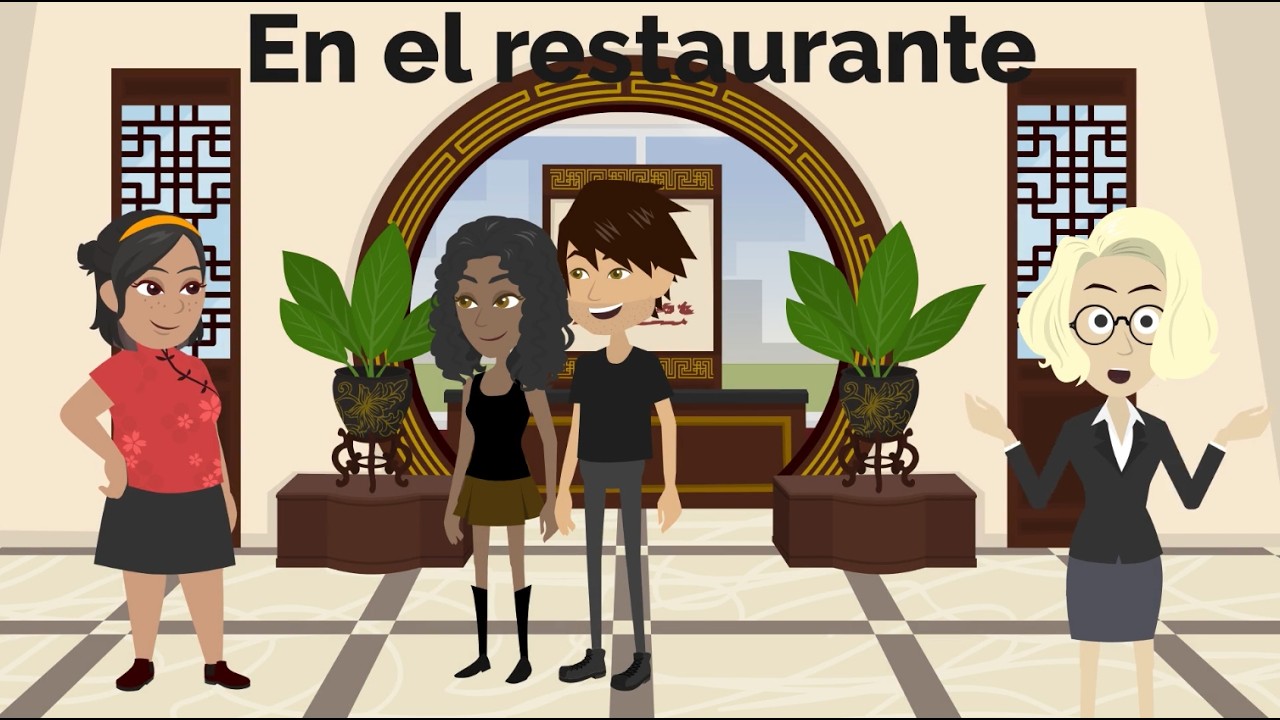
En este video, exploramos conversaciones cotidianas en tres situaciones diferentes: un café, un hotel y un restaurante. Aprenderás vocabulario y expresiones útiles para pedir bebidas, reservar mesas, hacer recomendaciones y más. ¡Practica tu escucha, habla y gramática con nosotros!
Temas destacados del video:
• 1. En el café 00:38
👉 Vocabulario clave:
Café helado: Iced coffee.
Leche desnatada: Skim milk.
Cappuccino: Cappuccino.
Donut: Donut.
Tarta de limón: Lemon cake.
🗣️ Expresiones útiles:
"Me gustaría dos bebidas para llevar": I would like two drinks to go.
"¿Qué tipo de leche prefieres?": What type of milk do you prefer?
"¿Cuánto es el total?": How much is the total?
💡 Tiempos verbales:
Presente simple: "Prefieres" (You prefer), "tomaré" (I will take).
Condicional: "Me gustaría" (I would like).
• 2. En el hotel 03:29
👉 Vocabulario clave:
Estancia: Stay.
Acogedor/a: Cozy.
Vista: View.
Vegetariano/a: Vegetarian.
Reserva: Reservation.
🗣️ Expresiones útiles:
"¿Qué tal está siendo su estancia?": How is your stay going?
"Nos gustaría salir a comer": We would like to go out to eat.
"¿Pueden organizar también un taxi?": Can you also arrange a taxi?
💡 Tiempos verbales:
Presente continuo: "Está siendo" (It is being).
Futuro simple: "Organizaré" (I will arrange).
• 3. En el restaurante 07:15
👉 Vocabulario clave:
Reserva: Reservation.
Menú: Menu.
Tetera: Teapot.
Wok de verduras: Vegetable stir-fry.
Salmón: Salmon.
🗣️ Expresiones útiles:
"Hemos reservado una mesa": We have reserved a table.
"¿Están listos para pedir?": Are you ready to order?
"Tomaré el plato de salmón": I will have the salmon dish.
💡 Tiempos verbales:
Pretérito perfecto: "Hemos reservado" (We have reserved).
Futuro simple: "Tomaré" (I will take).
Resumen de Aprendizaje
✅ Vocabulario: Aprendemos palabras relacionadas con cafés, hoteles y restaurantes.
✅ Expresiones clave: Frases útiles para pedir, recomendar y reservar.
✅ Tiempos verbales: Practicamos el presente simple, pretérito perfecto y futuro simple.
Preguntas para Practicar
¿Qué bebidas sueles pedir en un café? ¿Prefieres leche normal o vegetal?
¿Qué tipo de restaurante te gusta más? ¿Por qué?
¿Cómo pides una mesa en un restaurante en español?
Cierre para Suscribirse
🎥 ¡No te pierdas nuestros próximos videos!
👉 Si te gustó este video y quieres seguir aprendiendo español de una manera divertida y fácil, ¡suscríbete a nuestro canal y activa la campanita de notificaciones! 🔔 Así estarás al tanto de todos nuestros nuevos contenidos.
🌟 ¿Por qué suscribirte?
Aprenderás nuevo vocabulario y expresiones útiles.
Mejorarás tu comprensión auditiva y pronunciación.
¡Y lo más importante! Te divertirás mientras aprendes.
💬 ¡Nos encanta leer tus comentarios!
Déjanos un comentario contándonos qué parte del video te gustó más o qué temas te gustaría ver en el futuro. ¡Tu opinión es muy importante para nosotros!
🚀 ¡Únete a nuestra comunidad de estudiantes de español!
Juntos podemos hacer que aprender español sea una experiencia increíble. ¡Nos vemos en el próximo video! 😊

En esta nueva clase de español, vamos a aprender gramática.
Además de practicar diálogos, como en casi todos nuestros vídeos, veremos el modo subjuntivo.
El modo subjuntivo es un modo gramatical, que se utiliza para expresar acciones que no están ocurriendo, sino que podrían pasar o haber pasado o acciones deseadas.
Sobre todo en este vídeo veremos el pretérito, acciones que podrían haber pasado.
Por ejemplo:
Si no hubiera tenido dolor, sin duda me habría convertido en futbolista profesional.
Si me hubiese convertido en futbolista profesional, habría conocido a muchos jugadores.
Si el torneo hubiera sido el año pasado, habría ido a todos los partidos del Real Madrid.
Es un modo verbal que a muchos les parece un poco difícil, ya lo trataremos con más profundidad lo importante es que empieces a familiarizarte con él y practiques los diálogos.
Hasta el próximo domingo!
/ Clase 114
Recuerda suscribirte a nuestro canal! 🔔

En la clase de español de hoy veremos una serie de diálogos que ocurren en diferentes tiendas como la verdulería, la pescadería, la carnicería, la quesería, la fruría y la panadería.
Nuestra protagonista está haciendo las compras para el día y conversa con los tenderos sobre lo que necesita, lo que esta disponible y el precio de los artículos.
Un vídeo esencial para aprender diálogos sonre las compras del día y como poder comprar productos básicos como pan, frutas, verduras, queso y otros productos.
Los diálogos entre la clienta y el tendero te ayudarán a hacer las compras esenciales en español.
00:00 Las comparas del día inica.
00:03 Comparar en la verdulería.
01:45 Comprar en la pescadería.
03:19 Comprar en la carnicería.
05:16 Comprar en la quesería
06:56 Comprar en la frutería
08:50 Comprar en la panadería
10:52 Comprar en la pastelería
12:47 ¿Quieres aprender español de manera fácil y divertida?
12:55 Suscríbete y fin del video.
Para nuestros más fieles seguidores ¿Podéis distinguir a protagonistas de otras historias en este vídeo? ¿cuáles?.
Suscríbete a nuestro canal si quieres aprender aspañol! 🔔
Suscribirse:https://www.youtube.com/Aprend....erespañolonline?sub_
Lista principiantes
✅ Curso de español para principiantes: https://youtube.com/playlist?l....ist=PLyhXDeW_WjhBv8b
✅ Español nivel intermedio: https://youtube.com/playlist?l....ist=PLyhXDeW_WjhAlQR
✅ Verbos en español: https://youtube.com/playlist?l....ist=PLyhXDeW_WjhDyOv

En este video para parender español , seguimos a Ana y Pedro en su emocionante aventura de acampada. Desde los preparativos en casa hasta la llegada al campamento y la resolución de problemas en el camino, el video muestra una serie de situaciones cotidianas que ayudan a aprender vocabulario y verbos específicos relacionados con la acampada y las herramientas.
Frases Clave:
Preparativos en Casa:
“¿Tienes todo listo para la acampada?”
“Solo me falta encontrar las cerillas y la brújula.”
“¿Dónde están las cerillas?”
Llegada al Lugar de Acampada:
“Este lugar es perfecto.”
“Vamos a montar la tienda de acampada primero.”
“¿Has revisado las pilas?”
Preparando la Fogata:
“Voy a usar las cerillas para encenderlo.”
“Aquí tienes el hacha.”
“Tenemos una buena fogata.”
Noche en la Acampada:
“Me encanta cómo se ve el fuego.”
“Voy a sacar la comida.”
Problemas con la Brújula:
“Será todo un desafío.”
“Quizás debamos probarla para estar seguros que funciona.”
Problema en el Camino:
“Allí delante hay un río con una fuerte corriente.”
“Cruzaremos a pie, pero ataremos un extremo de la cuerda a ese árbol.”
El Lago:
“¡Lo hicimos! Llegamos al lago.”
“El sol comienza a bajar, deberíamos comenzar a volver.”
Noche en el Campamento:
“Voy a avivar el fuego para cocinar algo de cena.”
“Solo nos queda disfrutar de la noche.”
Tiempos Verbales y Estructura Gramatical:
Presente Indicativo:
“Tengo todo listo para la acampada.”
“Voy a usar las cerillas.”
Imperativo:
“Vamos a montar la tienda.”
“Pasa el hacha.”
Futuro Próximo:
“Voy a recoger algunas ramas.”
“Vamos a tener un refugio.”
Presente Perfecto:
“He comprado pilas nuevas.”
“Has revisado las pilas.”
Pretérito Indefinido:
“Estaban en la cocina.”
“Llegamos justo a tiempo.”
Análisis del vídeo:
Escena 1: Preparativos en Casa
Objetos: cerillas, brújula, cuerda, linterna, hacha, sacos de dormir, tienda de acampada, botas de montaña.
Acciones: encontrar, meter, revisar, buscar.
Frases Clave: “¿Tienes todo listo para la acampada?”, “Solo me falta encontrar las cerillas y la brújula.”
Escena 2: Llegada al Lugar de Acampada
Acciones: montar, asegurar, recoger, preparar.
Frases Clave: “Vamos a montar la tienda de acampada primero”, “¿Has revisado las pilas?”
Escena 3: Preparando la Fogata
Objetos: ramas, cerillas, hacha.
Acciones: usar, encender, cortar, buscar.
Frases Clave: “Voy a usar las cerillas para encenderlo”, “Tenemos una buena fogata.”
Escena 4: Noche en la Acampada
Objetos: fogata, linterna, comida.
Acciones: mirar, encender, hacer, sacar.
Frases Clave: “Me encanta cómo se ve el fuego”, “Voy a sacar la comida.”
Escena 5: Problemas con la Brújula
Objetos: brújula.
Acciones: probar, confirmar.
Frases Clave: “Será todo un desafío”, “Quizás debamos probarla para estar seguros que funciona.”
Escena 6: Problema en el Camino
Objetos: cuerda, árbol.
Acciones: cruzar, atar, ir.
Frases Clave: “Allí delante hay un río con una fuerte corriente”, “Cruzaremos a pie, pero ataremos
un extremo de la cuerda a ese árbol.”
Escena 7: El Lago
Acciones: llegar, descansar, bañarse, volver.
Frases Clave: “¡Lo hicimos! Llegamos al lago”, “El sol comienza a bajar, deberíamos comenzar a volver.”
Escena 8: Noche en el Campamento
Objetos: fogata, sacos de dormir.
Acciones: avivar, cocinar, preparar.
Frases Clave: “Voy a avivar el fuego para cocinar algo de cena”, “Solo nos queda disfrutar de la noche.”
¡Suscríbete ✍, dale al like 👍 y activa la 🔔 para no perderte ningún video!

¡Bienvenidos! 😊 En este video aprenderás cómo expresar tus emociones en español usando adjetivos. ¿Te has preguntado cómo decir que estás feliz, triste, emocionado o nervioso? ¡Aquí te lo explicamos de forma sencilla y práctica!
Acompáñanos mientras repasamos algunos de los adjetivos más comunes para describir sentimientos y estados de ánimo, además de cómo usarlos correctamente con el verbo estar.
Este video es perfecto para quienes quieren mejorar su vocabulario en español y aprender a hablar sobre sus emociones en situaciones cotidianas. ¡No te lo pierdas!
Ideal para estudiantes de todos los niveles que quieran aprender español de manera interactiva y divertida. 🔥
📌 Temas cubiertos:
Cómo usar el verbo "estar" con adjetivos
Frases y vocabulario emocional en español
Expresiones comunes para describir sentimientos
Puntos clave:
Verbo "estar" + adjetivos:
Usamos estar con adjetivos para hablar de emociones y estados temporales (feliz, preocupado, cansado).
Es importante que el adjetivo concuerde en género (masculino/femenino) y número (singular/plural).
Adjetivos emocionales comunes:
Feliz (neutral, no cambia de género)
Preocupado/a (preocupados/as)
Cansado/a (cansados/as)
Enamorado/a
Emocionado/a
Triste (neutral, no cambia de género)
Emociones opuestas:
Feliz vs. Triste
Emocionado vs. Aburrido
Nervioso vs. Calmado
Intensificadores:
Muy: "Estoy muy cansada."
Un poco: "Estoy un poco preocupada."
Bastante: "Estoy bastante nerviosa."
Cambios de estado emocional:
A lo largo del día, las emociones pueden cambiar. Usar expresiones como:
"Primero estaba emocionada, luego preocupada."
"Ahora me siento aliviada."
Tiempos verbales:
En este video, la mayoría de las frases están en presente, que es el tiempo verbal más común cuando describimos cómo nos sentimos en el momento actual:
"Estoy" (del verbo estar) es la forma presente.
Si quisieran hablar de emociones pasadas, dirían "Estaba" (imperfecto).
Sugerencia para práctica:
Intenta escribir cómo te sientes hoy usando los adjetivos que vimos en el video y completa esta frase en los comentarios:
Hoy estoy....

¿Qué hay en mi bolso? - Clase de español
En esa nueva clase de español aprenderemos el nombre de objetos del día a día y que se suelen llevar en el bolso.
Objetos de la vida cotidiana que veremos en el video:
Bolso de mujer:
- Cartera
- Móvil
- Desinfectante de manos
- Crema de manos
- Pañuelos de papel
- Espejo de mano
- Barra de labios
- Cinta para el pelo
- Gafas de sol
- Bocadillo
- Algo de beber
Mochila:
- Portatil
- Cargador
- Agenda
- Cuaderno
- Estuche con lápices de diferentes colores
Riñonera:
- Móvil
- Dinero
- Llaves de casa
Bolsa de deporte:
- Camiseta
- Pantalones deportivos
- Short
- Sujetador deportivo
- Sudadera
- Botella de agua
- Toalla
- Champú y acondicionador
- Cepillo
- Pequeño secador de pelo
Bolsa de algodón para el parque:
- Libros
- Tablet
- Túper
¿Y tú, qué llevas siempre contigo?
Capítulos:
00:00 Inicio objetos de la vida cotidiana
00:03 Bolso de mujer
01:53 Bolso de mujer más grande
03:27 Mochila
05:11 Riñonera
06:48 Bolsa de deporte
08:16 Bolsa de algodón para el parque
Más videos para Aprender español nivel A1:
https://youtube.com/playlist?l....ist=PLyhXDeW_WjhBv8b
En nuestro canal encontrarás un curso completo y gratuito de español (español como lengua extranjera) para principiantes y avanzados. En los videos aprenderás español a través de imágenes, diálogos, escuchar y hablar español.
Suscríbete a nuestro canal:
https://www.youtube.com/Aprend....erespañolonline?sub_
Recuerda activar las notificaciones para que te avisemos de cada nuevo vídeo 🔔

En este nuevo vídeo para aprender español, te enseñaremos los saludos básicos en español, así como las conversaciones cotidianas que te ayudarán a desenvolverte en situaciones de la vida real.
Aprenderás cómo saludar de manera formal e informal, cómo realizar compras en una tienda, hacer pedidos en un restaurante y pedir indicaciones en la calle.
Capítulos:
00:00 Saludar en Español comienza
00:10 Saludos formales
01:01 Saludos en confianza
01:52 Despedidas
03:00 Conversaciones cotidianas
03:07 En una tienda
04:08 En un restaurante
05:29 En la calle
07:20 Algunos ejemplos
09:16 Suscríbete y fin del vídeo
Aclaración: En el minuto https://youtu.be/bXyIi19UMmY?t=80 la expresión "¡Hombre, cuánto tiempo!" se utiliza coloquialmente para saludar a alguien a quien no has visto en mucho tiempo y no está restringida por el género. Puede ser utilizada tanto para saludar a hombres como a mujeres. Es una forma amigable y familiar de expresar sorpresa y alegría por encontrarse con alguien después de un largo período de tiempo.
Suscríbete a nuestro canal ✍, dale al like 👍 y activa las notificaciones🔔 para no perderte ningún nuevo vídeo!

Cómo decir la hora en español:
En esta clase de español aprenderemos a pedir y dar la hora, además de algunos trucos para que sepas dar la hora como un nativo.
Las partes del reloj: https://youtu.be/JFjW5pl0qRA?t=22
La aguja pequeña marca las horas.
La aguja grande marca los minutos.
En algunos relojes también hay una aguja más fina que va más rápido y marca los segundos.
¿Qué hora es?
Son las ocho en punto: https://youtu.be/JFjW5pl0qRA?t=88
Se dice "en punto" cuando la hora acaba de comenzar y estamos en el minuto 00 de la misma. Es decir, la aguja de los minutos se encuentra en el número 12
¿Cómo sabemos que son las 8 en punto? https://youtu.be/JFjW5pl0qRA?t=126
Son las once y cuarto: https://youtu.be/JFjW5pl0qRA?t=193
Se dice "y cuarto" cuando la hora ha empezado hace un cuarto de hora. Si la hora tiene 60 minutos, son cuatro veces 15 minutos, por lo que si han pasado 15 minutos desde que empezó la hora, ha pasado un cuarto de hora.
¿Cómo sabemos que son las 11 y cuarto? https://youtu.be/JFjW5pl0qRA?t=233
Son las dos y media: https://youtu.be/JFjW5pl0qRA?t=310
Se dice "y media" cuando ya ha pasado media hora, es decir que la aguja grande se encuentra en el 6, la mitad de la vuelta completa.
¿Cómo sabemos que son las 2 y media? https://youtu.be/JFjW5pl0qRA?t=333
Son las once menos cuarto (de la noche): https://youtu.be/JFjW5pl0qRA?t=387
Como hemos visto antes, si faltan 15 minutos para que sean las 11, también se podría decir que falta un cuarto de hora para las once, por lo tanto: son las once menos cuarto.
¿Cómo sabemos que son las 11 menos cuarto? https://youtu.be/JFjW5pl0qRA?t=434
Más ejemplos de cómo dar las horas:
Las tres y cinco: https://youtu.be/JFjW5pl0qRA?t=498
Las cuatro y diez: https://youtu.be/JFjW5pl0qRA?t=507
Las diez y cuarto (también es correcto decir que son las diez y quince): https://youtu.be/JFjW5pl0qRA?t=517
Las ocho y veinte: https://youtu.be/JFjW5pl0qRA?t=535
Las siete y veinticinco: https://youtu.be/JFjW5pl0qRA?t=545
Las once y media: https://youtu.be/JFjW5pl0qRA?t=555
Las doce y treinta y cinco: https://youtu.be/JFjW5pl0qRA?t=572
La una y cuarenta: https://youtu.be/JFjW5pl0qRA?t=587
Las dos menos cuarto: https://youtu.be/JFjW5pl0qRA?t=597
Las cuatro y cincuenta: https://youtu.be/JFjW5pl0qRA?t=617
Las seis y cincuenta y cinco: https://youtu.be/JFjW5pl0qRA?t=627
Las cinco en punto: https://youtu.be/JFjW5pl0qRA?t=637
¿Qué hora es ahora que estás mirando el video?
Deja tu hora actual en los comentarios para poder practicar como decir la hora en español.
/ Clase 145
Recuerda suscribirte y activar las notificaciones para recibir nuestras nuevas clases 🔔

En este nuevo video para aprender español, Carla nos comparte sus pasatiempos favoritos, lo que nos permite aprender vocabulario, expresiones clave y tiempos verbales útiles para hablar sobre nuestras actividades diarias y hobbies.
Estos son los temas destacados del video para que puedas repasar y practicar.
• 1. Conociendo a Carla 00:03
👉 Vocabulario clave:
Vivir sola: To live alone.
Gatos: Cats.
Compañía: Company.
Travesuras: Mischiefs.
Pendientes: Attentive, watching over.
🗣️ Expresiones útiles:
"No estoy realmente sola": I’m not really alone.
"Siempre me hacen compañía": They always keep me company.
"Nunca me dejan realmente sola": They never really leave me alone.
💡 Tiempos verbales:
Presente simple: "Vivo" (I live), "tengo" (I have), "hacen" (they do/make).
• 2. Yoga y relajación 01:10
👉 Vocabulario clave:
Pasatiempos: Hobbies.
Relajarme: To relax.
Desconectar: To disconnect.
Cuidar: To take care of.
Recomendar: To recommend.
🗣️ Expresiones útiles:
"Me dedico a relajarme": I dedicate myself to relaxing.
"Cuidar de mi cuerpo y mi mente": To take care of my body and mind.
"He hecho algunos amigos": I’ve made some friends.
Tiempos verbales:
Presente simple: "Voy" (I go), "es" (it is).
Pretérito perfecto: "He hecho" (I have made).
• 3. Disfrutando del verano: recitales al aire libre 01:50
👉 Vocabulario clave:
Recitales: Concerts.
Al aire libre: Outdoors.
Conciertos: Concerts.
Bajo las estrellas: Under the stars.
Suerte: Luck.
🗣️ Expresiones útiles:
"Me encanta ir a recitales": I love going to concerts.
"Disfruto de los conciertos": I enjoy the concerts.
"Hemos viajado por toda España": We have traveled all over Spain.
Tiempos verbales:
Presente simple: "Me encanta" (I love), "disfruto" (I enjoy).
Pretérito perfecto: "Hemos viajado" (We have traveled).
• 4. Netflix y noches tranquilas 02:54
👉 Vocabulario clave:
Quedarse en casa: To stay at home.
Películas: Movies.
Palomitas: Popcorn.
Acomodarse: To get comfortable.
Pedir comida: To order food.
🗣️ Expresiones útiles:
"Es nuestra manera de relajarnos": It’s our way of relaxing.
"Preparamos palomitas": We prepare popcorn.
"Si nos da hambre": If we get hungry.
💡 Tiempos verbales:
Presente simple: "Vemos" (We watch), "elegimos" (We choose).
Condicional: "Si nos da hambre" (If we get hungry).
5. Comer fuera y salir con amigas 03:54
👉 Vocabulario clave:
Probar: To try.
Descubrir: To discover.
Platos: Dishes.
Reírse: To laugh.
Desconectar: To disconnect.
🗣️ Expresiones útiles:
"Disfruto mucho salir a comer fuera": I really enjoy eating out.
"Me encanta probar nuevos restaurantes": I love trying new restaurants.
"Hablamos de todo un poco": We talk about a bit of everything.
💡 Tiempos verbales:
Presente simple: "Disfruto" (I enjoy), "salgo" (I go out).
Infinitivo: "Probar" (To try), "descubrir" (To discover).
Resumen de Aprendizaje
✅ Vocabulario: Aprendimos palabras relacionadas con hobbies, mascotas, comida y actividades sociales.
✅ Expresiones clave: Frases útiles para hablar sobre rutinas, gustos y preferencias.
✅ Tiempos verbales: Practicamos el presente simple, pretérito perfecto y condicional.
Preguntas para Practicar
¿Cuáles son tus pasatiempos favoritos?
¿Te gusta salir a comer fuera o prefieres cocinar en casa?
¿Qué haces para relajarte después del trabajo o el estudio?
¡Esperamos que esta guía te haya sido útil! No olvides practicar y compartir tus hobbies en los comentarios. ¡Hasta la próxima! 😊

En este nuevo video para aprender español, seguimos la conversación entre Sofía y Tom, dos vecinos que comparten sus rutinas diarias en español. Aprenderás:
📌 Vocabulario Clave:
Rutina matutina:
"Me he quedado dormido" (I overslept)
"Sacar al perro" (To walk the dog)
"Desayunar algo ligero" (To eat a light breakfast)
Consejos útiles:
"Acostarse temprano" (To go to bed early)
"Hacer estiramientos" (To stretch)
Expresiones de tiempo:
"Por los pelos" (Just in time)
"A medianoche" (At midnight)
🗣️ Diálogos Reales:
Tom (caótico):
"¡Uf, mi mañana ha sido un completo caos!"
"He salido pitando a la parada del bus."
Sofía (organizada):
"Hago 20 minutos de yoga o salgo a caminar."
"Voy al trabajo en bici."
⏰ Tiempos Verbales:
Pretérito perfecto: Acciones recientes ("He llegado", "Has hecho").
Presente simple: Hábitos ("Me levanto a las 6", "Tardo 15 minutos").
💡 ¡Practica con Estas Preguntas!
"¿Cómo es tu rutina por la mañana?"
"¿Qué consejo de Sofía te gustaría seguir?"
"¿A qué hora te acuestas normalmente?"
🌟 ¿Eres más como Tom o como Sofía? ¡Cuéntanos en los comentarios!
👇
🔔 ¡Suscríbete para más historias en español! Nuevos videos cada domingo. 🚀

En esta nueva clase de español, aprenderemos sobre las conjeturas y presentimientos en el tiempo futuro. ¿Qué pasa cuando no estamos seguros de lo que sucederá en el futuro? ¿Cómo podemos expresar nuestras predicciones o suposiciones en español? Veamos algunos ejemplos y practiquemos la forma correcta de usar estos tiempos verbales. ¡Asegúrate de seguir la clase para mejorar tu español y expresarte con confianza en el futuro!
Hemos marcado con color en los subtítulos integrados el verbo en tiempo futuro para que te sea más fácil reconocerlos.
00:00 Empieza la clase de español.
00:03 Martín aún no ha llegado, le habrá pasado algo
00:41 Probablemente estará en un atasco
01:20 No hay mucha gente en la cafetería hoy
01:31 Es viernes, muchos se irán a comer a casa
02:19 Emanuel está esperando a alguien
02:31 Seguramente tendrá una cita
03:00 Será una cita a siegas
03:12 ¿Cuántas calorías tendrá la hamburguesa?
03:57 Si sigo comiendo hamburguesas dejaré de estar delgada
04:10 Perderé el tren y llegaré tarde a casa
04:29 Los niños se quedarán con ganas de verte
05:05 ¿Me podrás tener listo el pedido a las 4?
05:54 ¿Puedo servirte algo?
06:04 Mi pareja llegará en pocos minutos
06:18 Les atenderé en cuanto venga
06:42 Tu coche estaba en muy mal estado
07:01 Te tocará venir un par de veces más
07:19 ¿Me dará problemas?
07:41 Prefiero pensar que funcionará
07:55 Si ganan el campeonato se pasarán 3 dias festejando
08:08 No será para menos
08:33 Ganaremos el Euromillones, ya lo verás
09:26 ¡Qué hotel más bonito!
09:35 La noche será carísima
09:46 Los huéspedes la pasarán genial
10:07 Quizás podremos premitírnoslo
10:21 Los robots y la IA reemplazarán muchos trabajos
10:37 Muchas personas perderán sus empleos
11:18 El cambio cimático no se arreglará en pocos años
11:31 Tendremos que hacer más sacrificios
11:42 A la gente no le gustará
12:05 Suscríbete y fin del vídeo.
En nuestro canal encontrarás un curso completo y gratuito de español (español como lengua extranjera) para principiantes y avanzados. Te prepara para el examen español DELE. En los videos aprenderás español a través de imágenes, diálogos, escuchar y hablar español.
https://www.youtube.com/Aprend....erespa%C3%B1olonline 🔔

En esta calse de español nivel A1, exploraremos una fiesta familiar.
Aprenderás a hablar sobre tus parientes y sus relaciones familiares, así como a utilizar preguntas y respuestas comunes para describir a tu familia.
Además, pondrás a prueba tus conocimientos con ejercicios interactivos y ejemplos prácticos.
Aprende un montón de vocabulario sobre la familia en español!!!
Suscribirse:https://www.youtube.com/Aprend....erespañolonline?sub_ 🔔
✅ Curso de español para principiantes: https://youtube.com/playlist?l....ist=PLyhXDeW_WjhBv8b
✅ Español nivel intermedio: https://youtube.com/playlist?l....ist=PLyhXDeW_WjhAlQR
✅ Verbos en español: https://youtube.com/playlist?l....ist=PLyhXDeW_WjhDyOv

¡Hola, estudiantes de español! En este nuevo video para aprender español, exploramos diálogos cotidianos en tres situaciones importantes: el supermercado, el transporte público y el restaurante. Aprenderás vocabulario y expresiones útiles para hacer compras, viajar y comer fuera. ¡Practica tu escucha, habla y gramática con nosotros!
Temas destacados del video:
• 1. En el supermercado 00:02
👉 Vocabulario clave:
Pan integral: Whole wheat bread.
Productos congelados: Frozen products.
Promoción: Promotion.
Frutas y verduras: Fruits and vegetables.
Recibo: Receipt.
🗣️ Expresiones útiles:
"¿Dónde están los productos congelados?": Where are the frozen products?
"¿Hay alguna promoción?": Is there any promotion?
"¿Puedo pagar con tarjeta?": Can I pay with a card?
💡 Tiempos verbales:
Presente simple: "Estoy buscando" (I am looking for), "cuesta" (It costs).
Imperativo: "Sírvete" (Help yourself).
• 2. En el transporte público 02:16
👉 Vocabulario clave:
Estación de tren: Train station.
Billete: Ticket.
Ida y vuelta: Round trip.
Paradas: Stops.
Asiento libre: Free seat.
🗣️ Expresiones útiles:
"¿Cuánto cuesta un billete?": How much is a ticket?
"¿Este tren va al aeropuerto?": Does this train go to the airport?
"¿Está libre este asiento?": Is this seat free?
💡 Tiempos verbales:
Presente simple: "Va" (It goes), "sale" (It leaves).
Futuro simple: "Vendré" (I will come).
• 3. En el restaurante 04:02
👉 Vocabulario clave:
Reserva: Reservation.
Menú: Menu.
Plato del día: Dish of the day.
Vegetariano/a: Vegetarian.
Cuenta: Bill.
🗣️ Expresiones útiles:
"Quisiera una mesa para dos": I would like a table for two.
"¿Cuál es el plato del día?": What is the dish of the day?
"La cuenta, por favor": The bill, please.
💡 Tiempos verbales:
Presente simple: "Tienen" (They have), "está" (It is).
Pretérito perfecto: "Ha gustado" (It has been liked).
Resumen de Aprendizaje
✅ Vocabulario: Aprendemos palabras relacionadas con compras, transporte y restaurantes.
✅ Expresiones clave: Frases útiles para hacer preguntas, pedir servicios y expresar preferencias.
✅ Tiempos verbales: Practicamos el presente simple, futuro simple y pretérito perfecto.
Preguntas para Practicar
¿Qué sueles comprar en el supermercado?
¿Prefieres el transporte público o el coche? ¿Por qué?
¿Qué platos sueles pedir en un restaurante?
🎥 ¡No te pierdas nuestros próximos videos!
👉 Si te gustó este video y quieres seguir aprendiendo español de una manera divertida y fácil, ¡suscríbete a nuestro canal y activa la campanita de notificaciones! 🔔 Así estarás al tanto de todos nuestros nuevos contenidos.
🌟 ¿Por qué suscribirte?
Aprenderás nuevo vocabulario y expresiones útiles.
Mejorarás tu comprensión auditiva y pronunciación.
¡Y lo más importante! Te divertirás mientras aprendes.
💬 ¡Nos encanta leer tus comentarios!
Déjanos un comentario contándonos qué parte del video te gustó más o qué temas te gustaría ver en el futuro. ¡Tu opinión es muy importante para nosotros!
🚀 ¡Únete a nuestra comunidad de estudiantes de español!
Juntos podemos hacer que aprender español sea una experiencia increíble. ¡Nos vemos en el próximo video! 😊