Top videos

En este video para aprender español, exploramos vocabulario esencial y situaciones comunes en una ciudad.
A través de diálogos cotidianos entre un hombre y una mujer, abordamos temas como el aparcamiento, carriles bici, buzones de correos, rotondas, pasos de cebra, semáforos, zonas peatonales, plazas y atascos.
Cada diálogo incluye frases típicas y lenguaje coloquial, ideal para estudiantes extranjeros que quieren mejorar su español.
Frases Importantes y Vocabulario:
00:02 Aparcamiento
Hombre: Vamos a llegar tarde si no encontramos un sitio para aparcar rápidamente.
Mujer: ¿Y si probamos el aparcamiento subterráneo de La Plaza de Oriente?
Nota: Uso del futuro simple y del subjuntivo ("si no encontramos").
00:35 Carril bici
Mujer: ¡Cuidado con la bicicleta! Estás en el carril bici.
Hombre: Uf, no me acostumbro a estar controlando el carril bici.
Nota: Uso del presente continuo para describir acciones actuales.
01:16 Buzón de correos
Hombre: ¿Sabría decirme dónde puedo enviar una carta?
Mujer: Si necesitas comprar los sellos tendrás que ir a correos o al estanco a comprarlos. Si ya los tienes puedes tirar la carta en un buzón.
Nota: Uso del condicional y del presente para dar instrucciones.
02:15 Rotonda
Mujer: ¿Por qué no avanzamos en la rotonda? Estamos dando vueltas sin salir.
Hombre: Es que no sé cuál es nuestra salida, estoy esperando que el GPS me lo diga.
Nota: Uso del presente continuo y del presente simple.
03:01 Paso de cebra
Hombre: ¡Espera a que el semáforo se ponga en verde antes de cruzar el paso de cebra!
Mujer: Pero no viene ningún coche, ¡podemos cruzar ya!
Nota: Uso del imperativo y del subjuntivo.
03:41 Semáforo
Mujer: ¿Has pasado el semáforo en rojo?
Hombre: No, estaba cambiando.
Nota: Uso del pretérito perfecto y del pasado continuo.
04:12 Zona peatonal
Hombre: ¿Se puede entrar con el coche en la zona peatonal?
Mujer: Los carteles dicen que si vas al hotel puedes entrar.
Nota: Uso del presente y del condicional para preguntar y dar información.
04:48 Plaza
Hombre: Esta es la plaza que acaban de reformar, creo que han acertado con la reforma.
Mujer: ¡Qué bonita ha quedado! ¿Quieres sentarnos un rato en el banco?
Nota: Uso del pretérito perfecto y del presente.
05:24 Atasco
Hombre: ¡Estamos atrapados en un atasco y llegaremos tarde!
Mujer: ¿Estamos atrapados en un atasco o nosotros somos el atasco?
Nota: Uso del presente continuo y del presente simple.
Estructuras Gramaticales
Presente continuo: Estamos dando vueltas, Estás en el carril bici.
Imperativo: Espera a que el semáforo se ponga en verde.
Condicional: ¿Podríamos eliminar algunos detalles para reducir costos?
Subjuntivo: Si no encontramos un sitio.
Pretérito perfecto: Has pasado el semáforo en rojo.
¡Suscríbete ✍, dale al like 👍 y activa la 🔔 para no perderte ningún video!

Hoy veremos la segunda parte de "La Vida en el Piso Compartido"
Por si te la has perdido, aquí tienes la primera parte:
https://youtu.be/usld0WMtkZ8
En esta continuación tienes la oportunidad de aprender muchísimo español de manera divertida.
Puedes aprender los objetos que se encuentran habitualmente en una habitación, las tareas que hay que realizar en un hogar, el nombre de los objetos que necesitas para realizarlas y hasta el uso del verbo necesitar.
Aquí tienes los capítulos:
00:00 La vida en el piso compartido 2ª parte.
00:03 Paolo prefiere limpiar una vez a la semana
00:32 Objetos que se encuentran en una habitación
01:59 Hacer la colada
04:07 Repasamos las tareas juntos
04:20 Hacer la compra
04:41 Limpiar el baño
05:04 Regar las plantas
05:26 Pasar la aspiradora
05:51 Arreglar los muebles y los electrodomésticos
06:19 Cocinar
07:00 Lavar los platos
07:10 Limpiar y ordenar
07:34 Lavar la ropa
07:54 Objetos necesarios para las tareas del hogar
09:56 Verbo necesitar
Como curiosidad te contamos que en España a "lavar la ropa" se le dice también muchas veces "Hacer la colada".
Por ejemplo:
Estoy haciendo la colada
Tengo que hacer la colada
Ayer hice mi colada
Me llamó mientras hacía la colada.
Y tú ¿Qué tareas tienes que hacer en casa? ¿Cuáles te gustan más y cuáles te gustan menos?
Leemos todos los comentarios ¡Anímate a participar!
Y recuerda suscribirte a nuestro canal para aprender español de maner fácil y divertida🔔
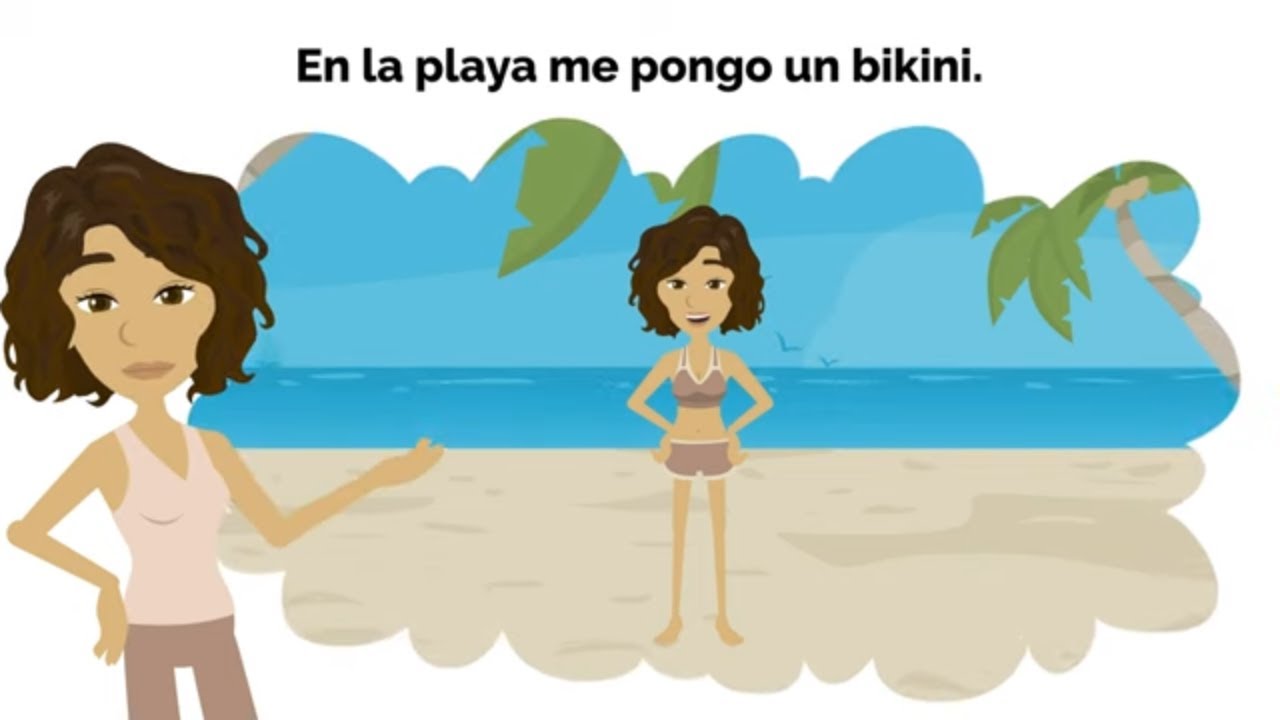
Ya estamos en verano y toca hacer una limpieza del armario.
En esta nueva clase de español podrás aprender un montón de vocabulario sobre la ropa que habitualmente usamos en verano.
La ropa forma parte de nuestro día a día y por lo tanto es fundamental que aprendas vocabulario para mejorar tu nivel de conversación en español.
Algunos ejemplos de ropa de verano que aprenderemos en el video:
Vestido 👗
Pantalón corto
Falda
Camisetas sin mangas
Bikini 👙
Sandalias 🩴
Traje de baño 🩱
Zapatillas de deporte 👟
Ropa deportiva
Faldas largas
Blusa
Vestido ligero de verano
Petos
Mochila
Maleta 🧳
Sombrero para el sol 👒
Chubasquero
Jersey fino
Camisetas
Pantalones largos 👖
Calcetines 🧦
Bragas 🩲
Sujetador
Pijama
Gorra 🧢
Camisa Hawaiana
Camisetas
Calcetines
Calzoncillos
Bañador 🩳
Vestido de noche
Vestido de verano
Tacones altos
Bolsos
Ropa interior de encaje
Camisones
Chaqueta de cuero
Ropa de bebé:
Bodies
Camisetas
Chaquetas finas
Calcetines finos
Medias finas
Pijamas
Sombrero
En el vídeo encontrarás oraciones con ejemplos de uso de cada una de estas palabras del vocabulario de ropa de verano, para que puedas utilizarlas de manera correcta en tus conversaciones en español.
Y tu, ¿Que vas a comprar en las rebajas de verano?
Cuéntanos en los comentarios
/ Clase 154
Recuerda suscribirte a nuestro canal 🔔

En este nuevo video para aprender español, seguimos a Daniel, quien recibe un paquete misterioso que contiene un robot con inteligencia artificial llamado Smartix. A través de esta historia divertida, aprenderemos vocabulario y expresiones útiles para hablar sobre tecnología, tareas domésticas y situaciones cotidianas en español.
Temas destacados del video:
• 1. La entrega del paquete 00:02
👉 Vocabulario clave:
Paquete: Package.
Entregar: To deliver.
Dirección: Address.
Firma: Signature.
Pesado/a: Heavy.
🗣️ Expresiones útiles:
"Tenemos que entregarlo aquí": We have to deliver it here.
"Firme aquí para confirmar": Sign here to confirm.
"El paquete es muy pesado": The package is very heavy.
💡 Tiempos verbales:
Presente simple: "Es" (It is), "tenemos" (We have).
Pretérito indefinido: "Sonó" (It rang), "firmó" (He signed).
• 2. Conociendo a Smartix 03:56
👉 Vocabulario clave:
Robot: Robot.
Inteligencia artificial: Artificial intelligence.
Cargar: To charge.
Botón: Button.
Asistente doméstico: Home assistant.
🗣️ Expresiones útiles:
"Enchufar el robot": Plug in the robot.
"Presione el botón azul": Press the blue button.
"Te ayudaré con la casa": I will help you with the house.
💡 Tiempos verbales:
Futuro simple: "Ayudaré" (I will help), "haré" (I will do).
Infinitivo: "Cargar" (To charge), "presionar" (To press).
• 3. Las habilidades de Smartix 03:00
👉 Vocabulario clave:
Lavar: To wash.
Cocinar: To cook.
Planchar: To iron.
Cuidar: To take care of.
Vigilar: To watch over.
🗣️ Expresiones útiles:
"Lavo los platos sucios": I wash the dirty dishes.
"Te doy masajes": I give you massages.
"Vigilo la casa": I watch over the house.
💡 Tiempos verbales:
Presente simple: "Lavo" (I wash), "cocino" (I cook).
Infinitivo: "Cuidar" (To take care of), "vigilar" (To watch over).
• 4. Una cena especial con Tina 04:30
👉 Vocabulario clave:
Novia: Girlfriend.
Cena: Dinner.
Alergias: Allergies.
Intolerancias: Intolerances.
Aperitivo: Appetizer.
🗣️ Expresiones útiles:
"Cocina una cena deliciosa": Cook a delicious dinner.
"Es alérgica a los frutos secos": She is allergic to nuts.
"Disfruté mucho de la comida": I really enjoyed the food.
💡 Tiempos verbales:
Pretérito indefinido: "Preparé" (I prepared), "disfruté" (I enjoyed).
Imperativo: "Apaga" (Turn off), "cierra" (Close).
Resumen de Aprendizaje:
✅ Vocabulario: Aprendemos palabras relacionadas con tecnología, tareas domésticas y cenas especiales.
✅ Expresiones clave: Frases útiles para hablar sobre robots, cocina y relaciones personales.
✅ Tiempos verbales: Practicamos el presente simple, futuro simple y pretérito indefinido.
Preguntas para Practicar:
¿Qué harías si tuvieras un robot como Smartix en casa?
¿Qué tareas domésticas te gustaría que hiciera un robot por ti?
¿Crees que los robots pueden ser útiles en la vida cotidiana? ¿Por qué?
🎥 ¡No te pierdas nuestros próximos videos!
👉 Si te gustó este video y quieres seguir aprendiendo español de una manera divertida y fácil, ¡suscríbete a nuestro canal y activa la campanita de notificaciones! 🔔 Así estarás al tanto de todos nuestros nuevos contenidos.
🌟 ¿Por qué suscribirte?
Aprenderás nuevo vocabulario y expresiones útiles.
Mejorarás tu comprensión auditiva y pronunciación.
¡Y lo más importante! Te divertirás mientras aprendes.
💬 ¡Nos encanta leer tus comentarios!
Déjanos un comentario contándonos qué parte del video te gustó más o qué temas te gustaría ver en el futuro. ¡Tu opinión es muy importante para nosotros!
🚀 ¡Únete a nuestra comunidad de estudiantes de español!
Juntos podemos hacer que aprender español sea una experiencia increíble. ¡Nos vemos en el próximo video! 😊

Tiempo futuro en español. Planes y sueños para el futuro.
En este vídeo veremos una clase de las Señorita Perez, en dónde pregunta a los alumnos qué es lo que les gustaría ser de mayores.
Los alumnos contestan la pregunta utilizando el tiempo futuro ya que lo que expresas sucederá el día de mañana.
Juan cuenta que en el futuro le gustaría ser futbolista, Alejandra quieres ser médica como su padre, a Sergio le gustaría ser millonario ganando la lotería y viajar por todo el mundo.
Alicia quiere estudiar derecho y comprar una casa enorme. Iván quiere ser veterinario y curar a todos los animales que lo necesiten.
Una buena oportunidad para aprender a expresarse en el tiempo futuro del español, contando cosas que sucederán el día de mañana.
¿Cuáles son tus planes para el futuro? Escríbelo en los comentarios.
Y recuerda suscribirte y activar las notificaciones si quieres seguir nuestras clases para aprender español.
🔔
Clase 84

¡Aprende a expresarte con confianza en español!
En este video, aprenderem cómo hablar de tus sentimientos y emociones en español.
Aprenderás vocabulario clave para describir cómo te sientes y cómo expresar tus emociones en diferentes situaciones. Ya sea que quieras hablar con amigos, compañeros de trabajo o con alguien especial, este video te ayudará a comunicar tus sentimientos con claridad y precisión.
00:00 Sentimientos y emociones en español
00:03 Hola, ¿Cómo te sientes hoy?
00:13 Me siento un poco abrumado
00:57 Además me siento un poco triste
02:16 Me siento agradecido
03:45 ¿Qué te hace sentir tan positiva?
04:03 Me siento energizada y feliz
05:17 Me siento orgullosa de mi misma
07:01 ¿Qué te hace sentir tan feliz?
09:40 Me siento muy afortunada
10:08 Me siento un poco frustrada
11:32 Me siento un poco emocionada
12:32 ¿Cómo te sientes tú hoy?
12:40 Suscríbete y fin del video
Algunos sentimientos y emociones que podremos aprender en la clase de hoy:
Abrumado
Triste
Agradecido
Positiva
Energizada
Feliz
Orgullosa
Afortunada
Frustrada
Emocionada
Y tú ¿Cómo te sientes hoy? Escríbelo en los comentarios.
🔔 Suscribirse: https://www.youtube.com/Aprend....erespañolonline?sub_
✅ Curso de español para principiantes: https://youtube.com/playlist?l....ist=PLyhXDeW_WjhBv8b
✅ Español nivel intermedio: https://youtube.com/playlist?l....ist=PLyhXDeW_WjhAlQR
✅ Verbos en español: https://youtube.com/playlist?l....ist=PLyhXDeW_WjhDyOv

En este video para aprender español veremos los adjetivos y antónimos.
Los adjetivos son palabras que aportan características o información sobre el sustantivo (el objeto o persona del que estemos hablando)
Ejemplos de adjetivos:
"Ese perro es muy ruidoso" lleva el adjetivo "ruidoso" para expresar una característica del "perro"
"El es un hombre rico" lleva el adjetivo "rico" para expresar una característica de la persona que estamos describiendo "El".
"Esta comida esta muy mala" lleva el adjetivo "mala" para describir una cualidad (sabor) de la comida .
Los antónimos son palabras opuestas o que significan lo contrario.
Ejemplos de antónimos:
Dia ---- Noche
Luz ---- Oscuridad
Cerrado ---- Abierto
Negativo ---- Positivo
Salado ---- Dulce
Este es un video para nivel intermedio de español pero puede ser usado para practicar por todos los niveles.
Nivel básico-intermedio, A2-B1
🔔
/ Clase 91

Carmen y María quieren tener una mascota
Preguntan a sus padres pero estos se niegan. Una buena oportunidad para aprender diálogos en español.
Paseando con su abuela Carmen insiste y pregunta a su abuela si puede comprarles una mascota. Finalmente convence a su abuelo para ir a la tienda de mascotas a ver animales de compañía.
En el campo ven los típicos animales de granja: gallinas, caballos, ovejas y vacas.
Ya en la tienda de mascotas ven gatos, perros, tortugas, pájaros, conejos, ratoncitos y peces.
En su paseo tienen un montón de diálogos y el abuelo describe las principales características de los animales usando montones de adjetivos en español.
Además tienen muchísimos diálogos con el empleado de la tienda.
¿Qué mascota tenías de pequeño? Escríbelo en los comentarios.
Y no olvide activar las notificaciones para que te avisemos de cada nuevo video.🔔
#Clase 82

¡Te deseamos un feliz halloween!
Hoy os vamos a contar una historia de terror. Esta noche es la noche de los muertos y lo celebraremos con un vídeo para aprender español.
Alex preguntará a sus amigos de la escuela, quienes quieren participar de la fiesta de halloween.
Van a una tienda de disfraces y eligen un disfraz para Halloween.
Luego llegan los invitados y cada uno describe su disfraz.
La madre de Alex les cuenta una historia tenebrosa y muy divertida.
En este vídeo podrás aprender:
A hacer preguntas en español
Descripciones
Presentaciones
Vocabulario sobre halloween
Historias de terror
Pero sobre todo podrás morirte de miedo!
/ Clase 119
Recuerda suscribirte a nuestro canal y activar las notificaciones. 🔔

Hoy volvemos con una de nuestras historias para aprender español.
Santiago y clara tienen un encuentro con uno de los personajes mitológicos más fascinantes: Las sirenas.
Puedes utilizar esta historia para practicar tu español, aprender nuevo vocabulario y disfrutar de una historia llena de emoción.
Recuerda suscribirte a nuestro canal y arrojar las conchas de las sirenas al mar, antes que sea tarde.
Suscribirse:https://www.youtube.com/Aprend....erespañolonline?sub_ 🔔
✅ Curso de español para principiantes: https://youtube.com/playlist?l....ist=PLyhXDeW_WjhBv8b
✅ Español nivel intermedio: https://youtube.com/playlist?l....ist=PLyhXDeW_WjhAlQR
✅ Verbos en español: https://youtube.com/playlist?l....ist=PLyhXDeW_WjhDyOv
Suscríbete ✍, dale al like 👍 y activa la 🔔 para no perderte ningún video!

Sergio y Andrea ¿Recuerdas cómo nos conocimos? Un cliente agradable – 3ª parte
Sergio esta agotado de su primer semana de trabajo y tiene un diálogo con su compañera donde le pide recomendaciones para un buen restaurante.
La compañera le recomienda el Café Lu
Una buena escena para aprender español con diálogos sobre recomendaciones.
Al mismo tiempo Andrea se presenta en el Café Lu para su primer día de trabajo. Expresa sus inquietudes y tiene también diálogos con sus compañeros.
Diálogos y frases para el primer día de trabajo.
Luego Andrea se junta con su jefe, quien le explica sus funciones y le describe las zonas del restaurante.
Es una llena de vocabulario de hostelería y que podría servir para quien necesite español para trabajar de camarero en un restaurante.
Justo en ese momento entra Sergio preguntando por algo para comer y no deja indiferente a Andrea.
La amiga de Andrea, Eva, le envía un mensaje desde el móvil para saber cómo le ha ido en su primer día. Tienen un diálogo escrito a través del móvil.
Andrea no pierde la oportunidad de comentarle sobre ese nuevo cliente que la ha impresionado.
Describir una persona que te gusta en español
Clase 101
Suscríbete a nuestro canal🔔

El señor Guerrero viene a cenar. Es el jefe de la señora Martín, al parecer es un hombre difícil.
Además de practicar diálogos podremos aprender mucho vocabulario. Una clase de español para practicar lo aprendido hasta ahora.
El jefe no bebe alcohol, es intolerante a la lactosa, vegetariano y alérgico al trigo lo que hace que la cena se convierta en una situación muy incómoda.
Igualmente la familia martín, con mucha paciencia, logra salir adelante.
Esta clase de español nos ayudará a practicar un poco todo lo aprendido hasta ahora y a lidiar con gente intolerante.
¿Quién tuvo alguna vez un jefe así?
/ Clase 109
Activa las notificaciones🔔

Continuamos con la cita fallida entre Sergio y Andrea.
El camarero continúa muy despistado y olvida la mitad de las cosas que Sergio y Andrea le piden.
Finalmente pueden empezar a comer y la comida estaba muy buena, lo que logra mejorar un poco la experiencia.
A la hora de pedir la cuenta, vuelven los problemas. La cuenta incluye una paella que nuestros protagonistas no han comido.
Aún así, logran mantenerse de buen ánimo y luego de cenar deciden ir a ver las estrellas al parque.
Lo que empezó como una cita fallida, terminó como una romántica noche de amor.
/ Clase 139
🔔

En este nuevo vídeo veremos una típica conversación familiar en español. Todos los integrantes de la familia se juntan para planear las vacaciones de verano.
Dos de los hermanos cuentan experiencias de antiguas vacaciones en tiempo pasado y además nos cuentan sus preferencias para estas nuevas vacaciones.
Con un montón de diálogos y nombres de lugares para vacacionar, finalmente deciden quedarse en España y cada uno cuenta lo que le gustaría hacer estas vacaciones.
Conversación / vocabulario
#Clase 89
🔔

Hoy repasaremos los días de la semana y las rutinas diarias en español.
Repaso de los Días de la Semana:
Comenzamos repitiendo juntos los días de la semana. Esta repetición es crucial para la memorización. ¿Los recordamos? Lunes, martes, miércoles, jueves, viernes, sábado, domingo.
Diálogos de Rutina Diaria:
A través de los diálogos entre Alex y Laura, exploramos diferente actividades típicas que se realizan diariamente. Esto nos ayudará a ampliar nuestro vocabulario y a entender como se estructuran las actividades en español.
Tiempos Verbales y Expresiones Útiles:
Presente Simple: Observamos su uso en la descripción de rutinas, como "voy al gimnasio", "trabajo", "cocino".
Expresiones de Tiempo: Como "por la mañana", "por la noche", "después de", que son esenciales para hablar sobre rutinas.
¿Cuál es tu día favorito de la semana y por qué?
00:03 Práctica de repetición de los días de la semana
01:28 Actividades de los lunes
02:16 Actividades de los martes
03:00 Actividades de los miércoles
03:41 Actividades de los jueves
04:18 Actividades de los viernes
04:56 Actividades de los sábados
05:27 Actividades del domingo
06:07 Suscríbete y fin del vídeo
Suscríbete a nuestro canal ✍, dale al like 👍 y activa las notificaciones🔔 para no perderte ningún nuevo vídeo!

Un nuevo video para que puedas aprender español online con preguntas y respuestas:
¿Tienes hijos?
¿Tienes un coche?
¿Estas casada?
¿Sabes nadar?
¿Sabes cocinar bien?
¿Cómo te sientes?
¿Te gusta?
¿Que lées?
¿Qué tiempo hace?
Un montón de preguntas y respuestas para que puedas practicar como hacer preguntas.
Recuerda suscribirte a nuestro canal!🔔
¿Quieres aprender español en situaciones cotidianas? En este video te enseñaremos cómo resolver problemas comunes en español en el contexto de un viaje en tren, reservas de billetes y en un hotel.
Aprenderás frases y expresiones útiles para entender y comunicarte en español con empleados de transporte y hoteles, incluyendo cómo preguntar sobre retrasos de trenes, cambiar billetes y solucionar problemas en la habitación de un hotel.
"Resolver problemas en los viajes - Español para viajar" es un curso diseñado para aquellos que desean mejorar su capacidad para comunicarse en español mientras viajan.
Con este vídeo para aprender español tendrás la oportunidad de adquirir habilidades prácticas para resolver problemas comunes que pueden surgir durante los viajes.
Podrás desarrollar tu confianza y fluidez en situaciones de viaje y adquirir herramientas esenciales para interactuar en español con éxito.
00:00 Introducción e inicio de la clase
00:03 Tren con retraso
04:32 Devolver un billete de tren
10:10 Hola, tengo un poblema con mi habitación
13:56 Tengo otro problema
16:20 Suscríbete y fin del vídeo
Algunas frases útiles para problemas en los viajes que puedes aprender en este vídeo:
- Hola, ¿puede ayudarme? Tengo un problema con mi tren.
- ¿Sabe cuánto tiempo será el retraso?
- ¿Y qué puedo hacer? Necesito llegar a Madrid a tiempo.
- ¿Y cuánto tiempo tardaría eso?
- ¿Dónde puedo comprar los billetes?
- Quisiera devolver mi billete de tren
- ¿y cuánto me costaría cambiar la fecha del billete?
- ¿Cuánto tiempo tengo para hacer el cambio?
- Tengo un problema con mi habitación.
- ¿Cuánto tiempo tardará en solucionar el problema?
- Realmente necesito dormir.
En nuestro canal encontrarás un curso completo y gratuito de español:
Suscribirse:https://www.youtube.com/Aprend....erespañolonline?sub_ 🔔
✅ Curso de español para principiantes: https://youtube.com/playlist?l....ist=PLyhXDeW_WjhBv8b
✅ Español nivel intermedio: https://youtube.com/playlist?l....ist=PLyhXDeW_WjhAlQR
✅ Verbos en español: https://youtube.com/playlist?l....ist=PLyhXDeW_WjhDyOv
Suscríbete a nuestro canal ✍, dale al like 👍 y activa las notificaciones🔔 para no perderte ningún nuevo vídeo!

Here’s a video on a super important verb: tener (to have). Let’s see all of the different forms to express that different people have something or have to do something.
Please like the video and share with others who could benefit. More Spanish lessons coming.
Request a topic you’d like for me to go over in a future video!
👍Please share this video with others and like it to help me get the word out on my videos!
And let me know about other troublesome topics you’d like in bite-sized form.
🔔 Subscribe for more Spanish lessons: http://bit.ly/XGe7we
Special Offer: Get a discount off your first 6 months with code CHATEOBOT! Sign up at: https://www.senorjordan.com/chat
Social Media:
* YouTube: https://www.youtube.com/SeñorJordan
* Find “señor jordan videos” on Facebook, Twitter, Instagram, and TikTok
* Soundcloud: senorjordanspanish
Enjoying the content? Consider buying me a taco!
https://ko-fi.com/senorjordan
🌐 Private Lessons Available:
Interested in improving your Spanish conversational skills? Contact me: www.senorjordan.com/clases
📚 Practice Your Spanish with My Books!
https://www.tprsbooks.com/shop/?_product_type=novel&_author=jeremy-senor-jordan&_product_language_filter=spanish
#SpanishHelp #SpanishLearning #SpanishGrammar #PresentTense #StemChangers #StemChangingVerbs #ERverbs #Present #spanish #SpanishLessons #SpanishBite #senorjordan #señorjordan #Tener #Tenerque #Have #Has #spanish #spanishverbs #learnspanish #spanishlessons

Here’s a video on a super important verb: querer (to want). Let’s see all of the different forms to express that different people want something or want to do something.
Please like the video and share with others who could benefit. More Spanish lessons coming.
Request a topic you’d like for me to go over in a future video!
👍Please share this video with others and like it to help me get the word out on my videos!
And let me know about other troublesome topics you’d like in bite-sized form.
🔔 Subscribe for more Spanish lessons: http://bit.ly/XGe7we
Special Offer: Get a discount off your first 6 months with code CHATEOBOT! Sign up at: https://www.senorjordan.com/chat
Social Media:
* YouTube: https://www.youtube.com/SeñorJordan
* Find “señor jordan videos” on Facebook, Twitter, Instagram, and TikTok
* Soundcloud: senorjordanspanish
Enjoying the content? Consider buying me a taco!
https://ko-fi.com/senorjordan
🌐 Private Lessons Available:
Interested in improving your Spanish conversational skills? Contact me: www.senorjordan.com/clases
📚 Practice Your Spanish with My Books!
https://www.tprsbooks.com/shop/?_product_type=novel&_author=jeremy-senor-jordan&_product_language_filter=spanish
#SpanishHelp #SpanishLearning #SpanishGrammar #PresentTense #StemChangers #StemChangingVerbs #ERverbs #Present #spanish #SpanishLessons #SpanishBite #senorjordan #señorjordan #Querer #Want #Wants #spanish #spanishverbs #learnspanish #spanishlessons

Practice Your Spanish With Chateo - a Spanish-speaking chatbot! | 50% off your first 6 months with code CHATEOBOT | Sign up at: https://www.senorjordan.com/chat
~~~~~~~~~~~~~~~~~~~~~~~~~~~~~~
SUBSCRIBE for more Spanish videos: http://bit.ly/XGe7we
and make sure to click the notification bell!
Follow me on Facebook: https://www.facebook.com/srjordanspanish
Tweet me: https://twitter.com/senorjordan
Check out my website: http://www.senorjordan.com
Follow me on Instagram: @senorjordanvideos
Listen to my music on Soundcloud:
https://soundcloud.com/senorjordanspanish
Listen to my music on Spotify:
https://open.spotify.com/artis....t/2nyJ9GgLNMckXCuBHU
Buy my songs on iTunes:
https://music.apple.com/us/artist/1621526948
Buy my songs on Amazon:
https://www.amazon.com/music/p....layer/artists/B09Z35
Donate to my video-making project:
https://paypal.me/srjordanvideos?country.x=US&locale.x=en_US
~~~~~~~~~~~~~~~~~~~~~~~~~~~~~~
*Grammar Pop Up version!
See Non-grammar version here:
https://www.youtube.com/watch?v=tDgqgRzUGE
This is a video in a new series to help people learn Spanish through repetition and storytelling.
This particular story is basic. We will be using the words from this episode in future episodes. The idea is to repeat words a lot in different ways and to get you forgetting that you're watching something in Spanish.

Practice Your Spanish With Chateo - a Spanish-speaking chatbot! | Get a discount off your first 6 months with code CHATEOBOT | Sign up at: https://www.senorjordan.com/chat
~~~~~~~~~~~~~~~~~~~~~~~~~~~~~~
Listen to this song and others on the go on , Amazon Music, Apple Music, Spotify, Soundcloud (see links below)!
~~~~~~~~~~~~~~~~~~~~~~~~~~~~~~
Teachers, buy the official packet to go along with the video for multiple passes and with 10 different activities here:
https://www.teacherspayteacher....s.com/Product/Packet
~~~~~~~~~~~~~~~~~~~~~~~~~~~
SUBSCRIBE for more Spanish videos: http://bit.ly/XGe7we
and make sure to click the notification bell!
Follow me on Facebook: https://www.facebook.com/srjordanspanish
Tweet me: https://twitter.com/senorjordan
Check out my website: http://www.senorjordan.com
Follow me on Instagram: @senorjordanvideos
Listen to my music on Soundcloud:
https://soundcloud.com/senorjordanspanish
Listen to my music on Spotify:
https://open.spotify.com/artis....t/2nyJ9GgLNMckXCuBHU
Buy my songs on iTunes:
https://music.apple.com/us/artist/1621526948
Buy my songs on Amazon:
https://www.amazon.com/music/p....layer/artists/B09Z35
Donate to my video-making project:
https://paypal.me/srjordanvideos?country.x=US&locale.x=en_US
~~~~~~~~~~~~~~~~~~~~~~~~~~~
Here's an original song I came up with to help with some weather phrases! I hope you find it catchy and useful!
*click CC for subtitles in English of lyrics.
*some phrases might change depending on region:
"hace fresco" might also be "está fresco"
"está feo afuera" might also be "hace mal tiempo"
"está bonito afuera" might also be "hace buen tiempo"
& "¿qué tiempo hace?" might also be "¿Cómo está el tiempo/clima?" / ¿Qué tal el tiempo/clima?"
Weather phrases:
hace calor - it's hot
hace fresco - it's cool
hace frío - it's cold
hace viento - it's windy
está despejado - it’s clear
está nublado - it’s cloudy
no está nublado - it’s not cloudy
está lloviendo - it’s raining (right now)
está nevando - it’s snowing right now
afuera está feo - it’s ugly outside (the weather is bad)
está bonito afuera - it’s beautiful outside
los truenos - thunder
los rayos - lightning
el tiempo - the weather
el clima - the weather
¿Qué tiempo hace? - how’s the weather?
and some other phrases -
cuando - when
Necesito usar el bloqueador - I need to use sunblock
quiero más helado por favor - I want more ice cream please
me pongo los guantes y un abrigo - I put on gloves and a coat
cerca del fuego permanezco - close to the fire I remain
normalmente camino más lento - normally I walk more slow
quiero estar en mi cama durmiendo - i want to be in my bed sleeping
chocolate caliente estoy tomando - hot chocolate I am drinking
escucho - I listen (to) / I hear
veo- I see
hacer un picnic yo quisiera - to go on a picnic I would like
no sé - I don’t know
necesito preguntar - I need to ask
And don’t forget to check out some of my other videos if you are wanting to learn Spanish!
chords are:
Bbm | F

Practice Your Spanish With Chateo - a Spanish-speaking chatbot! | Get a discount off your first 6 months with code CHATEOBOT | Sign up at: https://www.senorjordan.com/chat
~~~~~~~~~~~~~~~~~~~~~~~~~~~~~~
SUBSCRIBE for more Spanish videos: http://bit.ly/XGe7we
and make sure to click the notification bell!
Follow me on Facebook: https://www.facebook.com/srjordanspanish
Tweet me: https://twitter.com/senorjordan
Check out my website: http://www.senorjordan.com
Follow me on Instagram: @senorjordanvideos
Listen to my music on Soundcloud:
https://soundcloud.com/senorjordanspanish
Listen to my music on Spotify:
https://open.spotify.com/artis....t/2nyJ9GgLNMckXCuBHU
Buy my songs on iTunes:
https://music.apple.com/us/artist/1621526948
Buy my songs on Amazon:
https://www.amazon.com/music/p....layer/artists/B09Z35
Donate to my video-making project:
https://paypal.me/srjordanvideos?country.x=US&locale.x=en_US
~~~~~~~~~~~~~~~~~~~~~~~~~~~
In this video lesson we'll be talking about the word 'Hay' in Spanish. "Hay" can mean there is or there are.
Hope you enjoy it and learn something new!
Rate this video if it was helpful and let me know if you have any questions, comments, or suggestions about this video.
See word bank for this video:
http://www.senorjordan.com/2010/10/01-hay/
For word banks and much more to help you with the video lessons, check out http://www.senorjordan.com
*author's note* excuse the truck noise at the beginning and later when I make an English faux passe.

Practice Your Spanish With Chateo - a Spanish-speaking chatbot! | Get a discount off your first 6 months with code CHATEOBOT | Sign up at: https://www.senorjordan.com/chat
~~~~~~~~~~~~~~~~~~~~~~~~~~~~~~
Listen to this song and others on the go on soundcloud!
https://soundcloud.com/senorjordanspanish
~~~~~~~~~~~~~~~~~~~~~~~~~~~~~~
SUBSCRIBE for more Spanish videos: http://bit.ly/XGe7we
and make sure to click the notification bell!
Follow me on Facebook: https://www.facebook.com/srjordanspanish
Tweet me: https://twitter.com/senorjordan
Check out my website: http://www.senorjordan.com
Follow me on Instagram: @senorjordanvideos
Listen to my music on Soundcloud:
https://soundcloud.com/senorjordanspanish
Listen to my music on Spotify:
https://open.spotify.com/artis....t/2nyJ9GgLNMckXCuBHU
Buy my songs on iTunes:
https://music.apple.com/us/artist/1621526948
Buy my songs on Amazon:
https://www.amazon.com/music/p....layer/artists/B09Z35
Donate to my video-making project:
https://paypal.me/srjordanvideos?country.x=US&locale.x=en_US
~~~~~~~~~~~~~~~~~~~~~~~~~~~~~~
I wrote the lyrics to this one and put it to the tune of a familiar kids' song. I think it turned out well!
If you would like for me to come up with another song to help learn something grammatical or remember something you're studying, let me know!

Here’s a quick video to help with -AR verbs in the Preterite in Spanish!
Please like the video and share with others who could benefit. More Spanish lessons coming.
Request a topic you’d like for me to go over in a future video!
👍Please share this video with others and like it to help me get the word out on my videos!
And let me know about other troublesome topics you’d like in bite-sized form.
🔔 Subscribe for more Spanish lessons: http://bit.ly/XGe7we
Special Offer: Get a discount off your first 6 months with code CHATEOBOT! Sign up at: https://www.senorjordan.com/chat
Social Media:
* YouTube: https://www.youtube.com/SeñorJordan
* Find “señor jordan videos” on Facebook, Twitter, Instagram, and TikTok
* Soundcloud: senorjordanspanish
Enjoying the content? Consider buying me a taco!
https://ko-fi.com/senorjordan
🌐 Private Lessons Available:
Interested in improving your Spanish conversational skills? Contact me: www.senorjordan.com/clases
📚 Practice Your Spanish with My Books!
https://www.tprsbooks.com/shop/?_product_type=novel&_author=jeremy-senor-jordan&_product_language_filter=spanish
Practice Your Spanish With Chateo - a Spanish-speaking chatbot! | 50% off your first 6 months with code CHATEOBOT | Sign up at: https://www.senorjordan.com/chat
~~~~~~~~~~~~~~~~~~~~~~~~~~~~~~
SUBSCRIBE for more Spanish videos: http://bit.ly/XGe7we
and make sure to click the notification bell!
Follow me on Facebook: https://www.facebook.com/srjordanspanish
Tweet me: https://twitter.com/senorjordan
Check out my website: http://www.senorjordan.com
Follow me on Instagram: @senorjordanvideos
Listen to my music on Soundcloud:
https://soundcloud.com/senorjordanspanish
Listen to my music on Spotify:
https://open.spotify.com/artis....t/2nyJ9GgLNMckXCuBHU
Buy my songs on iTunes:
https://music.apple.com/us/artist/1621526948
Buy my songs on Amazon:
https://www.amazon.com/music/p....layer/artists/B09Z35
Donate to my video-making project:
https://paypal.me/srjordanvideos?country.x=US&locale.x=en_US
~~~~~~~~~~~~~~~~~~~~~~~~~~~~~~
*Grammar Pop Up version!
See Non-grammar version here:
https://www.youtube.com/watch?v=tDgqgRzUGE
This is a video in a new series to help people learn Spanish through repetition and storytelling.
This particular story is basic. We will be using the words from this episode in future episodes. The idea is to repeat words a lot in different ways and to get you forgetting that you're watching something in Spanish.