Top videos

Practice Your Spanish With Chateo - a Spanish-speaking chatbot! | Get a discount off your first 6 months with code CHATEOBOT | Sign up at: https://www.senorjordan.com/chat
~~~~~~~~~~~~~~~~~~~~~~~~~~~~~~
SUBSCRIBE for more Spanish videos: http://bit.ly/XGe7we
and make sure to click the notification bell!
Follow me on Facebook: https://www.facebook.com/srjordanspanish
Tweet me: https://twitter.com/senorjordan
Check out my website: http://www.senorjordan.com
Follow me on Instagram: @senorjordanvideos
Listen to my music on Soundcloud:
https://soundcloud.com/senorjordanspanish
Listen to my music on Spotify:
https://open.spotify.com/artis....t/2nyJ9GgLNMckXCuBHU
Buy my songs on iTunes:
https://music.apple.com/us/artist/1621526948
Buy my songs on Amazon:
https://www.amazon.com/music/p....layer/artists/B09Z35
Donate to my video-making project:
https://paypal.me/srjordanvideos?country.x=US&locale.x=en_US
~~~~~~~~~~~~~~~~~~~~~~~~~~~
This video covers months and some useful phrases dealing with numbers and months.
Hope it's helpful. Feel free to add any questions or comments.
For more Spanish videos, check out http://www.senorjordan.com
Vocabulario:
enero - January
febrero - February
marzo - March
abril - April
mayo - May
junio - June
julio - July
agosto - August
septiembre - September
octubre - October
noviembre - November
diciembre - December
¿Cuál es la fecha de hoy? - What is the date today?
Hoy es el # de mes. - Today is the # of month.
primero - first
¿Cuándo es tu cumpleaños? - When is your birthday?
Mi cumpleaños es el # de mes. - My birthday is the # of month.
el día de la Independencia - Independence Day
la Navidad - Christmas
el día de San Valentín - Valentines Day
el día de los espíritus - Halloween
Practice Your Spanish With Chateo - a Spanish-speaking chatbot! | Get a discount off your first 6 months with code CHATEOBOT | Sign up at: https://www.senorjordan.com/chat
~~~~~~~~~~~~~~~~~~~~~~~~~~~~~~
SUBSCRIBE for more Spanish videos: http://bit.ly/XGe7we
and make sure to click the notification bell!
Follow me on Facebook: https://www.facebook.com/srjordanspanish
Tweet me: https://twitter.com/senorjordan
Check out my website: http://www.senorjordan.com
Follow me on Instagram: @senorjordanvideos
Listen to my music on Soundcloud:
https://soundcloud.com/senorjordanspanish
Listen to my music on Spotify:
https://open.spotify.com/artis....t/2nyJ9GgLNMckXCuBHU
Buy my songs on iTunes:
https://music.apple.com/us/artist/1621526948
Buy my songs on Amazon:
https://www.amazon.com/music/p....layer/artists/B09Z35
Donate to my video-making project:
https://paypal.me/srjordanvideos?country.x=US&locale.x=en_US
Let's hope the sound is better now!
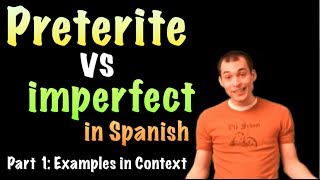
Hola. In this video lesson we'll start tackling the confusion that often arises with two past tenses: the preterite and the imperfect. Stay tuned for the next video which will also deal with the preterite and the imperfect.
Wordbank below:
http://www.senorjordan.com/02-preterite-vs-imperfect/
Rate this video if it was helpful. And leave any questions, comments or suggestions pertaining to the video below.
Also make sure to visit http://www.senorjordan.com for more videos with wordbanks, verb conjugation sheets and the whole shabang!
Thanks for watching!

SUBSCRIBE for more Spanish videos: http://bit.ly/XGe7we
and make sure to click the notification bell!
Follow me on Facebook: https://www.facebook.com/srjordanspanish
Tweet me: https://twitter.com/senorjordan
Check out my website: http://www.senorjordan.com
Follow me on Instagram: @senorjordanvideos
Listen to my music on Soundcloud:
https://soundcloud.com/senorjordanspanish
Listen to my music on Spotify:
https://open.spotify.com/artis....t/2nyJ9GgLNMckXCuBHU
Buy my songs on iTunes:
https://music.apple.com/us/artist/1621526948
Buy my songs on Amazon:
https://www.amazon.com/music/p....layer/artists/B09Z35
Donate to my video-making project:
https://paypal.me/srjordanvideos?country.x=US&locale.x=en_US
~~~~~~~~~~~~~~~~~~~~~~~~~~~~~~
See next joke in Spanish:
https://www.youtube.com/watch?v=ZGRjRRHoXIQ
See previous joke in Spanish:
https://www.youtube.com/watch?v=UXxE6NbX-uk
¡Feliz viernes! A ver si les gusta este chiste.
~~~~~~~~~~~
Happy Friday! Let's see if you like this joke.
*reuploaded to fix title error
*Did I say FISHES in this video? Oh man.

Practice Your Spanish With Chateo - a Spanish-speaking chatbot! | 50% off your first 6 months with code CHATEOBOT | Sign up at: https://www.senorjordan.com/chat
~~~~~~~~~~~~~~~~~~~~~~~~~~~~~~
SUBSCRIBE for more Spanish videos: http://bit.ly/XGe7we
and make sure to click the notification bell!
Follow me on Facebook: https://www.facebook.com/srjordanspanish
Tweet me: https://twitter.com/senorjordan
Check out my website: http://www.senorjordan.com
Follow me on Instagram: @senorjordanvideos
Listen to my music on Soundcloud:
https://soundcloud.com/senorjordanspanish
Listen to my music on Spotify:
https://open.spotify.com/artis....t/2nyJ9GgLNMckXCuBHU
Buy my songs on iTunes:
https://music.apple.com/us/artist/1621526948
Buy my songs on Amazon:
https://www.amazon.com/music/p....layer/artists/B09Z35
Donate to my video-making project:
https://paypal.me/srjordanvideos?country.x=US&locale.x=en_US
~~~~~~~~~~~~~~~~~~~~~~~~~~~~~~
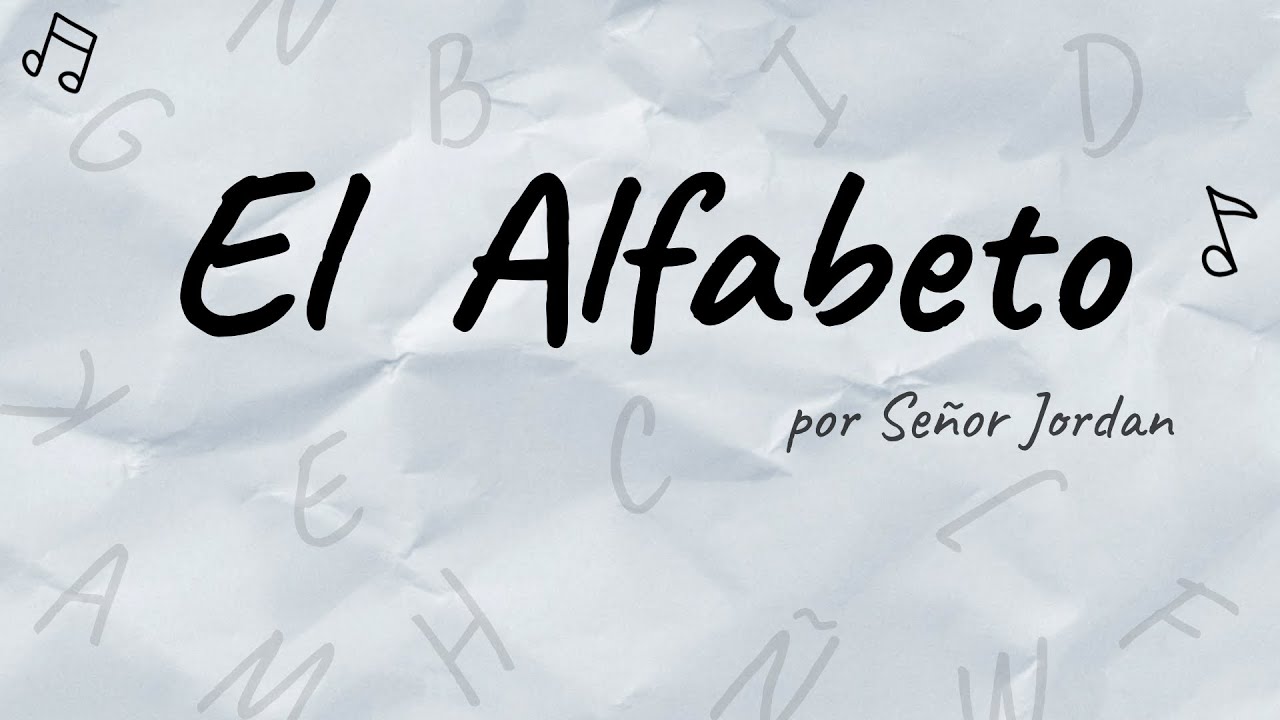
Here's a remake of my alphabet video in HIGH DEFINITION!
In this lesson we'll be going over el alfabeto and working on the Spanish vowels.
Feel free to let me know if you have any comments or questions.
For more free Spanish videos, check out http://www.senorjordan.com
Thanks for watching!

SUBSCRIBE for more Spanish videos: http://bit.ly/XGe7we
and make sure to click the notification bell!
Follow me on Facebook: https://www.facebook.com/srjordanspanish
Tweet me: https://twitter.com/senorjordan
Check out my website: http://www.senorjordan.com
Follow me on Instagram: @senorjordanvideos
Listen to my music on Soundcloud:
https://soundcloud.com/senorjordanspanish
Listen to my music on Spotify:
https://open.spotify.com/artis....t/2nyJ9GgLNMckXCuBHU
Buy my songs on iTunes:
https://music.apple.com/us/artist/1621526948
Buy my songs on Amazon:
https://www.amazon.com/music/p....layer/artists/B09Z35
Donate to my video-making project:
https://paypal.me/srjordanvideos?country.x=US&locale.x=en_US
~~~~~~~~~~~~~~~~~~~~~~~~~~~~~~
Here are some real tweets from Twitter to help you practice your Spanish!

SUBSCRIBE for more Spanish videos: http://bit.ly/XGe7we
and make sure to click the notification bell!
Follow me on Facebook: https://www.facebook.com/srjordanspanish
Tweet me: https://twitter.com/senorjordan
Check out my website: http://www.senorjordan.com
Follow me on Instagram: @senorjordanvideos
Listen to my music on Soundcloud:
https://soundcloud.com/senorjordanspanish
Listen to my music on Spotify:
https://open.spotify.com/artis....t/2nyJ9GgLNMckXCuBHU
Buy my songs on iTunes:
https://music.apple.com/us/artist/1621526948
Buy my songs on Amazon:
https://www.amazon.com/music/p....layer/artists/B09Z35
Donate to my video-making project:
https://paypal.me/srjordanvideos?country.x=US&locale.x=en_US
~~~~~~~~~~~~~~~~~~~~~~~~~~~~~~
Here's a real Piropo (pick-up line) in Spanish! I can't guarantee it will work for you though. Try at your own risk!

Here's an original song for you to be able to learn how to tell time in Spanish!
Hopefully you enjoy it! :-)
Help me make it viral by watching, rewatching and sharing it with everyone you know!
Buy this song on iTunes:
https://music.apple.com/us/alb....um/que-hora-es/16404
👍Please share this video with others and like it to help me get the word out on my videos!
And let me know about other troublesome topics you’d like in bite-sized form.
🔔 Subscribe for more Spanish lessons: http://bit.ly/XGe7we
🤖Practice Your Spanish with Chateo! Get a discount off your first 6 months with code CHATEOBOT! Sign up at: https://www.senorjordan.com/chat
Social Media:
* YouTube: https://www.youtube.com/SeñorJordan
* Find “señor jordan videos” on Facebook, Twitter, Instagram, and TikTok
* Soundcloud: senorjordanspanish
Enjoying the content? Consider buying me a taco!
https://ko-fi.com/senorjordan
🌐 Private Lessons Available:
Interested in improving your Spanish conversational skills? Contact me: www.senorjordan.com/clases
📚 Practice Your Spanish with My Books!
https://www.tprsbooks.com/shop/?_product_type=novel&_author=jeremy-senor-jordan&_product_language_filter=spanish
~~~~~~~~~~~~~~~~~~~~~~~~~~~
Special thanks to Ely Saúl García for making the music sound way better and for helping with the production for this video!
instagram: @levitasrec
And thanks TO ALL OF YOU for watching my videos over the years! Who knew I would still be making them so many years later!

Practice Your Spanish With Chateo - a Spanish-speaking chatbot! | Get a discount off your first 6 months with code CHATEOBOT | Sign up at: https://www.senorjordan.com/chat
~~~~~~~~~~~~~~~~~~~~~~~~~~~~~~
Listen to the longer version of the song on the go on Soundcloud!
https://soundcloud.com/senorjordanspanish
~~~~~~~~~~~~~~~~~~~~~~~~~~~
SUBSCRIBE for more Spanish videos: http://bit.ly/XGe7we
and make sure to click the notification bell!
Follow me on Facebook: https://www.facebook.com/srjordanspanish
Tweet me: https://twitter.com/senorjordan
Check out my website: http://www.senorjordan.com
Follow me on Instagram: @senorjordanvideos
Listen to my music on Soundcloud:
https://soundcloud.com/senorjordanspanish
Listen to my music on Spotify:
https://open.spotify.com/artis....t/2nyJ9GgLNMckXCuBHU
Buy my songs on iTunes:
https://music.apple.com/us/artist/1621526948
Buy my songs on Amazon:
https://www.amazon.com/music/p....layer/artists/B09Z35
Donate to my video-making project:
https://paypal.me/srjordanvideos?country.x=US&locale.x=en_US
~~~~~~~~~~~~~~~~~~~~~~~~~~~
This video lesson covers a song that I learned back as a high school Spanish student. It teaches you the 'yo' form of many of the irregulars verbs in the preterite (a past tense).
Although I didn't mention it as being part of the lyrics in the video, these irregulars do not have any accent marks when written.
Lyrics:
tener es tuve; estar estuve
ir es fui y también ser
poner es puse; poder es pude
traje es para traer
hacer hice; haber hube;
saber supe; querer quise;
decir dije; venir vine;
ver vi; dar di;
no acentos
I didn't write it. It's pretty awesome though.
Rate this video if it was helpful!
Let me know if you have questions, comments, suggestions or would like to share if you have a special way of remembering the irregulars in the preterite.
For more free Spanish video lessons, word banks and verb conjugation charts, visit http://www.senorjordan.com
For extensive preterite sheet and song:
http://www.senorjordan.com/preterite-sheet/
Thanks for watching!
Let’s practice the alphabet in Spanish!
Buy this song on iTunes!
https://music.apple.com/us/art....ist/se%C3%B1or-jorda
Special thanks to Ely Saúl García for making the music sound way better and for helping with the production for this video!
instagram: @levitasrec
👍Please share this video with others and like it to help me get the word out on my videos!
And let me know about other troublesome topics you’d like in bite-sized form.
🔔 Subscribe for more Spanish lessons: http://bit.ly/XGe7we
🤖Practice Your Spanish with Chateo! Get a discount off your first 6 months with code CHATEOBOT! Sign up at: https://www.senorjordan.com/chat
Social Media:
* YouTube: https://www.youtube.com/SeñorJordan
* Find “señor jordan videos” on Facebook, Twitter, Instagram, and TikTok
* Soundcloud: senorjordanspanish
Enjoying the content? Consider buying me a taco!
https://ko-fi.com/senorjordan
🌐 Private Lessons Available:
Interested in improving your Spanish conversational skills? Contact me: www.senorjordan.com/clases
📚 Practice Your Spanish with My Books!
https://www.tprsbooks.com/?_author=jeremy-senor-jordan&_product_language_filter=spanish

Practice Your Spanish With Chateo - a Spanish-speaking chatbot! | Get a discount off your first 6 months with code CHATEOBOT | Sign up at: https://www.senorjordan.com/chat
~~~~~~~~~~~~~~~~~~~~~~~~~~~~~~
SUBSCRIBE for more Spanish videos: http://bit.ly/XGe7we
and make sure to click the notification bell!
Follow me on Facebook: https://www.facebook.com/srjordanspanish
Tweet me: https://twitter.com/senorjordan
Check out my website: http://www.senorjordan.com
Follow me on Instagram: @senorjordanvideos
Listen to my music on Soundcloud:
https://soundcloud.com/senorjordanspanish
Listen to my music on Spotify:
https://open.spotify.com/artis....t/2nyJ9GgLNMckXCuBHU
Buy my songs on iTunes:
https://music.apple.com/us/artist/1621526948
Buy my songs on Amazon:
https://www.amazon.com/music/p....layer/artists/B09Z35
Donate to my video-making project:
https://paypal.me/srjordanvideos?country.x=US&locale.x=en_US
~~~~~~~~~~~~~~~~~~~~~~~~~~~~~~
Practice Your Spanish With Chateo - a Spanish-speaking chatbot! | Get a discount off your first 6 months with code CHATEOBOT | Sign up at: https://www.senorjordan.com/chat
~~~~~~~~~~~~~~~~~~~~~~~~~~~~~~
SUBSCRIBE for more Spanish videos: http://bit.ly/XGe7we
and make sure to click the notification bell!
Follow me on Facebook: https://www.facebook.com/srjordanspanish
Tweet me: https://twitter.com/senorjordan
Check out my website: http://www.senorjordan.com
Follow me on Instagram: @senorjordanvideos
Listen to my music on Soundcloud:
https://soundcloud.com/senorjordanspanish
Listen to my music on Spotify:
https://open.spotify.com/artis....t/2nyJ9GgLNMckXCuBHU
Buy my songs on iTunes:
https://music.apple.com/us/artist/1621526948
Buy my songs on Amazon:
https://www.amazon.com/music/p....layer/artists/B09Z35
Donate to my video-making project:
https://paypal.me/srjordanvideos?country.x=US&locale.x=en_US
To see the wordbank, click below:
http://www.senorjordan.com/02-por-vs-para/
~~~~~~~~~
Many people have requested a video on some of the differences between Por and Para.
It doesn't tell you every single possible use, but I try to more or less summarize some of the big differences for you. As you can see, there's a lot to discuss since this video is probably my longest one ever!
Like this video if it was helpful!
Let me know if you have any questions, comments or suggestions about this lesson.
For more Spanish lessons, wordbanks, verb conjugation charts and more, check out http://www.senorjordan.com
For the quiz in this video:
http://www.senorjordan.com/wp-content/uploads/2011/04/por-vs-para-pre-quiz.pdf
For a printout of the differences mentioned:
http://www.senorjordan.com/wp-content/uploads/2011/04/por-vs-para-differences.pdf
Thanks for watching!.
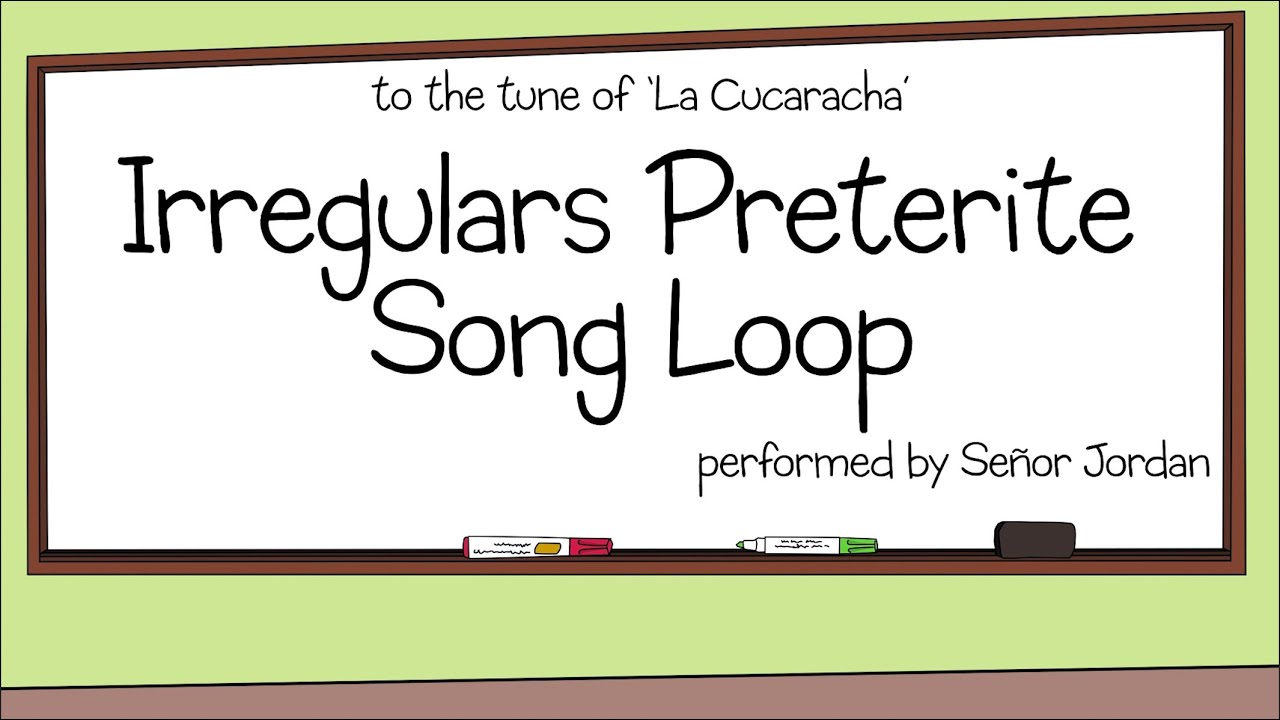
Here's a LOOP version of one of my most popular videos. It is a song I learned in High School Spanish to help with irregular verbs in the preterite.
Explanation video here:
https://www.youtube.com/watch?v=MXsivRHsvas&t=11s&ab_channel=SenorJordan
I have changed the line "no acentos" to "no hay acentos" as it still fits ok and is better grammar in Spanish.
~~~~~~~~~~~~~~~~~~~~~~~~~~~
👍Please share this video with others and like it to help me get the word out on my videos!
And let me know about other troublesome topics you’d like in bite-sized form.
🔔 Subscribe for more Spanish lessons: http://bit.ly/XGe7we
🤖Practice Your Spanish with Chateo! Get a discount off your first 6 months with code CHATEOBOT! Sign up at: https://www.senorjordan.com/chat
Social Media:
* YouTube: https://www.youtube.com/SeñorJordan
* Find “señor jordan videos” on Facebook, Twitter, Instagram, and TikTok
* Soundcloud: senorjordanspanish
Enjoying the content? Consider buying me a taco!
https://ko-fi.com/senorjordan
🌐 Private Lessons Available:
Interested in improving your Spanish conversational skills? Contact me: www.senorjordan.com/clases
📚 Practice Your Spanish with My Books!
https://www.tprsbooks.com/shop/?_product_type=novel&_author=jeremy-senor-jordan&_product_language_filter=spanish
Special thanks to Natalia Lauman for the background art!
@namilauman
Special thanks to Ely Saúl García for making the music sound way better and adding an additional voice or two!
@levitasrec/
And thanks TO ALL OF YOU for watching my videos over the years! Who knew I would still be making them so many years later!
~~~~~~~~~~~~~~~~~~~~~~~~~~~~~~
And are you still reading this far down?
Write aardvark in the comments so I know! :-)

Practice Your Spanish With Chateo - a Spanish-speaking chatbot! | Get a discount off your first 6 months with code CHATEOBOT | Sign up at: https://www.senorjordan.com/chat
~~~~~~~~~~~~~~~~~~~~~~~~~~~~~~
SUBSCRIBE for more Spanish videos: http://bit.ly/XGe7we
and make sure to click the notification bell!
Follow me on Facebook: https://www.facebook.com/srjordanspanish
Tweet me: https://twitter.com/senorjordan
Check out my website: http://www.senorjordan.com
Follow me on Instagram: @senorjordanvideos
Listen to my music on Soundcloud:
https://soundcloud.com/senorjordanspanish
Listen to my music on Spotify:
https://open.spotify.com/artis....t/2nyJ9GgLNMckXCuBHU
Buy my songs on iTunes:
https://music.apple.com/us/artist/1621526948
Buy my songs on Amazon:
https://www.amazon.com/music/p....layer/artists/B09Z35
Donate to my video-making project:
https://paypal.me/srjordanvideos?country.x=US&locale.x=en_US
~~~~~~~~~~~~~~~~~~~~~~~~~~~
*workbank mentioned in video below:
http://www.senorjordan.com/2008/11/present-tense-ir-part-3-verbo/
Hola. In this video lesson we'll be going over the irregular verb IR. If we have this verb and then another verb after it, we can create a sort of a future tense. Watch the video and hopefully it will make more sense!
Rate this video if it was helpful!
Also leave any questions/comments/suggestions about this video if you have them.
For more free Spanish video lessons, check out http://www.senorjordan.com
*wordbank mentioned in video at above site*
SUBSCRIBE for more Spanish videos: http://bit.ly/XGe7we
Follow me on Facebook: https://www.facebook.com/srjordanspanish
Tweet me: https://twitter.com/senorjordan
Check out my website: http://www.senorjordan.com
Check out my instagram: @senorjordanvideos
~~~~~~~~~~~~~~~~~~~~~~~~~~~~~~
*Click CC to see English or French subtitles!
En este episodio, averiguamos cómo llegó a Cuba.
~~~~~~~~~~~~~~~~~~
In this episode, we find out how he got to Cuba.
See next episode:
https://www.youtube.com/watch?v=QDfKoILfglw
See previous episode:
http://www.youtube.com/watch?v=9h2tuOSxQcg
The beautiful Miami picture can be found here:
http://www.flickr.com/photos/tegioz/6110449758/
The beautiful Cuba picture can be found here:
http://www.flickr.com/photos/n....ataliemaynor/6244907
*Gracias a geisthood por la traducción al francés

SUBSCRIBE for more Spanish videos: http://bit.ly/XGe7we
and make sure to click the notification bell!
Follow me on Facebook: https://www.facebook.com/srjordanspanish
Tweet me: https://twitter.com/senorjordan
Check out my website: http://www.senorjordan.com
Follow me on Instagram: @senorjordanvideos
Listen to my music on Soundcloud:
https://soundcloud.com/senorjordanspanish
Listen to my music on Spotify:
https://open.spotify.com/artis....t/2nyJ9GgLNMckXCuBHU
Buy my songs on iTunes:
https://music.apple.com/us/artist/1621526948
Buy my songs on Amazon:
https://www.amazon.com/music/p....layer/artists/B09Z35
Donate to my video-making project:
https://paypal.me/srjordanvideos?country.x=US&locale.x=en_US
~~~~~~~~~~~~~~~~~~~~~~~~~~~~~~
Here Jamoncito reacts to finding his arch enemy at Luis' igloo.
¡Nuevo episodio en 15 días! (el 25 de junio)

Practice Your Spanish With Chateo - a Spanish-speaking chatbot! | Get a discount off your first 6 months with code CHATEOBOT | Sign up at: https://www.senorjordan.com/chat
~~~~~~~~~~~~~~~~~~~~~~~~~~~~~~
SUBSCRIBE for more Spanish videos: http://bit.ly/XGe7we
and make sure to click the notification bell!
Follow me on Facebook: https://www.facebook.com/srjordanspanish
Tweet me: https://twitter.com/senorjordan
Check out my website: http://www.senorjordan.com
Follow me on Instagram: @senorjordanvideos
Listen to my music on Soundcloud:
https://soundcloud.com/senorjordanspanish
Listen to my music on Spotify:
https://open.spotify.com/artis....t/2nyJ9GgLNMckXCuBHU
Buy my songs on iTunes:
https://music.apple.com/us/artist/1621526948
Buy my songs on Amazon:
https://www.amazon.com/music/p....layer/artists/B09Z35
Donate to my video-making project:
https://paypal.me/srjordanvideos?country.x=US&locale.x=en_US
~~~~~~~~~~~~~~~~~~~~~~~~~~~~~~
*Click CC to see English or French translations!
En este episodio, averiguamos porqué estaba triste Thor Tuga.
~~~~~~~~~~~~~~~~~
In this episode, we find out why Thor Tuga was sad.
to see next episode:
http://www.youtube.com/watch?v=9h2tuOSxQcg
to see episode 5:
http://youtu.be/J75KIn6KyGg
The beautiful Miami photos can be found here:
1. http://www.flickr.com/photos/tegioz/6110449758/
2. http://www.flickr.com/photos/tegioz/6110448460/
The beautiful Cuba picture can be found here:
http://www.flickr.com/photos/n....ataliemaynor/6244907
*Gracias a geisthood por la traducción al francés
Practice Your Spanish With Chateo - a Spanish-speaking chatbot! | Get a discount off your first 6 months with code CHATEOBOT | Sign up at: https://www.senorjordan.com/chat
~~~~~~~~~~~~~~~~~~~~~~~~~~~~~~
SUBSCRIBE for more Spanish videos: http://bit.ly/XGe7we
and make sure to click the notification bell!
Follow me on Facebook: https://www.facebook.com/srjordanspanish
Tweet me: https://twitter.com/senorjordan
Check out my website: http://www.senorjordan.com
Follow me on Instagram: @senorjordanvideos
Listen to my music on Soundcloud:
https://soundcloud.com/senorjordanspanish
Listen to my music on Spotify:
https://open.spotify.com/artis....t/2nyJ9GgLNMckXCuBHU
Buy my songs on iTunes:
https://music.apple.com/us/artist/1621526948
Buy my songs on Amazon:
https://www.amazon.com/music/p....layer/artists/B09Z35
Donate to my video-making project:
https://paypal.me/srjordanvideos?country.x=US&locale.x=en_US
~~~~~~~~~~~~~~~~~~~~~~~~~~~~~~
*Click "CC" for English or French translations!
En este episodio, aprendemos donde vivía Thor Tuga.
----------------------
In this episode, we learn where Thor Tuga lived.
see next episode:
http://youtu.be/cYOcj52qDfw
see episode 4:
http://www.youtube.com/watch?v=rOwKjG-Ltls&feature=relmfu
The moon picture can be found here:
http://www.flickr.com/photos/jurvetson/97214206/
The miami picture can be found here:
http://www.flickr.com/photos/tegioz/6110448460/
*Gracias a geisthood por la traducción al francés

Practice Your Spanish With Chateo - a Spanish-speaking chatbot! | Get a discount off your first 6 months with code CHATEOBOT | Sign up at: https://www.senorjordan.com/chat
~~~~~~~~~~~~~~~~~~~~~~~~~~~~~~
SUBSCRIBE for more Spanish videos: http://bit.ly/XGe7we
and make sure to click the notification bell!
Follow me on Facebook: https://www.facebook.com/srjordanspanish
Tweet me: https://twitter.com/senorjordan
Check out my website: http://www.senorjordan.com
Follow me on Instagram: @senorjordanvideos
Listen to my music on Soundcloud:
https://soundcloud.com/senorjordanspanish
Listen to my music on Spotify:
https://open.spotify.com/artis....t/2nyJ9GgLNMckXCuBHU
Buy my songs on iTunes:
https://music.apple.com/us/artist/1621526948
Buy my songs on Amazon:
https://www.amazon.com/music/p....layer/artists/B09Z35
Donate to my video-making project:
https://paypal.me/srjordanvideos?country.x=US&locale.x=en_US
~~~~~~~~~~~~~~~~~~~~~~~~~~~~~~

Here’s a quick video to help with the present progressive (ING) with -ER verbs in Spanish.
Please like the video and share with others who could benefit. More Spanish lessons coming.
Request a topic you’d like for me to go over in a future video!
👍Please share this video with others and like it to help me get the word out on my videos!
And let me know about other troublesome topics you’d like in bite-sized form.
🔔 Subscribe for more Spanish lessons: http://bit.ly/XGe7we
Special Offer: Get a discount off your first 6 months with code CHATEOBOT! Sign up at: https://www.senorjordan.com/chat
Social Media:
* YouTube: https://www.youtube.com/SeñorJordan
* Find “señor jordan videos” on Facebook, Twitter, Instagram, and TikTok
* Soundcloud: senorjordanspanish
Enjoying the content? Consider buying me a taco!
https://ko-fi.com/senorjordan
🌐 Private Lessons Available:
Interested in improving your Spanish conversational skills? Contact me: www.senorjordan.com/clases
📚 Practice Your Spanish with My Books!
https://www.tprsbooks.com/shop/?_product_type=novel&_author=jeremy-senor-jordan&_product_language_filter=spanish
#spanish #SpanishHelp #SpanishLearning #FYP #foryourpage #senorjordan #senorjordanvideos #señorjordan #AprendeEspañol #ayudaenespañol #profesdeespañol #spanishteachers #PracticeSpanish #BasicSpanish #SpanishGrammar #Grammar #SimpleSpanish #español #SpanishLessons #FreeSpanish #PresentProgressive #Progressive #INGform #SpanishMadeSimple #SpanishBite #ERverbs
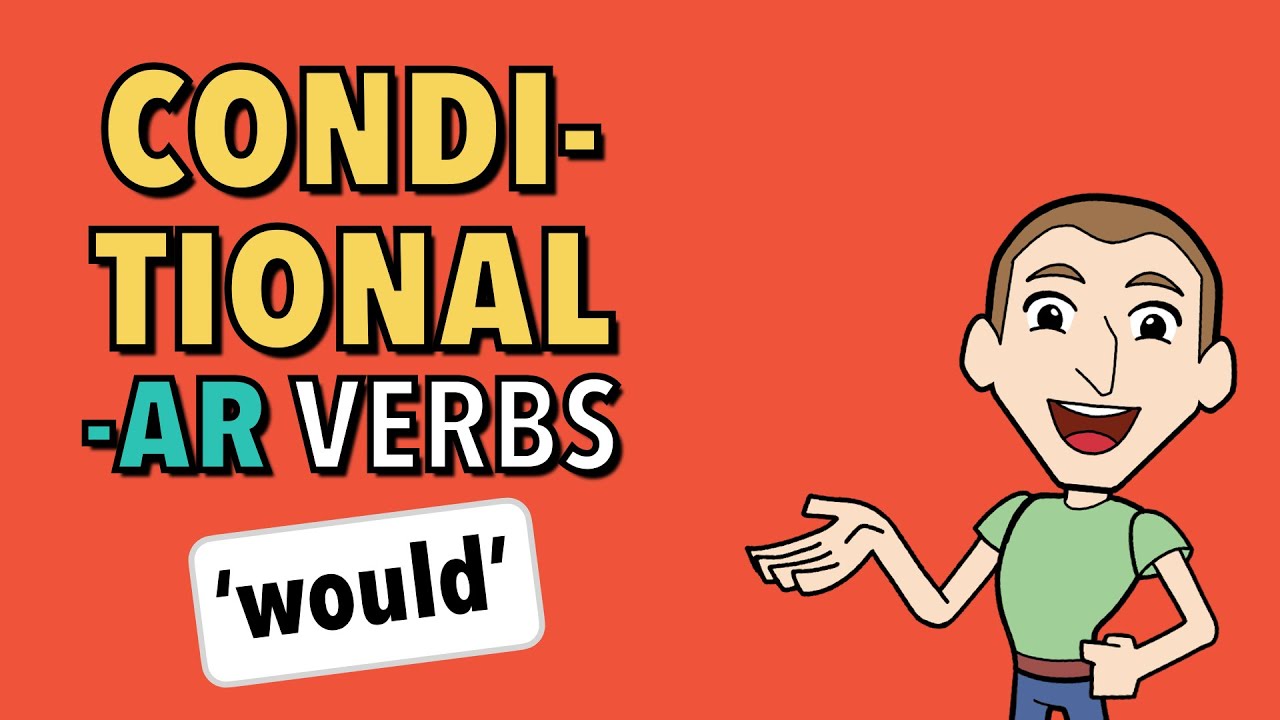
Here’s a quick video where we learn to how to use the conditional with -AR verbs in Spanish.
And this is the same formula for many -ER and -IR verbs. Of course there will be some irregulars in a future video.
The conditional is a tense or mood used to say something would happen or someone would do something.
Please like the video and share with others who could benefit. More Spanish lessons coming.
Request a topic you’d like for me to go over in a future video!
👍Please share this video with others and like it to help me get the word out on my videos!
And let me know about other troublesome topics you’d like in bite-sized form.
🔔 Subscribe for more Spanish lessons: http://bit.ly/XGe7we
Special Offer: Get a discount off your first 6 months with code CHATEOBOT! Sign up at: https://www.senorjordan.com/chat
Social Media:
* YouTube: https://www.youtube.com/SeñorJordan
* Find “señor jordan videos” on Facebook, Twitter, Instagram, and TikTok
* Soundcloud: senorjordanspanish
Enjoying the content? Consider buying me a taco!
https://ko-fi.com/senorjordan
🌐 Private Lessons Available:
Interested in improving your Spanish conversational skills? Contact me: www.senorjordan.com/clases
📚 Practice Your Spanish with My Books!
https://www.tprsbooks.com/shop/?_product_type=novel&_author=jeremy-senor-jordan&_product_language_filter=spanish
#spanish #SpanishHelp #SpanishLearning #FYP #foryourpage #senorjordan #senorjordanvideos #señorjordan #AprendeEspañol #ayudaenespañol #profesdeespañol #spanishteachers #PracticeSpanish #BasicSpanish #SpanishGrammar #Grammar #SimpleSpanish #español #SpanishLessons #FreeSpanish #SpanishMadeSimple #SpanishBite #Conditional #ARverbs

Practice Your Spanish With Chateo - a Spanish-speaking chatbot! | Get a discount off your first 6 months with code CHATEOBOT | Sign up at: https://www.senorjordan.com/chat
~~~~~~~~~~~~~~~~~~~~~~~~~~~~~~
SUBSCRIBE for more Spanish videos: http://bit.ly/XGe7we
and make sure to click the notification bell!
Follow me on Facebook: https://www.facebook.com/srjordanspanish
Tweet me: https://twitter.com/senorjordan
Check out my website: http://www.senorjordan.com
Follow me on Instagram: @senorjordanvideos
Listen to my music on Soundcloud:
https://soundcloud.com/senorjordanspanish
Listen to my music on Spotify:
https://open.spotify.com/artis....t/2nyJ9GgLNMckXCuBHU
Buy my songs on iTunes:
https://music.apple.com/us/artist/1621526948
Buy my songs on Amazon:
https://www.amazon.com/music/p....layer/artists/B09Z35
Donate to my video-making project:
https://paypal.me/srjordanvideos?country.x=US&locale.x=en_US
~~~~~~~~~~~~~~~~~~~~~~~~~~~
This video lesson covers yet another verb irregular in the preterite: hacer (to do, make).
Enjoy!
Rate this video if it was helpful!
Feel free to leave questions/comments/suggestions about this video.
For more free Spanish video lessons, word banks and verb conjugation charts, visit http://www.senorjordan.com
*Author's note*
You might hear 'tender la cama' more than 'hacer la cama' for 'to make the bed' depending on who you are talking with.
*Click CC for English subtitles!* This is a story that was made a few years ago on my Comprehensible Spanish channel.
I hope you enjoy it to practice with!
How did you do? Did you understand it? If not, watch it again and again to get more repetition of the words in the video! If this is a little too hard, try turning on the subtitles to follow along! Or watch my other Spanish in context videos or lessons for more Spanish help!
Original story:
https://www.youtube.com/playli....st?list=PLdVAUQOSGq7
~~~~~~~~~~~~~~~
👍Please share this video with others and like it to help me get the word out on my videos!
And let me know about other troublesome topics you’d like in bite-sized form.
🔔 Subscribe for more Spanish lessons: http://bit.ly/XGe7we
🤖Practice Your Spanish with Chateo! Get a discount off your first 6 months with code CHATEOBOT! Sign up at: https://www.senorjordan.com/chat
Social Media:
* YouTube: https://www.youtube.com/SeñorJordan
* Find “señor jordan videos” on Facebook, Twitter, Instagram, and TikTok
* Soundcloud: senorjordanspanish
Enjoying the content? Consider buying me a taco!
https://ko-fi.com/senorjordan
🌐 Private Lessons Available:
Interested in improving your Spanish conversational skills? Contact me: www.senorjordan.com/clases
📚 Practice Your Spanish with My Books!
https://www.tprsbooks.com/shop/?_product_type=novel&_author=jeremy-senor-jordan&_product_language_filter=spanish
~~~~~~~~~~~~~~~~~~~~~~~~~~~~~
Special thanks to Ely Saul Garcia for the intro music and Edgar Bossio for the narration and voices! And thanks to YOU for watching!

Practice Your Spanish With Chateo - a Spanish-speaking chatbot! | Get a discount off your first 6 months with code CHATEOBOT | Sign up at: https://www.senorjordan.com/chat
~~~~~~~~~~~~~~~~~~~~~~~~~~~~~~
SUBSCRIBE for more Spanish videos: http://bit.ly/XGe7we
and make sure to click the notification bell!
Follow me on Facebook: https://www.facebook.com/srjordanspanish
Tweet me: https://twitter.com/senorjordan
Check out my website: http://www.senorjordan.com
Follow me on Instagram: @senorjordanvideos
Listen to my music on Soundcloud:
https://soundcloud.com/senorjordanspanish
Listen to my music on Spotify:
https://open.spotify.com/artis....t/2nyJ9GgLNMckXCuBHU
Buy my songs on iTunes:
https://music.apple.com/us/artist/1621526948
Buy my songs on Amazon:
https://www.amazon.com/music/p....layer/artists/B09Z35
Donate to my video-making project:
https://paypal.me/srjordanvideos?country.x=US&locale.x=en_US
~~~~~~~~~~~~~~~~~~~~~~~~~~~~~~

Some food combos just shouldn’t work — until you actually try them! 🍕🍦 From fries dipped in milkshakes to peanut butter on burgers, these weird pairings might sound totally wrong but taste absolutely incredible. Ready to test your taste buds and maybe discover your new favorite snack? Let’s dive into the strangest food combos that look “ew!” but taste amazing! 🤯🍴
Animation is created by Bright Side.
----------------------------------------------------------------------------------------
Music from TheSoul Sound: https://thesoul-sound.com/
Check our Bright Side podcast on Spotify and leave a positive review! https://open.spotify.com/show/....0hUkPxD34jRLrMrJux4V
Subscribe to Bright Side: https://goo.gl/rQTJZz
----------------------------------------------------------------------------------------
Our Social Media:
Facebook: https://www.facebook.com/brightplanet/
Instagram: https://www.instagram.com/brightside.official
TikTok: https://www.tiktok.com/@bright....side.official?lang=e
Stock materials (photos, footages and other):
https://www.depositphotos.com
https://www.shutterstock.com
https://www.eastnews.ru
----------------------------------------------------------------------------------------
For more videos and articles visit: http://www.brightside.me
----------------------------------------------------------------------------------------
This video is made for entertainment purposes. We do not make any warranties about the completeness, safety and reliability. Any action you take upon the information in this video is strictly at your own risk, and we will not be liable for any damages or losses. It is the viewer's responsibility to use judgement, care and precaution if you plan to replicate.

It's true that dinosaurs disappeared thousands of years ago when a gigantic meteor struck and wiped them out. But what if we told you that one of them may have survived all these years and is currently living in Africa? This is what some residents of Congo claim, who report seeing a gigantic, scaly creature. In this video, we'll discuss this and other mysteries, as well as gather untold stories about extraordinary animals that once roamed the earth and continue to fascinate the modern world.
Animation is created by Bright Side.
----------------------------------------------------------------------------------------
Music from TheSoul Sound: https://thesoul-sound.com/
Check our Bright Side podcast on Spotify and leave a positive review! https://open.spotify.com/show/....0hUkPxD34jRLrMrJux4V
Subscribe to Bright Side: https://goo.gl/rQTJZz
----------------------------------------------------------------------------------------
Our Social Media:
Facebook: https://www.facebook.com/brightplanet/
Instagram: https://www.instagram.com/brightside.official
TikTok: https://www.tiktok.com/@bright....side.official?lang=e
Stock materials (photos, footages and other):
https://www.depositphotos.com
https://www.shutterstock.com
https://www.eastnews.ru
----------------------------------------------------------------------------------------
For more videos and articles visit: http://www.brightside.me
----------------------------------------------------------------------------------------
This video is made for entertainment purposes. We do not make any warranties about the completeness, safety and reliability. Any action you take upon the information in this video is strictly at your own risk, and we will not be liable for any damages or losses. It is the viewer's responsibility to use judgement, care and precaution if you plan to replicate.