Top Videos

After a discussion about what a parachute is and how it works, students create parachutes using different materials that they think will work best. They test their designs, and then contribute to a class discussion (and possible journal writing) to report which paper materials worked best.
View the full activity on TeachEngineering:
https://www.teachengineering.o....rg/activities/view/d
TeachEngineering has over 1,500 FREE lessons and activities. Visit https://www.teachengineering.org/ for more!
Music: Safety Net - Riot

Microcontrollers are the brains of the electronic world, but in order to play with one, you must first get it connected! For this maker challenge, students learn how to connect their Arduino microcontroller circuit boards to computers. First, students are walked through the connection process, helped to troubleshoot common pitfalls, and write their first Arduino programs (setup and loop functions, semicolons, camel case, pin 13 LED). Then they are given the open-ended challenge to create their own blinking LED code—such as writing Morse code messages and mimicking the rhythm of a heartbeat. This practice helps students become comfortable with the fundamental commands before progressing to more difficult programs.
View the full activity at TeachEngineering:
https://www.teachengineering.o....rg/makerchallenges/v
TeachEngineering has over 1,500 FREE lessons and activities. Visit http://www.TeachEngineering.org for more!
Music: Whatdafunk - Audionautix
Whatdafunk by Audionautix is licensed under a Creative Commons Attribution license (https://creativecommons.org/licenses/by/4.0/)
Artist: http://audionautix.com/

📸 Join us for an unforgettable moment as we reveal the winners of the 2023 K12 In Focus Photography Competition, live-streamed from the beautiful city of Savannah, Georgia, in partnership with the Savannah College of Art and Design!
🏆 This event will showcase the incredible talent of young photographers from across the nation, with winners announced in three categories: DSLR, Smartphone, and Film. Each grade band (K-2, 3-5, 6-8, and 9-12) will have its 1st, 2nd, and 3rd place winners revealed, highlighting the diverse creativity and skill within each age group. We will also be announcing the People's Choice Award Winners that YOU voted for!
🎉 Be part of this exciting celebration of art and innovation as we recognize and applaud the outstanding work of these young artists.
Date: January 27th, 2024
Time: 6pm Eastern Time
Location: Live-streamed on Facebook + Youtube
Hosted by: K12
Stay tuned for more updates and get ready to witness the next generation of photographers shine!
___________________________________________________________________________________________________
http://www.k12.com. K12 is the leader in online learning for grades K through 12 for two fundamental reasons: we develop our own curriculum, widely regarded as the highest quality available online, and we are devoted to fulfilling the promise of education for every child.
Engage with K12 families at https://www.facebook.com/k12inc
Connect with K12 on Google+ at http://plus.google.com/+k12
Follow us on Twitter at http://twitter.com/k12learn
Find us on Pinterest at http://pinterest.com/k12inc/

It’s alive! 🧑🔬🧪 Ever wondered how the first sci-fi novel came to be? Learn all about the origins of
“Frankenstein; or, The Modern Prometheus” in this K12 Teaching Moment!
_________________________________________________________________________________
Stay Connected with us!
Enroll Today: K12.com
Facebook: facebook.com/StrideK12
Instagram: instagram.com/k12learn
Tik Tok: tiktok.com/@stridek12

Education Week's Leaders To Learn From is a singular event that draws more than 250 superintendents, district-level administrators, policymakers, industry professionals, and other education leaders to highlight excellence in K-12 leadership and share innovative and proven solutions to the challenges facing today's public schools.
Learn more at http://edweek.org/leaders
Want more stories about schools across the nation, including the latest news and unique perspectives on education issues? Visit www.edweek.org.
About Education Week:
Education Week is America’s most trusted source of independent K-12 education news, analysis, and opinion. Our work serves to raise the level of understanding and discourse about education among school and district leaders, policymakers, researchers, teachers, and the public. Published by the nonprofit organization Editorial Projects in Education, Education Week has been providing award-winning coverage of the field for over 35 years.
Follow Education Week:
- Subscribe to our Channel: http://www.youtube.com/subscri....ption_center?add_use
- On Facebook at https://www.facebook.com/edweek/
- On Twitter at https://twitter.com/educationweek/
- On LinkedIn at https://www.linkedin.com/company/education-week
To license video footage from Editorial Projects in Education please contact the Education Week Library at library@epe.org.

SUSCRIBETE AQUÍ: https://bit.ly/3B8CNXP
Suscríbete ► http://bit.ly/SuscribeteElReinoInfantil
Síguenos/Follow us:
Facebook ► https://www.facebook.com/ElReinoInfantil
Instagram► https://www.instagram.com/reino_infantil/
Twitter ► https://twitter.com/Reino_Infantil
¡Encuentra todos nuestros productos exclusivos aquí!
►http://bit.ly/ElReinoInfantilWEB
Sammy el Heladero - Las Canciones del Zoo | El Reino Infantil
Título: Sammy el Heladero
Autor/Compositor: Johnson, Marian Margarita
Intérprete: Alina Gandini

SUSCRIBETE AQUÍ: https://bit.ly/3B8CNXP
Suscríbete ► http://bit.ly/SuscribeteElReinoInfantil
► Síguenos en Facebook: https://rebrand.ly/FacebookERI
► Síguenos en Instagram: https://rebrand.ly/InstaERI
¡Encuentra todos nuestros productos exclusivos aquí!
►http://bit.ly/ElReinoInfantilWEB
Se acerca la navidad. El burrito ve una hermosa estrella en el Cielo que indica el camino hacia el pueblo. Zenón, sus sobrinos y los animales de la Granja harán una peregrinación para visitar el hermoso pesebre gigante que se ha montado en la plaza principal para celebrar la Navidad.
Letra
Mi burrito sabanero
Con mi burrito sabanero
Voy camino de Belén,
Con mi burrito sabanero
Voy camino de Belén.
Si me ven si me ven
Voy camino de Belén. (bis)
El lucerito mañanero
Ilumina mi sendero. (bis)
Si me ven si me ven
Voy camino de Belén (bis)
Con mi cuatrico voy cantando,
Mi burrito va trotando,
Con mi cuatrico voy cantando
Mi burrito va trotando.
Si me ven si me ven
Voy camino de Belén. (bis)
Tuki tuki tuki tuki,
tuki tuki tuki ta
Apúrate mi burrito
que ya vamos a llegar.
Tuki tuki tuki tuki,
tuki tuki tuki tu
Apúrate mi burrito
vamos a ver a Jesús
Con mi burrito sabanero
Voy camino de Belén,
Con mi burrito sabanero
Voy camino de Belén.
Si me ven si me ven
Voy camino de Belén. (bis)
El lucerito mañanero
Ilumina mi sendero. (bis)
Si me ven si me ven
Voy camino de Belén. (bis)
Con mi cuatrico voy cantando,
Mi burrito va trotando,
Con mi cuatrico voy cantando
Mi burrito va trotando.
Si me ven si me ven
Voy camino de Belén. (bis)
Tuki tuki tuki tuki,
tuki tuki tuki ta
Apúrate mi burrito
que ya vamos a llegar.
Tuki tuki tuki tuki,
tuki tuki tuki tu
Apúrate mi burrito
vamos a ver a Jesús.
Con mi burrito sabanero
Voy camino de Belén,
Con mi burrito sabanero
Voy camino de Belén.
Si me ven si me ven
Voy camino de Belén. (bis)
Si me ven si me ven
Voy camino de Belén. (bis)
Título original: Mi Burrito Sabanero
Autor: ( Blanco Manzo Hugo Cesar "Hugo Blanco")
Interprete: Sofy Schiaffino

SUSCRIBETE AQUÍ: https://bit.ly/3B8CNXP
Suscríbete ► http://bit.ly/SuscribeteElReinoInfantil
Síguenos/Follow us:
Facebook ► https://www.facebook.com/ElReinoInfantil
Instagram► https://www.instagram.com/reino_infantil/
Twitter ► https://twitter.com/Reino_Infantil
¿Quieres más videos? ¡Escucha esta divertida playlist de La Granja de Zenón!
►http://bit.ly/PlaylistCancionesLaGranjaDeZenon
¡Encuentra todos nuestros productos exclusivos aquí!
►http://bit.ly/ElReinoInfantilWEB
Así Es La Granja - La Granja de Zenón 4 | El Reino Infantil
Título original: Así Es La Granja
Autor/Compositor: Cecilia Maria Teresa Rogier "Cecilia Rogier" - Eduardo Alberto Marceillac "Chacho Marceillac"
Intérprete: Duo Tiempo de Sol

Someone asked me a while back to make a video on simple sentences. I hadn’t thought of how tricky that might be to some. As a learner, I always thought of Spanish as a code. Maybe this code will help you as well!
Basically it involves a subject and a verb. And we can also add some other things to the sentence. In this video we’ll talk about one of those things: conjunctions and give some examples.
Please like the video and share with others who could benefit. More Spanish lessons coming.
Request a topic you’d like for me to go over in a future video!
👍Please share this video with others and like it to help me get the word out on my videos!
And let me know about other troublesome topics you’d like in bite-sized form.
🔔 Subscribe for more Spanish lessons: http://bit.ly/XGe7we
Special Offer: Get a discount off your first 6 months with code CHATEOBOT! Sign up at: https://www.senorjordan.com/chat
Social Media:
* YouTube: https://www.youtube.com/SeñorJordan
* Find “señor jordan videos” on Facebook, Twitter, Instagram, and TikTok
* Soundcloud: senorjordanspanish
Enjoying the content? Consider buying me a taco!
https://ko-fi.com/senorjordan
🌐 Private Lessons Available:
Interested in improving your Spanish conversational skills? Contact me: www.senorjordan.com/clases
📚 Practice Your Spanish with My Books!
https://www.tprsbooks.com/shop/?_product_type=novel&_author=jeremy-senor-jordan&_product_language_filter=spanish
#spanish #SpanishHelp #SpanishLearning #FYP #foryourpage #senorjordan #senorjordanvideos #señorjordan #AprendeEspañol #ayudaenespañol #profesdeespañol #spanishteachers #PracticeSpanish #BasicSpanish #SpanishGrammar #Grammar #SimpleSpanish #español #SpanishLessons #FreeSpanish #SpanishMadeSimple #SpanishBite
![I Tried 300 Free AI Tools and Here is The Best! [2024]](https://i.ytimg.com/vi/qcRJrOtkJ2I/maxresdefault.jpg)
🚀 Become an AI Master – All-in-one AI Learning https://aimaster.me/pro
Check out the Million Dollar Weekend deal on AppSumo! https://appsumo.com/products/m....illion-dollar-weeken [Update] Free download this AI tool: https://bit.ly/3Td1d7A to upscale old video image quality to 4K; Hardware acceleration supported, with bonus feature to convert, download, edit and record.
Million Dollar Weekend on Amazon https://www.amazon.com/Million....-Dollar-Weekend-Surp
In this latest video, we're going to explore the absolute best AI tools out there, all of which are completely free. Over 100 AI tools were launched throughout 2023, but not all of them made the cut. Nevertheless, we've selected the top ones across multiple categories: text processing, image generation, AI-driven music creation, premier video editing tools, and more, without costing you a penny. Make sure to watch the video all the way through, as the lineup is quite fascinating!

Sign up for Ahrefs: https://ahrefs.com/pricing?utm_source=AIMaster&utm_medium=youtube&utm_campaign=partnerships&utm_content=Q2_2025
🚀 Become an AI Master – All-in-one AI Learning https://aimaster.me/pro
In this video I pit Grok AI, OpenAI ChatGPT, and Google Gemini against each other in a hands-on AI comparison that answers the big question: is Grok 3 better than GPT-4? You’ll watch a streamlined ChatGPT tutorial, see how to use Google Gemini for quick research, and learn where each bot shines in AI writing, images, reasoning, and brand-new ChatGPT features (hello ChatGPT 2025 and ChatGPT Plus). I cover every matchup—grok vs chatgpt, grok 3 vs chatgpt, chatgpt vs grok 3, chatgpt vs gemini, gemini vs grok, and the full chatgpt vs gemini vs grok showdown—so you get a clear, single-score ChatGPT comparison. Thank you Ahrefs for sponsoring this video.
#sponsored #Ahrefs #AIContentHelper #BrandRadar #ai
Ahrefs AI Content Helper: https://ahrefs.com/ai-content-helper?utm_source=AIMaster&utm_medium=youtube&utm_campaign=partnerships&utm_content=Q2_2025
Ahrefs Brand Radar: https://ahrefs.com/brand-radar?utm_source=AIMaster&utm_medium=youtube&utm_campaign=partnerships&utm_content=Q2_2025
Chapters:
0:00 - Intro
0:26 - The Rules
1:02 - Important Note
1:47 - Text Generation
2:00 - Style Adhesion
5:39 - Role Playing
6:30 - Image Generation
6:44 - Convenience
7:55 - Styles
8:47 - Text in Images
9:35 - Reasoning
12:30 - Special Features
14:35 - Canvas
16:47 - Data Analysis
18:11 - Deep Research
20:03 - Custom GPTs and GEMs
21:29 - Comparing Points & Final Verdict

🚀 Become an AI Master – All-in-one AI Learning https://aimaster.me/pro
Make short clips from long videos with Vidyo.ai https://vidyo.ai/
In this video, we take a look at the best AI tools for generating sound from text (Test-to-Speech). AI Speech generators are gaining popularity and with that comes a lot of mediocre tools. So it's important to highlight the good AI Voice Tools, and preferably also the free ones! Watch the video till the end, because you can easily turn any text into quality sound.
Chapters:
00:00 - Intro
00:09 - First tool
01:20 - Easy Text-to-Speech Tool
02:30 - Hight Quality Tool
03:26 - Ultimate AI Tool
04:57 - Simplest tool
06:09 - Text-to-Speech Customization
07:16 - Anything-To-Speech
08:17 - Another Cool Tool
09:20 - Absolutely Free Tool
12:12 - Text Reader
13:20 - Actual Voice Generation
14:40 - Voice Cloning Tool
16:00 - Yep... another one tool...
16:50 - Ultimate Voice-to-Speech Tool

The first 50 people get 30% off on VEED with my code AIMASTER30 off https://bit.ly/aimasterxveed
🚀 Become an AI Master – All-in-one AI Learning https://aimaster.me/pro
Master Nano Banana with 15 game-changing prompt techniques that will transform your AI workflow forever!
This ultimate tutorial reveals the exact strategies used by top AI creators.
In this comprehensive guide, you'll discover the most powerful Nano Banana techniques that 99% of users don't know about. I'll walk you through 15 proven prompt methods that will dramatically improve your AI outputs and save you hours of work.
What you'll learn:
• 15 advanced prompt techniques for maximum results
• Step-by-step implementation guide
• Real examples with before/after comparisons
• Pro tips for optimizing every prompt
• Common mistakes that kill your results
• Advanced strategies for complex tasks
Whether you're a beginner just starting with AI or an advanced user looking to level up, this tutorial has something for everyone. I've tested these techniques across thousands of prompts to bring you only what actually works.
By the end of this video, you'll have a complete arsenal of Nano Banana techniques that will make your AI work faster, smarter, and more effective than ever before.
Subscribe for more AI tutorials and hit the bell for notifications!
CHAPTERS:
00:00 - Stop using it wrong!
00:33 - Getting Started
01:03 - The Ultimate Formula
03:09 - Perfect Portrait Photography
04:21 - Product Photography Magic
05:20 - Architectural Visualization
07:43 - Landscape Photography Mastery
08:33 - Street Photography Authenticity
09:39 - Abstract Art Creation
10:25 - Portrait Enhancement
11:25 - Background Replacement
12:10 - Color Grading Magic
13:05 - Clothing Replacement
13:53 - Artistic Style Transfer
14:47 - Lighting Modification
15:35 - Object Removal
16:30 - Atmospheric Effects
17:25 - Professional Retouching
18:24 - Conclusion and Action Steps

This concise tutorial walks you through the process of calculating the dot product of two vectors using GeoGebra. In just a few simple steps, you'll learn how to input vector coordinates, visualize them graphically, and effortlessly find the result. It's perfect for students, math enthusiasts, or anyone curious to explore how GeoGebra can simplify practical and educational tasks.
https://www.stemkb.com/dot-pro....duct-with-geogebra.h

Pass any math or algebra test by hanging out with us and watching these short videos. 10 minutes is all you need. Question 21 to 25.
Join this channel to get access to perks:
https://www.youtube.com/channe....l/UCS1YNEY54RYgt9Obz
Get Our Premium Course -- ultimate-algebra.com
Over 200+ videos with quizzes and answer site, covers pre-algebra, algebra 1 and algebra 2.
GED preparations. Get videos, lessons and tests.
https://ultimateged.com

📅 Enjoy this fun Days of the week song by Lucas & Friends with your toddlers. Watch this fun sing-along video to learn the days of the week with your kids! This catchy tune will help your little one remember all seven days, Monday through Friday, plus the weekend. With fun animations and music for children to dance and sing along to, you can help them learn while they have a good time. The whole family will love it! 🤩
Grab the kids and watch a learning video that's fun and interesting for babies, toddlers, preschoolers, and kindergartners alike. In the sing-along, 🦁 Lucas and friends make learning fun and interactive (and memorable!) The video helps kids remember the days of the week while also teaching them how to spell. ✔️ The video is available to watch in ultra HD 4K so that you can enjoy it along with your child in the highest quality possible! 📌
⦿ Days of the Week
Sunday
Monday
Tuesday
Wednesday
Thursday
Friday
Saturday
🚀 Develop your child's English vocabulary with this Days of the Week sing-along. We hope kids and parents both enjoy this educational video and learn new things. 📸 Keep your camera ready to capture the smile and happiness on your little one's face as soon as Lucas, Lilly, Ruby, and Brody turn up on the screen. 🎯
⭐ RV AppStudios is thrilled to add our newest song for kids to our collection, and one we're sure your kids will love singing along-to! 👍 As always, be sure to LIKE and SHARE this kids song to show more families that it can be easy and fun to learn 🔔 And don't forget to SUBSCRIBE for more free animated sing-along songs and nursery rhymes for kids by RV Kids! 🔥
📢 Checkout Lucas & Friends Educational Children's Books: https://www.amazon.com/Lucas-F....riends-by-RV-AppStud
🎯 Try our FREE Educational Apps for Babies & Toddlers:
🟡 Google Play: https://play.google.com/store/....apps/dev?id=74300059
🟣 iOS: https://apps.apple.com/develop....er/rv-appstudios-llc
🟢 RV AppStudios: https://www.rvappstudios.com/kidsapp.html
🌟 Fun educational videos & rhymes for toddlers by RV AppStudios:
🗒️ Learn Months of The Year - https://youtu.be/5N3w0zxEwVs
✏️ ABC Alphabet for Kids - https://youtu.be/sZicltsIO5o
✋ Body Parts for Kids - https://youtu.be/G-7AMnZLOCM
🟠 Learn Shapes for Toddlers - https://youtu.be/2czDty8m3-E
Copyright © RV AppStudios

🚀 Mercury, Venus, Earth, Mars... Can your child name all of the planets? 🌞 With a little help from Lucas & Friends and this brand new planets song for kids, now they can! 🪐 Add a little outer space delight to your kid's day with the planets song, a catchy nursery rhyme that teaches the names of all of the planets in the solar system, one by one! ⭐
🌎 It's a great way to expand your child's education, and it's a fun way for babies, preschoolers, and kids of all ages to learn all of the planets. ☀️ Help your kids learn the planets and the sun with this fun sing-along kids song. Check out this fun planet song for kids to learn all the planets of the solar system! 🌌
⦿ Planet Song Lyrics:
3…2...1... Here we go!
Mercury Venus Earth and Mars
Jupiter Saturn Uranus and Neptune.
"Do you see that bright star?"
I am The Sun
I'm the fiery ball of fire
The biggest source of light
I am Sun!
And these are all the planets!
I am Mercury
I'm the nearest to the Sun
The smallest of them all
I am Mercury!
Pa pa pa pa planet of the solar system
I am Venus
I'm the brightest in the sky
The hottest of them all
I am Venus!
Ohh so hot!
I am Earth
I have a little tilt to the side
The home planet for you
I am Earth!
Pa pa pa pa planet of the solar system
I am Mars
I've got mountains so so high
The red rusty planet
I am Mars!
Look! that's a big planet
I am Jupiter
I am the Giant planet (ha ha ha)
I have a big red spot
I am Jupiter!
Pa pa pa pa planet of the solar system
I am Saturn
My rings are so beautiful
The prettiest of them all
I am Saturn!
"Oh wow so beautiful"
I am Uranus
My rings are made of dust
The coldest of them all
I am Uranus!
Pa pa pa pa planet of the solar system
I am Neptune
I'm the windy supersonic planet
The farthest of them all
I am Neptune!
Hey is that a planet too?
I am Pluto
I used to be a planet
Mercury Venus Earth and Mars
Jupiter Saturn Uranus and Neptune.
⭐ If our video entertains your child and makes them happy, please hit the LIKE button. SHARE it with your friends and family members so that more and more kids can sing and have fun. 👍 SUBSCRIBE to our channel to watch our other nursery rhymes, kids songs, and educational videos for children and parents. 🔔 And make sure you turn on the bell icon to get notified as soon as our new videos come up. 🔥
🛍️ Official Lucas & Friends Store Now Open - https://shop.rvappstudios.com
📢 Checkout Lucas & Friends Educational Children's Books: https://www.amazon.com/Lucas-F....riends-by-RV-AppStud
🎯 Try our FREE Educational Apps for Babies & Toddlers:
🟡 Google Play: https://play.google.com/store/....apps/dev?id=74300059
🟣 iOS: https://apps.apple.com/develop....er/rv-appstudios-llc
🟢 RV AppStudios: https://www.rvappstudios.com/kidsapp.html
🌟 Fun nursery rhymes and kids songs by RV AppStudios:
📅 Days of the Week Song - https://youtu.be/fYEzqbRGwcY
🥰 Healthy Habits Kids Songs - https://youtu.be/c1D8VEJeQTk
🍎 Learn Fruits Names for Kids - https://youtu.be/vSIYV0fGEqI
🖐️ Body Parts Song For Children - https://youtu.be/yx79UMVMiBU
Copyright © RV AppStudios
#SolarSystem #Educational #LearningVideos #KidsSong

Space in infinitely big with infinite stuff in it, but buy using the power of categorisation I can fit it all into a 12 minute video. Grab the poster here: https://store.dftba.com/collec....tions/domain-of-scie
This video explores all of the things in the Universe from our Earth and local Solar System, out to the Milky Way Galaxy and looks at all of the different kinds of stars from Brown Dwarfs to Red Supergiant Stars. Then to the things they explode into like white dwarfs, neutron stars and black holes. Then we look at all the other kinds of galaxy in the universe, blazars, quasars and out to the cosmic microwave background and the big bang. It covers most of the different things that we know about in the Universe.
#space #cosmology #DomainOfScience
--- References ---
Here are a couple of references I used for further reading.
Stars info
https://owlcation.com/stem/Dif....ferent-Types-of-Star
List of space objects
https://en.wikipedia.org/wiki/....Lists_of_astronomica
--- Posters ----
DFTBA Store: https://store.dftba.com/collec....tions/domain-of-scie
RedBubble Store: https://www.redbubble.com/people/DominicWalliman
Help me make amazing science videos on Patreon:
Patreon: https://www.patreon.com/domainofscience
I have also made posters available for educational use which you can find here: https://www.flickr.com/photos/95869671@N08/
--- My Science Books ----
I also write science books for kids! You can see them all here:
http://profastrocat.com
--- Follow me around the internet you weirdo ---
http://dominicwalliman.com
https://twitter.com/DominicWalliman
https://www.instagram.com/dominicwalliman
https://www.facebook.com/domainofscience
https://www.patreon.com/domainofscience
#space #universe #cosmology #science
Narration by Dominic Walliman
Art by Dominic Walliman
Animated by Dominic Walliman
Edited by Dominic Walliman
Music by Jeremy Soule nah just kidding it was also by Dominic Walliman

This video walks you through the step-by-step process for plotting coordinates on a graph or coordinate plane by using a table.
🔴 Subscribe for more free YouTube tips: https://www.youtube.com/c/ImprovedMath
🔴 Share this video with a friend: https://youtu.be/9tKO9chHpIg
🔴 Check out this playlist:
✅ For business inquiries contact me at improvedmath@gmail.com
✅ Let's connect:
https://www.youtube.com/c/ImprovedMath
https://www.tiktok.com/@improvedmath1?
https://www.pinterest.com/improvedmath/
Improved math is a channel created to provide additional instruction on essential math concepts. I’m passionate about math and I know first-hand how important math concepts are in the real world.
Teachers, parents, guardians, homeschoolers, and students can use these videos to help reinforce math skills. These math videos are designed to help teach yourself math or provide self-study math tools to assist when additional instruction is needed. Teaching math and learning math has changed the way many students learn in this virtual environment. Having on-demand math videos can provide math tutoring needed when children are not able to get help from their teachers after school hours or when trying to do math at home.
The library of math tutorials that I create can also be used as supplemental instructional material for homeschool math. Each full-length video comes with a subsequent knowledge check or math practice problems which serve as a virtual math topic worksheet to test your understanding of each skill. These videos can be paused to work out the problems on your own, then unpaused to check your answers. All of these videos can be found under the Knowledge Check playlist.
I also have a library of shorter videos (less than 1 minute in length - shorts) that are quick math tips and tricks on basic math topics. Some of these short math help videos include problems that you can work on yourself and submit your answers in the comments. They are all listed under my Math Tips and Tricks playlist.
Improved math is creating more videos every day to cover topics from 4th grade, 5th grade, 6th grade, and 7th-grade math. The videos focus on fractions, basic math operations, geometry, and ratios but more topics are being added all the time. If there is a specific topic you would like to see covered, drop me a comment in one of my videos and let me know!
Free math help videos will be posted every Thursday and Friday. For additional math resources, check out my math help website at improvedmath.com where I post math worksheets and answers along with additional context on math basics.
Thanks for watching my channel.

This video gives you 4 practice problems for multiplying whole numbers by a power of ten. The video gives the viewer the ability to try the problems themselves before the answers are revealed. There are 2 questions to solve on multiplying whole numbers by a power of ten and 2 questions on finding the exponent index when the whole number and number in standard form is given.
🔴 Subscribe for more free YouTube tips: https://www.youtube.com/c/ImprovedMath
🔴 Share this video with a friend: https://youtu.be/nVtkDwS20eM
🔴 Check out this playlist:
✅ For business inquiries contact me at improvedmath@gmail.com
✅ Let's connect:
https://www.youtube.com/c/ImprovedMath
https://www.tiktok.com/@improvedmath1?
https://www.pinterest.com/improvedmath/
Improved math is a channel created to provide additional instruction on essential math concepts. I’m passionate about math and I know first-hand how important math concepts are in the real world.
Teachers, parents, guardians, homeschoolers, and students can use these videos to help reinforce math skills. These math videos are designed to help teach yourself math or provide self-study math tools to assist when additional instruction is needed. Teaching math and learning math has changed the way many students learn in this virtual environment and during the pandemic. Having on-demand math videos can provide math tutoring needed when children are not able to get help from their teachers after school hours or when trying to do math at home.
The library of math tutorials that I create can also be used as supplemental instructional material for homeschool math. Each full-length video comes with a subsequent knowledge check or math practice problems which serve as a virtual math topic worksheet to test your understanding of each skill. These videos can be paused to work out the problems on your own, then unpaused to check your answers. All of these videos can be found under the Knowledge Check playlist.
I also have a library of shorter videos (less than 1 minute in length - shorts) that are quick math tips and tricks on basic math topics. Some of these short math help videos include problems that you can work on yourself and submit your answers in the comments. They are all listed under my Math Tips and Tricks playlist.
Improved math is creating more videos every day to cover topics from 4th grade, 5th grade, 6th grade, and 7th-grade math. The videos focus on fractions, basic math operations, geometry, and ratios but more topics are being added all the time. If there is a specific topic you would like to see covered, drop me a comment in one of my videos and let me know!
Free math help videos will be posted every Thursday and Friday. For additional math resources, check out my math help website at improvedmath.com where I post math worksheets and answers along with additional context on math basics.
Thanks for watching my channel.

If you want some extra practice on how to add negative integers, you have come to the right place! If all of your integers are negative, the answer will always be negative. If you are adding both positive and negative integers, you will need to subtract the absolute value of the integers. The answer will be the same sign as the integer with the largest absolute value. Don’t forget to check out the bonus problem and leave me your answer in the comments!
Understanding basic math isn’t just about crunching numbers; it's about fine tuning problem-solving abilities, making informed decisions, and gaining deeper insight into the world around us. From everyday tasks to complex situations, math plays a pivotal role.
Just as important is cultivating critical thinking skills. Learning how to analyze and evaluate information is needed to arrive at well-informed conclusions. Discover why these skills are the cornerstone of innovation, creativity and rational decision-making.
Math isn’t just confined to the classroom but is essential in all aspects of life from personal finance and career success to daily decision-making and creative endeavors.
Thank you so much for watching!
💡 Subscribe for more free YouTube tips: https://www.youtube.com/c/ImprovedMath
💡Share this video with a friend: https://youtu.be/Yo6tak167U0
✅ Let's connect:
For email inquiries: improvedmath@gmail.com
https://www.youtube.com/c/ImprovedMath
https://www.tiktok.com/@improvedmath1?
https://www.pinterest.com/improvedmath/

Check out @crashcourse Botany! https://www.youtube.com/watch?v=2th5lAd-77A
↓↓↓ More info and sources below ↓↓↓
Does any other creature on Earth undergo a life transformation as dramatic as the butterfly? I think not. Unfortunately, children's books about very hungry caterpillars skip all the COOL and WEIRD and GROSS stuff that happens along the way. It's time to dig into all the mind-blowing biology behind metamorphosis!
Filmed on location at the California Academy of Sciences
0:00 We were lied to as kids
1:48 Metamorphosis is more common than you think
3:36 It starts with an egg
4:46 Eat/Poop/Grow
6:05 Busting the biggest butterfly myth of all
7:23 Time to take your skin off
8:40 Inside the "sack of magic"
11:08 Metamorphosis,… metamorphosis everywhere
11:55 Why do butterflies do this?
13:42 Sign up for our Patreon!
High fives to all our Brain Trust Patrons:
Holly, Brett, and Ashe Bullion
Jaap Westera
Millennial Glacier
Mehdi Damou
Barbora Bei
Burt Humburg
dani bowman
David Johnston
Baerbel Winkler
Robert Young
Eric Meer
Dustin
Karen Haskell
Join us on Patreon!
https://patreon.com/itsokaytobesmart
Twitter
http://www.twitter.com/DrJoeHanson
http://www.twitter.com/okaytobesmart
Instagram
http://www.instagram.com/DrJoeHanson
http://www.instagram.com/okaytobesmart
Merch
https://store.dftba.com/collec....tions/its-okay-to-be
Facebook
https://www.facebook.com/itsokaytobesmartpbs/

Empathy is a term we hear a lot, but what does it mean and how does it work? Looking back through art history, we find many moments when art has allowed us to share in the feelings of others, from Maya Lin's Vietnam Veterans Memorial, to representations of the Buddhist deity Jizō Bosatsu, along with the Röttgen Pietà, Guáman Poma's First New Chronicle and Good Government, the ink drawings of Chittaprosad and Zainul Abedin, the work of Ghana Think Tank, and more.
#art #AParthistory #empathy
Thanks to our Grandmasters of the Arts Vincent Apa and Ernest Wolfe, and all of our patrons, especially Iain Eudaily, Patrick Hanna, Nichole Hicks, Eve Leonard, David Moore, Frame Monster Design Laboratory, Jane Quale, Constance Urist, and Nicholas Xu. To support our channel, visit: http://www.patreon.com/artassignment.
This episode was made in partnership with Smarthistory, the most-visited art history website in the world (https://smarthistory.org). Subscribe to their channel today: https://www.youtube.com/user/smarthistoryvideos
Empathy: https://plato.stanford.edu/entries/empathy/
http://blog.yalebooks.com/2018..../11/21/the-origin-of
Goya's The Third of May 1808: https://smarthistory.org/goya-third-of-may-1808/
Röttgen Pietà: https://www.khanacademy.org/hu....manities/ap-art-hist
Jizō Bosatsu: https://smarthistory.org/jizo-bosatsu/
https://www.metmuseum.org/art/....collection/search/44
Felipe Guaman Poma de Ayala: http://www.kb.dk/permalink/200....6/poma/info/en/front
https://www.khanacademy.org/hu....manities/art-america
Chittaprosad: https://hyperallergic.com/4396....19/the-artist-who-sk
https://www.documenta14.de/en/....artists/21960/chitta
Zainul Abedin: https://www.documenta14.de/en/....artists/21944/zainul
Käthe Kollwitz: https://www.khanacademy.org/hu....manities/ap-art-hist
Vietnam Veterans Memorial: https://smarthistory.org/maya-....lin-vietnam-veterans
Alfredo Jaar's Rwanda Project: https://art21.org/read/alfredo....-jaar-the-rwanda-pro
Ghana ThinkTank: http://www.ghanathinktank.org/
https://www.youtube.com/watch?v=ZRqJ-qPFvko&t=196s
Follow us elsewhere for the full Art Assignment experience:
Twitter: http://twitter.com/artassignment
Instagram: http://instagram.com/theartassignment/
Facebook group: https://www.facebook.com/group....s/artassignmentextra
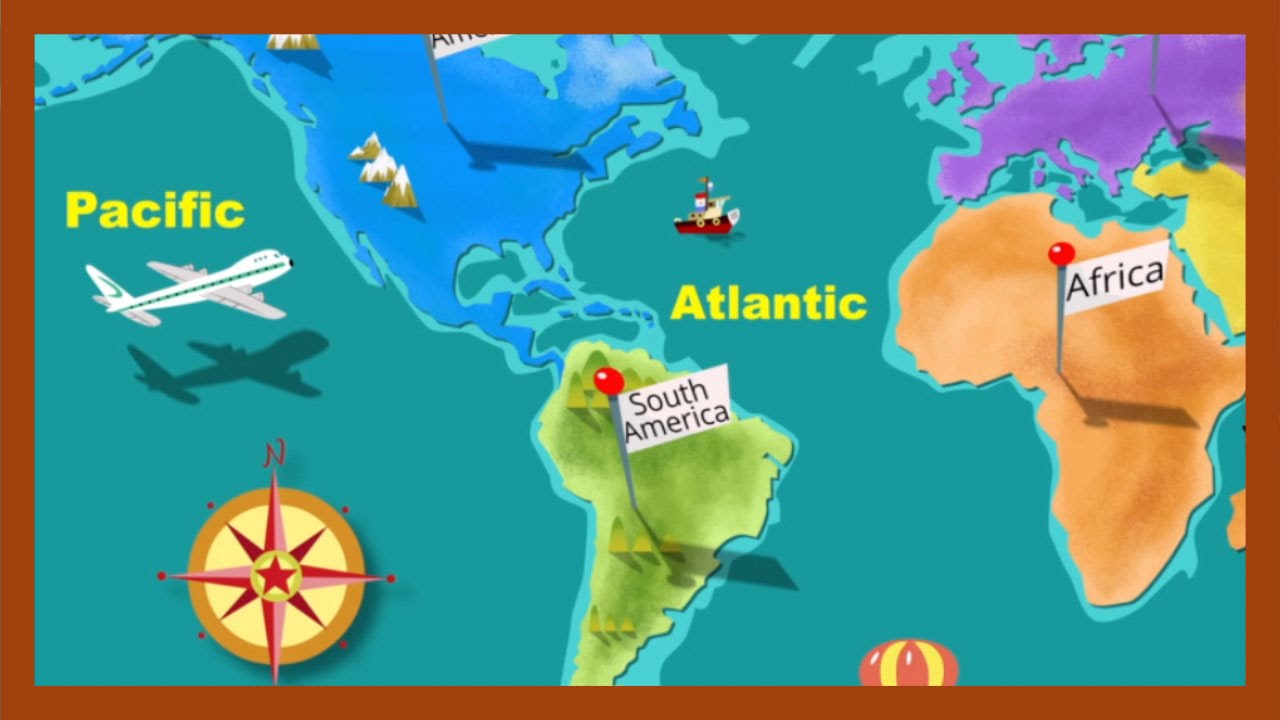
Parents, learn more about ABCmouse.com at www.abcmouse.com/abc/youtube
"Continents and Oceans” (See below for lyrics)
Traverse across “Continents and Oceans” and learn a little about each in this smooth and catchy tune by ABCmouse.com. Which continent has the most people? How about the least? Which one is the hottest? Can you name all five oceans? Our Earth is a very big place covered by water and land; learn about its seven continents and five oceans, because someday you might travel to each!
Song Lyrics:
Our Earth is a very, very, very big place!
It is covered by water and land.
It has five huge oceans, where we can swim,
And seven continents, where we can stand.
Asia is the continent that has the most people.
It’s also the largest in size.
It has the 50 highest mountains in the world—
Their peaks reach high into the skies.
Second largest is Africa.
It’s the hottest continent of all.
It has the largest sandy desert in the world
And animals both large and small.
If Africa’s hottest, then which is the coldest?
Antarctica—but it’s so very cold.
It’s only home to seals, penguins,
and other birds.
Though there’s snow, it’s the driest, I’m told!
And which is the wettest? It’s South America!
Rainforests cover much of its face.
Millions of animal species live there.
You’ll find them all over the place!
Our Earth is a very, very, very big place!
It is covered by water and land.
It has five huge oceans, where we can swim,
And seven continents, where we can stand.
Let’s look at Australia.
It’s the smallest of continents.
The fewest people call it home.
Most of its land is the bushland and outback,
Where koalas and kangaroos roam.
Now on to Europe. Though it’s rather small,
It has dozens of famous old cities.
Berlin, Madrid, Paris, London, and Rome—
Each city is uniquely pretty!
Last but not least is North America.
It’s the continent that I know best.
It is the home of our own United States—
A wonder from East Coast to West!
But let’s not forget, there are also five oceans.
Please let me be quite specific.
Their names are the Southern, Atlantic,
and Arctic,
The Indian, and the Pacific!
Our Earth is a very, very, very big place!
It is covered by water and land.
It has five huge oceans, where we can swim,
And seven continents, where we can stand.
I hope you learned something
about all the continents
And the names of our five oceans.
Hopefully, someday you will travel to each,
But only if you get the notion!
Our Earth is a very, very, very big place!
It is covered by water and land.
It has five huge oceans, where we can swim,
And seven continents, where we can stand.
About Us:
ABCmouse.com is an award-winning website that uses a variety of activities, including these songs, to help children build a strong foundation for future academic success. ABCmouse.com Early Learning Academy provides a full online curriculum from preschool through 2nd grade, with more than 10,000 interactive learning activities that teach the subjects of reading, math, science, social studies, art, and music.
© Age of Learning, Inc. All rights reserved.

Everyone is familiar with liquid water, ice and water vapour, but what are the differences between these three states of matter? Solids, liquids and vapours of the same substance differ in the motion of the molecules and the distance between them.
Animations courtesy of VisChem (Trade Mark), Copyright 1995, Roy Tasker. Thanks for all your help!