Top videos

Types of Government for kids will explain all of the various forms of government and the countries that use them. From Democracy to Dictatorship we will learn about what they mean, what living conditions are like, how they started, and much more!
Here is a sample of each of the kinds of governments and what they mean.
Democracy - People have freedom
Dictatorship - People have very little freedom, if any at all.
Monarchy - People have nearly the same freedoms as in a democracy.
Theocracy - Freedom is limited to what the religion allows.
Totalitarian - Little freedom, and nothing ever changes.
Anarchy - There is freedom, but life is usually very dangerous.
Be sure to download our free 9 page lesson plan on government types built for grades 5-6 here: https://learnbright.org/lesson....s/social-studies/gov
Thank you for watching and learning with us! We’re constantly releasing new content and videos so click that “Subscribe” button and you’ll notified.
Find and Follow Us Online:
Facebook: https://www.facebook.com/LearnBright/
Instagram: https://instagram.com/LearnBrightEducation
Pinterest: https://pinterest.com/LearnBrightEducation
YouTube: https://www.youtube.com/LearnBright
Website: https://learnbright.org/
*Teachers and Parents! Did you know? In addition to these great videos, we have also created a library of high quality and engaging lessons for your elementary aged student(s). Visit us, sign up for a free account, and instantly you'll have access to thousands of lesson plans, learning materials, teaching instructions, activities, and assignments that your kids will really enjoy! We hope to see you soon!
Browse our entire collection of Social Studies lesson plans: https://learnbright.org/lessons/?filter_subject=social-studies
#TypesofGovernment

Pilgrims for Kids will give you a brief history of the Pilgrims and the first Thanksgiving.
It all happened about 400 years ago. There was a group of travelers who came to America in search of religious freedom. They wanted to worship God in their own way in England, but they were not permitted. Instead, they boarded ships and went on a journey. These people are referred to as the Pilgrims.
The Pilgrims left Europe for America on September 20, 1620, and
established a colony called Plymouth. A colony is an area set up by a group of people who have usually traveled from the same country. It is a place where they settle to live, work, and raise their families.
Although the Pilgrims were happy to have settled in America, they faced a difficult and cold winter. They were not prepared. They built a large house and some smaller homes, but for a period of time people still slept on the Mayflower. Many of the Pilgrims died during the winter and of the 102 people who came across the Atlantic Ocean only 47 were still alive.
There were Native Americans living in the same area as the Pilgrims. Native Americans are the people who were already living on the land before the Pilgrims arrived in what is now known as America. They established a peace treaty with the Pilgrims. The Native Americans also agreed to trade for animal furs.
Some of the Native Americans also chose to stay with the Pilgrims and taught them how to plant corn, hunt, fish, and how to survive the cold winter.
After the first harvest in 1621, the Pilgrims invited some of the Native Americans to join them for a feast. Sometimes this is referred to as the first Thanksgiving as the tradition continued after every harvest in the years that followed.
View our video "The First Thanksgiving" that coincides with this video here: https://www.youtube.com/watch?v=9EZNCuQkWNU
Would you like more resources about Pilgrims and Thanksgiving? Click the link below to be taken to our detailed lesson plans with great ideas for teaching elementary aged students.
Pilgrims Lesson Plan:
https://learnbright.org/lesson....s/social-studies/the
Thanksgiving Lesson Plan:
https://learnbright.org/lesson....s/social-studies/tha
Thank you for watching and learning with us! We’re constantly releasing new content and videos so click that “Subscribe” button and you’ll notified.
Find and Follow Us Online:
Facebook: https://www.facebook.com/LearnBright/
Instagram: https://instagram.com/LearnBrightEducation
Pinterest: https://pinterest.com/LearnBrightEducation
YouTube: https://www.youtube.com/LearnBright
Website: https://learnbright.org/
*Teachers and Parents! Did you know? In addition to these great videos, we have also created a library of high quality and engaging lessons for your elementary aged student(s). Visit us, sign up for a free account, and instantly you'll have access to thousands of lesson plans, learning materials, teaching instructions, activities, and assignments that your kids will really enjoy! We hope to see you soon!
Browse our entire collection of Social Studies lesson plans: https://learnbright.org/lessons/?filter_subject=social-studies
#ASL
#PilgrimsForKids
#FirstThanksgiving

Verbs are a necessary part of virtually every sentence. There are only two kinds of verbs: action and being verbs. Do you know the difference between the two? In this video, you and your kids will learn the verbs that fall into the action group and the ones that fall into the being group.
A verb is a basic part of speech that shows an action, occurrence, or state of being. Action verbs show action or occurrence while being verbs describe a state of being. Most of the time, verbs show action. Examples include, run, play, study, go, drive, and chase. In the sentence My cat chases mice, what is the verb? You probably figured it out! Try switching the verb for another one and see how the sentence changes.
Action verbs essentially describe what someone or something did. Some verbs are a little less obvious. In the sentence Mom and Andrew went shopping yesterday, the verb is went. There are a ton of action verbs, but only eight being verbs! They are is, am, are, was, were, be, being, and been. It is a good idea to memorize this list so you can always remember the being verbs. As you can see, verbs are very important in sentences. Without them, sentences would fall apart!
We hope you and your student(s) enjoyed learning how to identify verbs! If you want even more practice, head over to our website and download any of our many free lesson plans about verbs, full of activities, worksheets, and more!
https://learnbright.org/?s=verbs&post_type=product
What you will learn in Action and Being Verbs:
0:00 Introduction to the two kinds of verbs
0:39 Action verbs
1:45 Quick quiz
2:40 The 8 being verbs
3:37 Find the being verb
4:26 Chart of 8 being verbs
Thank you for watching and learning with us! We’re constantly releasing new content and videos, so click that “Subscribe” button to get notified of any new content.
Find and Follow Us Online:
Facebook: https://www.facebook.com/LearnBright/
Instagram: https://instagram.com/LearnBrightEducation
Pinterest: https://pinterest.com/LearnBrightEducation
YouTube: @LearnBright
Website: https://learnbright.org/
*Teachers and Parents! Did you know? In addition to these great videos, we have also created a library of high-quality and engaging lessons for your elementary aged student(s). Visit us and sign up for a free account, and you will instantly have access to thousands of lesson plans, learning materials, teaching instructions, activities, and assignments that your kids will really enjoy! We hope to see you soon!
Browse our entire collection of Language Arts lesson plans: https://learnbright.org/lessons/?filter_subject=language-arts
#ASL
#ActionAndBeingVerbs
#ActionVerbs
#BeingVerbs

In this video we learn how and when to capitalize. We learn about 6 main capitalization rules, the difference between common and proper nouns, and many other techniques so that students will learn when and when not to capitalize words or letters in the English language.
The 6 main rules we cover in this video are:
1. The first work in every sentence must be capitalized.
2. The word "I" is always capitalized no matter where it is in the sentence.
3. Names of people and pets are always capitalized.
4. Proper names of places and things are capitalized.
5. Titles are always capitalized.
6. We always capitalize the days of the week, months of the year, holidays and other important events.
Looking for more capitalization resources? Download our free comprehensive lesson plan here: https://learnbright.org/?s=capitalization
Thank you for watching and learning with us! We’re constantly releasing new content and videos so click that “Subscribe” button and you’ll notified.
Find and Follow Us Online:
Facebook: https://www.facebook.com/LearnBright/
Instagram: https://instagram.com/LearnBrightEducation
Pinterest: https://pinterest.com/LearnBrightEducation
YouTube: https://www.youtube.com/LearnBright
Website: https://learnbright.org/
*Teachers and Parents! Did you know? In addition to these great videos, we have also created a library of high quality and engaging lessons for your elementary aged student(s). Visit us, sign up for a free account, and instantly you'll have access to thousands of lesson plans, learning materials, teaching instructions, activities, and assignments that your kids will really enjoy! We hope to see you soon!
Browse our entire collection of Language Arts lesson plans: https://learnbright.org/lessons/?filter_subject=language-arts
#ASL
#Capitalization
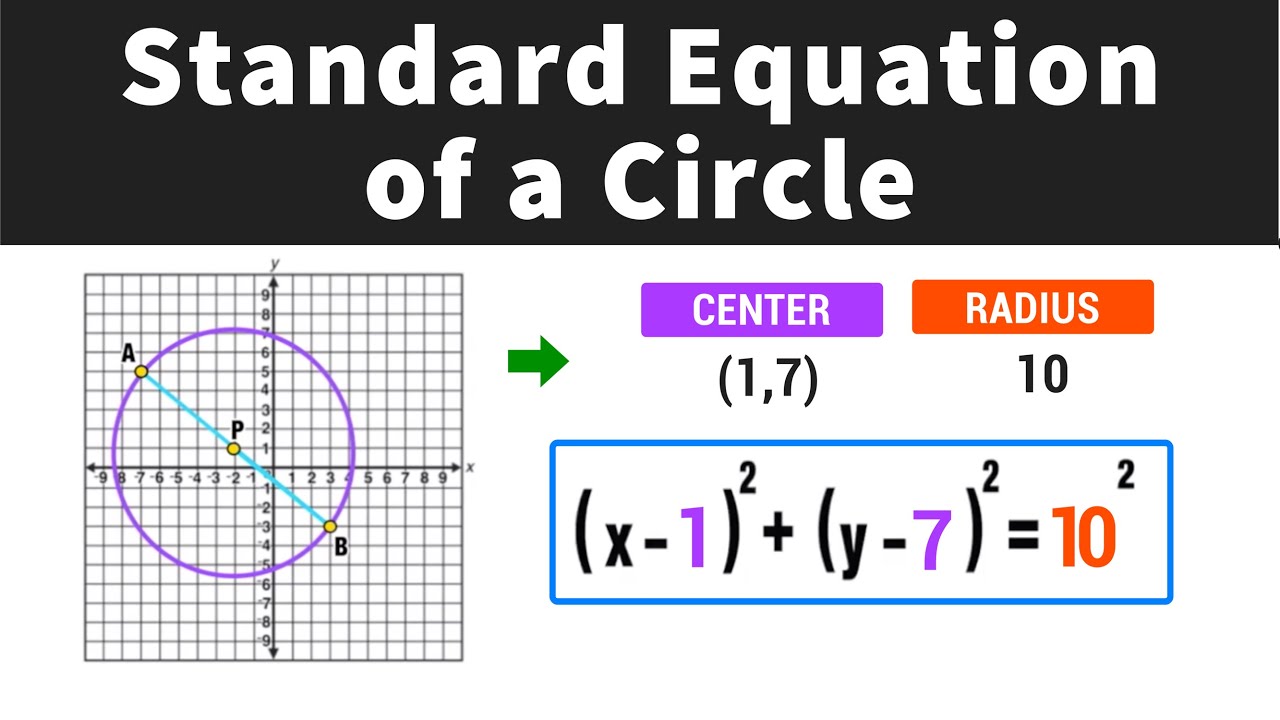
In this lesson, we will work through three practice problems where you have to find the standard equation of a circle (also known as the standard equation of a circle). Find the equation of the circle...
Tags: find the equation of the circle, equation of a circle, standard form of a circle, standard equation of a circle, general form of a circle, general equation of circle, center radius form, radius equation, center and radius calculator, find the center and radius of the circle, standard form equation of a circle, circle graph equation
#MashupMath
★ Want more FREE weekly math videos? Subscribe Now: http://bit.ly/1OVJnyh
★★ Why Math? Download YOUR Free eBook and sign-up for our FREE weekly newsletter: http://www.mashupmath.com/resources/

This statistics video tutorial provides a basic introduction into cumulative distribution functions and probability density functions. The probability density function or pdf is f(x) which describes the shape of the distribution. It can tell you if you have a uniform, exponential, or normal distribution. The cumulative distribution function or cdf allows you to calculate the area under the curve to the left of some point of interest in order to evaluate the accumulated probability.
Introduction to Probability:
https://www.youtube.com/watch?v=SkidyDQuupA
Probability Formulas:
https://www.youtube.com/watch?v=bddckR734aM
Probability Explained:
https://www.youtube.com/watch?v=UORztmWGY6Q
Probability With Geometry:
https://www.youtube.com/watch?v=DeH5aHWxEaI
Probability of Complementary Events:
https://www.youtube.com/watch?v=0T-CaQCiSf4
Conditional Probability:
https://www.youtube.com/watch?v=sqDVrXq_eh0
__________________________________
Independent and Dependent Events:
https://www.youtube.com/watch?v=lWAdPyvm400
Probability of Mutual Exclusive Events:
https://www.youtube.com/watch?v=X6usGgwXFyU
Multiplication and Addition Rule:
https://www.youtube.com/watch?v=94AmzeR9n2w
Compound Probability:
https://www.youtube.com/watch?v=EHU6pVSczb4
Expected Value:
https://www.youtube.com/watch?v=b6VK2VPMXNI
Probability Tree Diagrams:
https://www.youtube.com/watch?v=w4wKXVwtGac
___________________________________
Bayes Theorem:
https://www.youtube.com/watch?v=OByl4RJxnKA
Probability - Binomial Distribution:
https://www.youtube.com/watch?v=3PWKQiLK41M
Probability - Geometric Distribution:
https://www.youtube.com/watch?v=d5iAWPnrH6w
Probability - Poisson Distribution:
https://www.youtube.com/watch?v=m0o-585xwW0
Continuous Probability Distributions:
https://www.youtube.com/watch?v=QxqxdQ_g2uw
Probability Density Functions:
https://www.youtube.com/watch?v=3xAIWiTJCvE
__________________________________
Probability - Uniform Distributions:
https://www.youtube.com/watch?v=KfunVw-0AH0
Probability - Exponential Distributions:
https://www.youtube.com/watch?v=J3KSjZFVbis
Probability - Normal Distributions (Calculus):
https://www.youtube.com/watch?v=gHBL5Zau3NE
Probability - Standard Normal Distributions:
https://www.youtube.com/watch?v=CjF_yQ2N638
Probability - The Law of Large Numbers:
https://www.youtube.com/watch?v=ihTpK6dXSas
___________________________________
Final Exams and Video Playlists:
https://www.video-tutor.net/

-----------------
It's Okay To Be Smart is written and hosted by Joe Hanson, Ph.D
Follow me on Twitter/Instagram: @DrJoeHanson @okaytobesmart
Email me: itsokaytobesmart AT gmail DOT com
Facebook: http://www.facebook.com/itsokaytobesmart
For more awesome science, check out: http://www.itsokaytobesmart.com
Produced by PBS Digital Studios: http://www.youtube.com/user/pbsdigitalstudios
Joe Hanson - Creator/Host/Writer
Joe Nicolosi - Director
Amanda Fox - Producer, Spotzen Inc
Kate Eads - Associate Producer
Andrew Matthews - Editing/Motion Graphics/Animation
Katie Graham - Director of Photography
John Knudsen - Gaffer
Dalton Allen - Post-Production Intern
Theme music:
"Ouroboros" by Kevin MacLeod
Other music via APM
Stock images from Shutterstock, stock footage from Videoblocks
-----------------
Last week's video:
The Recipe For Life https://www.youtube.com/watch?v=tuBWjY9BpEc
More videos:
Why Does February Have 28 Days? https://www.youtube.com/watch?v=AgKaHTh-_Gs
Why Vaccines Work https://www.youtube.com/watch?v=3aNhzLUL2ys
Why Are Some People Left-Handed? https://www.youtube.com/watch?v=NPvMUpcxPSA
Where Does the Smell of Rain Come From? https://www.youtube.com/watch?v=lGcE5x8s0B8
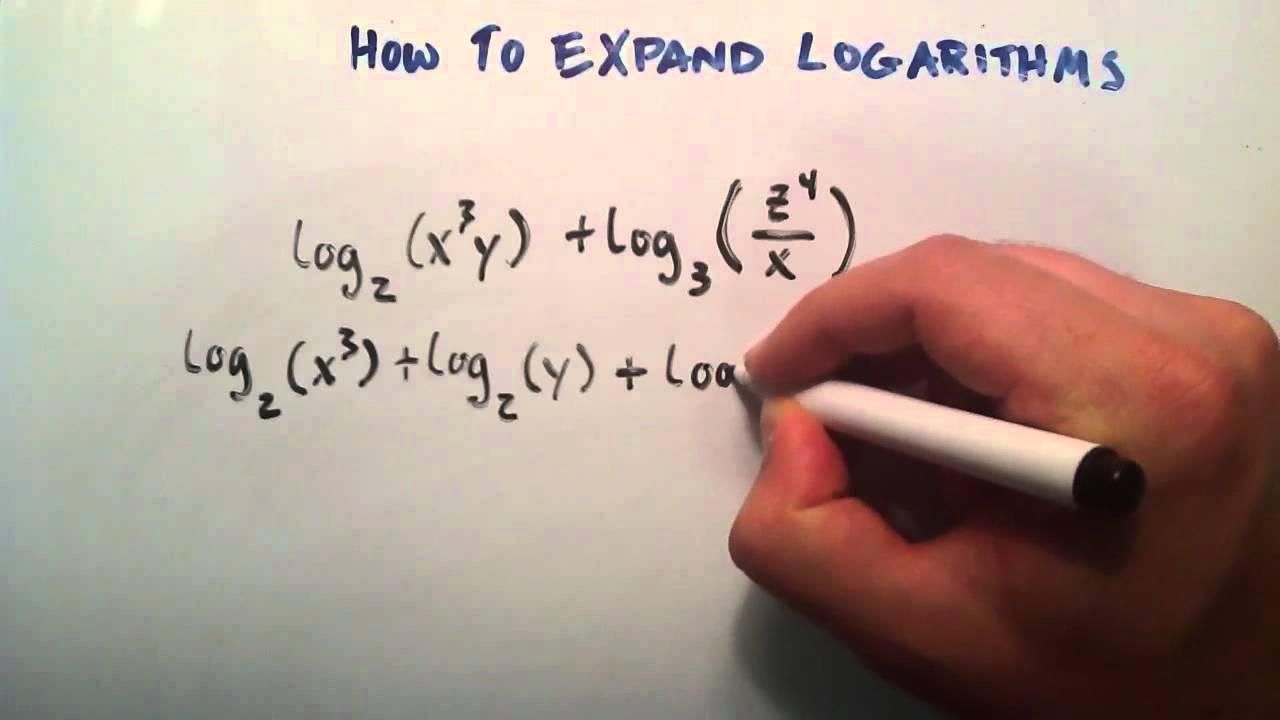
This tutorial provides another example on how to expand logarithms.
Join this channel to get access to perks:
https://www.youtube.com/channe....l/UCn2SbZWi4yTkmPUj5
:)

WWW.HARRYKINDERGARTENMUSIC.COM
...or find me on Teachers Pay Teachers!
www.teacherspayteachers.com/St....ore/Harry-Kinder
HARRY KINDERGARTEN MUSIC, LLC
Hip educational songs & videos for the K-2 Classroom!
Song: DOUBLES! DOUBLES! (1-10 VERSION)
Educational Content: Practicing "doubles" addition; This version has both the "small doubles" and the "big doubles" in one song, whereas my previous versions repeated one or the other in both verses.
1+1=2
2+2=4
3+3=6
4+4=8
5+5=10
6+6=12
7+7=14
8+8=16
9+9=18
10+10=20
Buy! *www.harrykindergartenmusic.com
Buy! *www.teacherspayteachers.com/St....ore/Harry-Kinder
Watch! *youtube.com/harrykindergarten
Discuss! * facebook.com/groups/harrykindergarten
Tweet! * twitter.com/harrykmusic
Logo Merchandise! * cafepress.com/harrykindergarten
Pledge! *patreon.com/harrykindergarten
Email! *pete@harrykindergartenmusic.com
HARRY KINDERGARTEN MUSIC FREEBIES:
This song is a FREEBIE. You can stream it for free on YouTube, but also buy it at my website. I am already offering 60+ of my hip educational songs/videos on YouTube FOR FREE at youtube.com/harrykindergarten. Enjoy them, utilize them, and share them! I am a current full-time Kindergarten teacher so I know what it's like to be looking around for quality content in my classroom! You can ALSO purchase the raw video file and/or audio file of those 60+ songs at my website (if you need them for some reason) or at Teachers Pay Teachers. I will continue to make freebie videos (ones you can just stream on YouTube for free) periodically, so continue to check back to see if I've posted any.
*Please DO NOT rip any of my videos off of YouTube and upload them to your YouTube channel. I want the Harry Kindergarten Music channel to be the hotspot for these videos, not random teachers' channels who happened to illegally take them off of mine. If you really want to have a playlist of them, create a playlist from MY channel or purchase them on my website so you have the raw files. THANKS FOR UNDERSTANDING!
Q: Do you speak at conferences?
A: Yes! My ability to speak at teacher conferences during the school year is "tight" because I am currently a classroom teacher and only have a set number of personal days. However, the SUMMER time is wide-open and I'd love to come to your conference and do a session/seminar! Some of the topics I've typically spoken to teachers about include music and technology in the classroom, classroom management, running a creative morning meeting, and utilizing YouTube in the early childhood classroom. Email me at pete@harrykindergartenmusic.com to make a speaking request.
Q: Can my class perform a "Harry Kindergarten song" for an audience?
A: If you desire to have your class or group of students perform one of my “Harry Kindergarten” songs for an audience, please note that there is a $6.00 PERFORMANCE FEE.
Here are some hypothetical examples of performance groups:
* Students perform a song for an audience during a graduation ceremony.
* Students perform a song for an audience during a school or community talent show.
* Students perform a song for an audience during a school assembly.
If you are unsure if you need to purchase a performance license or not, please inquire at: pete@harrykindergartenmusic.com. If you want more details about using a song multiple years or multiple classes, etc., e-mail me for a detailed PDF file.
$6.00 can be sent to:
Harry Kindergarten Music, LLC
508 Stewart Street
Bellwood, PA 16617
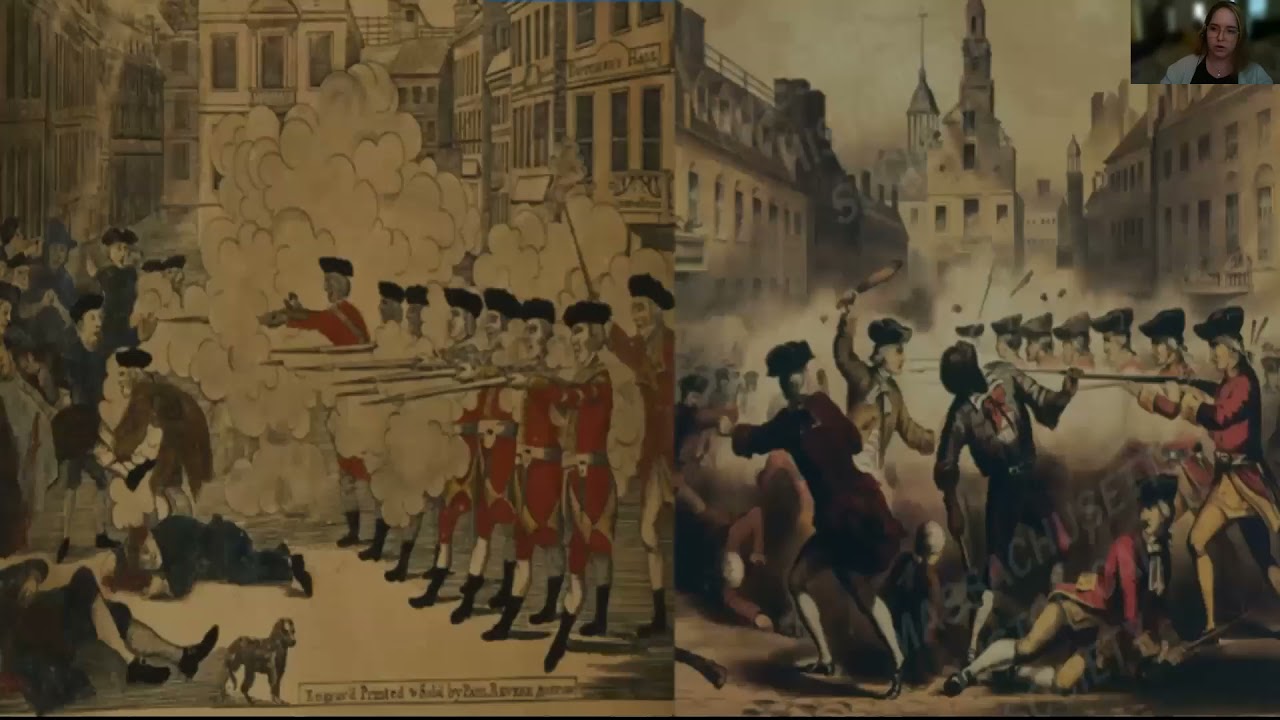
This is a lesson video as part of an application to the Ohio K12 school. The standard for OH is SS.5. "The ideas of the Enlightenment and dissatisfaction with colonial rule led English colonists to write the Declaration of Independence and launch the American Revolution"

WEBSITE: http://www.teachertube.com provides instruction on how to draw a simple tessellation

🔗 Next Video: https://youtu.be/hohfCC_NG-w
📚 Full Chapter Playlist: https://www.youtube.com/playli....st?list=PL8Zn2mbi6w2
📘 Class 3 Math | New Book | Chapter 3: Fractions
In this video Exercise 2 | Unit No 03 Fractions | Class 3 Math (PTB Book), students will learn how to compare and identify fractions with clear step-by-step explanations. This lesson covers equivalent fractions, comparing fractions using numerator and denominator, and solved examples for better understanding. Designed according to the Class 3 syllabus, it helps students build confidence in fractions. Perfect for Class 3 students, parents, and teachers who want simple and effective guidance in Unit 3.
#class3maths #fractions #mathforkids #equivalentfractions #Class3Exercise2 #mathlearning #Class3Fractions #mathematics #kidseducation #fractionsmadeeasy
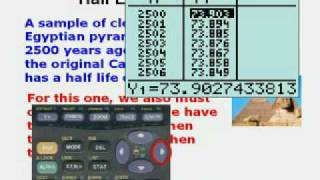
WEBSITE: http://www.teachertube.com The video shows how to use the exponential regression feature on the TI83 and TI84 series calculators to determine exponential functions. It also shows how to evaluate the functions. Specific examples include growth rate half life and musical tone problems. The video also shows how to paste the function from the regression to the function editor to speed up the evaluation process and eliminate opportunities for mistakes.
Diana and Roma can teach you how to count from 1 to 10 with a fun game.
Subscribe to Kids Diana Show - http://bit.ly/2k7NrSx
https://www.instagram.com/kidsdianashow/ Facebook https://www.facebook.com/KidsDianaShowOfficial/

Welcome to WildBrain Learning for Kids! Click here for more videos just like this: https://www.youtube.com/watch?v=kZ_8WG4AYiw&list=PL2F3nYtGth8ekgeYv_-G8GCouZt9Kz1Qp&index=2&t=0s
SUBSCRIBE to Learning for Kids ➡️➡️➡️ https://www.youtube.com/channel/UC101…
To see more of the Monster Math Squad, be sure to check out the playlist below:
https://www.youtube.com/watch?v=S54WKXvvYnQ&list=PL2F3nYtGth8cdCU5BCAU3-Zc-DIOeH6To&index=19
Calling all parents… Any questions/suggestions? Chat to us:
http://bit.ly/WB-Twitter | http://bit.ly/WB-Facebook | http://www.wildbrain.com
Learning for Kids brings you a fun, interactive, brand new series for you to learn your numbers, Monster Math Squad. Monster Math Squad stars MAX, LILY and GOO. While they may not be the biggest, or bravest (or even the brainiest) monsters on the block, the Squad love nothing better than to put their monster minds together and use their math skills to overcome any obstacle they face… even ones with two left feet or ten thumbs.
Each story features a job for the Squad, helping a monster with a unique problem. Along the way they face a variety of small challenges that require learning and using numeracy skills en route to and saving the day. The Monster Math Squad are quite simply mad for math and all things “mathy”… counting, measuring, sizing, sorting, exploring shapes, patterns, time… you name it, it’s all math to these monsters. For the Monster Math Squad, math can solve any problem. The series’ mission is to promote the love of numeracy, the idea that math is everywhere, and math is fun!
Monster Math Squad is a great way to teach young children and kids how to solve math problems. It’s an early learning programme designed to engage children in the world of math in a fun and creative way. The show is also suitable to teach math to toddlers and make it interesting. Unleash the power of mathematics for children with Monster Math Squad. Stay tuned to Learning for Kids for more of the Monster Math Squad, the show that teaches mathematics to children.
Learning For Kids is the only destination for children, kids, toddlers, babies in kindergarten, nursery and school to learn the basic key skills on YouTube. Learning for Kids encourages children to sing, dance, move, explore and learn their way through their early years.
Learning for Kids is part of the WildBrain family. We make fun, fresh content for parents and their little ones everywhere to enjoy.
What do you want to see on Learning for Kids? Tell us in the comments section below!
#Learn #KidsVideo #Children

Try it here
https://www.geogebra.org/m/b4ept5sn

Her ser vi på hvordan du utfører grunnleggende utregninger i GeoGebra.
#digitalundervisning #digitaltlæremiddel #matematikk1py

#truthtables
#conjunction
#disjunction
#negation
#genmath
Go Here For Free Practice: http://[a]www.ilearn.com%2Ffractions[/a]
iLearn provides professionally designed math instruction for all markets, including home, K-12, and college. Our instructional programs combine the best scientifically-designed curriculum with state-of-the art delivery systems. Our specialty is providing easy-to-use, highly effective support, for students who have difficulty learning math. It’s the easiest and fastest way to understand math and master math procedures.
This video is one of over 800 similar lessons from iLearn on math topics ranging from kindergarten through high school math.
• Subscribe to our channel and have access to all of our lessons here on YouTube.
• Share this video with your friends via your favorite social site.
For free access to unlimited online practice and tests, along with free access to these lessons, go to:
http://[a]www.ilearn.com%2Ffractions[/a]
For more information, contact us at: www.ilearn.com
1-877-789-2088 ext. 128 (toll free)
If you prefer to read, rather than watch this video, here’s the transcript:
Title: Rewriting Fractions with LCM as Common Denominator - Fast And Easy Math Learning Videos
You’ve already learned how to find the least common multiple of two numbers. In this lesson, you’ll learn to use the least common multiple of two numbers to find a common denominator for two fractions.
Here’s an example, one sixth and four ninths. One way to find a common denominator for these two fractions is to use the least common multiple of the denominators. First, let’s find the least common multiple of 6 and 9.
We start with six and list some multiples, as shown here.
Then we take 9 and list some multiples.
The least common multiple is the smallest number included in both of these lists of multiples. In this case, it’s 18.
Now let’s use that as the common denominator to rewrite both fractions.
One-sixth becomes three eighteenths.
And four ninths becomes eight eighteenths.
Another example, three fourths and three tenths. We start by finding the least common multiple of the denominators, 4 and 10.
We start by listing some multiples of four, as shown here.
Then we list some multiples of 10.
The least common multiple is 20.
We now can rewrite the fractions with a common denominator of 20.
Three fourths becomes fifteen twentieths.
And three tenths becomes six twentieths.
Last example, three fourths and one sixth. To find the common denominator, we find the least common multiple.
We list some multiples of 4 as shown here, then some multiples of 6.
The least common multiple is 12.
So, the least common denominator is 12.
We now rewrite each fraction with a denominator of 12.
Three fourths becomes 9 twelfths and one sixth becomes 2 twelfths.
In the remainder of this lesson, you’ll rewrite fractions with a common denominator after using the least common multiple of the denominators to find a common denominator.
http://[a]www.ilearn.com%2Ffractions[/a]
https://youtu.be/Q1ymsCnPSW8