Top videos

Courses on Khan Academy are always 100% free. Start practicing—and saving your progress—now: https://www.khanacademy.org/sc....ience/chemistry/stat
Introduction to the states or phases of matter.
Watch the next lesson: https://www.khanacademy.org/sc....ience/chemistry/stat-follow-up?utm_source=YT&utm_medium=Desc&utm_campaign=chemistry
Missed the previous lesson? https://www.khanacademy.org/science/chemistry/gases-and-kinetic-molecular-theory/ideal-gas-laws/v/maxwell-boltzmann-distribution?utm_source=YT&utm_medium=Desc&utm_campaign=chemistry
Chemistry on Khan Academy: Did you know that everything is made out of chemicals? Chemistry is the study of matter: its composition, properties, and reactivity. This material roughly covers a first-year high school or college course, and a good understanding of algebra is helpful.
About Khan Academy: Khan Academy offers practice exercises, instructional videos, and a personalized learning dashboard that empower learners to study at their own pace in and outside of the classroom. We tackle math, science, computer programming, history, art history, economics, and more. Our math missions guide learners from kindergarten to calculus using state-of-the-art, adaptive technology that identifies strengths and learning gaps. We've also partnered with institutions like NASA, The Museum of Modern Art, The California Academy of Sciences, and MIT to offer specialized content.
For free. For everyone. Forever. #YouCanLearnAnything
Subscribe to Khan Academy’s Chemistry channel: https://www.youtube.com/channe....l/UCyEot66LrwWFEMONv
Subscribe to Khan Academy: https://www.youtube.com/subscr....iption_center?add_us
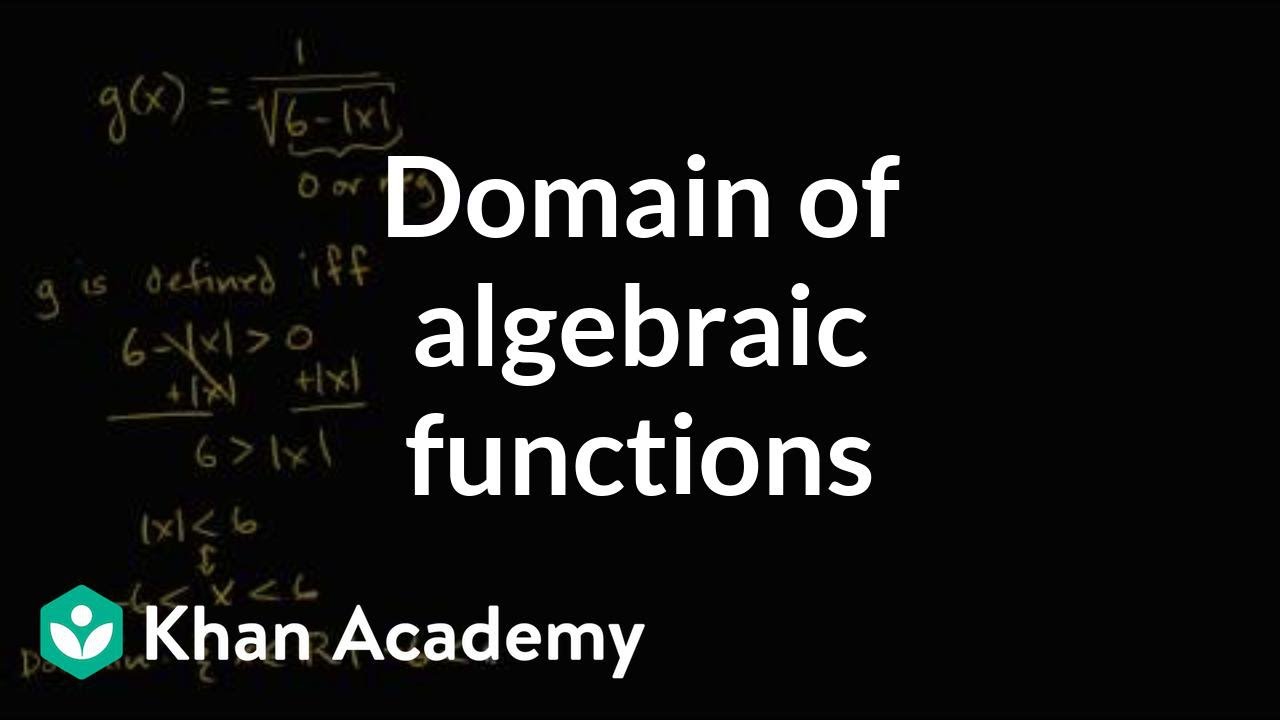
How to determine the domain of algebraic functions (examples) | Functions | Algebra I | Khan Academy
Courses on Khan Academy are always 100% free. Start practicing—and saving your progress—now: https://www.khanacademy.org/ma....th/algebra-home/alg-
Sal gives many examples where he determines the domains of functions according to mathematical limitations.
Practice this lesson yourself on KhanAcademy.org right now:
https://www.khanacademy.org/math/algebra/algebra-functions/determining-the-domain-of-a-function/e/domain-of-algebraic-functions?utm_source=YT&utm_medium=Desc&utm_campaign=AlgebraI
Watch the next lesson: https://www.khanacademy.org/math/algebra/algebra-functions/determining-the-domain-of-a-function/v/domain-of-a-modeling-function-example-1?utm_source=YT&utm_medium=Desc&utm_campaign=AlgebraI
Missed the previous lesson?
https://www.khanacademy.org/math/algebra/algebra-functions/determining-the-domain-of-a-function/v/domain-of-a-radical-function?utm_source=YT&utm_medium=Desc&utm_campaign=AlgebraI
Algebra I on Khan Academy: Algebra is the language through which we describe patterns. Think of it as a shorthand, of sorts. As opposed to having to do something over and over again, algebra gives you a simple way to express that repetitive process. It's also seen as a "gatekeeper" subject. Once you achieve an understanding of algebra, the higher-level math subjects become accessible to you. Without it, it's impossible to move forward. It's used by people with lots of different jobs, like carpentry, engineering, and fashion design. In these tutorials, we'll cover a lot of ground. Some of the topics include linear equations, linear inequalities, linear functions, systems of equations, factoring expressions, quadratic expressions, exponents, functions, and ratios.
About Khan Academy: Khan Academy offers practice exercises, instructional videos, and a personalized learning dashboard that empower learners to study at their own pace in and outside of the classroom. We tackle math, science, computer programming, history, art history, economics, and more. Our math missions guide learners from kindergarten to calculus using state-of-the-art, adaptive technology that identifies strengths and learning gaps. We've also partnered with institutions like NASA, The Museum of Modern Art, The California Academy of Sciences, and MIT to offer specialized content.
For free. For everyone. Forever. #YouCanLearnAnything
Subscribe to Khan Academy’s Algebra channel:
https://www.youtube.com/channe....l/UCYZrCV8PNENpJt36V
Subscribe to Khan Academy: https://www.youtube.com/subscr....iption_center?add_us
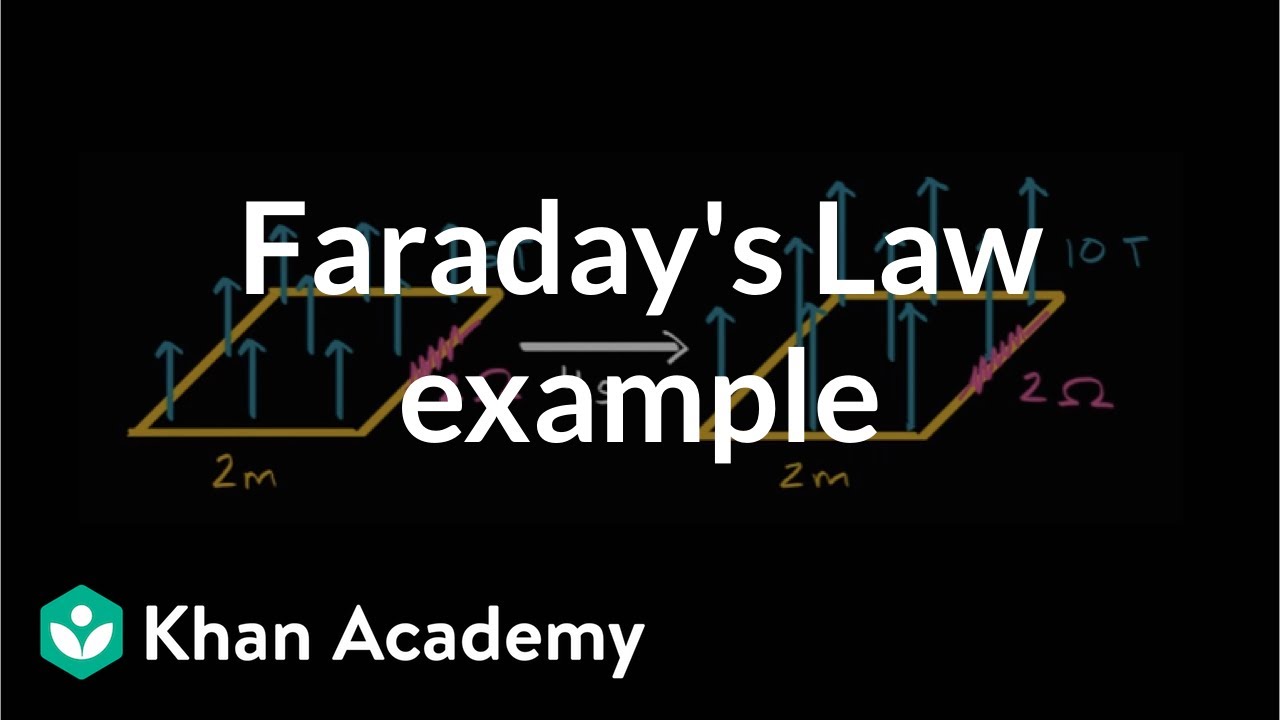
Courses on Khan Academy are always 100% free. Start practicing—and saving your progress—now: https://www.khanacademy.org/sc....ience/physics/magnet
Example calculating induced current based on change in flux.
Physics on Khan Academy: Physics is the study of the basic principles that govern the physical world around us. We'll start by looking at motion itself. Then, we'll learn about forces, momentum, energy, and other concepts in lots of different physical situations. To get the most out of physics, you'll need a solid understanding of algebra and a basic understanding of trigonometry.
About Khan Academy: Khan Academy offers practice exercises, instructional videos, and a personalized learning dashboard that empower learners to study at their own pace in and outside of the classroom. We tackle math, science, computer programming, history, art history, economics, and more. Our math missions guide learners from kindergarten to calculus using state-of-the-art, adaptive technology that identifies strengths and learning gaps. We've also partnered with institutions like NASA, The Museum of Modern Art, The California Academy of Sciences, and MIT to offer specialized content.
For free. For everyone. Forever. #YouCanLearnAnything
Subscribe to Khan Academy’s Physics channel: https://www.youtube.com/channe....l/UC0oGarQW2lE5PxhGo
Subscribe to Khan Academy: https://www.youtube.com/subscr....iption_center?add_us

Courses on Khan Academy are always 100% free. Start practicing—and saving your progress—now: https://www.khanacademy.org/sc....ience/physics/torque
The cross product and the direction of torque. Created by Sal Khan.
Watch the next lesson: https://www.khanacademy.org/science/physics/oscillatory-motion/harmonic-motion/v/introduction-to-harmonic-motion?utm_source=YT&utm_medium=Desc&utm_campaign=physics
Missed the previous lesson? https://www.khanacademy.org/science/physics/torque-angular-momentum/torque-tutorial/v/angular-momentum-of-an-extended-object?utm_source=YT&utm_medium=Desc&utm_campaign=physics
Physics on Khan Academy: Physics is the study of the basic principles that govern the physical world around us. We'll start by looking at motion itself. Then, we'll learn about forces, momentum, energy, and other concepts in lots of different physical situations. To get the most out of physics, you'll need a solid understanding of algebra and a basic understanding of trigonometry.
About Khan Academy: Khan Academy offers practice exercises, instructional videos, and a personalized learning dashboard that empower learners to study at their own pace in and outside of the classroom. We tackle math, science, computer programming, history, art history, economics, and more. Our math missions guide learners from kindergarten to calculus using state-of-the-art, adaptive technology that identifies strengths and learning gaps. We've also partnered with institutions like NASA, The Museum of Modern Art, The California Academy of Sciences, and MIT to offer specialized content.
For free. For everyone. Forever. #YouCanLearnAnything
Subscribe to Khan Academy’s Physics channel: https://www.youtube.com/channe....l/UC0oGarQW2lE5PxhGo
Subscribe to Khan Academy: https://www.youtube.com/subscr....iption_center?add_us

Courses on Khan Academy are always 100% free. Start practicing—and saving your progress—now: https://www.khanacademy.org/ec....onomics-finance-doma
Thinking about how different types of expenditures would be accounted for in GDP
Watch the next lesson: https://www.khanacademy.org/economics-finance-domain/macroeconomics/gdp-topic/real-nominal-gdp-tutorial/v/real-gdp-and-nominal-gdp?utm_source=YT&utm_medium=Desc&utm_campaign=macroeconomics
Missed the previous lesson? https://www.khanacademy.org/economics-finance-domain/macroeconomics/gdp-topic/GDP-components-tutorial/v/components-of-gdp?utm_source=YT&utm_medium=Desc&utm_campaign=macroeconomics
Macroeconomics on Khan Academy: Topics covered in a traditional college level introductory macroeconomics course
About Khan Academy: Khan Academy offers practice exercises, instructional videos, and a personalized learning dashboard that empower learners to study at their own pace in and outside of the classroom. We tackle math, science, computer programming, history, art history, economics, and more. Our math missions guide learners from kindergarten to calculus using state-of-the-art, adaptive technology that identifies strengths and learning gaps. We've also partnered with institutions like NASA, The Museum of Modern Art, The California Academy of Sciences, and MIT to offer specialized content.
For free. For everyone. Forever. #YouCanLearnAnything
Subscribe to Khan Academy's Macroeconomics channel: https://www.youtube.com/channe....l/UCBytY7pnP0GAHB3C8
Subscribe to Khan Academy: https://www.youtube.com/subscr....iption_center?add_us
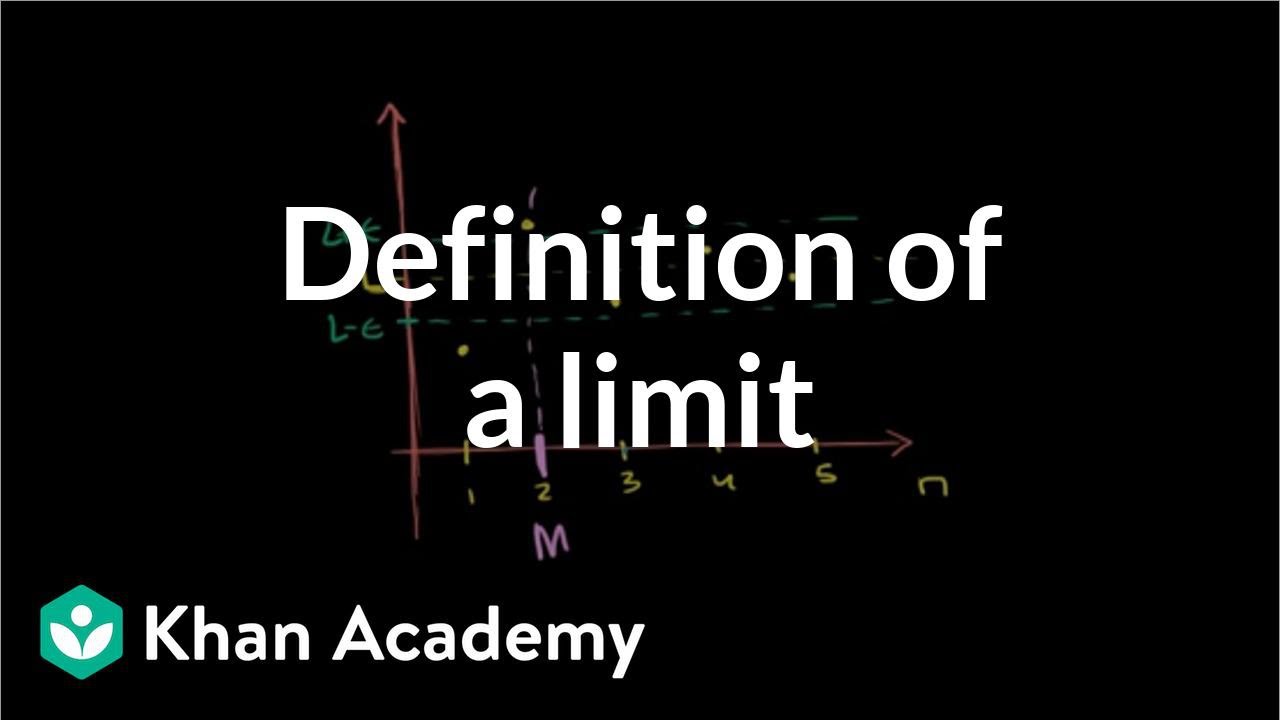
Courses on Khan Academy are always 100% free. Start practicing—and saving your progress—now: https://www.khanacademy.org/ma....th/ap-calculus-bc/bc
A sequence is "converging" if its terms approach a specific value at infinity. This video is a more formal definition of what it means for a sequence to converge. Created by Sal Khan.
Watch the next lesson: https://www.khanacademy.org/math/ap-calculus-bc/bc-series/bc-series-opt-vids/v/proving-a-sequence-converges?utm_source=YT&utm_medium=Desc&utm_campaign=APCalculusBC
Missed the previous lesson? https://www.khanacademy.org/math/ap-calculus-bc/bc-series/bc-power-series/v/finding-function-from-series-by-integrating?utm_source=YT&utm_medium=Desc&utm_campaign=APCalculusBC
AP Calculus BC on Khan Academy: Learn AP Calculus BC - everything from AP Calculus AB plus a few extra goodies, such as Taylor series, to prepare you for the AP Test
About Khan Academy: Khan Academy is a nonprofit with a mission to provide a free, world-class education for anyone, anywhere. We believe learners of all ages should have unlimited access to free educational content they can master at their own pace. We use intelligent software, deep data analytics and intuitive user interfaces to help students and teachers around the world. Our resources cover preschool through early college education, including math, biology, chemistry, physics, economics, finance, history, grammar and more. We offer free personalized SAT test prep in partnership with the test developer, the College Board. Khan Academy has been translated into dozens of languages, and 100 million people use our platform worldwide every year. For more information, visit www.khanacademy.org, join us on Facebook or follow us on Twitter at @khanacademy. And remember, you can learn anything.
For free. For everyone. Forever. #YouCanLearnAnything
Subscribe to Khan Academy's AP Calculus BC channel: https://www.youtube.com/channe....l/UC5A2DBjjUVNz8axD-
Subscribe to Khan Academy: https://www.youtube.com/subscr....iption_center?add_us

Courses on Khan Academy are always 100% free. Start practicing—and saving your progress—now: https://www.khanacademy.org/ma....th/ap-statistics/den
Discussion of how "normal" a distribution might be
Practice this lesson yourself on KhanAcademy.org right now:
https://www.khanacademy.org/math/probability/statistics-inferential/normal_distribution/e/empirical_rule?utm_source=YT&utm_medium=Desc&utm_campaign=ProbabilityandStatistics
Watch the next lesson: https://www.khanacademy.org/math/probability/statistics-inferential/normal_distribution/v/ck12-org-normal-distribution-problems-empirical-rule?utm_source=YT&utm_medium=Desc&utm_campaign=ProbabilityandStatistics
Missed the previous lesson?
https://www.khanacademy.org/math/probability/statistics-inferential/normal_distribution/v/normal-distribution-excel-exercise?utm_source=YT&utm_medium=Desc&utm_campaign=ProbabilityandStatistics
Probability and statistics on Khan Academy: We dare you to go through a day in which you never consider or use probability. Did you check the weather forecast? Busted! Did you decide to go through the drive through lane vs walk in? Busted again! We are constantly creating hypotheses, making predictions, testing, and analyzing. Our lives are full of probabilities! Statistics is related to probability because much of the data we use when determining probable outcomes comes from our understanding of statistics. In these tutorials, we will cover a range of topics, some which include: independent events, dependent probability, combinatorics, hypothesis testing, descriptive statistics, random variables, probability distributions, regression, and inferential statistics. So buckle up and hop on for a wild ride. We bet you're going to be challenged AND love it!
About Khan Academy: Khan Academy offers practice exercises, instructional videos, and a personalized learning dashboard that empower learners to study at their own pace in and outside of the classroom. We tackle math, science, computer programming, history, art history, economics, and more. Our math missions guide learners from kindergarten to calculus using state-of-the-art, adaptive technology that identifies strengths and learning gaps. We've also partnered with institutions like NASA, The Museum of Modern Art, The California Academy of Sciences, and MIT to offer specialized content.
For free. For everyone. Forever. #YouCanLearnAnything
Subscribe to KhanAcademy’s Probability and Statistics channel:
https://www.youtube.com/channe....l/UCRXuOXLW3LcQLWvxb
Subscribe to KhanAcademy: https://www.youtube.com/subscr....iption_center?add_us
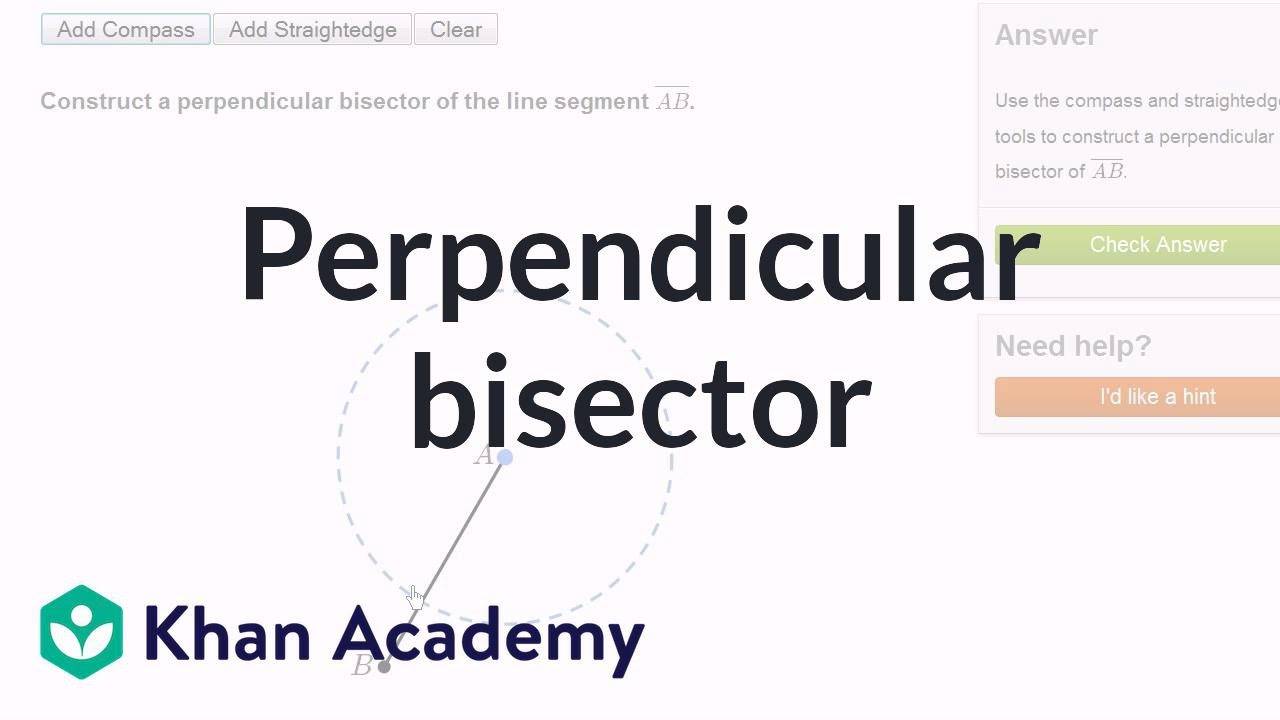
Courses on Khan Academy are always 100% free. Start practicing—and saving your progress—now: https://www.khanacademy.org/ma....th/geometry/hs-geo-c
Practice this lesson yourself on KhanAcademy.org right now:
https://www.khanacademy.org/math/geometry/geometric-constructions/geo-bisectors/e/constructions_1?utm_source=YT&utm_medium=Desc&utm_campaign=Geometry
Watch the next lesson: https://www.khanacademy.org/math/geometry/geometric-constructions/geo-bisectors/v/constructing-a-perpendicular-line-using-a-compass-and-straightedge?utm_source=YT&utm_medium=Desc&utm_campaign=Geometry
Missed the previous lesson?
https://www.khanacademy.org/math/geometry/analytic-geometry-topic/parallel-and-perpendicular/v/distance-between-a-point-and-a-line?utm_source=YT&utm_medium=Desc&utm_campaign=Geometry
Geometry on Khan Academy: We are surrounded by space. And that space contains lots of things. And these things have shapes. In geometry we are concerned with the nature of these shapes, how we define them, and what they teach us about the world at large--from math to architecture to biology to astronomy (and everything in between). Learning geometry is about more than just taking your medicine ("It's good for you!"), it's at the core of everything that exists--including you. Having said all that, some of the specific topics we'll cover include angles, intersecting lines, right triangles, perimeter, area, volume, circles, triangles, quadrilaterals, analytic geometry, and geometric constructions. Wow. That's a lot. To summarize: it's difficult to imagine any area of math that is more widely used than geometry.
About Khan Academy: Khan Academy offers practice exercises, instructional videos, and a personalized learning dashboard that empower learners to study at their own pace in and outside of the classroom. We tackle math, science, computer programming, history, art history, economics, and more. Our math missions guide learners from kindergarten to calculus using state-of-the-art, adaptive technology that identifies strengths and learning gaps. We've also partnered with institutions like NASA, The Museum of Modern Art, The California Academy of Sciences, and MIT to offer specialized content.
For free. For everyone. Forever. #YouCanLearnAnything
Subscribe to Khan Academy’s Geometry channel:
https://www.youtube.com/channe....l/UCD3OtKxPRUFw8kzYl
Subscribe to Khan Academy: https://www.youtube.com/subscr....iption_center?add_us

How can we tell if a sequence converges or diverges? See Sal in action, determining the convergence/divergence of several sequences. Created by Sal Khan.
Practice this lesson yourself on KhanAcademy.org right now: https://www.khanacademy.org/math/ap-calculus-bc/bc-series/bc-inf-sequences/e/convergence-and-divergence-of-sequences?utm_source=YT&utm_medium=Desc&utm_campaign=APCalculusBC
Watch the next lesson: https://www.khanacademy.org/math/ap-calculus-bc/bc-series/bc-finite-geo-series/v/series-as-sum-of-sequence?utm_source=YT&utm_medium=Desc&utm_campaign=APCalculusBC
Missed the previous lesson? https://www.khanacademy.org/math/ap-calculus-bc/bc-series/bc-inf-sequences/v/convergent-and-divergent-sequences?utm_source=YT&utm_medium=Desc&utm_campaign=APCalculusBC
AP Calculus BC on Khan Academy: Learn AP Calculus BC - everything from AP Calculus AB plus a few extra goodies, such as Taylor series, to prepare you for the AP Test
About Khan Academy: Khan Academy is a nonprofit with a mission to provide a free, world-class education for anyone, anywhere. We believe learners of all ages should have unlimited access to free educational content they can master at their own pace. We use intelligent software, deep data analytics and intuitive user interfaces to help students and teachers around the world. Our resources cover preschool through early college education, including math, biology, chemistry, physics, economics, finance, history, grammar and more. We offer free personalized SAT test prep in partnership with the test developer, the College Board. Khan Academy has been translated into dozens of languages, and 100 million people use our platform worldwide every year. For more information, visit www.khanacademy.org, join us on Facebook or follow us on Twitter at @khanacademy. And remember, you can learn anything.
For free. For everyone. Forever. #YouCanLearnAnything
Subscribe to Khan Academy's AP Calculus BC channel: https://www.youtube.com/channe....l/UC5A2DBjjUVNz8axD-
Subscribe to Khan Academy: https://www.youtube.com/subscr....iption_center?add_us

Decompose an irregular shape to find area of entire figure.
Watch the next lesson: https://www.khanacademy.org/math/pre-algebra/measurement/perimeter/v/introduction-to-perimeter?utm_source=YT&utm_medium=Desc&utm_campaign=PreAlgebra
Missed the previous lesson? https://www.khanacademy.org/math/pre-algebra/measurement/area-basics/v/comparing-areas-of-plots-of-land?utm_source=YT&utm_medium=Desc&utm_campaign=PreAlgebra
Pre-Algebra on Khan Academy: No way, this isn't your run of the mill arithmetic. This is Pre-algebra. You're about to play with the professionals. Think of pre-algebra as a runway. You're the airplane and algebra is your sunny vacation destination. Without the runway you're not going anywhere. Seriously, the foundation for all higher mathematics is laid with many of the concepts that we will introduce to you here: negative numbers, absolute value, factors, multiples, decimals, and fractions to name a few. So buckle up and move your seat into the upright position. We're about to take off!
About Khan Academy: Khan Academy offers practice exercises, instructional videos, and a personalized learning dashboard that empower learners to study at their own pace in and outside of the classroom. We tackle math, science, computer programming, history, art history, economics, and more. Our math missions guide learners from kindergarten to calculus using state-of-the-art, adaptive technology that identifies strengths and learning gaps. We've also partnered with institutions like NASA, The Museum of Modern Art, The California Academy of Sciences, and MIT to offer specialized content.
For free. For everyone. Forever. #YouCanLearnAnything
Subscribe to KhanAcademy’s Pre-Algebra channel:: https://www.youtube.com/channe....l/UCIMlYkATtXOFswVoC
Subscribe to KhanAcademy: https://www.youtube.com/subscr....iption_center?add_us
Courses on Khan Academy are always 100% free. Start practicing—and saving your progress—now: https://www.khanacademy.org/ma....th/ap-calculus-ab/ab
You're on a ladder. The bottom of the ladder starts slipping away from the wall. Amidst your fright, you realize this would make a great related rates problem... Created by Sal Khan.
Practice this lesson yourself on KhanAcademy.org right now: https://www.khanacademy.org/math/ap-calculus-ab/ab-applications-derivatives/ab-related-rates/e/related-rates-pythagorean-theorem?utm_source=YT&utm_medium=Desc&utm_campaign=APCalculusAB
Watch the next lesson: https://www.khanacademy.org/math/ap-calculus-ab/ab-applications-derivatives/ab-related-rates/v/related-rates-of-water-pouring-into-cone?utm_source=YT&utm_medium=Desc&utm_campaign=APCalculusAB
Missed the previous lesson? https://www.khanacademy.org/math/ap-calculus-ab/ab-applications-derivatives/ab-related-rates/v/rate-of-change-of-distance-between-approaching-cars?utm_source=YT&utm_medium=Desc&utm_campaign=APCalculusAB
AP Calculus AB on Khan Academy: Bill Scott uses Khan Academy to teach AP Calculus at Phillips Academy in Andover, Massachusetts, and heÕs part of the teaching team that helped develop Khan AcademyÕs AP lessons. Phillips Academy was one of the first schools to teach AP nearly 60 years ago.
About Khan Academy: Khan Academy is a nonprofit with a mission to provide a free, world-class education for anyone, anywhere. We believe learners of all ages should have unlimited access to free educational content they can master at their own pace. We use intelligent software, deep data analytics and intuitive user interfaces to help students and teachers around the world. Our resources cover preschool through early college education, including math, biology, chemistry, physics, economics, finance, history, grammar and more. We offer free personalized SAT test prep in partnership with the test developer, the College Board. Khan Academy has been translated into dozens of languages, and 100 million people use our platform worldwide every year. For more information, visit www.khanacademy.org, join us on Facebook or follow us on Twitter at @khanacademy. And remember, you can learn anything.
For free. For everyone. Forever. #YouCanLearnAnything
Subscribe to Khan AcademyÕs AP Calculus AB channel: https://www.youtube.com/channe....l/UCyoj0ZF4uw8VTFbml
Subscribe to Khan Academy: https://www.youtube.com/subscr....iption_center?add_us
See what the fundamental theorem of calculus looks like in action. Created by Sal Khan.
Practice this lesson yourself on KhanAcademy.org right now: https://www.khanacademy.org/math/ap-calculus-ab/ab-antiderivatives-ftc/ab-fundamental-theorem-of-calc/e/the-fundamental-theorem-of-calculus?utm_source=YT&utm_medium=Desc&utm_campaign=APCalculusAB
Watch the next lesson: https://www.khanacademy.org/math/ap-calculus-ab/ab-antiderivatives-ftc/ab-fundamental-theorem-of-calc/v/swapping-the-bounds-for-definite-integral?utm_source=YT&utm_medium=Desc&utm_campaign=APCalculusAB
Missed the previous lesson? https://www.khanacademy.org/math/ap-calculus-ab/ab-antiderivatives-ftc/ab-fundamental-theorem-of-calc/v/connecting-the-first-and-second-fundamental-theorems-of-calculus?utm_source=YT&utm_medium=Desc&utm_campaign=APCalculusAB
AP Calculus AB on Khan Academy: Bill Scott uses Khan Academy to teach AP Calculus at Phillips Academy in Andover, Massachusetts, and heÕs part of the teaching team that helped develop Khan AcademyÕs AP lessons. Phillips Academy was one of the first schools to teach AP nearly 60 years ago.
About Khan Academy: Khan Academy is a nonprofit with a mission to provide a free, world-class education for anyone, anywhere. We believe learners of all ages should have unlimited access to free educational content they can master at their own pace. We use intelligent software, deep data analytics and intuitive user interfaces to help students and teachers around the world. Our resources cover preschool through early college education, including math, biology, chemistry, physics, economics, finance, history, grammar and more. We offer free personalized SAT test prep in partnership with the test developer, the College Board. Khan Academy has been translated into dozens of languages, and 100 million people use our platform worldwide every year. For more information, visit www.khanacademy.org, join us on Facebook or follow us on Twitter at @khanacademy. And remember, you can learn anything.
For free. For everyone. Forever. #YouCanLearnAnything
Subscribe to Khan AcademyÕs AP Calculus AB channel: https://www.youtube.com/channe....l/UCyoj0ZF4uw8VTFbml
Subscribe to Khan Academy: https://www.youtube.com/subscr....iption_center?add_us
Introduction to molecular and empirical formulas. Calculating molecular mass.
More free lessons at: http://www.khanacademy.org/video?v=gfBcM3uvWfs
Courses on Khan Academy are always 100% free. Start practicing—and saving your progress—now: https://www.khanacademy.org/ma....th/algebra/x2f8bb115
Multiple arguments for what we could get when we divide zero by zero. We will later see that this can be considered indeterminate
Watch the next lesson: https://www.khanacademy.org/math/algebra2/functions_and_graphs/undefined_indeterminate/v/undefined-and-indeterminate?utm_source=YT&utm_medium=Desc&utm_campaign=AlgebraII
Missed the previous lesson?
https://www.khanacademy.org/math/algebra2/functions_and_graphs/undefined_indeterminate/v/why-dividing-by-zero-is-undefined?utm_source=YT&utm_medium=Desc&utm_campaign=AlgebraII
Algebra II on Khan Academy: Your studies in algebra 1 have built a solid foundation from which you can explore linear equations, inequalities, and functions. In algebra 2 we build upon that foundation and not only extend our knowledge of algebra 1, but slowly become capable of tackling the BIG questions of the universe. We'll again touch on systems of equations, inequalities, and functions...but we'll also address exponential and logarithmic functions, logarithms, imaginary and complex numbers, conic sections, and matrices. Don't let these big words intimidate you. We're on this journey with you!
About Khan Academy: Khan Academy offers practice exercises, instructional videos, and a personalized learning dashboard that empower learners to study at their own pace in and outside of the classroom. We tackle math, science, computer programming, history, art history, economics, and more. Our math missions guide learners from kindergarten to calculus using state-of-the-art, adaptive technology that identifies strengths and learning gaps. We've also partnered with institutions like NASA, The Museum of Modern Art, The California Academy of Sciences, and MIT to offer specialized content.
For free. For everyone. Forever. #YouCanLearnAnything
Subscribe to Khan Academy’s Algebra II channel:
https://www.youtube.com/channe....l/UCsCA3_VozRtgUT7wW
Subscribe to Khan Academy: https://www.youtube.com/subscr....iption_center?add_us
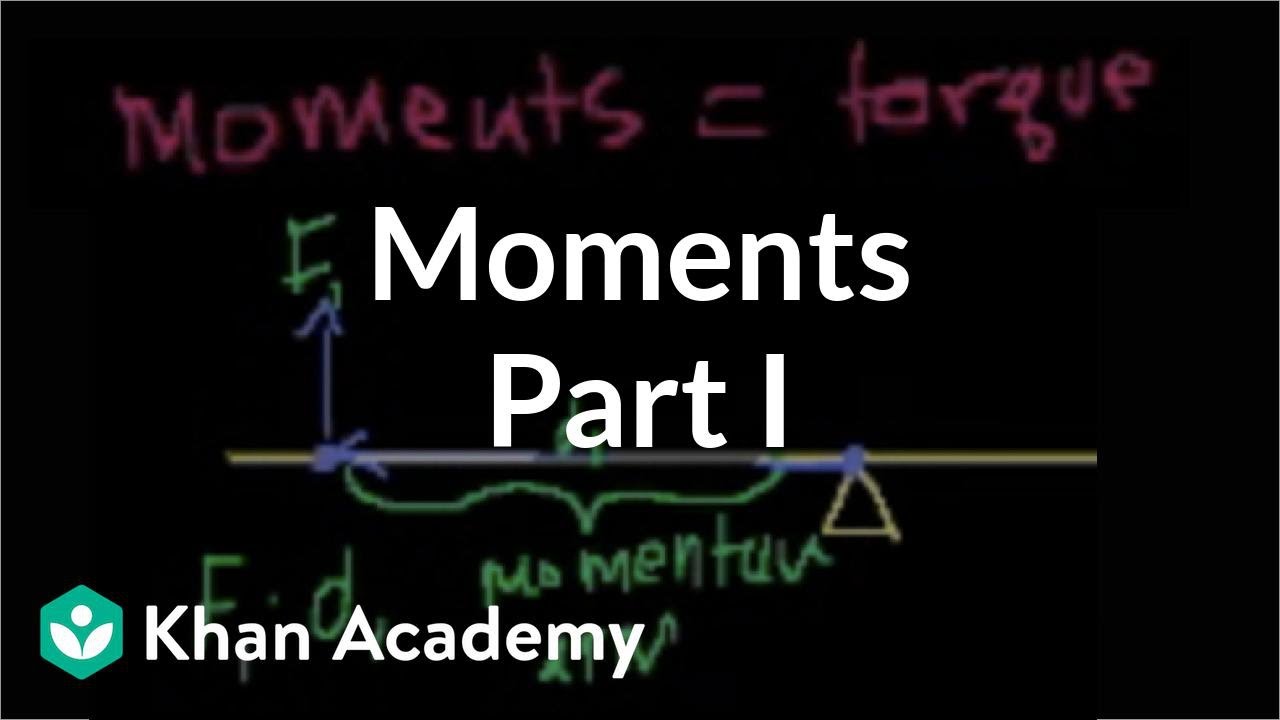
Courses on Khan Academy are always 100% free. Start practicing—and saving your progress—now: https://www.khanacademy.org/sc....ience/physics/torque
Introduction to moments. Created by Sal Khan.
Watch the next lesson: https://www.khanacademy.org/sc....ience/physics/torque-part-2?utm_source=YT&utm_medium=Desc&utm_campaign=physics
Missed the previous lesson? https://www.khanacademy.org/science/physics/torque-angular-momentum/torque-tutorial/v/introduction-to-torque?utm_source=YT&utm_medium=Desc&utm_campaign=physics
Physics on Khan Academy: Physics is the study of the basic principles that govern the physical world around us. We'll start by looking at motion itself. Then, we'll learn about forces, momentum, energy, and other concepts in lots of different physical situations. To get the most out of physics, you'll need a solid understanding of algebra and a basic understanding of trigonometry.
About Khan Academy: Khan Academy offers practice exercises, instructional videos, and a personalized learning dashboard that empower learners to study at their own pace in and outside of the classroom. We tackle math, science, computer programming, history, art history, economics, and more. Our math missions guide learners from kindergarten to calculus using state-of-the-art, adaptive technology that identifies strengths and learning gaps. We've also partnered with institutions like NASA, The Museum of Modern Art, The California Academy of Sciences, and MIT to offer specialized content.
For free. For everyone. Forever. #YouCanLearnAnything
Subscribe to Khan Academy’s Physics channel: https://www.youtube.com/channe....l/UC0oGarQW2lE5PxhGo
Subscribe to Khan Academy: https://www.youtube.com/subscr....iption_center?add_us

Courses on Khan Academy are always 100% free. Start practicing—and saving your progress—now: https://www.khanacademy.org/ma....th/cc-eighth-grade-m
8th grade on Khan Academy: 8th grade is all about tackling the meat of algebra and getting exposure to some of the foundational concepts in geometry. If you get this stuff (and you should because you're incredibly persistent), the rest of your life will be easy. Okay, maybe not your whole life, but at least your mathematical life. Seriously, if you really get the equations and functions stuff we cover here, most of high school will feel intuitive, even relaxing. (Content was selected for this grade level based on a typical curriculum in the United States.)
About Khan Academy: Khan Academy offers practice exercises, instructional videos, and a personalized learning dashboard that empower learners to study at their own pace in and outside of the classroom. We tackle math, science, computer programming, history, art history, economics, and more. Our math missions guide learners from kindergarten to calculus using state-of-the-art, adaptive technology that identifies strengths and learning gaps. We've also partnered with institutions like NASA, The Museum of Modern Art, The California Academy of Sciences, and MIT to offer specialized content.
For free. For everyone. Forever. #YouCanLearnAnything
Subscribe to Khan Academy’s 8th grade channel:
https://www.youtube.com/channe....l/UCq341CBxj87C7AY_z
Subscribe to Khan Academy: https://www.youtube.com/subscr....iption_center?add_us
See what the fundamental theorem of calculus looks like in action. Created by Sal Khan.
Practice this lesson yourself on KhanAcademy.org right now: https://www.khanacademy.org/math/ap-calculus-ab/ab-antiderivatives-ftc/ab-fundamental-theorem-of-calc/e/the-fundamental-theorem-of-calculus?utm_source=YT&utm_medium=Desc&utm_campaign=APCalculusAB
Watch the next lesson: https://www.khanacademy.org/math/ap-calculus-ab/ab-antiderivatives-ftc/ab-fundamental-theorem-of-calc/v/swapping-the-bounds-for-definite-integral?utm_source=YT&utm_medium=Desc&utm_campaign=APCalculusAB
Missed the previous lesson? https://www.khanacademy.org/math/ap-calculus-ab/ab-antiderivatives-ftc/ab-fundamental-theorem-of-calc/v/connecting-the-first-and-second-fundamental-theorems-of-calculus?utm_source=YT&utm_medium=Desc&utm_campaign=APCalculusAB
AP Calculus AB on Khan Academy: Bill Scott uses Khan Academy to teach AP Calculus at Phillips Academy in Andover, Massachusetts, and heÕs part of the teaching team that helped develop Khan AcademyÕs AP lessons. Phillips Academy was one of the first schools to teach AP nearly 60 years ago.
About Khan Academy: Khan Academy is a nonprofit with a mission to provide a free, world-class education for anyone, anywhere. We believe learners of all ages should have unlimited access to free educational content they can master at their own pace. We use intelligent software, deep data analytics and intuitive user interfaces to help students and teachers around the world. Our resources cover preschool through early college education, including math, biology, chemistry, physics, economics, finance, history, grammar and more. We offer free personalized SAT test prep in partnership with the test developer, the College Board. Khan Academy has been translated into dozens of languages, and 100 million people use our platform worldwide every year. For more information, visit www.khanacademy.org, join us on Facebook or follow us on Twitter at @khanacademy. And remember, you can learn anything.
For free. For everyone. Forever. #YouCanLearnAnything
Subscribe to Khan AcademyÕs AP Calculus AB channel: https://www.youtube.com/channe....l/UCyoj0ZF4uw8VTFbml
Subscribe to Khan Academy: https://www.youtube.com/subscr....iption_center?add_us

Courses on Khan Academy are always 100% free. Start practicing—and saving your progress—now: https://www.khanacademy.org/sc....ience/ap-biology/che
Saturated fats, unsaturated fats, and trans fats
Biology on Khan Academy: Life is beautiful! From atoms to cells, from genes to proteins, from populations to ecosystems, biology is the study of the fascinating and intricate systems that make life possible. Dive in to learn more about the many branches of biology and why they are exciting and important. Covers topics seen in a high school or first-year college biology course.
About Khan Academy: Khan Academy offers practice exercises, instructional videos, and a personalized learning dashboard that empower learners to study at their own pace in and outside of the classroom. We tackle math, science, computer programming, history, art history, economics, and more. Our math missions guide learners from kindergarten to calculus using state-of-the-art, adaptive technology that identifies strengths and learning gaps. We've also partnered with institutions like NASA, The Museum of Modern Art, The California Academy of Sciences, and MIT to offer specialized content.
For free. For everyone. Forever. #YouCanLearnAnything
Subscribe to Khan Academy's Biology channel: https://www.youtube.com/channe....l/UC82qE46vcTn7lP4tK
Subscribe to Khan Academy: https://www.youtube.com/subscr....iption_center?add_us

Courses on Khan Academy are always 100% free. Start practicing—and saving your progress—now: https://www.khanacademy.org/ec....onomics-finance-doma
Simple example of calculating Real GDP from Nominal GDP
More free lessons at: http://www.khanacademy.org/video?v=v5YT8GlSxoU
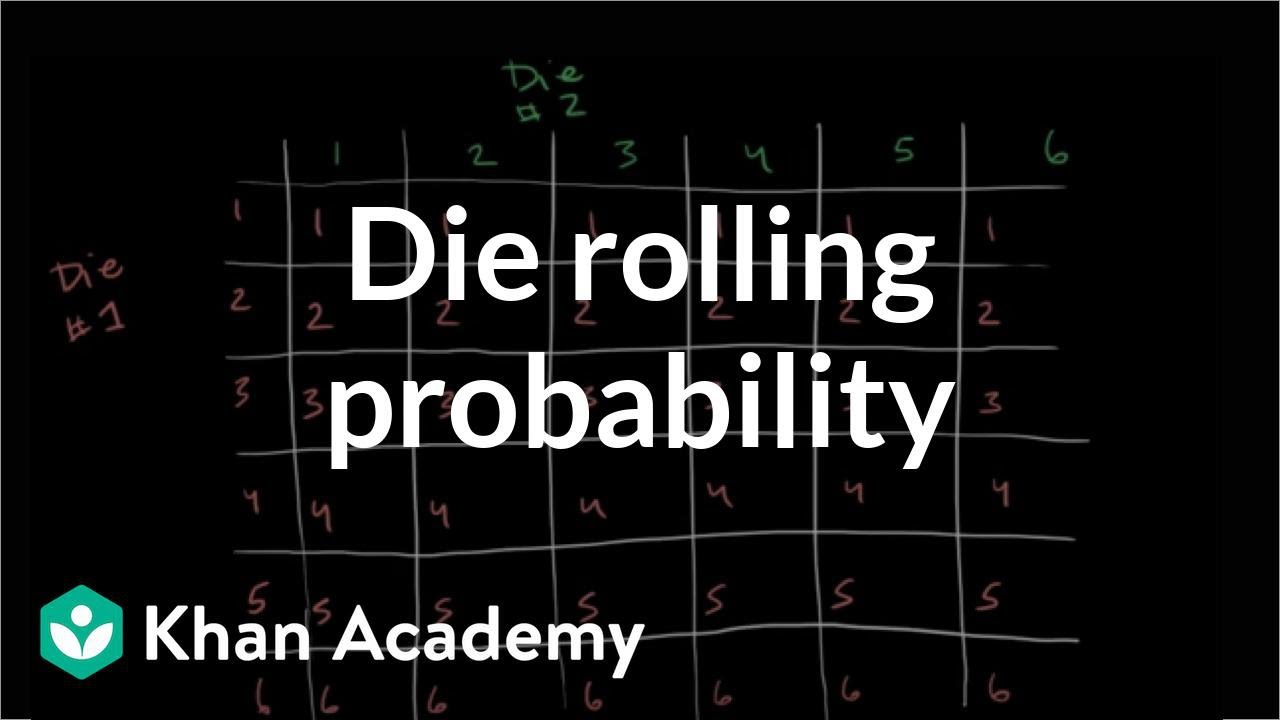
We're thinking about the probability of rolling doubles on a pair of dice. Let's create a grid of all possible outcomes.
Watch the next lesson: https://www.khanacademy.org/math/precalculus/prob_comb/independent_events_precalc/v/lebron-asks-about-the-chances-of-making-10-free-throws?utm_source=YT&utm_medium=Desc&utm_campaign=Precalculus
Missed the previous lesson?
https://www.khanacademy.org/math/precalculus/prob_comb/independent_events_precalc/v/getting-at-least-one-heads?utm_source=YT&utm_medium=Desc&utm_campaign=Precalculus
Precalculus on Khan Academy: You may think that precalculus is simply the course you take before calculus. You would be right, of course, but that definition doesn't mean anything unless you have some knowledge of what calculus is. Let's keep it simple, shall we? Calculus is a conceptual framework which provides systematic techniques for solving problems. These problems are appropriately applicable to analytic geometry and algebra. Therefore....precalculus gives you the background for the mathematical concepts, problems, issues and techniques that appear in calculus, including trigonometry, functions, complex numbers, vectors, matrices, and others. There you have it ladies and gentlemen....an introduction to precalculus!
About Khan Academy: Khan Academy offers practice exercises, instructional videos, and a personalized learning dashboard that empower learners to study at their own pace in and outside of the classroom. We tackle math, science, computer programming, history, art history, economics, and more. Our math missions guide learners from kindergarten to calculus using state-of-the-art, adaptive technology that identifies strengths and learning gaps. We've also partnered with institutions like NASA, The Museum of Modern Art, The California Academy of Sciences, and MIT to offer specialized content.
For free. For everyone. Forever. #YouCanLearnAnything
Subscribe to Khan Academy’s Precalculus channel:
https://www.youtube.com/channe....l/UCBeHztHRWuVvnlwm2
Subscribe to Khan Academy: https://www.youtube.com/subscr....iption_center?add_us
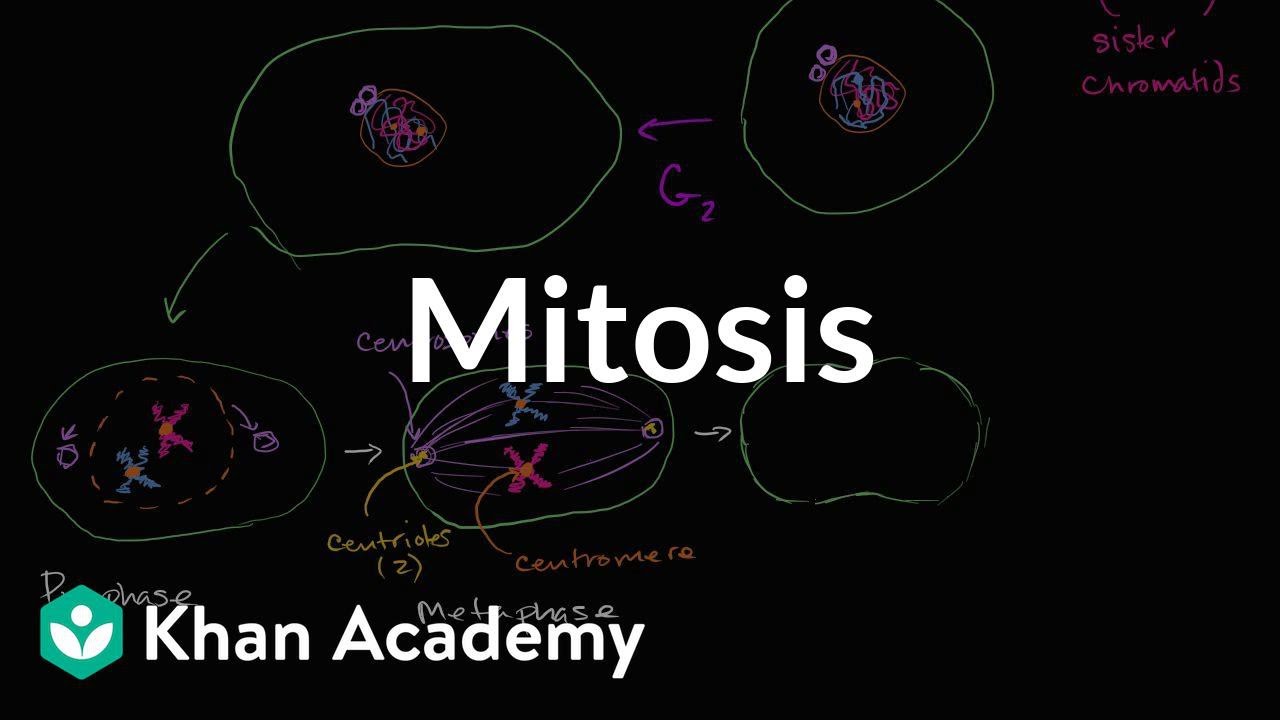
Courses on Khan Academy are always 100% free. Start practicing—and saving your progress—now: https://www.khanacademy.org/sc....ience/ap-biology/cel
Mitosis is how cells divide! Learn what happens in all the phases of mitosis: prophase, metaphase, anaphase, and telophase.
Watch the next lesson: https://www.khanacademy.org/test-prep/mcat/cells/cellular-division/v/comparing-mitosis-and-meiosis?utm_source=YT&utm_medium=Desc&utm_campaign=mcat
Missed the previous lesson? https://www.khanacademy.org/test-prep/mcat/cells/cellular-division/v/interphase?utm_source=YT&utm_medium=Desc&utm_campaign=mcat
MCAT on Khan Academy: Go ahead and practice some passage-based questions!
About Khan Academy: Khan Academy offers practice exercises, instructional videos, and a personalized learning dashboard that empower learners to study at their own pace in and outside of the classroom. We tackle math, science, computer programming, history, art history, economics, and more. Our math missions guide learners from kindergarten to calculus using state-of-the-art, adaptive technology that identifies strengths and learning gaps. We've also partnered with institutions like NASA, The Museum of Modern Art, The California Academy of Sciences, and MIT to offer specialized content.
For free. For everyone. Forever. #YouCanLearnAnything
Subscribe to Khan Academy’s MCAT channel: https://www.youtube.com/channe....l/UCDkK5wqSuwDlJ3_nl
Subscribe to Khan Academy: https://www.youtube.com/subscr....iption_center?add_us
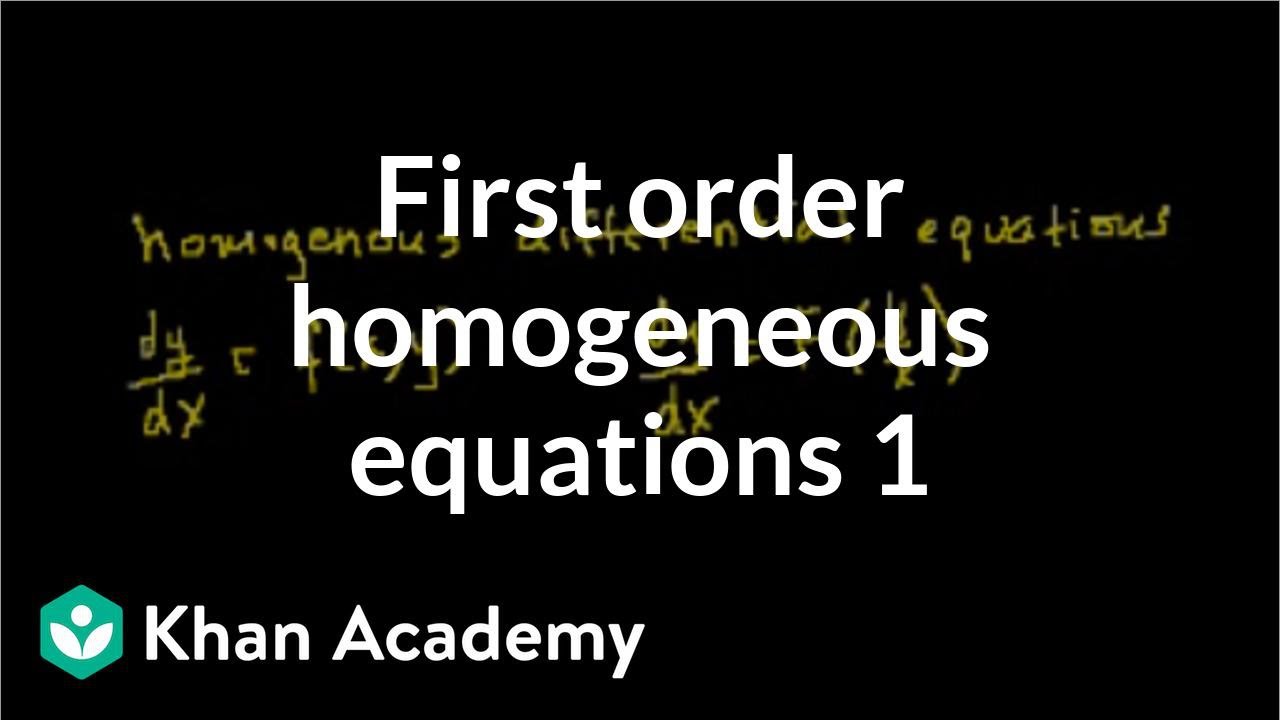
Courses on Khan Academy are always 100% free. Start practicing—and saving your progress—now: https://www.khanacademy.org/ma....th/differential-equa
Introduction to first order homogenous equations.
Watch the next lesson: https://www.khanacademy.org/math/differential-equations/first-order-differential-equations/homogeneous-equations/v/first-order-homogenous-equations-2?utm_source=YT&utm_medium=Desc&utm_campaign=DifferentialEquations
Missed the previous lesson?
https://www.khanacademy.org/math/differential-equations/first-order-differential-equations/exact-equations/v/integrating-factors-2?utm_source=YT&utm_medium=Desc&utm_campaign=DifferentialEquations
Differential Equations on Khan Academy: Differential equations, separable equations, exact equations, integrating factors, homogeneous equations.
About Khan Academy: Khan Academy offers practice exercises, instructional videos, and a personalized learning dashboard that empower learners to study at their own pace in and outside of the classroom. We tackle math, science, computer programming, history, art history, economics, and more. Our math missions guide learners from kindergarten to calculus using state-of-the-art, adaptive technology that identifies strengths and learning gaps. We've also partnered with institutions like NASA, The Museum of Modern Art, The California Academy of Sciences, and MIT to offer specialized content.
For free. For everyone. Forever. #YouCanLearnAnything
Subscribe to KhanAcademy’s Differential Equations channel:: https://www.youtube.com/channe....l/UCxSQHGkaDv8UKXE0T
Subscribe to KhanAcademy: https://www.youtube.com/subscr....iption_center?add_us

Structure of the endoplasmic reticulum and Golgi body (Golgi apparatus), and how they function in secretion of proteins from the cell.
Watch the next lesson: https://www.khanacademy.org/science/biology/structure-of-a-cell/tour-of-organelles/v/endomembrane-system?utm_source=YT&utm_medium=Desc&utm_campaign=biology
Missed the previous lesson? https://www.khanacademy.org/science/biology/structure-of-a-cell/prokaryotic-and-eukaryotic-cells/v/prokaryotic-and-eukaryotic-cells?utm_source=YT&utm_medium=Desc&utm_campaign=biology
Biology on Khan Academy: Life is beautiful! From atoms to cells, from genes to proteins, from populations to ecosystems, biology is the study of the fascinating and intricate systems that make life possible. Dive in to learn more about the many branches of biology and why they are exciting and important. Covers topics seen in a high school or first-year college biology course.
About Khan Academy: Khan Academy offers practice exercises, instructional videos, and a personalized learning dashboard that empower learners to study at their own pace in and outside of the classroom. We tackle math, science, computer programming, history, art history, economics, and more. Our math missions guide learners from kindergarten to calculus using state-of-the-art, adaptive technology that identifies strengths and learning gaps. We've also partnered with institutions like NASA, The Museum of Modern Art, The California Academy of Sciences, and MIT to offer specialized content.
For free. For everyone. Forever. #YouCanLearnAnything
Subscribe to Khan Academy's Biology channel: https://www.youtube.com/channe....l/UC82qE46vcTn7lP4tK
Subscribe to Khan Academy: https://www.youtube.com/subscr....iption_center?add_us

Courses on Khan Academy are always 100% free. Start practicing—and saving your progress—now: https://www.khanacademy.org/sc....ience/chemistry/stat
Understanding and interpreting phase diagrams
Watch the next lesson: https://www.khanacademy.org/science/chemistry/states-of-matter-and-intermolecular-forces/introduction-to-intermolecular-forces/v/van-der-waals-forces?utm_source=YT&utm_medium=Desc&utm_campaign=chemistry
Missed the previous lesson? https://www.khanacademy.org/science/chemistry/states-of-matter-and-intermolecular-forces/states-of-matter/v/vapor-pressure?utm_source=YT&utm_medium=Desc&utm_campaign=chemistry
Chemistry on Khan Academy: Did you know that everything is made out of chemicals? Chemistry is the study of matter: its composition, properties, and reactivity. This material roughly covers a first-year high school or college course, and a good understanding of algebra is helpful.
About Khan Academy: Khan Academy offers practice exercises, instructional videos, and a personalized learning dashboard that empower learners to study at their own pace in and outside of the classroom. We tackle math, science, computer programming, history, art history, economics, and more. Our math missions guide learners from kindergarten to calculus using state-of-the-art, adaptive technology that identifies strengths and learning gaps. We've also partnered with institutions like NASA, The Museum of Modern Art, The California Academy of Sciences, and MIT to offer specialized content.
For free. For everyone. Forever. #YouCanLearnAnything
Subscribe to Khan Academy’s Chemistry channel: https://www.youtube.com/channe....l/UCyEot66LrwWFEMONv
Subscribe to Khan Academy: https://www.youtube.com/subscr....iption_center?add_us
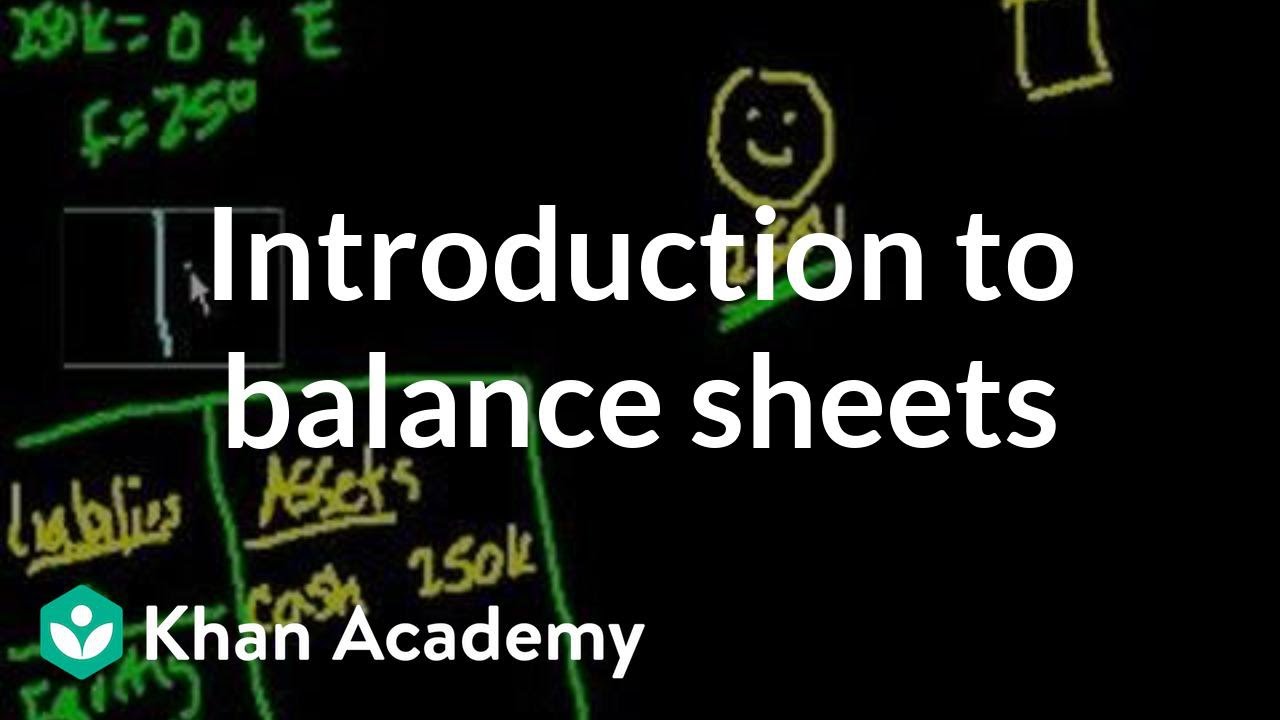
Using a home purchase to illustrate assets, liabilities and owner's equity. Created by Sal Khan.
Watch the next lesson:
https://www.khanacademy.org/economics-finance-domain/core-finance/housing/home-equity-tutorial/v/more-on-balance-sheets-and-equity?utm_source=YT&utm_medium=Desc&utm_campaign=financeandcapitalmarkets
Finance and capital markets on Khan Academy: This old and badly drawn tutorial covers a topic essential to anyone planning to not live in the woods -- your personal balance sheet. Since homes are usually the biggest part of these personal balance sheets, we cover that too.
About Khan Academy: Khan Academy offers practice exercises, instructional videos, and a personalized learning dashboard that empower learners to study at their own pace in and outside of the classroom. We tackle math, science, computer programming, history, art history, economics, and more. Our math missions guide learners from kindergarten to calculus using state-of-the-art, adaptive technology that identifies strengths and learning gaps. We've also partnered with institutions like NASA, The Museum of Modern Art, The California Academy of Sciences, and MIT to offer specialized content.
For free. For everyone. Forever. #YouCanLearnAnything
Subscribe to Khan Academy’s Finance and Capital Markets channel: https://www.youtube.com/channe....l/UCQ1Rt02HirUvBK2D2
Subscribe to Khan Academy: https://www.youtube.com/subscr....iption_center?add_us