Video teratas

Every Google Gemini 3.0 Pro Feature You'll NEED in 2026
In this video, I walk through every major capability of Gemini 3.0 Pro and Google’s AI stack in real use. You’ll see how it reasons through complex problems, analyzes images and videos, handles massive PDFs with long context, powers AI mode in Google Search, and connects with tools like Nano Banana Pro, Veo 3.1, and NotebookLM to create images, videos, podcasts, and full workflows from scratch.
If you’re still using Gemini like a basic chatbot, you’re wasting time. This is how to use it properly.
Get more AI tips that don't make it into videos 👉 https://parker-prompts.com/join
Watch Next https://youtu.be/tTplmSnPIHQ
Watch Next https://youtu.be/gXm4Rp6gjEU
Watch Next https://youtu.be/di5E5FG1OT0
Watch Next https://youtu.be/4KvTNcGOeMU
Watch Next https://youtu.be/SogSf-1p9t4
I'm Parker. I started this YouTube Channel with the goal to learn more about AI myself and to then pass on the knowledge to anyone willing to listen.
let's work together: partnerships @ parker-prompts.com

ChatGPT Vs Google Gemini 2.5 flash
Nano banana vs Chat GPT
Open AI Vs Google Gemini

Google AI has three subscription tiers for Gemini, Free, Pro and Ultra. But which one is actually worth your money—and is the $250 Ultra plan just overkill for most people?
0:00 Intro
0:38 Free Plan
2:28 Models
4:28 Context Size
5:28 Tools
8:26 DeepThink & Agent
9:38 Scheduled Actions
10:15 NotebookLM
11:05 Google Docs
11:22 Flow & Whisk
12:38 Priority Access
13:43 Gmail
14:19 Google Search
14:49 Storage
15:10 Free vs Pro
16:51 Pro vs Ultra
10:30 NotebookLM Course Card
🎃 Save 75% on Hostinger to build your website using AI: https://www.hostinger.com/charliechang
^ use code CHARLIECHANG for an additional 10% off! (Limited time offer)
In this video, I go over everything you need to know about Google Gemini, from how to get started as a beginner to using their advanced AI features like research mode, canvas, image generation, and seamless integration with Google Docs, Gmail, Sheets, and more. Gemini AI is such an amazing tool because it not only works like ChatGPT but also connects directly with your Google workspace account, making it one of the most practical AI tools you can use every day. We’ll be diving into free vs. paid plans, the Flash vs. Pro models, and real use cases that will actually save you time and money.
► Get access to my FREE side hustle courses:
https://www.sidehustlemastery.com
My favorite finance + business products:
💳 My favorite credit cards: https://yourbestcreditcards.co....m/card-finder/?ccid=
🏦 Favorite online savings accounts: https://bit.ly/top-hysa-2026
📈 Get a bonus with WeBull Investing: https://bit.ly/webull-bonus
🖥️ Best AI website builder (Less than $3/month using code CHARLIECHANG): https://hostinger.com/charliechang
🥇 Hire the top 1% of overseas talent: https://paired.so
► Join my FREE newsletter:
https://buildabetterbusiness.co/subscribe
Be sure to watch this video until the end because I’ll walk you through how to use Gemini like a pro and show you the exact features that make it stand out from other AI tools. I highly recommend treating Gemini like your personal assistant and the smartest person in the world. You can use it to draft emails, summarize PDFs, research faster, and even create content inside Docs and Sheets. Once you learn the best ways to apply it, you’ll realize Gemini can do the heavy lifting for almost any task and save you hours every week.
Yes, watching this tutorial will give you a solid understanding of Google Gemini, but the best way to learn is by actually trying it yourself. So, visit Gemini, test its features, and start incorporating them into your daily workflow. The more you use it, the faster you’ll see how powerful it really is. Gemini is not just another AI, it’s a complete AI platform that integrates directly into the apps you already use, making it perfect for students, professionals, and creators.
If you want to see more AI videos like this, check out my other videos:
10 Ways to Use ChatGPT So Well It Feels Illegal (Tutorial)
https://www.youtube.com/watch?v=Jg09XvHGHiQ
n8n Tutorial for Beginners: How to Build AI Automations for FREE (Step-by-Step):
http://www.youtube.com/watch?v=Fy1UCBcgF2o
I hope you guys found this video helpful, and if you did, please SHARE it with a friend or family member who you think could benefit and also LIKE and subscribe for more videos like this in the future!
Thank you for watching, and I hope you have a wonderful rest of your day!
– Charlie
#Gemini #Tutorial #AI
Timeline:
0:00 - Introduction
0:29 - Google Gemini Main Page Walkthrough
1:44 - What Can Google Gemini Do? (Basic Features Explained)
2:54 - How to Use Gemini for Deep Research (Step-by-Step)
6:06 - Gemini Canvas Mode Tutorial for Beginners
6:42 - Google Gemini Image Generation Made Easy
7:26 - Uploading and Using Files in Google Gemini
9:17 - How to Use Google Apps Inside Gemini (Docs, Drive, etc.)
10:14 - What Are Gems in Google Gemini? (Beginner's Guide)
12:02 - How to Use Google Gemini on Your Phone
13:29 - Google Gemini Paid Plan Features Explained
15:05 - How to Use Gemini in Gmail for Writing Emails
16:00 - Google Gemini in Google Docs Tutorial
17:02 - Final Thoughts
Disclaimer: Some of the links above may be affiliate links, which means that if you click on them, I may receive a small commission. The retailers and financial services companies pay the commission at no cost to you, and this helps to support our channel and keep our videos free. Thank you!
In addition, I am not a financial advisor. Charlie Chang does not provide tax, legal or accounting advice. The ideas presented in this video are for entertainment purposes only. Please do your own due diligence before making any financial decisions.
► My Instagram: https://www.instagram.com/charlie__chang/

Interested in getting credit for this lesson? Take the full AI Boost Bootcamp course on Google Skills and earn your badge → https://goo.gle/4ccw2mH
Go from AI basics to advanced proficiency in under 50 minutes with AI Boost Bootcamp. Based on Google’s own proven internal training, this course empowers you to master Gemini at work across Google Workspace and Gemini Enterprise.
In Lesson 1, we’ll orient you across Google’s AI ecosystem—from Workspace and NotebookLM to the Gemini app and Gemini Enterprise—before mastering the Art of Prompting using the four essential pillars (Persona, Task, Format, and Context).
🕒 Timestamps:
0:00 – Welcome: Course introduction
1:28 – Product overview: Where to find Gemini in Workspace, NotebookLM, Gemini App, Gemini Enterprise.
3:56 – The agentic workplace: Intro to Gemini Enterprise and AI agents.
4:52 – AI prompting essentials: Master the PTFC framework (Persona, Task, Format, Context) to get high-quality results.
6:50 – Recap: A summary of fundamentals and Lesson 2.
What is Google Workspace → https://goo.gle/45BsE1W
Set up Google Workspace → https://goo.gle/4q8r3t1
Subscribe to Google Workspace → https://goo.gle/GoogleWorkspace
Try Google Workspace with Gemini → https://goo.gle/45FrVNh
Follow Google Workspace on X → https://goo.gle/3YpmHS0
Follow Google Workspace on Facebook → https://goo.gle/4q8cZja
Follow Google Workspace on LinkedIn → https://goo.gle/49Eqjpw
Follow Google Workspace on Instagram → https://goo.gle/44Xs4eL
Follow Google Workspace on TikTok → https://goo.gle/4qijGio
Follow Google Workspace on Threads → https://goo.gle/4so5XYS
#GoogleWorkspace
#GoogleWorkspaceWithGemini

A few days ago, I conducted a simple experiment. I scribbled a chaotic drone path over a map, fed it into Google’s newly released Gemini Omni model, and asked it to simulate a first-person drone view following that exact trajectory. What happened next completely broke AI Twitter.
Creators across the US, China, and the global AI community took this "scribble-to-video" concept and turned it into the ultimate stress test, pitting Google’s new foundational model against ByteDance’s powerful Seedance 2.0.
In this video, we are looking at the wildest community iterations, analyzing the results, and diving deep into the technical architecture. We aren't just looking at pretty pixels anymore. Models like Gemini Omni and Seedance 2.0 aren't text-to-video generators; they are natively multimodal, spatial world simulators that understand the physics of lighting, gravity, and structural depth.
00:00 I Accidentally Started an AI Video Trend
01:08 How Google Omni Actually Works
02:55 The Craziest Community Experiments
06:12 Spatial RAG & The Future of Street View
07:05 Google Omni vs. Seedance
07:37 Why Omni is an After Effects Killer
10:26 The Endgame: Volumetric 3D Video
12:04 Natively Multimodal AI Changes Everything
#GoogleOmni #Seedance #AIVideo #GoogleEarth #ArtificialIntelligence
Become a member to support the channel:
https://www.youtube.com/channe....l/UC7bGK0A1weWfNaRfO

So nutzt du Google Gemini: In diesem Video zeige ich dir, warum Google Gemini viel mehr kann, als die meisten denken. Du erfährst anhand konkreter Beispiele, wie du mit der KI im Alltag extrem viel Zeit sparen kannst. Ich erkläre dir, wie Google Gemini mit Gmail und dem Google Workspace zusammenarbeitet und dir hilft, E-Mails zu sortieren und Informationen schneller zu finden. Außerdem siehst du, wie du mit Gemini automatisch To-Do-Listen und Einkaufslisten erstellst. An praktischen Beispielen lernst du, wie Rezepte, Content-Pläne und Aufgaben direkt in Google Tasks gespeichert werden. Ich zeige dir auch, wie wiederkehrende Aufgaben und tägliche Inhalte automatisch von der KI erstellt werden. Ein weiteres Highlight ist die Nutzung von Google Gemini als persönlicher Assistent auf dem Smartphone. Du lernst, wie Bildschirmfreigabe und Kamera-Funktionen dir bei Content, Technikfragen und Einkäufen helfen. Zusätzlich erfährst du, wie Gemini Reels analysiert und konkrete Verbesserungsvorschläge gibt. Das Video zeigt außerdem, wie Videos transkribiert, Lernkarten und Quiz erstellt und Inhalte in Skripte umgewandelt werden. So bekommst du einen umfassenden Überblick über die vielseitigen Möglichkeiten von Google Gemini im Alltag und im Business.
00:00 Google Gemini nutzen
00:46 So sparst du Zeit mit Google Gemini
01:53 Google Gemini erstellt deine To Do Listen
03:29 Wiederkehrende Aufgaben in Google Gemini einrichten
05:25 Google Gemini Live nutzen
07:24 Du brauchst keinen Social Media Coach mehr
08:03 Audio und Video-Dateien transkribieren
08:21 Verstecke Funktionen in Google Gemini
09:15 So wandelt die KI Informationen um in Skripte für Social Media Content
09:48 Google Gemini YouTube Trick
10:38 Google Gemini wandelt Infografiken in animierte Videos um
Hier findest du Hilfe, wenn die Anbindung zu Workspace nicht funktioniert:
https://support.google.com/mail/answer/14199860?hl=de&co=GENIE.Platform%3DAndroid
(unbezahlte Werbung)
Du findest mich auch hier:
✔️ Instagram: https://www.instagram.com/feliciasimon._/
✔️ TikTok: https://www.tiktok.com/@feliciasimon_
✔️ LinkedIn: https://www.linkedin.com/in/felicia-simon/
✔️ Facebook: https://www.facebook.com/feliciasimon.marketing
✔️ Blog: https://feliciasimon.de/instagram
✔️ Newsletter (kein Spam, versprochen! Es gibt ein kurzes Update jeden Monat): https://feliciasimon.de/newsletter/ ✍️
✉️ E-Mail nur für Business-Anfragen: hello@feliciasimon.com
(Du verstehst bestimmt, dass ich keinen Support per Mail geben kann und Fragen auf diesem Weg nicht beantwortet werden.)
PS: Ich gebe Social Media Marketing Trainings und Workshops für Unternehmen. Wenn du Lust auf einen Workshop hast, dann melde dich gerne per Mail:
👉 hello@feliciasimon.com
(Du verstehst bestimmt, dass ich keinen Support per Mail geben kann und Fragen auf diesem Weg können leider nicht beantwortet werden.)

Get Started with MyPromptBuddy for free: https://mypromptbuddy.ai/
This video covers Gemini's new Desktop app for Mac, Gemini's new TTS model, an upgrade to AI studio's vibe coding experience and more. If you want to get the most out of Google Gemini and learn how to use Google Gemini like a pro this video is for you.

#manish4u #google #googlegemini #googlegeminiprompts #howtousegooglegemini
Hello & Namaste Everyone,
Google Gemini Kya Hai aur Kaise Use Kare | Google Gemini Full Tutorial For Beginners
🔴 SUBSCRIBE FOR MORE VIDEO 👉 https://www.youtube.com/channe....l/UC3m2kLQNIPUqebFAH
TOPIC COVER IN THIS VIDEO :
Google gemini use kaise kare mobile me
google ai app
gemini by google
google gemini ai
how to use gemini app
gemini kaise use kare
google gemini kya hai
google gemini in hindi
AI tools by google 2026
what is google gemini app
gemini app se kya hota hai
google gemini kaise use kare
how to use google gemini app
गूगल जेमिनी क्या है और कैसे यूज करें ?
google gemini full course in hindi
how to use google gemini ai in hindi
how to use google gemini ai in mobile
Disclaimer :-
This channel does not promotes or encourages any illegal activities and all content provided by this channel is meant for for educational purpose only.
Copyright Disclaimer :-under section 107, of the copyright act 1976 allowance is made for "fair use" for purpose such as criticism, comment, news reporting, teaching, scholarship and research
Fair use is a permitted by copyright copyright status that might otherwise be infringing, non-profit, educational or personal use tips the the balance in favour of fair use.
🙏 धन्यवाद (Thanks For Watching) 🙏
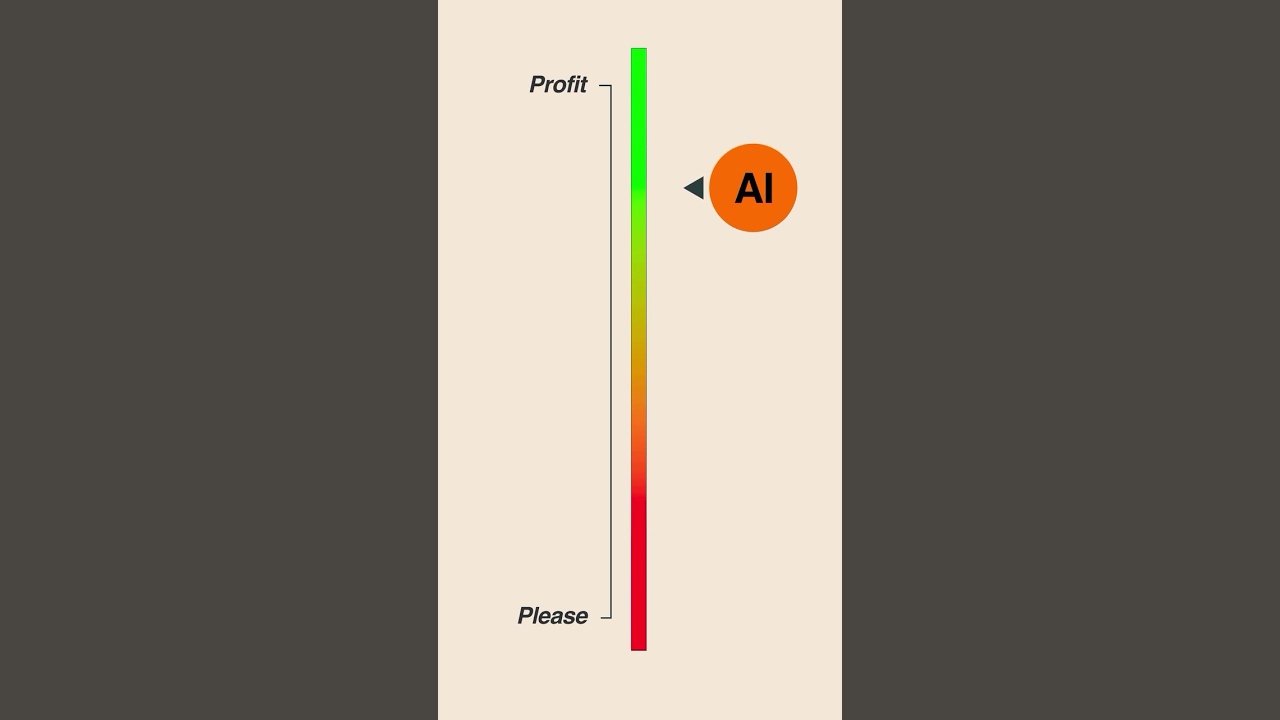
Anthropic has been one of the most talked-about AI companies lately — with Claude pushing the frontier of large language models and their AGI ambitions. 🚀
But the real question is: can they build a profitable business around it?
We’ve seen other AI-first startups raise billions, but profitability is a whole different game. Anthropic will need to balance:
Massive infrastructure costs 💸
Intense competition with OpenAI, Google, and others ⚔️
Finding the right use cases and revenue models 📈
The next few years will define whether Anthropic becomes the next OpenAI… or just another research-heavy lab without a sustainable business.
What do you think — can Claude’s edge be turned into real profits?
#ai #claude #agi #startup #ycombinator #anthropic #aimodel #futureofwork
Anthropic Study Reveals Which Jobs AI Will Replace First
Artificial intelligence is rapidly evolving from a productivity booster into a system that can reshape entire job categories.
A recent study by AI research company Anthropic analyzed large-scale real-world AI usage data and compared thousands of work tasks across different professions. The findings suggest that many computer-based roles could face higher exposure to automation.
Jobs that rely heavily on writing, research, documentation, customer interaction, and analytical work are particularly affected because modern AI systems are becoming extremely efficient at these types of tasks.
However, the research also highlights an emerging opportunity: professionals who can coordinate and manage AI tools. This role, sometimes referred to as an AI orchestrator, focuses on directing AI systems, designing workflows, and combining multiple tools to produce high-quality outcomes.
As organizations adopt more AI systems, the demand for people who understand how to manage and integrate these technologies could grow significantly.
The future of work may not simply be humans versus AI — it may be humans who know how to leverage AI outperforming those who don’t.
Tags
ai jobs future, anthropic ai study, jobs ai will replace, ai orchestrator role, future of work ai, artificial intelligence jobs impact, ai automation jobs, tech industry trends, ai productivity tools, ai career skills, creator economy ai, ai workforce transformation
CALL BACK LINK - https://cbxit.in/ytcallback
Connect with Mr. Sanjeev Jain – AI Automation & Tech Business Coach
SUBSCRIBE for the latest updates on AI, automation, and business coaching:
🔗 Instagram: https://www.instagram.com/sanjeevjain_coach
🔗 Facebook: https://www.facebook.com/ceoitbox
🔗 LinkedIn: https://www.linkedin.com/company/sanjeevjain
🔗 Twitter: https://twitter.com/ceoitbox
🎵 Music Licensing Disclaimer
All music used in this video is properly licensed for commercial use through royalty-free music platforms such as Envato Elements, Artlist, Epidemic Sound, or similar.
Licenses are held by AI CEOITBOX or our authorized video production partners.
We respect all copyright laws and hold valid, trackable licenses for every music asset used in our content. Proof of license can be provided upon request.
🛑 No copyright infringement intended. Any claims made in error may be disputed with the appropriate documentation.
📩 For licensing or copyright-related inquiries, contact: mktg@ceoitbox.in

The co-founders of Anthropic discuss the past, present, and future of Anthropic. From left to right: Chris Olah, Jack Clark, Daniela Amodei, Sam McCandlish, Tom Brown, Dario Amodei, and Jared Kaplan.
Links and further reading:
Anthropic's Responsible Scaling Policy (RSP): https://www.anthropic.com/news..../announcing-our-upda
Machines of Loving Grace: https://darioamodei.com/machines-of-loving-grace
Work with us: https://anthropic.com/careers
Claude: https://claude.com
00:00 Why work on AI?
02:08 Scaling breakthroughs
03:30 Early days of AI
10:57 Sentiment shifting
18:30 The Responsible Scaling Policy
30:42 Founding story
32:45 Building a culture of trust
39:08 Racing to the top
43:43 Looking to the future

Looking to learn AI without paying for expensive courses? Anthropic offers several free AI courses with certificates through its academy. From AI fundamentals and prompt engineering to APIs, cloud deployment, and AI-assisted coding with Claude, these courses cover the key skills needed to build modern AI applications.
In this video, we break down 7 of the best free Anthropic AI courses and who each one is best for. If you're a beginner, developer, or cloud engineer, there's a course here for you.

Will AI replace engineering teams according to Anthropic? AI will take your engineering team from full headcount to minimal. According to Anthropic’s analysis and report, AI can replace 90% of white collar jobs in most areas. Here’s where we are today, what this means for engineers, and how to future-proof your career by learning to orchestrate AI agents. #claudecode #productmanagement #anthropic

New technique from Anthropic helps us glean into the black box of generative AI models.
Let's break this down a bit and understand what this means.
#artificialintelligence @anthropic-ai #generativeai

This is Anthropic running the government-contract playbook at continental scale: Rwanda becomes a reference deployment that signals Claude's viability as sovereign AI infrastructure for the Global South, not just a consumer product. The Socratic-mentor framing—questions rather than answers—is a deliberate hedge against dependency criticism and gives Anthropic a defensible pedagogical story for regulators everywhere. Paired with Iceland, LSE, and India, Anthropic is quietly building a moat of institutional commitments that rivals will struggle to displace once teachers and civil servants are trained on Claude workflows.
Key numbers:
• 200,000+ ALX students and young professionals reached
• Up to 2,000 Rwandan teachers targeted for AI training
• 1,100+ conversations logged since Chidi rollout on November 4, 2025
• Nearly 4,000 learning sessions completed
• 9 out of 10 users reported positive experiences
• 1 year of Claude access granted to Rwanda pilot graduates
• Announcement date: November 18, 2025
• Claude Pro (individual), Claude Code (developer teams in government)
Source: https://www.anthropic.com/news..../rwandan-government-
Follow @TrendsInAI for daily AI news in 60 seconds.
#Shorts #AI #AINews #TrendsInAI
1) Join channel membership for exclusive videos -
https://www.youtube.com/channe....l/UC4Kp7INB8raUwYD-K
- - -
2) AI TURBOCHARGER course - LIVE - Enroll now - https://Turbocharger.BillionHopes.ai
- - -
3) Subscribe our channel - https://www.youtube.com/@Billi....onHopes?sub_confirma
- - -
4) Check our BH ACADEMY Courses - https://Academy.BillionHopes.ai
- - -
Billion Hopes - AI for real impact - https://BillionHopes.ai
AI current affairs - https://Insights.BillionHopes.ai


#Shorts
Why we just bet $40 billion on the future of Anthropic and AI infrastructure. This is how we are securing the most valuable real estate of the next century.
Why is a $40 billion investment in Anthropic actually a strategic play for total dominance? This video explores how locking in massive cloud infrastructure and TPU chip usage creates a closed-loop system for AI growth. We dive into the valuation gaps and the long-term vision of securing the global economy's technological foundation. Watch to discover the secret to owning the AI path forward.
📌 CHAPTERS
00:00 — The $40 Billion Bet
00:13 — Challenging the Valuation
00:25 — The Infrastructure Advantage
00:45 — The Closed-Loop AI Strategy
00:57 — Owning the Future
──────────────────────────────
⚠️ DISCLAIMER
This video is created for educational and entertainment purposes only. It is a fictional, narrative-driven story and does not constitute financial, legal, tax, or investment advice. The characters, companies, and scenarios depicted are entirely fictional. Any resemblance to real persons, entities, or events is coincidental. Always consult a qualified professional before making any financial decisions.
──────────────────────────────
#Shorts #AI #Tech #Anthropic #Investing
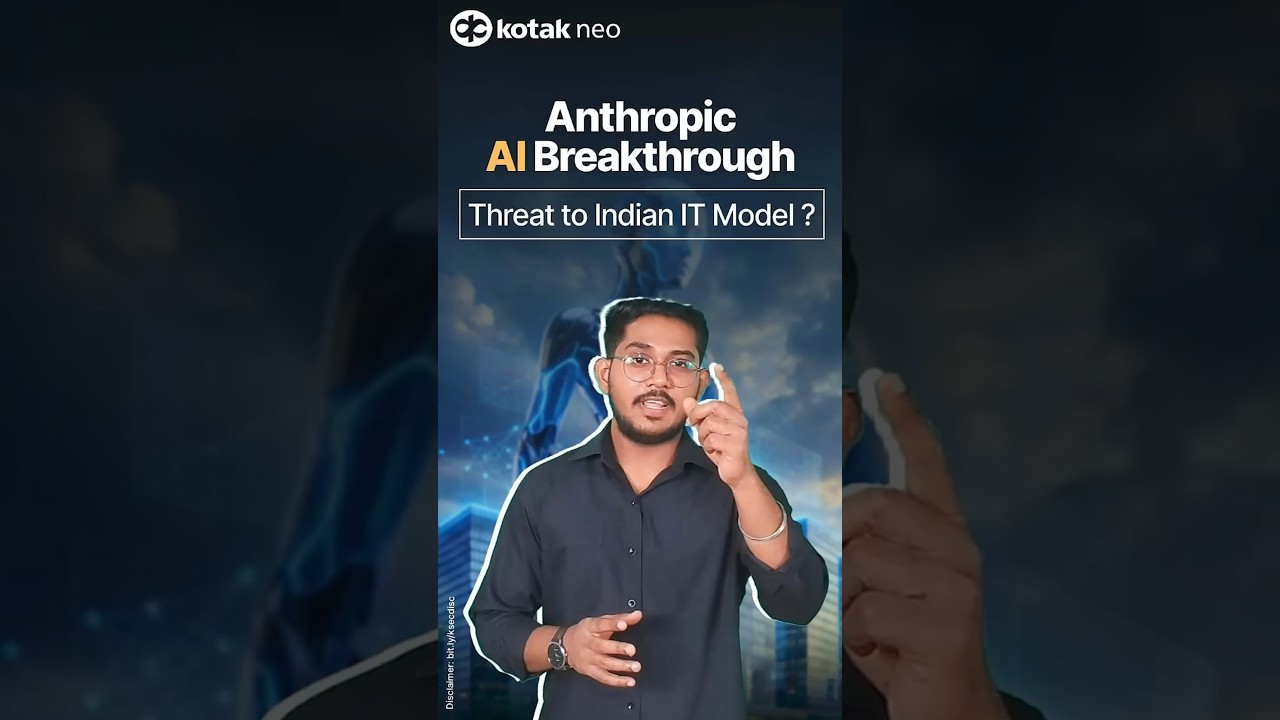
A single AI announcement wiped out thousands of crores in market cap from the Indian IT sector. But was AI really the reason — or was the sector already weak?
----------------------------------------------------------------------------------------------------------------------------------------------------------------------------------
Related Links:-
👉https://www.kotakneo.com/inves....ting-guide/share-mar
👉 https://www.kotaksecurities.co....m/stocks/sectors/ai-
👉 https://www.kotakneo.com/stock....s/tata-consultancy-s
👉 https://www.kotakneo.com/stock....s/mahindra-mahindra-
----------------------------------------------------------------------------------------------------------------------------------------------------------------------------------
Related Videos:-
👉 https://youtube.com/shorts/13HNB_5U8u8
👉 https://youtube.com/shorts/Thx46pp8XZw
👉 https://youtube.com/shorts/33Oo09GFovg
--------------------------------------------------------------------------------------------------------------------------------------------------------------After a major update from Anthropic, Indian IT giants like Infosys, TCS, and Tech Mahindra saw heavy selling pressure. Since February 3rd, Nifty IT has corrected nearly 12–13%.
Is AI truly a long-term threat to India’s outsourcing model?
Can automation replace coding, analytics, and backend services traditionally outsourced to India?
Or is this market panic an overreaction?
In this video, we break down:
What Anthropic’s new AI model can actually do
Why Indian IT stocks reacted sharply
Whether outsourcing demand is at risk
Long-term impact of AI on Indian IT jobs
Investment perspective: threat or opportunity?
Watch till the end to understand whether this is structural disruption or short-term fear.
Source: Moneycontrol
---------------------------------------------------------------------------------------------------------------------------------------------------------------------------------
To watch more videos on Stock Updates,
▶️ Subscribe to Kotak Neo - https://www.youtube.com/@kotak....neo?sub_confirmation & hit the 🔔 to watch our videos first.
🌐 LEARN MORE ABOUT Kotak Neo: https://www.kotakneo.com/
----------------------------------------------------------------------------------------------------------------------------------------------------------------------------------
#indianit #indianitsector #niftyit #itstocks #infosys #tcs #techmahindra #stockmarketindia #indianstockmarket #aiimpact #anthropic #artificialintelligence #aivsoutsourcing #outsourcingindustry #marketcorrection #stockmarketnews #itsectorcrash #aithreat #techstocksindia #marketanalysis
----------------------------------------------------------------------------------------------------------------------------------------------------------------------------------
Kotak Neo is a preferred choice of millions of customers when it comes to investment decisions. With free access to credible research, competitive pricing, and high-speed trading platforms, it makes investing an effortless journey for both new investors and experienced traders. To open a FREE Demat and trading account with Kotak Neo, please click here: https://www.kotakneo.com/
Disclaimer: https://www.kotakneo.com/disclaimer/
----------------------------------------------------------------------------------------------------------------------------------------------------------------------------------
FOLLOW US FOR STOCK UPDATES ON:
Telegram - https://t.me/KotakNeo
Twitter: https://twitter.com/kotaksecurities/
Instagram: https://www.instagram.com/kotaksecurities/
LinkedIn: https://www.linkedin.com/company/kotak-securities
Facebook: https://www.facebook.com/kotaksecurities/
----------------------------------------------------------------------------------------------------------------------------------------------------------------------------------
Customer Service: 1800 209 9191
We hope you enjoy your investment experience with us. If you have any other questions, please feel free to email our support team.

Great courses for AI careers - Billion Hopes - AI for real impact
https://billionhopes.ai
https://academy.billionhopes.ai


Anthropic's new Mythos AI is breaking cybersecurity barriers in ways experts never imagined. This revolutionary technology can penetrate digital defenses faster than any previous system, forcing the entire industry to reconsider security protocols. #Shorts #TechExplained #CyberSecurity Subscribe for daily tech updates that matter to your digital world.
A brand new federal lawsuit may shape the future of artificial intelligence, national security, and the limits of government power. In Anthropic PBC v. Department of War, the AI company behind Claude is asking a federal court to block actions by the Department of Defense after it refused to remove safety restrictions that would allow AI to conduct surveillance on U.S. citizens and operate lethal autonomous drones without human oversight.
The government responded by cutting off contracts and labeling Anthropic a national security supply chain risk, prompting the company to seek a Temporary Restraining Order (TRO) in federal court in San Francisco. The complaint raises serious constitutional and administrative law issues, including claims under the First Amendment, Fifth Amendment, and the Administrative Procedure Act.
Even more remarkable, engineers from Google and OpenAI have filed an amicus brief warning about the dangers of giving the military unrestricted access to powerful AI systems.
In this video I walk through the background of the case, the law behind Public Benefit Corporations, what a TRO means, and what to listen for during today’s emergency hearing. This may become one of the first major courtroom battles over AI regulation, autonomous weapons, and military use of artificial intelligence in the United States.---------------------------
Support my work
Linktr.ee/brynodc