Top Videos

Come along with us as we travel to Europe in this fun introduction to the European Continent for Kids. We will explore some of the most famous countries and landmarks in Europe and learn some important facts and history about this amazing place. Your students will learn that Europe is
the second smallest continent on Earth (Australia is the smallest), but third most populous with over 742
million people living in 50 countries! Thats amazing!
Europe truly is a beautiful place. Many call it home and many visit each year. We hope that this video gives you a small glimpse into the Beauty of Europe and a broader understanding of the world around us. If you'd like to learn even more about the Europe download our free lesson plan here: https://learnbright.org/lesson....s/social-studies/all the lesson is built for grades 3 - 6 and is packed with more fun content, activities, worksheets, and more!
Thank you for watching! Share your thoughts in the comments below and be sure to subscribe!
Find and Follow us Online:
Facebook: https://www.facebook.com/LearnBright/
Instagram: https://instagram.com/LearnBrightEducation
Pinterest: https://pinterest.com/LearnBrightEducation
YouTube: https://www.youtube.com/LearnBright
Website: https://learnbright.org/
Are you a K-6 grade teacher looking for more teaching resources? We don’t only provide video content but high quality lesson plans as well. 100% free with handouts, worksheets, classroom activities and more!
Browse our entire collection of Social Studies lesson plans: https://learnbright.org/lessons/?filter_subject=social-studies
#ASL
#Europe
#EuropeForKids

#sightwords
#learntoread
#learnhowtoread
#practiceREADINGatHOME
#EnglishWORDS
#EnglishGRADE1
#ENGLISHgrade2
#BASICenglishWORDS
#PracticeREADINGenglish
#TutorsaPAGBASA
#ReadingVideoTutorial
#Learn how to read English
#EnglishforKinder
#EnglishforGrade1
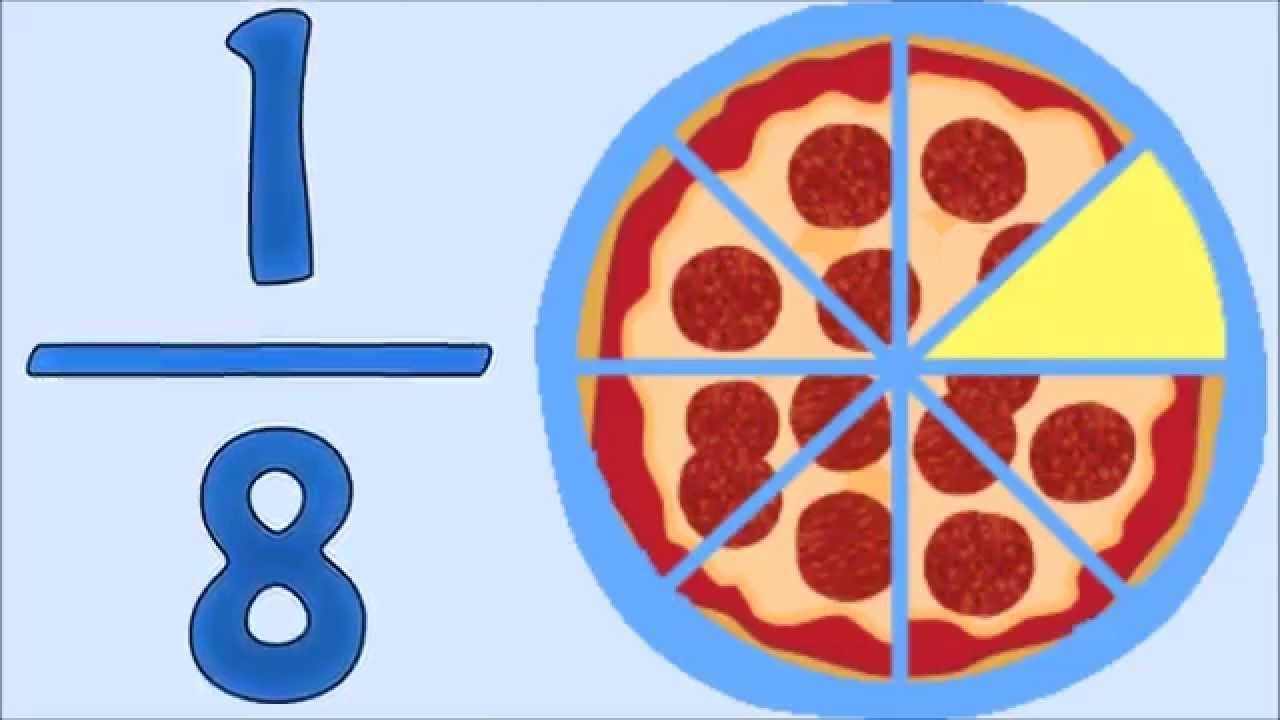
Learning Fractions
This video teaches the mathematical principle of fractions in an easy to understand way for children and kids to learn. This video uses visual representations to point out common fractions that we see in everyday life. This will help children to learn and apply fractions each day.
Thanks for watching Let's Learn Fractions, a kids learning video.
Visit our channel for more great videos for kids and children - http://www.youtube.com/kidslearningvideo
"Carefree" Kevin MacLeod (incompetech.com)
Licensed under Creative Commons: By Attribution 3.0
http://creativecommons.org/licenses/by/3.0/
--Subscribe to Kids Learning Videos--
http://www.youtube.com/subscri....ption_center?add_use
--Educational Toys for Kids--
https://www.amazon.com/shop/kidslearningvideos
--Popular Videos and Songs—
Animal Sounds Song - https://youtu.be/V7R_M52EAkI?l....ist=PLsujH_u89cJ-_59
The Three Little Pigs - https://youtu.be/HtHjB6rRmQc?l....ist=PLsujH_u89cJ9Qn3
Old MacDonald Had a Farm - https://youtu.be/o2xEz9ceqpo?l....ist=PLsujH_u89cJ-_59
--Check out our Website—
http://www.kidslearningvideos.com
--Follow Kids Learning Videos--
Facebook: https://www.facebook.com/KidsLearningVideo
Roku: https://channelstore.roku.com/....details/599303/kids-
Spotify: https://open.spotify.com/artis....t/26Emt3nquf2tasxreu

#patinig
#aeiou
#onlinetutor
#tutorsapagbasa
#pagbasangtagalog
Paano matututo bumasa ang bata?
Paano turuan bumasa ang bata?
Online Tutor sa pagbasa
Tamang paraan ng pagtuturo sa bata kung paano bumasa.
Ito ang hakbang para matutong bumasa ang bata. Importanteng makabisado muna ng bata ang mga patinig a-e-i-o-u bago magpatuloy sa pagbasa ng abakada, mayroon ding maikling pagsusulit pagkatapos ng pagsasanay sa pagbasa

Making an interactive and moving demonstration of circle theorems helps reinforce what the situation is. You can do it very quickly and easily in GeoGebra. This one is for the fact that a perpendicular bisector of a chord in a circle will always pass through the centre of the circle (and conversely, a line through the centre of a circle perpendicular to a chord will bisect it).
ALL CIRCLE THEOREMS LIVE HERE: https://www.geogebra.org/m/xkvz2EfF

Ninth Grade English Vocabulary words spelled, pronounced and defined. Kids will love the interesting format and learning environment. Homeschool teachers add this to your lesson plans. Welcome to the Complete K12 Essentials Youtube channel! Please "LIKE" and "SUBSCRIBE" to this channel. New videos posted every Tuesday. https://youtube.com/channel/UC...._XYRUNkxt9636TWXdgJ9
9th Grade English Vocabulary Part 2 in the online public school classroom
NEW : We have introduced interactive worksheets, puzzles, and quizzes on www.CompleteK12Essentials.com We have quick links to seamlessly move from our website to our Youtube channel.
Additional videos in this series will follow, so be sure to subscribe to our channel and tell a friend. If you have comments or suggestions on future videos please visit our channel link above.
_________________ABOUT_____________________
Complete K12 essentials Youtube channel and Complete K12 Essentials.com was created to offer parents and teachers an online augmentation or alternative when public schools are not available. The need for standard curriculum that can be delivered via the internet became obvious during the pandemic of 2020. Teachers and school districts were left to create lesson plans and somehow connect with the students with very little time. The challenge was to give each child a method to connect with teachers and class mates to simulate a natural learning environment. Although we are still building our library of video lessons, you can use our videos to create lesson plans, review standardized material, introduce building blocks and drills, as well as assigning tests and quizzes on limited videos, such as vocabulary. We are building videos that will serve all students from kindergarten through the 12th grade. Recently launched on June 21st, 2020 our goal is to provide videos that will serve as a resource for those teaching or those looking to cover important standardized curriculum. We believe that access to a solid foundation of knowledge should be available to everyone who chooses to seek it. Many offerings online lean on animation to capture a child’s attention, which to a certain extent works, but they lose interest rapidly and the opportunities for learning are significantly reduced. This is especially true when the child has no obligation to retain the material or accountability to a teacher. Navigating through the material suitable for each grade level is a difficult task at best, so we have created the “SAFE LEARNING PLACE” logo and apply it to all of our videos to show you our dedication to providing good learning material that can be trusted across our whole channel. The curriculum will cover Math, Language Arts, Social Studies, Science, Technology, Music, Art, Health and Fitness, Foreign Languages, Life Skills, Career training, History and Law.
Other examples from our channel:
1st Grade Math Drills 2’s and 3’s
https://youtu.be/-bUf9Mnn8t0
1st Grade Vocabulary sight word list 3
https://youtu.be/cjmB9mrzl1U
4th Grade Vocabulary part 1
https://youtu.be/dQJeMNUqx6U
6th Grade Vocabulary Part 1
https://youtu.be/FrXW345fjxs
6th Grade Vocabulary Part 2
https://youtu.be/PsG0s8Xydw0
6th Grade Vocabulary TEST on the Part 1 word list
https://youtu.be/Va_mm9mFEeg
7th Grade Vocabulary Part 1
https://youtu.be/j5uAXW60Ue4
11th Grade Vocabulary Part 1
https://youtu.be/OijIQS4EXIE
12th Grade Vocabulary Part 1
https://youtu.be/wQ00zV1UEm0
__Preschool Playlist_____
https://www.youtube.com/playli....st?list=PLo2mDZbtxdi
__4th Grade Playlist_____
https://www.youtube.com/playli....st?list=PLo2mDZbtxdi
__6th Grade Playlist_____
https://www.youtube.com/playli....st?list=PLo2mDZbtxdi
Online Public School Education Homeschool Children Kindergarten Preschool Preschoolers Virtual Youtube District Channel County Kids Test VPK Math Language Arts Reading Writing lesson Day Online Public School, 5th Grade, Reading, Writing, Fifth Grade, District, County, schools,
9th grade vocabulary words, language, 9th grade lesson plan, 9th grade spelling words,lesson plan, classroom vocabulary, English Language arts, Online Public School, Vocabulary, Ninth grade, Homeschool, 9th Grade, Reading, English vocabulary sounds, Learn English, Writing, Parts of Speech, English Teacher, Adverb, Education, Verb Phrase, Language Arts, Articles, English, Test, Quiz, Learning, Kids, Online school, Curriculum, Teach, New, Teacher, Courses, Lessons, Spelling list, Learn,

#GeoGebra#quadratic equation

#arithmetic #arithmeticprogression #grade10math
View full lesson: http://ed.ted.com/lessons/a-br....ief-history-of-numer
1, 2, 3, 4, 5, 6, 7, 8, 9... and 0. With just these ten symbols, we can write any rational number imaginable. But why these particular symbols? Why ten of them? And why do we arrange them the way we do? Alessandra King gives a brief history of numerical systems.
Lesson by Alessandra King, animation by Zedem Media.

English 3
Grade 3
Video Lessons
Powerpoint Lessons
K-12 Program
C.a. Geronimo Files
English3 Quarter1 Week8 Day4

My telescope - Celestron 9.25” sct and cgemii mount
Main camera - zwo 183mc pro
Guide camera - zwo asi299mm mini
Zwo asi air pro to control the telescope

Uploaded for educational purposes only.

Redistributed with permission from the Arizona Department of Education.

Follow on Facebook: https://www.facebook.com/shyam....bikesh.mahato?mibext
Contact:9809329002(whatsapp) to join online tuition class.
To watch:
Class 12(new course) (all grammar solution): https://youtube.com/playlist?l....ist=PLOkaFAYLOx04S2U
class 11(new course) all videos: https://youtube.com/playlist?l....ist=PLOkaFAYLOx05_oV
BBS 1st year's Business English: https://youtube.com/playlist?l....ist=PLOkaFAYLOx05Jhy
English language videos: https://youtube.com/playlist?l....ist=PLOkaFAYLOx06chs
English grammars for all videos: https://youtube.com/playlist?l....ist=PLOkaFAYLOx04-Ul
class 10 all videos: https://youtube.com/playlist?l....ist=PLOkaFAYLOx07CZm
Class 12(old course)(meanings into words): https://youtube.com/playlist?l....ist=PLOkaFAYLOx049K-
Class 12(old course) ( online meanings into words): https://youtube.com/playlist?l....ist=PLOkaFAYLOx06g_x
Class 12(old course)(heritage of words): https://youtube.com/playlist?l....ist=PLOkaFAYLOx06t-6
Motivational videos: https://youtube.com/playlist?l....ist=PLOkaFAYLOx07un4
class 11 meanings into words(old course): https://youtube.com/playlist?l....ist=PLOkaFAYLOx07rDj
#shyamsir #12result #D_ग्रेड #subjec-verb_agreement #class12English #NebEnglish #Nepalboard #Class12English #EnglishbyShyamBikeshSir #Grammar #class11English #BbsEnglish #BusinessEnglish #BedEnglish #BAenglish #BSWenglish #onlinetuition #englishlanguageclass #usedto #shyamsir #onlinetuition #learnenglish #englishsentences #english #englishlanguageclass #englishvocabulary #howtospeakenglish #howtowriteinenglish #english #howtospeakenglish
Follow on Facebook: https://www.facebook.com/shyam....bikesh.mahato?mibext
Contact:9809329002(whatsapp) to join online tuition class.

For teachers interviewing for a new job at public & private K-12 jobs — prepare and succeed at the teacher demo lesson.
This is one of the more difficult interview rounds later in the school interview process where you have to demonstrate to interviewers that you can keep students safe, manage a classroom, and drive learning outcomes.
Check out free resources on the Demo Lesson and other aspects of the teacher interview process, including articles on Selected's blog: https://blog.getselected.com/
Additional Articles:
- Acing the Demo Lesson https://blog.getselected.com/2017/03/09/ace-the-teacher-demo-lesson/
- Build Authority through Non-Verbal Communication https://blog.getselected.com/2018/09/27/use-non-verbal-communication-to-improve-classroom-engagement/
- Improve Student Behavior Without Shame or Punishment https://blog.getselected.com/2018/10/05/improve-student-behavior-without-shame-or-punishment/
Additional Courses
- Deliver a Successful Demo Lesson https://www.getselected.com/co....urses/deliver-a-succ
- Managing Challenging Student Behaviors https://www.getselected.com/co....urses/managing-chall
Selected helps teachers find jobs at schools they love. We offer a teacher hiring and career support platform. 100% FREE for teachers: https://www.getselected.com

Makey Makey - Deluxe Kit
Part ID : PPWIG-11519
Links :
https://www.proto-pic.co.uk/ma....key-makey-standard-k
https://www.proto-pic.co.uk/ma....key-makey-deluxe-kit
Drew unboxes the Makey Makey Deluxe Kit, showing the contents, and also giving a demonstration of using the included copper tape to show control of a program that uses the cursor keys to browse a PDF file.
![[ID] School in a new light | Google for Education](https://i.ytimg.com/vi/GPV_aah64qY/maxresdefault.jpg)
What does school mean to you?
Across Asia, an increasing number of schools have started using Google for Education – from Chromebooks, Google Classroom to Google Workspace for Education – while redefining the meaning of school, in their own unique ways.
Visit edu.google.com/new-school/ for more stories

This video is on singular and plural nouns for grade 1 i.e. singular and plural nouns for kids. Nouns for kids.
To buy Target Publications' books on the Topic, click on the links given below :-
https://amzn.to/3eBKyrk (1st Std. Workbooks)
https://amzn.to/3hjG1M1 (Grammar Books)
Introduction to grammar
Grade 1 unit 3 singular and plural
Nouns can be in the singular or plural number.
Singular Noun:
The noun that means one person, one place or one thing is said to be in the singular number.
Plural Noun:
The noun that means more than one person,place or thing is said to be in the plural number.
Rule 1:
To change the nouns from singular to plural we normally add the letter s at the end of the word.
Rule 2:
Nouns that end with the letter s, ss, sh, ch and 𝒙 can be made plural by adding es at the end.
Rule 3:
Nouns that end with the letter y, can be made plural by changing y to ies to make it plural.
Rule 4:
When the noun has a vowel (a, e, i, o, u) before it ends with the letter y, then just add s to it to make it plural.
Rule 5:
When a noun ends with o, then es is added to it to make it plural.
Rule 6:
When a noun ends with f or fe, then f or fe is changed into v and es is added.
For free lessons, worksheets and more learning videos
http://www.jkacademypro.com
jkacademypro@gmail.com
https://facebook.com/jkacademypro
Stories for kids: Level 1:
The Race : https://youtu.be/DrPaN5pEuJk
My Brother & Me: https://youtu.be/z4GZMortuuk
My Sister & Me: https://youtu.be/h5ifrki1P1U
Stories for kids: Level 2:
Pehelwaan Ji: https://youtu.be/1AIcpNs9Zts
Too Many Bananas: https://youtu.be/covsJzT9bAQ
It's All The Cat's Fault: https://youtu.be/jD-AZ1CY3qM
Satya, Watch out: https://youtu.be/LAa-MrjG0xA
Merchant of Venice: https://youtu.be/fuTN2lHCcMg
Phonic Sounds, Alphabet sounds, ABC Sounds:
https://youtu.be/O7z8hr1ODo4
Grade 1: Grammar
What is a Sentence?: https://youtu.be/ppbjDRtLxB8
Nouns: https://youtu.be/ByEO8kq41hI
Sungular and Plural nouns: https://youtu.be/f5VZYFJCpFc
Grade 1: Essay Writing
Myself: https://youtu.be/Z4447HuyByQ
Grade 2:
Sentences: https://youtu.be/o3zwyUbBi6w
Grade 3:
Sentences: https://youtu.be/Qxfb5moWdcQ
Grade 4:
Sentences: https://www.youtube.com/watch?v=XiXyD...
Subject and Predicate: https://youtu.be/8Co_sO3cWAc
Grade 5:
Types of Sentences: https://youtu.be/Q2k57kSRwsg
EVS Ch 1 Our Earth and Our Solar System: https://youtu.be/cUd6qt6FN7U
Grade 6:
Types of sentences: https://youtu.be/brtcuOYEHxI
Grade 7:
Types of sentences: https://youtu.be/A5ST9Cuu-p0
How Doth The Little Busy Bee: https://youtu.be/as52KumVDQo
How doth the little crocodile: https://youtu.be/M0Q5XPW4zHU
#singularandpluralnounsforgrade1
#singualarandpluralnounsforkids
#nounsforkids
#singularandpluralnounsforclass1
#nounssingularandplural
videos related to education


Arithmetic, Puppets adding manipulative blocks, Mortensen Math kids Montessori K-12 Preschool tutorial online video, Algebra visualization with Mortensen Math.com manipulative colored blocks to visualizing algebraic expressions, visualizing mathematics, Montessori Home-school k-12 preschool online curriculum on line video.\
CONTACT US:
Toll Free USA Tel: 800+4plus4=8! [800-475-8748]\
http://www.mortensenmathdirect.com