Top videos
Have you ever asked "What is an adjective?" Well, look no further! In this video for kids we learn all about adjectives, what they are, and how to use them in sentences. When completed with our free lesson plan activities, Students will be able to define, identify, and correctly use adjectives. We hope you enjoy!
Looking for more Adjectives for Kids resources? Download our free comprehensive lesson plans here: https://learnbright.org/?s=adjectives
Check out some of our other videos related to parts of speech here:
Verbs: https://youtu.be/OEC0YpLKU_o
Nouns: https://youtu.be/lUJI6ZJggsY
Action and Being Verbs: https://youtu.be/iwfUZAYyqR0
Thank you for watching and learning with us! We’re constantly releasing new content and videos so click that “Subscribe” button and you’ll notified.
Find and Follow Us Online:
Facebook: https://www.facebook.com/LearnBright/
Instagram: https://instagram.com/LearnBrightEducation
Pinterest: https://pinterest.com/LearnBrightEducation
YouTube: https://www.youtube.com/LearnBright
Website: https://learnbright.org/
*Teachers and Parents! Did you know? In addition to these great videos, we have also created a library of high quality and engaging lessons for your elementary aged student(s). Visit us, sign up for a free account, and instantly you'll have access to thousands of lesson plans, learning materials, teaching instructions, activities, and assignments that your kids will really enjoy! We hope to see you soon!
Browse our entire collection of Language Arts lesson plans: https://learnbright.org/lessons/?filter_subject=language-arts
#Adjectives

Deserts of the world explores the various kinds of earths deserts. In this video we learn what a desert is, the different kinds of deserts (Hot and dry, Semiarid, Coastal, and Cold), the wildlife that lives in each kind of desert, where some of these deserts are located and so much more.
Are you looking for more desert of the world resources? Download our free comprehensive lesson plan here: https://learnbright.org/lesson....s/social-studies/des
Thank you for watching and learning with us! We’re constantly releasing new content and videos so click that “Subscribe” button and you’ll notified.
Find and Follow Us Online:
Facebook: https://www.facebook.com/LearnBright/
Instagram: https://instagram.com/LearnBrightEducation
Pinterest: https://pinterest.com/LearnBrightEducation
YouTube: https://www.youtube.com/LearnBright
Website: https://learnbright.org/
*Teachers and Parents! Did you know? In addition to these great videos, we have also created a library of high quality and engaging lessons for your elementary aged student(s). Visit us, sign up for a free account, and instantly you'll have access to thousands of lesson plans, learning materials, teaching instructions, activities, and assignments that your kids will really enjoy! We hope to see you soon!
Browse our entire collection of Social Studies lesson plans: https://learnbright.org/lessons/?filter_subject=social-studies
#Deserts

Do you know what an alluvial fan is? How about a plateau? In this video for kids, you will learn all about lots of different types of landforms. These natural features include mountains, hills, valleys, alluvial fans, and plateaus, and so many more. Keep watching to see how much you know and how much you can learn!
Let's start with an alluvial fan. This is a fan-shaped mass of alluvial, a type of clay sediment that forms as the flow of a river slows down. Similarly, other landforms are shaped by nature, too. Sometimes it can take thousands or millions of years for a landform to develop. And landforms comprise lots of different types of materials. Fossils, sediments, and lava from volcanoes all contribute to the creation of various landforms.
There are around 10 main types of landforms on Earth. These include mountains, valleys, islands, coasts, deserts, rivers, and oceans. This video goes into each of these types. Mountains, for instance, all have peaks at the top. The Himalayas are the highest mountain range, and they are home to the tallest mountain in the world—Mount Everest. Valleys are the low-lying areas that tend of sit between mountains. The most well-known valley in the U.S. is Death Valley, which is the lowest, hottest, and driest area in all of North America.
We hope you and your student(s) enjoyed learning about these four different landforms! If you want to learn even more, head over to our website and download one of our many free lesson plans about landforms, full of activities, worksheets, and more!
https://learnbright.org/lessons/science/landforms/
https://learnbright.org/lesson....s/science/landforms-
https://learnbright.org/lesson....s/science/lakes-rive
https://learnbright.org/lessons/science/deserts/
https://learnbright.org/lesson....s/social-studies/des
What you will learn in Types of Landforms:
0:00 What are landforms?
1:25 Materials that make up a landform
3:18 Mountains and Valleys
4:48 Plains
5:27 Plateaus
6:06 Islands
7:06 Lakes and oceans
8:27 Coasts
9:04 Deserts
10:01 Rivers
Check out some of our other landform-related videos here:
Weathering and Erosion: https://youtu.be/QJUs4e2X5Uo
Weathering: https://youtu.be/mQAOe-0vxdc
Rocks: https://youtu.be/xsHPA2GNF9Q
Thank you for watching and learning with us! We’re constantly releasing new content and videos, so click that “Subscribe” button and you’ll get notified.
Find and Follow Us Online:
Facebook: https://www.facebook.com/LearnBright/
Instagram: https://instagram.com/LearnBrightEducation
Pinterest: https://pinterest.com/LearnBrightEducation
YouTube: @LearnBright
Website: https://learnbright.org/
*Teachers and Parents! Did you know? In addition to these great videos, we have also created a library of high quality and engaging lessons for your elementary aged student(s). Visit us, sign up for a free account, and instantly you'll have access to thousands of lesson plans, learning materials, teaching instructions, activities, and assignments that your kids will really enjoy! We hope to see you soon!
Browse our entire collection of Science lesson plans: https://learnbright.org/lessons/?filter_subject=science
#Landforms
#TypesOfLandforms
In this video your students and kids will learn how animals are classified into different groups. Classification breaks very large groups down into smaller groups. This makes them easier to be studied. Scientists classify animals, plants and insects based on things they have in common. Just like kids would do with their toys!
Taxonomy means to classify living things. Scientists and biologists use a taxonomy chart to classify all the organisms on Earth. This chart includes the following groups: Domain, Kingdom, Phylum, Class, Order, Family, Genus and Species. Throughout the video we will learn about the different taxonomies, how animals are classified and spend a little more time on vertebrates and invertebrates. By the end you kid will have a more solid understanding of what makes animals different and may be able to classify them into their proper taxonomies.
Would you like even more Animal Classification Learning resources? Download our free comprehensive lesson plans here: https://learnbright.org/?s=animal+classification here you'll find access to lots more content, worksheets, learning activities and more.
Thank you for watching and learning with us! We’re constantly releasing new content and videos, so click that “Subscribe” button and you’ll get notified.
Follow us across the web!
Find and Follow Us Online:
Facebook: https://www.facebook.com/LearnBright/
Instagram: https://instagram.com/LearnBrightEducation
Pinterest: https://pinterest.com/LearnBrightEducation
YouTube: https://www.youtube.com/LearnBright
Website: https://learnbright.org/
Are you a K-6 grade teacher looking for more teaching resources? We don’t only provide video content but high quality lesson plans as well. 100% free with handouts, worksheets, classroom activities and more!
Browse our entire collection of Science lesson plans: https://learnbright.org/lessons/?filter_subject=science
#AnimalClassificationForKids
#ClassifyAnimals
#ScienceForKids
In this video about maps for kids we will learn how to read a map, how to make a map, and many other useful skills. We introduce things like the key, map landmarks, cardinal directions, the history of maps (and how google maps or Siri help us now), and many other things.
Don't just stop with this video! Download our free 10 page comprehensive lesson plan all about maps here: https://learnbright.org/lesson....s/social-studies/int
After watching the video and completing the lesson plan your students will be able to define a map and its parts, use cardinal directions, read a map, and create a simple map using provided supplies.
Thank you for watching and learning with us! We’re constantly releasing new content and videos so click that “Subscribe” button and you’ll notified.
Find and Follow Us Online:
Facebook: https://www.facebook.com/LearnBright/
Instagram: https://instagram.com/LearnBrightEducation
Pinterest: https://pinterest.com/LearnBrightEducation
YouTube: https://www.youtube.com/LearnBright
Website: https://learnbright.org/
*Teachers and Parents! Did you know? In addition to these great videos, we have also created a library of high quality and engaging lessons for your elementary aged student(s). Visit us, sign up for a free account, and instantly you'll have access to thousands of lesson plans, learning materials, teaching instructions, activities, and assignments that your kids will really enjoy! We hope to see you soon!
Browse our entire collection of Social Studies lesson plans: https://learnbright.org/lessons/?filter_subject=social-studies
#MapsForKids
#ReadingMaps

Angles for Kids - An intro into the world of Angles is a video that will introduce your kids to Angles, How to Measure Angles, and provide an introduction to the various kinds of angles ie Acute, Right, Obtuse, Straight, and Reflex.
After watching this video and completing the coursework found on our website your child will understand the various kinds of angles and how to measure them.
Thank you for watching and learning with us! We’re constantly releasing new content and videos so click that “Subscribe” button and you’ll notified.
Find and Follow Us Online:
Facebook: https://www.facebook.com/LearnBright/
Instagram: https://instagram.com/LearnBrightEducation
Pinterest: https://pinterest.com/LearnBrightEducation
YouTube: https://www.youtube.com/LearnBright
Website: https://learnbright.org/
*Teachers and Parents! Did you know? In addition to these great videos, we have also created a library of high quality and engaging lessons for your elementary aged student(s). Visit us, sign up for a free account, and instantly you'll have access to thousands of lesson plans, learning materials, teaching instructions, activities, and assignments that your kids will really enjoy! We hope to see you soon!
Browse our entire collection of Math lesson plans:
https://learnbright.org/lessons/?filter_subject=math
#AnglesForKids

There are a lot of interesting facts about you that people don't know. The same is true of every single person in history, including our presidents! In celebration of Presidents' Day, we are going to share a few interesting facts that you may not know about some of our past presidents. For instance, did you know President Lincoln was 6' 4" tall, making him the tallest president we've had? James Madison, on the other hand, was the shortest president, at only 5' 4" tall. All the other presidents' heights fell somewhere between those two.
We hope you and your student(s) enjoyed learning about past presidents! If you want even more information, head over to our website and download one of our many lesson plans, full of activities, worksheets, and more!
https://learnbright.org/lesson....s/social-studies/u-s
Thank you for watching and learning with us! We’re constantly releasing new content and videos, so click that “Subscribe” button and you’ll get notified.
Find and Follow Us Online:
Facebook: https://www.facebook.com/LearnBright/
Instagram: https://instagram.com/LearnBrightEducation
Pinterest: https://pinterest.com/LearnBrightEducation
YouTube: @LearnBright
Website: https://learnbright.org/
*Teachers and Parents! Did you know? In addition to these great videos, we have also created a library of high-quality and engaging lessons for your elementary aged student(s). Visit us and sign up for a free account, and you'll instantly have access to thousands of lesson plans, learning materials, teaching instructions, activities, and assignments that your kids will really enjoy! We hope to see you soon!
Browse our entire collection of Social Studies lesson plans: https://learnbright.org/lessons/?filter_subject=social-studies
#shorts
#GeorgeWashington
#USPresidents

We all know the ocean is huge. But what else do we know? Almost 98% of all the water on the earth is in the ocean. Even though it's so big, only about 5% of it has even been explored! Large parts of the ocean remain a mystery. Marine biologists estimate that there are between 700,000 and 1 million species that live in this ginormous pool.
We hope you and your student(s) enjoyed learning about the world's beautiful ocean! If you want to learn even more, head over to our website and download one of our many lesson plans about the ocean, full of activities, worksheets, and more!
https://learnbright.org/lesson....s/science/all-about-
https://learnbright.org/lesson....s/science/all-about-
https://learnbright.org/lesson....s/science/all-about-
https://learnbright.org/lesson....s/science/importance
Thank you for watching and learning with us! We’re constantly releasing new content and videos, so click that “Subscribe” button and you’ll get notified.
Find and Follow Us Online:
Facebook: https://www.facebook.com/LearnBright/
Instagram: https://instagram.com/LearnBrightEducation
Pinterest: https://pinterest.com/LearnBrightEducation
YouTube: @LearnBright
Website: https://learnbright.org/
*Teachers and Parents! Did you know? In addition to these great videos, we have also created a library of high-quality and engaging lessons for your elementary aged student(s). Visit us, sign up for a free account, and instantly you'll have access to thousands of lesson plans, learning materials, teaching instructions, activities, and assignments that your kids will really enjoy! We hope to see you soon!
Browse our entire collection of Science lesson plans: https://learnbright.org/lessons/?filter_subject=science
#OceanFacts
#Ocean

The ocean is vital to our planet because it produces over half of the world's oxygen supply. It also absorbs 50 times more carbon that the atmosphere. We can also turn to the ocean for food, transportation, and recreation. In addition, the ocean helps regulate weather patterns, creates employment opportunities, and provides ingredients for medicines.
We hope you and your student(s) enjoyed learning about the world's beautiful ocean! If you want to learn even more, head over to our website and download one of our many lesson plans about the ocean, full of activities, worksheets, and more!
https://learnbright.org/lesson....s/science/importance
https://learnbright.org/lesson....s/science/all-about-
https://learnbright.org/lesson....s/science/all-about-
https://learnbright.org/lesson....s/science/all-about-
Thank you for watching and learning with us! We’re constantly releasing new content and videos, so click that “Subscribe” button and you’ll get notified.
Find and Follow Us Online:
Facebook: https://www.facebook.com/LearnBright/
Instagram: https://instagram.com/LearnBrightEducation
Pinterest: https://pinterest.com/LearnBrightEducation
YouTube: @LearnBright
Website: https://learnbright.org/
*Teachers and Parents! Did you know? In addition to these great videos, we have also created a library of high-quality and engaging lessons for your elementary aged student(s). Visit us, sign up for a free account, and instantly you'll have access to thousands of lesson plans, learning materials, teaching instructions, activities, and assignments that your kids will really enjoy! We hope to see you soon!
Browse our entire collection of Science lesson plans: https://learnbright.org/lessons/?filter_subject=science
#ImportanceOfOceans
#Ocean

Calculating area doesn't have to be difficult and it has many real world applications. In this video, you will learn what area and perimeter is and how to find the area of many different kinds of objects.
Looking for more Area resources? Download our free comprehensive lesson plan here: https://learnbright.org/?s=area
Thank you for watching and learning with us! We’re constantly releasing new content and videos so click that “Subscribe” button and you’ll notified.
Find and Follow Us Online:
Facebook: https://www.facebook.com/LearnBright/
Instagram: https://instagram.com/LearnBrightEducation
Pinterest: https://pinterest.com/LearnBrightEducation
YouTube: https://www.youtube.com/LearnBright
Website: https://learnbright.org/
*Teachers and Parents! Did you know? In addition to these great videos, we have also created a library of high quality and engaging lessons for your elementary aged student(s). Visit us, sign up for a free account, and instantly you'll have access to thousands of lesson plans, learning materials, teaching instructions, activities, and assignments that your kids will really enjoy! We hope to see you soon!
Browse our entire collection of Math lesson plans:
https://learnbright.org/lessons/?filter_subject=math
#HowToCalculateArea
#CalculatingAreaForKids
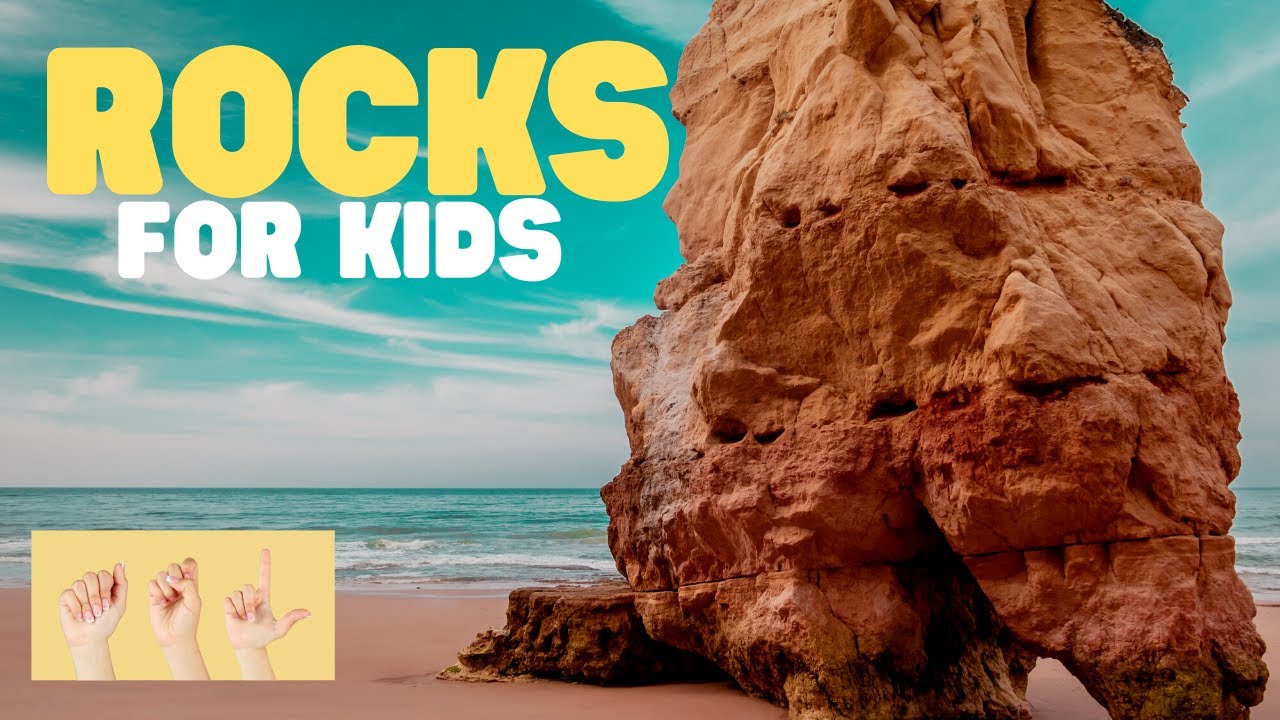
Did you know there are three types of rock on this planet? In Rocks for Kids, you will learn all about how different kinds of rocks form. You will discover the properties and traits that make these rocks unique. And maybe you will find that being a geologist, a scientist that studies rocks, would totally rock!
Your kids will learn interesting facts about sedimentary rocks, metamorphic rocks, and igneous rocks. For instance, did you know that fossils are really only found in sedimentary rocks? You wouldn't find a dinosaur bone in a slab of marble. Speaking of marble, marble is a type of metamorphic rock. Metamorphic rocks form with really high pressure and heat beneath the earth's surface.
Igneous rocks actually divide further into two categories. There are intrusive (or plutonic) igneous rocks and extrusive igneous rocks. Intrusive rocks form when magma cools slowly inside the earth. An example of an intrusive igneous rock is granite. Extrusive igneous rocks form when lava cools really quickly. If lava cools fast enough, it creates obsidian.
We hope you and your student(s) enjoyed learning about rocks and geology! If you want to learn even more, head over to our website and download one of our many free lesson plans about different kinds of rocks, full of activities, worksheets, and more!
https://learnbright.org/lesson....s/science/geology-an
https://learnbright.org/lesson....s/science/the-rock-c
https://learnbright.org/lesson....s/science/igneous-ro
https://learnbright.org/lesson....s/science/sedimentar
https://learnbright.org/lesson....s/science/metamorphi
What you will learn in Rocks for Kids:
0:00 Introduction to geology, rocks, and geologists
1:51 Three types of rocks
2:01 Sedimentary rocks and how they form
3:17 Metamorphic rocks and how they form
4:29 Igneous rocks and how they form
5:29 Intrusive (plutonic) and extrusive igneous rocks
6:44 Review of rocks and geology
Thank you for watching and learning with us! We’re constantly releasing new content and videos, so click that “Subscribe” button and you’ll get notified.
Find and Follow Us Online:
Facebook: https://www.facebook.com/LearnBright/
Instagram: https://instagram.com/LearnBrightEducation
Pinterest: https://pinterest.com/LearnBrightEducation
YouTube: @LearnBright
Website: https://learnbright.org/
*Teachers and Parents! Did you know? In addition to these great videos, we have also created a library of high-quality and engaging lessons for your elementary aged student(s). Visit us, sign up for a free account, and instantly you'll have access to thousands of lesson plans, learning materials, teaching instructions, activities, and assignments that your kids will really enjoy! We hope to see you soon!
Browse our entire collection of Science lesson plans: https://learnbright.org/lessons/?filter_subject=science
#ASL
#RocksForKids
#GeologyAndRocks

What do you know about the inside of our planet? In our Layers of the Earth for Kids video, you and your students will discover some facts about the four main layers that make up our beautiful earth! The first thing you'll learn is that the earth is not simply a giant ball of dirt, rocks, and minerals. On the contrary, our planet is much more than meets the eye.
The crust is the outer layer of the earth and is actually between 5 and 25 miles thick depending on where you are. Under the oceans, it is only about 3 to 5 miles thick, and we refer to these areas as oceanic crust. The crust beneath the land reaches up to 25 miles thick. We refer to these parts as continental crust. The temperatures of the earth's crust can range anywhere between air temperature and 1600°F, which is hot enough to melt rocks!
This thin layer consists of broken pieces called plates, which float on top of the soft mantle layer below. (The movement of these plates is what often causes earthquakes.) The mantle layer is the largest at about 1800 miles thick. It comprises extremely hot, dense rock that flows like asphalt. The temperature at the top is about 1600°F, but it's about 4000°F at the bottom! This layer is basically made up of melted rock that allow the plates of the earth's crust to float on top. The melted rock that escapes to the earth's surface lead to the creation of volcanoes.
Then comes the outer core of the earth. The outer core consists mostly of melted nickel and iron. This layer lies around 1800 miles below the earth's surface and is around 1400 miles thick. The temperature ranges from 4000°F to 9000°F! The inner core is about 800 miles thick with 9000°F temperatures. There is so much pressure in the core that the metals squeeze very tightly, forcing them to vibrate as solids do. This pressure comes from the weight of the other layers that press down on it.
We hope you and your student(s) enjoyed learning about the crust, mantle, and inner and outer cores of our planet! If you want to learn even more, head over to our website and download one of our many free lesson plans about Earth, full of activities, worksheets, and more!
https://learnbright.org/lesson....s/science/layers-of-
What you will learn in Layers of the Earth for Kids:
0:00 Introduction to the earth
0:25 What the earth is made of
1:17 The crust—outermost layer of Earth
2:09 Plate tectonics
2:40 Lithosphere and asthenosphere
3:33 The mantle layer
4:35 The outer and inner core layers
5:34 Review of the facts
Thank you for watching and learning with us! We’re constantly releasing new content and videos, so click that “Subscribe” button and you’ll get notified.
Find and Follow Us Online:
Facebook: https://www.facebook.com/LearnBright/
Instagram: https://instagram.com/LearnBrightEducation
Pinterest: https://pinterest.com/LearnBrightEducation
YouTube: @LearnBright
Website: https://learnbright.org/
*Teachers and Parents! Did you know? In addition to these great videos, we have also created a library of high-quality and engaging lessons for your elementary aged student(s). Visit us, sign up for a free account, and instantly you'll have access to thousands of lesson plans, learning materials, teaching instructions, activities, and assignments that your kids will really enjoy! We hope to see you soon!
Browse our entire collection of Science lesson plans: https://learnbright.org/lessons/?filter_subject=science
#ASL
#Earth
#LayersOfTheEarth

Sometimes it's hard to distinguish whether something is a necessity or we just want that thing. Financial Literacy for Kids provides the basics about needs versus wants, budgeting, credit versus debit, and more. The points are easy to follow and understand. By the end, students will receive a good foundation of these points of financial literacy.
A need is something that is necessary to survival. Food, water, and shelter are needs because we need those things to survive. Wants include much more, from toys and books to phones and cars. While it can be difficult to tell the difference sometimes, these definitions will help you find the answer.
The video also reviews the concepts of saving versus borrowing. Saving money is something we do so that we can eventually buy something we want, like a new bike. This can take time. If you want something more immediately, you can borrow money. Borrowing money, however, means that you have to pay back the money you borrowed over time. And sometimes you have to pay interest.
Budgeting is a very helpful tool to help control or manage our finances. A budget designates a certain amount of money to go toward certain things. For instance, perhaps you budget $50 for food for a week. If you spend more money on food than you budgeted for that week, you may have to save money somewhere else to ensure you don't spend more money than you have and go into debt.
We hope you and your student(s) enjoyed learning about these important skills! If you want even more information, head over to our website and download one of our many free lesson plans, full of activities, worksheets, and more!
https://learnbright.org/lesson....s/math/introduction-
What you will learn in Financial Literacy for Kids:
0:00 Introduction
0:37 Needs versus wants
1:13 Making a budget
1:52 Saving versus borrowing
2:56 Savings and checking accounts
3:39 Credit versus debit
4:40 Review of the facts
Thank you for watching and learning with us! We’re constantly releasing new content and videos, so click that “Subscribe” button and you’ll get notified.
Find and Follow Us Online:
Facebook: https://www.facebook.com/LearnBright/
Instagram: https://instagram.com/LearnBrightEducation
Pinterest: https://pinterest.com/LearnBrightEducation
YouTube: @LearnBright
Website: https://learnbright.org/
*Teachers and Parents! Did you know? In addition to these great videos, we have also created a library of high-quality and engaging lessons for your elementary aged student(s). Visit us and sign up for a free account, and you'll instantly have access to thousands of lesson plans, learning materials, teaching instructions, activities, and assignments that your kids will really enjoy! We hope to see you soon!
Browse our entire collection of Math lesson plans:
https://learnbright.org/lessons/?filter_subject=math
#ASL
#FinancialLiteracy
#FinancialLiteracyForKids

Decoding words can be hard to do when you are just starting out readings. In this video we give you some great ideas and examples of decoding words. We will learn 5 steps in learning new words including sounding out words and breaking the words into chunks.
We don't just stop at the video. Visit our website to download our free 11 page decoding word lesson plan that is packed full of ideas, more content, decoding word worksheets, activities and more!
You can download the lesson plan here: https://learnbright.org/?s=decoding+words
After watching the video and completing the lesson plan students will be able to know and apply
grade-level phonics and word analysis in decoding words. This video is designed for 1st Grand and 2nd Grade but can be adapted for other grade levels as needed.
Thank you for watching and learning with us! We’re constantly releasing new content and videos so click that “Subscribe” button and you’ll notified.
Find and Follow Us Online:
Facebook: https://www.facebook.com/LearnBright/
Instagram: https://instagram.com/LearnBrightEducation
Pinterest: https://pinterest.com/LearnBrightEducation
YouTube: https://www.youtube.com/LearnBright
Website: https://learnbright.org/
*Teachers and Parents! Did you know? In addition to these great videos, we have also created a library of high quality and engaging lessons for your elementary aged student(s). Visit us, sign up for a free account, and instantly you'll have access to thousands of lesson plans, learning materials, teaching instructions, activities, and assignments that your kids will really enjoy! We hope to see you soon!
Browse our entire collection of Reading lesson plans: https://learnbright.org/lessons/?filter_subject=reading
#ASL
#DecodingWords
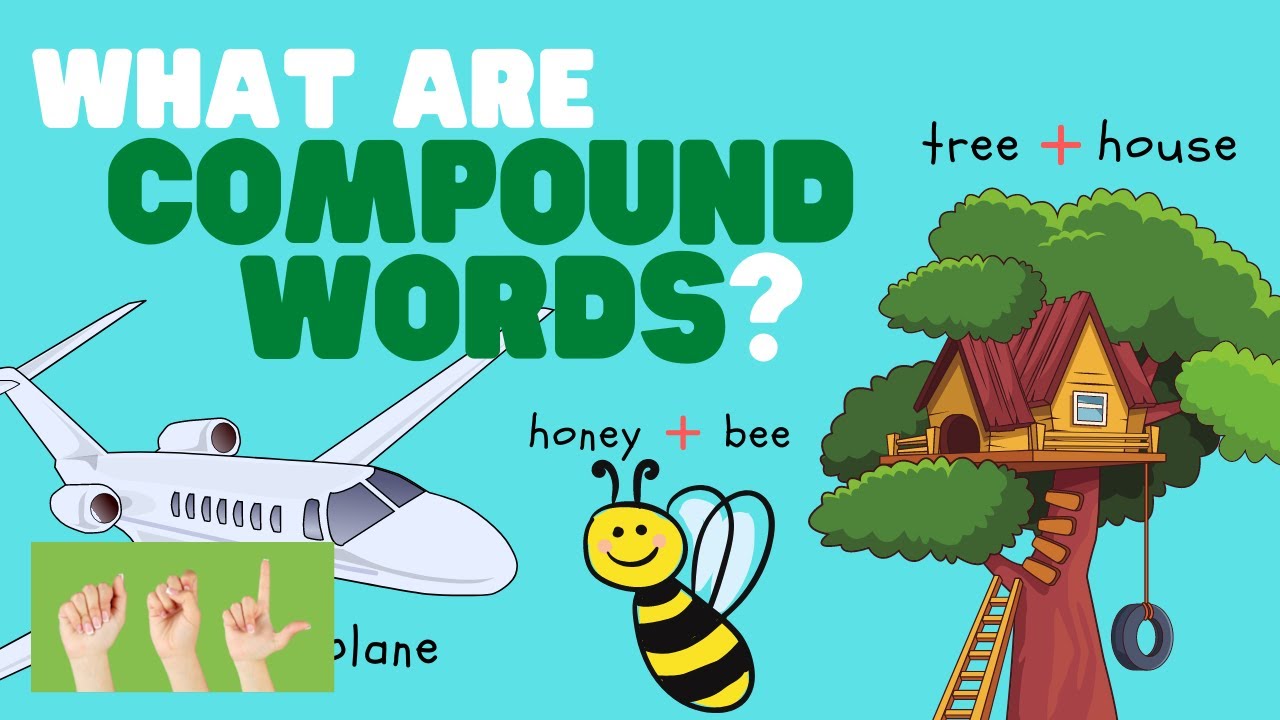
You've heard them, but you may not have known it. In this video we are going to learn all about compound words. So, what are compound words? Compound words are creating when smaller
words are joined together to make new words with different meanings. There are thousands of compound words in the English language, but kids do not need to learn
all of them it is helpful to learn how to recognize them and throughout the video we share lots of examples and help students learn to identify compound words.
In this video we learn that there are three kinds of Compound Words.
1. Closed Compound Word: These words are written together. Examples include: haircut, airport, milkman, rollerblade, waterway, makeup
2. Open Compound Words: These are written as separate words, but together have a new meaning.
Some examples are: high school, dining room, school bus
3. Hyphenated Compounds: These words have a hyphen located between the words, like: well-known, merry-go-round, twenty-one, first-rate
We will help your kids learn about these kinds of compounds words and have a fun time as we practice throughout the video. For even more practice activities and worksheets, download our free lesson plan here: https://learnbright.org/lesson....s/language-arts/comp
Thank you for watching! Share your thoughts in the comments below and be sure to subscribe!
Follow us across the web!
Facebook: https://www.facebook.com/LearnBright/
Instagram: https://instagram.com/LearnBrightEducation
Pinterest: https://pinterest.com/LearnBrightEducation
YouTube: https://www.youtube.com/LearnBright
Website: https://learnbright.org/
Are you a K-6 grade teacher looking for more teaching resources? We don’t only provide video content but high quality lesson plans as well. 100% free with handouts, worksheets, classroom activities and more!
Browse our collection of other Language Arts lesson plans: https://learnbright.org/lessons/?filter_subject=language-arts
#ASL
#CompoundWords

Did you know that 70% of the earth is covered by water? Water is everywhere! You and your kids or students will learn all sorts of interesting things about water in this video.. Water is a major necessity to life. Without water, life on Earth wouldn't even exist! And that includes all life—not just humankind.
This video describes what water is made of: hydrogen and oxygen. It also talks about how water can be found in the form of a solid, liquid, or gas. As a solid, it's called ice. That happens when water freezes. In fact, snowflakes are simply really, really small ice crystals, but they are still water! When water gets hot, it turns into a gas. This is called water vapor or steam.
Water can be found almost anywhere. Most of it is in liquid form and is found in the oceans all over the world. But don't forget about polar ice caps and glaciers, lakes and rivers, and ground water from rain that has seeped into the earth. There are two types of water: salt water and fresh water. Most of the water on Earth is salt water. Humans can only drink fresh water, however, because drinking salt water would make us sick. This video explains that if you compared all the water on the earth to a gallon of water, only a teaspoon of it would equal the amount of fresh water on the earth!
We hope you and your student(s) enjoyed learning about water! If you want to learn more, head over to our website and download one of our many free lesson plans about water full of activities, worksheets, and more!
https://learnbright.org/lesson....s/science/water-wate
What you will learn in this video:
0:00 Introduction to water and what we use it for
1:10 What is water?
1:32 What is water made of?
2:19 Water as a liquid, solid, and gas
3:30 Where does water come from?
4:18 Types of water
5:17 Salt water versus fresh water
6:00 The importance of fresh water and how to conserve it
7:14 Review time
8:12 What did you learn?
Thank you for watching and learning with us! We’re constantly releasing new content and videos, so click that “Subscribe” button and you’ll get notified.
Find and Follow Us Online:
Facebook: https://www.facebook.com/LearnBright/
Instagram: https://instagram.com/LearnBrightEducation
Pinterest: https://pinterest.com/LearnBrightEducation
YouTube: @LearnBright
Website: https://learnbright.org/
*Teachers and Parents! Did you know? In addition to these great videos, we have also created a library of high quality and engaging lessons for your elementary aged student(s). Visit us and sign up for a free account, and you'll instantly have access to thousands of lesson plans, learning materials, teaching instructions, activities, and assignments that your kids will really enjoy! We hope to see you soon!
Browse our entire collection of Science lesson plans: https://learnbright.org/lessons/?filter_subject=science
#ASL
#WaterWaterEverywhere
#AllAboutWater

In this video we learn about cause and effect for kids. Everything has a cause and everything has an effect. We share many stories in this video that will help students learn how to identify causes and effects in their lives and in their reading. We also have a free lesson plan with activities and worksheets that students can use to continue to increase their understanding.
Download our 3rd grade resource here: https://learnbright.org/lesson....s/reading/cause-and-
Thank you for watching and learning with us! We’re constantly releasing new content and videos so click that “Subscribe” button and you’ll notified.
Find and Follow Us Online:
Facebook: https://www.facebook.com/LearnBright/
Instagram: https://instagram.com/LearnBrightEducation
Pinterest: https://pinterest.com/LearnBrightEducation
YouTube: https://www.youtube.com/LearnBright
Website: https://learnbright.org/
*Teachers and Parents! Did you know? In addition to these great videos, we have also created a library of high quality and engaging lessons for your elementary aged student(s). Visit us, sign up for a free account, and instantly you'll have access to thousands of lesson plans, learning materials, teaching instructions, activities, and assignments that your kids will really enjoy! We hope to see you soon!
Browse our entire collection of Reading lesson plans: https://learnbright.org/lessons/?filter_subject=reading
#ASL
#CauseandEffect

Reading Comprehension is very important for kids to practice and they will need these skills for the rest of their lives. Reading a book is no fun when you don't comprehend what is happening. In this video we give students a chance to practice reading comprehension strategies and skills. At the root Reading Comprehension means "Understanding what you are reading" and in this video we have practice exercises that help a child read, pause, break down, ask questions, and practice many other skills to better comprehend the story.
There are 4 main skills when it comes to reading comprehension that we teach and practice throughout this video. They are: Ask questions, look for details that answer your questions, look for support clues, review your findings and check your answers. We will learn these skills and practice them using a few Reading Comprehension exercises that will help your child/student better develop the skill.
In addition to the video we invite you to download our FREE comprehensive Reading Comprehension lesson plan here: https://learnbright.org/lesson....s/reading/reading-co This lesson is complete with Reading Comprehension Worksheets, Classroom Activities, Practice Stories and Pages, and much more!
Video TimeStamps:
0:00 Reading Comprehension Introduction
0:41 The Happy Dog Story and Practice
2:24 The Importance of Reading Comprehension
3:28 4 Reading Comprehension Skills
4:51 Reading Comprehension Exercise: Jack and the Bean stock
12:34 Conclusion
Thank you for watching and learning with us! We’re constantly releasing new content and videos so click that “Subscribe” button and you’ll notified.
Find and Follow Us Online:
Facebook: https://www.facebook.com/LearnBright/
Instagram: https://instagram.com/LearnBrightEducation
Pinterest: https://pinterest.com/LearnBrightEducation
YouTube: https://www.youtube.com/LearnBright
Website: https://learnbright.org/
*Teachers and Parents! Did you know? In addition to these great videos, we have also created a library of high quality and engaging lessons for your elementary aged student(s). Visit us, sign up for a free account, and instantly you'll have access to thousands of lesson plans, learning materials, teaching instructions, activities, and assignments that your kids will really enjoy! We hope to see you soon!
Browse our entire collection of Reading lesson plans: https://learnbright.org/lessons/?filter_subject=reading
#ASL
#ReadingComprehension
#ReadingComprehensionSkills

What is an ocean? What is a lake? What do you call water that flows down a mountain? In this video, you and your kid(s) will learn all about the many bodies of water that cover the earth. You will discover what to call both the largest and smallest water bodies. Over 70% of the earth's surface is made up of water. That means there is more than double the amount of water than there is land!
Some bodies of water are made up of salt water. Others, such as many lakes and streams, contain fresh water. There is a lot more salt water than fresh water, though. Over 95% of water sources are salt water. That's because most of the water on the planet comes from oceans, which are by far the biggest water bodies. Not to mention, the deepest part of the ocean is deeper than the height of Mt. Everest! Scientists believe there are around a million species living in the ocean! While trees convert carbon dioxide to oxygen, did you know about 70% of Earth's oxygen supply actually comes from phytoplankton in the oceans?
You will also learn about reservoirs and lakes. Reservoirs are essentially man-made lakes. People create man-made lakes or reservoirs by damming up a river, holding back a lot of water in one place. The largest freshwater lake in the world is Lake Superior, which is located between Canada and the United States.
Rivers are unique in their own way. Rivers can flow down mountain, through valleys, or across plains. They flow toward either an ocean, a sea, a lake, or another river. They are very useful because they provide food, transportation, power, and a place to bathe! The Amazon and Nile Rivers are the two longest rivers. You will also learn about streams, which are kind of like mini rivers. They also come with a lot of different names, such as bayou, creek, and wash.
We hope you and your student(s) enjoyed learning about these different bodies of water! If you want to learn even more, head over to our website and download one of our many free lesson plans about water, full of activities, worksheets, and more!
https://learnbright.org/lesson....s/science/water-wate
https://learnbright.org/lesson....s/science/the-water-
https://learnbright.org/lesson....s/science/water-poll
https://learnbright.org/lesson....s/science/all-about-
https://learnbright.org/lesson....s/science/lakes-rive
What you will learn in Water Bodies for Kids:
0:00 Introduction to water bodies
0:35 Where water comes from
1:48 Oceans and their characteristics
2:57 Fun fact about phytoplankton
3:40 Lakes and reservoirs and their characteristics
4:49 Rivers and their characteristics
6:17 Streams and their characteristics
7:03 Review of the bodies of water
Thank you for watching and learning with us! We’re constantly releasing new content and videos, so click that “Subscribe” button and you’ll get notified.
Find and Follow Us Online:
Facebook: https://www.facebook.com/LearnBright/
Instagram: https://instagram.com/LearnBrightEducation
Pinterest: https://pinterest.com/LearnBrightEducation
YouTube: @LearnBright
Website: https://learnbright.org/
*Teachers and Parents! Did you know? In addition to these great videos, we have also created a library of high-quality and engaging lessons for your elementary aged student(s). Visit us, sign up for a free account, and instantly you'll have access to thousands of lesson plans, learning materials, teaching instructions, activities, and assignments that your kids will really enjoy! We hope to see you soon!
#ASL
#WaterBodiesForKids
#WaterBodies
#BodiesOfWater

In this video we learn about the four types of sentences. We learn about Statement Sentences, Question Sentences, Emotion Sentences, and Command Sentences. Each of these kinds of sentences is used in different situations and by the end of the video you'll know what each does and fell confidant you will use them right.
If after the video you'd like even more help learning about the four types of sentences then download our 100% free lesson plan here: https://learnbright.org/lesson....s/language-arts/sent
Thank you for watching and learning with us! We’re constantly releasing new content and videos so click that “Subscribe” button and you’ll notified.
Find and Follow Us Online:
Facebook: https://www.facebook.com/LearnBright/
Instagram: https://instagram.com/LearnBrightEducation
Pinterest: https://pinterest.com/LearnBrightEducation
YouTube: https://www.youtube.com/LearnBright
Website: https://learnbright.org/
*Teachers and Parents! Did you know? In addition to these great videos, we have also created a library of high quality and engaging lessons for your elementary aged student(s). Visit us, sign up for a free account, and instantly you'll have access to thousands of lesson plans, learning materials, teaching instructions, activities, and assignments that your kids will really enjoy! We hope to see you soon!
Browse our entire collection of Language Arts lesson plans: https://learnbright.org/lessons/?filter_subject=language-arts
#TypesOfSentences

In this video, we will learn about the real name for shooting stars: meteors! Your student(s) will learn all about these fiery rocks. More specifically, they will learn that meteors have a few different names depending on where they are on their journey to the earth's surface. They start out as meteoroids. Meteoroids are pieces of metal or rock that break off comets or asteroids when they crash into each other in space. They are not actually called meteors until they begin to fall toward Earth's atmosphere! Then, if they make it through, they get a new name again once they've landed somewhere on the earth: meteorites.
Your student(s) will learn about the both the biggest and oldest meteorites that have been discovered. The largest meteorite is named Hoba, which means gift, located in Namibia, Africa. It weighs 60 tons, which is 120,000 pounds! And the oldest meteorite is named the Fukang Meteorite. It was discovered near Fukang, China, and is believed to be about 4.5 billion years old. That means that it is about the same age, or even older, than our planet!
Children will also love learning about meteor showers. Meteor showers can be predicted throughout the year. It looks like hundreds or even thousands of shooting stars falling from the sky.
Your student(s) will love showing off their new knowledge about meteors. Would you like even more fun learning opportunities about Meteors? Visit us at learnbright.org and download our free 10-page comprehensive meteor lesson plan. It's full of fun, hands-on activities that will get your student(s) excited about space.
https://learnbright.org/lesson....s/science/asteroids-
What you will learn in this video:
0:00 Introduction to meteors
0:25 What is a meteor?
0:45 Meteoroids and meteorites
2:39 What are meteors made of?
3:16 The largest and oldest meteorites on Earth
4:25 What is a meteor shower?
5:09 Quiz on meteors
Thank you for watching and learning with us! We’re constantly releasing new videos, so click that “Subscribe” button to get notified of any new content.
Find and Follow Us Online:
Facebook: https://www.facebook.com/LearnBright/
Instagram: https://instagram.com/LearnBrightEducation
Pinterest: https://pinterest.com/LearnBrightEducation
YouTube: @LearnBright
Website: https://learnbright.org/
*Teachers and Parents! Did you know? In addition to these great videos, we have also created a library of high-quality and engaging lessons for your elementary aged student(s). Visit us, sign up for a free account, and instantly gain access to thousands of lesson plans, learning materials, teaching instructions, activities, and assignments that your kids will really enjoy! We hope to see you soon!
Browse our entire collection of Science lesson plans: https://learnbright.org/lessons/?filter_subject=science
#ASL
#Meteors
#WhatIsAMeteor

Angles for Kids - An intro into the world of Angles is a video that will introduce your kids to Angles, How to Measure Angles, and provide an introduction to the various kinds of angles ie Acute, Right, Obtuse, Straight, and Reflex.
After watching this video and completing the coursework found on our website your child will understand the various kinds of angles and how to measure them.
Thank you for watching and learning with us! We’re constantly releasing new content and videos so click that “Subscribe” button and you’ll notified.
Find and Follow Us Online:
Facebook: https://www.facebook.com/LearnBright/
Instagram: https://instagram.com/LearnBrightEducation
Pinterest: https://pinterest.com/LearnBrightEducation
YouTube: https://www.youtube.com/LearnBright
Website: https://learnbright.org/
*Teachers and Parents! Did you know? In addition to these great videos, we have also created a library of high quality and engaging lessons for your elementary aged student(s). Visit us, sign up for a free account, and instantly you'll have access to thousands of lesson plans, learning materials, teaching instructions, activities, and assignments that your kids will really enjoy! We hope to see you soon!
Browse our entire collection of Math lesson plans:
https://learnbright.org/lessons/?filter_subject=math
#ASL
#AnglesForKids

#Phonics #LearntoRead #CVCWords
This reading lesson is designed for beginners, pre-schoolers, kinder, and grade 1. In this reading tutorial, students are expected to be able to read CVC words, sentences, and stories.
#practiceReading
#ReadingTutortialforKids
#ReadingTutortialforKinder
#ReadingTutortialforGrade1
#ReadingTutortialforGrade2
#Phonics
#CVCWords
#CvcSentences
#CVCShortstories
#LearntoRead

Mount Rushmore is one of the most popular tourist attractions in the United States. What do you know about the monument and the individuals whose heads you see? In Mount Rushmore for Kids, you and your students will learn about some of the history behind this huge sculpture. You will also discover why the four presidents on its face were chosen to be the subjects of the monument.
Construction for Mount Rushmore began in 1927. Much earlier in 1884, a lawyer from New York named Charles E. Rushmore traveled to South Dakota's Black Hills National Forest. He decided to name the mountain after himself when he learned that it had never been named before. Fast forward to the 1920s: There was some discussion over a period of years about who to sculpt into the mountainside. In the end, the subjects they agreed upon were George Washington, Abraham Lincoln, Thomas Jefferson, and Theodore Roosevelt.
It took 14 years to build the monument and required the help of nearly 400 men and women who served in various capacities. They had to endure extreme weather condition and had to climb 700 stairs every day to reach the top of the mountain! An interesting fact you may not know is that 90% of the mountain was carved using dynamite. Despite these dangerous conditions, not one worker died in all 14 years.
You may wonder why those four presidents were chosen. George Washington led the colonists in the American Revolutionary War. He was the "Father of the Country" and the first president. He was chosen to represent birth. Thomas Jefferson was chosen to represent growth because of his role in expanding the size of the U.S. by purchasing the Louisiana Territory. Abraham Lincoln represented the preservation of the nation because of his impact on preserving the Union during the Civil War and abolishing slavery. And finally, Theodore Roosevelt provided leadership when America experienced rapid growth. he also linked the east and west parts of the world through the construction of the Panama Canal. He represented development.
We hope you and your student(s) enjoyed learning about this amazing monument! If you want even more information, head over to our website and download one of our many free lesson plans, full of activities, worksheets, and more!
https://learnbright.org/lesson....s/social-studies/all
What you will learn in Mount Rushmore for Kids:
0:00 Introduction to Mount Rushmore
1:01 Where it is and why it was built
1:57 Deciding who to sculpt
2:54 When the project started and who was involved
3:44 Using dynamite to carve the design
4:37 Visitors of the memorial—Shrine of Democracy
5:42 Why George Washington and Thomas Jefferson were chosen
6:26 Why Abraham Lincoln and Theodore Roosevelt were chosen
7:17 Review of the facts
Thank you for watching and learning with us! We’re constantly releasing new content and videos, so click that “Subscribe” button and you’ll get notified.
Find and Follow Us Online:
Facebook: https://www.facebook.com/LearnBright/
Instagram: https://instagram.com/LearnBrightEducation
Pinterest: https://pinterest.com/LearnBrightEducation
YouTube: @LearnBright
Website: https://learnbright.org/
*Teachers and Parents! Did you know? In addition to these great videos, we have also created a library of high-quality and engaging lessons for your elementary aged student(s). Visit us and sign up for a free account, and you'll instantly have access to thousands of lesson plans, learning materials, teaching instructions, activities, and assignments that your kids will really enjoy! We hope to see you soon!
Browse our entire collection of Social Studies lesson plans: https://learnbright.org/lessons/?filter_subject=social-studies
#ASL
#MountRushmore
#HistoricalLandmark

In this video Fossil Fuels for Kids you and your students will learn all about fossil fuels, what they are, and where they come from. We talk about the kinds of fossil fuels (Coal, Oil, Natural Gas), Where they come from, common misconceptions about fossil fuels, what they are used for and so much more! We hope you and your kids enjoy learning all about fossil fuels.
Looking for more Fossil Fuel resources? Download our free comprehensive lesson plan here:
https://learnbright.org/lesson....s/science/fossil-fue
Thank you for watching and learning with us! We’re constantly releasing new content and videos, so click that “Subscribe” button and you’ll get notified.
Find and Follow Us Online:
Facebook: https://www.facebook.com/LearnBright/
Instagram: https://instagram.com/LearnBrightEducation
Pinterest: https://pinterest.com/LearnBrightEducation
YouTube: https://www.youtube.com/LearnBright
Website: https://learnbright.org/
*Teachers and Parents! Did you know? In addition to these great videos, we have also created a library of high quality and engaging lessons for your elementary aged student(s). Visit us, sign up for a free account, and instantly you'll have access to thousands of lesson plans, learning materials, teaching instructions, activities, and assignments that your kids will really enjoy! We hope to see you soon!
Browse our entire collection of Science lesson plans: https://learnbright.org/lessons/?filter_subject=science
#ASL
#FossilFuels