Top videos

Have you ever heard of the water cycle? Maybe you've heard the word evaporation or precipitation. These are stages in the water cycle! In The Water Cycle for Kids, you will learn all four stages of this process, and you may even discover that you've seen it in action many times! You will also learn about how important it is to conserve freshwater on the earth.
The water you drink may possibly be millions of years old! This is because the earth has a certain amount of water that moves around the earth in different states and phases. The first stage is evaporation. This occurs when the sun heats the water in oceans, lakes, and other bodies of water to point that it turns into gas, and that gas evaporates into the air. Transpiration is similar to evaporation and occurs when plant leaves release water as water vapor into the air.
Condensation is the third step. This is when the vapor in the air gets cold and changes back into a liquid. This is actually how a cloud forms! This is also the reason you see foggy mirrors after a hot shower. When clouds have too much water and get too heavy, it rains. When it rains, this is called precipitation, the final stage of the cycle. Then the whole cycle starts all over again!
We hope you and your student(s) enjoyed learning about the water cycle! If you want to learn even more, head over to our website and download one of our many free lesson plans, full of activities, worksheets, and more!
https://learnbright.org/lesson....s/science/the-water-
https://learnbright.org/lesson....s/science/precipitat
What you will learn in The Water Cycle for Kids:
0:00 Introduction to the water cycle
0:41 What is the water cycle?
1:50 Evaporation and Transpiration
2:53 Condensation and Precipitation
4:04 Why it's important to take care of water
4:41 How you can help
5:15 Why it's good to keep freshwater clean
5:46 Review the facts
Check out some of our other water-related videos here:
Water Bodies: https://youtu.be/FshhCvbFedE
Water Pollution: https://youtu.be/A3rLfrIUzY4
Water, Water Everywhere: https://youtu.be/rEJ5yuFR3f8
Thank you for watching and learning with us! We’re constantly releasing new content and videos, so click that “Subscribe” button and you’ll get notified.
Find and Follow Us Online:
Facebook: https://www.facebook.com/LearnBright/
Instagram: https://instagram.com/LearnBrightEducation
Pinterest: https://pinterest.com/LearnBrightEducation
YouTube: @LearnBright
Website: https://learnbright.org/
*Teachers and Parents! Did you know? In addition to these great videos, we have also created a library of high-quality and engaging lessons for your elementary aged student(s). Visit us, sign up for a free account, and instantly you'll have access to thousands of lesson plans, learning materials, teaching instructions, activities, and assignments that your kids will really enjoy! We hope to see you soon!
Browse our entire collection of Science lesson plans: https://learnbright.org/lessons/?filter_subject=science
#TheWaterCycleForKids
#WaterCycle

Did you know that there are over 20,000 species of butterfly living throughout the world? In Butterflies for Kids, you and your students will learn lots of interesting facts about these lovely bugs. Speaking of lovely, butterflies actually have two types of coloration: pigmented and structural. And some species have ultraviolet patterns that we humans can't even see!
Butterflies eat lots of things some of which you likely wouldn't expect. They have a long tongue called a proboscis that they use to slurp up juices and nectar and tree sap. But butterflies also eat aphids, drink from mud puddles, and consume rotting or dead matter! And believe it or not, they've only got a few taste buds on their "tongue" because most of their taste buds are on their feet.
Butterflies are essential to the environment. Along with other pollinators, they help pollinate plants and increase biodiversity. Scientists can also study them to learn about the health of a particular ecosystem. Because of habitat loss, the populations of various butterfly species are on the decline. In addition, climate change has also caused butterflies to struggle. Unpredictable temps lead to unpredictable hatching times, which can be disastrous for caterpillars.
We hope you and your student(s) enjoyed learning about these beautiful insects! If you want to learn even more, head over to our website and download one of our many lesson plans about animals, full of activities, worksheets, and more!
https://learnbright.org/lesson....s/science/butterflie
https://learnbright.org/lesson....s/science/all-about-
https://learnbright.org/lesson....s/science/metamorpho
https://learnbright.org/lessons/science/bugs/
Thank you for watching and learning with us! We’re constantly releasing new content and videos, so click that “Subscribe” button and you’ll get notified.
Find and Follow Us Online:
Facebook: https://www.facebook.com/LearnBright/
Instagram: https://instagram.com/LearnBrightEducation
Pinterest: https://pinterest.com/LearnBrightEducation
YouTube: @LearnBright
Website: https://learnbright.org/
*Teachers and Parents! Did you know? In addition to these great videos, we have also created a library of high-quality and engaging lessons for your elementary aged student(s). Visit us, sign up for a free account, and instantly you'll have access to thousands of lesson plans, learning materials, teaching instructions, activities, and assignments that your kids will really enjoy! We hope to see you soon!
Browse our entire collection of Science lesson plans: https://learnbright.org/lessons/?filter_subject=science
#Butterflies
#Insects
#Bugs

What is an ocean? What is a lake? What do you call water that flows down a mountain? In this video, you and your kid(s) will learn all about the many bodies of water that cover the earth. You will discover what to call both the largest and smallest water bodies. Over 70% of the earth's surface is made up of water. That means there is more than double the amount of water than there is land!
Some bodies of water are made up of salt water. Others, such as many lakes and streams, contain fresh water. There is a lot more salt water than fresh water, though. Over 95% of water sources are salt water. That's because most of the water on the planet comes from oceans, which are by far the biggest water bodies. Not to mention, the deepest part of the ocean is deeper than the height of Mt. Everest! Scientists believe there are around a million species living in the ocean! While trees convert carbon dioxide to oxygen, did you know about 70% of Earth's oxygen supply actually comes from phytoplankton in the oceans?
You will also learn about reservoirs and lakes. Reservoirs are essentially man-made lakes. People create man-made lakes or reservoirs by damming up a river, holding back a lot of water in one place. The largest freshwater lake in the world is Lake Superior, which is located between Canada and the United States.
Rivers are unique in their own way. Rivers can flow down mountain, through valleys, or across plains. They flow toward either an ocean, a sea, a lake, or another river. They are very useful because they provide food, transportation, power, and a place to bathe! The Amazon and Nile Rivers are the two longest rivers. You will also learn about streams, which are kind of like mini rivers. They also come with a lot of different names, such as bayou, creek, and wash.
We hope you and your student(s) enjoyed learning about these different bodies of water! If you want to learn even more, head over to our website and download one of our many free lesson plans about water, full of activities, worksheets, and more!
https://learnbright.org/lesson....s/science/water-wate
https://learnbright.org/lesson....s/science/the-water-
https://learnbright.org/lesson....s/science/water-poll
https://learnbright.org/lesson....s/science/all-about-
https://learnbright.org/lesson....s/science/lakes-rive
What you will learn in Water Bodies for Kids:
0:00 Introduction to water bodies
0:35 Where water comes from
1:48 Oceans and their characteristics
2:57 Fun fact about phytoplankton
3:40 Lakes and reservoirs and their characteristics
4:49 Rivers and their characteristics
6:17 Streams and their characteristics
7:03 Review of the bodies of water
Thank you for watching and learning with us! We’re constantly releasing new content and videos, so click that “Subscribe” button and you’ll get notified.
Find and Follow Us Online:
Facebook: https://www.facebook.com/LearnBright/
Instagram: https://instagram.com/LearnBrightEducation
Pinterest: https://pinterest.com/LearnBrightEducation
YouTube: @LearnBright
Website: https://learnbright.org/
*Teachers and Parents! Did you know? In addition to these great videos, we have also created a library of high-quality and engaging lessons for your elementary aged student(s). Visit us, sign up for a free account, and instantly you'll have access to thousands of lesson plans, learning materials, teaching instructions, activities, and assignments that your kids will really enjoy! We hope to see you soon!
#WaterBodiesForKids
#WaterBodies
#BodiesOfWater

Biomes and Ecosystems for Kids is a introductory video for students in 4th - 6th grade. We cover the 5 major categories of biomes which are: Desert, Grassland, Forest, Aquatic, and Tundra and students will learn how to identify the animals, vegetation, temperatures and other differences of each biome.
We also will learn about the characteristics of ecosystems and how animals and humans can live together.
Don't just stop at our video! Download our free 12 page PDF lesson plan about biomes and ecosystem that is complete with teacher instructions, content pages, activities, homework sheets, quizzes and more! You can download the lesson here: https://learnbright.org/lesson....s/science/biomes-and
Once completed with the video your students will be able to define biome and ecosystem, identify their differences, and list characteristics and types of each.
Check out some of our other videos related to biomes and ecosystems here:
Deserts: https://youtu.be/dElLbbptwfo
Rainforests: https://youtu.be/sEQMEllUyks
Oceans of the World: https://youtu.be/1WZsxVDTqcU
Habitats: https://youtu.be/40B2IjLWfTQ
Thank you for watching and learning with us! We’re constantly releasing new content and videos, so click that “Subscribe” button and you’ll get notified.
Find and Follow Us Online:
Facebook: https://www.facebook.com/LearnBright/
Instagram: https://instagram.com/LearnBrightEducation
Pinterest: https://pinterest.com/LearnBrightEducation
YouTube: https://www.youtube.com/LearnBright
Website: https://learnbright.org/
*Teachers and Parents! Did you know? In addition to these great videos, we have also created a library of high quality and engaging lessons for your elementary aged student(s). Visit us, sign up for a free account, and instantly you'll have access to thousands of lesson plans, learning materials, teaching instructions, activities, and assignments that your kids will really enjoy! We hope to see you soon!
Browse our entire collection of Science lesson plans: https://learnbright.org/lessons/?filter_subject=science
#ASL
#Biomes
#Ecosystems

What is an inference? Making an inference simply means to use what you already know to make a guess about something that you don’t know. It is a very important reading comprehension skill and throughout this video we help your kids and students practice making inferences.
There are 4 main steps to making inferences that we cover in this video. They are:
1. Read the text.
2. Look for clues or important facts and details.
3. Combine those details with things that you already know.
4. Make inferences about what you are reading.
We hope this video is helpful as you teach your kids about inferences and reading comprehension overall. If you are looking for more inferences resources? We have 6 different inference lesson plans with more activities, worksheets, classroom teaching ideas and more (for grades 1-6). Find your lesson here: https://learnbright.org/?s=inferences
Thank you for watching! Share your thoughts in the comments below and be sure to subscribe!
Find and Follow us Online:
Facebook: https://www.facebook.com/LearnBright/
Instagram: https://instagram.com/LearnBrightEducation
Pinterest: https://pinterest.com/LearnBrightEducation
YouTube: https://www.youtube.com/LearnBright
Website: https://learnbright.org/
Are you a K-6 grade teacher looking for more teaching resources? We don’t only provide video content but high quality lesson plans as well. 100% free with handouts, worksheets, classroom activities and more!
Browse our collection of other Reading lesson plans: https://learnbright.org/lessons/?filter_subject=reading
#ASL
#Whatisaninference
#InferencesForKids

Have you ever heard the word Reptile? Have you ever asked yourself "What is a Reptile?". Well if so, you're in luck because in this video we are going to learn all about reptiles for kids! We will talk about invertebrate vs vertebrate animals and where reptiles fall on that chart. We will learn interesting facts about reptiles like how many of them have claws on their feet, how reptiles can shed their skin, where they live, what they eat, and so much more! After viewing the video and completing the reptile lesson plan found on our site (link below) students will be able to identify important reptile characteristics and have a great understanding about these awesome animals.
Download the free reptile lesson plan here: https://learnbright.org/lesson....s/science/reptiles-a
Thank you for watching and learning with us! We’re constantly releasing new content and videos, so click that “Subscribe” button and you’ll get notified.
Find and Follow Us Online:
Facebook: https://www.facebook.com/LearnBright/
Instagram: https://instagram.com/LearnBrightEducation
Pinterest: https://pinterest.com/LearnBrightEducation
YouTube: https://www.youtube.com/LearnBright
Website: https://learnbright.org/
*Teachers and Parents! Did you know? In addition to these great videos, we have also created a library of high quality and engaging lessons for your elementary aged student(s). Visit us, sign up for a free account, and instantly you'll have access to thousands of lesson plans, learning materials, teaching instructions, activities, and assignments that your kids will really enjoy! We hope to see you soon!
Browse our entire collection of Science lesson plans: https://learnbright.org/lessons/?filter_subject=science
#ASL
#ReptilesForKids
#WhatIsAReptile

In this video, your kids will learn all about nouns. So, what is a noun? A noun is a person, place, or thing. Throughout this video your student will be given lots of examples. They will be able to practice identifying nouns in a fun way.
The video describes each of the three groups of nouns one by one in detail. First, we will talk about nouns for people. Because people have titles, like doctor and baker, those are considered people nouns too! Then we discuss nouns for places. These can be cities like Atlanta or Paris, or they can be buildings like school or hospital. Last, we talk about nouns that describe things. Everything else that isn't a person or place falls into the things category. Things include dog, computer, water, window, and so many more. There are millions of nouns because there are millions of people, places, and things!
We hope you and your student(s) enjoyed learning how to identify nouns! If you want even more practice, head over to our website and download one of our many free lesson plans about nouns full of activities, worksheets, and more!
https://learnbright.org/?s=nouns&post_type=product
What you will learn in this video:
0:00 Introduction to words
0:44 Nouns for people
1:57 Nouns for places
2:12 Nouns for things
3:06 Practicing finding nouns
4:24 Two types of nouns
6:28 Dividing proper and common nouns
7:16 How to decide the type of noun
Thank you for watching and learning with us! We’re constantly releasing new content and videos, so click that “Subscribe” button and you’ll get notified.
Find and Follow Us Online:
Facebook: https://www.facebook.com/LearnBright/
Instagram: https://instagram.com/LearnBrightEducation
Pinterest: https://pinterest.com/LearnBrightEducation
YouTube: @LearnBright
Website: https://learnbright.org/
*Teachers and Parents! Did you know? In addition to these great videos, we have also created a library of high-quality and engaging lessons for your elementary aged student(s). Visit us and sign up for a free account, and you will instantly have access to thousands of lesson plans, learning materials, teaching instructions, activities, and assignments that your kids will really enjoy! We hope to see you soon!
Browse our entire collection of Language Arts lesson plans: https://learnbright.org/lessons/?filter_subject=language-arts
#ASL
#NounsForKids
#Nouns

Do you know what a bar graph is? Or have you ever heard a pie chart? In Graphs for Kids, you and your kids will learn all about four basic graphs that people use to share data. You can use many types of graphs to display the same information. Sometimes it just depends on what you like best.
Pictographs use pictures to display data. For instance, if you studied how many students liked a specific field trip, you could create a pictograph to show the numbers. A certain picture would represent each student or a specific number of students. You could use a bar graph to share the same information. Instead of pictures, you would use bars, usually of different colors.
Another type of graph is the line graph. Line graphs are helpful in showing information over a period of time. For example, if you want to measure how tall you are at different ages, you can use a line graph to show your steady increase in height. The final graph you will learn about is actually called a pie chart. This is because it looks like a pie! The sizes of each "slice" depend on your data. If you interview 100 students about their favorite pet, and 50 of them like dogs the most, then half of the pie would represent students who prefer dogs.
We hope you and your student(s) enjoyed learning about these basic graphs! If you want even more information, head over to our website and download one of our many free lesson plans, full of activities, worksheets, and more!
https://learnbright.org/lessons/math/basic-graphs/
https://learnbright.org/lesson....s/math/introduction-
What you will learn in Graphs for Kids:
0:00 Introduction to graphs and how they work
0:33 Pictographs
1:04 How to read pictographs
1:57 Bar graphs and how to read them
3:09 Line graphs and how to read them
4:45 Pie charts and how to read them
5:39 What to do with what you learned
Thank you for watching and learning with us! We’re constantly releasing new content and videos, so click that “Subscribe” button and you’ll get notified.
Find and Follow Us Online:
Facebook: https://www.facebook.com/LearnBright/
Instagram: https://instagram.com/LearnBrightEducation
Pinterest: https://pinterest.com/LearnBrightEducation
YouTube: @LearnBright
Website: https://learnbright.org/
*Teachers and Parents! Did you know? In addition to these great videos, we have also created a library of high-quality and engaging lessons for your elementary aged student(s). Visit us and sign up for a free account, and you'll instantly have access to thousands of lesson plans, learning materials, teaching instructions, activities, and assignments that your kids will really enjoy! We hope to see you soon!
Browse our entire collection of Math lesson plans:
https://learnbright.org/lessons/?filter_subject=math
#ASL
#GraphsForKids
#BasicGraphs

In this video we learn how and when to capitalize. We learn about 6 main capitalization rules, the difference between common and proper nouns, and many other techniques so that students will learn when and when not to capitalize words or letters in the English language.
The 6 main rules we cover in this video are:
1. The first work in every sentence must be capitalized.
2. The word "I" is always capitalized no matter where it is in the sentence.
3. Names of people and pets are always capitalized.
4. Proper names of places and things are capitalized.
5. Titles are always capitalized.
6. We always capitalize the days of the week, months of the year, holidays and other important events.
Looking for more capitalization resources? Download our free comprehensive lesson plan here: https://learnbright.org/?s=capitalization
Thank you for watching and learning with us! We’re constantly releasing new content and videos so click that “Subscribe” button and you’ll notified.
Find and Follow Us Online:
Facebook: https://www.facebook.com/LearnBright/
Instagram: https://instagram.com/LearnBrightEducation
Pinterest: https://pinterest.com/LearnBrightEducation
YouTube: https://www.youtube.com/LearnBright
Website: https://learnbright.org/
*Teachers and Parents! Did you know? In addition to these great videos, we have also created a library of high quality and engaging lessons for your elementary aged student(s). Visit us, sign up for a free account, and instantly you'll have access to thousands of lesson plans, learning materials, teaching instructions, activities, and assignments that your kids will really enjoy! We hope to see you soon!
Browse our entire collection of Language Arts lesson plans: https://learnbright.org/lessons/?filter_subject=language-arts
#ASL
#Capitalization

Learn all about the 5 Oceans of the World in this video designed for kids and elementary students. We walk through the geographic locations for each ocean and share some unique facts about each area. We hope you enjoy learning all about our Oceans. For more resources download our comprehensive lesson plan found here:
Oceans of the World: https://learnbright.org/lesson....s/science/oceans-of-
What Lives in the Oceans: https://learnbright.org/lesson....s/science/what-lives
The Oceans of the earth are vast…they are humongous! Over 72% of the earth is covered with water called Oceans and Seas
There are five major Oceans of the world, and although these Oceans are all connected, they each have a different name. They are; The Pacific Ocean…the Atlantic Ocean…the Indian Ocean…The Southern Ocean (also called the Antarctic Ocean) …and the Arctic Ocean.
Here are some specific facts about each ocean.
Pacific Ocean: Located between the continents of Asia, N./S. America & Australia
~The largest of the 5 oceans, covers 30% of the Earth’s surface.
~ The word Pacific means peaceful, but the ocean is not calm or peaceful.
~ Many volcanoes are located in the ocean: The “Ring of Fire”.
~ The deepest part is nearly 7 miles below the surface.
~ The Great Barrier Reef is located off the Australian coast.
Atlantic Ocean: Located between the continents America, Europe, and Africa
~ About half the size of the Pacific Ocean
~ Many sharks are found in the waters of the ocean.
~ Islands located in the Atlantic include the Bahamas and Greenland, which is the largest island on Earth.
~ The word Atlantic means “Sea of Atlas”.
~ Cities on the Atlantic Ocean include Miami and London.
Indian Ocean: Located between Africa, Australia and parts of Asia
~ Largest breeding grounds of the world for humpback whales.
~ The Suez Canal in Egypt is a waterway in the ocean.
~ Cities along the ocean include Mumbai, India; Perth, Australia;
and Singapore.
~ Many endangered species live here such as turtles and seals.
Arctic Ocean: Located around the North Pole across the Arctic circle
~ Home to many of the Polar Bears of the world.
~ Smallest ocean and most shallow, but is the coldest.
~ Sometimes called the “frozen ocean”, almost completely covered in ice during the winter,
~ There are more fish species here than anywhere else in the world.
Southern Ocean: Located around the South Pole across the Antarctic circle
~ Home to the Emperor Penguins and Wandering Albatrosses
~ Sometimes it is also called the Antarctic Ocean
~ Icebergs are found throughout the Southern Ocean
~ No people live along the coast of the ocean
Check out some of our other ocean-related videos here:
Ocean Animals: https://youtu.be/8adtdg0N2-g
Sharks: https://youtu.be/kl9qJMpoYqs
Coral Reefs: https://youtu.be/8d0MgxoECq8
All about Fish: https://youtu.be/TwVAMry3SQ0
Thank you for watching and learning with us! We’re constantly releasing new content and videos, so click that “Subscribe” button and you’ll get notified.
Find and Follow Us Online:
Facebook: https://www.facebook.com/LearnBright/
Instagram: https://instagram.com/LearnBrightEducation
Pinterest: https://pinterest.com/LearnBrightEducation
YouTube: https://www.youtube.com/LearnBright
Website: https://learnbright.org/
*Teachers and Parents! Did you know? In addition to these great videos, we have also created a library of high quality and engaging lessons for your elementary aged student(s). Visit us, sign up for a free account, and instantly you'll have access to thousands of lesson plans, learning materials, teaching instructions, activities, and assignments that your kids will really enjoy! We hope to see you soon!
Browse our entire collection of Science lesson plans: https://learnbright.org/lessons/?filter_subject=science
#ASL
#OceansOfTheWorldForKids
#FiveOceans

Learn about the story of Hanukkah in this fun engaging video. We will learn all about Hanukkah, what it means, how Hanukkah is celebrated, its origins and more. We also learn about the many symbols of Hanukah such as the menorah, the western or "wailing" wall, the dreidel and more! Watching the Hanukkah for kids video is a fun way to learn all about this important celebration.
We hope you enjoy this video and have a wonderful holiday season.
Looking for more Hanukkah resources? Download our free comprehensive lesson plan here: https://learnbright.org/lesson....s/social-studies/wha
Thank you for watching and learning with us! We’re constantly releasing new content and videos so click that “Subscribe” button and you’ll notified.
Find and Follow Us Online:
Facebook: https://www.facebook.com/LearnBright/
Instagram: https://instagram.com/LearnBrightEducation
Pinterest: https://pinterest.com/LearnBrightEducation
YouTube: https://www.youtube.com/LearnBright
Website: https://learnbright.org/
*Teachers and Parents! Did you know? In addition to these great videos, we have also created a library of high quality and engaging lessons for your elementary aged student(s). Visit us, sign up for a free account, and instantly you'll have access to thousands of lesson plans, learning materials, teaching instructions, activities, and assignments that your kids will really enjoy! We hope to see you soon!
Browse our entire collection of Social Studies lesson plans: https://learnbright.org/lessons/?filter_subject=social-studies
#ASL
#Hanukkah
#HistoryOfHanukkah

Welcome to How to Simplify Fractions (Part 1) with Mr. J! Need help simplifying fractions (aka putting fractions in lowest terms)? You're in the right place!
Whether you're just starting out, or need a quick refresher, this is the video for you if you're looking for help with how to simplify fractions. Mr. J will go through simplifying fractions examples and explain the steps for how to simplify a fraction.
More Simplifying Fractions Videos:
✅ Simplifying Fractions (Part 1): https://youtu.be/4CKDqvddhhg
✅ Simplifying Fractions (Part 2): https://youtu.be/0vKP4NOqWSg
✅ Simplifying Mixed Numbers: https://youtu.be/OacSX6dkN94
About Math with Mr. J: This channel offers instructional videos that are directly aligned with math standards. Teachers, parents/guardians, and students from around the world have used this channel to help with math content in many different ways. All material is absolutely free.
Click Here to Subscribe to the Greatest Math Channel On Earth: https://goo.gl/XHTrfY
Follow Mr. J on Twitter: @MrJMath5
Email: math5.mrj@gmail.com
Music: https://www.bensound.com/royalty-free-music
Hopefully this video is what you're looking for when it comes to simplifying fractions.
Have a great rest of your day and thanks again for watching! ✌️✌️✌️
TabletClass Math:
https://tcmathacademy.com/
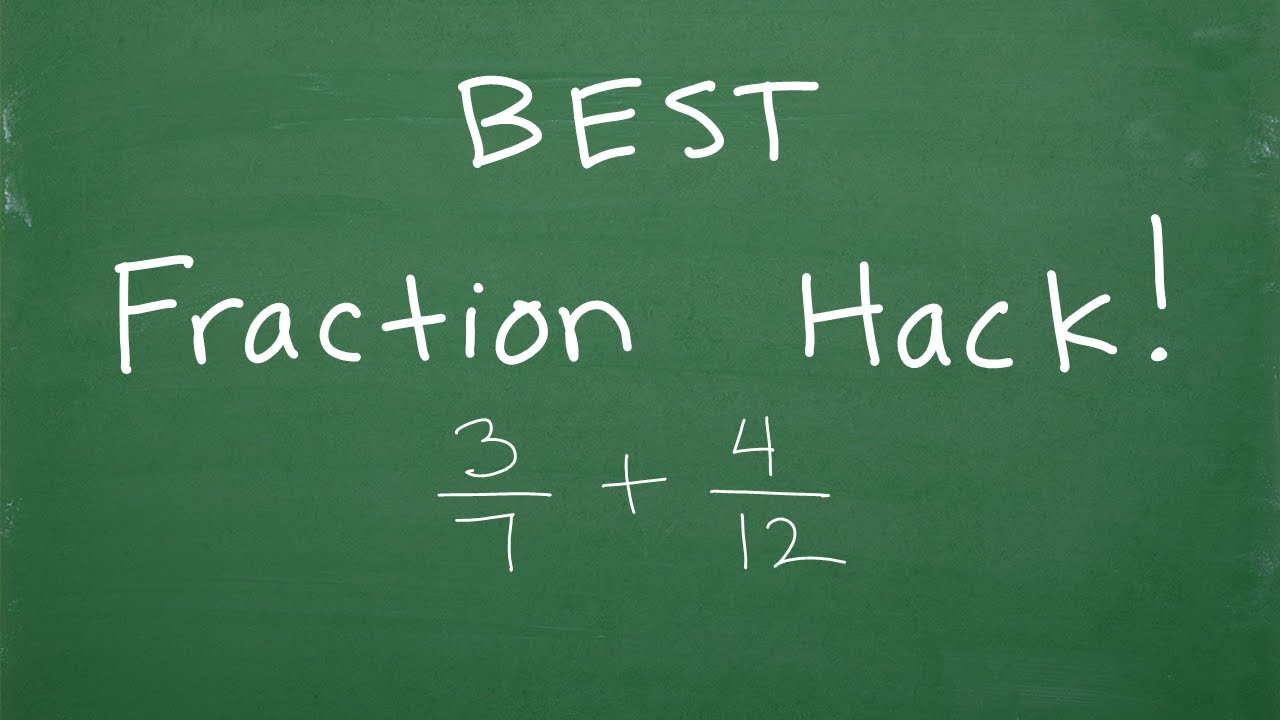
This video explains a great hack, short cut when adding and subtracting fractions.


In this video, we will learn about the Concept of an Equation with One Variable.
Access eLearn Digital content/ videos on mobile Download eLearn App from Google play store.
Android App:
http://bit.ly/2RBzptk
For More Information:
Website:
https://elearn.gov.pk/
Web App:
https://elearn.gov.pk/onlineApp/indexx.php
E-MAIL:
elearn@punjab.gov.pk
eLearn is the official repository of digitized textbooks of Punjab. Each book has been augmented with Video Lectures, Illustrations, Animations, Simulations, and Interactive Assessments. Through this website, you can access 30 Science and Maths textbooks for Grade 4-12 which have been augmented with 13,047 Video Lectures, 592 Simulations, 2100 Audio minutes and 1,830Animations. eLearn is developed by Punjab Information Technology Board in collaboration with Punjab Curriculum & Textbook Board and the School Education Department.

This week, Princeton historian D. Graham Burnett joins us to discuss the existential threat that A.I. poses to the traditional humanities degree and why he believes we’ll see thousands of new schools emerge outside the university system to carry on the exploration of what it means to be a person in the world.
This is a clip from Hard Fork episode 152 https://youtu.be/X-KzyPRdcmc
Guests:
D. Graham Burnett, historian of science and technology at Princeton University
https://history.princeton.edu/....people/d-graham-burn
Additional Reading:
Will the Humanities Survive Artificial Intelligence?
https://www.newyorker.com/cult....ure/the-weekend-essa
Hard Fork is a weekly look into the future that's already here. Hosts Kevin Roose and Casey Newton explore stories from the bleeding edge of tech.
Casey’s publication, Platformer: https://www.platformer.news/
FOLLOW US ON SOCIAL
TikTok: https://www.tiktok.com/@hardfork
Insta:
Kevin Roose - https://www.instagram.com/kevinroose/
Casey Newton - https://www.instagram.com/crumbler/
Twitter (X):
Kevin - https://x.com/kevinroose
Casey - https://x.com/CaseyNewton
Threads:
Kevin - https://www.threads.net/@kevinroose
Casey - https://www.threads.net/@crumbler
Subscribe to the audio only podcast:
Apple - https://podcasts.apple.com/us/....podcast/hard-fork/id
Spotify - https://open.spotify.com/show/....44fllCS2FTFr2x2kjP9x
Amazon - https://music.amazon.com/podca....sts/7c7fe198-e6a8-41
YouTube Music - https://music.youtube.com/playlist?list=PLB9gMmtMLXxsa8C0PzHFL2tJFh7FrKrYD&si=Fwb9Uwon1ZneNsBp
The New York Times - https://www.nytimes.com/column/hard-fork
Credits
“Hard Fork” is hosted by Kevin Roose and Casey Newton. Produced by Rachel Cohn and Whitney Jones. Engineering by Alyssa Jane Moxley and original music by Dan Powell, Marion Lozano, Sophia Lanman and Rowan Niemisto. Fact-checking by Caitlin Love. Our executive producer is Jen Poyant. Video production by Chris Schodt, Sawyer Roque, and Jake Nicol. Video QC by Isabella Anderson. Podcast Art Direction by Benjamin Wilkerson Tousley. Podcast Art & Animations by Julian Hespenheide. Additional Motion graphics by Phil Robibero. Thumbnails by Julia Moburg, Elizabeth Bristow, and Yvonne Stender. Special thanks to Paula Szuchman, Pui-Wing Tam, Niko Gallogly, Kate LoPresti and Jeffrey Miranda

In this video tutorial we find x.
For more problems and solutions visit http://www.mathplanet.com
#mathematics #maths #algebra1 #linearequations #ratios

That's Why Mohit Sir Called "God Of Mathematics"| Puzzle Brain teaser | #competishun #shorts #tricks
@MohitTyagi
#genius #mohittyagi #ytshortsindia #youtube #education

See more at https://www.underwatermath.com. Underwater Math provides engaging learning solutions for students. This video helps students understand the equal sign and determine if addition and subtractio equations are true or false. Florida Math Standard AR.2.1, AR.2.2

"Visit http://www.educationgalaxy.com to learn more.
Education Galaxy provides online assessment, instruction, and practice for elementary students. Education Galaxy helps students master their state standards and prepare for state testing. Education Galaxy's Topic Overviews and question feedback help explain each question for the student after incorrect answers."
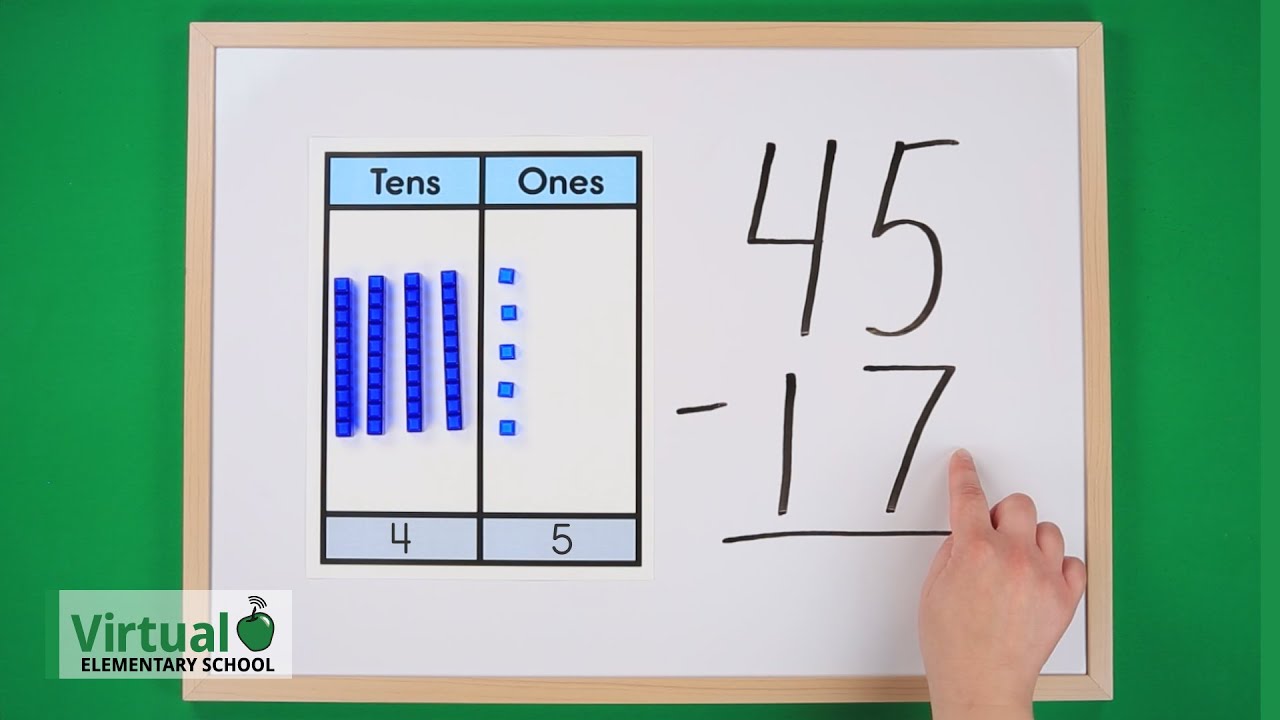
Learn how to subtract larger numbers using base ten blocks and regrouping.
Visit https://www.virtualelementarys....chool.com/new-math-c to learn more about our new elementary math courses.
Copyright © 2021 by D2L Corporation. All rights reserved. Except where otherwise noted, all content is created and owned by D2L Corporation.

Beginning Subtraction,Starring Dale Mason, Montessori K-12 Homeschool Pre-school online tutorial video,Mortensen Math.com. Math, Montessori K-12 Homeschool Kids Math tutoring videos Calculus, Trigonometry, Fractions, Algebra, Addition, Subtraction, Multiplication, Factoring, Free kid's online mathematics curriculum videos.

Subtraction lesson for K-12

=================================================
More Animated Bible Stories here https://ouo.io/QRLcnJ
=================================================
BUY YourvOwn Bible @ ALIEXPRESS http://ivononic.com/5EY7
FREE Math Videos for Toddlers
http://vismuene.com/6b7a
Buy your own multi-purpose learning module https://invol.co/cl18o24
Buy Rosary here https://invol.co/cl18kr6
Click this link to buy Math Game https://invol.co/cl16v3h
Subtraction 2: Learn Numbers/Mathematics
Download Math Interactive Whiteboard Lessons and flash games here: http://iwb-resources.blogspot.com
Lyrics, MIDI files, Sheet Music, Videos of Filipino Folk Songs, American Folk Songs, Canadian Folk Songs, Irish Folk Songs, Kids Songs, Nursery Rhymes http://filipinofolksongsatbp.blogspot.com
Kids' Songs and Nursery Rhymes Piano Tutorial and Karaoke http://kidssongsandnurseryrhymes.blogspot.com