Top videos
Many of us who make and appreciate art spend loads of time on Instagram. How is it changing the way we interpret and interact with art? And is it actually changing the art that gets made? Let's find out. #art #instagramart #instagram
Thanks to our Grandmasters of the Arts Vincent Apa, Josh Thomas, and Ernest Wolfe, and all of our patrons, especially Rich Clarey, Iain Eudaily, Frame Monster Design Laboratory, Patrick Hanna, Nichole Hicks, Andrew Huynh, Eve Leonard, David Moore, Gabriel Civita Ramirez, Constance Urist, Nicholas Xu, and Roberta Zaphiriou. To support our channel, visit: http://www.patreon.com/artassignment.
Studies mentioned:
Budge, K. (2017), Objects in Focus: Museum Visitors and Instagram. Curator, 60: 67-85. doi:10.1111/cura.12183
Alixandra Barasch, Gal Zauberman, Kristin Diehl. How the Intention to Share Can Undermine Enjoyment: Photo-Taking Goals and Evaluation of Experiences. Journal of Consumer Research, Volume 44, Issue 6, April 2018, p 1220–1237, https://doi.org/10.1093/jcr/ucx112
Subscribe for new episodes of The Art Assignment every other Thursday, and follow us elsewhere for the full Art Assignment experience:
Twitter: http://twitter.com/artassignment
Instagram: http://instagram.com/theartassignment/
Facebook group: https://www.facebook.com/group....s/artassignmentextra

She's probably the most famous artwork of all time, but what do you know about her? It's time to better know the Mona Lisa. To support our channel, or at least consider it: http://www.patreon.com/artassignment
Special thanks to our Patrons of the Arts: Chad Crews and Constance Urist
Subscribe for new episodes of The Art Assignment every other Thursday!
--
Follow us elsewhere for the full Art Assignment experience:
Website: http://www.theartassignment.com
Instagram: http://instagram.com/theartassignment/
Extra Credit Group: http://www.facebook.com/groups..../artassignmentextrac
tumblr: http://theartassignment.tumblr.com/
All responses tumblr: http://all.theartassignment.com
Twitter: http://twitter.com/artassignment
Facebook: http://www.facebook.com/theartassignment
and maybe Reddit?: http://www.reddit.com/r/TheArtAssignment

Pre-order our book YOU ARE AN ARTIST (which includes new assignments!) here: http://bit.ly/2kplj2h
In which we meet Cambodian artist Sopheap Pich and receive the assignment to make an IMPRINT. We filmed with Sopheap at Indianapolis Fabrications while he was in town installing a new work for the Indianapolis Museum of Art.
INSTRUCTIONS - Imprint
1. Choose an object you find interesting
2. Cut it, making a flat surface
3. Dip the cut surface in paint
4. Press it on to a piece of paper repeatedly to make an imprint
5. Upload to you social media platform of choice using #theartassignment
6. Fame and glory (your work may be featured in the future video)
Find out more about The Art Assignment and how to submit your response: http://theartassignment.com/

Resistance isn't always visible, but when we can see it in art, what does it look like? Step back through global art history and look at Delacroix's Liberty Leading the People, Night Attack on the Sanjô Palace, Henry Oscar One Bull’s Custer’s War, Goya's Disasters of War, and Kara Walker's Darkytown Rebellion. Each revealing in disparate ways the experience of those who have struggled against systems of power.
This episode was made in partnership with Smarthistory, the most-visited art history website in the world (https://smarthistory.org). Subscribe to their channel today: https://www.youtube.com/channe....l/UC3R-xanNgtoa8b7gp
Thanks to our Grandmaster of the Arts Vincent Apa, and all of our patrons, especially Frame Monster Design Laboratory, Lynn Gordon, Patrick Hanna, Nichole Hicks, Nicholas Huynh, Eve Leonard, David Moore, Jane Quale, Constance Urist, Nicholas Xu. To support our channel, visit: http://www.patreon.com/artassignment.

Pre-order our book YOU ARE AN ARTIST (which includes new assignments!) here: http://bit.ly/2kplj2h Sarah and John reflect on the first year of PBS Digital Studios' The Art Assignment, and talk about viewer-submitted responses to the question: What does the Art Assignment mean to you? We are so grateful for all of those who responded and who participate in the Art Assignment community.
Many thanks to all the fine people who make this series possible: PBS Digital Studios and Matthew Vree, Mark Olsen, Brandon Brungard, Molly Schwartz, Dana Schechter, Jason Weidner, Zulaiha Razak, Stan Muller, Elise Lockwood, and Meredith Danko.
Don't forget to follow us elsewhere for the full Art Assignment experience:
Tumblr: http://theartassignment.com
Our Response Tumblr: http://all.theartassignment.com
Twitter: http://twitter.com/artassignment
Instagram: http://instagram.com/theartassignment/
Facebook: http://www.facebook.com/theartassignment
and don't forget Reddit!: http://www.reddit.com/r/TheArtAssignment/
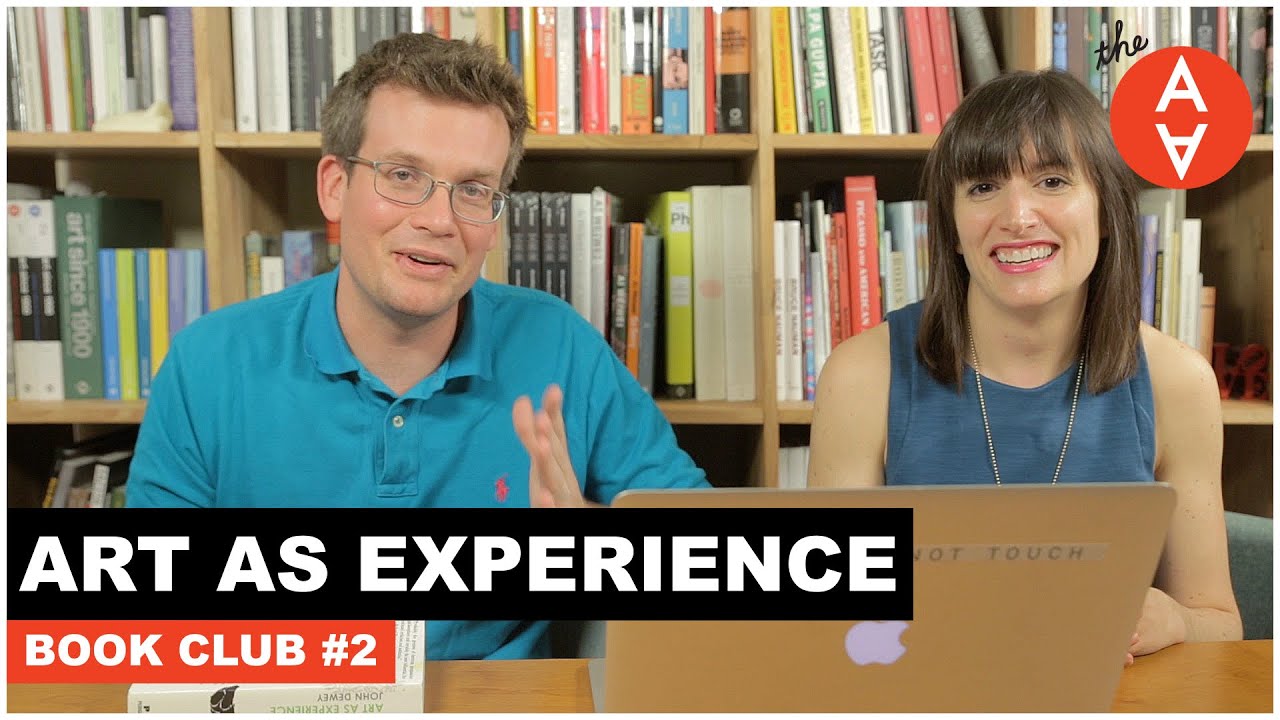
Pre-order our book YOU ARE AN ARTIST (which includes new assignments!) here: http://bit.ly/2kplj2h Round 2 of The Art Assignment Book Club features John Dewey's Art As Experience, which certainly was an experience to read - congratulations to you if you did it! If you didn't, we understand. We read it for you, and we'll discuss some of the big ideas Dewey talks about, including what an art experience actually is, how aesthetics play into experiences, and... Liverpool F.C.?
Read the book if you'd like to learn more!
http://bit.ly/1PlNF5s
--
Follow us elsewhere for the full Art Assignment experience!
Tumblr: http://theartassignment.com
Response Tumblr: http://all.theartassignment.com
Twitter: http://twitter.com/artassignment
Instagram: http://instagram.com/theartassignment/
Facebook: http://www.facebook.com/theartassignment
and don't forget Reddit!: http://www.reddit.com/r/TheArtAssignment
Here's how you can get involved:
1. Tell us what you love about public media using #IlovePBS
2. Learn more about public media at http://pbs.org/value.
3. Find your representative at https://www.govtrack.us/congress/members
Subscribe for new episodes of The Art Assignment every Thursday!
--
Follow us elsewhere for the full Art Assignment experience:
Tumblr: http://theartassignment.com
Response Tumblr: http://all.theartassignment.com
Twitter: http://twitter.com/artassignment
Instagram: http://instagram.com/theartassignment/
Facebook: http://www.facebook.com/theartassignment
and don't forget Reddit!: http://www.reddit.com/r/TheArtAssignment

We met Hannah Hart in her studio to talk about everything from painting to poetry -- here are Hannah's five favorite works of art:
1) Little By Little by Hannah Gelb (available here as a print! https://store.dftba.com/produc....ts/little-by-little-
2) The video Why Trust Is Worth It by Ze Frank: https://www.youtube.com/watch?v=cWypWe9UAhQ
3) Biwa Lake Tree, Study 2 by Michael Kenna
4) Little Red Riding Hood by Cory Godbey
5) Any poem by Mary Oliver
Thanks, Hannah. We (h)art you.
Find Hannah around the internet:
youtube: https://www.youtube.com/harto
twitter: http://twitter.com/harto
instagram: http://instagram.com/harto
tumblr: http://mydrunkkitchen.tumblr.com
facebook: http://facebook.com/hannahhartofficial
snapchat: @hartoooo
To support our channel, visit: http://www.patreon.com/artassignment.
Thanks to our Grandmaster of the Arts Indianapolis Homes Realty, and all of our patrons, especially Lynn Gordon, Patrick Hanna, and Constance Urist.
Subscribe for new episodes of The Art Assignment every other Thursday!
--
Follow us elsewhere for the full Art Assignment experience:
Tumblr: http://theartassignment.com
Response Tumblr: http://all.theartassignment.com
Twitter: http://twitter.com/artassignment
Instagram: http://instagram.com/theartassignment/
Facebook: http://www.facebook.com/theartassignment
and don't forget Reddit!: http://www.reddit.com/r/TheArtAssignment

Pre-order our book YOU ARE AN ARTIST (which includes new assignments!) here: http://bit.ly/2kplj2h
This week's assignment comes from Jonn Herschend and Will Rogan, who cofounded THE THING Quarterly, a publication that distributes everyday objects conceived of by different artists. They ask you to consider the meaning of physical objects in an increasingly digital world and Make a Thing.
John Green then talks about Invader, a French street artist who travels the world and installs mosaics inspired by video games from the 70s and 80s.
INSTRUCTIONS - Make a Thing
1. Take something from the virtual world
2. Make is physical
3. Upload a photo of your physical object using #theartassignment
4. Fame and glory (your work might be in a future episode)
Find out more about The Art Assignment and how to submit your response: http://theartassignment.com/

Pre-order our book YOU ARE AN ARTIST (which includes new assignments!) here: http://bit.ly/2kplj2h Today's episode has been sponsored by Squarespace. For more information, visit http://www.squarespace.com/artassignment
Happy birthday to us! Welcome to the third year of The Art Assignment. We’ve got some exciting things in store:
1. We have a Google Voice number! Call us with any questions or comments at (901) 602-ARTY
2. Visit our shiny new website: http://www.theartassignment.com/
3. Follow us on social media!
Tumblr: http://theartassignment.tumblr.com
Response Tumblr: http://all.theartassignment.com
Twitter: http://twitter.com/artassignment
Instagram: http://instagram.com/theartassignment/
Facebook: http://www.facebook.com/theartassignment
Reddit: http://www.reddit.com/r/TheArtAssignment
And don't forget to subscribe for new episodes of The Art Assignment every Thursday!

Pre-order our book YOU ARE AN ARTIST (which includes new assignments!) here: http://bit.ly/2kplj2h
We visit Fritz Haeg at his home and studio in Los Angeles and receive the assignment to make a rag rug! But not just any rag rug--one that you make over time and do something on. Find more detailed instruction here: https://www.youtube.com/watch?v=6By4XYlPIBA
INSTRUCTIONS:
1. Gather old textiles (clothes, bed sheets, etc.)
2. Make a rug
3. Share your journey of making the rug and what you do on it
4. Upload it using #theartassignment
5. Fame and glory (your work might be in a future episode)
Learn more about Fritz Haeg: http://www.fritzhaeg.com
Watch a video about his rug at LA's Hammer Museum: http://youtu.be/N9U_D3TJxD0
And here's another about his recent show at the Walker Art Center: http://youtu.be/eO1A_oRTNCs
In this episode we talk about Hélio Oiticica's Parangolés (1964--79)
See video of Parangolés performed:
https://www.youtube.com/watch?v=dJTr8I2M6Ps
And learn more about Oiticica:
http://www.tate.org.uk/whats-o....n/tate-modern/exhibi

In which we review some early responses to The Art Assignment Episode 1: Meet in the Middle: http://www.youtube.com/watch?v=U9lpMFPEj58.
Thanks to all of you who have posted responses! These are not ALL of the responses, and we encourage you to continue meeting in the middle and posting your responses with #theartassignment. There are many more great ones than are excerpted here, and we encourage you to follow us on Twitter, Tumblr, and Instagram to continue seeing interesting responses.
We do have an Instagram!: http://instagram.com/theartassignment
Videos and images included in the Meet in the Middle montage:
allylucas99: http://instagram.com/p/kxLT0VzXde/
shortsisters756: http://www.youtube.com/watch?v=Xvfp1hueYDg
klonschaferl: https://www.youtube.com/watch?v=5ze0DsGrYNk
vlogbrothers: http://www.youtube.com/watch?v=DRwcemQxbEY
Cynicus: http://www.youtube.com/watch?v=azRlCHhdpxg
Jennifer Reynolds-Strange: http://www.youtube.com/watch?v=JiorIyTd8Tg
Albusowner: http://youtu.be/syT-qlamN88
Meg Gilbert: http://www.youtube.com/watch?v=VyGnr5OdPRg
Katinka: http://www.youtube.com/watch?v=5-jhVRlyDZg
LeAnne Jones: http://www.youtube.com/watch?v=aVE6wc5h9vQ
grabhir: http://www.youtube.com/watch?v=antYFrH2tgY
Rosianna Halse Rojas: http://youtu.be/iq9MaRWEq_A
booksandquills: http://www.youtube.com/watch?v=aBeEutXATo8
Lauren Fairweather: http://www.youtube.com/watch?v=a1HNoxyDc8Q
Caitilin Joly: http://www.youtube.com/watch?v=HdpyfTOnUcs
http://davidandlucy.blogspot.c....o.uk/2014/02/assignm
whimsicalnerd: http://www.youtube.com/watch?v=00Ei6sfACsw
storyofageek: http://www.youtube.com/watch?v=K5TDMoSgMPo
tiffannytaboo: http://instagram.com/p/kx_bxLkFoh/
chirpytrauma: http://instagram.com/p/k57JRTjmqP/
riseandshine521: http://instagram.com/p/lAzxSnoOMf/
jadea513: http://instagram.com/p/kuxUwykcpY/
semen_stained_mountaintops: http://instagram.com/p/lBD6q_AK1g/
laufeyha: http://instagram.com/p/kuq2VhvnE6/
ammme239: http://instagram.com/p/kr9Vs0K7-f/
joyannknight: http://instagram.com/p/lAxugXk2Q5/
pennykearey: http://instagram.com/p/lAVmrcR85k/
magoothecuke: http://instagram.com/p/kzo_AYmrOf/
emilylime26: http://instagram.com/p/lBOS6EuZds/

Pre-order our book YOU ARE AN ARTIST (which includes new assignments!) here: http://bit.ly/2kplj2h You walked on it, and we watched. Herewith a compilation of some of our favorite responses to Kate Gilmore's Art Assignment: http://youtu.be/JhLN7dtukig?li....st=PLdGqz6dgvIzYgUG9
Thanks to all who participated! And don't forget to check out all of the responses on Tumblr: http://theartassignmentrespons....es.tumblr.com/tagged

There is a huge range of ways that gender has been understood and represented in the history of art. We look at a few examples that show us gender is a concept that has never been fixed: Hermaphroditos by the ancient Greeks, Titian's Venus of Urbino, Baule portrait masks, the photographs of Claude Cahun and Marcel Moore, and Maya stone carvings.
This episode was made in partnership with Smarthistory, the most-visited art history website in the world (https://smarthistory.org). Subscribe to their channel today: https://www.youtube.com/channe....l/UC3R-xanNgtoa8b7gp
Thanks to our Grandmaster of the Arts Vincent Apa, and all of our patrons, especially Iain Eudailey, Frame Monster Design Laboratory, Patrick Hanna, Nichole Hicks, Eve Leonard, David Moore, Jane Quale, Constance Urist, and Nicholas Xu. To support our channel, visit: http://www.patreon.com/artassignment.
Ring that notification bell to learn about new episodes of The Art Assignment every other Thursday.

Another YouTube #shorts from Dr. Joe! Subscribe for more fun science stories.
Join us on Patreon!
https://patreon.com/itsokaytobesmart
Instagram
http://www.instagram.com/DrJoeHanson
http://www.instagram.com/okaytobesmart
Facebook
https://www.facebook.com/itsokaytobesmartpbs/

Another YouTube #shorts from Dr. Joe! Subscribe for more fun science stories.
Join us on Patreon!
https://patreon.com/itsokaytobesmart
Instagram
http://www.instagram.com/DrJoeHanson
http://www.instagram.com/okaytobesmart
Facebook
https://www.facebook.com/itsokaytobesmartpbs/
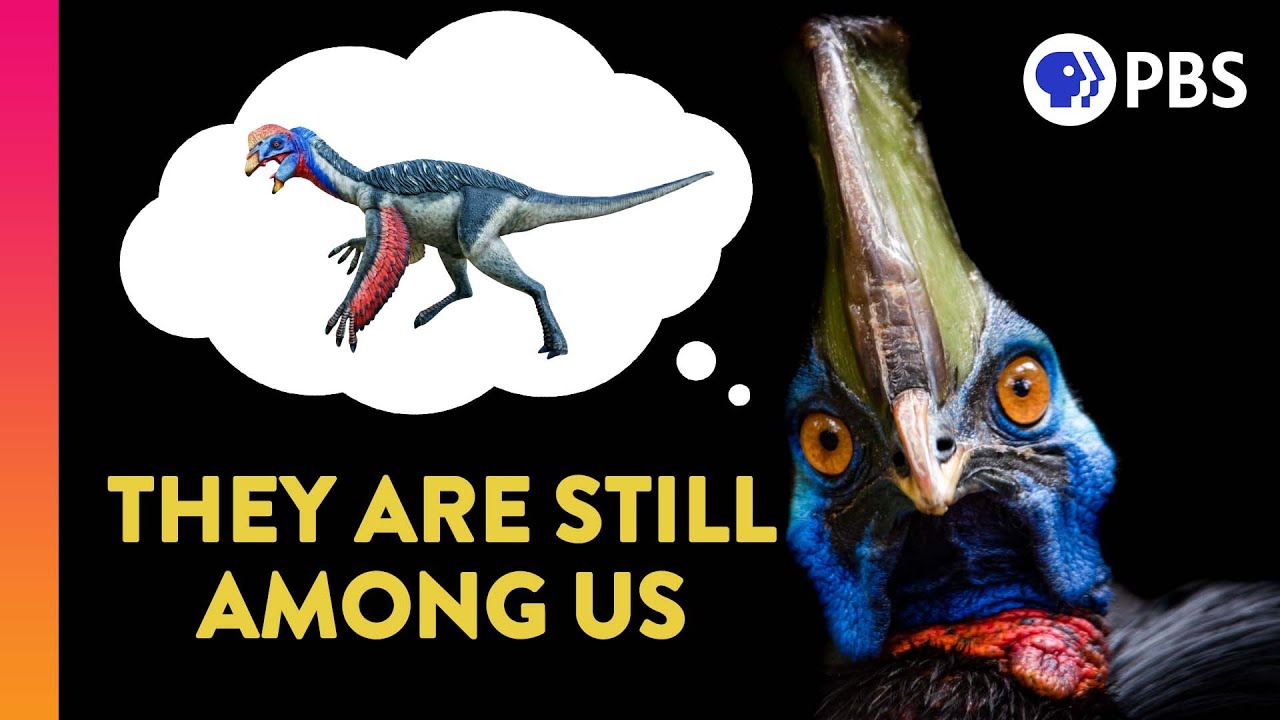
Welcome to… Jurassic Pluck
Subscribe: http://bit.ly/iotbs_sub Twitter: @DrJoeHanson @okaytobesmart
↓ More info and sources below ↓
Most people are taught that dinosaurs went extinct 66 million years ago when a giant meteor crashed into the Yucatan peninsula. I'm here to tell you that's wrong. Dinosaurs are alive and well today, and you don't have to go to Jurassic World to see them (although hanging out with Chris Pratt would be cool)
We have living dinosaurs all around us. We just call them "birds". Yes. Birds are dinosaurs.
Viewers like you help make PBS (Thank you 😃) . Support your local PBS Member Station here: https://to.pbs.org/PBSDSDonate
The tetrapod playlist: https://www.youtube.com/playli....st?list=PLsmqeqKj7M-
Special thanks to Scott Hartman (http://www.skeletaldrawing.com/) for the great Deinonychus and Archaeopteryx illustrations
More info/sources:
Great Audubon article on dinosaur-bird evolution http://www.audubon.org/magazin....e/january-february-2
Dig deeper with this hour-long Yale lecture by Dr. Richard Prum: https://www.youtube.com/watch?v=Ao7Q8kOqjfs
Dr. John Hutchinson's research on dinosaur/bird posture
http://whatsinjohnsfreezer.com..../2013/04/24/3d_dinos
Chickens wearing prosthetic tails, for science!
http://journals.plos.org/ploso....ne/article?id=10.137
T. rex had a wishbone: http://www.smithsonianmag.com/....science-nature/this-
Did prey grasping of dinosaurs evolve into bird flight stroke? http://www.ucmp.berkeley.edu/v....ertebrates/flight/av
Reconstructing dinosaur sounds http://www.sandia.gov/LabNews/....LN12-19-97/dinosaur_
Great TED-Ed video on the evolution of feathers in dinosaurs: https://www.youtube.com/watch?v=hPLgfGX1I5Y
Brian Switek on dinosaur feathers: http://www.smithsonianmag.com/....ist/?next=/science-n
What do birds see? http://www.nwf.org/news-and-ma....gazines/national-wil
Tetrachromacy and feathers in dinosaurs: http://www.sciencemag.org/cont....ent/346/6208/416.sho
Have an idea for an episode or an amazing science question you want answered? Leave a comment or check us out at the links below!
Follow on Twitter: http://twitter.com/okaytobesmart
http://twitter.com/DrJoeHanson
Follow on Tumblr: http://www.itsokaytobesmart.com
Follow on Instagram: http://instagram.com/drjoehanson
Joe Hanson - Creator/Host/Writer
Joe Nicolosi - Director
Amanda Fox - Producer, Spotzen IncKate Eads - Associate Producer
Andrew Matthews - Editing/Motion Graphics/Animation
Katie Graham - Director of Photography
John Knudsen - Gaffer
Theme music: "Ouroboros" by Kevin MacLeod
Other music via APM
Stock images from Shutterstock, stock footage from Videoblocks
Birds of paradise clips via PBS Nature

Thank you to Brilliant for supporting PBS
To learn more, go to: https://brilliant.org/BeSmart/
↓↓↓ More info and sources below ↓↓↓
In the race to survive, both predators and prey use visual tricks to get ahead. One nearly universal trick is countershading, a color pattern that helps animals erase their own shadows or blend into different backgrounds. It’s worked well enough that nature has produced this pattern over and over again, all over Earth, for at least tens of millions of years.
0:00 Why does every animal look like this?
0:52 A painter's big idea
1:49 Disappearing shadows
2:22 Testing the idea
3:48 Countershading everywhere!
6:10 What about water?
7:22 Making light to hide shadows
8:19 Outro
References: https://sites.google.com/view/....countershading-refer
SUBSCRIBE so you don’t miss a video! ►► http://bit.ly/iotbs_sub
We’re on PATREON! Join the community https://www.patreon.com/itsokaytobesmart
-----------
High fives to all our Brain Trust Patrons:
Millennial Glacier
paul andre bouis
Mark Littlehale
Ali Freiburger
Mehdi Damou
Barbora Bei
Burt Humburg
dani bowman
David Johnston
Salih Arslan
Baerbel Winkler
Robert Young
Eric Meer
Dustin
Karen Haskell
Join us on Patreon!
https://patreon.com/itsokaytobesmart
Twitter
http://www.twitter.com/DrJoeHanson
http://www.twitter.com/okaytobesmart
Instagram
http://www.instagram.com/DrJoeHanson
http://www.instagram.com/okaytobesmart
Merch
https://store.dftba.com/collec....tions/its-okay-to-be
Facebook
https://www.facebook.com/itsokaytobesmartpbs/
This episode of Be Smart is licensed exclusively to YouTube.
🗣️ Visit https://to.pbs.org/DonateBeSmart to support your local PBS stations.
↓↓↓ More info and sources below ↓↓↓
Seedless fruits are delicious, convenient… and completely unnatural. In this video, we explore the science, history, and hidden risks behind seedless bananas, watermelons, and grapes — and why they literally can’t survive without us.
-----------
High fives to all our Brain Trust Patrons:
Reuben Brewer
Marcus Pingel
Olivia Ruiz
Mike and Patty Loftis
Ed Eyden
Holly, Brett, and Ashe Bullion
Jaap Westera
Barbora Bei
dani bowman
David Johnston
Baerbel Winkler
Eric Meer
Karen Haskell
SUBSCRIBE so you don’t miss a video! ►► http://bit.ly/iotbs_sub
Join us on Patreon!
https://patreon.com/itsokaytobesmart
Instagram
http://www.instagram.com/DrJoeHanson
http://www.instagram.com/okaytobesmart
Facebook
https://www.facebook.com/itsokaytobesmartpbs/
Merch
https://store.dftba.com/collec....tions/its-okay-to-be

Another YouTube #shorts from Dr. Joe! Subscribe for more fun science stories.
Join us on Patreon!
https://patreon.com/itsokaytobesmart
Instagram
http://www.instagram.com/DrJoeHanson
http://www.instagram.com/okaytobesmart
Facebook
https://www.facebook.com/itsokaytobesmartpbs/

Sunspots, solar flares, coronal mass ejections, OH MY!
Viewers like you help make PBS (Thank you 😃) . Support your local PBS Member Station here: https://to.pbs.org/PBSDSDonate
Subscribe to It's Okay To Be Smart: http://bit.ly/iotbs_sub
↓ More info and sources below ↓
As massive magnetic fusion reactors go, the sun is pretty awesome.
How a CME forms: https://www.youtube.com/watch?v=xsXqNNQsS7I
More on solar storms from Bad Astronomy:
http://www.slate.com/blogs/bad...._astronomy/2013/02/0
http://www.slate.com/blogs/bad...._astronomy/2013/02/2
Anatomy of solar storms: http://www.space.com/12047-sol....ar-flares-sun-storms
All the sun science you've ever wanted:
http://solarcellcentral.com/sun_page.html
Footage via NASA/Goddard Space Flight Center, ESA/Hubble, and Pond5
Joe Hanson - Host and writer
Joe Nicolosi - Director
Amanda Fox - Producer, Spotzen IncKate Eads - Associate Producer
Editing/Motion Graphics - Andrew Matthews
Music:
"Ouroboros" by Kevin MacLeod
Artwork/photos via Shutterstock
Produced for PBS Digital Studios
-----------
Join us on Patreon!
https://patreon.com/itsokaytobesmart
Twitter
http://www.twitter.com/DrJoeHanson
http://www.twitter.com/okaytobesmart
Instagram
http://www.instagram.com/DrJoeHanson
http://www.instagram.com/okaytobesmart
Merch
https://store.dftba.com/collec....tions/its-okay-to-be
Facebook
https://www.facebook.com/itsokaytobesmartpbs/
PBS Member Stations rely on viewers like you. To support your local station, go to: http://to.pbs.org/DonateOKAY
↓ More info and sources below ↓
We’re on PATREON! Join the community ►► https://www.patreon.com/itsokaytobesmart
SUBSCRIBE so you don’t miss a video! ►► http://bit.ly/iotbs_sub
A human with the metabolism of a hummingbird would need to eat about 80,000 calories a day to survive. That’s because staying warm by making your own heat takes a ton of energy. And that brings up a paradox, because creating your own body heat is incredibly expensive. The largest animals on Earth have to spend most of their day just eating enough to keep their heat engines running. So why aren’t we cold-blooded… like crocodiles? Here’s the science
References: https://sites.google.com/view/....warm-blooded-referen
-----------
Big Thank you to our Brain Trust Patrons:
AlecZero
Amy Sowada
Andrew Campbell
Baerbel Winkler
Benjamin Teinby
Brian Chang
dani bowman
David Johnston
Dustin
Eric Meer
Javier Soto
Karen Haskell
Marcus Tuepker
Peter Ehrnstrom
Robert Young
Roy Lasris
Salih Arslan
Zenimal
Join us on Patreon!
https://patreon.com/itsokaytobesmart
Twitter
http://www.twitter.com/DrJoeHanson
http://www.twitter.com/okaytobesmart
Instagram
http://www.instagram.com/DrJoeHanson
http://www.instagram.com/okaytobesmart
Merch
https://store.dftba.com/collec....tions/its-okay-to-be
Facebook
https://www.facebook.com/itsokaytobesmartpbs/

You can learn more at https://curiositystream.com/smart
SUBSCRIBE so you don’t miss a video! ►► http://bit.ly/iotbs_sub
↓↓↓ More info and sources below ↓↓↓
You may have heard that a kilogram of feathers weighs the same as a kilogram of steel, but that all depends on where you weigh them. This video is all about the difference between mass and weight, and how weirdly awesome Earth’s gravity really is.
REFERENCES:
https://en.wikipedia.org/wiki/Mass_versus_weight
http://curious.astro.cornell.e....du/about-us/42-our-s
https://en.wikipedia.org/wiki/Equatorial_bulge
http://www.cleonis.nl/physics/....phys256/equatorial_b
https://en.wikipedia.org/wiki/Geoid
https://gracefo.jpl.nasa.gov/
http://www2.csr.utexas.edu/gra....ce/publications/fact
-----------
FOLLOW US:
Twitter: @DrJoeHanson @okaytobesmart
Instagram: @DrJoeHanson @okaytobesmart
Merch: https://store.dftba.com/collec....tions/its-okay-to-be
Facebook: http://www.facebook.com/itsokaytobesmart
BOOKS WE’VE FEATURED:
http://smart-books.tumblr.com/
-----------
It’s Okay To Be Smart is hosted by Joe Hanson, Ph.D.
Director: Joe Nicolosi
Researcher: Matt Caplan, Ph.D.
Creative Director: David Schulte
Editors/animators: Derek Borsheim
Executive Producer: Amanda Fox
Producer: Stephanie Noone
Produced by PBS Digital Studios
Music via APM
Stock images from Shutterstock http://www.shutterstock.com

Join our Patreon community: https://www.patreon.com/itsokaytobesmart
SUBSCRIBE so you don’t miss a video! ►► http://bit.ly/iotbs_sub
↓↓↓ More info and sources below ↓↓↓
Predictive analytics uses math and historical data to make predictions about the future. It’s used in commerce, sports, politics, social media and tons of other places. And as it turns out, people have been using math to predict people’s death for centuries. Can it predict mine?
-----------
High fives to all our Brain Trust Patrons:
Ed Eyden
Jennifer Burton
Charles Horton, Jr
Holly, Brett, and Ashe Bullion
Jaap Westera
Mehdi Damou
Barbora Bei
Burt Humburg
dani bowman
David Johnston
Baerbel Winkler
Eric Meer
Karen Haskell
Join us on Patreon!
https://patreon.com/itsokaytobesmart
Instagram
http://www.instagram.com/DrJoeHanson
http://www.instagram.com/okaytobesmart
Facebook
https://www.facebook.com/itsokaytobesmartpbs/
Merch
https://store.dftba.com/collec....tions/its-okay-to-be

Viewers like you help make PBS (Thank you 😃) . Support your local PBS Member Station here: https://to.pbs.org/PBSDSDonate
I used #badDNA once in this video. Can you find it?
Don’t miss our next video! SUBSCRIBE! ►► http://bit.ly/iotbs_sub
↓↓↓ More info and sources below ↓↓↓
If you see #badDna, be sure to show me on Twitter! @DrJoeHanson @okaytobesmart
Biology textbooks are full of drawings of DNA, but none of those show what DNA actually looks like. Sure, they’re good models for understanding how DNA works, but inside of real cells, it’s a whole lot more interesting. Learn why we can’t look directly at DNA, and find out how DNA is actually packed inside cells.
-----------
READ MORE:
Best electron microscope image of DNA: http://theatln.tc/2xLBb0Y
Atomic force microscopy (the tiny needle): https://en.wikipedia.org/wiki/....Atomic_force_microsc
Visualizing the 3-D genome: http://bit.ly/2eHud8k
Stevens, Tim J., et al. "3D structures of individual mammalian genomes studied by single-cell Hi-C." Nature 544.7648 (2017): 59-64.
-----------
FOLLOW US:
Merch: https://store.dftba.com/collec....tions/its-okay-to-be
Facebook: http://www.facebook.com/itsokaytobesmart
Twitter: @okaytobesmart @DrJoeHanson
Tumblr: http://www.itsokaytobesmart.com
Instagram: @DrJoeHanson
Snapchat: YoDrJoe
-----------
It’s Okay To Be Smart is hosted by Joe Hanson, Ph.D.
Director: Joe Nicolosi
Writer: Joe Hanson
Editor/animator: Evan Wright
Producer: Stephanie Noone and Amanda Fox
Produced by PBS Digital Studios
Music via APM
Stock images from Shutterstock http://www.shutterstock.com